English
  简体中文
简体中文  Deutsch
  Español
  Français
  Italiano
  日本語
日本語  한국어
한국어  Polski
  Português
  Русский
  Türkçe
  Nederlands
  Tiếng Việt
  ไทย
ไทย 
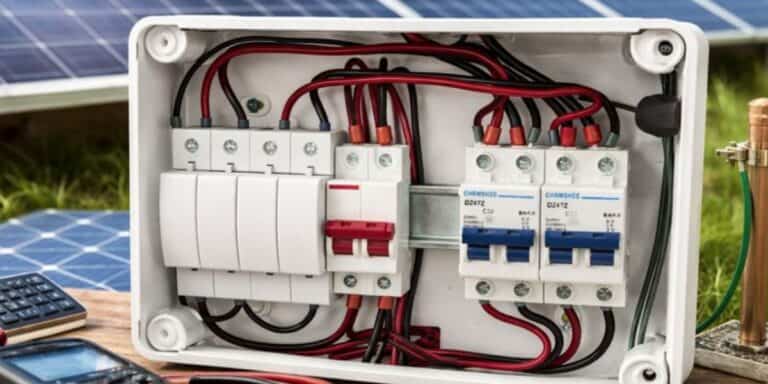
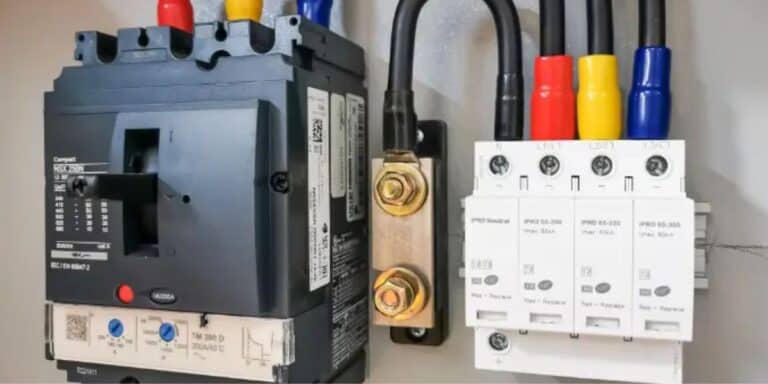
In a 3-phase system, surge protection works by sensing abnormal overvoltage, switching internally from a high-impedance state to a low-impedance state, diverting the surge current into the grounding or bonding path, and limiting the voltage that reaches connected equipment. It does not “block” a surge. It reduces the peak voltage by giving the surge a controlled path away from sensitive loads. The result is lower electrical stress on insulation, power supplies, drives, and control electronics.
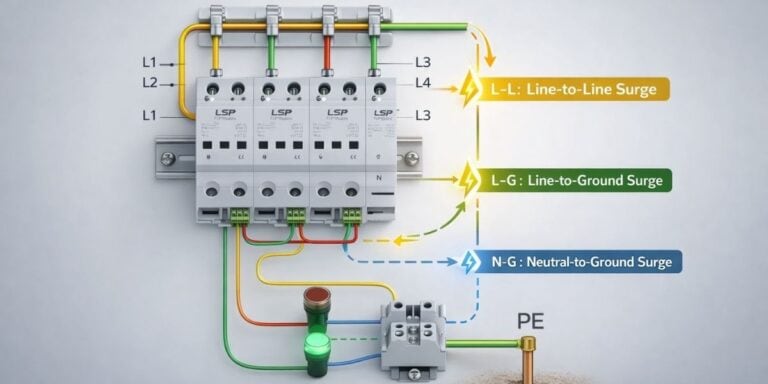
Three-phase systems need this approach even more than single-phase systems because they have more possible surge paths. Surges can appear line-to-ground (L–G), line-to-line (L–L), and in systems with a neutral, sometimes neutral-to-ground (N–G). A 3 phase surge protective device is therefore built to manage several modes of overvoltage at the same time, not just one.
This article explains how surge protection devices operate in 3-phase power systems, how they divert and limit transient overvoltages, how different SPD types (Type 1, Type 2, and Type 3) are used, and how placement and coordination affect real-world surge reduction performance.
What “Electrical Surge” Means in 3-Phase Systems
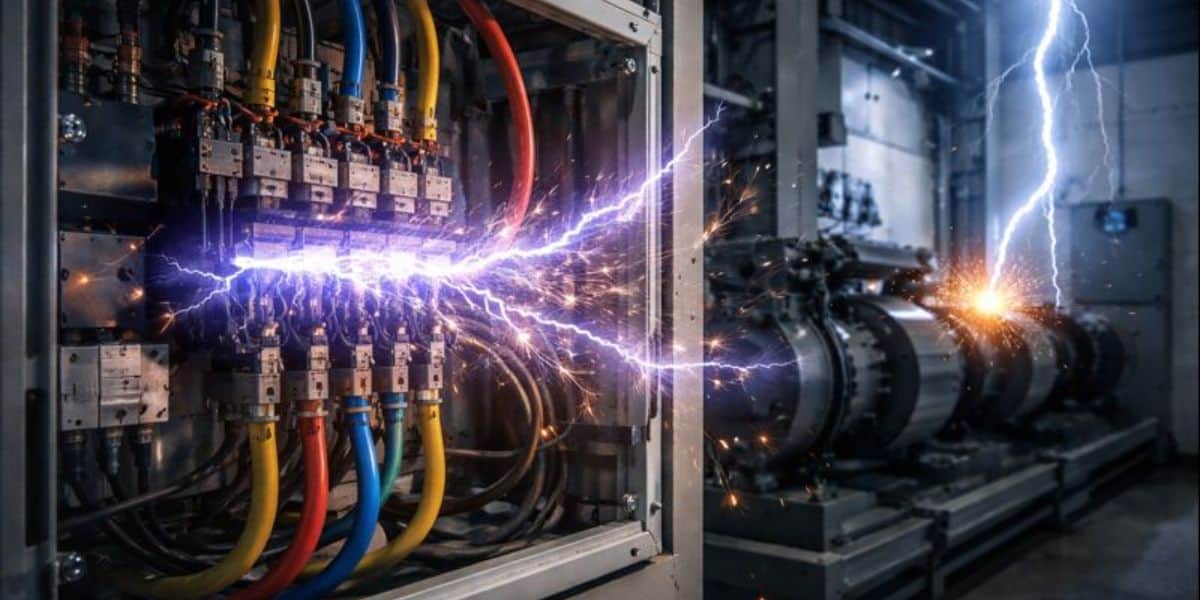
An electrical surge, more correctly called a transient overvoltage, is a very short and very fast rise in voltage. It typically lasts from microseconds to a few milliseconds. The two most common sources are lightning (either direct strikes or induced effects on nearby lines) and switching events inside the electrical system.
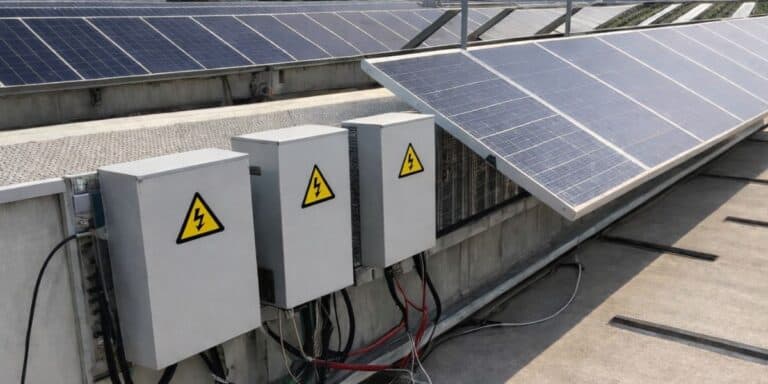
In industrial and commercial 3-phase installations, many surges are created internally. Large motors, variable-frequency drives, contactors, and capacitor banks all switch significant energy. Every time current is interrupted or redirected, the system inductance can generate a voltage spike. This means that even if the external utility supply is stable, a facility can still experience frequent transient overvoltages.
How a 3-Phase SPD Works
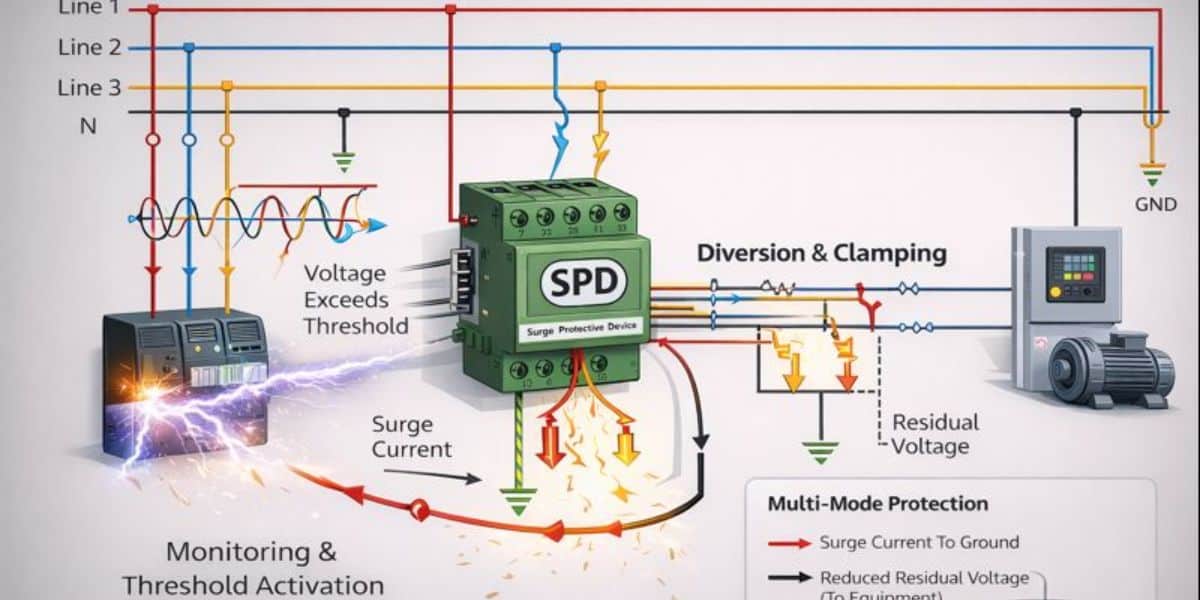
A surge protection device, often abbreviated as spd (surge protective device), operates on a simple but carefully engineered principle: it stays invisible during normal operation and becomes conductive only when the voltage becomes dangerous.
Monitoring & Threshold Behavior
In normal conditions, the internal protective elements of the device are in a high-impedance state. This means they draw almost no current and do not affect the power system. The SPD is effectively “watching” the voltage continuously.
When a transient pushes the voltage above a defined threshold level, the behavior changes. The internal elements switch rapidly into a conductive state. This switching is not mechanical; it happens because of the electrical properties of the components inside the device.
Diversion (Current Redirection) + Clamping
Once the SPD becomes conductive, it creates a controlled low-impedance path between the energized conductor and the grounding or bonding system. The surge current prefers this low-impedance path instead of flowing through sensitive equipment.
At the same time, the device limits the peak voltage that can appear across the load. This is often called “clamping.” It is important to understand that the voltage is not reduced to zero. A certain “residual” or “let-through” voltage always remains. The goal is to keep this residual voltage low enough that insulation systems and electronic components are not damaged or excessively stressed.
Multi-Mode Protection in 3-Phase Networks
In 3-phase systems, surges do not appear in only one way. A practical device must handle several paths at once:
- Line to ground (L–G)
- Line to line (L–L)
- In systems with a neutral, sometimes neutral to ground (N–G)
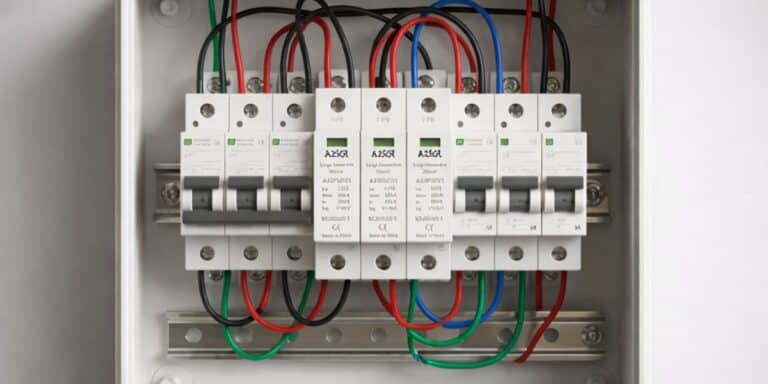
A 3-phase surge protection device is therefore internally arranged to control these modes together. It does not assume that a surge will always reference ground. Many damaging transients in 3-phase equipment appear between phases.
Key Components Inside a 3-Phase Surge Protective Device
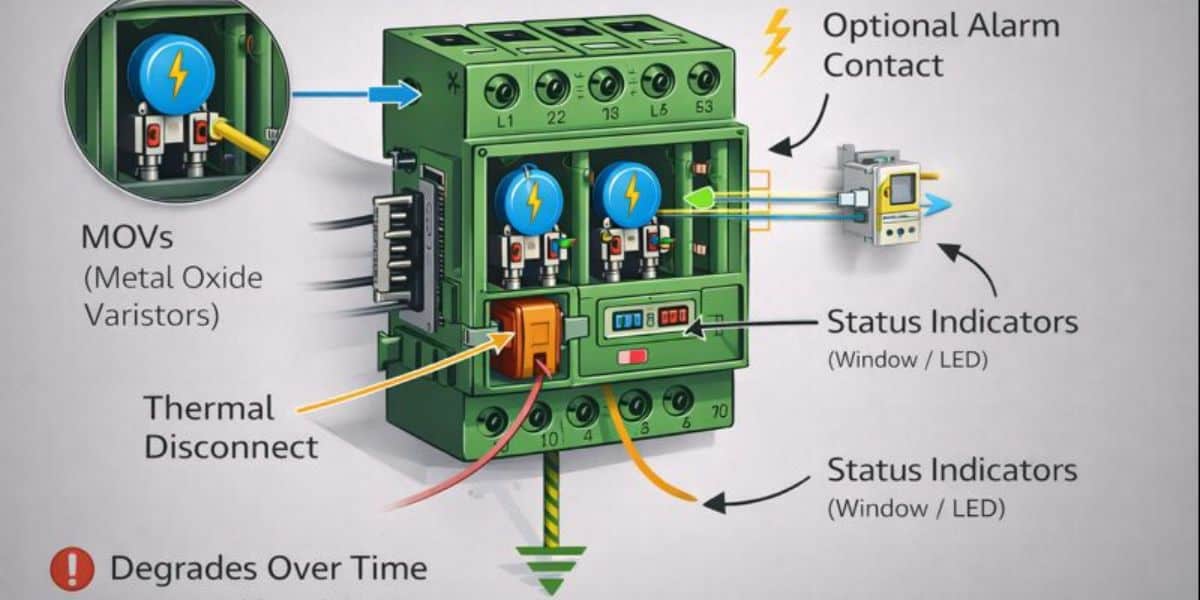
Most modern surge protection devices rely on a small number of proven components, arranged and coordinated for the required voltage and current levels.
The most common active element is the metal oxide varistor (MOV). An MOV behaves like a very high resistance at normal voltage and like a low resistance when the voltage exceeds its threshold. This property is what allows the SPD to switch from “doing nothing” to “diverting current” in a fraction of a microsecond.
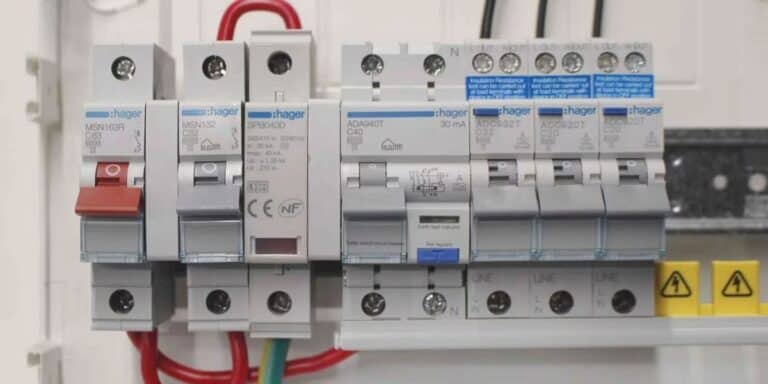
Because MOVs and similar elements can overheat or degrade after many strong surges, a practical device also includes a thermal disconnect or similar protection. This prevents a failed component from remaining connected to the system in an unsafe way. Many devices also include simple indicators, such as a window or LED, to show whether the protection elements are still connected. Some designs provide a remote alarm contact so that the status can be monitored by a control system.
A critical practical point is that these devices are not permanent. Every time they absorb surge energy, a small amount of their capacity is used. Over many events, they slowly degrade. This “consumable” behavior is normal and is the reason why condition indicators exist.
SPD Types in 3-Phase Systems
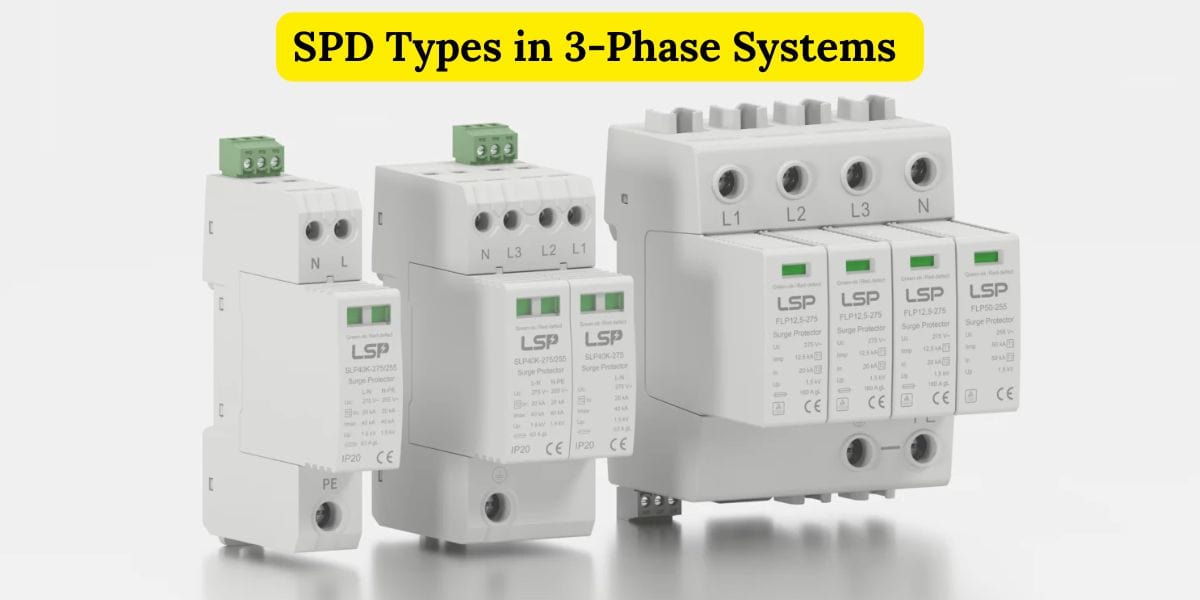
The terms for spd types describe where the device is installed in the power system and what kind of surge environment it is designed to face. They are not quality levels; they are application categories.
- Type 1 surge protection device: Installed at or very near the service entrance, upstream of main distribution. It is intended to handle high-energy surges coming from outside, such as lightning-related events on the supply lines.
- Type 2 surge protection device: Installed in distribution panels, motor control centers, and similar internal boards. It is the most common choice for protecting 3-phase industrial and commercial panels from both incoming and internally generated surges.
- Type 3 surge protection device: Installed close to sensitive equipment. It is not meant to handle large surge energy by itself and depends on upstream devices to reduce the main surge before it sees it.
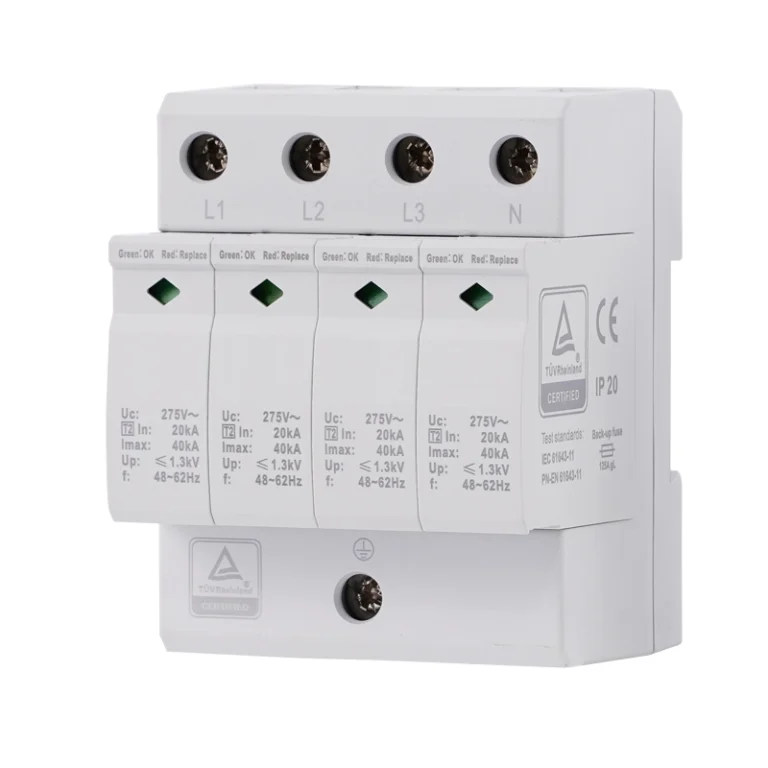
- FDS20C/4-275 Class II
- Designation: Type2
- Classification: Class II
- Protection mode: L→PE , N→PE
- Nominal Voltage Un: 230 Vac/50(60)Hz
- Max. continuous operating voltage Uc (L-N): 275 Vac/50(60)Hz
- Short-circuit withstand capability: 20 kA
- Continuous operating current Ic: <20 µA
- Standby power consumption Pc: ≤25 mVA
- Max discharge current (8/20μs) Imax: 40 kA
- Nominal discharge current (8/20μs) In: 20 kA
- Voltage protective level Up: ≤1.3 kV
- Isolation resistance: >1000 MΩ
- Housing material: UL94V-0
- Degree of protection: IP20
In a complete system, these types are often combined so that each one handles the part of the surge energy it is best suited for.
Where 3-Phase SPDs Reduce Surges the Most
Surge protection works best when it is applied in stages. A device at the service entrance reduces the energy of large incoming surges before they can spread through the building. Devices in distribution panels then reduce the remaining energy and also handle surges created by internal switching. Finally, point-of-use protection can deal with the smaller, faster transients that remain.
Physical installation details matter a lot. The connection between the SPD and the busbars or conductors should be as short and direct as possible. Long leads add inductance, and inductance creates additional voltage during fast current changes. In practice, this means that even a very good surge protection device can perform poorly if it is installed with long, looping wires.
How 3-Phase SPDs Reduce Surges (Staged Protection Overview)
| Installation point | Main surge source | What the SPD does | Typical SPD type used | Practical benefit |
| Service entrance | Lightning and external network transients | Diverts high-energy surges to ground before they enter the facility | Type 1 surge protection device | Reduces stress on the entire internal system |
| Main distribution panels | Combination of incoming and internal switching surges | Further limits residual voltage and handles internally generated events | Type 2 surge protection device | Protects feeders, MCCs, and downstream boards |
| Sub-distribution or local panels | Internal switching surges, load changes | Clamps remaining transients closer to loads | Type 2 or coordinated Type 3 | Lowers exposure of branch circuits |
| At sensitive equipment | Fast, low-energy residual transients | Final voltage limiting at the point of use | Type 3 surge protection device | Reduces nuisance failures and electronic damage |
This table shows the logic of staged protection. No single device is expected to handle everything. Each location reduces part of the surge energy and the peak voltage. By the time a transient reaches sensitive electronics, its amplitude and energy are much lower than they were at the service entrance.
Real-World Performance Factors
The actual performance of surge protective devices in 3-phase systems depends on several practical factors, not only on the device itself:
- The quality of the grounding and bonding system strongly affects how easily surge current can be diverted away from equipment.
- Short, straight connection conductors reduce inductive voltage rise and improve clamping performance.
- Coordination between multiple surge protection devices prevents one device from taking all the stress and aging too quickly.
- In many 3-phase facilities, internally generated switching surges are more frequent than lightning-related events and must be considered in the protection strategy.
Common Mistakes
Several common installation and planning mistakes reduce the effectiveness of surge protection in real systems:
- Using only one surge protection device for an entire facility and assuming it will protect everything equally.
- Installing the device far from the busbar or with long, looping conductors that add unnecessary inductance.
- Ignoring line-to-line surges and focusing only on line-to-ground paths in 3-phase systems.
- Using only a Type 3 device near equipment without any upstream Type 1 or Type 2 protection.
- Assuming that a status indicator showing “OK” means the system is perfectly protected against all possible surges.
Conclusion
In a 3-phase power system, surge protection works by detecting abnormal overvoltage, switching to a low-impedance path, diverting surge current to ground, and limiting the voltage that reaches equipment. It reduces electrical stress rather than completely eliminating surges. Because 3-phase systems have multiple surge paths, protection must cover line-to-line and line-to-ground modes. The most effective results come from correct placement, short connections, and coordination between different SPD types. Properly applied, these devices significantly reduce failure rates and downtime, even though no system can remove all surge effects.
FAQs
Related Posts