English
  简体中文
简体中文  Deutsch
  Español
  Français
  Italiano
  日本語
日本語  한국어
한국어  Polski
  Português
  Русский
  Türkçe
  Nederlands
  Tiếng Việt
  ไทย
ไทย 
LED lighting industry has transformed modern lighting across residential, commercial, industrial, and automotive applications. LEDs are favored for high energy efficiency, long operational life, and compact size. However, their performance depends heavily on PCB design, SMT assembly quality, and solder joint reliability. Even minor assembly defects can lead to flickering, color inconsistency, hotspot formation, or premature failure.
This guide explores
- Strategies for improving PCB LED reliability
- Focusing on SMT best practices, solder joint optimization, and thermal management.
- Help manufacturers to achieve high-quality and durable LED systems.
Common Reliability Challenges in PCB LEDs
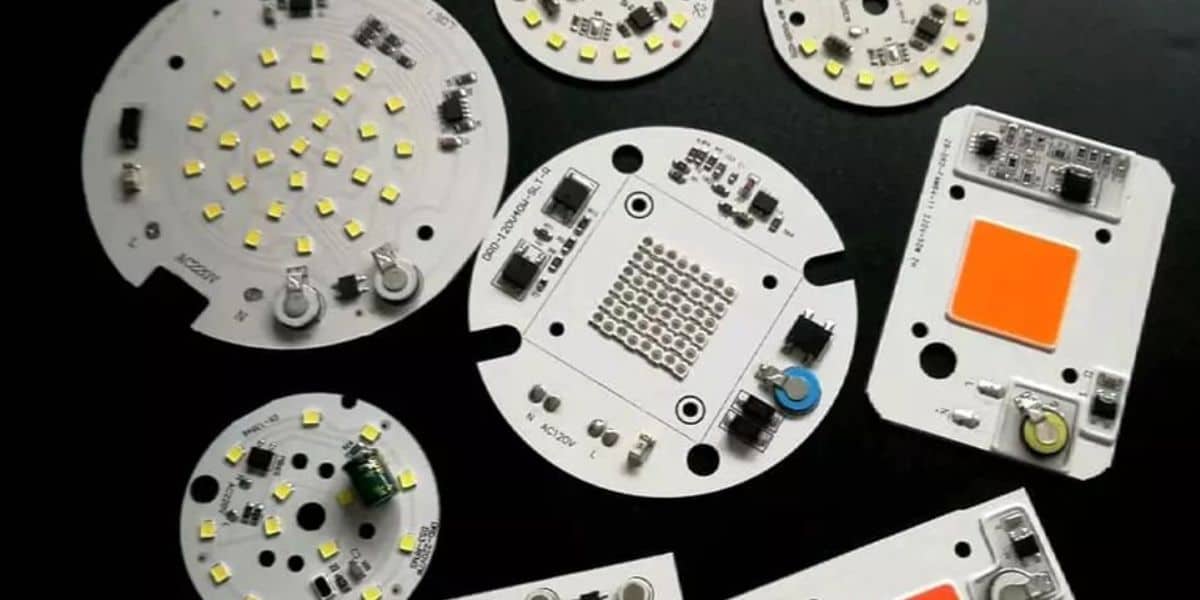
LEDs are highly sensitive to thermal, electrical, and mechanical stresses. Poor design or assembly can compromise performance and lifespan. Typical challenges include:
- Cracked or open solder joints leading to intermittent connections.
- Thermal stress causing PCB warping and component degradation.
- Electromigration damaging copper traces under high current density.
- Mechanical stress from handling, transport, or thermal cycling.
- Misaligned LEDs resulting in uneven light output or visible hotspots.
Table 1: Impact of PCB and SMT Issues on LED Reliability

| Issue | Cause | Effect on LED System |
| Cracked solder joints | Thermal cycling, mechanical stress | Flickering, open circuits |
| Misaligned LEDs | Pick-and-place errors | Uneven light distribution |
| Thermal hotspots | Poor heat dissipation | Lumen depreciation, early failure |
| Electromigration | High current density, thin traces | Trace damage, failure over time |
| Solder voids | Improper paste deposition | Reduced thermal/electrical conductivity |
Surface-Mount Technology (SMT) Considerations
SMT allows precise LED placement, smaller form factors, and improved electrical performance. However, poor SMT practices reduce reliability.
1: PCB Design for SMT
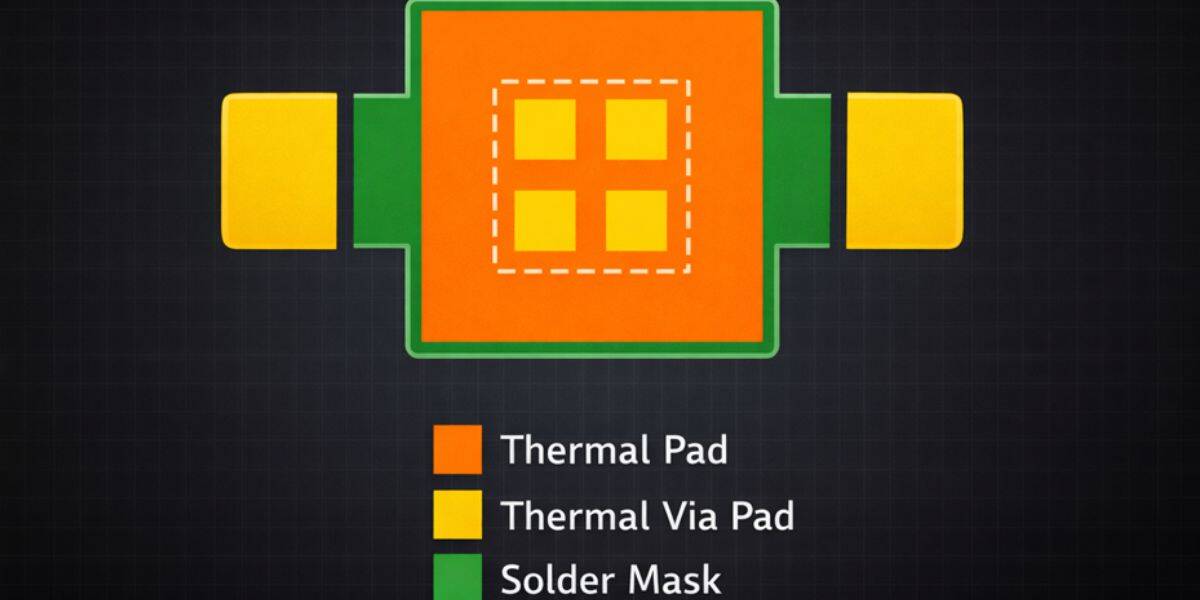
A well-engineered PCB layout supports reliability:
| Design Element | Best Practise |
| Pad size and shape | Ensure proper solder wetting and avoid bridging |
| Thermal pads | Improve heat dissipation for high-power LEDs |
| Solder mask design | Prevent solder spillage and maintain placement accuracy |
| Trace width & copper | Maintain low resistance and handle current efficiently |
2: Pick-and-Place Accuracy
Proper placement is critical for uniform lighting:
- Nozzle selection, placement speed, and pressure must be optimized.
- Misalignment can create optical inconsistencies and mechanical stress.
- Regular calibration reduces placement errors and rework.
3: Solder Paste Application
Solder paste quality and application are vital:
- Low-void, high-quality paste ensures consistent wetting.
- Precision stencils prevent insufficient or excessive solder.
- Flux content must be suitable to prevent oxidation.
Solder Joint Reliability
Solder joints form the mechanical and electrical connection between LEDs and PCBs. Poor soldering is a primary failure cause.
1: Solder Alloy Selection
- SAC305 (SnAgCu) is the lead-free standard.
- Low-melting alloys reduce thermal stress during reflow.
- Alloy must be compatible with PCB finishes (ENIG, HASL, OSP).
2: Reflow Profile Optimization
Reflow temperature must be controlled:
- Preheat, soak, and peak temperatures must match manufacturer recommendations.
- Avoid overheating LEDs or pads to prevent thermal shock.
- Controlled cooling reduces cracking risks.
3: Solder Joint Geometry
Proper joint shape improves strength and conductivity:
- Fillet height should cover the pad without excess solder.
- Smooth, concave fillets reduce void formation.
- Coplanarity ensures stable electrical contact.
4: Inspection and Quality Control
- Automated Optical Inspection (AOI) detects visible defects.
- X-ray inspection identifies hidden voids in thermal pads.
- Regular process audits maintain consistent quality.
Table 2: Recommended Solder Fillet Specifications for LEDs
| LED Type | Fillet Height (mm) | Joint Angle | Notes |
| 0.2–0.5 W LEDs | 0.2–0.3 | 45–60° | Standard surface mount LED |
| 1–3 W LEDs | 0.3–0.5 | 45–70° | High-power LEDs require thermal support |
| >5 W LEDs | 0.4–0.6 | 60–75° | Use thermal vias and metal-core PCB |
Thermal Management for SMT LEDs

Heat is the most critical factor for LED reliability. High temperatures accelerate lumen depreciation and reduce lifespan.
Key Strategies:
- Aluminum-core PCBs improve heat dissipation.
- Thermal vias under LEDs transfer heat to larger copper planes.
- Heatsinks and TIMs are essential for high-power applications.
- Correct LED spacing prevents hotspots and ensures uniform temperature distribution.
Common SMT and Soldering Issues
| Issue | Cause | Solution |
| Tombstoning | Uneven surface tension during reflow | Adjust solder paste volume and profile |
| Solder bridging | Excess solder, misaligned pads | Reduce paste deposition, improve stencil |
| Cold solder joints | Poor wetting, low temperature | Optimize reflow profile and solder type |
| Voiding | Trapped air or flux | Use low-void paste, proper reflow |
Best Practices for Reliable PCB LED Assembly
Design for Manufacturability (DFM): Align pads, traces, and thermal paths with SMT capabilities.
- Use high-quality solder paste: Low-void, consistent alloy with proper flux.
- Controlled reflow profile: Prevent overheating and rapid cooling.
- Inspection: AOI, X-ray, and manual checks.
- Handling: Minimize mechanical stress during transport and assembly.
- Thermal design: Metal-core PCBs, thermal vias, and heatsinks.
- Standardized processes: Documentation ensures repeatability.
Case Study: High-Power LED Module
A high-bay industrial LED module experienced frequent solder joint failures due to thermal cycling.
Improvements implemented:
- Switched to aluminum-core PCBs.
- Optimized solder paste deposition.
- Controlled reflow profiles.
- Added thermal vias under LEDs.
Results:
- 30% reduction in solder joint defects.
- Improved lumen maintenance after 5,000 operating hours.
Emerging Trends in PCB LED Assembly
- Low-temperature soldering alloys reduce thermal stress.
- Lead-free soldering ensures regulatory compliance without reducing reliability.
- AI-assisted inspection detects defects faster than traditional methods.
- Advanced PCB materials with high thermal conductivity improve heat dissipation.
- 3D thermal simulations predict hotspots before production.
Additional Tips for Manufacturers
- Use stencil design software for precise solder paste deposition.
- Conduct thermal simulations to prevent hotspots before production.
- Calibrate pick-and-place machines regularly.
- Maintain controlled humidity and temperature in assembly areas.
- Use protective coatings for high-humidity environments.
Conclusion
PCB LED reliability depends on SMT assembly quality, solder joint integrity, and thermal management. Proper design, soldering, and process control prevent failures, enhance performance, and extend LED lifespan. Manufacturers who implement optimized layouts, high-quality soldering, and advanced thermal strategies achieve reliable, long-lasting LED systems with consistent light output.
For high-performance, durable LED solutions, trust SignliteLED for expertly engineered PCB LED assemblies. We focus on SMT optimization, precise soldering, and advanced thermal management to deliver reliable illumination.
Contact SignliteLED today to enhance your product quality, reduce failures, and ensure superior LED performance.
FAQs
Related Posts