Italiano
  English
  简体中文
简体中文  Deutsch
  Español
  Français
  日本語
日本語  한국어
한국어  Polski
  Português
  Русский
  Türkçe
  Nederlands
  Tiếng Việt
  ไทย
ไทย 
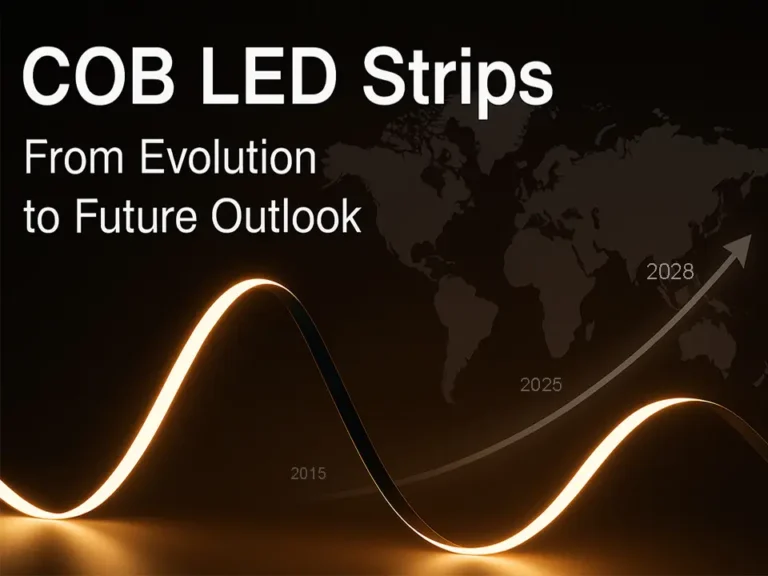
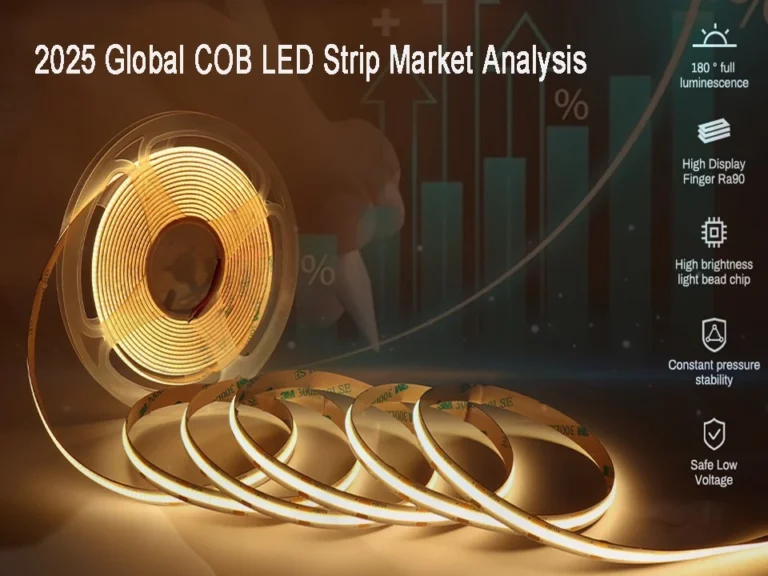
The global COB LED strip market is experiencing rapid growth, projected to reach $5.5 billion by 2030, driven by the increasing demand in retail, commercial, and architectural lighting. With over 400 suppliers in China leading production, the market features a wide range of options in price, quality, and technical performance.
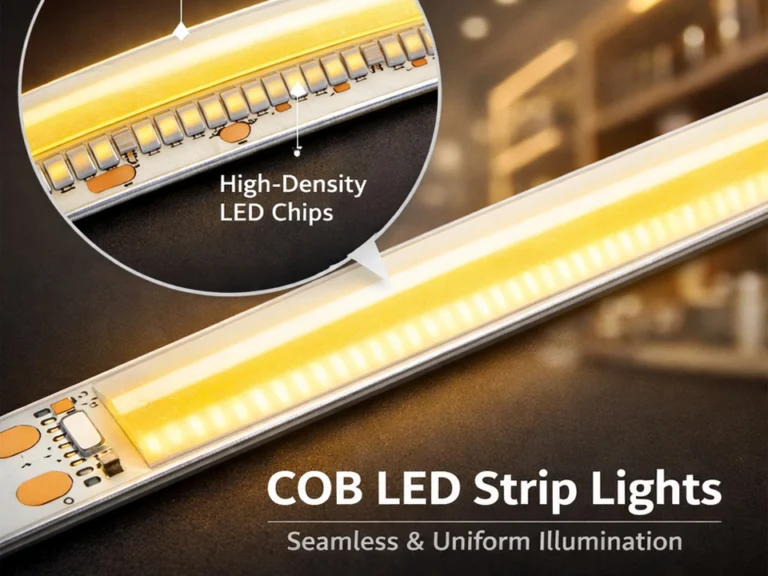
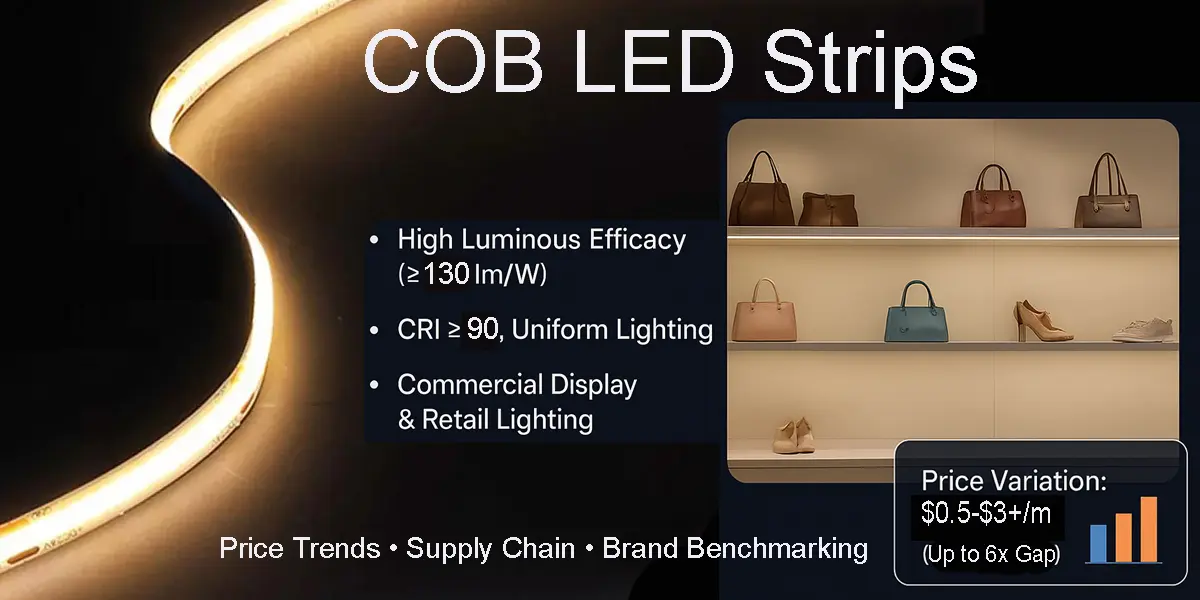
Strisce LED COB offer several advantages over traditional SMD strips: uniform light output, high luminous efficacy (130–150 lm/W), excellent color rendering (CRI 90+), and tight color consistency (SDCM 2–5). These features make them ideal for projects where visual quality, reliability, and energy efficiency are critical.
For buyers, understanding the differences in performance, cost, and procurement strategy between consumer (C-End) and commercial/engineering (B-End) markets is essential. Choosing the right COB LED strip can maximize total value, reduce maintenance costs, and ensure long-term lighting performance.
Key Highlights:
- Market Size & Growth: $2.5B in 2023 → $5.5B by 2030 (CAGR 12%)
- Top Applications: Retail displays, offices, hospitality, residential & DIY projects
- Price Range: $0.5–$5 per meter, depending on quality and specifications
- Technical Specs: Luminous efficacy 130–150 lm/W, CRI 90+, SDCM 2–5
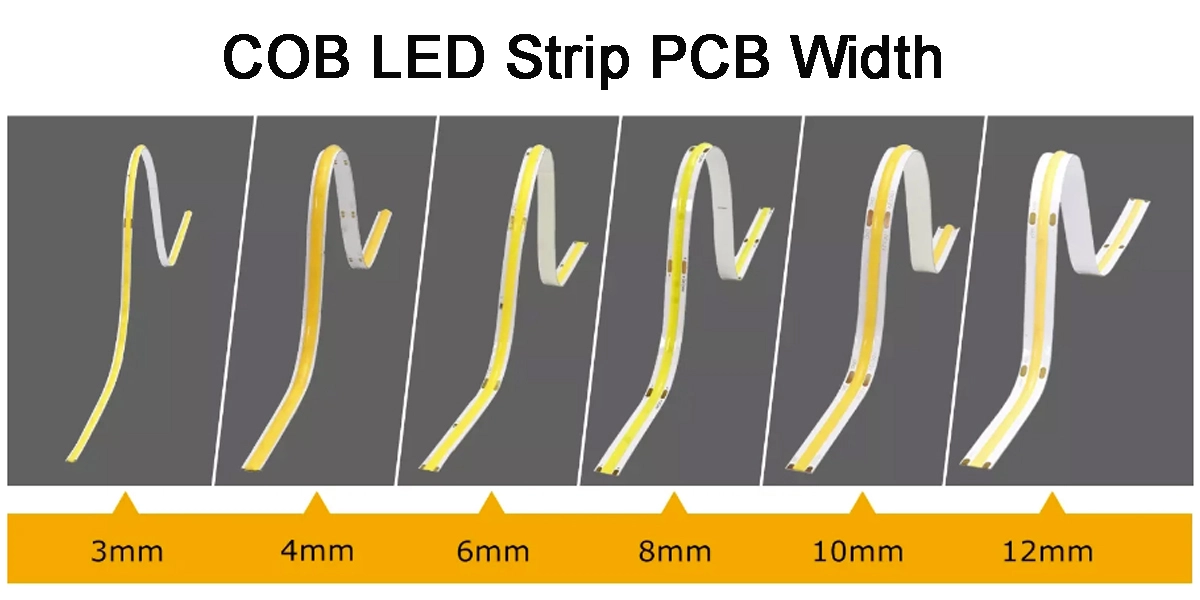
- China’s Advantage: 400+ suppliers providing diverse PCB widths (2.7–14 mm) and LED densities (320–720 chips/m)
This guide is designed for procurement teams, lighting engineers, and project specifiers, providing actionable insights to navigate COB LED pricing, supply chain considerations, and performance optimization. By understanding C-End vs B-End differences, buyers can make data-driven decisions, selecting the most suitable products for their specific application scenarios.
Analisi comparativa dei mercati C-end e B-end e guida all'approvvigionamento
Understanding the differences between consumer (C-End) and commercial/engineering (B-End) COB LED strip markets is crucial for selecting the right product. Each segment has distinct technical expectations, pricing sensitivities, and procurement strategies. Key differences between consumer (C-End) and commercial/engineering (B-End) COB LED strips are detailed in market analysis, including typical CRI, LED density, and SDCM values.
Differenze chiave
- C-End (Consumer / Retail)
- Applications: Small retail displays, home decoration, DIY projects
- Order volume: 10–100 m
- Performance: CRI 80–90, luminous efficacy 120–140 lm/W, SDCM 3–5
- Priority: Low upfront cost, flexible delivery
- Trade-off: Less uniformity, shorter lifespan, larger color variation
- B-End (Commercial / Engineering)
- Applications: Retail chains, supermarkets, offices, architectural projects
- Order volume: 500–10,000 m+
- Performance: CRI 90–95+, luminous efficacy 130–150 lm/W, SDCM ≤2
- Priority: Reliability, total cost of ownership (TCO), long lifespan
- Trade-off: Higher upfront cost, longer lead times
Core Parameter Comparison (5m reel / 24V, 480 LEDs/m, 8–14mm PCB)
| Parametro | Valore tipico di fine CC | valore tipico di fine B | banconote |
| Prezzo al metro | $0.5–$4 | $1.5–$5 | Reflects components, warranty, certifications |
| Larghezza del PCB | 3–10 mm | 8–14 mm | Wider PCBs improve heat dissipation & stability |
| Densità dei LED | 320–480 LEDs/m | 480–720 LEDs/m | B-End prioritizes lumen output & uniformity |
| CRI | 80+ | 90+ (R9>50) | Color fidelity critical for B-End |
| SDCM | ≤5 | ≤3 | Tighter color consistency for batch uniformity |
| Garanzia | 1–3 anni | 3–5 anni | Longer warranty ensures reliability |
| valore fondamentale | Cost-performance & convenience | Reliability & TCO | Highlights market positioning |
Procurement Insights
- Align application to market segment: DIY or small retail → C-End; large chains/architectural → B-End
- Prioritize CRI 90+ and SDCM ≤2 for commercial projects
- Consider warranty and TCO for long-term savings
- Understand market priorities: C-End favors flexibility, B-End emphasizes long-term performance
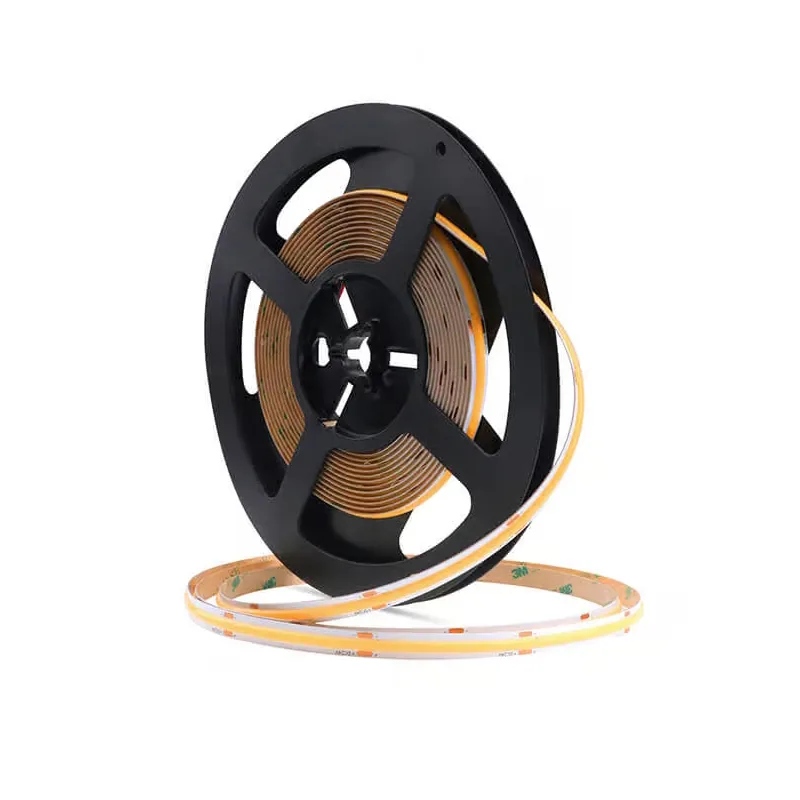
Strisce LED per pannocchia da bobina
Modello: FYX08S480A/C
Qtà LED al metro: 480chip
Larghezza PCB: 8 mm
Opzione colore: 3000K/4000K/6500K
CRI: >80
Tensione di ingresso: DC24V/DC12V
Potenza al metro: 10,5 W/m
Efficienza: 90-110 lumen/watt
Grado IP: IP20
Garanzia: 2 anni
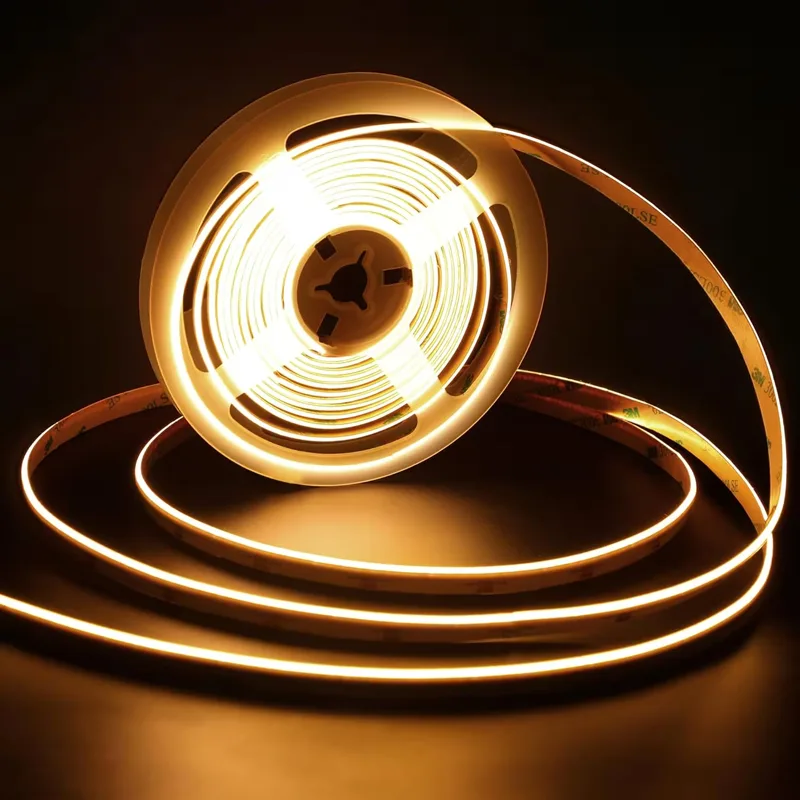
Striscia LED COB a emissione laterale
Modello: FYX08S480C
Qtà LED al metro: 480chip
Larghezza PCB: 8 mm
Opzione colore: 2700K/3000K/4000K/6500K
CRI: >90
Tensione di ingresso: DC24V
Potenza per metro: 10W
Efficienza: 90-110 lumen/watt
Grado IP: IP20
Garanzia: 3 anni
Scenari applicativi e consulenza sugli appalti
Align Applications with Technical Requirements
- Retail Displays: CRI 90+, 480–720 LEDs/m, SDCM ≤2; C-End for small displays, B-End for chains
- Hospitality & Entertainment: CRI 90+, uniform illumination, 130–150 lm/W; boutique → C-End, hotels → B-End
- Architectural / Commercial: CRI 90–95+, 10–14 mm PCB, SDCM ≤2; B-End only
- Office / Workspace: CRI 80–90, 320–480 LEDs/m, SDCM ≤3; small offices → C-End, large offices → B-End
- Residential / DIY: CRI 80–90, 320–480 LEDs/m, SDCM ≤5; mostly C-End
Key Procurement Insights
- Match COB type to project: Standard COB → cost-sensitive areas, Premium COB (SCOB/SOB) → color-critical areas
- Color fidelity and SDCM are critical for retail, hospitality, architectural applications
- Balance cost vs. performance: C-End prioritizes upfront cost, B-End prioritizes TCO and long-term reliability
- Use LED density and PCB width strategically to enhance uniformity and heat dissipation
- Evaluate supplier certifications, capacity, and supply chain stability
Core Application Table
| Aapplicazione | CRI tipico | Densità dei LED | Larghezza del PCB | SDCM | Procurement Recommendation |
| Retail Display | 90+ | 480–720 | 8–12 mm | ≤2 | C-End: small/flexible; B-End: bulk/color-critical |
| Ospitalità | 90+ | 480–720 | 8–12 mm | ≤3 | C-End: boutique; B-End: hotels/chains |
| Architectural | 90–95+ | 480–720 | 10–14 mm | ≤2 | B-End only |
| Ufficio | 80-90 | 320–480 | 5–8 mm | ≤3 | C-End: small; B-End: large offices |
| residenziale | 80-90 | 320–480 | 3–8 mm | ≤5 | Mostly C-End; B-End: high-end smart homes |
Analisi del costo e del valore della catena di approvvi
Understanding Cost Drivers
- LED Chip Quality: Higher CRI and luminous efficacy; +25–50% cost
- PCB Material & Width: Wider/high-Tg PCBs improve heat dissipation and mechanical stability
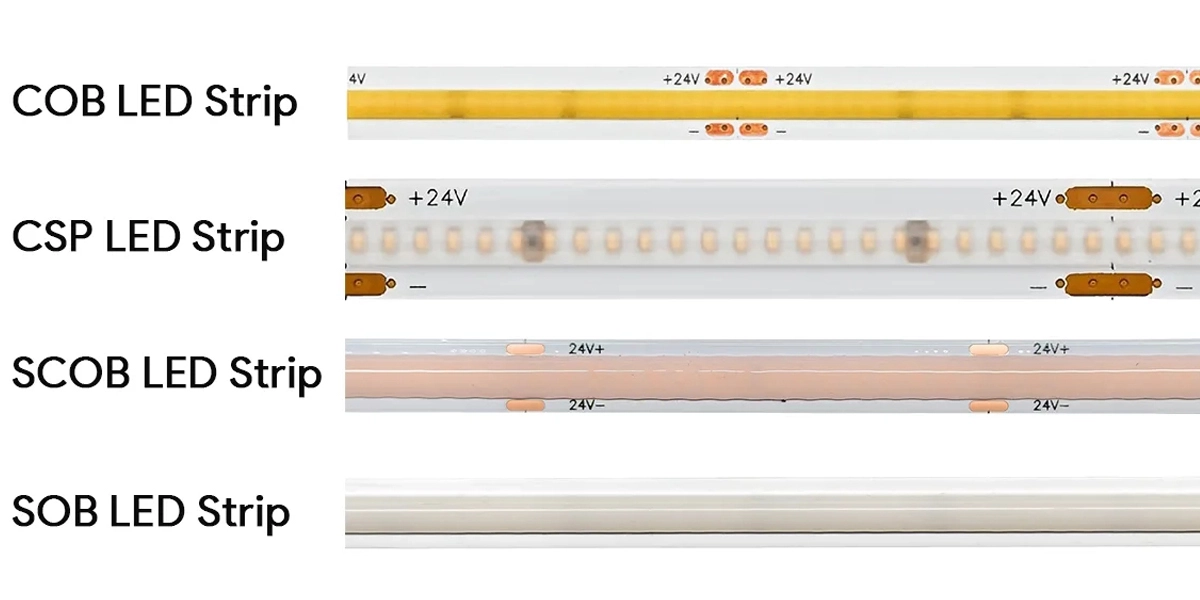
- Encapsulation & Packaging (COB, CSP, SCOB, SOB): Improves uniformity, reduces hotspots
- Labor & Assembly: Automation vs manual affects cost and reliability
- Certification & Warranty: UL, CE, RoHS, extended warranty increase B-End cost but reduce TCO
Core Technology & Cost Comparison Table
| tecnologia | Vantaggi chiave | Applicazioni tipiche | impatto sui costi |
| Standard COB | Uniform light, continuous beam | Small retail, DIY, offices | Base cost |
| CSP | Higher lumen density, better heat dissipation | Retail displays, hospitality | +15–25% |
| frettare | Modular segments, easy customization, uniform color | Large commercial & architectural | +20–35% |
| singhiozzare | Extreme color consistency, SDCM ≤2 | Museums, galleries, premium retail | +30–40% |
Procurement Tip
- C-End: Standard COB or low-end CSP for budget projects
- B-End: SCOB or SOB for color-critical, high-lumen, long-lifecycle projects
Align Cost with Application Needs
- Retail/Hospitality: SCOB/SOB → high CRI, tight SDCM, LED density
- Architectural/Commercial: B-End COB → custom PCB width, extended warranty
- Office/Residential: Standard COB/C-End CSP → cost-effective, small projects
Developing the Optimal Procurement Strategy
Align Technical Specifications with Project Needs
- Retail & Hospitality → SCOB/SOB, high CRI, tight SDCM, high LED density
- Architectural/Commercial → B-End COB, custom PCB width, extended warranty
- Office/Residential → Standard COB/C-End CSP, cost-effective
TCO Considerations
- Performance reliability → reduces maintenance
- Warranty & support → mitigates replacement/downtime risk
- Energy efficiency → lowers operating costs
- Color consistency → tight SDCM reduces rework
Core TCO Comparison Table
| Articolo di costo | opzione economica | opzione professionale |
| Initial Purchase | $500 | $1,500 |
| costo energetico | $800 | $600 |
| Manutenzione | $400 | $0 (entro la garanzia) |
| Downtime Loss | $300 | $0 |
| Total 5-Year TCO | $2,000 | $2,100 |
Supplier Selection & Production Evaluation
- Certifications: UL, CE, RoHS, ISO
- Production capacity: small and bulk orders
- Quality control: LED, PCB, assembly inspection
- Supply chain stability: timely delivery
- OEM/ODM options: flexible custom solutions
Actionable Procurement Insights
- Balance cost, performance, TCO
- Match COB type to application & budget
- Prioritize supplier credentials & stability
- Use cost-performance & TCO analysis to justify decisions
Competitive Landscape & China’s Manufacturing Advantages
Panoramica del mercato globale
- Asia accounts for over 70% of global COB LED strip output, with China as the dominant production hub. According to Verified Market Research, premium B-End strips dominate North America and Europe for high-value, color-critical projects.
- Premium B-End strips dominate North America and Europe for high-value, color-critical projects.
- C-End and mid-tier OEM strips serve APAC and Latin America, focusing on cost-sensitive, volume-driven applications.
China’s Manufacturing Strengths
- Scalable Production – Hundreds of suppliers can handle small to large orders with flexibility.
- Cost Competitiveness – Lower labor, material, and logistics costs support multiple pricing tiers.
- Technical Versatility – PCB widths 2.7–14 mm, LED densities 320–720 chips/m, COB types including CSP, SCOB, SOB.
- Integrated Supply Chain – Chips, PCBs, encapsulation, QC all accessible in one region, shortening lead times.
- International Certifications – Many suppliers compliant with UL, CE, RoHS, facilitating export to strict markets.
Regional Procurement Insights
| regione | Market Trend | Fuoco degli appalti |
| Nord America | High-CRI, certified B-End | Premium strips, strict warranty |
| Europa | Color-critical retail & architecture | High-performance COB, extended service |
| apoap | Volume-driven, cost-sensitive | C-End for secondary areas, B-End for flagship projects |
| America Latina | Mixed demand, emerging market | Flexible pricing, availability-focused |
Takeaway chiave
- China continues to be the global hub for COB LED strips, combining scalable production, technical versatility, cost efficiency, and certifications.
- Buyers can leverage these advantages for volume-driven C-End projects and high-performance B-End applications.
- Selecting suppliers with stable production, QC, and certification experience is critical for project success.
For readers who want to explore more about COB LED strip trends, see:
- Tendenze di illuminazione 2025: il sorprendente aumento delle strisce LED COB
- Tendenze di strisce LED COB
FAQ – COB LED Strip Market & Procurement
Conclusione
The global COB LED strip market has evolved from basic lighting components into critical solutions driving upgrades in retail, commercial, and architectural lighting.
For buyers and engineers:
- Focus on total cost of ownership (TCO), long-term performance, color fidelity (CRI/SDCM), and advanced packaging technologies.
- Leverage China’s mature manufacturing ecosystem for reliable quality, scalable production, and competitive pricing.
Future Outlook (3–5 years):
- COB LED strips will continue to unlock smart lighting, sustainable solutions, high-end retail displays, and large-scale commercial projects.
- Advances in efficacy, color consistency, and smart integration will reshape industry standards and create new value.
Actionable Tip:
Evaluate COB LED strips not only by upfront cost but also by lifecycle performance, CRI fidelity, luminous efficacy, and supplier reliability. High-quality COB technology is a long-term investment in lighting performance and customer satisfaction.
Post correlati