Italiano
  English
  简体中文
简体中文  Deutsch
  Español
  Français
  日本語
日本語  한국어
한국어  Polski
  Português
  Русский
  Türkçe
  Nederlands
  Tiếng Việt
  ไทย
ไทย 
I dispositivi di protezione contro le sovratensioni (SPD) sono classificati come Tipo 1, Tipo 2 e Tipo 3 per riflettere dove operano all'interno di un sistema elettrico e come gestiscono l'energia di sovratensione in quella posizione. Questi tipi non sono intercambiabili. Ciascuno è progettato per un ambiente di sovratensione e una funzione di protezione specifica e funzionano correttamente solo se applicati come parte di un sistema coordinato.
Questo articolo è una guida tecnica comparativa. Non reintroduce i fondamenti della protezione da sovratensioni. Invece, si concentra su come gli SPD di tipo 1, tipo 2 e tipo 3 differiscono per ruolo, capacità e interazione del sistema e come gli ingegneri determinano il corretto posizionamento nelle installazioni elettriche reali.
Framework di confronto: come si differenziano i tipi SPD
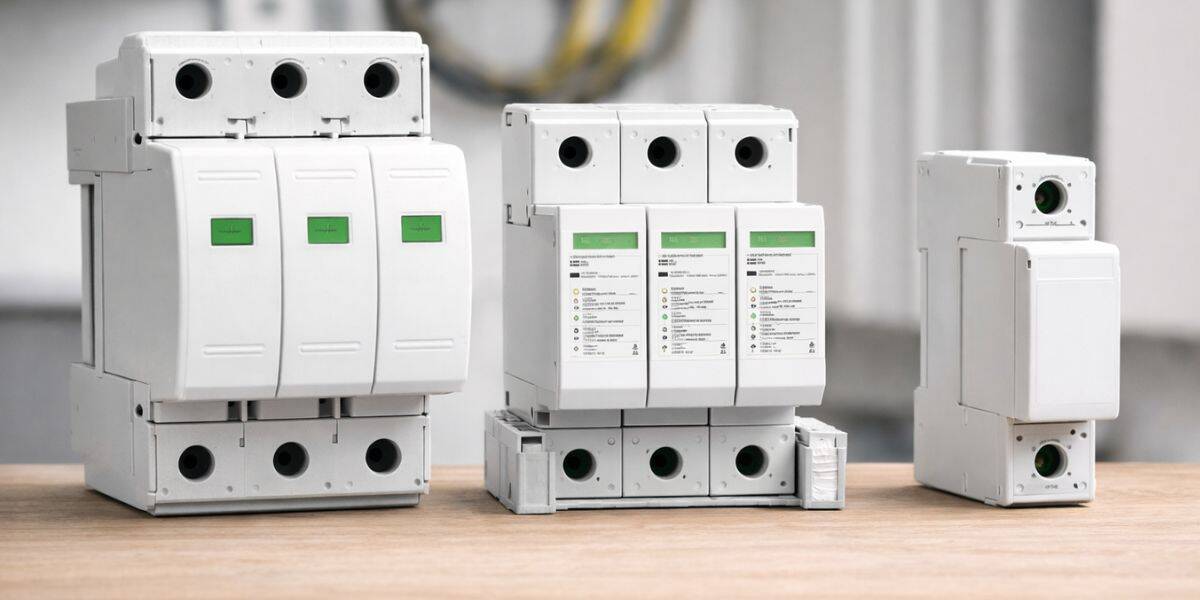
La classificazione SPD non si basa sulla dimensione del prodotto, sul prezzo o sulla robustezza percepita. Si basa sulla posizione di installazione e sull'esposizione prevista per le sovratensioni.
Quando l'energia di sovratensione viaggia attraverso un sistema elettrico, le sue caratteristiche cambiano:
- La magnitudine di sovracorrente diminuisce
- La forma della forma d'onda si evolve
- La tensione residua rimane pericolosa per le apparecchiature sensibili
A causa di questo comportamento, la protezione da sovratensione è divisa in zone. Ogni tipo di SPD è progettato per operare all'interno di una zona specifica, dove può gestire lo stress da sovratensione senza essere sovraccaricato o sottoperformante.
Il confronto tra SPD di tipo 1, tipo 2 e tipo 3 dovrebbe sempre considerare:
- Posizione di installazione
- Livello di energia di sovratensione previsto
- Funzione di protezione primaria
- Dipendenza da altri tipi di SPD
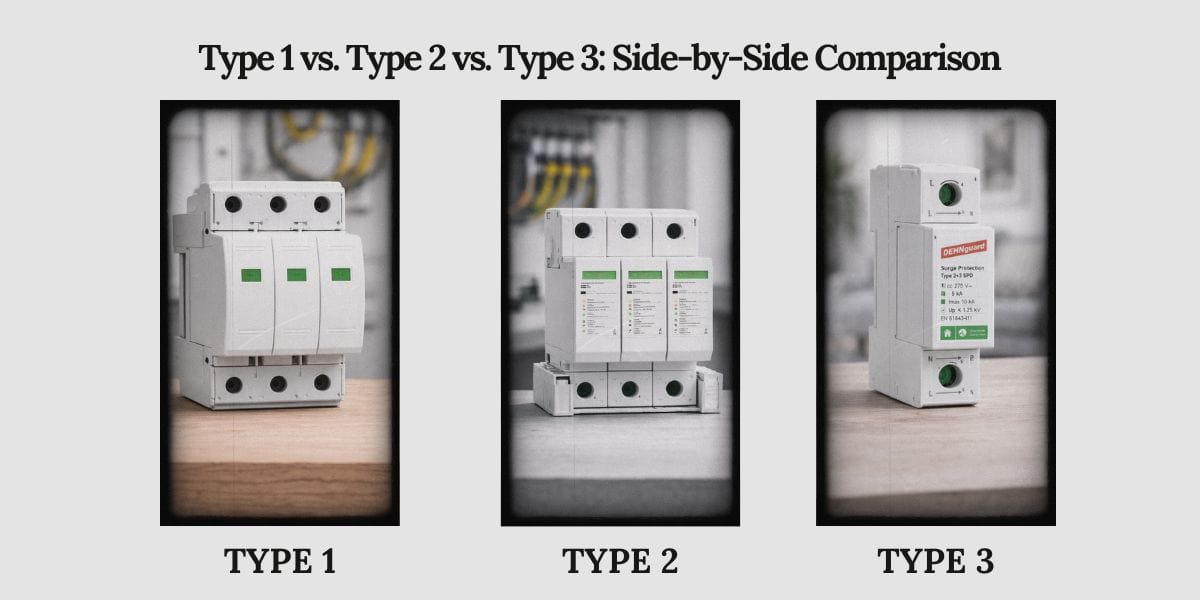
Tipo 1 vs. Tipo 2 vs. Tipo 3: confronto affiancato
| Parametro | Tipo 1 SPD | Tipo 2 SPD | Tipo 3 SPD |
| Posizione tipica di installazione | Ingresso servizio, lato linea di disconnessione principale | Pannelli di distribuzione, lato di carico della disconnessione | Apparecchiature quasi sensibili |
| Livello di esposizione di picco | molto alto | medio-alto | Basso |
| funzione primaria | deviare la corrente di sovratensione in entrata | Pinza residui e picchi di commutazione | Limitazione di tensione fine |
| Gestione della corrente di picco | molto alto | Da moderato a elevato | Basso |
| Precisione di bloccaggio della tensione | Basso | Medio | Alto |
| Idoneità autonoma | No | limitato | No |
| Dipendenza da altri SPD | Richiede il tipo 2 a valle | Spesso abbinato a tipo 1 e tipo 3 | Richiede a monte di tipo 1 o di tipo 2 |
| Rischio tipico se applicato erroneamente | Protezione inadeguata delle apparecchiature | sovraccarico e riduzione della durata della vita | fallimento catastrofico |
Questo confronto evidenzia un principio chiave: Tipi SPD sono definiti per funzione e posizionamento, non dalla classifica delle prestazioni.
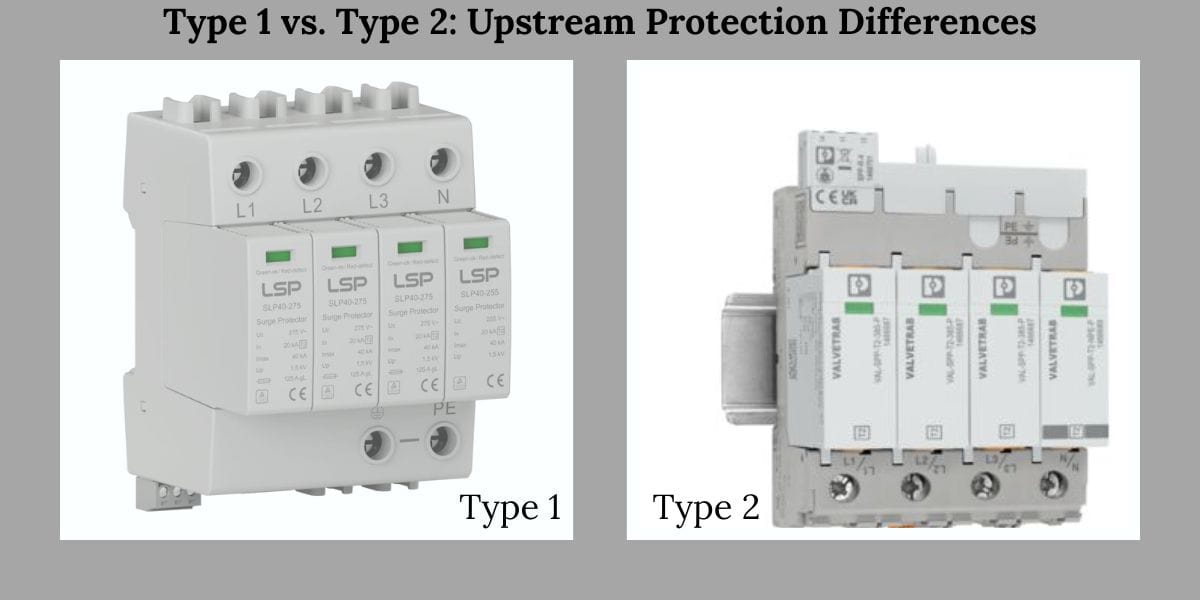
Tipo 1 vs. Tipo 2: differenze di protezione a monte
contesto di installazione
Gli SPD di tipo 1 sono installati all'ingresso del servizio, dove l'esposizione alle sovratensioni esterne è massima. Gli SPD di tipo 2 sono installati a valle, all'interno del sistema di distribuzione interno.
Questa differenza di posizione cambia fondamentalmente ciò che ogni dispositivo dovrebbe gestire.
Profilo energetico di sovratensione
- Digita 1 SPD incontrare impulsi ad alta energia associati a eventi legati ai fulmini che entrano dalla rete di utilità.
- Tipo 2 SPD incontrare energia residua di fulmini e frequenti transitori di commutazione generati internamente.
Poiché i dispositivi di tipo 2 non sono progettati per gli impulsi energetici più elevati, non possono sostituire la protezione di tipo 1 all'ingresso di servizio.
Distinzione funzionale
- Il tipo 1 si concentra sulla deviazione di sovratensione
- Il tipo 2 si concentra sulla limitazione della tensione e sul controllo di sovratensione ripetitivo
L'installazione di una protezione di tipo 2 in ambienti ad alta esposizione consente di spostare lo stress eccessivo su dispositivi che non sono progettati per questo, portando a un degrado prematuro.
Tipo 2 vs. Tipo 3: Distribuzione vs. Protezione a livello di apparecchiature
Prossimità di installazione
Gli SPD di tipo 2 proteggono le reti di distribuzione, mentre gli SPD di tipo 3 proteggono le singole apparecchiature o circuiti. La distanza tra l'SPD e il carico protetto è un elemento di differenziazione critico.
Controllo della tensione residua
Dopo la protezione a monte, la tensione transitoria residua può ancora superare la capacità di resistenza all'impulso dell'elettronica sensibile. Gli SPD di tipo 3 forniscono un raffinamento della tensione fine nel punto di utilizzo.
Limitazione della gestione dell'energia
Gli SPD di tipo 3 non sono progettati per assorbire l'energia di sovratensione. Se esposti direttamente a eventi ad alta energia, possono fallire rapidamente. Per questo non devono mai essere utilizzati senza protezione a monte.
Il confronto tra il tipo 2 e il tipo 3 non riguarda quale sia "migliore", ma dove la precisione sostituisce la manipolazione dell'energia.
Perché nessun singolo tipo SPD è sufficiente
La protezione contro le sovratensioni non è additiva. L'installazione di più dispositivi dello stesso tipo non fornisce una protezione a strati.
Ogni tipo di SPD funziona in modo ottimale solo all'interno del range di sollecitazione previsto:
- Il tipo 1 riduce l'energia di sovratensione in entrata
- Il tipo 2 gestisce la sovratensione rimanente
- Tipo 3 Limita tensione residua finale
Il tentativo di eseguire tutte queste funzioni con un unico dispositivo comporta una protezione compromessa, una durata ridotta o entrambi.
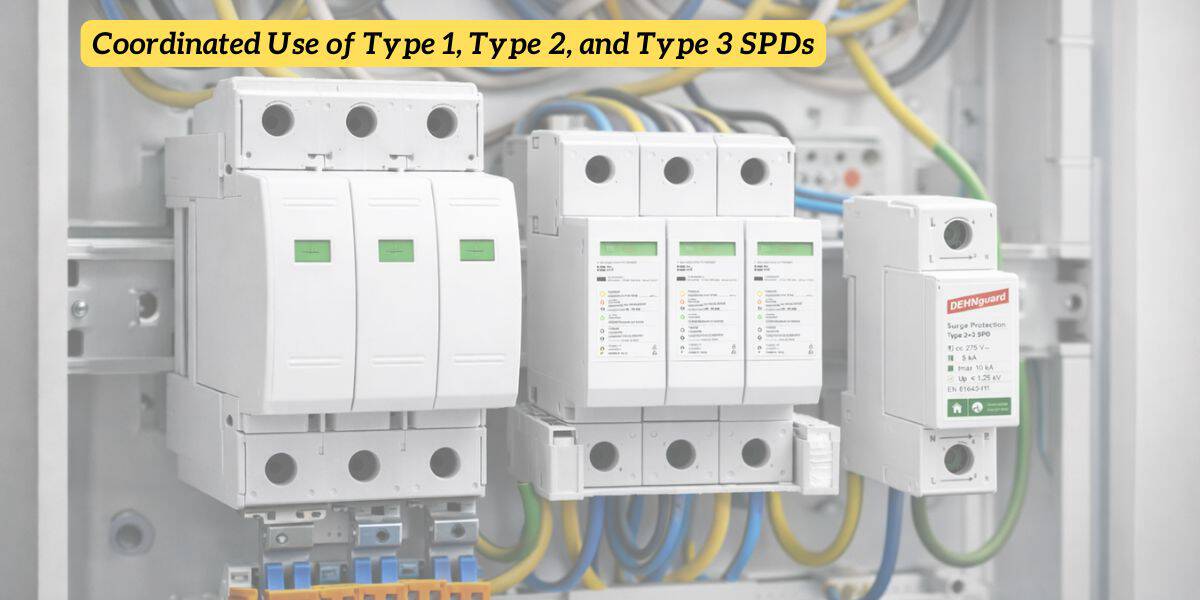
Uso coordinato di SPD di tipo 1, tipo 2 e tipo 3
Come funziona il coordinamento
Un sistema di protezione contro le sovratensioni coordinato rispecchia il modo in cui si propaga l'energia di sovratensione:
- Tipo 1 Devia gli impulsi ad alta energia all'ingresso del sistema
- Tipo 2 Pinze rimanenti all'interno del sistema di distribuzione
- Tipo 3 Protegge i carichi sensibili dalla tensione residua
Ogni fase riduce lo stress sul successivo.
Perché il coordinamento conta più della quantità
Un coordinamento improprio può causare:
- Condivisione di energia irregolare
- Surriscaldamento localizzato
- Comportamento di fallimento imprevedibile
Il corretto posizionamento e la separazione dell'impedenza contano più dell'installazione di dispositivi aggiuntivi.
Scenari di confronto basati su applicazioni
Ingresso servizio con esposizione esterna
Le strutture con linee aeree o infrastrutture elettriche esterne richiedono una protezione di tipo 1 all'ingresso del servizio, seguita dalla protezione di tipo 2 a valle.
Sistemi di distribuzione commerciale e industriale
Le operazioni di commutazione dominano l'attività di sovratensione. Gli SPD di tipo 2 forniscono il ruolo di protezione primaria, spesso coordinati con dispositivi di tipo 1 a monte.
Sistemi elettronici sensibili
I controllori di automazione, le interfacce di strumentazione e di comunicazione richiedono una protezione di tipo 3, ma solo quando l'energia di sovratensione a monte è già stata ridotta.
Sistemi monofase vs. trifase
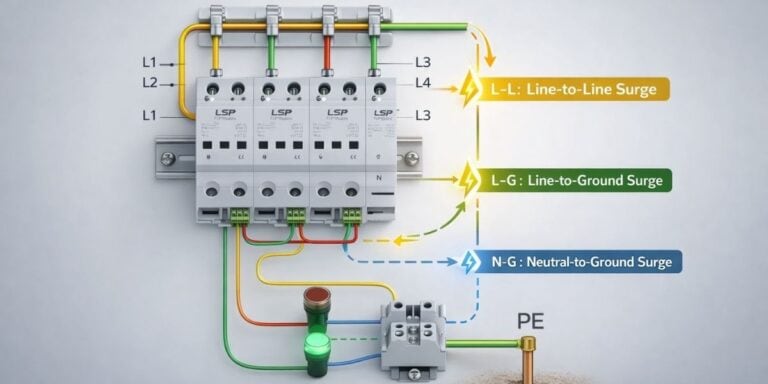
una 3 fase Dispositivo di protezione contro le sovratensioni deve gestire i transitori da fase a fase e fase-terra in modo coerente. La selezione del tipo SPD deve essere allineata alla configurazione del sistema, non solo alla tensione.
errori di confronto comuni che fanno gli ingegneri
- Supponendo che i dispositivi di tipo 3 possano funzionare autonomo
- sovradimensionamento di un SPD invece di coordinare più tipi
- Installazione di più dispositivi di tipo 2 senza considerare l'impedenza
- Trattare i tipi di SPD come livelli di prestazione piuttosto che ruoli funzionali
Questi errori riducono l'efficacia della protezione e aumentano il rischio di manutenzione.
contesto degli standard
Standard come UL 1449 e IEC 61643 definiscono le condizioni di test e i criteri di classificazione per i tipi SPD. Supportano un confronto coerente, ma non sostituiscono il giudizio ingegneristico a livello di sistema in merito al posizionamento e al coordinamento.
Conclusione
I dispositivi di protezione contro le sovratensioni di tipo 1, di tipo 2 e di tipo 3 svolgono ruoli distinti e complementari all'interno di un sistema elettrico. Le loro differenze sono definite dalla posizione di installazione, dall'esposizione alle sovratensioni e dalla funzione di protezione, non dalla classe del prodotto o dalla posizione di marketing.
Un'efficace protezione da sovratensioni dipende dal coordinamento, non dal sovradimensionamento o dalla ridondanza. Quando ogni tipo di SPD viene applicato dove funziona meglio, l'energia di sovratensione viene progressivamente controllata, la sollecitazione dell'attrezzatura viene ridotta e l'affidabilità del sistema a lungo termine migliora.
Domande frequenti
Post correlati