2011년부터 간판 및 LED 스트립 조명 공장

2011년부터 간판 및 LED 스트립 조명 공장

상업용 조명 프로젝트를 위한 LED 조명 시트를 선택하는 방법

Choosing the right LED light sheet for a commercial lighting project requires evaluating measurable technical criteria rather than relying on general performance claims. Procurement teams should assess lumen output per square meter, CRI levels (typically ≥80 or ≥90 for retail), consistent color temperature (Kelvin stability), voltage compatibility (commonly 24V systems), maximum-to-minimum brightness uniformity, and thermal management structure. Incorrect LED spacing, insufficient heat dissipation, or mismatched driver capacity can result in visible hotspots, voltage drop, premature lumen depreciation, and expensive rework after installation.

Commercial applications also demand predictable integration behind acrylic, fabric, or architectural materials with limited depth. If illumination strength, diffuser distance, or power loading is not calculated properly, the system may fail to achieve uniform brightness across large surfaces.

This article explains how to choose LED light sheets for commercial lighting projects by detailing key technical specifications, performance benchmarks, application-based selection criteria, and supplier evaluation standards required for professional B2B projects.

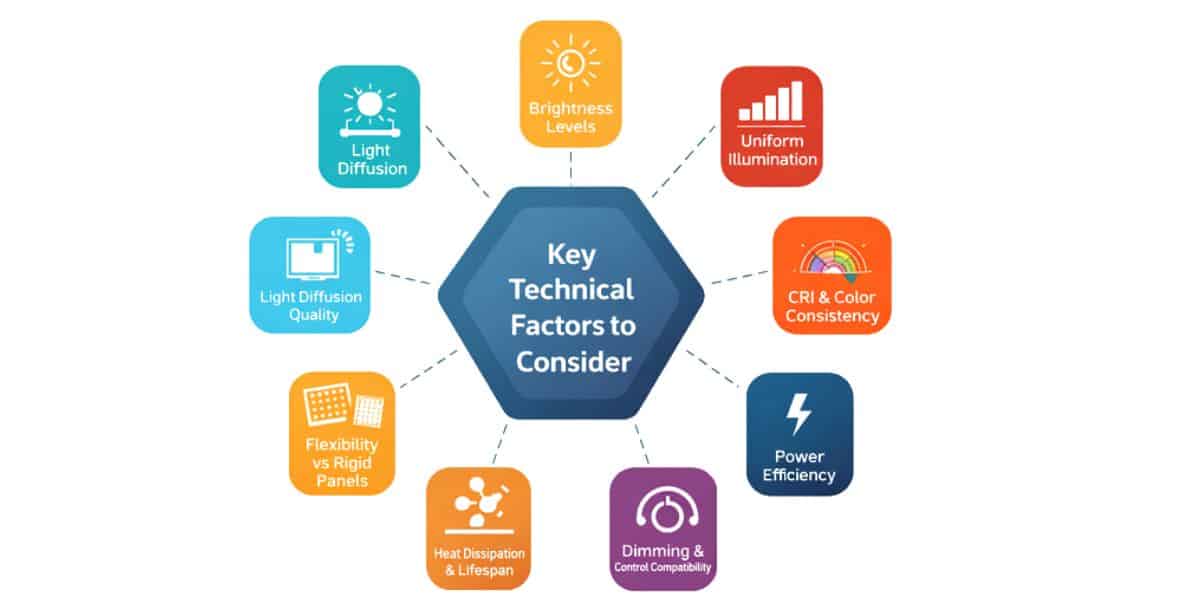
Key Technical Factors to Consider

LED 라이트 시트

Selecting a LED light sheet requires a structured review of measurable performance criteria, not just general brightness or flexibility claims. In commercial projects, specifications such as lumen output per square meter, CRI rating, voltage configuration, thermal limits, and modular connection capacity directly determine whether the system will perform reliably over years of operation.

Brightness Levels

Commercial applications often require significantly higher output than residential settings. A high brightness LED light sheet should typically deliver between 3,000–8,000 lumens per square meter, depending on application depth and diffuser type.

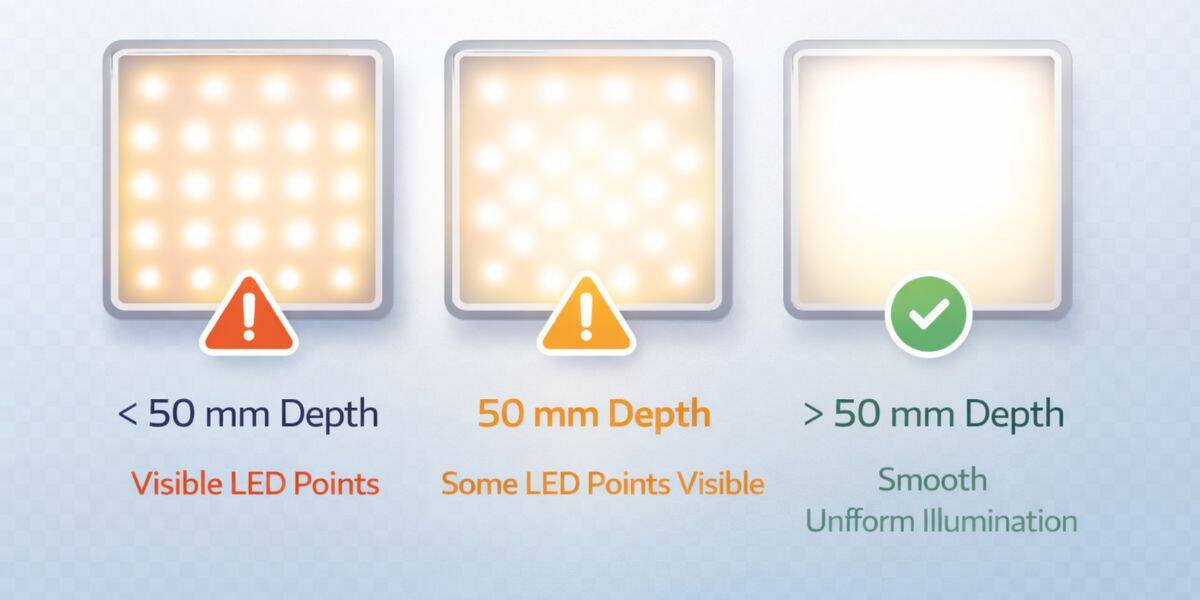
For shallow lightboxes (under 50 mm depth), higher output is required to maintain surface brightness without visible LED points. Storefront displays exposed to daylight may require higher luminance to compete with ambient light levels, while interior architectural features may require controlLED brightness to avoid glare or over-illumination.

Output specifications should always be evaluated after accounting for diffuser light loss, which can reduce visible brightness by 20–40% depending on material thickness.

Uniform Illumination Performance

LED 라이트 시트

Uniformity depends on LED spacing density, optical layout, and the reflective characteristics of the mounting cavity. A uniform illumination LED light sheet should achieve a maximum-to-minimum luminance ratio close to 1.2:1 to 1.5:1 for professional display environments.

When evaluating uniformity, assess:

• Maximum-to-minimum luminance ratio across the panel

• Required viewing distance and observer angle

• Compatibility with specific diffuser materials and thickness

• Recommended minimum installation depth from sheet to diffuser

Poor spacing design can result in visible hotspots, especially at shallow depths below 40 mm.

Light Diffusion Quality

Even with sufficient brightness, uneven optical spread can cause shadowing or LED dot visibility. Commercial-grade systems are engineered to perform effectively at defined installation depths (for example, 30–80 mm cavity depth depending on configuration).

Specification sheets should indicate recommended diffuser distance to ensure uniform performance.

CRI and Color Consistency

Color Rendering Index (CRI) directly affects how products, fabrics, and branding graphics appear under illumination. Retail environments typically require CRI ≥80, while premium retail, cosmetics, or art installations often specify CRI ≥90.

Color bin consistency is equally critical. LED sheets used across multiple installations should maintain tight bin control (for example, within 3-step MacAdam ellipse) to prevent visible color variation between batches.

Power Efficiency

Energy efficiency should be evaluated using lumens per watt (lm/W) and system-level driver efficiency. Commercial projects typically target 100–150 lm/W depending on brightness class and configuration.

Driver efficiency, voltage drop over long runs, and power supply compatibility must also be reviewed to prevent uneven brightness across larger installations.

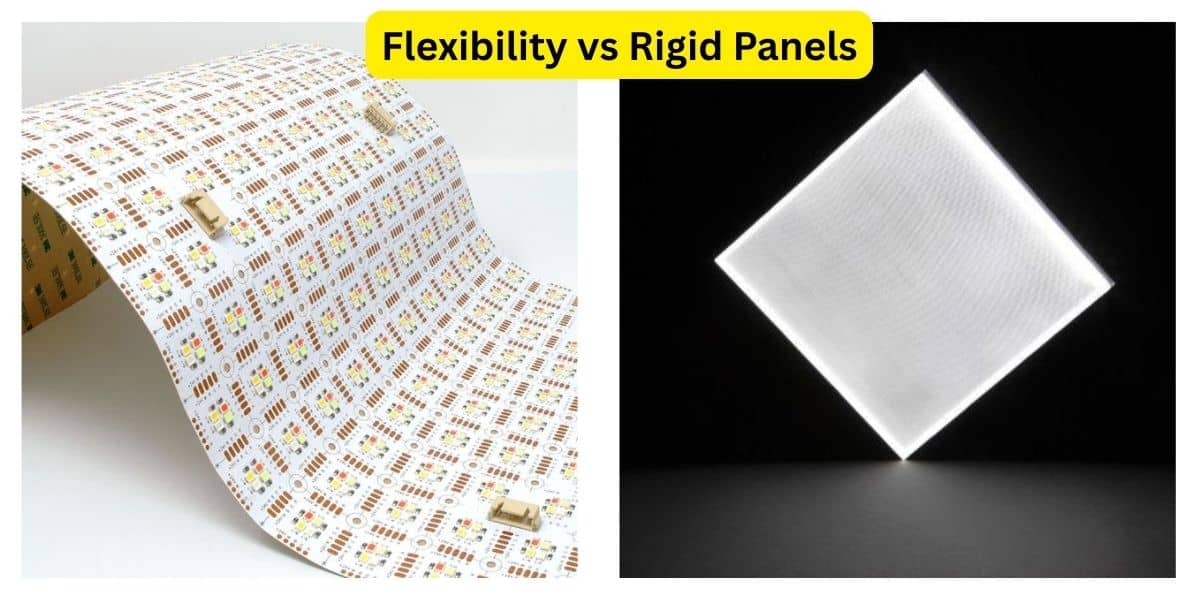
Flexibility vs Rigid Panels

LED 라이트 시트

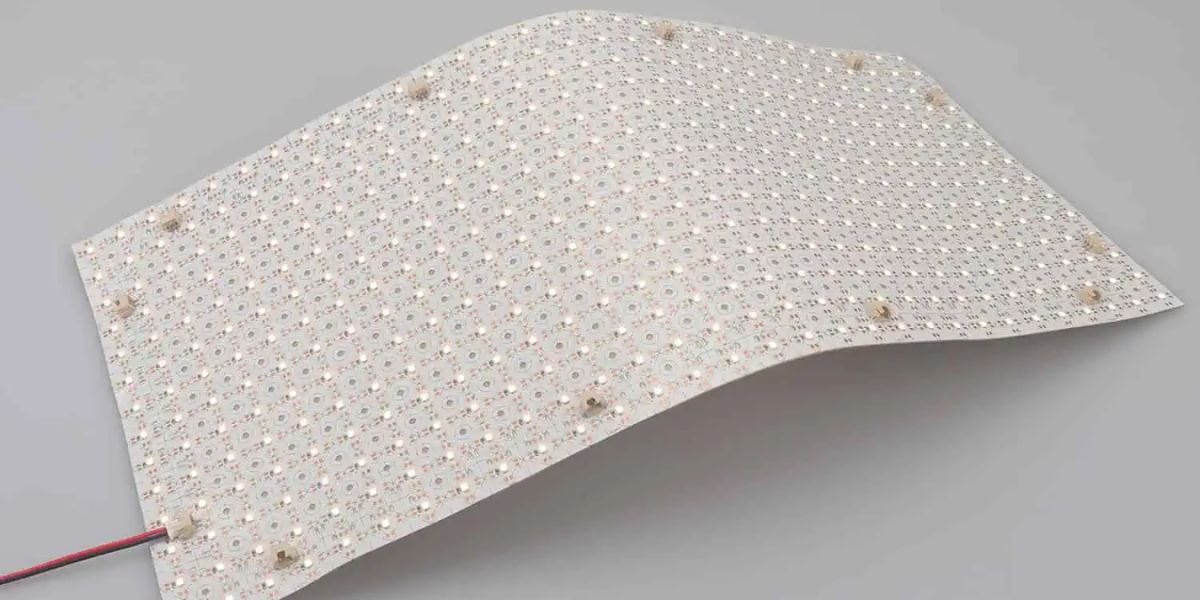
A flexible LED light sheet is suitable for curved surfaces, cylindrical columns, and irregular architectural forms. However, rigid panels may offer better mechanical stability for large flat installations exceeding 1 meter in length.

Selection should consider:

• Mounting surface stability

• Structural support availability

• Required curvature radius

• Long-term mechanical durability

Flexibility should not compromise thermal performance or electrical reliability.

Dimming and Control Compatibility

Commercial projects frequently require integration with 0–10V, PWM, DALI, or other control systems. The LED light sheet must be compatible with constant-voltage drivers matching system voltage (commonly 24V).

Smooth dimming without flicker, particularly below 20% brightness, is critical in hospitality and architectural environments.

Heat Dissipation and Lifespan

Thermal management directly affects lumen maintenance and lifespan. Commercial systems should specify operating temperature range and projected lumen maintenance (for example, L70 at 50,000 hours).

Heat spreading substrates, aluminum backing layers, and proper airflow spacing reduce premature degradation.

Panel Size and Modular Scalability

A LED light sheet panel system should support modular linking without visible brightness variation between sections. Seamless electrical connectors and consistent current distribution are essential for large walls or retail backdrops.

Poor modular design can cause voltage drop, leading to uneven brightness across extended installations.

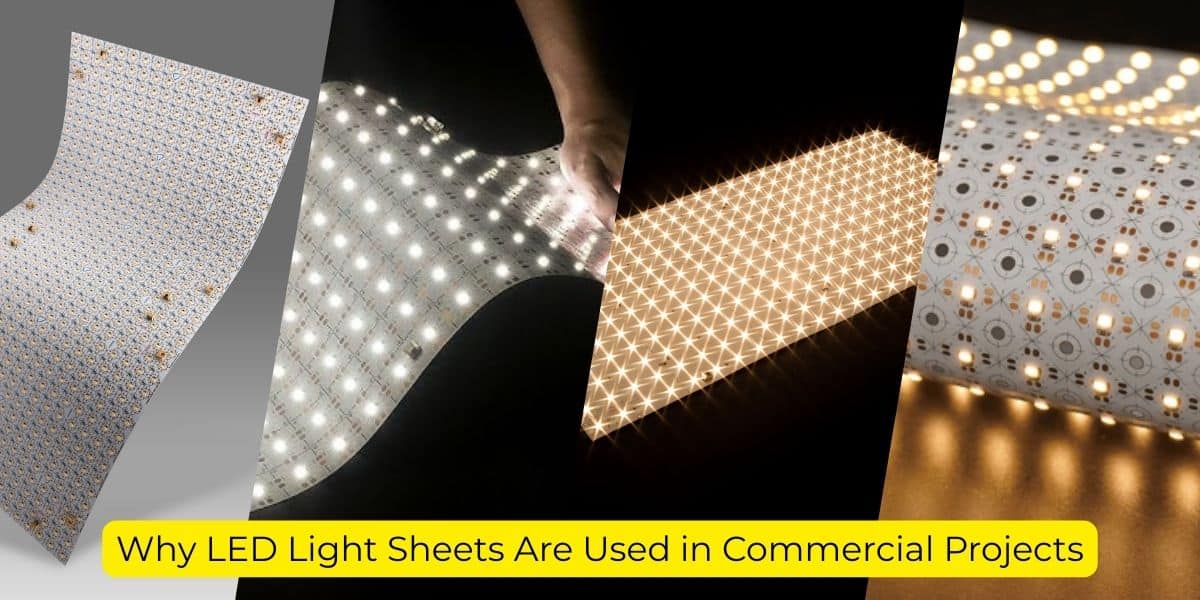
Why LED Light Sheets Are Used in Commercial Projects

LED 라이트 시트

In commercial lighting projects, LED light sheets are selected not for aesthetics alone, but for measurable performance advantages in controlLED backlighting environments. Their use is driven by three operational requirements: uniform luminance distribution, reduced installation depth, and long-term thermal stability.

Uniform Illumination Performance

Uniformity is a technical requirement in retail, signage, and architectural backlighting. Inconsistent light distribution results in visible hotspots, shadow bands, and color distortion behind acrylic or fabric diffusers. A properly engineered uniform illumination LED light sheet maintains tight luminance variation across the surface, typically targeting a max-to-min brightness ratio within 1.3:1 to 1.5:1 depending on viewing distance and diffuser thickness.

In commercial signage and display systems, this directly affects brand color accuracy and visual consistency. Even minor luminance imbalance becomes visible when backlighting translucent graphics, particularly in large-format installations.

Slim Construction and Integration Depth

Commercial installations often operate under strict depth constraints. Traditional fluorescent lightboxes or framed LED panels may require 50–100 mm installation depth. In contrast, a LED light sheet panel can operate effectively within significantly shallower cavities, often under 30 mm depending on brightness level and diffuser type.

This reduced depth allows:

• Thinner display cabinets

• Lighter aluminum framing systems

• Reduced material consumption

• Greater architectural flexibility

Depth efficiency becomes especially critical in retail shelving, window displays, and wall-integrated branding systems.

Thermal Management and Operational Reliability

Heat accumulation is one of the primary causes of LED lumen depreciation and premature failure. Commercial LED light sheet panels are engineered with distributed LED spacing and conductive substrate layers to reduce localized thermal concentration.

Proper thermal distribution supports:

• Stable lumen maintenance over extended operating hours

• Reduced color shift over time

• Lower driver stress

• Extended service intervals

In high-duty commercial environments where systems may operate 10–14 hours daily, thermal stability directly influences lifecycle cost and maintenance planning.

Functional Differences from Standard LED Panels

Standard LED ceiling panels are typically manufactured in fixed dimensions and optimized for grid-based ceiling installation. They are not designed for precision backlighting applications where:

• Custom cut dimensions are required

• Irregular shapes must be illuminated

• Installation depth is limited

• Light must be evenly distributed across signage surfaces

By contrast, LED lighting sheet panels are engineered for modular expansion, cut-to-size adaptability, and controlLED backlighting performance in commercial environments.

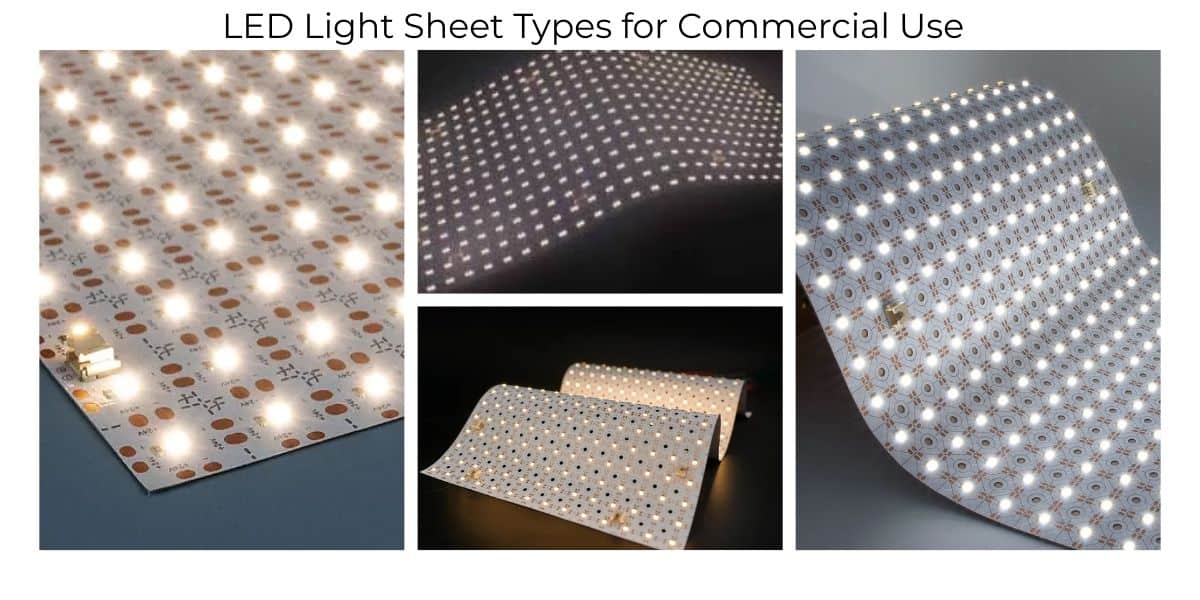
LED Light Sheet Types for Commercial Use

LED 라이트 시트

다른 LED sheet light types serve different performance goals in commercial environments. Selecting the correct type depends on application requirements, control needs, and branding objectives.

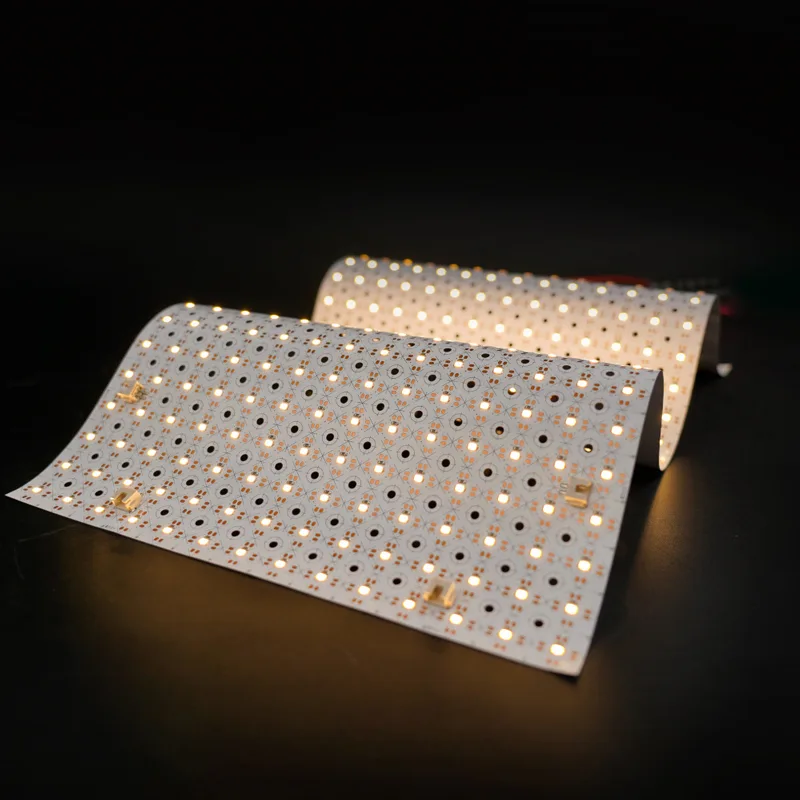
흑백 LED 시트

LED 라이트 시트
  • 주요 모델: PQx4925T242C
  • LED Iype: SMD2835
  • LED QIY: 242pcs/plece
  • 입력 전압: 직류24V
  • Power: 28W/plece
  • Coiors:2700K/3000K/4000K/6000K
  • 루멘: 2800Im/plece
  • CRL:80/90
  • Size(Lx W):490 mmx245 mm
  • 최소 절단 단위: 22.3mm x 22.3mm
  • 디밍 가능:
  • 빔 각도:120°
  • IP 등급: IP20/IP54
  • 수명:50,000시간
  • 보증: 3년
  • 인증: CE, RoHS
  • The back has SM double-sided adhesive tape

Monochrome LED sheets emit a single fixed color temperature (for example, 3000K, 4000K, or 6500K). These are commonly used in retail shelving, display cabinets, and lightboxes where consistent white illumination is required.

They are typically:

• More cost-efficient

• Easier to control

• Suitable for large-scale rollouts

Monochrome systems are ideal when color consistency and budget control are priorities.

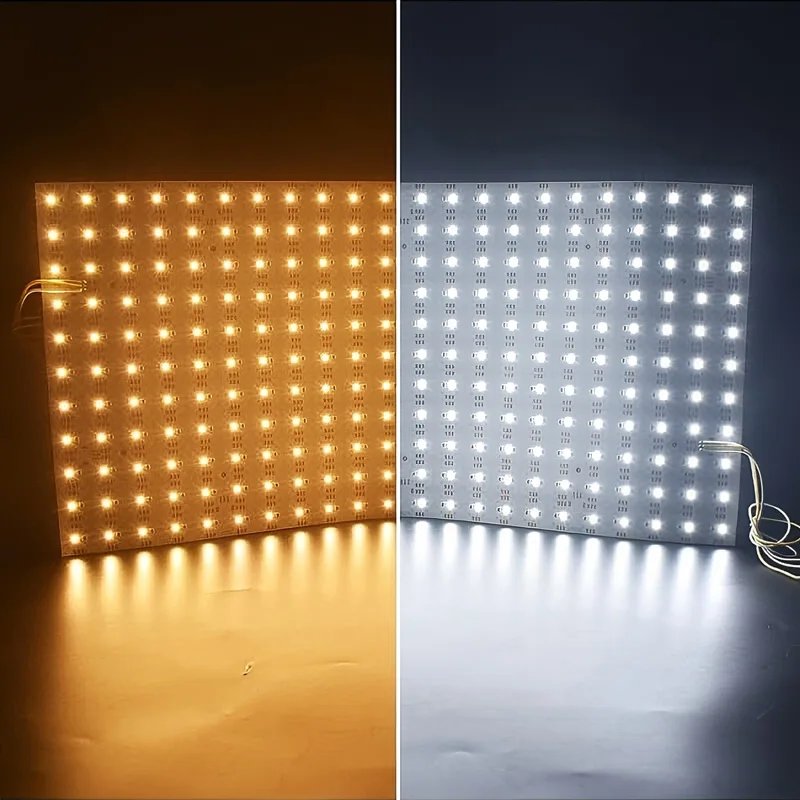
조정 가능한 흰색 LED 시트

LED 라이트 시트
  • 크기(L x W ): 250mmx250mm/490mmx245mm
  • LED 유형: 2835 SMD
  • LED 수량: 200pcs/484pcs
  • 작동 전압: DC 24V
  • Power: 16W/40W
  • 색온도 조절 가능 범위: 2700K-6500K
  • 광속: 1600LM/3800LM
  • 크리: >90ra
  • 최소 절단 길이: 25mmx25mm/22.3mmx22.3mm
  • 디밍 가능: 예
  • 빔 각도: 120°
  • 방수 레벨: IP20 비방수, IP54 방수
  • 보증: 3년

Tunable white LED sheets allow adjustment between warm and cool white tones. This flexibility supports environments where lighting atmosphere must adapt throughout the day.

They are commonly used in:

• Showrooms

• Hospitality spaces

• Premium retail environments

Tunable systems increase project cost but provide greater environmental control and user experience customization.

RGB LED 시트

LED 라이트 시트
  • 크기(L x W ): 490mmx245mm
  • LED 유형: 5050 SMD
  • LED 수량: 128 개
  • 작동 전압: 직류24V
  • Power: 45w
  • 색상: RGB
  • 디밍 가능:
  • 절단 길이: 39.6mm
  • 빔 각도: 120°
  • Waterproof level: IP20 비방수, IP54 방수
  • 수명: >35,000시간
  • 보증: 3년

RGB LED sheets enable dynamic color changes for branding and decorative applications. They are often selected for experiential retail, signage, and architectural features where color variation is required.

However, RGB systems:

• Require advanced drivers

• Need proper control integration

• Demand more precise installation planning

They are not typically used for standard white backlighting projects.

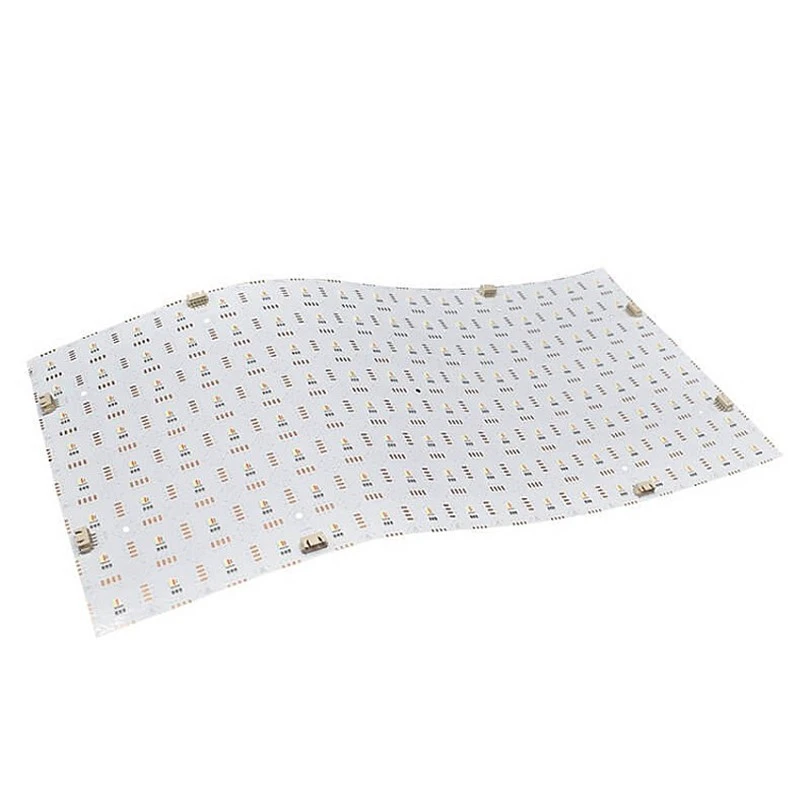
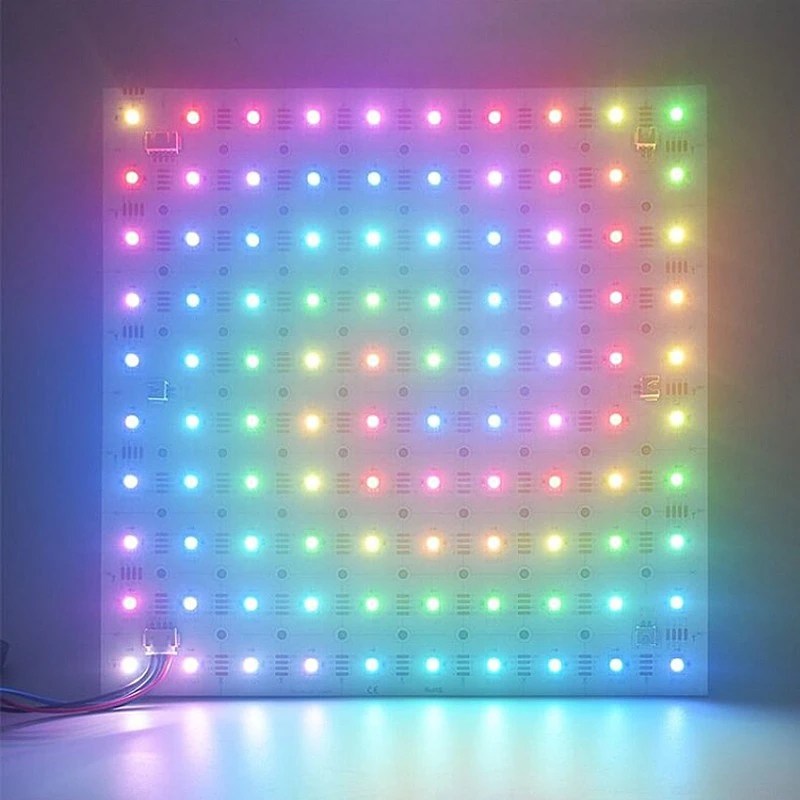
픽셀 LED 시트

LED 라이트 시트
  • 크기(L x W ): 250mmx250mm
  • LED 유형: 5050 SMD
  • LED 수량: 100개
  • IC type: Built-in WS2812
  • IC 수량: 100개
  • 색상: RGBIC
  • 작동 전압: DC 12V
  • 현재: 1.08a
  • Power: 13w
  • 광속: 20LM/LED
  • 빔 각도: 120°
  • 방수 레벨: IP20 비방수, IP54 방수
  • 수명: >35,000 hours
  • 보증: 3년

Pixel LED sheets allow individual LED control for animations or dynamic effects. These are used in digital display walls, interactive installations, and advanced branding applications.

Pixel systems require:

• Dedicated controllers

• Programming support

• Higher technical integration

They are selected when visual impact is more important than basic illumination.

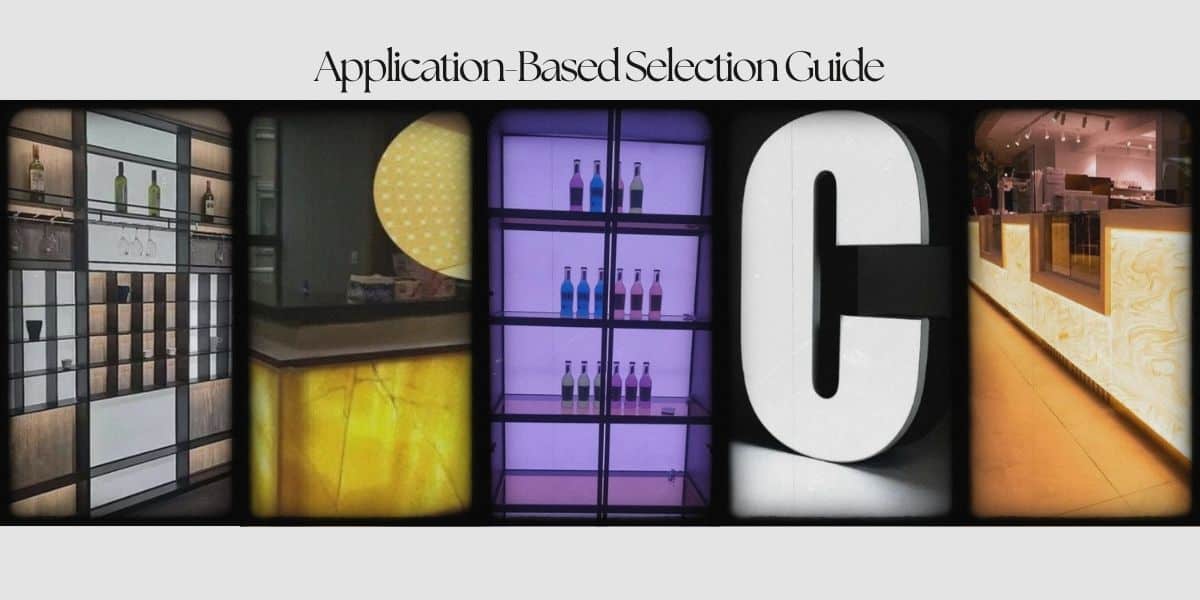
Application-Based Selection Guide

LED 라이트 시트

Lighting requirements vary by application. A standardized specification rarely suits all environments.

Retail Displays

Retail environments prioritize high brightness and excellent color rendering. A high brightness LED light sheet ensures product visibility under ambient lighting. Uniformity is critical to avoid shadowing across shelves.

Shop Windows

Shop windows face daylight competition. Higher output and glare control are essential. Thermal stability is also important due to direct sun exposure.

Display Cabinets

Display cabinets require moderate brightness and excellent uniformity. Limited internal space makes slim LED sheet lighting solutions advantageous.

Signage and Branding

Signage applications demand consistent brightness across graphic surfaces. A uniform illumination LED light sheet prevents hotspots that distort branding elements.

Architectural Feature Lighting

Architectural applications may require curved integration, making a flexible LED light sheet more appropriate. Aesthetic continuity and dimming control become primary concerns.

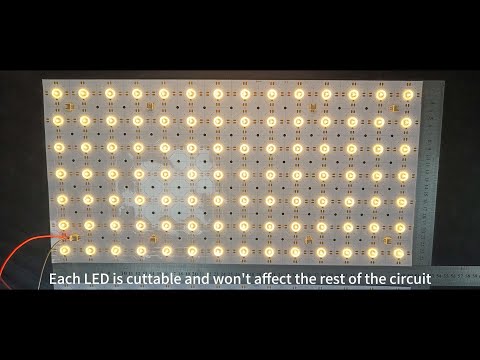
For a clearer understanding of spacing, cutting zones, and placement depth in real installations, the following video example demonstrates how LED light sheets are arranged behind translucent panels in commercial backlighting projects

YouTube 동영상

How to Evaluate LED Light Sheet Quality

LED 라이트 시트

Quality assessment extends beyond brightness.

Material quality affects durability and heat conduction. Substrate stability prevents warping over time.

LED chip consistency determines color uniformity. Poor bin management can create visible variation across multiple LED light sheet panels.

Diffuser compatibility influences perceived uniformity. Testing should include real-world installation depth conditions.

Long-term reliability testing should simulate extended operational hours. Thermal stress testing and lumen maintenance evaluation provide insight into lifespan.

Production consistency ensures that repeat orders match initial samples, which is essential for multi-phase commercial projects.

Supplier Evaluation for Commercial Projects

Choosing a supplier involves structured evaluation.

Sample testing allows assessment of brightness, uniformity, and dimming behavior. Real installation mock-ups provide accurate insight.

Batch consistency must be verified through documented quality control processes. Variation between shipments can disrupt brand consistency.

Customization capability matters for non-standard dimensions or brightness tuning. A supplier should demonstrate engineering support for adapting LED sheet lighting to project needs.

Production scalability ensures capacity for large commercial rollouts without compromising quality.

Technical documentation, including photometric data and thermal performance reports, supports compliance and design validation.

When Customization Matters

Customization becomes necessary when:

  • Installation depth is limited
  • Shapes are irregular
  • Brightness must be tuned to specific branding requirements
  • Integration with architectural elements demands precise sizing

A tailored LED light sheet panel configuration ensures alignment with structural constraints and design intent. For curved or complex shapes, a flexible LED light sheet may be essential to achieve seamless integration.

결론

오른쪽 선택 LED light sheet requires balancing brightness, uniformity, energy efficiency, thermal management, flexibility, and scalability. Commercial projects demand predictable performance over extended operational lifecycles.

Decision-making should follow a structured evaluation process: define application needs, assess technical specifications, validate uniformity and brightness, confirm compatibility with control systems, and review supplier consistency.

A properly specified solution enhances visual quality, reduces maintenance risk, and supports long-term project performance. In commercial environments where lighting directly influences brand perception and operational efficiency, careful selection is not optional. It is foundational.

자주 묻는 질문

LED 스트립 조명LED 스트립 조명
집에 숨겨진 LED 스트립 조명을 어떻게 설치할 수 있습니까?
조명 효과 계획, 올바른 구성 요소 선택, LED 스트립 채널 준비 및 장착, LED 스트립 설치 및 연결, 그리고 마지막으로 디퓨저와 마감 터치를 추가하여 매끄러운 전문가급의 숨겨진 광선을 제공하는 체계적인 5단계 프로세스를 통해 집에 숨겨진 LED 스트립 조명을 설치할 수 있습니다. 숨겨져 있는...
LED 네온 조명의 치수 공차: 원인, 범위 및 솔루션
LED 네온 조명은 유연성과 생생한 시각적 영향으로 인해 건축 조명, 상업 장식 및 간판 프로젝트에 널리 사용됩니다. 그러나 네온의 실제 치수가 명목상의 사양과 크게 다를 경우 심각한 설치 문제를 야기할 수 있습니다. 이 문제는 프로젝트에서 더욱 중요해집니다...
Acoustic-LED-Lighting-Guide-2025-TRENDS-ACDBUSTRIESAcoustic-LED-Lighting-Guide-2025-TRENDS-ACDBUSTRIES
2025년 음향 LED 조명 가이드: 트렌드 및 액세서리
소개 제품 소개 제품 소개 제품 소개 제품 소개 2000년 10월 20일 2010년 1월 20일 2010년 1월 20일 2010년 1월 20일 2010년 1월 흡음 기술과 에너지 효율적인 LED 조명을 결합하여 공간을 조명할 뿐만 아니라 음향 편안함을 향상시킵니다. 이 가이드는 최신 트렌드를 탐구합니다.
실내 LED 식물 성장등 가이드실내 LED 식물 성장등 가이드
실내 LED 성장 조명 가이드: 건강한 식물을 위한 PPFD, 스펙트럼 및 조명 팁
현재 시장에는 다양한 LED 식물 조명 제품이 출시되어 있으며 외관상 유사해 보일 수 있습니다. 그러나 실제 성능에는 상당한 차이가 존재하는데, 주요 문제점으로 짧은 수명이 지적됩니다. 일부 제품은 단 수십 시간 사용 후 고장나거나 심각한 광감소 현상을 보이는 경우가 있습니다...
실외 LED 스트립 조명 선택에 대한 궁극의 가이드실외 LED 스트립 조명 선택에 대한 궁극의 가이드
실외 LED 스트립 조명 선택에 대한 궁극적인 가이드
올바른 실외 LED 스트립 조명 선택하기 LED 조명은 환경 적합성에 따라 비내후성, 내후성, 방수 등 세 가지 주요 유형으로 분류할 수 있습니다. 비내후성 LED 조명은 실내 전용으로 설계되었습니다. 반면, 비바람에 견디는 LED 조명은 실외용으로 적합하며, 방수 LED 조명은 특별히 다음과 같은 용도로 사용됩니다.
LED 스트립을 설치하는 이유LED 스트립을 설치하는 이유
LED 스트립을 설치하는 이유는 무엇인가요?
조명 제품인 LED 스트립은 우리 집에 독특한 분위기를 연출할 수 있습니다. LED 스트립은 그 모양의 이름을 따서 명명되었으며 조명 스트립처럼 빛나면 우리 집을 더욱 고급스럽게 보이게 할 수 있습니다. 사실, LED 스트립의 설치는 간단하고 저렴합니다 ...

공유하다:

페이스북
지저귀다
핀터레스트
링크드인
구독하다
알림
guest
0 댓글
가장 오래된
최신 가장 많이 투표된
인라인 피드백
모든 댓글 보기

SignliteLED 블로그 검색

카테고리

위로

지금 견적을 받으세요