한국어
한국어  English
  简体中文
简体中文  Deutsch
  Español
  Français
  Italiano
  日本語
日本語  Polski
  Português
  Русский
  Türkçe
  Nederlands
  Tiếng Việt
  ไทย
ไทย 
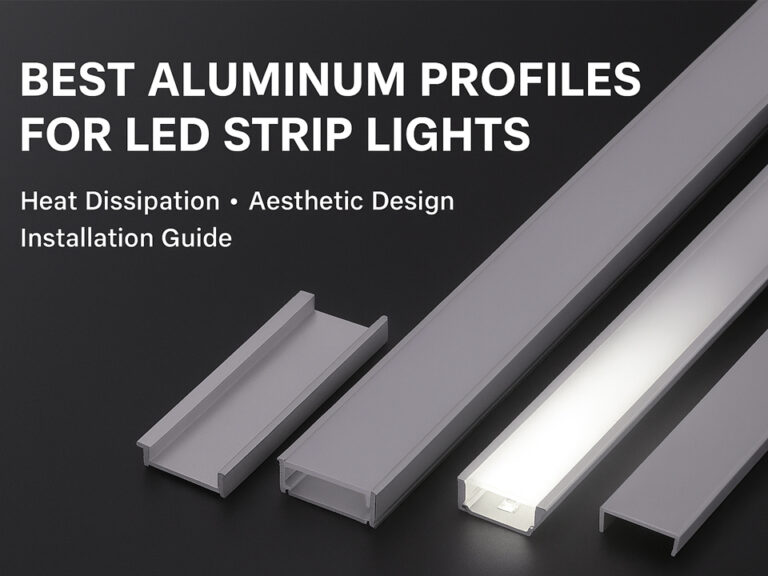
Choosing the right LED aluminum profile is essential for maximizing the performance, lifespan, and appearance of LED strip lighting. The correct profile depends on strip width, wattage, installation method, and lighting effect. Factors such as heat dissipation, diffuser type, and mounting location all influence which LED channel or extrusion will work best for your project.
This article focuses on profile selection — for the full picture of contemporary linear lighting design and solutions, see our complete guide: LED 프로파일 및 조명 솔루션: 현대적인 선형 조명을 위한 완벽한 가이드.
How Do You Choose the Right LED Profile for Different LED Strip Types?
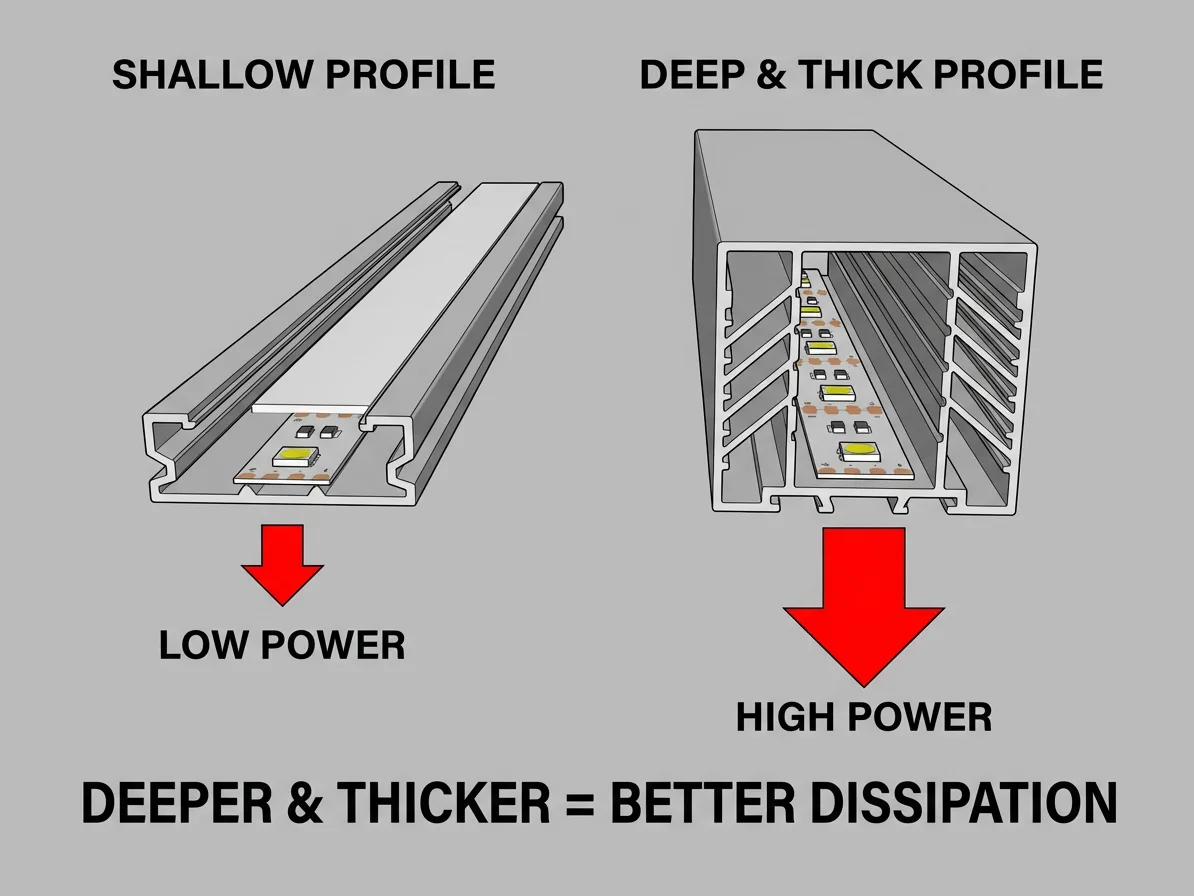
Choosing the right LED profile means matching the strip’s width, wattage, LED density, and lighting goal with a channel that provides proper fit, cooling, and light diffusion. An aluminum profile acts as a heat sink, glare control layer, and protective housing that affects brightness stability, lifespan, and visual comfort. High-power or dense LED strips need deeper, heavier channels for better heat dissipation, while low-power decorative strips can use slimmer profiles. Diffuser choice also matters, as clear covers maximize brightness and visibility of LEDs, while frosted or opal covers soften light and reduce spotting. Selecting the correct profile ensures mechanical compatibility, thermal stability, and the desired lighting effect.
How Do You Identify an LED Strip Type Before Choosing a Profile?
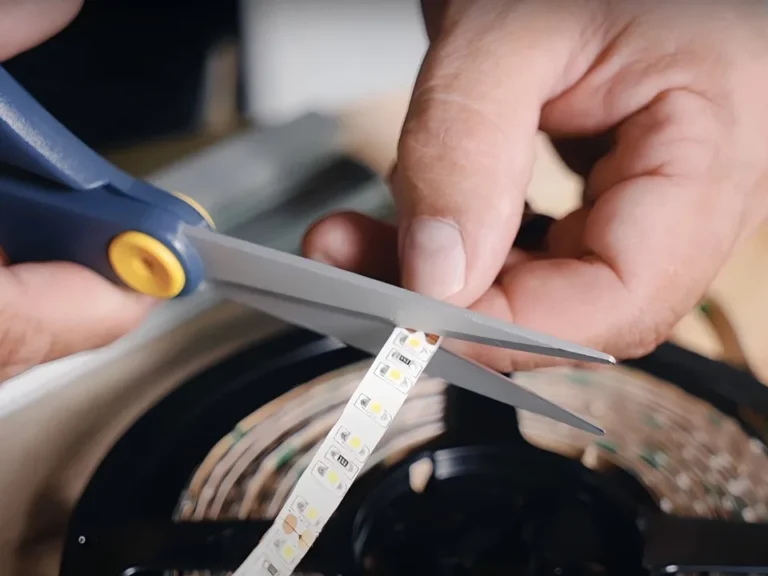
LED strip type is identified by its LED model, PCB width, voltage, and LED density, all of which determine profile compatibility. Common chip codes such as 2835, 3528, 5050, or 5630 indicate LED size and brightness level. Measuring the strip width, typically 8 mm, 10 mm, or 12 mm, ensures it fits inside the aluminum channel. High-density strips create smoother light but generate more heat, requiring deeper profiles. Voltage (12V or 24V) also indicates power load per meter and cooling needs. Correct identification prevents choosing a channel that is too narrow or thermally insufficient.
What Are the Different Types of LED Strip Lights and Their Profile Requirements?
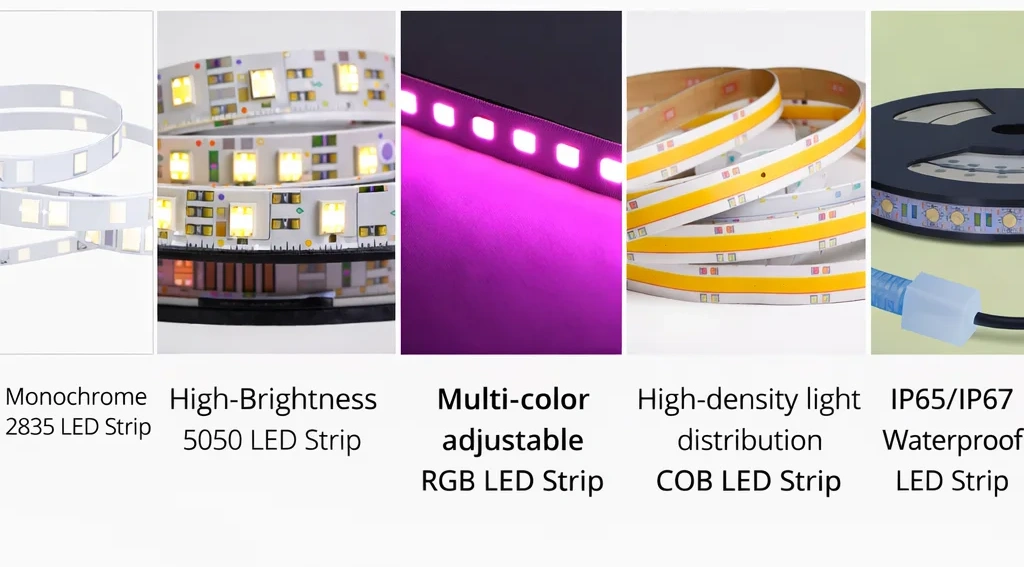
Different LED strip categories require specific profile depths, widths, and diffuser styles to ensure professional performance and longevity. Choosing the wrong combination can lead to overheating or poor visual effects like visible “hotspots.”
| LED 스트립 유형 | Profile Width & Depth Requirements | Recommended Diffuser | Primary Focus |
| Standard Single-Color (SMD) | Slim surface or recessed channels. | Frosted or Opal | Even diffusion & low profile. |
| High-Output (5050 / 5630) | Wider and deeper aluminum channels. | Clear (for brightness) or Frosted | Heat dissipation & preventing lumen decay. |
| RGB / RGBW | Extra-wide channels to accommodate larger PCBs. | High-quality Frosted | Color blending for a uniform line of light. |
| COB (Continuous) | Shallow for aesthetics; Deep for high wattage. | Opal or Milky | Dot-free linear lighting & thermal mass. |
| Waterproof (IP65 / IP67) | Extra-wide internal clearance for silicone coating. | Secure, snap-on covers | Mechanical fit & protection. |
Matching strip type with the right profile ensures reliable performance, safe temperatures, and professional lighting results.
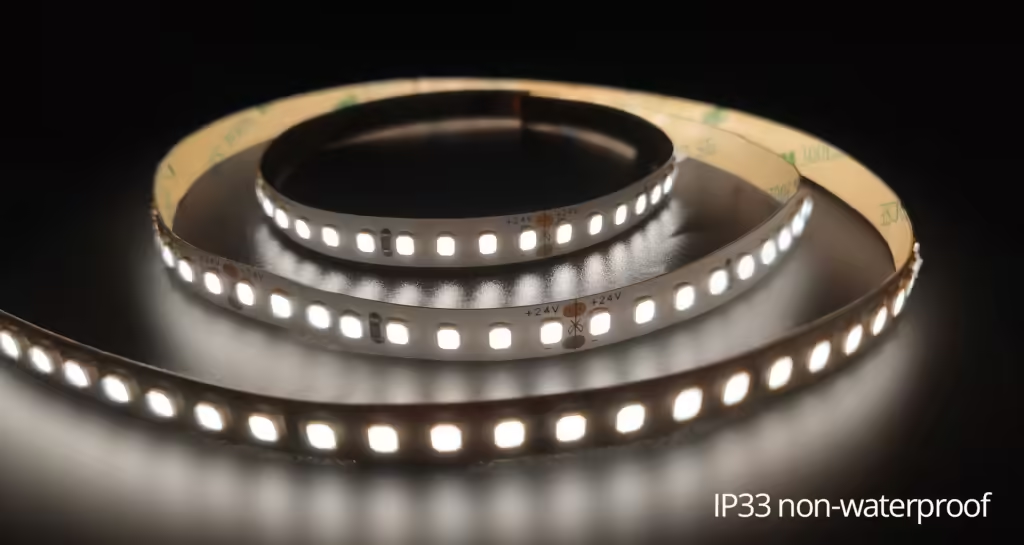
고효율 2835 LED 스트립 조명
- 미터당 128개의 SMD2835 LED
- 10mm PCB 너비
- 정확한 컬러 렌더링을 위한 CRI≥80
- 최대 200lm/W 고효율
- 완전 디밍 가능
- 강력한 양면 3M 접착 테이프
- 3000K, 4000K 및 6500K 색온도(옵션)
- 단일 단색 BIN, 3단계 SDCM 사용 가능
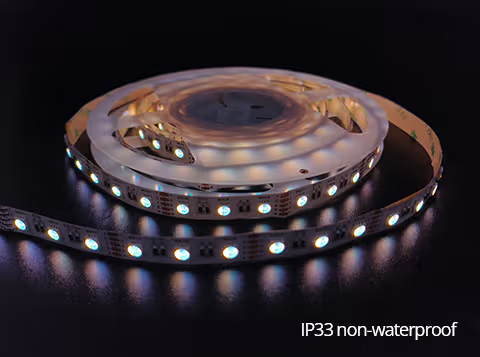
5m(16.4ft) 60LED/m 싱글 컬러 조명 5050 LED 스트립 조명
- 제품: SMD5050-60LED-10MM
- 220lm/W 고효율 SMD5050 LED
- 양면 구리 피복 라미네이트
- 단일 단일 컬러 빈, 3단계 SDCM 사용 가능
Do COB LED Strips Need Special Aluminum Profiles?
COB LED 스트립 do not need completely different profiles, but they benefit from channels that improve heat transfer and preserve their dot-free appearance. COB strips use dense micro-LEDs that produce smooth light, which pairs well with opal or milky diffusers for soft ambient lighting. Many COB strips operate at moderate to high wattage, so shallow decorative channels may not provide enough thermal mass. Deeper aluminum profiles help maintain lower temperatures and protect color stability and lifespan. Slightly wider channels may also be needed because some COB PCBs are broader than standard SMD strips. Choosing a profile that balances diffusion and heat capacity keeps COB lighting uniform and reliable.
What Size LED Profile Do You Need for Your LED Strip Width?
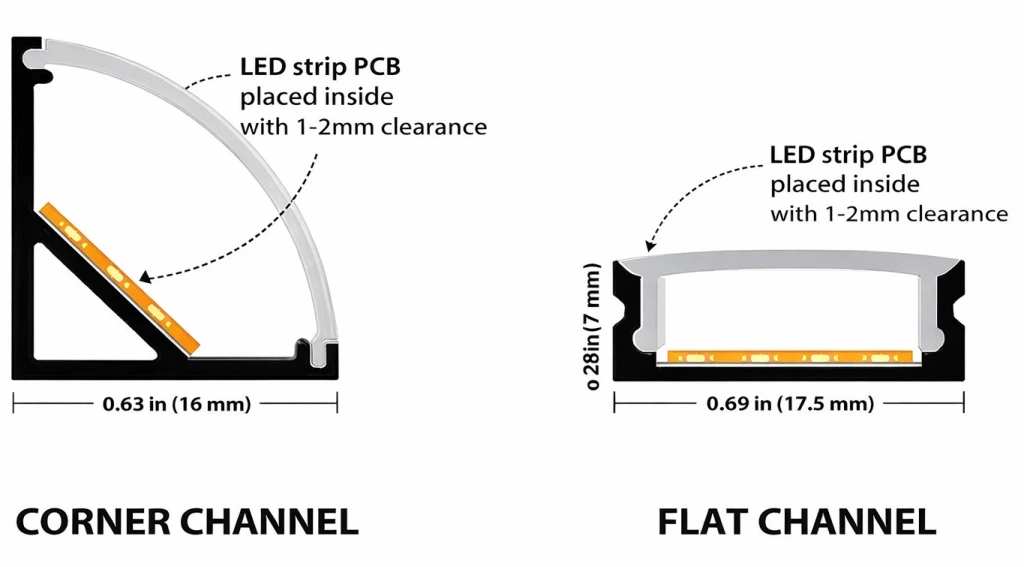
The correct LED profile size depends mainly on strip PCB width, but internal clearance, diffuser thickness, and heat needs also affect fit and performance. An aluminum profile should be slightly wider than the strip to allow safe installation, wire routing, and proper diffuser placement. Profiles that are too narrow can stress solder joints or block the cover, while overly wide channels may reduce heat transfer and create uneven reflections. Profile depth is also important because deeper channels improve light blending and reduce visible LED dots. Choosing the right size ensures safe thermal operation and a clean linear lighting result.
LED Strip and LED Aluminum Channel Compatibility Guide
The correct LED profile size is determined by the strip’s PCB width, but internal channel clearance, diffuser thickness, and heat requirements must also be considered. An aluminum profile should always be slightly wider than the LED strip to allow for safe wire routing and proper cover placement without compressing components.
Common LED Strip Widths and Matching Profile Sizes
Using a reference table reduces selection errors and ensures a clean, professional linear lighting appearance. Below is the recommended mapping for standard installations:
| Strip PCB Width | Typical Strip Type | Min. Internal Channel Width | Recommended Profile Depth |
| 5 mm – 8 mm | Ultra-narrow / Decorative | 10mm | Shallow (8-10 mm) |
| 10mm | Standard Single-color / RGB | 12mm | Medium (12-15 mm) |
| 12mm | High-power / RGBW | 14 mm – 16 mm | Deep (15+ mm) for better diffusion |
| 15 mm+ | Dual-row / High-output | 20 mm+ | Heavy-duty / Deep channels |
| Waterproof (IP65/67) | Any of the above | Add 2 mm to strip width | Deep enough to clear silicone |
Can One LED Profile Fit Multiple LED Strip Widths?
Yes. A 12 mm internal-width channel can typically house both 8 mm and 10 mm strips. However, using an oversized profile for a very narrow strip may reduce thermal efficiency. For high-brightness needs, wider profiles allow for dual-row installations, provided the thermal mass of the aluminum can handle the increased heat load.
Common LED Strip Widths and Matching Aluminum Profile Sizes
Most LED strips use standard PCB widths, each pairing best with certain channel sizes. Narrow 8 mm strips fit slim profiles with 10–12 mm internal width, ideal for accent lighting. Standard 10 mm strips usually need at least 12 mm internal width. Wider 12 mm or RGBW strips require 14–16 mm channels to avoid crowding. High-power or dual-row strips may exceed 16 mm and need heavy-duty deep profiles. Matching width to channel size ensures stable mounting, good heat transfer, and proper diffuser fit.
LED Strip and Aluminum Profile Compatibility Table
A compatibility table simplifies selection by mapping strip widths to channel dimensions. These tables list PCB width, minimum internal channel width, suggested depth, and diffuser type for best diffusion. Including waterproof options accounts for thickness differences. Tables also show whether profiles support single or dual-strip setups, useful for high-output designs. Using a reference table reduces errors and speeds lighting design.
| LED 스트립 유형 | Typical Width | Power Range | Recommended Profile Type | Minimum Profile Depth |
| 2835 / 3528 Single Row | 8mm | 5–10 W/m | Slim surface profile | 7–10mm |
| 5050 / 5630 High Output | 10–12mm | 10–18 W/m | Standard U-shape aluminum channel | 10–12 mm |
| High-Density LED Strips | 12–15mm | 15–22 W/m | Deep recessed or wide channel | 12–16 mm |
| COB LED 스트립 | 8–12mm | 8–16 W/m | Deep profile with frosted diffuser | 12–18 mm |
| RGB / RGBW Strips | 12–16mm | 14–20 W/m | Wide aluminum profile with opal cover | 12–16 mm |
How Does LED Strip Power Affect the Profile Choice?
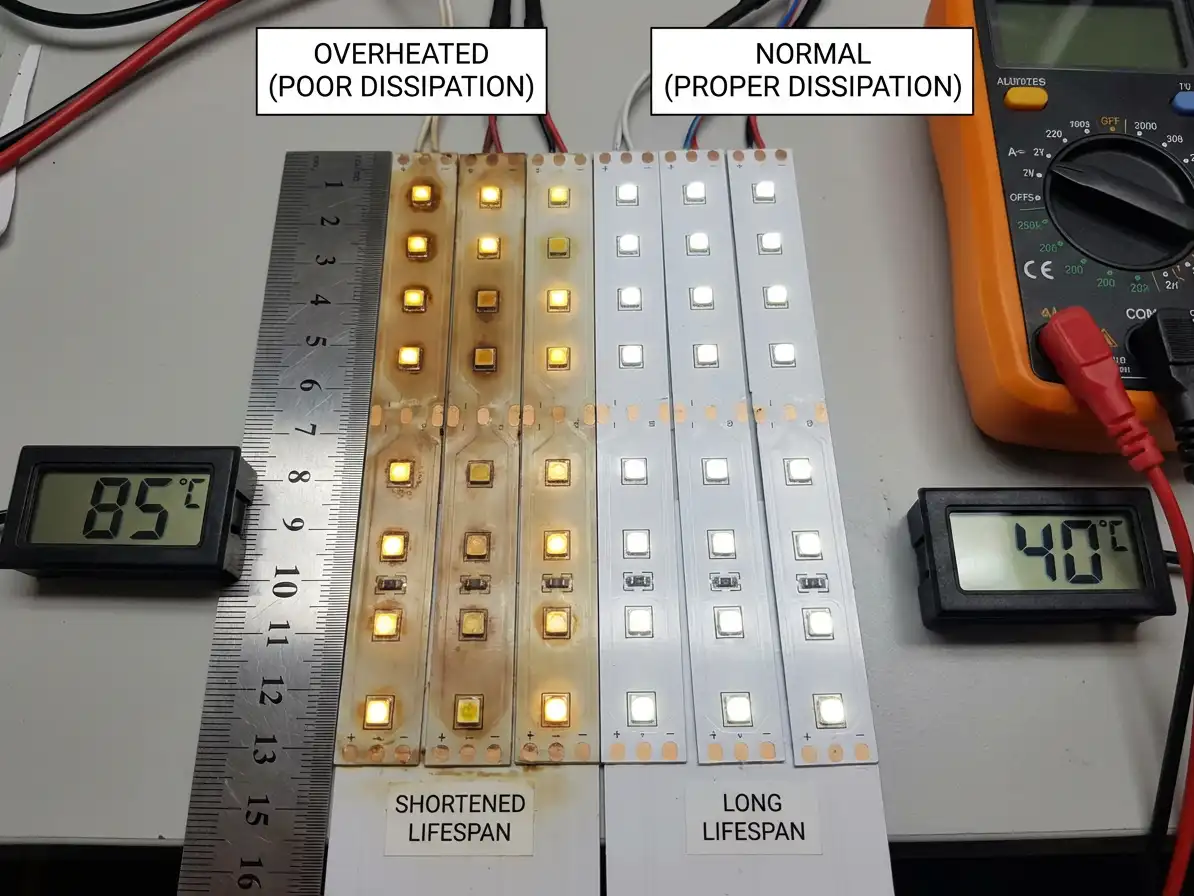
LED strip power (watts per meter) directly determines the thermal mass required for effective heat dissipation. Using a profile with insufficient aluminum for high-power strips will lead to “lumen depreciation” and permanent color shift.
Power-to-Profile Matching Guide
| Strip Power Level | Wattage (per meter) | Recommended Profile Type | Thermal Requirement |
| Low Power | < 10 W/m | Slim / Decorative channels | Basic passive cooling |
| Medium Power | 10 – 20 W/m | Standard / Deeper channels | Enhanced aluminum mass |
| High Power | > 20 W/m | Heavy-duty / Thick-walled | Maximum surface area & airflow |
How to Calculate Drivers for LED Strips and Aluminum Profiles
LED driver sizing should be based on total strip wattage with an added safety margin, commonly known as the 80% rule, to ensure stable performance and lower thermal stress.
· Formula: (Strip Watts per Meter × Total Length) × 1.25 = Recommended Driver Wattage
- 예시: A 14 W/m strip at 5 meters = 70W. Add 20-30% margin → 90W – 100W Driver.
This margin prevents the power supply from running at full load, which reduces heat buildup inside aluminum LED profiles and improves system lifespan. For higher-power installations, dividing long runs into shorter circuits also helps minimize voltage drop and localized overheating.

How to Keep LED Strip Lights from Overheating
Preventing heat buildup inside a profile is essential for maintaining the L70 lifespan of your LEDs. Follow these expert tips:
- Improve Thermal Contact: Use high-quality thermally conductive adhesive tape to eliminate air gaps between the PCB and aluminum.
- Avoid Deep Recessing in Wood: If embedding profiles in insulating materials like wood, choose wider flanges or deeper profiles to increase the heat dissipation surface.
- Ventilation Gaps: For high-wattage runs, leave a 1-2mm gap at the end caps to allow for natural convection.
- Selection Strategy: When in doubt, size up. A larger aluminum profile will always run cooler than a cramped one.
What Installation Type Determines the LED Profile You Need?
The installation method directly influences the shape, flange design, and mounting accessories of the LED profile. Choosing the correct mounting style ensures both mechanical stability and a professional architectural finish.
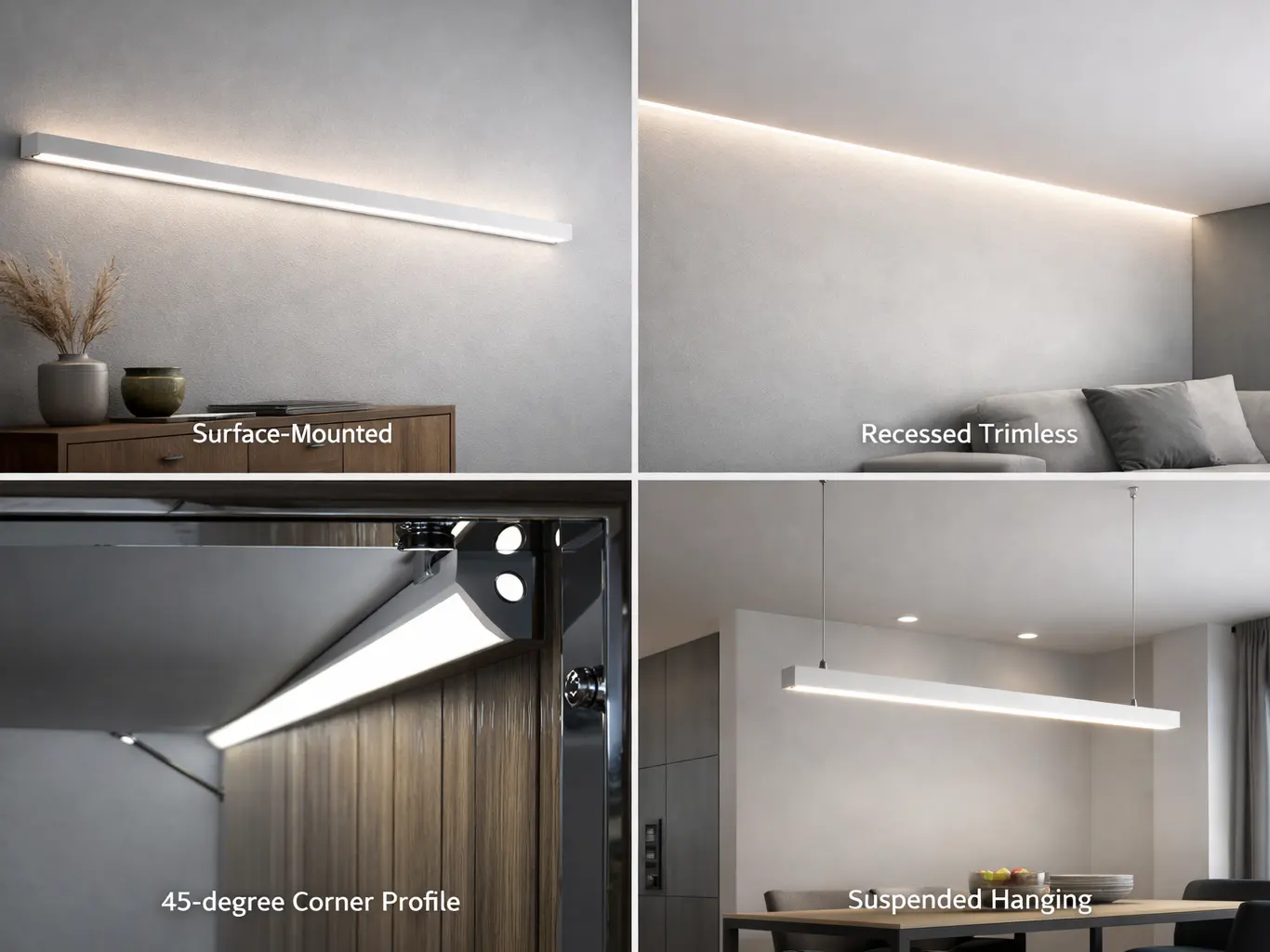
Quick Comparison: Common Installation Types
Each LED profile installation method requires a different channel shape and structural design to ensure proper mounting, light direction, and thermal performance.
| 설치 유형 | 주요 기능 | Best For… | 조명 효과 |
| 움푹 들어간 | Flanged or trimless; sits flush with surface. | Drywall, cabinetry, ceilings. | Minimalist, integrated look. |
| 표면에 장착 된 | Easy clip-on installation; no cutting needed. | Retrofits, wardrobes, shelving. | Functional, high heat dissipation. |
| Corner / Angled | 45° or 30° light direction. | Under-cabinets, wall junctions. | Targeted task lighting; reduced glare. |
| 매달린 | Hung via cables; heavy-duty housing. | High ceilings, office lighting. | Modern, hanging linear fixtures. |
Need lighting that follows complex curves or custom contours? Discover bendable linear solutions in this guide: 맞춤형 구부릴 수 있는 선형 조명 기구: 복잡한 건축 프로젝트를 위한 완벽한 조명 솔루션.
Surface-Mounted vs. Recessed: Which One Should You Choose?
Surface-mounted LED channels attach directly to surfaces, while recessed channels sit flush inside a cut-out. Surface profiles are easier to install, need no structural cutting, and allow better airflow, making them suitable for retrofits and higher-power strips. Recessed profiles offer a more integrated look but require precise installation and may limit heat dissipation in tight spaces. The choice depends on whether design integration or installation simplicity is the priority. Understanding this difference ensures both lighting performance and thermal management meet project needs.
| 기능 | 표면에 장착 된 | 움푹 들어간 |
| Ease of Install | High (No cutting/grooving required). | Moderate (Requires precise cut-outs). |
| 미학 | Visible fixture; functional look. | Hidden fixture; flush, seamless finish. |
| Cooling | Superior (360° airflow around channel). | Restricted (Heat trapped in cavity). |
| 최고의 응용 프로그램 | Renters, retrofits, high-wattage strips. | New construction, high-end interiors. |
When Should You Use Corner or Angled LED Profiles?
Corner profiles are essential when light needs to be directed at a 45-degree angle to illuminate a specific surface while keeping the light source hidden from direct view.
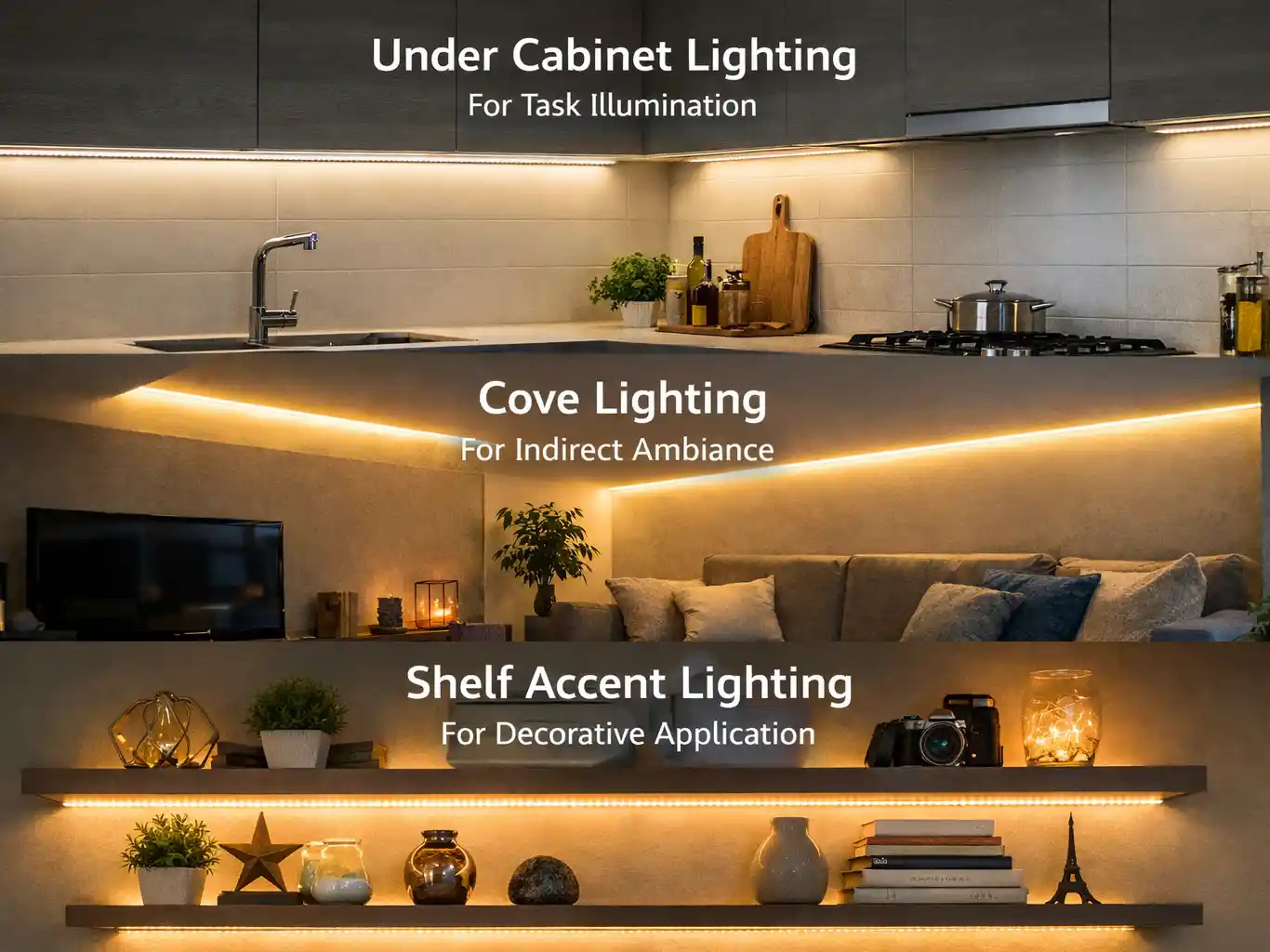
- Kitchen Task Lighting: Directs light onto the countertop rather than the backsplash.
- Display Cases: Maximizes product visibility while reducing reflections.
- Cove Lighting: Projects light upward and outward for a softer ambient glow.

How Do LED Profile Diffusers Affect Lighting Performance?
LED profile diffusers control glare, light uniformity, and whether individual LED points are visible, making them essential to the final lighting effect. The diffuser shapes how light leaves the channel, turning harsh point sources into smoother linear illumination. Clear covers maximize brightness but expose LED dots, while more opaque covers create softer, more comfortable light. Diffusers also influence beam spread, affecting how evenly nearby surfaces are illuminated. Choosing the right diffuser ensures the balance between efficiency, comfort, and appearance.
How to Choose the Right LED Profile Diffuser (Clear vs Frosted vs Opal)
The best diffuser depends on whether brightness or visual comfort is the priority. Clear diffusers provide the highest light output but make LED chips visible. Frosted diffusers soften glare while keeping good efficiency, making them a common general-purpose option. Opal diffusers create the smoothest, dot-free light line, ideal for ambient or decorative lighting. Because stronger diffusion slightly lowers brightness, higher-power strips may be needed when using opal covers.
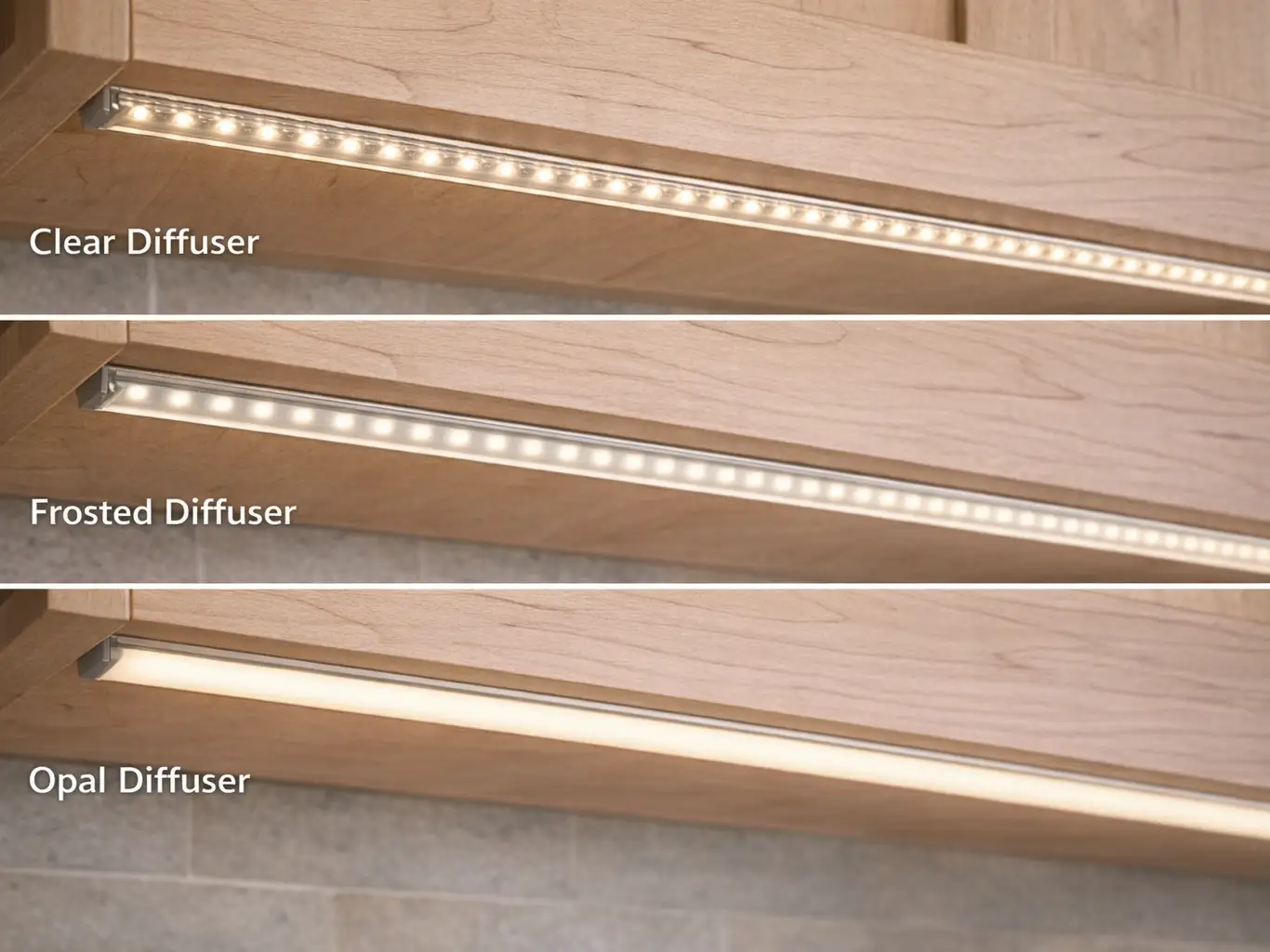
Choosing the Right Diffuser: Clear vs. Frosted vs. Opal
Different diffuser materials change brightness, glare level, and LED visibility, making diffuser selection critical for achieving the desired lighting effect.
| 디퓨저 유형 | 광선의 투과 | 도트 가시성 | 최고의 응용 프로그램 |
| 가 | 95% – 98% (High) | High (Visible Chips) | High-ceiling coves, hidden accent lighting. |
| 희게 센 | 70% – 85% (Medium) | 보통 | General task lighting, under-cabinets. |
| Opal / Milky | 50% – 65% (Low) | None (Dot-free) | Decorative linear light, eye-level fixtures. |
| Black / Smoke | 20% – 35% (Very Low) | Hidden when off | High-end architectural design, “invisible” light. |
To learn more about how clear, milky, and black diffusers affect light quality and application, read: LED 채널 디퓨저 문제: 투명 대 우유 대 검정색 덮개.
How to Reduce LED Strip Dotting Using the Right Diffuser
Achieving a professional, seamless glow (Spotless Effect) isn’t just about the cover; it’s about the “Depth-to-Pitch” Ratio. To eliminate LED dots, follow this 3-step strategy:
- Select Deep Profiles: A deeper channel (15mm+) allows light from the chips to spread and overlap before hitting the diffuser.
- Use High-Density Strips: Opt for COB strips or SMD strips with at least 120 LEDs/meter. The closer the LEDs are to each other, the easier they are to blend.
- Choose Opal Diffusers: While they reduce brightness by ~35%, they provide the maximum light scattering required for a solid line of light.
Efficiency vs. Aesthetics: The Trade-off
Remember that higher diffusion always comes at the cost of brightness. If you use an Opal diffuser, it is recommended to increase the strip wattage by 20-30% to compensate for the light absorption of the material, ensuring the final lumen output meets your needs. Wondering how to pick the right diffuser channel for your project? This in-depth guide covers the key factors: 최고의 LED 디퓨저 채널을 선택하는 방법은 무엇인가요?
How Does the Application Area Affect LED Profile Selection?
The environment determines the required shape, protection rating, and light distribution of your LED profile. Selecting a profile based on the installation area ensures the lighting is not only beautiful but also durable and functional.
Application Area vs. Recommended Profile Type
| 신청 지역 | Best Profile Choice | Primary Lighting Goal | Key Feature Needed |
| Kitchen Cabinets | Corner / Angled | Task lighting on counters. | Glare control & heat resistance. |
| Cove / Ceiling | Recessed / Plaster-in | Indirect, seamless glow. | Deep channels to hide dots. |
| Shelves / Niches | Slim Surface-mount | Subtle accentuation. | Compact size & easy install. |
| Wardrobes / Closets | Surface-mount with Sensor | Functional visibility. | Low profile & integrated sensor space. |
| Stairs / Floors | Heavy-duty Recessed | Safety & orientation. | Pressure resistance & anti-slip. |
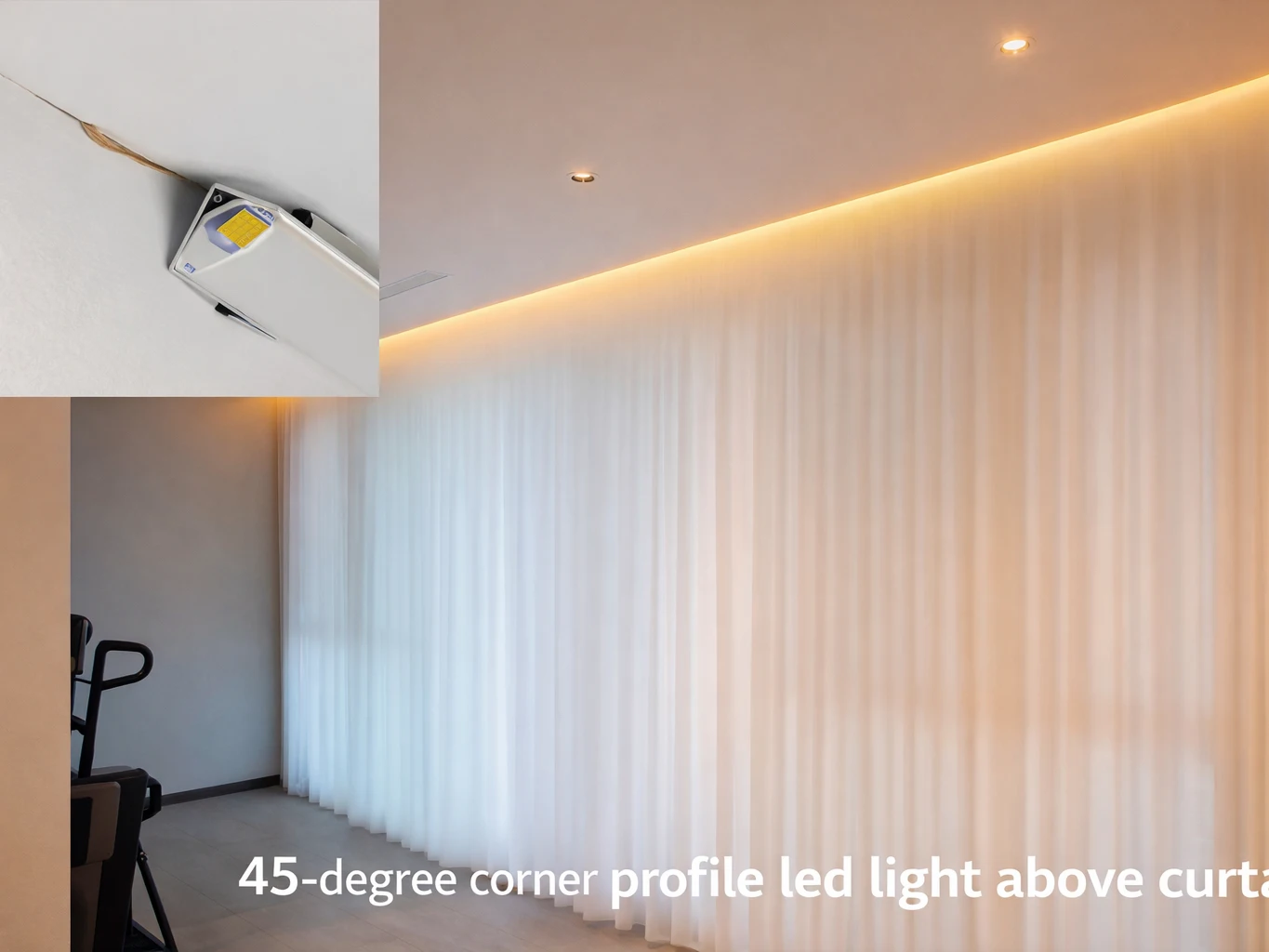
Which LED Profile Is Best for Kitchen Cabinet Lighting?
Kitchens demand lighting that is both functional and comfortable.
- The Angle Matters: Use 45° Corner Profiles mounted at the front or back of the cabinet to direct light toward the workspace, preventing direct glare into your eyes.
- Aesthetic Harmony: Choose Opal diffusers to soften reflections on glossy granite or quartz countertops, creating a professional “high-end” look.
What Type of LED Profile Is Best for Accent and Cove Lighting?
For spaces like living rooms or hotel lobbies, the goal is to see the light, not the fixture.
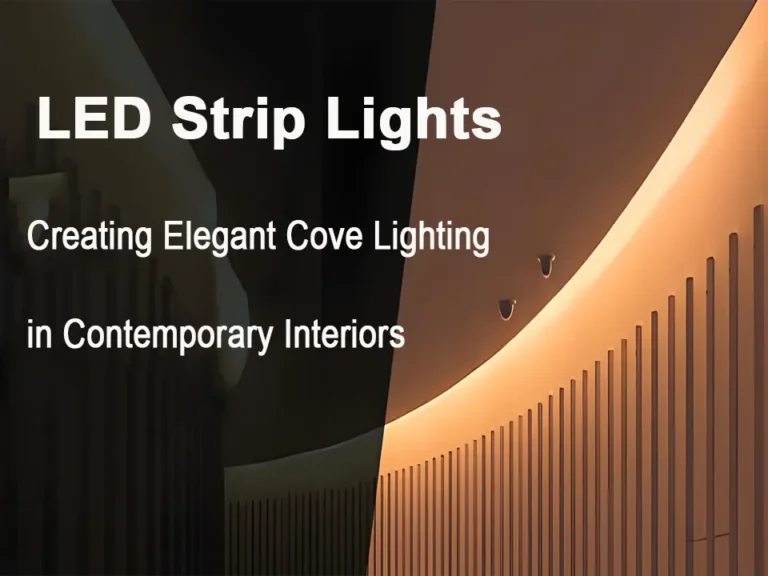
- Seamless Integration: Plaster-in (Trimless) profiles are the gold standard for coves, as they blend into the drywall for a completely hidden appearance.
- Dot-Free Ambience: Use deeper channels to allow for maximum diffusion, ensuring the ceiling or wall is washed in a smooth, continuous line of light.
How Do You Choose LED Profiles for Residential and Home Lighting?
Home lighting should focus on simplicity and comfort.
- Surface-mount Convenience: Ideal for DIY projects and retrofitting existing furniture without the need for complex routing or cutting.
Can LED Profiles Be Cut, Customized, or Ordered in Special Finishes?
Yes. Most LED aluminum profiles are designed for on-site customization. They can be cut to exact lengths, fitted with specialized end caps, and selected in various finishes to match your interior design.
Quick Guide: Choosing the Right Finish
The finish of your profile affects not only the look but also the durability and light reflection within your space.
| Finish Type | 시각 효과 | Best For… | 내구성 |
| Anodized Silver | Natural metallic look. | General residential & commercial. | High (Scratch resistant). |
| Matte Black | Discreet & modern. | Dark ceilings, cinema rooms, luxury furniture. | Medium (Avoid heavy friction). |
| Pure White | Blends with white surfaces. | Bright interiors, kitchens, office ceilings. | High (Powder-coated). |
| Raw Aluminum | Industrial/Industrial. | Industrial applications, hidden installations. | Standard (Prone to oxidation). |
How to Cut Aluminum LED Profiles Safely
Aluminum extrusions can be field-trimmed using standard metal-cutting tools. To ensure a professional finish:
- Use the Right Tool: A fine-tooth saw blade or a miter saw designed for non-ferrous metals provides the cleanest cut.
- Leave the Diffuser On: Pro Tip — Cut the profile and the plastic diffuser together to ensure they align perfectly in length.
- Deburr the Edges: Use a small file to smooth the edges after cutting to prevent wire damage and ensure end caps fit snugly.
The Final LED Profile Selection Checklist
Before finalizing your purchase, use this table to verify that your selected profile meets all project requirements.
| 선택 계수 | Requirement Check |
| Strip Width | Is the internal channel width at least 1-2mm wider than the PCB? |
| 전력(W/m) | Does the aluminum mass provide enough heat dissipation for the wattage? |
| Environment | Is it indoor, outdoor, or a high-humidity area (Kitchen/Bath)? |
| 설치 | Is it surface-mounted, recessed, or corner-mounted? |
| 조명 효과 | Do you need Spotless (Opal) or Max Brightness (Clear)? |
| Visual Match | Does the finish (Silver/Black/White) complement the surface color? |
| 액세서리 | Have you included matching End Caps and Mounting Clips? |
Common Mistakes to Avoid When Choosing LED Profiles for Strip Lights
Choosing the wrong LED profile can lead to immediate installation failure or long-term performance issues like overheating and “spotting.” Understanding these common errors ensures a safer, more professional result.
Summary: Top Mistakes and Their Solutions
Many LED profile performance issues come from common selection mistakes, which can be avoided by matching profile size, depth, and diffuser type to the LED strip specifications.
| Common Mistake | Potential Consequence | Expert Solution |
| Profiles Too Shallow | Overheating & LED chip failure. | Match profile depth to wattage (>20W/m needs deep channels). |
| Ignoring Thermal Contact | Shortened lifespan & color shift. | Use high-quality thermal tape & ensure metal-to-metal contact. |
| Wrong Diffuser Choice | Harsh glare or visible “dots.” | Use Opal diffusers + high-density strips for a “neon” effect. |
| Too Narrow for IP-Strips | Damaged solder joints / pinched strips. | Add 2mm clearance for waterproof silicone coatings. |
1. Don’t Compromise on Depth for High-Power Strips
Many users choose ultra-slim profiles for aesthetics, but shallow channels have less “thermal mass.”
- The Risk: High-wattage strips (above 15-20W/m) generate intense heat. In a shallow channel, this heat has nowhere to go, leading to lumen depreciation (dimming) within months.
- The Rule: If your strip is high-output, prioritize a Heavy-Duty or Deep profile to act as a proper heat sink.
2. Thermal Management is Not Optional
An aluminum profile is more than a bracket; it’s a cooling system.
- The Mistake: Placing a strip loosely inside a channel or using low-quality adhesive.
- The Fix: Ensure the strip is firmly bonded to the aluminum surface. Avoid fully enclosing high-power profiles in unventilated wooden cavities without checking the thermal load first.
3. Mismatching Diffusers and Lighting Goals
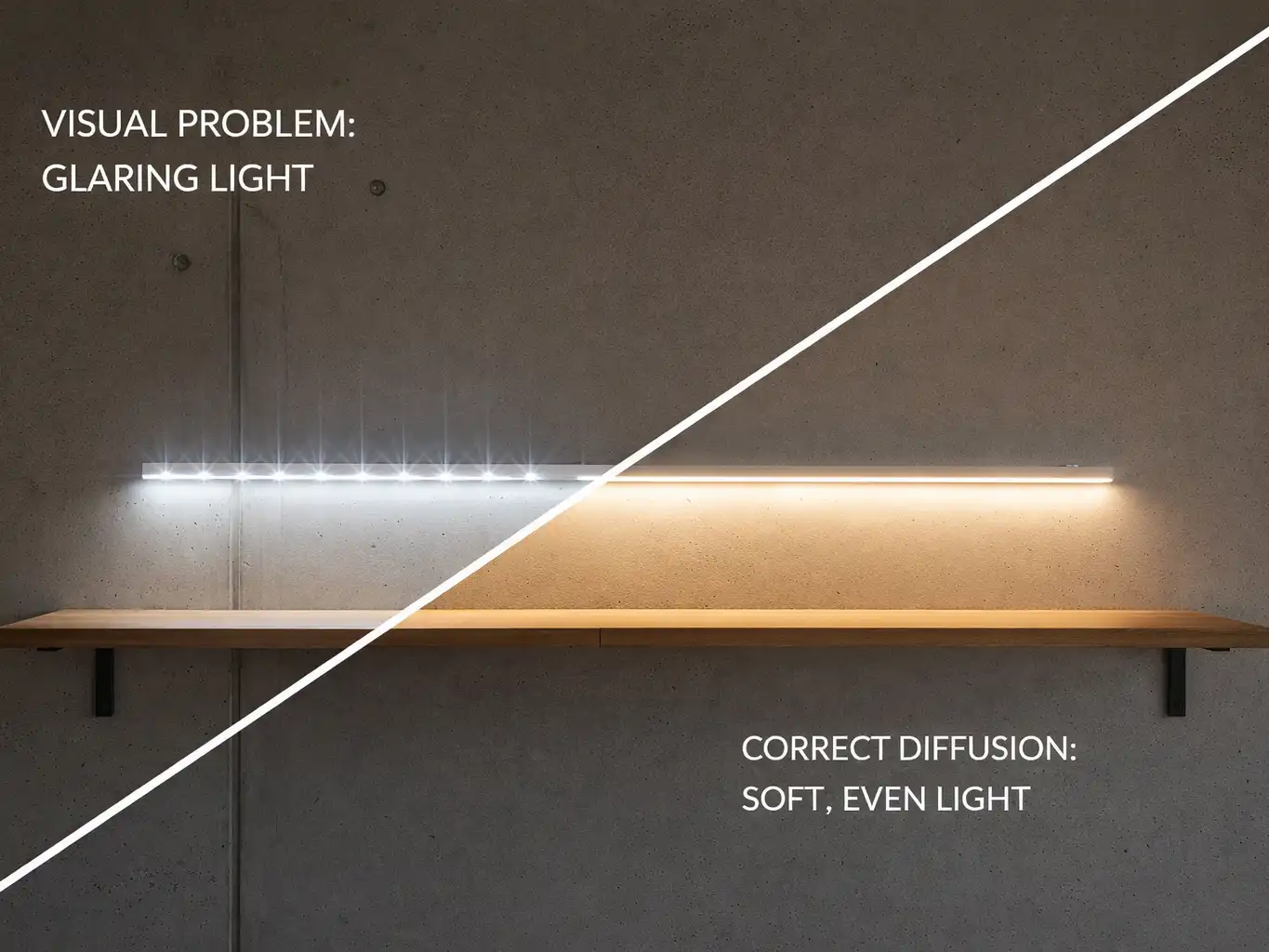
Visual discomfort often stems from choosing the wrong cover.
- Clear Diffusers are for indirect lighting (where you can’t see the fixture).
- Opal/Milky Diffusers are for direct view (where the fixture is visible).
- Pro Tip: If you see “dots” through an Opal cover, your profile is likely too shallow or your LED density is too low.
결론
Choosing the right LED profile is a balance between strip compatibility, thermal performance, and lighting aesthetics. By meticulously matching the strip’s width and wattage to the channel’s dimensions and material mass, you ensure a system that is not only visually stunning but also built to last.
Remember: Measure twice, calculate the heat load once, and always prioritize the “Dot-Free” effect for a truly professional finish.
자주 묻는 질문
관련 게시물