2011년부터 간판 및 LED 스트립 조명 공장

2011년부터 간판 및 LED 스트립 조명 공장

건축 음향을 개선하는 방법: 실용적인 솔루션 및 설계 팁

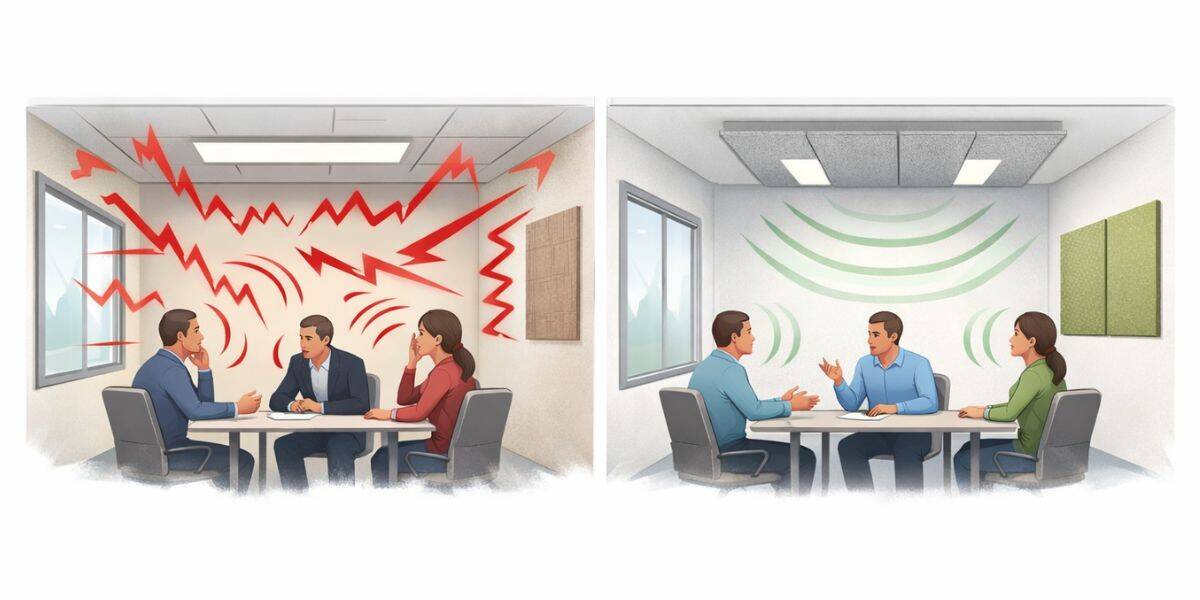
Improving building acoustics means controlling how sound behaves inside a space so it supports comfort, communication, and daily use rather than working against it. Good acoustics reduce unwanted noise, limit echo and reverberation, and help speech remain clear and intelligible. When acoustics are poor, people experience fatigue, distraction, stress, and reduced productivity. This is true in offices and coworking spaces, but also in homes, schools, hospitals, and public buildings where wellbeing and clarity matter just as much as aesthetics.

Improving acoustics is not about eliminating sound completely. It is about managing sound in a way that fits the function of the space. 

This article explains practical ways to improve building acoustics, covering material choices, layout strategies, and modern acoustic solutions used in real projects.

1. What Does “Good Building Acoustics” Mean?

펠트 라이트 픽스처

Good building acoustics refers to how effectively a space controls sound to match its intended use. This involves more than lowering noise levels. It requires understanding how sound travels, reflects, and is perceived by occupants.

One important distinction is between sound absorption, sound blocking, and sound masking. Sound absorption reduces echo and reverberation by capturing sound energy rather than reflecting it. Materials such as acoustic panels, ceiling systems, and felt-based products absorb sound waves and prevent them from bouncing around a room. Sound blocking, by contrast, focuses on preventing sound from passing through walls, floors, or ceilings. This is usually achieved through mass, airtight construction, and structural separation. Sound masking does not reduce noise directly. Instead, it introduces a controlled background sound that makes disruptive noise less noticeable, which is common in open-plan offices.

Acoustics is often mistakenly treated as a synonym for noise reduction, but that view is too narrow. A space can be quiet and still have poor acoustics if speech sounds unclear or if the room feels uncomfortable to use. In offices, poor acoustics reduce focus and increase cognitive load. In residential buildings, they affect privacy and sleep quality. In schools, acoustics influence learning outcomes and speech comprehension. In hospitals, they impact patient recovery and staff performance. In commercial spaces, they shape customer experience and time spent in the environment.

Good building acoustics balance absorption, blocking, and layout decisions to support how people actually use the space.

2. Common Acoustic Problems in Buildings

Several recurring acoustic issues appear across modern buildings, especially where design prioritizes openness and hard finishes.

  • Echo and excessive reverberation
    Sound reflecting repeatedly off untreated surfaces causes noise to linger, making spaces feel louder and more chaotic than they actually are.
  • Speech intelligibility problems
    Reflected sound interferes with direct speech, reducing clarity in meeting rooms, classrooms, and open offices and increasing listening fatigue.
  • Noise transfer between rooms
    Sound travels through walls, ceilings, floors, and shared building systems, affecting privacy in residential, office, and healthcare environments.
  • Overuse of hard surfaces
    Materials such as glass, concrete, drywall, stone, and metal reflect sound efficiently and contribute little to acoustic control when used without compensation.
  • High ceilings and open layouts
    Large volumes and uninterrupted surfaces increase reflection paths, amplifying reverberation unless absorption is added strategically.

3. Practical Ways to Improve Building Acoustics

펠트 라이트 픽스처

Improving acoustics does not require a single solution. Effective results come from combining materials, placement, and design strategies that address how sound behaves in the space.

Surface absorption on walls and ceilings

Adding absorption to room surfaces is one of the most effective ways to reduce echo and improve clarity. Wall-mounted acoustic panels are commonly used, but ceilings are often underutilized despite their impact. Sound naturally travels upward and reflects off ceiling surfaces, making them a critical area for treatment.

Absorptive surfaces should be placed where sound energy is highest, such as near seating areas, workstations, and speaking positions. The goal is not to cover every surface, but to interrupt reflection paths and control reverberation time.

Why ceilings matter in acoustic design

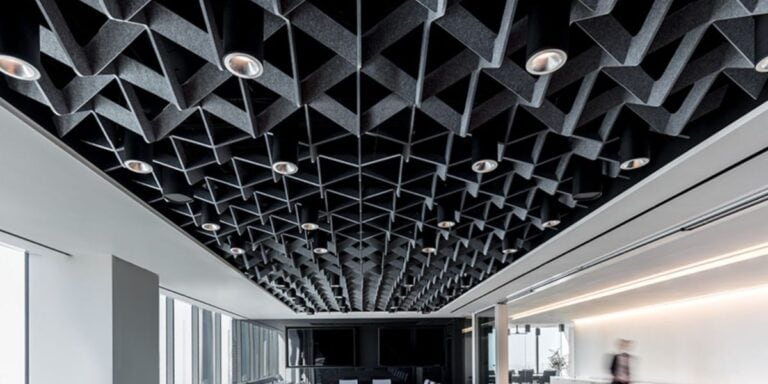
Ceilings influence acoustics more than many people realize. In open spaces, ceiling reflections contribute heavily to overall noise levels. Treating ceilings allows designers to control sound without sacrificing wall space that may be needed for storage, displays, or glazing.

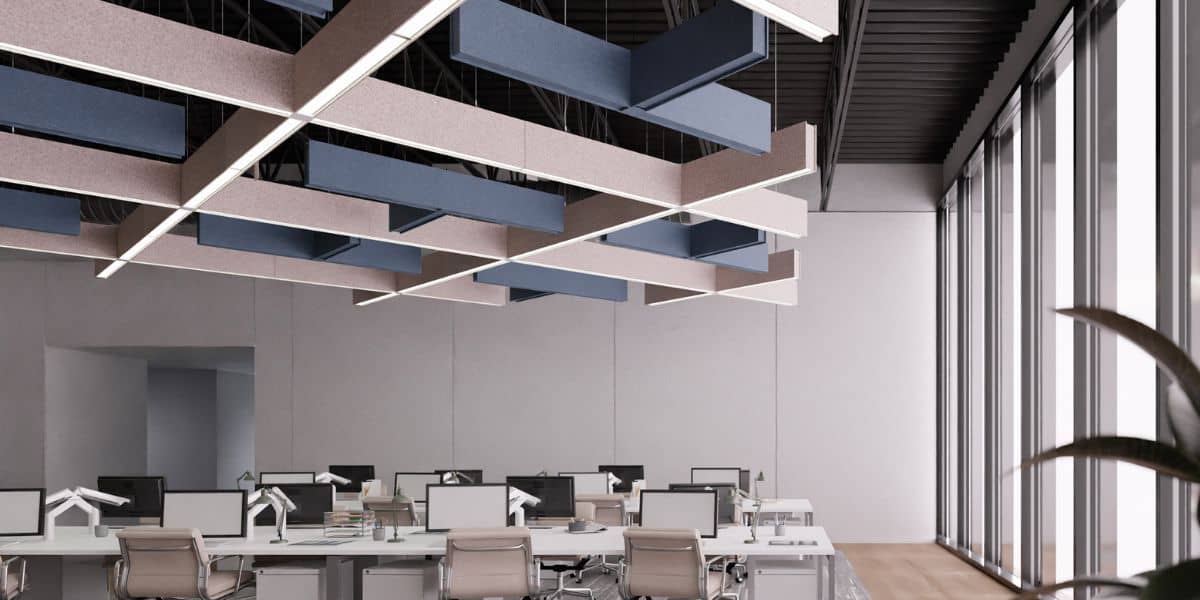
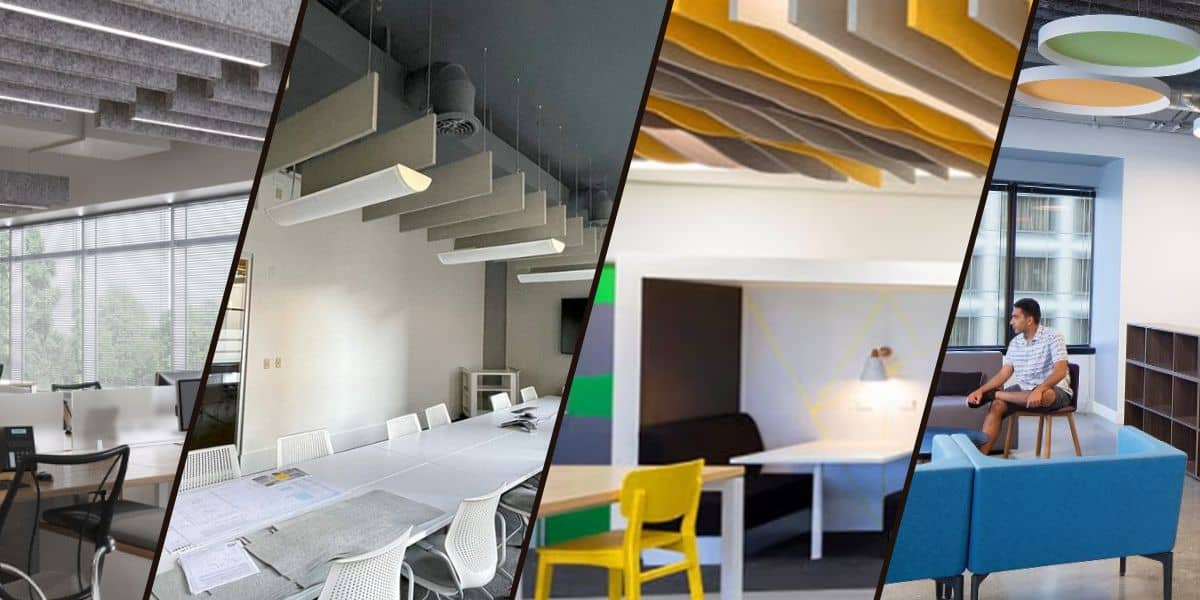
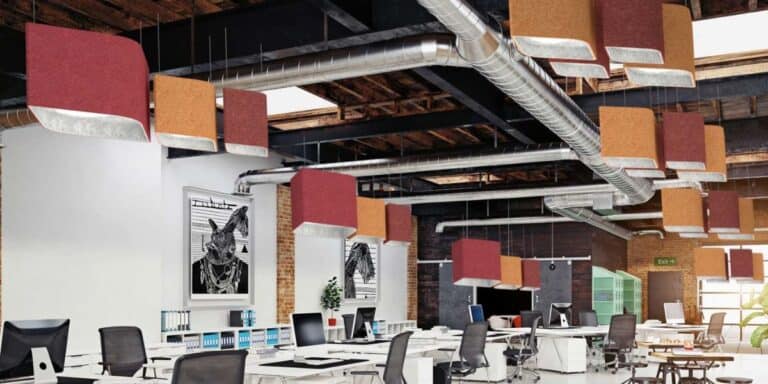
Ceiling-based solutions include acoustic tiles, baffles, and clouds. These systems are particularly useful in spaces with high ceilings or limited wall area. By placing absorption above occupants, sound is controlled closer to its source.

The role of acoustic fixtures in modern buildings

Modern interiors often demand multifunctional elements that serve both technical and aesthetic purposes. This is where acoustic fixtures play an increasingly important role. These elements combine sound absorption with other functions, such as lighting or spatial definition.

Acoustic fixtures are especially valuable in contemporary offices and public spaces where clean design and flexibility are priorities. They allow acoustic treatment to be integrated into the overall design rather than added as an afterthought.

How acoustic lighting improves acoustics without sacrificing design

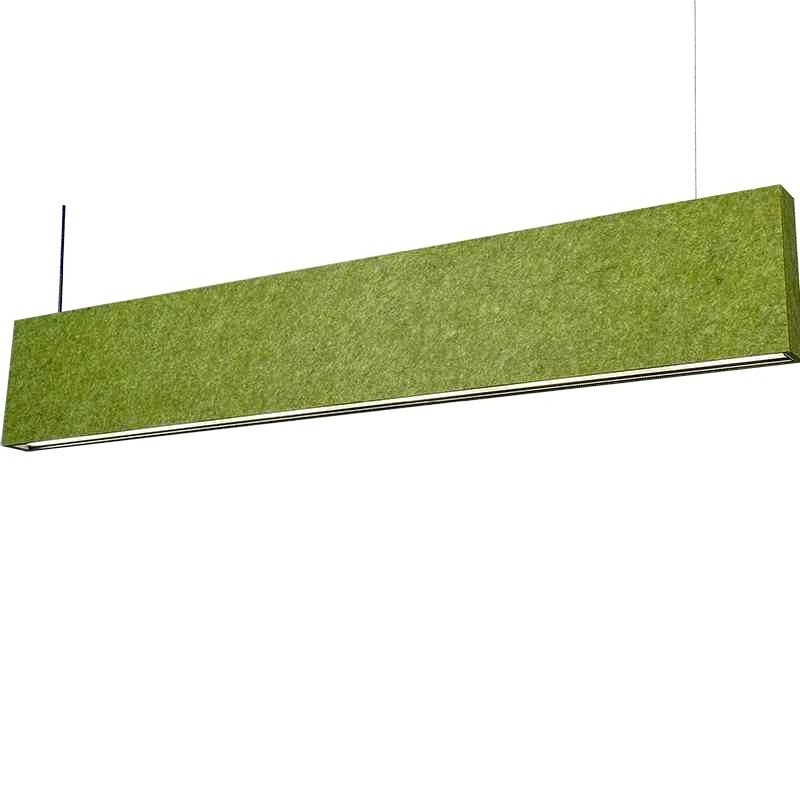
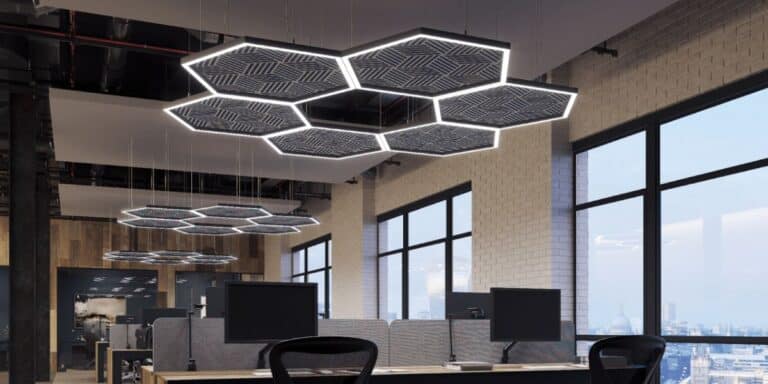
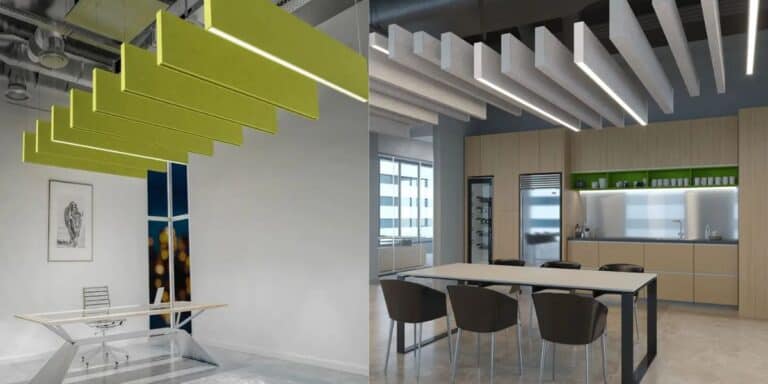
음향 조명 combines sound-absorbing materials with integrated lighting. This approach addresses two essential building systems at once: illumination and acoustic control. Instead of adding separate panels and light fixtures, designers can reduce visual clutter while improving performance.

Used correctly, acoustic lighting helps manage reverberation in open offices, conference rooms, and shared spaces. Products designed for this purpose often take the form of suspended panels or fixtures that absorb sound while providing functional light. When specified thoughtfully, acoustic lighting becomes part of the architectural language of the space rather than a purely technical intervention. Examples of such integrated solutions can be found in modern acoustic lighting systems designed specifically for commercial interiors.

펠트 라이트 픽스처

슬림 눈부심 방지 음향 LED 선형 빛

  • 입력 전압: AC100-277V / AC220-240V, 50-60Hz
  • Housing Size: W58H200 mm / W58H300mm
  • 방출 방향: 아래로
  • Length Option: 1218mm / 1220mm / 1288mm
  • CCT: 3000K / 4000K / 6000K
  • Power: 30W / 32W
  • 광속: 100-110LM/W
  • CRI: >90Ra
  • PF: >0.90
  • 깜박임 없음: 예
  • Beam Angle: 36°
  • IP 등급: IP20
  • 보증: 5년
  • 펠트 어쿠스틱 보드 색상: 빨강/녹색/파랑/회색 48색 이상 옵션

Felt lighting and fixtures in contemporary interiors

Felt-based materials are increasingly used in acoustic applications due to their absorptive properties and design flexibility. Felt lighting and fixtures soften both sound and visual character, making them suitable for collaborative spaces, lounges, and creative environments.

These solutions work well in spaces where a warmer, less technical aesthetic is desired. Felt-based acoustic fixtures can reduce mid- and high-frequency reverberation while contributing to a more comfortable atmosphere.

4. Design Tips That Improve Acoustics

펠트 라이트 픽스처

Many acoustic improvements can be achieved through design and layout choices without altering the building structure.

  • Zoning strategies
    Separate noisy activities from quiet ones by planning layouts intentionally, such as placing meeting areas away from focused work zones.
  • Furniture placement
    Upholstered seating, bookshelves, partitions, and storage units help absorb and diffuse sound when positioned along reflection paths.
  • Use of soft materials and finishes
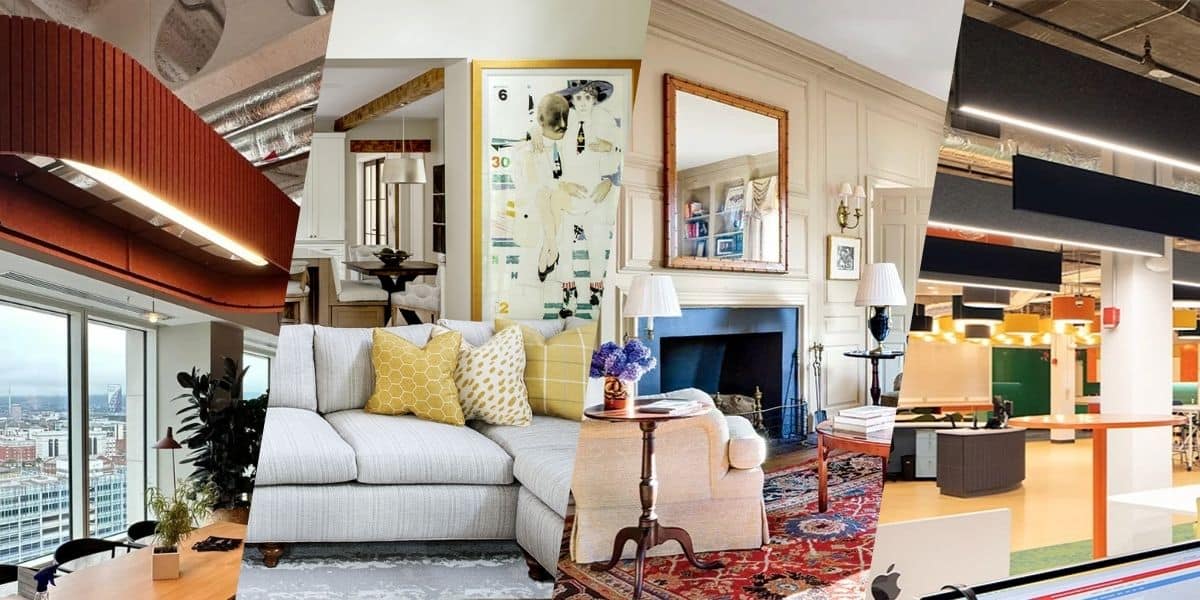
    Carpets, rugs, curtains, and fabric-covered furniture reduce reflected sound, particularly in residential and mixed-use spaces.
  • Prioritizing placement over quantity
    A smaller number of well-placed absorptive elements often performs better than excessive treatment installed without acoustic logic.

5. Acoustic Materials and Solutions Compared

Solution Type주기능최고의 사용 사례음표
Acoustic wall panelsAbsorptionOffices, corridorsReduces echo and improves clarity
Ceiling baffles or cloudsAbsorptionOpen spacesControls reverberation from above
Acoustic lighting panelsLight and absorptionOffices, coworking spacesDual-purpose solution
Felt lighting fixturesAbsorption and designModern interiorsVisual and acoustic balance
Sound masking systemsDistraction controlOpen officesSupports absorption strategies

This comparison highlights that no single solution addresses every acoustic challenge. Each option serves a specific role within a broader acoustic strategy.

6. Where Acoustic Lighting Fits Best in Building Design

펠트 라이트 픽스처

Acoustic lighting is most effective in spaces where both sound control and lighting quality are critical, and where wall-based solutions are limited.

In offices and coworking spaces, acoustic lighting helps manage noise in open-plan environments. It reduces reverberation while providing consistent, task-appropriate illumination. This supports focus and reduces fatigue without altering the open character of the space.

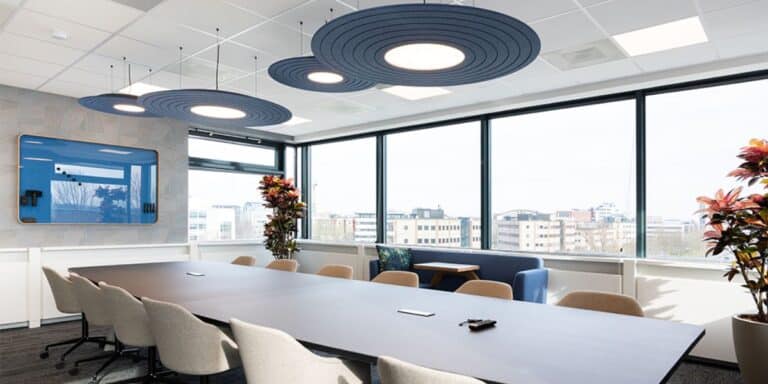
Conference rooms benefit from acoustic lighting because speech clarity is essential. Ceiling-based absorption near the table reduces reflections that interfere with conversation, while integrated lighting ensures even visibility for participants.

Educational buildings often face constraints on wall space due to boards, displays, and storage. Acoustic lighting panels provide absorption without competing with functional wall elements, improving speech intelligibility in classrooms and lecture spaces.

Healthcare and public spaces require acoustics that support calm and privacy. Acoustic lighting can help reduce background noise in waiting areas and corridors while maintaining a clean, uncluttered ceiling design.

In all these cases, acoustic lighting panels are particularly useful when wall space is limited or visually sensitive, making ceiling integration the most practical approach.

펠트 라이트 픽스처

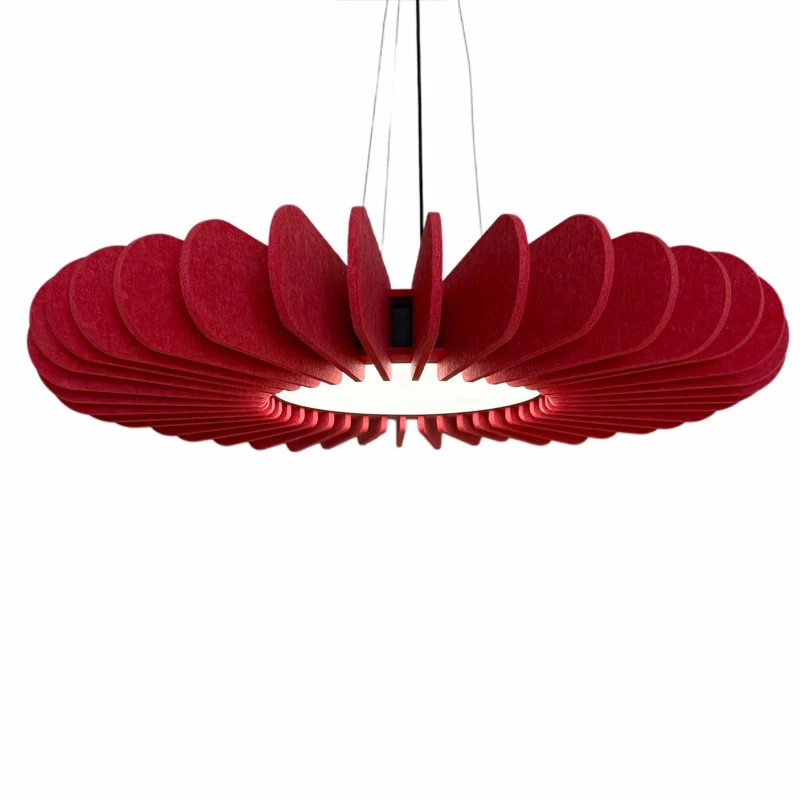
초박형 슬림 라운드 어쿠스틱 LED 펜던트 라이트

  • 입력 전압: AC100-277V / AC220-240V, 50-60Hz
  • Housing Size: 120 mm
  • 방출 방향: 아래로
  • Size DH: 50080mm
  • CCT: 3000K / 4000K / 6000K
  • Power: 15W
  • 광속: 100-110LM/W
  • CRI: >90Ra
  • PF: >0.90
  • 플리커 무료: 예
  • 빔 각도: 120°
  • IP 등급: IP20
  • 보증: 5년
  • Acoustic Panel Color Option: Red / Green / Blue / Grey more than 48 colors option

7. Common Mistakes in Acoustic Design

Even well-intentioned projects often fall short due to avoidable design assumptions.

  • Ignoring ceiling surfaces
    Treating only walls leaves a major reflection plane untouched, especially in rooms with hard flooring.
  • Relying on decorative elements without acoustic value
    Not all visually soft materials absorb sound effectively, leading to minimal real-world improvement.
  • Expecting one solution to solve all problems
    Acoustics requires a system-based approach combining absorption, blocking, and layout strategies.
  • Poor placement of acoustic elements
    Even high-quality materials underperform when installed away from key reflection points or sound sources.

Building acoustics is moving toward integration rather than add-on solutions. Systems that combine lighting, absorption, and even air management are becoming more common as designers seek efficiency and visual clarity.

Modular 음향 설비 are gaining popularity because they adapt to changing layouts, especially in hybrid work environments. Flexibility is now a core requirement.

There is also a growing focus on wellbeing. Acoustics is increasingly recognized as a factor in mental health, productivity, and overall comfort, influencing how spaces are designed from the earliest stages.

결론

Improving building acoustics requires a balanced approach. Effective solutions combine sound absorption, smart placement, and an understanding of how spaces are used. Walls, ceilings, furnishings, and layout all contribute to acoustic performance.

Integrated solutions such as acoustic lighting and well-designed acoustic fixtures allow sound control to coexist with modern design requirements. When applied thoughtfully, these strategies create spaces that are comfortable, functional, and supportive of wellbeing without relying on excessive or intrusive treatments.

자주 묻는 질문

음향 설비음향 설비
음향 고정 장치가 회의실의 에코를 줄입니까? | 명확한 음성과 더 나은 음향을 위한 최상의 배치 전략
예, 음향 고정 장치는 회의실의 에코를 줄일 수 있습니다. 반사된 소리 에너지를 흡수하여 잔향을 줄이고 산만 반사를 줄여서 말을 이해하기 쉽게 만듭니다. 이 기사는 음향 고정 장치가 에코를 감소시키는 방법과 회의실에서 음성 선명도를 향상시키기 위한 최상의 배치 전략을 설명합니다. 실용적으로...
PCB LEDPCB LED
스마트 거리 조명 응용 프로그램을 위한 PCB LED
스마트 가로등의 PCB LED는 발광 다이오드를 목적으로 설계된 인쇄 회로 기판에 직접 장착하여 안정적인 전기 작동, 제어된 방열 및 장기간의 서비스를 통해 일관된 광 출력을 보장하는 실외 조명 솔루션입니다. 이러한 솔루션은 스마트 거리 조명 시스템에 널리 적용됩니다.
LED 시트 라이트 대 LED 스트립 라이트: 차이점은 무엇입니까?
LED 조명은 상업용 및 장식용 프로젝트 모두에서 다용도로 사용되는 선택이 되었으며, 백라이트 표면에서부터 유연한 액센트 조명까지 다양한 솔루션을 제공합니다. 많은 옵션 중에서 LED 시트 조명과 LED 스트립 조명은 유사한 구성 요소를 공유하지만 매우 다른 용도로 사용하기 때문에 종종 비교됩니다. 이해...
LED 선반 조명 아이디어LED 선반 조명 아이디어
소매 선반의 제품 디스플레이를 향상시키기 위해 LED 스트립 조명을 사용하는 방법
효과적인 소매 선반 조명은 고객 인식에 직접적인 영향을 미치고 판매를 높일 수 있습니다. LED 스트립 조명은 슈퍼마켓, 부티크 및 전문점에서 제품을 강조하고 시각적 매력을 부여하며 전반적인 쇼핑 경험을 개선하기 위해 널리 사용됩니다. 높은 CRI LED 스트립을 사용하여 소매업체는 실제 제품 색상을 선보일 수 있고 디스플레이를 더 많이 만들 수 있습니다.
실외 프로젝트를 위한 방수 LED 스트립 조명을 선택하는 방법
야외 공간을 개선하는 데 있어 올바른 조명은 모든 차이를 만들 수 있습니다. 파티오를 업데이트하든, 통로를 강조하든, 단순히 뒷마당에 분위기를 더하든, 처음부터 현명한 선택을 하면 장기적인 만족도를 보장할 수 있습니다. 하지만 시중에 수많은 옵션이 있기 때문에 올바른 조명을 선택하는 것은 쉽지 않습니다.
플러그 없이 LED 스트립을 사용할 수 있나요?플러그 없이 LED 스트립을 사용할 수 있나요?
플러그 없이 LED 스트립을 사용할 수 있나요?
LED 스트립 조명은 에너지 효율, 유연성 및 가변성, 다양한 적용 시나리오로 인해 장식 및 조명으로 널리 선택되고 있습니다. 하지만 많은 사람들이 "LED 스트립 조명이 플러그 없이도 제대로 작동할 수 있나요?"라고 질문할 수 있습니다. 사실, 올바른 설치 방법과 전원 솔루션을 사용하면 ...

공유하다:

페이스북
지저귀다
핀터레스트
링크드인
구독하다
알림
guest
0 댓글
가장 오래된
최신 가장 많이 투표된
인라인 피드백
모든 댓글 보기

SignliteLED 블로그 검색

카테고리

위로

지금 견적을 받으세요