2011년부터 간판 및 LED 스트립 조명 공장

2011년부터 간판 및 LED 스트립 조명 공장

LED 채널 가이드: 100% spotless 조명을 달성하는 방법(유형, 크기 및 선택)

If you want truly professional, dot-free linear lighting, using a proper LED channel is not optional — it is essential. An LED channel directly determines heat dissipation, light diffusion, visual comfort, and the long-term reliability of your LED strip lighting system. Without it, even high-quality LED strips can suffer from glare, visible hotspots, and accelerated lumen depreciation caused by poor thermal control.

Many lighting issues blamed on LED strips are actually the result of skipping the aluminum LED channel. When LED tape is installed directly onto wood, drywall, or plastic surfaces, heat builds up quickly and light remains harsh and uneven. A well-designed LED channel system solves these problems by acting as both a heat sink and an optical control housing, turning raw LED strips into refined architectural lighting.

In this guide, you will learn how to choose the right LED channel for different applications, understand critical sizing rules, compare diffuser options, and apply practical buying tips. Whether you are specifying a project or planning to buy LED channel systems for installation, these principles will help you achieve consistent, spotless linear illumination. Inspiration Gallery: Top Applications of LED Aluminum Profiles

What Is an LED Channel and Why Do You Need One?

Technical Definition and Core Function

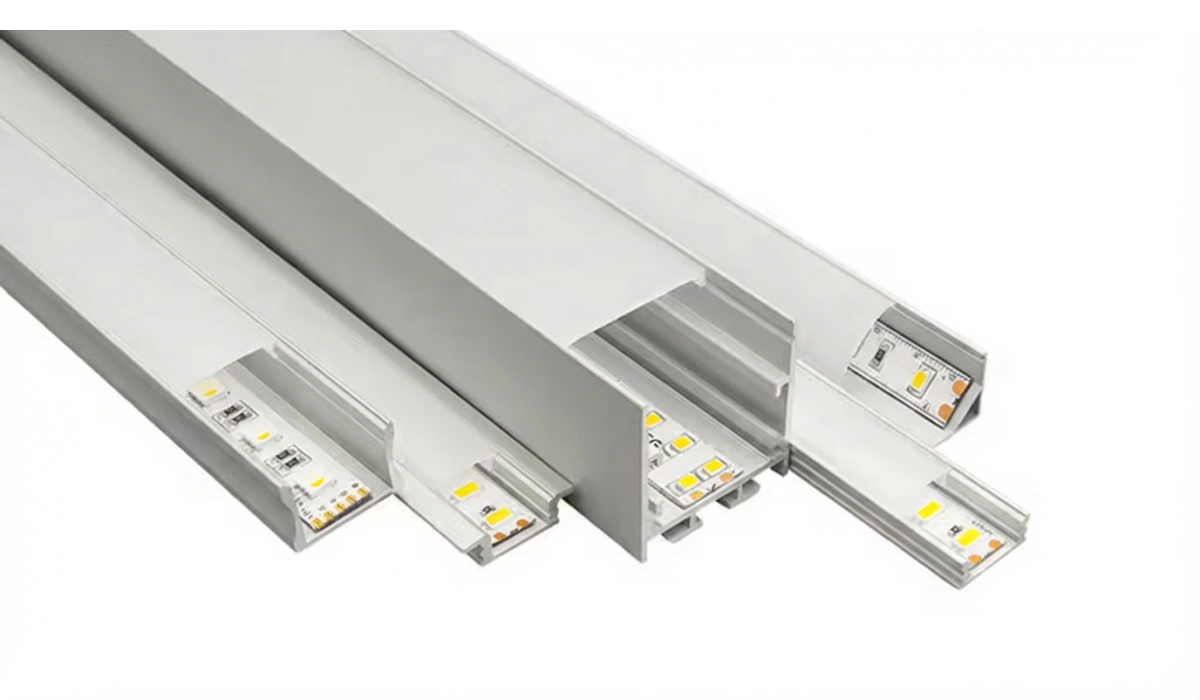
An LED channel (also called an LED strip channel or aluminum LED profile) is a rigid housing system designed to mount, protect, cool, and visually refine LED strips. It typically consists of an extruded aluminum body, a diffuser cover, and mounting accessories such as clips and end caps.

In professional lighting applications, an LED channel is not an accessory — it is a core system component. It transforms exposed LED tape into a controlled, durable, and architecturally integrated linear lighting solution.

Heat Dissipation: The Foundation of LED Longevity

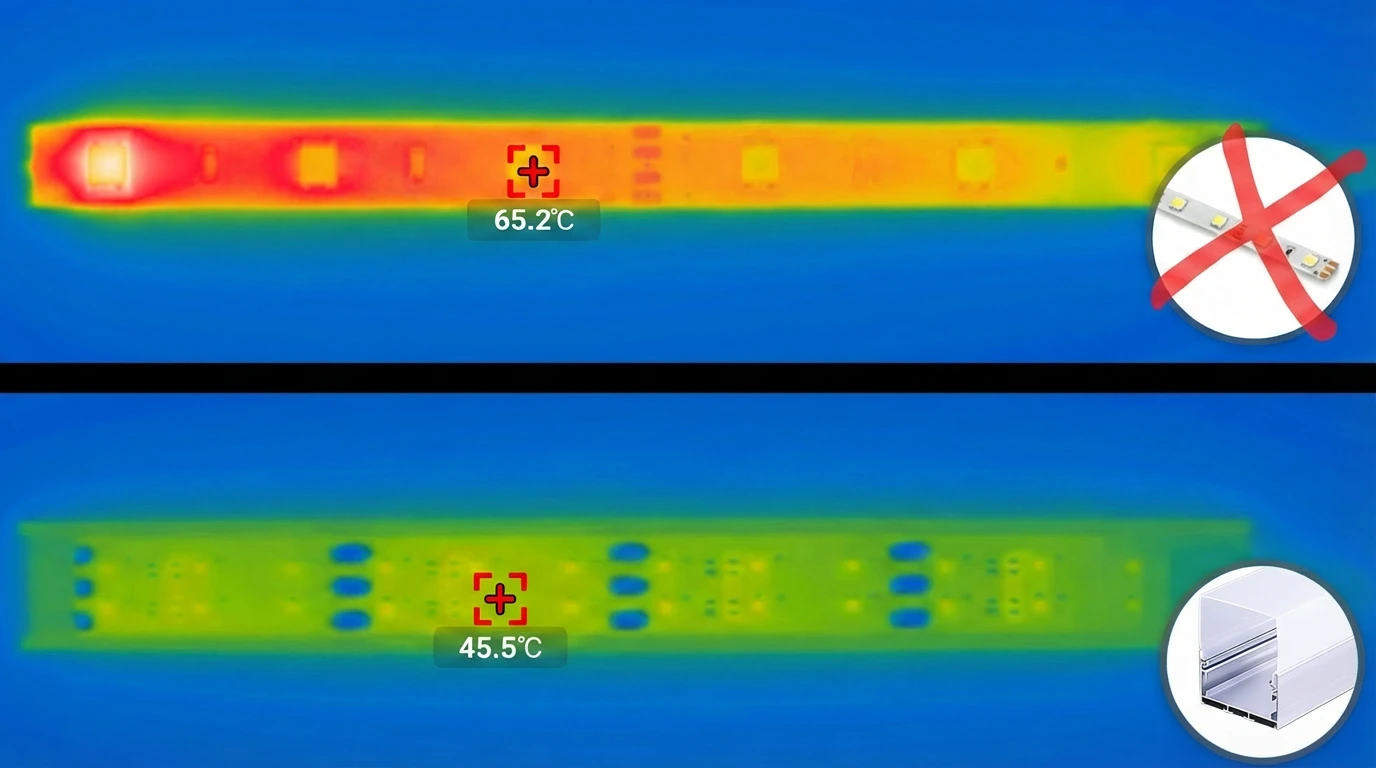
Thermal imaging comparison showing heat dissipation efficiency of aluminum LED channels vs bare strips

LED strips generate heat at the PCB level. Without efficient thermal management, junction temperatures rise, leading to faster lumen depreciation and premature failure. An aluminum LED channel addresses this by acting as a passive heat sink. Aluminum has high thermal conductivity (around 205 W/m·K), dramatically outperforming plastic materials.

When an LED strip is installed inside an aluminum LED channel, heat spreads along the extrusion and dissipates into the surrounding air. This lowers operating temperature and improves lumen maintenance. Quality LED strips used with properly sized aluminum LED channels can exceed 50,000 hours (L70), while strips mounted directly on wood or plastic surfaces may experience up to 30 percent faster light decay.

Engineering takeaway: an aluminum LED channel is a thermal management device that directly extends LED lifespan and stabilizes system performance.

Dot-Free Performance: Turning Points into Lines

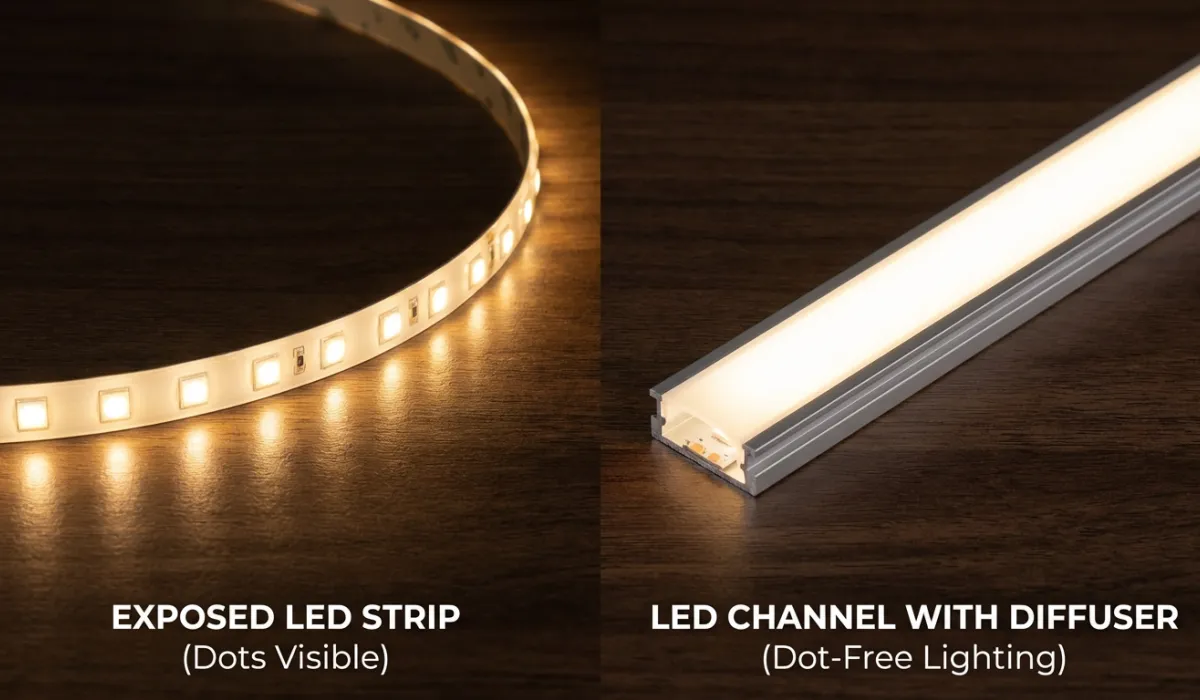
comparison between exposed LED strip and LED channel with diffuser for dot free lighting

Raw LED strips produce discrete points of light because individual diodes are spaced along the PCB. Without optical control, this creates visible hotspots, especially in shallow or direct-view installations.

An LED channel improves visual uniformity through optical diffusion:

  1. Channel depth increases the distance between the LED source and the diffuser
  2. The diffuser spreads and blends the emitted light
  3. The result is a continuous linear effect instead of visible LED dots

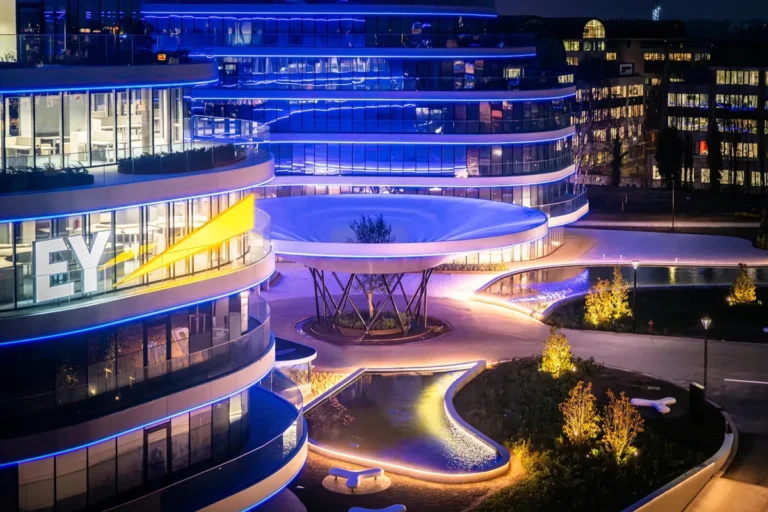
This optical control is critical for applications such as architectural coves, ceiling reveals, wall grazing, and high-end cabinetry lighting.

Without a properly sized LED channel and diffuser combination, achieving truly spotless linear lighting is extremely difficult, even when using high-density LED strips.

Protection and Architectural Integration

Beyond thermal and optical performance, an LED channel provides mechanical protection and supports clean architectural detailing.

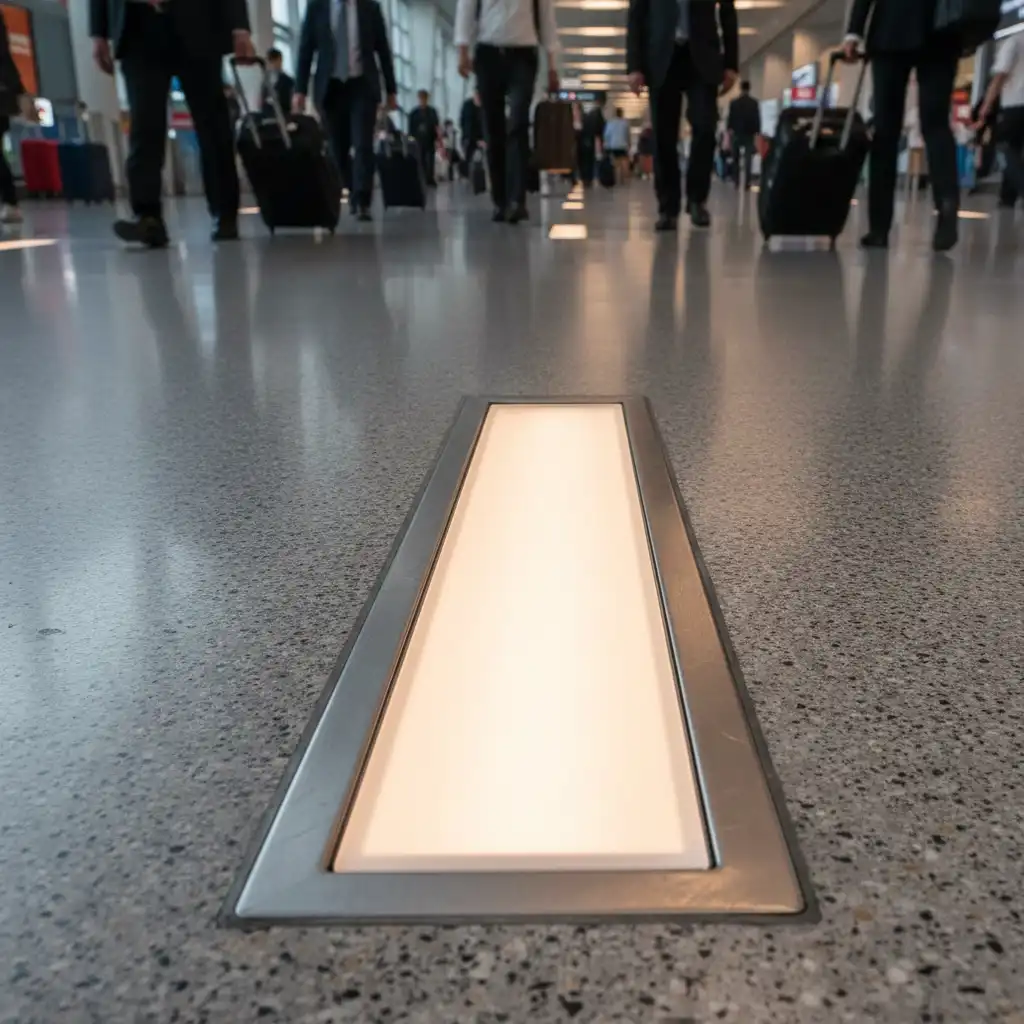
Close-up of a recessed LED channel providing mechanical protection in a high-traffic commercial area.

물리적 보호
• Shields LED strips from dust, impact, and accidental contact
• Prevents PCB flexing and solder joint stress
• Extends usable life in commercial and high-traffic environments

Architectural finish
• Creates straight, clean light lines
• Conceals wiring and mounting imperfections
• Enables recessed, trimless, and seamless lighting details

For designers and engineers, the LED channel functions as both a lighting component and a construction element, bridging electrical systems and architectural finishes.

Aluminum vs. Plastic LED Channels (Why Material Matters)

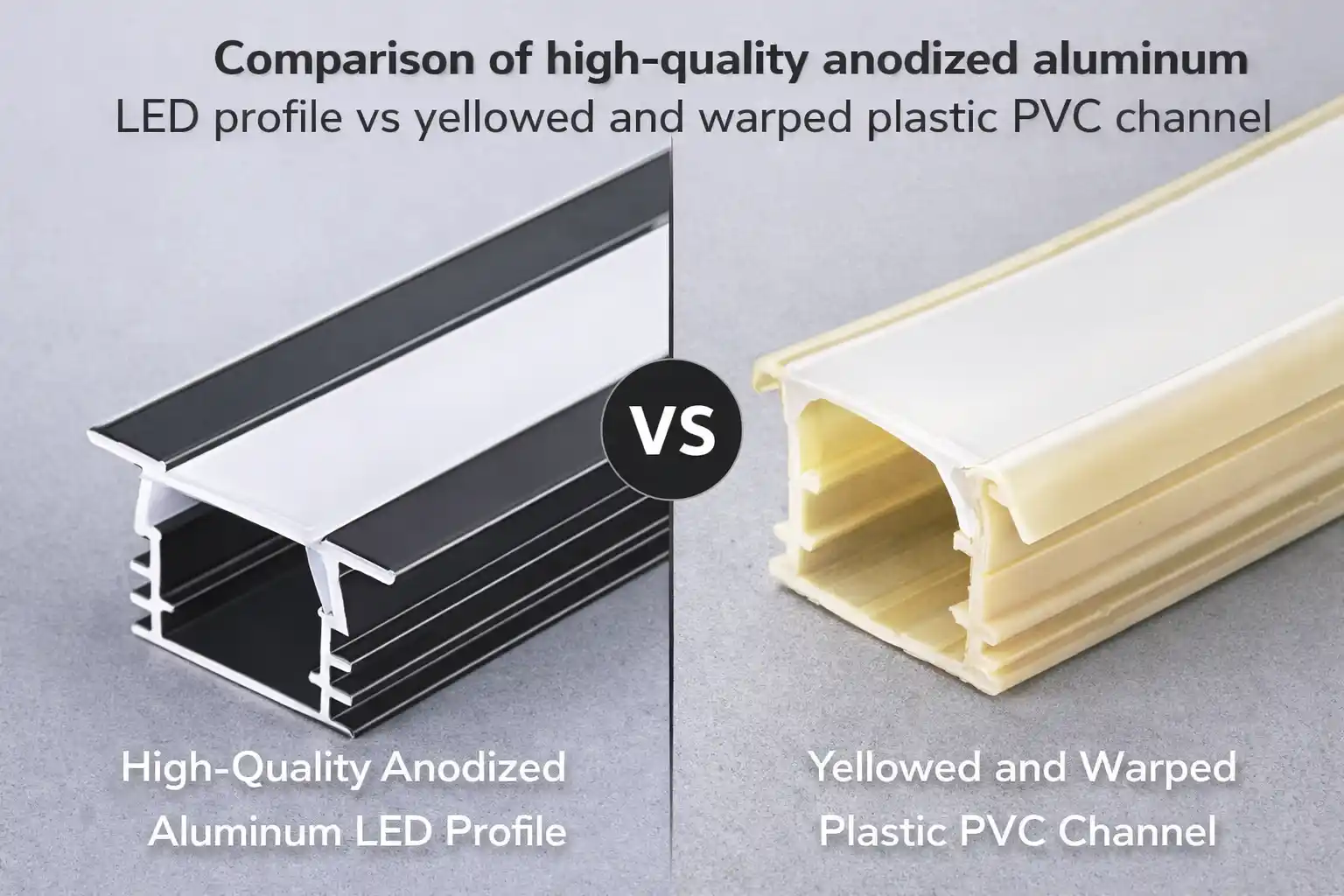
Comparison of high-quality anodized aluminum LED profile vs yellowed and warped plastic PVC channel.

기능알루미늄 LED 채널Plastic / PVC Channels
열 관리Excellent heat dissipation, stabilizes LED temperaturePoor heat transfer, traps heat
내구성Rigid, impact-resistant, heat-resistantCan warp, crack, or discolor over time
루멘 유지Supports long-term brightness stabilityHeat buildup accelerates lumen loss
미적 품질Architectural, professional finishOften looks temporary or low-end

Plastic LED channels may be acceptable for short-term or decorative use, but aluminum LED channels are the industry standard for architectural, commercial, and high-output lighting where performance and longevity are critical.

Types of LED Channels (By Installation Method)

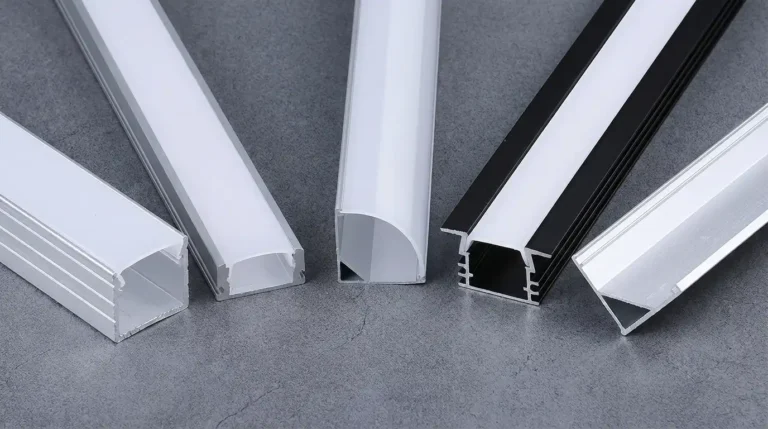
Selecting the right LED channel depends on how it will be integrated into the space. The installation method directly affects thermal performance, light diffusion, glare control, and construction complexity. The three primary categories are surface mounted, recessed (including trimless), and corner or angled LED channels.

Surface Mounted LED Strip Channels

Surface mounted LED channels are the most versatile and widely used. Installed directly onto finished surfaces such as wood, cabinetry, metal, or masonry, they are ideal for retrofit projects and furniture-integrated lighting. Typical applications include under-cabinet lighting, shelving illumination, and task lighting.

A key technical factor is channel height, which influences optical blending and dot visibility.

Channel HeightTypical RangeOptical Effect권장 사용
Low Profile7–10 mmMinimal LED-to-diffuser distance; higher risk of visible dotsDecorative accents, low-output strips
Standard Profile12–15 mmImproved light blending and glare controlGeneral task and architectural lighting
Deep Surface Profile16–20+ mmSuperior diffusion and reduced hotspot visibilityHigh-density or COB LED strips

Deeper LED channels provide better light spread and more uniform output, which is critical for reducing visible LED points in direct-view installations.

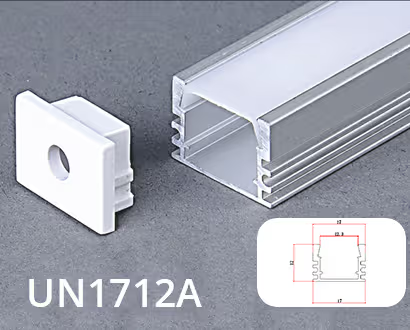
UN1712A

표면 장착형 알루미늄 프로파일

무게:0.141KG
두께: 0.8mm
PC 색상: 밀크 화이트
Size: L1000*W17*H12mm
엔드 캡/클립: 1쌍/m
알루미늄 색상: 실버/블랙

Recessed and Trimless LED Strip Channels

Recessed LED channels are installed flush with surrounding building materials, producing a clean, integrated lighting effect. Trimless, also called plaster-in LED channels, eliminate visible edges entirely and create a seamless “light slot,” making them ideal for high-end architectural projects. These channels are typically embedded into drywall ceilings or wall assemblies.

기능Recessed ChannelTrimless / Plaster-in Channel
Installation StageAfter surface cut-outBefore final plaster and finishing
Visible FrameThin trim edge visibleNo visible trim after finishing
Aesthetic ResultClean but defined openingSeamless “light slot” effect
Skill Requirement보통High (requires drywall finishing precision)
일반적인 애플리케이션Ceilings, wall slots, cabinetryLuxury residential, hotels, galleries

Deeper recessed LED channels are often paired with high-density LED strips to improve optical mixing and achieve spotless linear lighting.

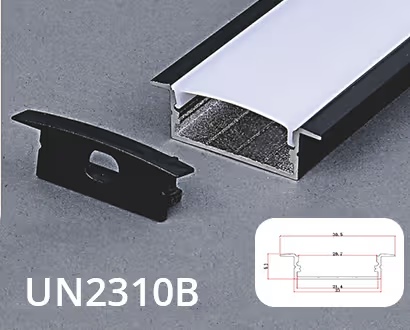
UN2310B

매립형 알루미늄 프로파일

무게:0.102KG
두께: 0.8mm
PC 색상: 밀크 화이트
Size: L1000*W23*H10mm
엔드 캡/클립: 1쌍/m
알루미늄 색상: 실버/블랙

Corner and 45° LED Strip Channels

Corner and 45-degree LED channels are designed to project light diagonally, making them ideal for indirect lighting where vertical and horizontal surfaces meet. By shifting the beam angle, they reduce glare and improve light distribution across adjacent surfaces. Common uses include cabinet corners, stair details, display shelving, and cove transitions.

설치 위치Lighting PurposePerformance Advantage
Under cabinets (rear corner)Countertop task lightingDirects light outward, reduces backsplash shadows
Ceiling-to-wall junctionIndirect ambient lightingCreates soft wall wash effect
Shelf front corners조명 표시Evenly illuminates vertical objects
Step and stair cornersSafety and accent lightingImproves visibility without direct glare

Corner LED channels enhance perceived brightness and visual comfort without increasing wattage, making them efficient for layered lighting design. Installation Guide: Mastering 45° Corner LED Aluminum Profiles.

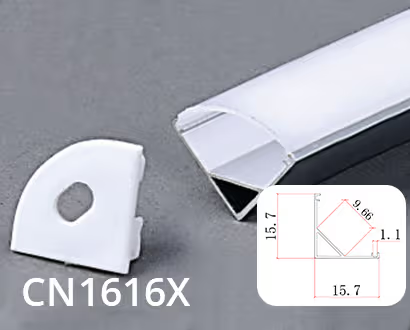
CN1616X

코너 알루미늄 프로파일

무게:0.093KG
두께: 0.8mm
PC 색상: 밀크 화이트
Size: L1000*W16*H16mm
엔드 캡/클립: 1쌍/m
알루미늄 색상: 실버/블랙

Installation Type Comparison Overview

The installation method of an LED channel influences both construction requirements and optical performance. The summary below helps simplify specification decisions.

채널 유형장착 방법Visual StyleTypical Depth...에 최선을 다하다설치 복잡성
표면 장착Fixed onto finished surfaceVisible linear fixtureShallow to deepCabinets, shelves, retrofits낮음
움푹 들어간Installed into cut-out slotFlush, integratedMedium to deepCeilings, walls, millworkMedium
Trimless / Plaster-inEmbedded before finishingSeamless architectural slotMedium to deepLuxury architectural projects높음
Corner / 45°Mounted at inside anglesIndirect, angled lightShallow to mediumUnder cabinets, coves, displaysLow to medium

Choosing the appropriate LED channel type ensures the lighting system aligns with both construction constraints and the desired visual effect.

LED Channel Sizes: Width, Depth, and Length Explained

LED channel size is a critical factor in linear lighting design. Choosing the wrong dimensions can lead to visible hotspots, overheating, and reduced lighting performance. Proper sizing ensures mechanical fit, stable thermal behavior, and smooth optical diffusion.

This section explains how to select the correct width, depth, and length for a professional LED channel installation.

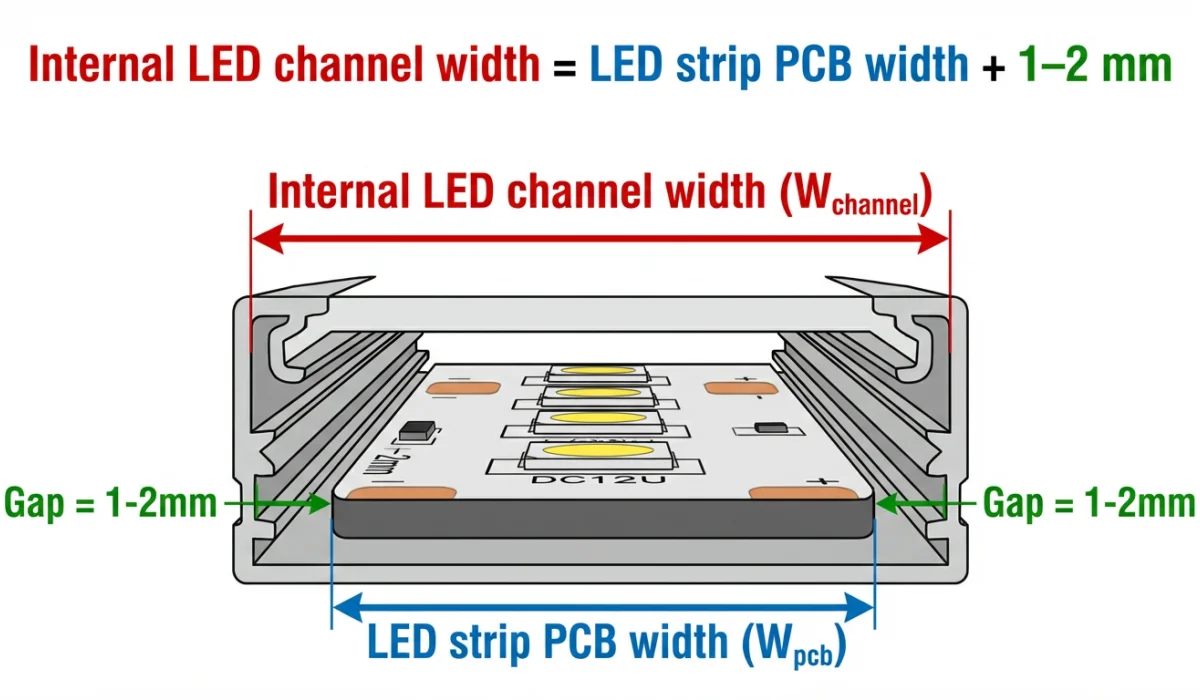
The Internal Width Rule

When specifying an LED channel, the most important dimension is the internal usable width, not the external profile size. This determines whether the LED strip fits correctly and whether there is adequate room for wiring, solder joints, and connectors.

A practical engineering rule is to allow clearance on both sides of the LED strip.

Recommended guideline:
Internal LED channel width = LED strip PCB width + 1–2 mm

Technical cross-section diagram showing internal width clearance for LED strip installation. (1)

This added space prevents compression, reduces stress on solder pads, and simplifies installation.

LED Strip PCB WidthMinimum Internal Channel Width음표
8mm10 mmSuitable for single-row SMD strips
10 mm12mmCommon for high-density 2835 or 5050 strips
12mm14 mmRecommended for RGB or higher-power strips
16 mm18–20 mmNeeded for wide COB or dual-row strips

Undersized LED channels restrict airflow and trap heat, reducing long-term reliability.

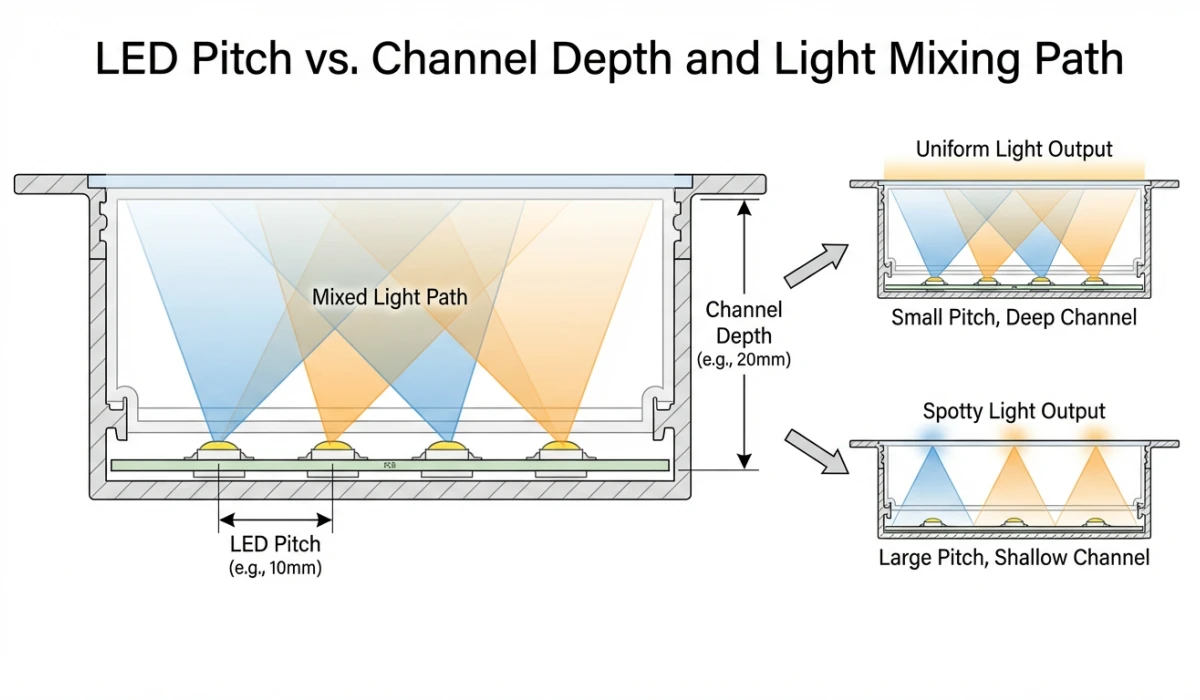
Depth vs. LED Pitch: The Spotless Lighting Formula

LED channel depth is a primary factor in light diffusion. Greater depth increases the distance between the LED source and the diffuser, allowing light to blend more effectively. For dot-free performance with a milky diffuser, channel depth should be equal to or greater than the LED pitch.

diagram showing relationship between LED pitch and LED channel depth for diffusion

LED 밀도Approx. LED PitchRecommended Minimum Channel Depth
60 LED/m~16.6 mm16 mm or deeper
120 LED/m~8.3 mm12 mm or deeper
180 LEDs/m~5.5 mm10 mm or deeper
COB LED 스트립Continuous phosphor layer8–10 mm typically sufficient

Shallow LED channels increase the risk of visible hotspots, especially with high-density LED strips.

Shallow vs. Deep Channels: Performance Trade-offs

Deeper LED channels improve light uniformity but require more installation space. The choice depends on visual expectations and construction constraints.

Channel Depth장점제한 사항Best Applications
Shallow (7–10 mm)Slim appearance, fits tight spacesHigher risk of visible dotsHidden coves, indirect lighting
Medium (12–15 mm)Good diffusion, balanced designSlightly more visible profileCabinets, shelves, general architectural use
Deep (16–25+ mm)Excellent hotspot suppression, reduced glareRequires more installation depthPremium architectural lighting, COB strips

Where the LED channel is directly visible, deeper profiles significantly improve visual comfort and perceived light quality.

Standard Lengths and Engineering Considerations

LED channels are manufactured in standard lengths, and selecting the correct size improves alignment and installation efficiency.

Standard LengthCommon Use음표
1 meterRetail and DIY projectsEasy handling and shipping
2 metersResidential and light commercialFewer joints, cleaner lines
3 metersArchitectural projectsReduces connection points
8 ft (94 in)North American commercial projectsMatches common building module spacing

Longer LED channels reduce the number of joints, improving visual continuity and mechanical strength. However, installers must consider thermal expansion and leave a small gap between sections.

Width, Depth, and Thermal Performance

LED channel dimensions also influence thermal behavior. Wider and deeper aluminum profiles provide greater surface area for heat dissipation, helping maintain lower junction temperatures and better lumen maintenance. Undersized LED channels can trap heat, accelerating light decay and shortening system lifespan. Proper sizing therefore supports optical performance, glare control, and long-term reliability, turning a simple LED strip into a professional-grade linear lighting system.

Diffusers Matter: Clear vs Milky vs Black Covers

The diffuser is the primary optical control component in an LED channel system. While the aluminum LED channel manages heat and structure, the diffuser determines how light is seen — affecting brightness, glare, softness, and whether LED dots remain visible. Choosing the wrong LED channel diffuser can result in harsh light, visible hotspots, or reduced visual comfort, even when the channel size is correct.

Diffusers are engineered to balance light transmission and diffusion, and each type serves a different lighting goal.

Diffuser Type광선의 투과시각 효과...에 최선을 다하다
Clear~90–95%Maximum brightness, LED dots often visibleIndirect lighting, concealed coves, hidden channels
Milky (Opal)~70–75%Soft, uniform light, dot-free appearanceUnder-cabinet, shelves, wall slots, general architectural lighting
Black (Smoke)~30–45%Channel looks dark when off, subtle glow when onHigh-end retail, hospitality, cinema, minimalist interiors

Clear diffusers prioritize output over softness and are best where the LED channel is hidden from direct view. Milky diffusers provide the best balance between efficiency and visual comfort and are the standard choice for visible linear lighting. Black diffusers focus on aesthetics, helping the LED channel visually disappear when off, though with reduced brightness when illuminated.

Deep Dive: How to Choose the Right LED Channel Diffuser (Clear vs. Milky vs. Black)

Material Matters: PC vs PMMA

LED channel diffusers are typically made from polycarbonate (PC) or acrylic (PMMA), and material choice affects durability and long-term appearance.

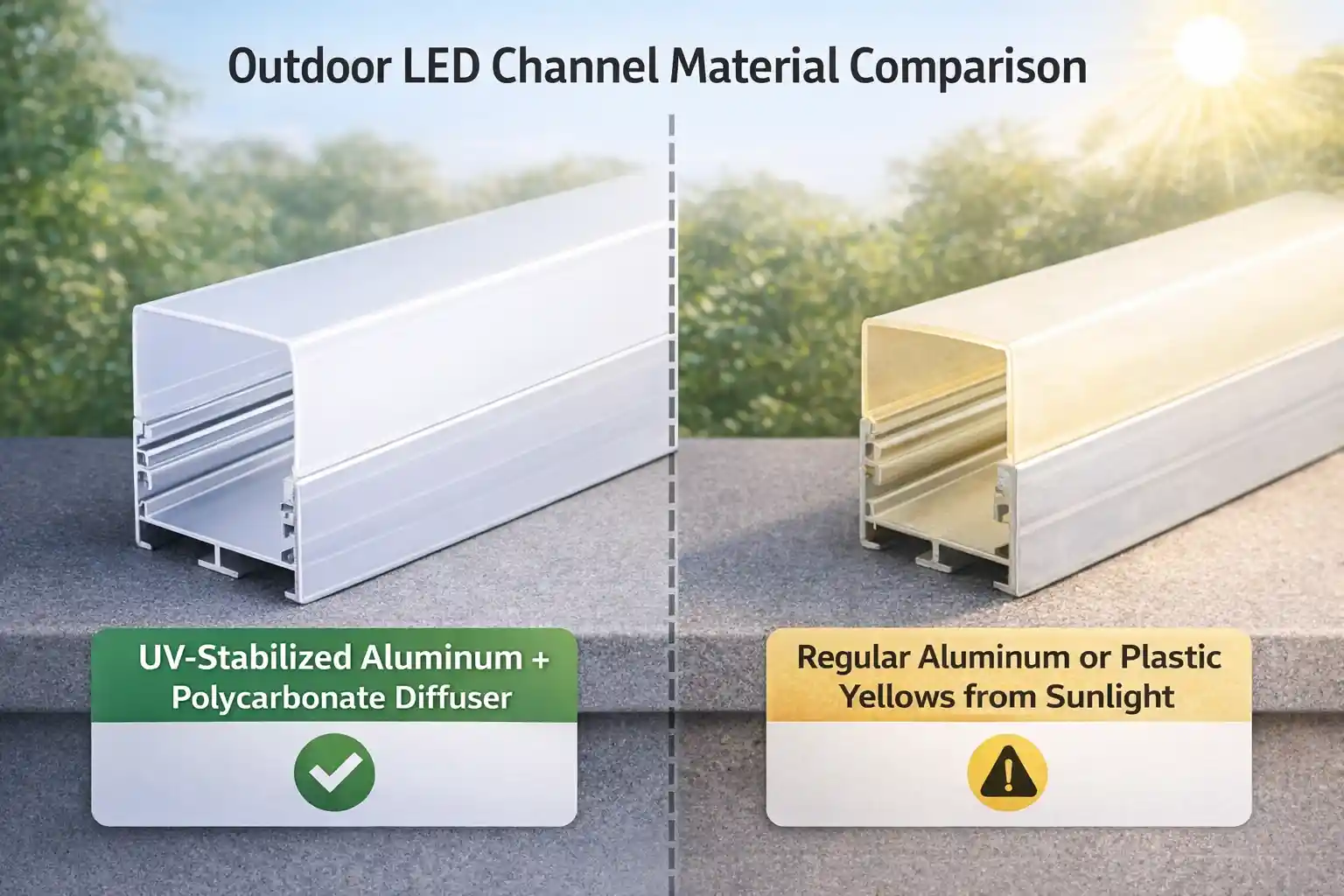
Polycarbonate offers high impact resistance and better heat tolerance, making it suitable for high-power LED channel installations. UV-stabilized PC also resists yellowing in outdoor or sun-exposed environments.

PMMA provides excellent optical clarity and smooth diffusion but may yellow faster under prolonged UV exposure unless specially treated. For architectural and commercial projects, material quality is just as important as diffuser color.

Waterproof & Outdoor LED Channels: What to Know

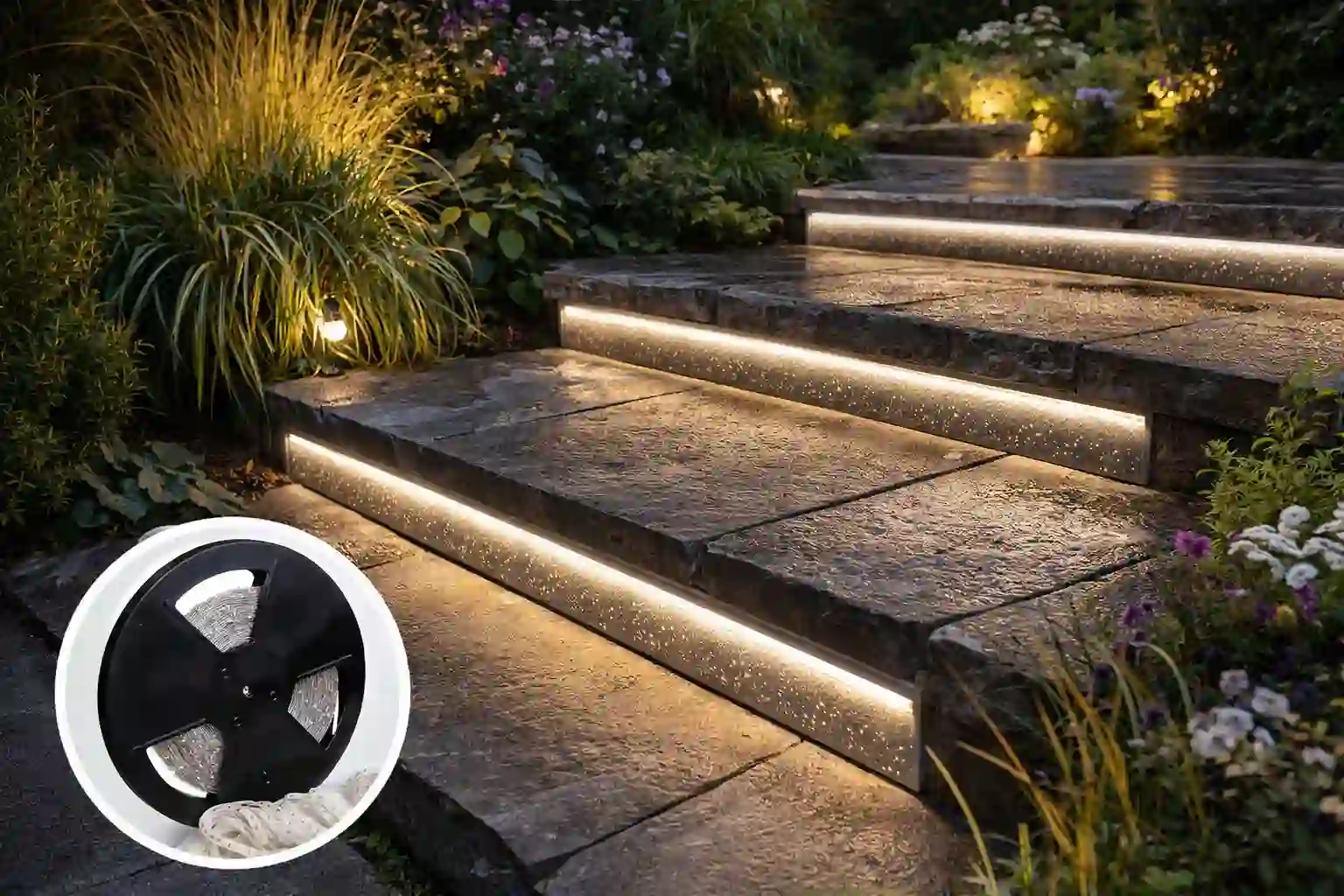
Waterproof and outdoor LED channels are essential for protecting linear lighting systems from moisture, dust, and harsh environmental conditions while maintaining thermal and optical performance. A properly specified LED channel not only shields the LED strip from water ingress but also ensures stable heat dissipation in fluctuating outdoor temperatures. Understanding waterproofing methods, IP ratings, and material durability is critical for long-term reliability.

waterproof LED strip channels installed in an outdoor garden step

Structural Waterproofing vs. Strip Waterproofing

Structural waterproofing refers to sealing the entire LED channel system to block water entry. This includes using sealed end caps, gaskets, and neutral silicone sealant at all joints and terminations.

Strip waterproofing refers to the LED strip itself being coated or encased in a water-resistant layer, typically rated IP65 or higher. However, even a waterproof LED strip can fail if installed inside a non-sealed LED channel where water can accumulate.

For outdoor installations, both the LED strip and the LED channel housing must be considered as part of one waterproof system, especially in environments with heavy rain, humidity, or salt exposure.

Choosing the Right IP Rating for Outdoor LED Channels

Ingress Protection (IP) ratings indicate how well an LED channel system resists dust and water. Selecting the correct rating depends on the installation environment.

IP 등급보호 수준Suitable For
IP65Dust-tight and resistant to water jetsOutdoor walls, façades, and areas exposed to rain
ip66Protected against powerful water jets and dust-tightWet environments like fountains and walkways
IP67Submersible up to 1 meter for 30 minutesHigh-humidity zones, near pools or docks
IP68Suitable for continuous immersionPools, water features, underwater architectural lighting

Installation Techniques for Waterproof LED Channels

Proper installation is critical to maintaining waterproof integrity. Even a high-IP LED channel can fail if incorrectly assembled.

• Use sealed end caps to prevent water entry at channel terminations
• Apply neutral cure silicone sealant along joints and seams
• Route wiring through waterproof junction boxes to avoid exposed connections

Attention to detail during installation ensures the LED channel system maintains its rated protection level over time.

Materials and UV Resistance for Outdoor LED Channels

Aluminum LED channels are ideal for outdoor use due to their strength, corrosion resistance, and excellent heat dissipation. For sun-exposed locations, channels should feature UV-stabilized coatings or anodized finishes to prevent discoloration and surface degradation.

UV-stabilized aluminum LED channel with polycarbonate diffuser versus standard outdoor channel showing UV protection

Diffusers used in outdoor LED channels should also be UV-resistant, typically made from UV-stabilized polycarbonate, to prevent yellowing and loss of light transmission over time. Proper material selection ensures both performance and appearance are maintained in demanding outdoor environments.

Common Mistakes When Buying LED Channels

Choosing the right LED channel involves more than selecting a profile that “looks right.” Specification and installation errors can lead to uneven brightness, visible hotspots, overheating, and shortened system lifespan. Avoiding the following mistakes ensures your LED channel system performs reliably and delivers professional lighting results.

1. Ignoring Voltage Drop

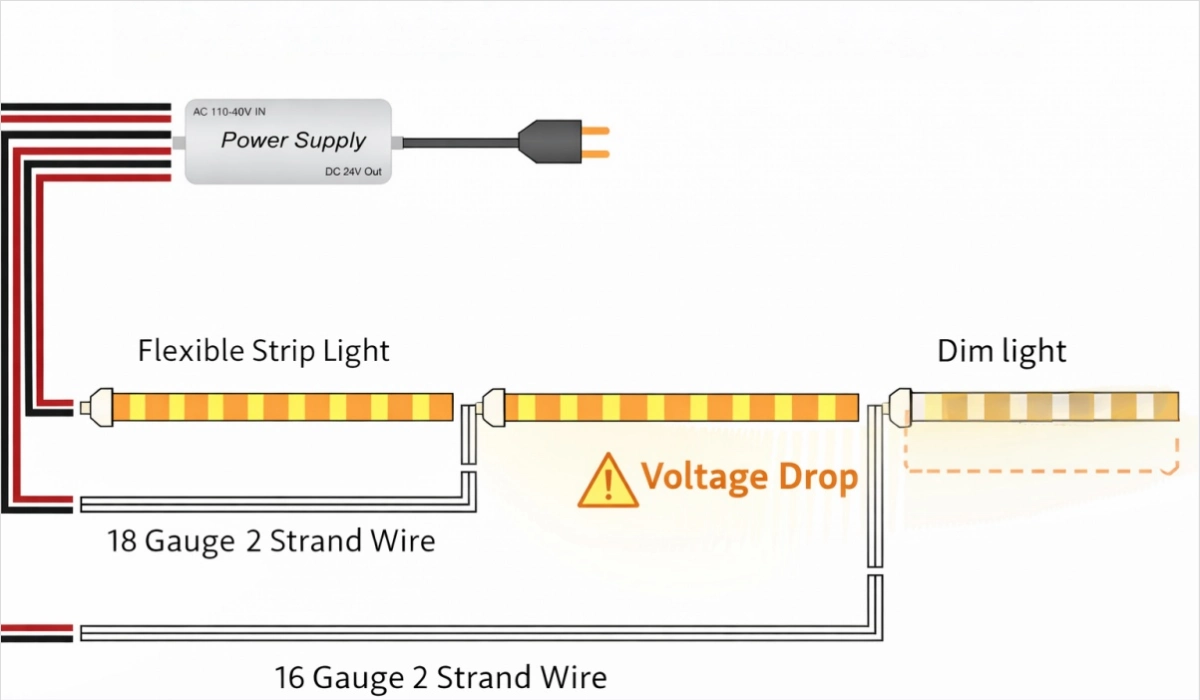
In long LED strip runs (typically over 5–10 meters), voltage drop can cause dimming and inconsistent brightness. Even with a properly sized LED channel, poor power distribution affects overall performance.

Use thicker gauge wires for long distances, confirm the power supply can handle the full load, and add power injection points for runs beyond 10 meters to maintain stable illumination.

voltage drop issue in long LED channel installation causing dim light at the end

2. Neglecting Thermal Management

An LED channel is also a thermal management device. Profiles that are too shallow or made from low-quality materials trap heat, accelerating lumen depreciation and reducing LED lifespan.

Always choose aluminum LED channels and match channel depth to strip power and density. Deeper profiles are especially important for high-output LED strips such as COB.

3. Overlooking Channel Depth

Channel depth directly affects optical performance. Shallow LED channels may leave individual LED points visible, creating distracting hotspots.

Low-output strips may work in 7–10 mm profiles, but direct-view or high-density installations typically require 12–16 mm or deeper LED channels to achieve smooth, uniform light.

4. Ignoring Diffuser Type

The LED channel diffuser strongly influences final light quality. Selecting the wrong cover can result in glare or visible LED dots.

Diffuser Type광선의 투과시각 효과...에 최선을 다하다
Clear~95%Maximum brightness, visible dotsConcealed or indirect lighting
Milky (Opal)70–75%Soft, uniform, dot-free lightTask lighting, visible linear runs
Black (Smoke)30–45%Subtle glow, channel blends when offHigh-end architectural and retail spaces

Match the LED channel diffuser to the visual goal and installation environment.

5. Choosing the Wrong Channel Length or Width

Internal width must be 1–2 mm wider than the LED strip PCB to prevent compression and allow wiring space. Channels that are too narrow trap heat and complicate installation.

For long runs, ensure LED channel lengths are planned to minimize joints and maintain visual continuity while still allowing for thermal expansion gaps.

6. Failing to Plan for Expansion

Lighting systems often evolve. Without planning, future upgrades can require dismantling installed LED channels.

Leave extra wiring capacity, accessible power points, and modular channel layouts so additional LED strips or drivers can be added without damaging finished surfaces.

7. Skipping Installation Guidelines

Improper installation can compromise both performance and safety. Always follow the manufacturer’s instructions for mounting, wiring, and sealing.

For waterproof LED channels, use the specified end caps, gaskets, and sealants to maintain the intended IP rating and prevent moisture ingress.

YouTube 동영상

결론: Careful attention to power distribution, thermal design, diffuser selection, and installation practices ensures an LED channel system delivers uniform, efficient, and long-lasting linear lighting. Avoiding these common mistakes protects both performance and visual quality.

Custom & Wholesale LED Strip Channels from Manufacturer

For large-scale lighting projects, custom and wholesale LED channels provide greater flexibility and efficiency compared to off-the-shelf solutions. By working directly with manufacturers like SignliteLED, you can secure tailored solutions that meet your unique design, performance, and cost requirements. Whether you’re an architect, lighting designer, or distributor, understanding the advantages of custom LED channels ensures your lighting projects achieve the desired results.

사용자 지정 옵션

SignliteLED offers a range of customization options to meet specific project requirements. These options are vital for achieving both aesthetic goals and performance needs.

Wholesale inventory of custom aluminum LED profiles with various finishes and lengths. (1)

Customization OptionAvailable Features혜택
길이Customizable to project specificationsFits specific design needs
FinishAnodized, matte, glossy, powder-coatedMatches project aesthetics
Diffuser TypeClear, milky, black, frostedControls light diffusion
Channel DepthShallow to deepEnsures proper heat management and light diffusion
재료Aluminum, stainless steel, custom alloysDurable and rust-resistant options

결론

Choosing the right LED channel is essential for both the performance and aesthetic quality of your lighting installation. Whether your goal is to eliminate visible LED spots, improve heat dissipation, or achieve a sleek, architectural finish, the right LED channel can make all the difference. By understanding the various types, sizes, and customization options available, you can make informed decisions that enhance both the functionality and longevity of your LED lighting system. Always consider critical factors such as channel depth, diffuser type, and the installation environment to achieve optimal results. With the right LED channel knowledge, you will create flawless, professional lighting solutions every time.

자주 묻는 질문

다양한 조명 효과를 보여주는 투명, 유백색 및 검은색 디퓨저 커버가 있는 LED 스트립 채널다양한 조명 효과를 보여주는 투명, 유백색 및 검은색 디퓨저 커버가 있는 LED 스트립 채널
LED 채널 디퓨저 문제: 투명 대 우유 대 검정색 덮개
LED 스트립 조명은 건축, 상업 및 주거 프로젝트를 위한 표준 솔루션이 되었습니다. 그러나 고품질 LED 스트립과 알루미늄 채널을 사용하더라도 많은 설치가 여전히 가시광선, 눈부심 또는 고르지 않은 조명으로 인해 어려움을 겪고 있습니다. 대부분의 경우, 근본 원인은 LED 스트립 자체가 아니라 디퓨저입니다.
광원 솔루션을 위한 서명된 알루미늄 프로파일광원 솔루션을 위한 서명된 알루미늄 프로파일
LED 프로파일 및 조명 솔루션: 현대적인 선형 조명을 위한 완벽한 가이드
현대 건축이 계속해서 깨끗한 선과 통합된 디테일을 선호함에 따라 조명은 순수한 장식적인 특징이 아니라 구조적 디자인 요소로 발전했습니다. 선형 LED 조명 시스템은 이제 주거, 상업 및 건축 프로젝트 전반에 걸쳐 널리 적용되어 시각적 연속성, 효율성 및 유연성을 제공합니다. 이들의 핵심은...
PCB 제조 및 조립에 최고의 가치를 제공하는 회사PCB 제조 및 조립에 최고의 가치를 제공하는 회사
PCB 제조 및 조립에 가장 가치 있는 회사는 어디입니까?
LED 라이트 보드는 LED 발광 장치, 저항기, 커패시터, 드라이버 IC 및 기타 요소를 PCB 기판에 통합하는 핵심 구성 요소입니다. 기존의 전자 회로와 달리 LED 라이트 보드는 열 성능, 전류 운반 용량 및 장기 안정성에 특히 중점을 둡니다. 이 모든 제품은 PCB 설계 및 제조에 크게 의존합니다.
KNX-스마트 제어 시스템 가이드KNX-스마트 제어 시스템 가이드
KNX 스마트 제어 시스템 가이드
단독 주택이든 사무실 건물이든, 에어컨, 조명, 출입 통제 시스템과 같은 관리의 편안함과 다양성에 대한 요구가 증가하고 있습니다. 효율적인 에너지 사용도 점점 더 중요해지고 있지만 지능형 제어와 장비의 능동적 모니터링 없이는 ...
주방 캐비닛 조명이란?주방 캐비닛 조명이란?
주방 캐비닛 조명: LED 스트립 조명을 선택하고 설치하는 방법은 무엇입니까?
현대식 주방에서 조명은 단순히 공간을 밝히는 것뿐만 아니라 기능을 개선하고 미관을 향상시키며 전체 공간의 분위기를 조성할 수도 있습니다. 요즘에는 특히 캐비닛 조명에 LED 스트립을 사용하는 것이 매우 인기 있는 옵션이 되었습니다. LED 스트립은 에너지 효율적일 뿐만 아니라 ...
상업용 간판 산업이 LED 네온으로 인해 변화하는 이유상업용 간판 산업이 LED 네온으로 인해 변화하는 이유
LED 네온으로 인해 상업용 간판 산업이 변화하는 이유
기존 간판을 대체하고 있는 놀랍도록 효과적이고 환경 친화적인 LED 간판 덕분에 상업용 간판의 풍경이 바뀌고 있습니다. 상업용 LED 조명 시스템은 높은 가시성과 효과 외에도 다양한 이점을 제공하며 상업용 간판 산업을 변화시키는 데 기여하고 있습니다. LED로 비용 절감...

공유하다:

페이스북
지저귀다
핀터레스트
링크드인
구독하다
알림
guest
0 댓글
가장 오래된
최신 가장 많이 투표된
인라인 피드백
모든 댓글 보기

SignliteLED 블로그 검색

카테고리

위로

지금 견적을 받으세요