2011년부터 간판 및 LED 스트립 조명 공장

2011년부터 간판 및 LED 스트립 조명 공장

균일한 배광을 위한 PCB LED 레이아웃 최적화

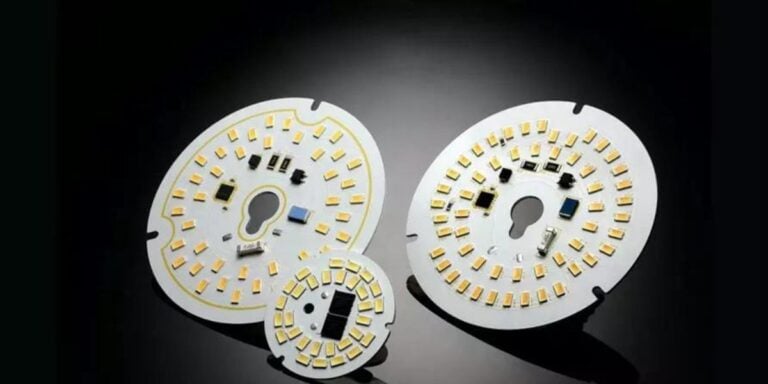
In modern lighting design, achieving uniform light distribution is no longer a visual preference. An optimized PCB LED layout ensures consistent brightness, reduced glare, and improved visual comfort. Beyond aesthetics, layout optimization directly influences thermal performance, electrical efficiency, and product lifespan. Improper LED placement often causes hotspots, uneven illumination, color variation, and accelerated component degradation.

Optimizing PCB LED layout extends beyond simple placement, requiring optical, thermal, and electrical planning. Balanced material selection and precise routing ensure each LED contributes evenly to final output. Poor layout choices create hotspots, shadowing, color inconsistency, and early failures reducing reliability.

This blog explores design principles for optimizing LED PCB board layouts achieving uniform light distribution. It covers LED spacing strategies, beam angle control, and optical alignment techniques. Thermal pathways and substrate choices are explained to improve durability and long-term lighting performance.

Understanding Uniform Light Distribution in LED Products

PCB LED

Uniform light distribution refers to the even spread of luminous intensity across the intended illuminated area, without visible brightness variations. In practical LED products, non-uniformity typically appears as:

  • Bright spots directly above LEDs
  • Dark areas between LEDs
  • Uneven edge illumination
  • Glare caused by concentrated light points

These problems are usually not caused by the LED chips themselves, but by suboptimal PCB layout, spacing, and thermal imbalance.

Role of PCB Layout in LED Light Uniformity

The PCB is the physical platform that determines:

  • LED placement geometry
  • Spacing between LEDs
  • Electrical current distribution
  • Thermal dissipation paths

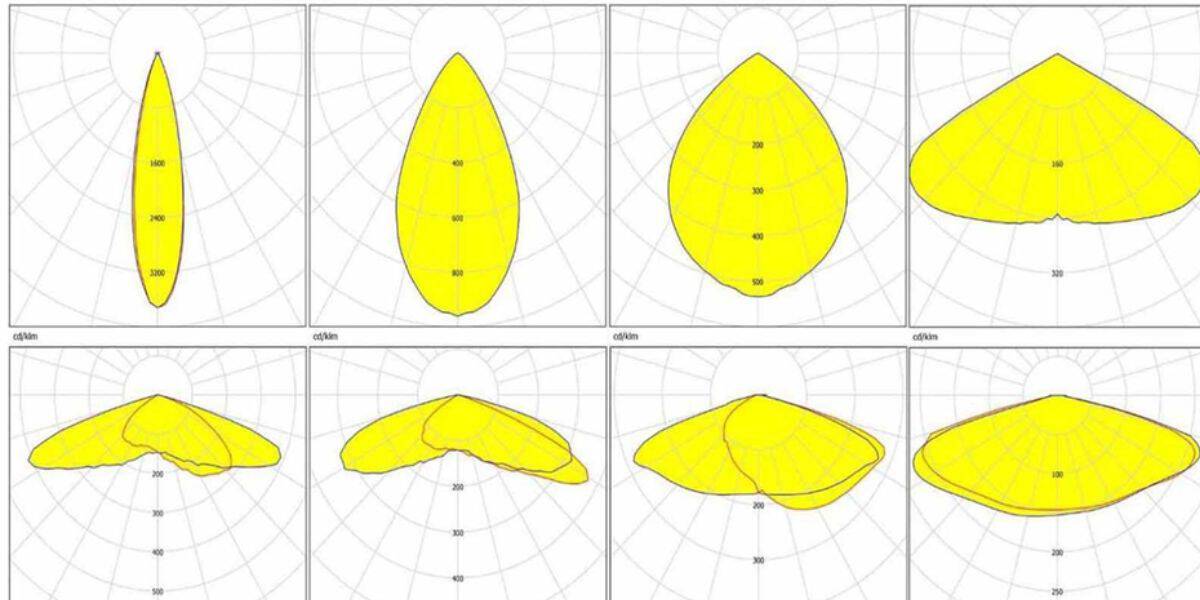
Because LEDs are point light sources, their arrangement on the PCB dictates how light overlaps and blends before reaching diffusers, lenses, or open air. A poorly planned layout can cause localized brightness peaks, while an optimized layout ensures smooth light blending.

LED Spacing and Pitch Optimization

1: Importance of Proper LED Spacing

PCB LED

LED spacing, often referred to as LED pitch, is the distance between adjacent LEDs on the PCB. Incorrect spacing is one of the most common causes of uneven light output.

(a) Too close spacing

  • Creates excessive brightness concentration
  • Increases thermal density
  • Leads to glare and optical discomfort

(b) Too wide spacing

  • Causes dark spots between LEDs
  • Requires stronger diffusers
  • Reduces overall efficiency

The optimal spacing depends on LED power, beam angle, mounting height, and optical components used in the final product.

2: Matching Spacing to Optical Design

For products using diffusers or lenses, LED spacing must align with the diffuser’s light-mixing capability. High-diffusion materials allow slightly wider spacing, while low-diffusion designs require tighter LED placement to maintain uniformity.

Symmetrical and Consistent LED Placement

Importance of Layout Symmetry

Symmetrical LED placement ensures balanced light distribution across the PCB surface. Asymmetrical layouts often result in uneven brightness, especially near edges or corners.

Key principles include:

  • Equal spacing in X and Y directions
  • Consistent alignment patterns (grid or circular)
  • Avoiding random or irregular LED positioning

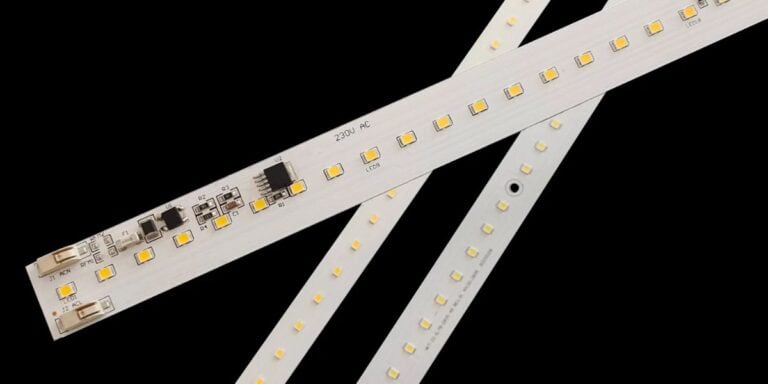
In linear lighting products, LEDs should follow a straight, evenly spaced line. In panel or area lighting, matrix or staggered grid layouts are preferred to improve light overlap.

Edge and Corner Illumination Control

Edges and corners are common problem areas where light output tends to drop off. Poor edge illumination makes products appear dimmer and lower in quality.

To address this:

  • Place LEDs closer to PCB edges
  • Use slightly higher-density placement near corners
  • Maintain thermal balance to avoid overheating edge LEDs

This ensures consistent brightness across the entire emitting surface.

Current Distribution and Electrical Balance

Uniform Current Equals Uniform Light

Even if LEDs are perfectly spaced, uneven current distribution can still cause brightness variations. LEDs connected to different current paths may operate at slightly different currents, leading to inconsistent light output.

Best practices include:

  • Balanced series-parallel circuit design
  • Equal trace lengths for parallel LED strings
  • Avoiding excessive voltage drops across long traces

Uniform electrical design ensures each LED operates at the intended power level.

Thermal Uniformity and Its Impact on Light Output

1: Relationship Between Heat and Brightness

LED brightness is directly affected by junction temperature. LEDs running hotter produce less light and degrade faster. Uneven heat distribution across the PCB therefore leads to uneven light output over time.

2: Thermal-Aware LED Layout

To maintain uniform brightness:

  • Distribute LEDs evenly to avoid thermal hotspots
  • Avoid clustering high-power LEDs in one area
  • Use consistent thermal paths for all LEDs

Uniform thermal performance ensures consistent luminous output throughout the PCB.

PCB Material and Its Influence on Layout Effectiveness

While layout geometry is critical, PCB material plays a supporting role in maintaining uniformity. PCBs with better thermal conductivity help equalize temperature differences across the board, reducing brightness variation caused by heat buildup.

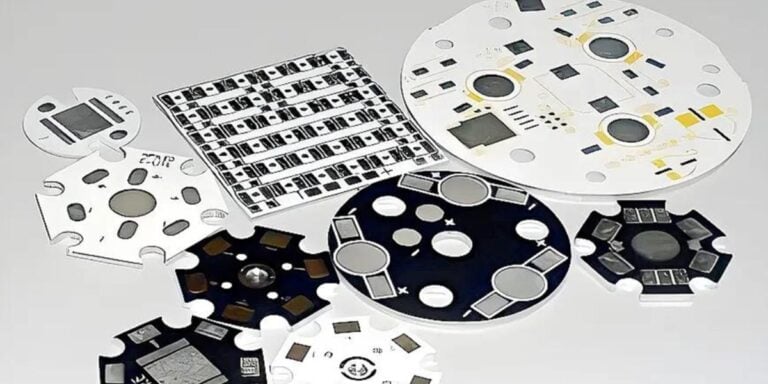
Metal-core PCBs, particularly aluminum-based designs, are commonly used in high-power LED products because they support consistent thermal behavior across the layout.

Optical Interaction Between LEDs

Light Overlap and Blending

Uniform illumination relies on controlled overlap of individual LED light patterns. Proper PCB layout ensures that each LED’s beam overlaps with neighboring LEDs at the correct angle and distance.

Designers must consider:

  • LED viewing angle
  • PCB-to-diffuser distance
  • Reflective surfaces within the product housing

Optimized layout reduces the need for excessive diffusion, improving efficiency while maintaining uniformity.

Layout Considerations for Different LED Products

PCB LED

1: Linear LED Products

  • Use consistent, straight-line LED spacing
  • Maintain equal distance from diffuser
  • Avoid gaps near ends

2: Panel and Ceiling Lights

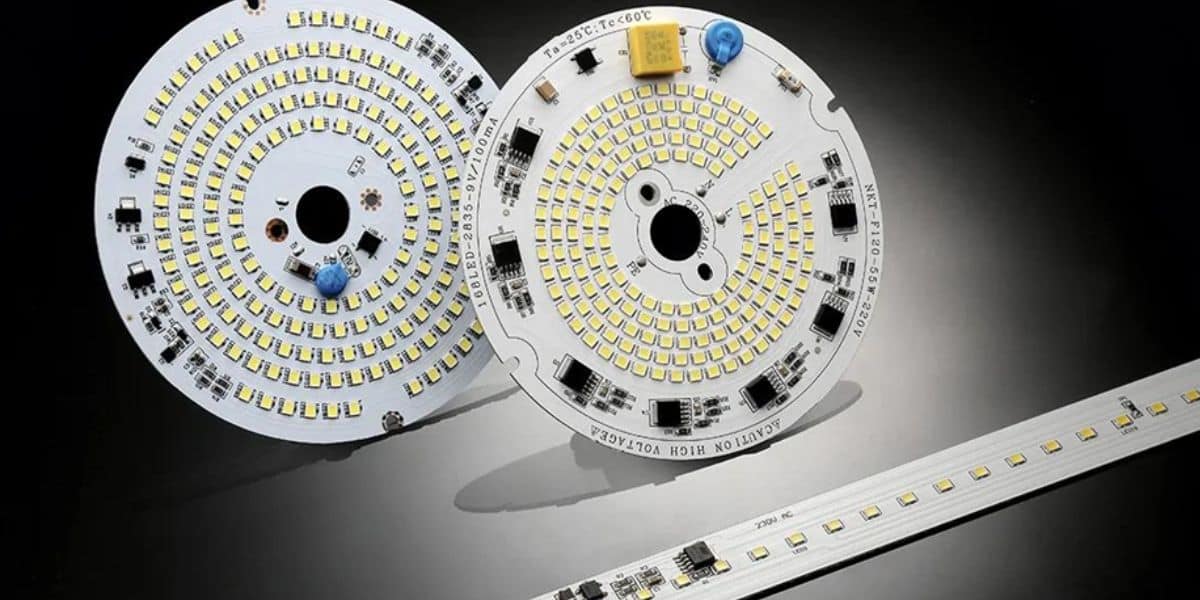
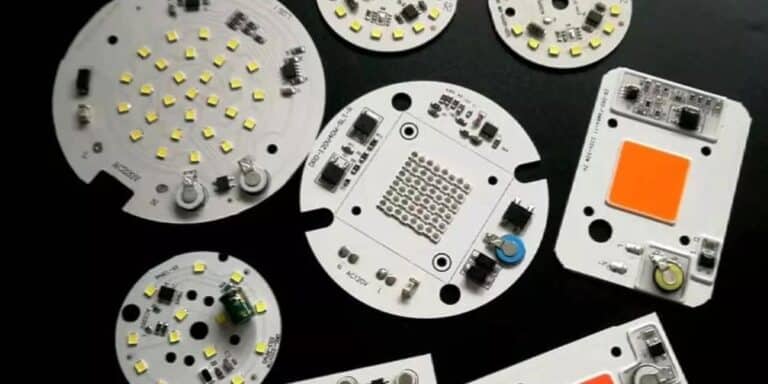
  • Use grid or staggered matrix layouts
  • Increase edge LED density if required
  • Balance center and perimeter illumination

3: High-Power Spot or Flood Lights

  • Use symmetrical circular layouts
  • Ensure thermal balance around the center LED
  • Avoid over-driving central LEDs

Each product category requires a layout tailored to its optical and mechanical design.

Minimizing Visual Artifacts

Poor PCB LED layout can cause unwanted visual artifacts such as:

  • Dotting effect (visible LED points)
  • Zebra striping in linear fixtures
  • Shadow bands on illuminated surfaces

Optimized layout, combined with correct diffuser selection, eliminates these defects and enhances perceived product quality.

Testing and Iteration in Layout Optimization

Achieving perfect uniformity often requires prototyping and testing. Simulation tools can predict light distribution, but real-world testing validates assumptions.

Recommended steps include:

  • Optical simulation of LED placement
  • Thermal analysis of PCB layout
  • Physical prototyping and photometric testing
  • Iterative refinement based on results

This systematic approach ensures reliable, repeatable light uniformity in mass production.

Why Should You Consider SignliteLED For Your Next Partner?

For superior lighting solutions and dependable LED performance, SignliteLED specializes in high-quality PCB LED solutions engineered for precision and durability.

  • Our experienced team develops advanced LED PCB board design layouts that ensure uniform brightness, electrical stability, and long-term reliability.
  • By utilizing premium materials such as SMD LED PCB board 그리고 round aluminum PCB LED, we achieve excellent thermal management and improved heat dissipation.
  • Our customized LED light PCB design approach supports scalable production, making our 사용자 정의 LED PCB solutions ideal for commercial, industrial, and architectural lighting applications.

결론

Optimizing PCB LED layout is fundamental to achieving uniform light distribution in LED products. Proper LED spacing, symmetrical placement, balanced current design, and thermal uniformity all work together to deliver smooth, glare-free illumination. In short, uniform light does not happen by chance. It is the result of precise, thoughtful PCB LED layout design.

Contact SignliteLED today to discuss your project requirements and experience high-quality, durable LED PCB manufacturer tailored to your applications.

자주 묻는 질문

PCB LEDPCB LED
2026 PCB LED Buying Guide: Power, CCT, and Materials
At SignliteLED, we support professional buyers by providing reliable, application-driven LED solutions. As the global lighting industry advances into 2026, LED performance is no longer determined by the LED chip alone. Today, PCB LED design plays a decisive role in thermal stability, color consistency, electrical safety, and overall system lifespan. For...
PCB LEDPCB LED
2026 LED PCB 공급망 동향 및 리드 타임 위험
2026년의 LED PCB 공급망은 단기적인 혼란보다는 구조적 변화로 정의됩니다. 조명, 디스플레이 및 통합 LED 시스템에 대한 수요는 계속 증가하고 있지만 공급은 지역 다각화, 더 엄격한 구성 요소 종속성, 과잉 용량이 아닌 데이터에 의해 주도되는 계획에 의해 형성됩니다. 결과적으로 리드...
PCB LEDPCB LED
PCB LED 신뢰성 향상: SMT 및 솔더 조인트 팁
LED 조명 산업은 주거, 상업, 산업 및 자동차 응용 분야에서 현대적인 조명을 변화시켰습니다. LED는 높은 에너지 효율, 긴 작동 수명 및 컴팩트한 크기에 선호됩니다. 그러나 성능은 PCB 설계, SMT 어셈블리 품질 및 솔더 조인트 신뢰성에 크게 의존합니다. 작은 조립 결함이라도 깜박임이 발생할 수 있습니다.
PCB LEDPCB LED
스마트 거리 조명 응용 프로그램을 위한 PCB LED
스마트 가로등의 PCB LED는 발광 다이오드를 목적으로 설계된 인쇄 회로 기판에 직접 장착하여 안정적인 전기 작동, 제어된 방열 및 장기간의 서비스를 통해 일관된 광 출력을 보장하는 실외 조명 솔루션입니다. 이러한 솔루션은 스마트 거리 조명 시스템에 널리 적용됩니다.
LED 물고기를 끌어들이는 조명 기술 및 선택 가이드LED 물고기를 끌어들이는 조명 기술 및 선택 가이드
LED 물고기를 끌어들이는 조명 가이드: 기술 및 선택
물고기를 사용하여 배에 불빛을 끌어들이는 어부를 본 적이 있습니까? 이 마법의 전구는 조명용이 아니라 물고기를 유인하기 위한 것입니다! 물고기를 끌어들이는 조명은 물고기의 광택시를 이용하여 어부들이 쉽게 잡을 수 있도록 합니다. 조명을 끌어들이는 조명은 낚시를 더 효율적으로 만들 뿐만 아니라...
DMX와 SPI의 차이점은 무엇인가요?DMX와 SPI의 차이점은 무엇인가요?
DMX 제어 시스템으로 SPI LED 스트립을 제어하는 방법
디지털 주소 지정이 가능한 LED 스트립은 자체 컨트롤러 또는 제어 시스템을 갖춘 DMX LED 스트립과 SPI LED 스트립으로 분류된다는 것은 잘 알려져 있습니다. DMX 제어 시스템은 SPI LED 스트립 조명과 관련이 없다고 생각하는 경우가 많지만, 사실은 ...

공유하다:

페이스북
지저귀다
핀터레스트
링크드인
구독하다
알림
guest
0 댓글
가장 오래된
최신 가장 많이 투표된
인라인 피드백
모든 댓글 보기

SignliteLED 블로그 검색

카테고리

위로

지금 견적을 받으세요