English
  简体中文
简体中文  Deutsch
  Español
  Français
  Italiano
  日本語
日本語  한국어
한국어  Polski
  Português
  Русский
  Türkçe
  Nederlands
  Tiếng Việt
  ไทย
ไทย 
LED PCB assembly cost is shaped by five primary pricing factors rather than a single price driver. Materials and components set the baseline. Design complexity determines processing effort. Production volume affects unit efficiency. Lead time influences scheduling pressure. Testing and quality control define inspection depth. Together, these elements explain why custom pcb cost varies widely between projects and why two boards with similar appearances can carry very different final prices.
Understanding these pricing factors helps engineers and procurement teams evaluate cost realistically instead of relying on headline quotes. In LED applications, cost reflects risk control, process stability, and long-term performance requirements rather than simple board assembly.
What Determines the Cost of LED PCB Assembly?

LED PCB assembly cost behaves differently from standard PCB assembly because LED boards perform multiple roles at once. In addition to providing electrical connectivity, the board must support thermal dissipation, mechanical stability, and consistent optical performance over long operating cycles.
Unlike general electronics, LED systems are sensitive to small variations in heat flow, component placement, and current balance. These sensitivities translate directly into additional manufacturing controls, inspection steps, and material constraints, all of which influence custom pcb price.
The purpose of breaking down cost is not to estimate a quote in advance, but to understand why certain design and planning decisions increase or reduce total expense across the project lifecycle.
The 5 Pricing Factors That Shape LED PCB Assembly Cost

1. Materials and Components
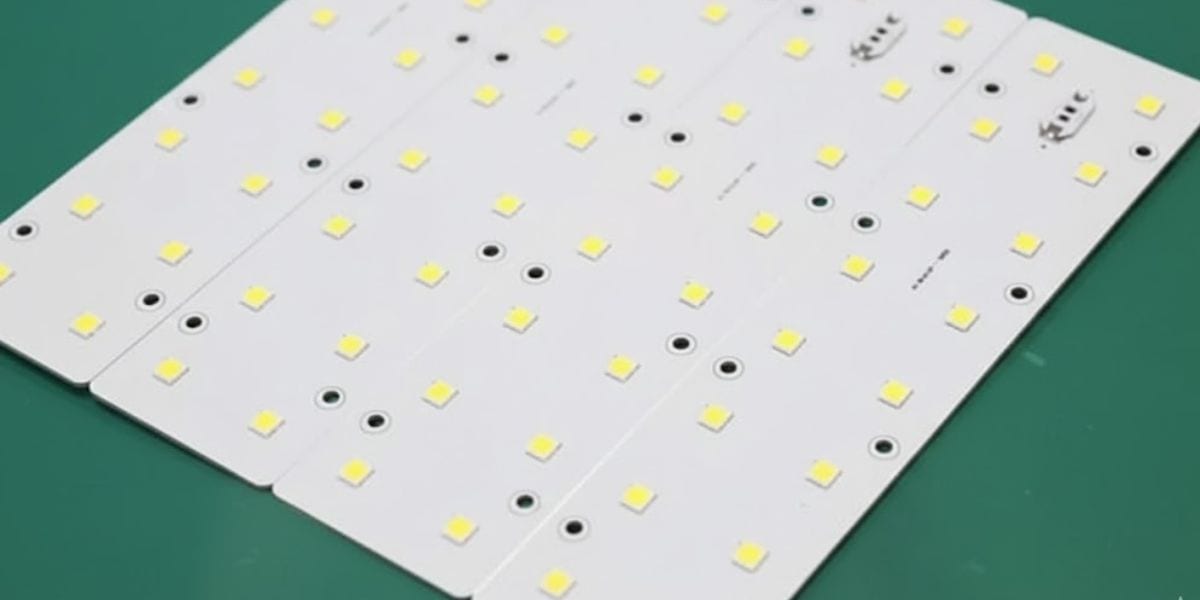
Material selection is the single largest contributor to custom pcb cost in LED assembly. Substrate choice alone can significantly shift the cost baseline. Standard FR-4 materials are generally less expensive, while aluminum-based or metal-core boards increase cost due to enhanced thermal performance requirements and more complex processing.
LED assemblies often rely on materials designed to manage sustained heat rather than short electrical loads. This requirement introduces higher material costs and tighter manufacturing tolerances. In addition, surface finishes, copper thickness, and thermal interface considerations further influence pricing.
Component sourcing also plays a critical role. LEDs, drivers, and supporting components vary widely in availability, binning requirements, and electrical consistency. When components are tightly specified or limited to specific suppliers, sourcing flexibility decreases. This increases procurement effort, inventory risk, and overall cost within custom pcb production.
In LED projects, materials and components do not just define performance. They define manufacturability.
2. Design Complexity and Board Structure
Design complexity determines how much processing effort is required during fabrication and assembly. Larger boards consume more raw material and require longer handling time. Higher layer counts introduce additional lamination, drilling, alignment, and inspection steps.
Dense layouts with closely spaced LEDs slow placement speed and increase sensitivity to alignment error. Thermal routing, current balancing, and mechanical constraints add further complexity. Even without changing materials, these factors raise pcb custom cost by increasing machine time, engineering oversight, and rework risk.
In LED PCB assembly, complexity is not measured by appearance. It is measured by how tightly performance tolerances must be controlled during manufacturing.
3. Production Volume and Order Scale
Production volume directly affects unit cost efficiency. Small batches and prototype builds carry higher per-unit cost because setup, programming, stencil preparation, and verification effort are spread across very few boards.
These fixed efforts do not scale down with quantity. As a result, early prototypes often appear disproportionately expensive. This is not inefficiency; it is the reality of controlled manufacturing.
As volume increases, processes stabilize and efficiency improves. Larger runs allow optimized workflows, predictable yields, and reduced handling variability. This is why custom pcb production pricing improves significantly once designs move beyond validation stages.
Prototype pricing should never be used as a benchmark for production-level cost expectations.
4. Lead Time and Scheduling Priority
Lead time influences cost because manufacturing capacity is finite. Standard timelines allow LED PCB assembly to flow efficiently alongside other projects. Expedited orders disrupt this balance.
Compressed schedules require priority allocation of equipment, labor, inspection resources, and logistics coordination. This increases cost even when materials and design remain unchanged.
In LED projects, lead time pressure often increases quality risk. Rushed decisions may force substitutions or reduced inspection scope, which shifts cost from manufacturing into field failures. For this reason, shorter lead times almost always correlate with higher custom pcb price.
Cost impact here is driven by scheduling pressure, not speed alone.
5. Testing and Quality Control Requirements
Testing depth directly influences pcb custom cost, especially for LED applications where consistency and reliability are critical. Basic inspection verifies assembly accuracy, while deeper testing evaluates electrical behavior, thermal stability, and long-term performance indicators.
LED PCBs often require stricter quality control because minor defects can affect brightness uniformity, color consistency, or lifespan. Additional inspection steps increase handling time and documentation effort, raising cost.
However, this cost represents risk reduction rather than excess process. In LED systems, quality control is a financial safeguard against early degradation and warranty exposure.
Cost Drivers and Their Practical Impact on LED PCB Assembly
| Cost Factor | What Drives the Cost | Practical Impact on Price |
| Materials and components | Substrate choice and component availability | Sets the baseline cost level |
| Design complexity | Board size, layers, and layout density | Increases processing and inspection effort |
| Production volume | Order size and setup distribution | Higher unit cost at low volumes |
| Lead time | Scheduling pressure and priority handling | Raises cost under tight timelines |
| Testing and quality control | Inspection depth and reliability requirements | Adds cost to reduce performance risk |
How These Cost Factors Interact in Real Projects
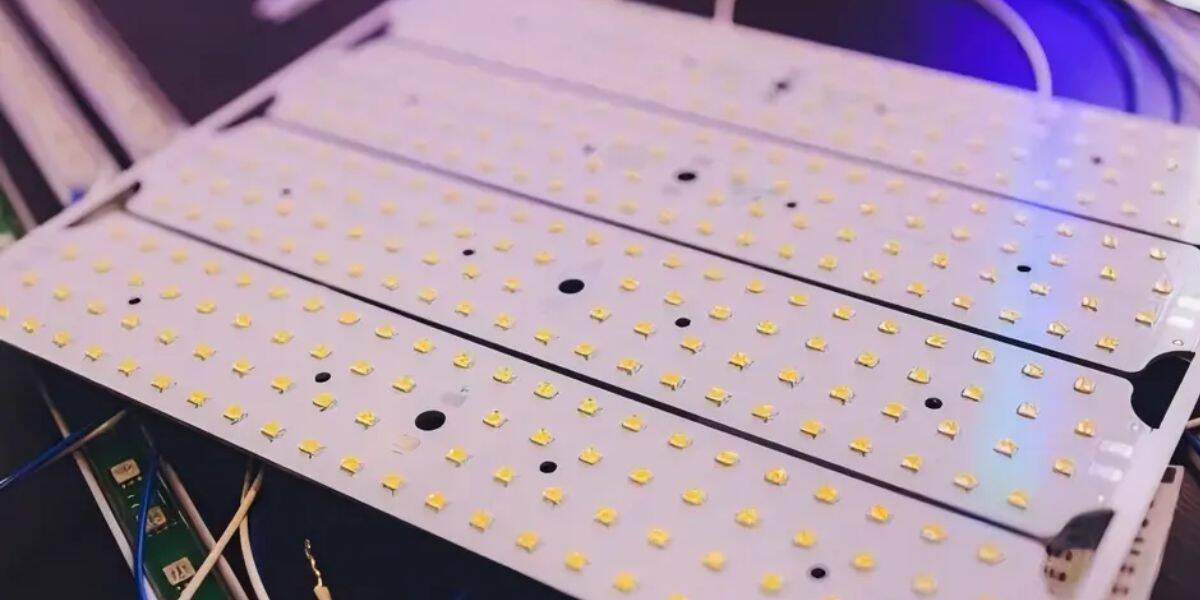
These pricing factors do not operate independently. A complex design amplifies material handling effort. Tight lead times magnify the cost impact of inspection requirements. Low volumes combined with advanced substrates produce disproportionately high per-unit pricing.
For procurement teams, this means cost optimization must be evaluated as a system. Reducing cost in one area often increases pressure elsewhere. Understanding these interactions leads to more realistic expectations and better alignment between engineering and purchasing decisions.
Common Misunderstandings About LED PCB Assembly Cost
A higher cost does not automatically indicate unnecessary complexity. In many cases, it reflects material or inspection requirements that protect long-term performance.
The lowest quote does not always represent the lowest total cost. Reduced testing or compressed schedules often shift expense into future failures rather than eliminating it.
Prototype pricing should not be compared directly to production pricing. Early builds carry setup and validation expenses that disappear at scale.
Cost reduction does not always come from changing suppliers. Often it comes from aligning design, volume, and lead time decisions more effectively.
When Paying More Reduces Total Project Cost
In LED PCB assembly, higher upfront cost can reduce overall project expense by lowering rework rates, extending product lifespan, and reducing maintenance or warranty exposure. Spending more on materials, testing, or realistic lead times often prevents downstream costs that are far more difficult to control.
This perspective is especially important for long-life lighting applications where field failures carry operational and reputational risk.
Conclusion
LED PCB assembly cost is shaped by five core pricing factors: materials and components, design complexity, production volume, lead time, and testing and quality control. Each factor reflects real manufacturing effort rather than arbitrary pricing behavior.
Understanding these drivers allows engineers and procurement teams to evaluate trade-offs clearly, plan projects realistically, and manage custom pcb cost with transparency rather than chasing the lowest visible number.
FAQs
Related Posts