English
  简体中文
简体中文  Deutsch
  Español
  Français
  Italiano
  日本語
日本語  한국어
한국어  Polski
  Português
  Русский
  Türkçe
  Nederlands
  Tiếng Việt
  ไทย
ไทย 
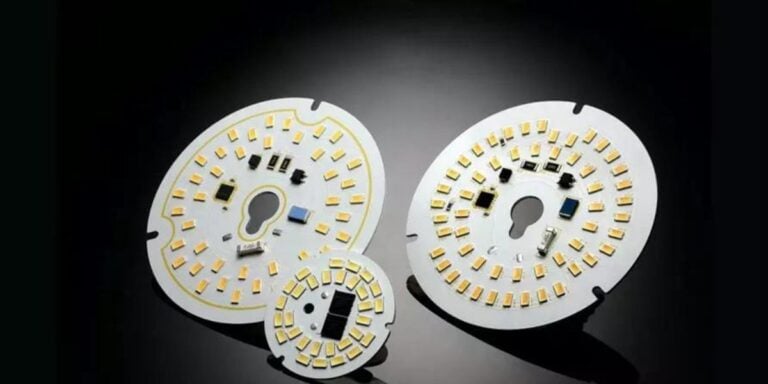
A PCB LED in smart street lighting is an outdoor lighting solution where light-emitting diodes are mounted directly onto a purpose-designed printed circuit board to ensure stable electrical operation, controlled heat dissipation, and consistent light output over long service periods. These solutions are widely applied in smart street lighting systems such as roadway illumination, highways, residential streets, urban corridors, and public infrastructure where lighting operates continuously under environmental stress.
In these applications, PCB-based LED assemblies provide mechanical consistency, predictable thermal behavior in exposed conditions, and reliable integration with smart control systems used for dimming, monitoring, and energy management. Suitability for street lighting applications is defined by how effectively the PCB design manages heat, maintains electrical stability during long operating cycles, supports system-level controls, and withstands environmental exposure, rather than by raw brightness or component claims.
What Is a PCB LED in Smart Street Lighting?

In the context of smart street lighting, a PCB LED refers to an outdoor-rated lighting assembly where LEDs are permanently integrated onto a rigid or semi-rigid circuit board designed for roadway fixtures. The PCB serves three critical roles at once.
First, it provides a stable thermal path that helps transfer heat away from the LEDs into the fixture body. Second, it ensures electrical reliability by maintaining consistent connections during long operating cycles and power regulation events. Third, it creates structural consistency so that light sources remain aligned within linear or modular street luminaires. This definition is specific to outdoor street infrastructure and does not include decorative or indoor lighting assemblies.
Why PCB LEDs Are Used in Smart Street Lighting Systems

Street lighting operates in conditions that place constant stress on lighting components. PCB-based LED assemblies are used because they address these stresses at a system level.
Outdoor fixtures must manage heat continuously, often with limited airflow. A well-designed PCB supports controlled heat transfer into the luminaire housing, reducing thermal accumulation. Electrical stability is equally important, as street lights run for extended periods and must tolerate switching cycles, dimming schedules, and monitoring functions. PCB integration allows consistent current paths and predictable behavior over time.
Modern street lighting also relies on smart controls such as dimming profiles, fault detection, and centralized management. PCB-based designs support these functions by offering a stable platform for integration with drivers, sensors, and communication modules. In linear street fixtures, the PCB format also helps maintain uniform light distribution along roadways without gaps or uneven output.
Applications and System-Level Benefits of PCB LEDs in Smart Street Lighting
In smart street lighting applications, PCB LED assemblies are used across a wide range of public environments, including urban roadways, highways, residential streets, and municipal infrastructure. These environments demand lighting systems that operate reliably for long hours while maintaining consistent performance under varying weather and traffic conditions.
From a system perspective, PCB-based LED designs contribute to energy efficiency by supporting stable current delivery and predictable thermal behavior, which allows smart control systems to apply dimming schedules without compromising light quality. This directly supports energy-saving strategies commonly used in modern street lighting networks.
PCB LED assemblies also reduce long-term maintenance demands. Their structural stability and controlled heat dissipation help extend service life, lowering the frequency of replacements and minimizing disruption in public spaces. This is particularly important for large-scale deployments where maintenance access is limited or costly.
In addition, PCB LEDs support future-ready infrastructure. Their modular integration with drivers and control components allows cities to upgrade sensors, communication modules, or control logic without replacing entire luminaires, making them well suited for evolving smart city requirements.
Key Factors to Evaluate When Choosing a PCB LED for Street Lighting

Selecting the right solution requires evaluating how the assembly performs in real street conditions, not just how it looks on paper.
Thermal management design
What to look for is a PCB structure intended to move heat efficiently into the fixture body. This matters because outdoor lights operate for long hours with limited cooling. If ignored, excessive heat buildup can lead to uneven light output, accelerated component degradation, and premature system failure.
PCB layout stability for continuous operation
A stable layout maintains electrical integrity during long duty cycles and frequent on-off transitions. In street lighting, instability can result in flicker, intermittent faults, or reduced system reliability that is difficult to diagnose once installed.
Compatibility with smart street lighting controls
The assembly should integrate cleanly with drivers and control electronics used for dimming, monitoring, and scheduling. Without this compatibility, smart functions may operate inconsistently or require workarounds that increase maintenance complexity.
Environmental exposure considerations
Street lighting is exposed to dust, moisture, temperature variation, and vibration. The PCB design must account for these conditions. If environmental factors are overlooked, corrosion, connection failures, or thermal stress can undermine long-term performance.
Maintenance and replacement practicality
Street lighting systems are serviced at scale. A design that allows predictable replacement and minimal disruption reduces downtime. Poorly planned assemblies can increase labor effort and raise operational costs over the system’s life.
Role of Linear LED PCB Modules in Smart Street Lighting
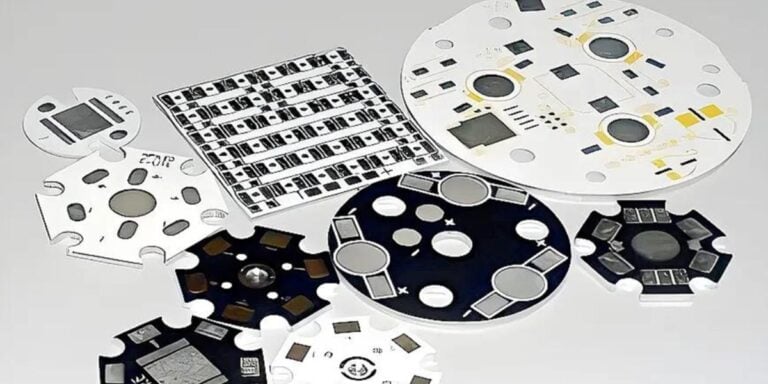
Linear LED PCB modules are commonly used in street lighting because they align well with roadway illumination requirements and fixture design. Their elongated format supports even light distribution along roads and sidewalks, reducing hotspots and dark zones.
From an integration perspective, linear modules fit efficiently into standardized street luminaire housings and allow consistent replication across poles and zones. This scalability is important for municipalities managing large networks. In this context, a led pcb board functions as a structural lighting element rather than a standalone component, supporting uniformity and system planning.
Common Misjudgments When Selecting PCB LEDs for Street Lighting
One frequent mistake is assuming that PCB assemblies designed for indoor use will perform adequately outdoors. Indoor conditions do not reflect the thermal and environmental stresses of street installations.
Another misjudgment is focusing on perceived brightness while overlooking thermal design. Higher light output does not compensate for inadequate heat handling, and ignoring this balance often leads to early degradation.
A third issue is neglecting system-level integration. Selecting a pcb led light without considering how it interacts with controls, drivers, and monitoring systems can create gaps in smart functionality and complicate maintenance.
How PCB LEDs Fit Into Modern Smart Street Lighting Infrastructure

Within smart street lighting infrastructure, PCB-based LED assemblies act as the stable foundation for control and monitoring layers. They interface with drivers that manage power and dimming, support sensors used for diagnostics, and operate within energy management strategies designed to reduce waste.
Rather than functioning in isolation, the led light pcb board is part of a coordinated system where physical stability enables digital control. When this relationship is understood during selection, lighting networks operate more predictably and are easier to manage over time.
Conclusion
PCB LED solutions play a central role in smart street lighting applications because they combine electrical stability, thermal control, and structural consistency in a form that supports real-world public infrastructure. Their value is not limited to light generation alone, but to how reliably they operate across roadways, residential streets, highways, and urban environments where lighting must function continuously under environmental stress.
In practical applications, PCB-based LED assemblies enable energy-efficient operation, predictable maintenance planning, and seamless integration with smart control systems used for dimming, monitoring, and energy management. Rather than evaluating PCB LEDs by isolated specifications, selecting the right solution requires understanding how the assembly performs within its intended street lighting application.
When chosen with application context in mind, PCB LEDs help municipalities and system planners build lighting networks that are stable, scalable, and easier to manage over long service lifecycles.
FAQs
Related Posts