Polski
  English
  简体中文
简体中文  Deutsch
  Español
  Français
  Italiano
  日本語
日本語  한국어
한국어  Português
  Русский
  Türkçe
  Nederlands
  Tiếng Việt
  ไทย
ไทย 
W przemyśle elektroniki prawie codziennie wspomina się o „PCB” i „PCBA”. Jednak te dwie koncepcje często powodują zamieszanie, nawet wśród startupów sprzętowych lub zespołów zaopatrzeniowych bez doświadczenia w elektronice.
Niektórzy uważają, że są to jedynie synonimy, inni błędnie zakładają, że PCBA jest po prostu „ulepszoną wersją PCB”, a niektórzy pracownicy zaopatrzeniowi nawet nie wiedzą, jakiej usługi naprawdę potrzebują, gdy proszą o wycenę.
W rzeczywistości rozróżnienie między PCB i PCBA wykracza poza definicje, bezpośrednio wpływając na koszty produktu, cykle dostaw, ryzyko jakościowe i złożoność łańcucha dostaw. Szczególnie w kontekście 2026, gdzie elektronika jest bardzo inteligentna, a technologia AI jest głęboko zintegrowana z procesami produkcyjnymi, prawidłowe zrozumienie rozróżnienia między PCB a PCBA stało się kluczowe dla przedsiębiorstw w celu zmniejszenia ryzyka i zwiększenia wydajności.
W tym artykule systematycznie analizujemy podstawowe różnice między PCB i PCBA z wielu wymiarów — definicji technicznych, procesów produkcyjnych, struktur kosztów, trendów w branży i decyzji dotyczących zakupów — aby pomóc inżynierom i personelowi zaopatrzeniowemu w dokonywaniu bardziej świadomych wyborów na wczesnych etapach projektów.
Co to jest PCB? (drukowana płytka drukowana)
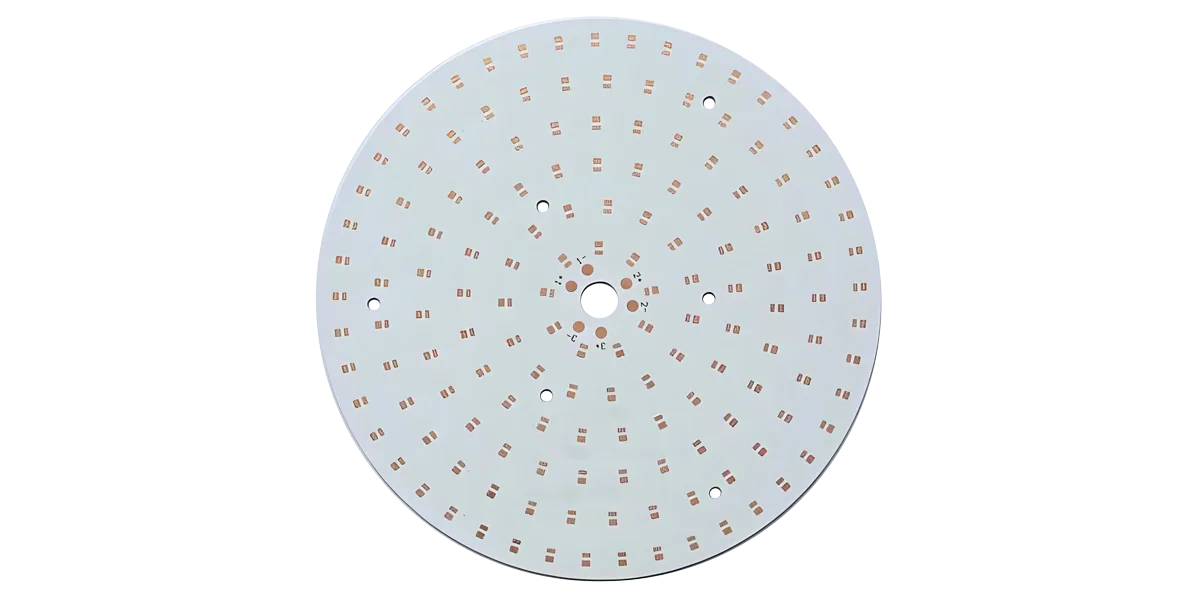
Płytka drukowana (płytka drukowana) służy jako podstawowy nośnik dla elementów elektronicznych, umożliwiając podłączenie elektryczne poprzez ślady folii miedzianych, podkładki i przelotki. PCB odnosi się wyłącznie do „gołej płyty” bez zamontowanych na niej elementów elektronicznych. Stanowi jednak fizyczne podstawy produktów elektronicznych, zapewniając podłoże dla obwodów i ułatwiając połączenia elektryczne.
Płytki PCB służą jako punkt wyjścia dla wszystkich systemów oświetlenia LED, zarówno elastycznych listew LED, jak i modułów LED o dużej mocy.
Elementy konstrukcyjne płytek LED PCB
Typowa płytka PCB LED zwykle zawiera:
1. Materiał bazowy
- FR-4: Nadaje się do diod LED o niskiej i średniej mocy
- Metal Core PCB (MCPCB): aluminium lub miedzi, szeroko stosowane w listwach i modułach LED o dużej mocy dla lepszej wydajności cieplnej
- Materiały o wysokiej częstotliwości: stosowane w inteligentnych systemach oświetleniowych i systemach LED IoT
2 Warstwa miedzi
Grubość miedzi (1 uncja–6 uncji) bezpośrednio wpływa na:
- Prąd nośności
- Kontrola spadku napięcia
- Zarządzanie termiczne Wydajność taśm LED
3. Maska lutownicza
Zapobiega zwarciom i utlenianiu. W przemyśle LED biała maska lutownicza jest szeroko stosowana ze względu na swoje doskonałe właściwości odblaskowe.
4. Sitodruk
Oznaczenia wskazują polarność LED, orientację i numery części, ułatwiając masową produkcję i konserwację.
Typowe typy PCB w branży LED
Typy i aplikacje PCB w branży LED są przede wszystkim następujące:
| Typ | Materiał | Scenariusz zastosowania |
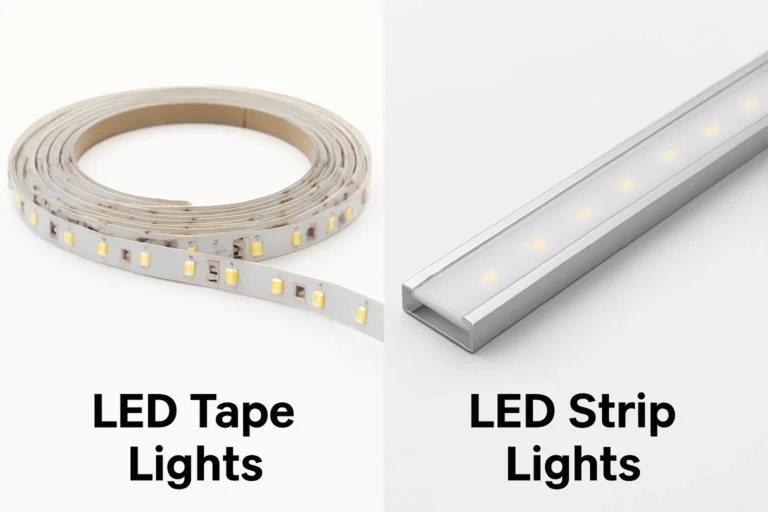
| Elastyczna taśma LED z taśmą LED | Elastyczny obwód drukowany (FPC) | Otwory na światło, szafki, nieregularne środowiska instalacyjne |
| Dzięki PCB modułu LED | Płyta z włókna szklanego FR-4 / płyta podstawowa z aluminium | Lampy liniowe, lampy sufitowe (FR-4 dla niskiej mocy, aluminium dla dużej mocy) |
| Sztywna taśma LED z taśmą LED | Aluminiowa podstawa PCB / gruba miedziana płyta FR-4 | Oświetlenie liniowe, oświetlenie przemysłowe |
| Niestandardowa płyta PCB LED | Niestandardowa płyta PCB LED | Wysokiej klasy / profesjonalne oświetlenie |
Co to jest PCBA? (drukowany zespół płytki drukowanej)
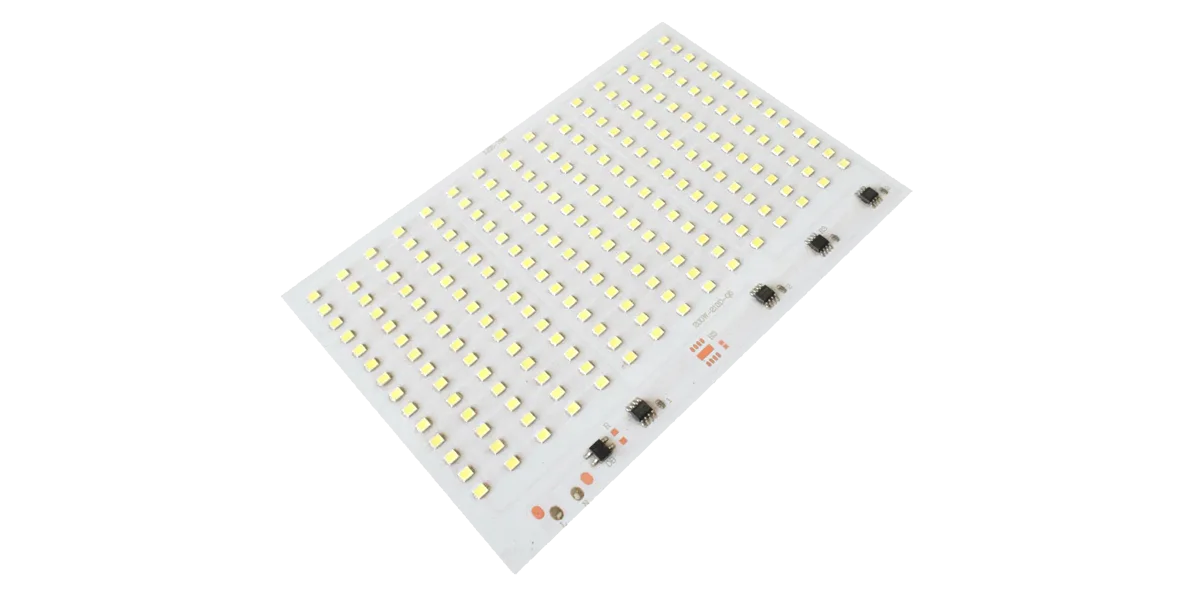
PCBA (zespół drukowanej płytki drukowanej) Odnosi się do gotowej płytki drukowanej wytwarzanej przez lutowanie komponentów elektronicznych, takich jak rezystory, kondensatory, układy scalone, diody LED i złącza na płytce drukowanej przy użyciu procesów SMT lub THT. Posiada pełne właściwości elektryczne i funkcjonalne. Jest to gotowy system obwodu po lutowaniu, zmontowaniu i przetestowaniu na płytce drukowanej elementów elektronicznych.
PCBA to kluczowy krok, który sprawia, że płytka drukowana jest „prawdziwie funkcjonalna”.
1. Dlaczego produkty LED muszą przejść PCBA?
Bez PCBA:
- Diody LED nie mogą się zapalić.
- Sterowniki prądu stałego nie mogą działać stabilnie.
- Nie można zaimplementować funkcji inteligentnego sterowania i ściemniania.
PCBA lutowane chipy LED, rezystory, kondensatory, układy scalone sterowników, złącza i inne komponenty na płytce drukowanej, przekształcając je w funkcjonalny system oświetlenia.
2 Procesy montażu PCBA LED
- SMT (technologia montażu powierzchniowego)
- Proces głównego nurtu dla taśm LED i modułów
- Wysoka automatyzacja, wydajność i spójność
- Nadaje się do układów LED o dużej gęstości
- THT (technologia otworu)
– Używany do interfejsów zasilania i terminali wysokoprądowych
- Wysoka wytrzymałość mechaniczna i stabilność
– montaż hybrydowy (SMT + THT)
– Powszechne w komercyjnych i przemysłowych oprawach LED, równoważenie wydajności i niezawodności.
Porównanie procesów produkcyjnych PCB i PCBA (krok po kroku)
Zrozumienie procesów produkcyjnych jest kluczem do uchwycenia ich różnic.
Proces produkcji PCB obejmuje przede wszystkim ekspozycję, wytrawianie, wiercenie, poszycie itp. Zapoznaj się z poniższym schematem dla konkretnego przepływu pracy:
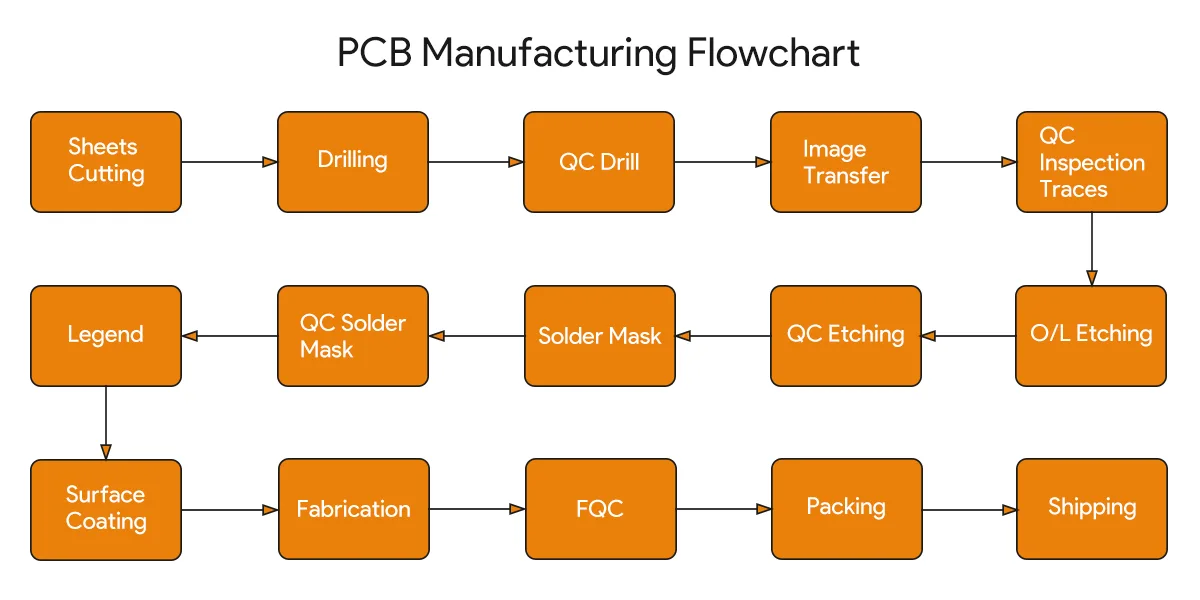
Na tym etapie ukończona płytka drukowana pozostaje nieosłoniętą płytą bez żadnych funkcji oświetlenia i sterowania.
Proces produkcji PCBA obejmuje przede wszystkim rozmieszczenie, montaż i testowanie SMT. Konkretny przepływ pracy przedstawiono na poniższym wykresie:
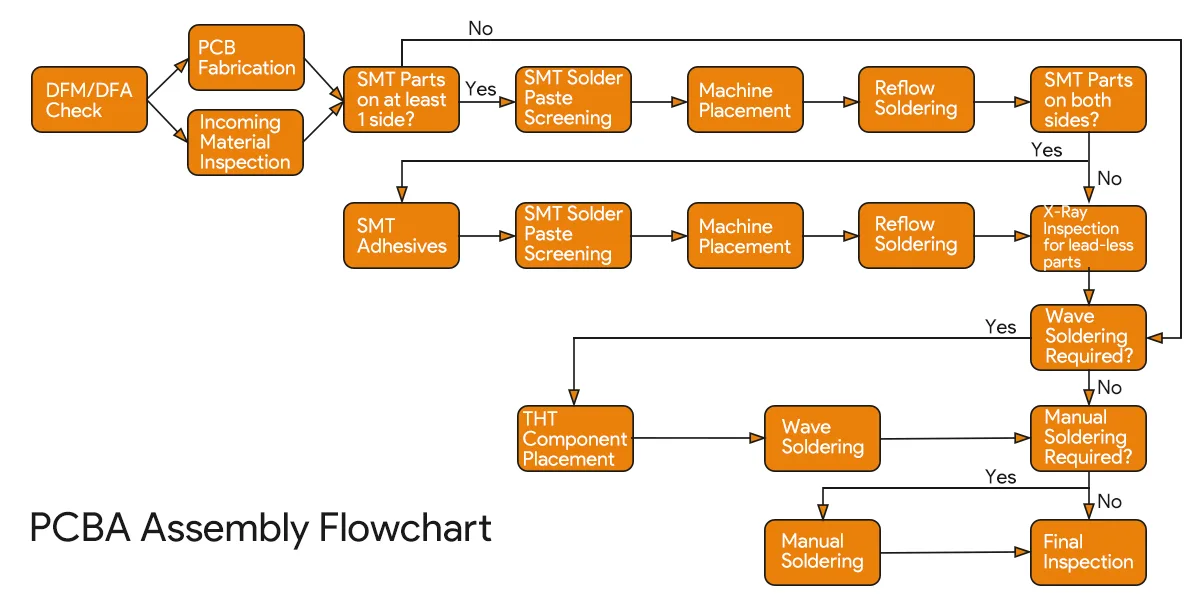
Jak pokazano, proces PCBA jest znacznie dłuższy niż produkcja PCB i opiera się w większym stopniu na wiedzy, sprzęcie i możliwościach zarządzania.
PCB vs. PCBA: kluczowe różnice w skrócie
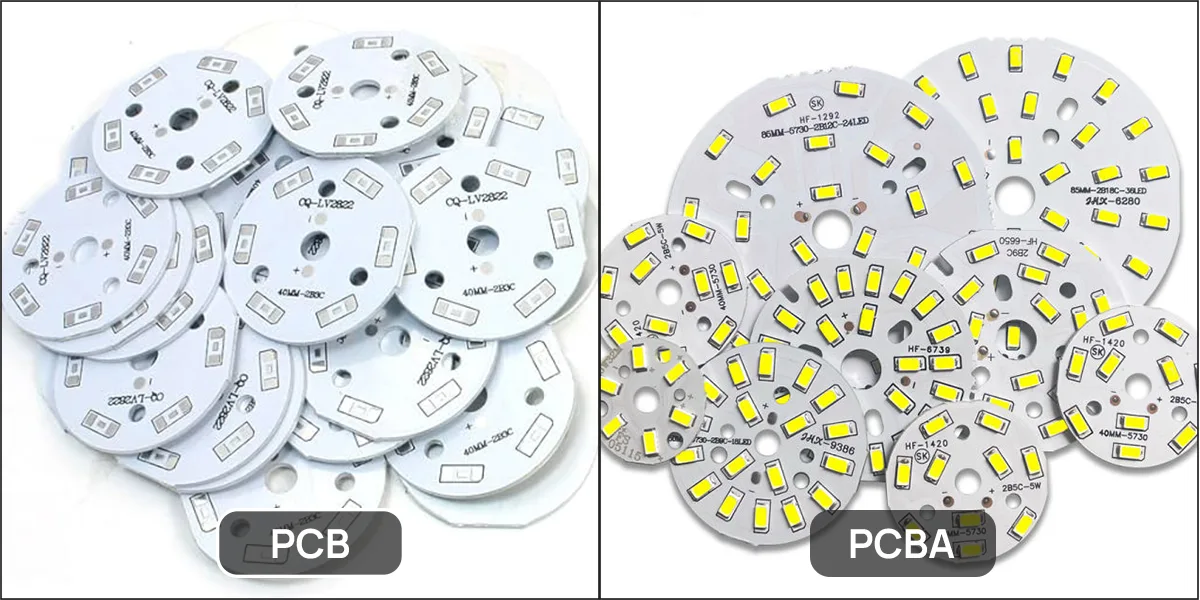
Jaka jest dokładnie różnica między PCB a PCBA? Prosta analogia: PCB = podstawowa konstrukcja, zbliżona do ramy budynku i rurociągów; PCBA = funkcjonalny gotowy produkt, w pełni zasilany i działający budynek.
W produktach oświetleniowych LED sama płyta PCB nie może emitować światła. Dopiero po zakończeniu PCBA paski lub moduły LED mogą działać prawidłowo.
| CAgory | PCB (drukowana płytka drukowana) | pCBA (drukowany zespół płytki drukowanej) |
| Definicja | Goła deska wykonana z izolującego podłoża i przewodzących śladów miedzi, bez elementów elektronicznych | Moduł funkcjonalny stworzony przez montaż elementów elektronicznych (rezystory, kondensatory, układy scalone itp.) na płytce drukowanej |
| Podstawowa funkcja | Zapewnia ścieżki połączeń elektrycznych i wsparcie mechaniczne dla komponentów | Wykonuje rzeczywiste funkcje elektroniczne, takie jak przetwarzanie sygnału, zarządzanie energią i logika sterowania |
| stan fizyczny | Niezaludniony „goły deska” | W pełni zmontowany i lutowany „modele gotowe” |
| Wygląd | Zielona (lub inny kolor) maska lutownicza z widocznymi miedzianymi śladami i klockami | Pokryte komponentami, złączami lutowniczymi i przewodami; układ funkcjonalny wyraźnie widoczny |
| Zakres produkcji | Tylko wykonanie płyt | Pozyskiwanie komponentów + montaż + testowanie |
| Proces produkcji | Cięcie materiału → laminowanie miedzi → wytrawianie obwodu → wiercenie → wykończenie powierzchni | Kontrola przychodząca → rozmieszczenie SMT → lutowanie nawrotowe / lutowanie falowe → kontrola i testy funkcjonalne |
| Kluczowy nacisk techniczny | Dokładność śledzenia, kontrola impedancji, precyzja trawienia na poziomie mikronów | Jakość lutowania, dokładność umieszczenia, kontrola wydajności (zazwyczaj ≥99.9%) |
| Struktura kosztów | Surowce + procesy wytwarzania PCB | Elementy elektroniczne (BOM) + montaż + testowanie |
| Typowy poziom kosztów | Stosunkowo niska (niestandardowa płytka drukowana: ok. $0.1–$5 na płytę) | Wyższe (prototypy PCBA zazwyczaj zaczynają się od $30, w zależności od BOM) |
| Wyjście dostawy | Nośnik elektryczny bez funkcjonalności | Gotowy do użycia obwód elektroniczny o zdefiniowanych funkcjach |
1. Różnice funkcjonalne
- PCB: zapewnia tylko ścieżki obwodów
- PCBA: w pełni sprawny system LED gotowy do włączenia zasilania
2. Zakres produkcji
- PCB: Wykonanie płytek drukowanych
- PCBA: Zakup komponentów + montaż + testowanie
3. Wymagana dokumentacja (często zadawane pytania dotyczące zamówienia)
Produkcja PCB wymaga:
- Pliki Gerbera
- Pliki wiertarskie NC
PCBA wymaga:
- BOM (Bill of Materials)
- Pick-and-place (pliki współrzędnych)
- Pliki szablonów
4. Testy i kontrola jakości
PCB:
- Testy ciągłości elektrycznej
- Kontrola wzrokowa
- Pomiar grubości miedzi
- Testy impedancyjne
PCBA:
- Inspekcja pasty lutowniczej SPI
- Automatyczna inspekcja optyczna AOI
- Rentgen (BGA, kontrola złącza lutowanego sterownika)
- Testy ICT/funkcjonalne (jasność, prąd, stabilność)
- Testowanie starzenia i niezawodności
- Strumień świetlny i testy wydajności elektrycznej
5. Pakowanie i logistyka
- PCB: próżniowe opakowanie odporne na wilgoć
- PCBA: opakowania antystatyczne (ESD), tace niestandardowe
Dlaczego PCBA jest znacznie droższy niż PCB?
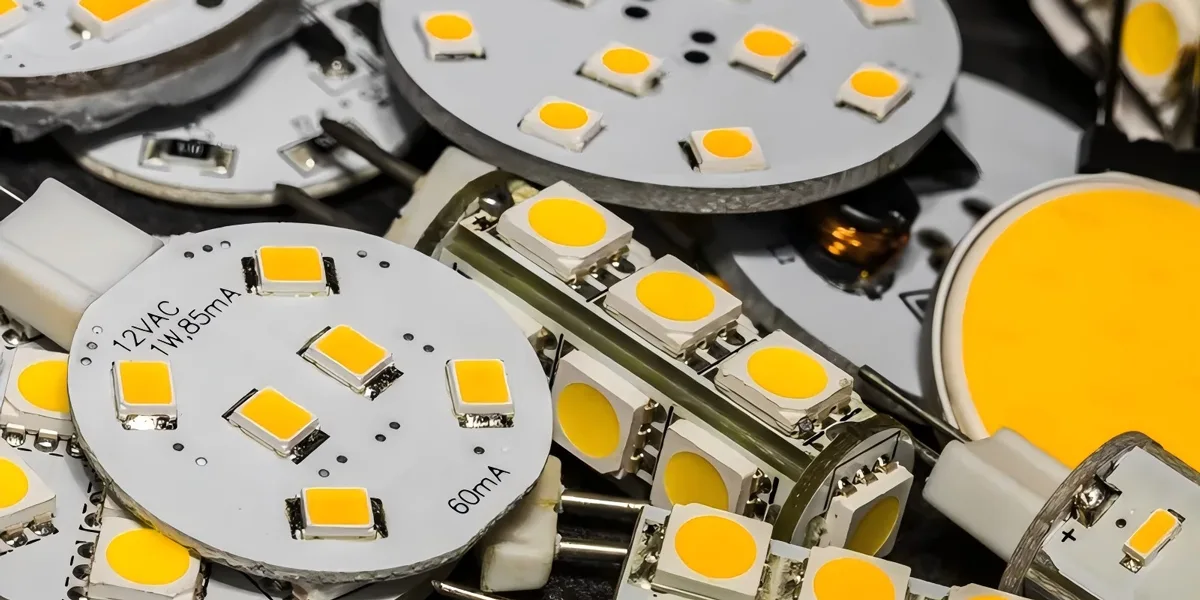
To jedno z najczęściej zadawanych pytań przez personel zakupowy. Wyższy koszt PCBA nie wynika po prostu ze „zwiększonych opłat manipulacyjnych”, ale raczej wynik wielu czynników:
- Koszty komponentów: Chipy, rezystory, kondensatory, diody LED, układy scalone sterowników i inne komponenty często stanowią największą część kosztów PCBA.
- Inwestycje w pracę i sprzęt: Maszyny do pick-and-place z szybkim przepływem, piece do przepływu, systemy AOI i sprzęt testowy to wszystkie wartości o wysokiej wartości.
- Wydajność i koszty ryzyka: Wady lutowania, wady materiałowe i problemy projektowe niosą ze sobą ryzyko przeróbki lub złomu.
- Koszty zarządzania łańcuchem dostaw: Niedobory materiałowe, zamienniki komponentów i wahania harmonogramu dostaw wymagają dodatkowej koordynacji.
Z biznesowego punktu widzenia PCBA jest zasadniczo „usługą inżynierii systemowej”, a nie tylko przetwórstwem produkcyjnym.
2026 Trendy branżowe: jak sztuczna inteligencja przekształca PCB/PCBA?
Do 2026 r. sztuczna inteligencja wyszła poza etapy koncepcyjne, aby głęboko zintegrować z produkcją PCB i PCBA, przyspieszając zmianę branży w kierunku wysoce zintegrowanej i inteligentnej produkcji.
Kluczowe trendy to:
- Analiza DFM wspomagana przez AI: Przewiduje potencjalne problemy z produkcją przed produkcją, zmniejszając przebieg próbny.
- Wykrywanie defektów AOI zasilane AI: Identyfikuje złożone wady, takie jak zimne lutowanie i niewspółosiowość poprzez głębokie uczenie, obniżając wskaźniki błędnej oceny.
- Inteligentne planowanie i prognozowanie materiałów: Optymalizuje wykorzystanie mocy produkcyjnych, jednocześnie zmniejszając niepewność dostawy.
- Dane jakości zamkniętej pętli: Ciągły poprawia wydajność i spójność poprzez analizę danych.
W przyszłości fabryki PCBA z obsługą sztucznej inteligencji uzyskają znaczące korzyści w zakresie terminów dostaw, kontroli jakości i zarządzania kosztami.
Czy powinieneś zdecydować się na gołą płytkę drukowaną lub jednorazową PCBA?
Nie ma uniwersalnej odpowiedzi — to zależy wyłącznie od typu projektu.
Jeśli masz doświadczony zespół elektroniczny i niezawodne zasoby SMT i potrzebujesz tylko gołych płyt, płytki drukowane oferują większą elastyczność i mogą być bardziej opłacalne.
Jeśli chcesz obniżyć koszty koordynacji, zminimalizować ryzyko jakościowe i przyspieszyć czas wprowadzania na rynek, One-Stop PCBA jest zazwyczaj doskonałym wyborem.
Dla produktów takich jak tablice świetlne LED, Moduły LED, oraz inteligentne oświetlenie PCBA znacznie zwiększa spójność i niezawodność dostaw.
Wspólne pułapki związane z zakupami PCB/PCBA
W rzeczywistych projektach często występują następujące błędy:
- dostarczanie niekompletnych lub niezweryfikowanych plików projektowych
- Rozbieżności BOM z rzeczywistym projektem
- Zaniedbując wymagania dotyczące testów, skupiając się wyłącznie na cenie jednostkowej
- Przypisywanie złożonych projektów PCBA do dostawców PCB
Kwestie te często pozostają niezauważone podczas cytowania, ale zwiększają ryzyko podczas masowej produkcji.
Przewodnik po podejmowaniu decyzji o zakupach: Jak wybrać?
Przed sfinalizowaniem wyboru, priorytetyzuj ocenę tych czynników:
- Złożoność projektu i wielkość partii
- Możliwości inżynierii wewnętrznej i łańcucha dostaw
- Wymagania dotyczące czasu realizacji i spójności
- Potrzebujesz długoterminowego, stabilnego partnera
Optymalny wybór niekoniecznie jest najniższym cytatem, ale rozwiązaniem o najniższym ogólnym ryzyku.
Wniosek
Podsumowując, PCB i PCBA pełnią odrębne, ale uzupełniające się role w produkcji elektroniki. PCB zapewniają podstawową strukturę i połączenia elektryczne, podczas gdy PCBA zapewnia pełną funkcjonalność i wartość handlową dla produktu.
Dla producentów oświetlenia LED zrozumienie rozróżnienia między PCB a PCBA przekracza względy techniczne — jest to decyzja strategiczna. Wybór odpowiedniego rozwiązania produkcyjnego i montażowego pomaga obniżyć koszty, poprawić jakość i przyspieszyć wprowadzanie produktów na światowe rynki. W miarę postępu integracji produktów, rozwiązania PCBA z możliwościami inżynieryjnymi i zaletami kontroli jakości będą odgrywać coraz większą rolę na globalnych rynkach elektroniki i oświetlenia LED.
Najczęściej zadawane pytania
Powiązane posty