Português
  English
  简体中文
简体中文  Deutsch
  Español
  Français
  Italiano
  日本語
日本語  한국어
한국어  Polski
  Русский
  Türkçe
  Nederlands
  Tiếng Việt
  ไทย
ไทย 
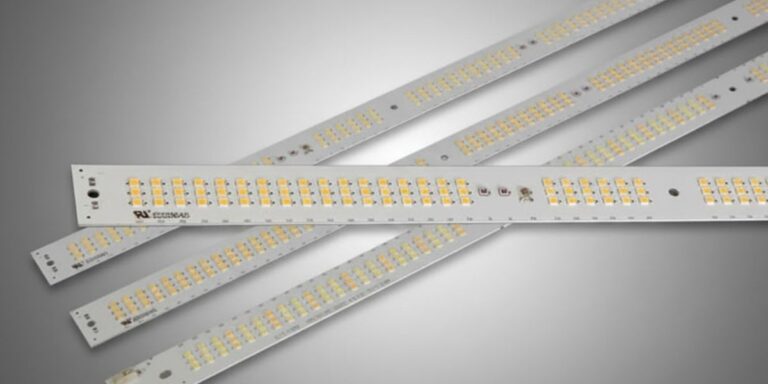
Os módulos de LED High-CRI são sistemas de iluminação projetados para reproduzir cores com precisão sob iluminação artificial. O CRI, ou índice de renderização de cores, mede o quanto uma fonte de luz revela as cores em comparação com uma referência natural. Os LEDs com alto valor de CRI são comumente usados em iluminação arquitetônica, displays de varejo, ambientes médicos, estúdios e qualquer aplicação em que a precisão das cores importe mais do que o brilho bruto.
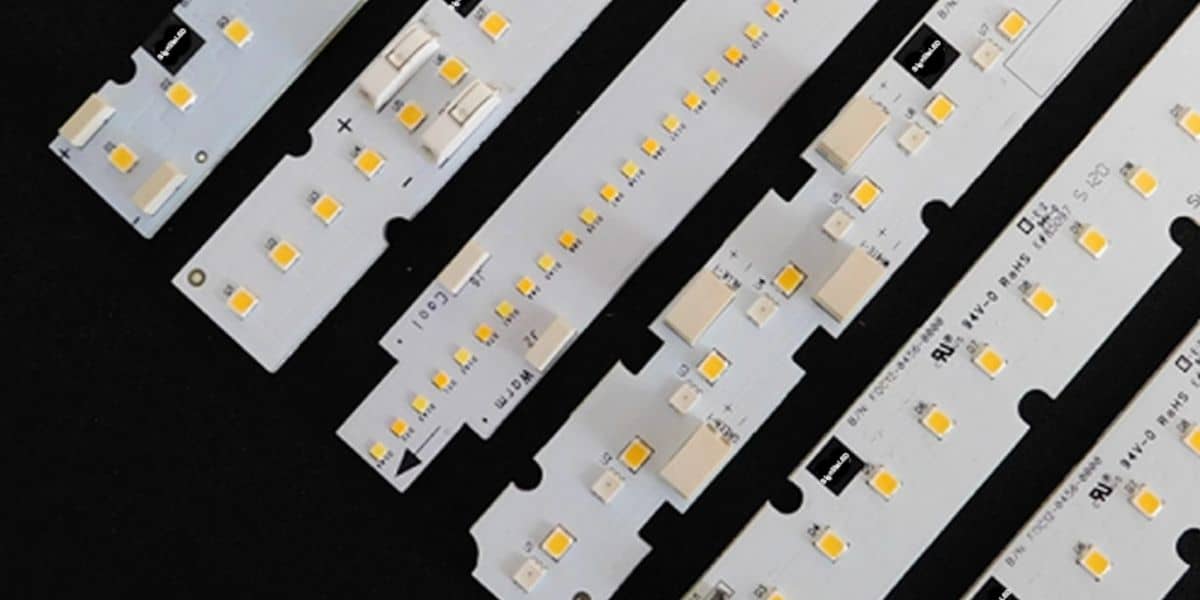
Nesses módulos, o pacote LED é apenas parte do sistema. A placa de circuito impresso desempenha um papel crítico na consistência do LED com o desempenho ao longo do tempo. Comparados aos conjuntos de LED padrão, os designs de alto CRI são muito mais sensíveis ao calor, à instabilidade elétrica e às decisões de layout. Pequenas variações na temperatura da junção ou corrente do inversor podem mudar o espectro emitido, reduzindo a fidelidade da cor mesmo quando o próprio LED é classificado para CRI alto.
É por isso que o design de LED PCB para aplicações de alto CRI se concentra menos em maximizar a produção e mais na manutenção da estabilidade. O comportamento térmico, o controle de corrente e a uniformidade óptica devem funcionar juntos. Uma placa de PCB LED bem desenhada ajuda a preservar a qualidade da cor ao longo da vida do produto, enquanto as escolhas ruins de design podem prejudicar até mesmo os melhores pacotes de LED.
O que diferencia o design de PCB com LED High-Cri diferente
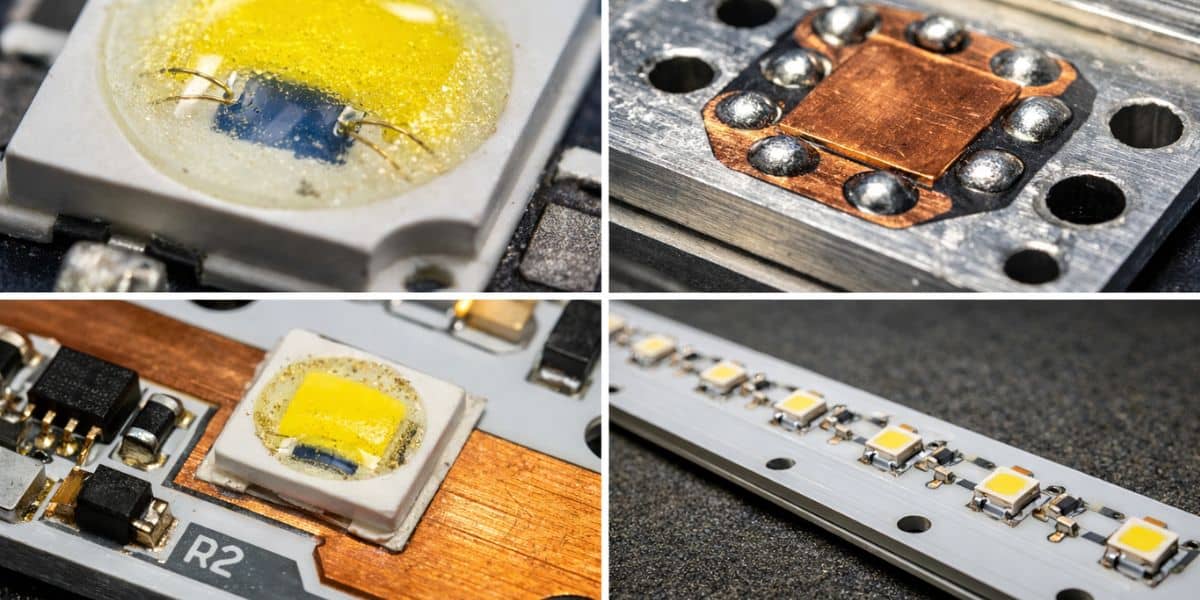
Os LEDs de alta CRI contam com sistemas de fósforo cuidadosamente ajustados para moldar o espectro de saída. Esses fósforos são mais sensíveis às condições operacionais do que os usados em LEDs padrão do CRI.
Sensibilidade e temperatura do fósforo
A camada de fósforo converte parte da emissão de LED azul em comprimentos de onda mais longos. À medida que a temperatura aumenta, a eficiência do fósforo e o equilíbrio espectral podem mudar. Mesmo aumentos modestos na temperatura da junção podem levar a mudanças mensuráveis na temperatura de cor correlacionada e CRI. Isso torna a consistência térmica uma preocupação de design de primeira ordem.
Impacto do calor na estabilidade da cor
O espalhamento de calor inconsistente pelo PCB pode fazer com que diferentes LEDs na mesma placa operem em temperaturas diferentes. O resultado é uma variação de cor visível em todo o módulo. Ao contrário da depreciação do lúmen, essas mudanças de cores podem aparecer no início da vida útil do produto se o design do PCB não gerenciar o calor uniformemente.
Por que o design de PCB afeta diretamente a qualidade da luz a longo prazo
O PCB determina como o calor deixa o LED, como a corrente flui através dele e quão mecanicamente estáveis montagem permanece ao longo do tempo. No design de PCB de LED High-CRI, a placa não é apenas uma transportadora elétrica. É uma estrutura de controle térmico e óptico que influencia diretamente a estabilidade da cor.
gerenciamento térmico
O gerenciamento térmico é o aspecto mais crítico do design de luz LED PCB para aplicações de alto CRI. O objetivo não é simplesmente manter as temperaturas baixas, mas mantê-las uniformes e previsíveis.
MCPCB x FR-4
Para LEDs de alta potência ou altas compactas, os PCBs de núcleo de metal são comumente usados.
- placas fr-4 Confie em planos de cobre e vias térmicas para mover o calor para um dissipador de calor externo. Eles podem ser adequados para LEDs de baixa potência ou amplamente espaçados, mas sua condutividade térmica é limitada.
- mcpcbs Use uma base metálica, tipicamente de alumínio ou cobre, com uma camada dielétrica entre o circuito de cobre e o núcleo de metal. Esta estrutura fornece um caminho térmico direto para longe do LED.
Para módulos de alto CRI, onde a consistência da cor é crítica, os mCpCBs são frequentemente preferidos porque reduzem os gradientes de temperatura em todos os níveis.
Base de alumínio x cobre
As placas de alumínio são amplamente utilizadas devido ao seu equilíbrio de custo, peso e desempenho térmico. As placas de cobre oferecem maior condutividade térmica, mas adicionam custo e peso, e geralmente são reservadas para aplicações com densidade de potência muito alta ou fluxo de ar limitado.
A escolha deve ser baseada em requisitos térmicos, restrições mecânicas e resfriamento em nível de sistema, não em suposições de que um material sempre oferece melhor desempenho de cor.
Vias térmicas e espessura de cobre
Nos projetos FR-4, as vias térmicas sob o LED térmico ajudam a mover o calor para os planos internos de cobre ou um dissipador de calor. O número, o diâmetro e o posicionamento dessas vias são mais importantes do que usá-los excessivamente. Vias mal colocadas podem criar um fluxo de calor desigual.
A espessura do cobre também afeta a propagação do calor. Aviões de cobre mais espessos distribuem o calor lateralmente, reduzindo os pontos quentes e ajudando a manter as temperaturas consistentes da junção LED em toda a linha.
Lógica de espalhamento de calor
O design térmico eficaz espalha o calor antes de remover o calor. Grandes áreas de cobre, layouts simétricos e pilhas de camadas consistentes ajudam a equalizar a temperatura. Essa abordagem é especialmente importante em módulos de LED lineares, onde os gradientes de temperatura podem se desenvolver de uma extremidade da placa para a outra.
Integridade da energia e controle de corrente
A estabilidade elétrica está intimamente ligada à estabilidade da cor em sistemas com LED CRI.
Importância de condução de corrente constante
Os LEDs de alta CRI devem ser acionados com uma corrente constante estável. As variações na corrente afetam diretamente a temperatura da junção e o espectro de emissões. O design de PCB suporta isso minimizando quedas de tensão, ruído e resistência parasitária.
Impacto atual da ondulação e do cintilação
O Ripple de corrente excessivo pode introduzir cintilação e ciclo térmico na junção LED. Embora a cintilação seja frequentemente discutida em termos de percepção humana, também contribui para o estresse a longo prazo sobre os materiais de fósforo. O desacoplamento adequado e o roteamento de energia limpo no PCB ajudam a reduzir esses efeitos.
Largura, aterramento e desacoplamento de rastreamento
Os traços amplos reduzem as perdas resistivas e a geração de calor. Uma estratégia de aterramento clara minimiza o acoplamento de ruído em caminhos de corrente LED. Os capacitores de desacoplamento colocados próximos às interfaces do motorista ajudam a estabilizar a tensão de alimentação e a entrega de corrente.
Em Projeto de LED PCB, essas práticas não são sobre ultrapassar os limites de desempenho, mas evitar o estresse elétrico desnecessário que pode degradar a qualidade da cor ao longo do tempo.
Layout de PCB e simetria óptica
As decisões de layout influenciam tanto o comportamento térmico quanto o óptico.
Simetria de colocação de LED
O posicionamento simétrico garante que cada LED veja condições térmicas e elétricas semelhantes. A assimetria pode levar a pontos quentes localizados, que se traduzem em variação de cor na superfície iluminada.
Espaçamento e conversa cruzada térmica
Os LEDs colocados muito próximos podem aquecer uns aos outros, mesmo que cada dispositivo esteja dentro dos limites de classificação. O espaçamento adequado permite que o calor se espalhe e se dissipe de forma mais uniforme. O espaçamento ideal depende do nível de potência, do material da placa e do método de resfriamento.
Rastreamento de roteamento de caminhos ópticos
Os traços de alta corrente devem ser roteados para longe de áreas reflexivas ou ópticas. Isso reduz a absorção indesejada, sombreamento ou aquecimento localizado próximo à superfície emissora.
Refletividade e estabilidade da máscara de solda
As máscaras de solda de cor clara e sem amarelo são usadas frequentemente em designs de placas de PCB de LED de alto CRI. Embora a máscara de solda não mude o CRI diretamente, a descoloração ao longo do tempo pode afetar a uniformidade percebida da cor e a aparência clara.
Seleção de materiais e acabamentos superficiais

As escolhas de materiais influenciam mais a confiabilidade do que o desempenho imediato.
materiais de base pcb
Além das opções de FR-4 e MCPCB, materiais dielétricos com condutividade térmica estável e baixas características de envelhecimento são importantes. O desempenho dielétrico inconsistente pode alterar a resistência térmica ao longo do tempo.
Acabamentos Enig e Epig
Os acabamentos de superfície ENIG e EPIG oferecem boa soldabilidade e resistência à corrosão. Do ponto de vista da cor, seu valor reside na estabilidade elétrica e mecânica de longo prazo, em vez de efeitos ópticos.
Um acabamento confiável reduz o risco de degradação do contato, o que poderia levar a uma distribuição irregular de corrente entre os LEDs.
Considerações de confiabilidade a longo prazo
Os aplicativos de alto CRI geralmente esperam uma longa vida útil com o mínimo de mudança de cor. Os materiais que resistem à oxidação, delaminação e fadiga térmica suportam esse objetivo, mantendo os caminhos elétricos e térmicos estáveis.
Confiabilidade e proteção para módulos de alto CRI
Riscos de envelhecimento térmico
A exposição repetida a temperaturas elevadas acelera o envelhecimento dos fósforos e pode mudar a saída de cor. O design de PCB que limita as temperaturas de pico e reduz o ciclo térmico ajuda a retardar esse processo.
revestimento conformado
Em ambientes agressivos, os revestimentos conformados podem proteger o PCB contra umidade e contaminantes. O revestimento deve ser opticamente estável e compatível com a operação LED, pois alguns materiais podem descolorir sob o calor e a luz.
Termistores NTC e feedback térmico
A integração de um termistor NTC no PCB permite que o sistema monitore a temperatura da placa e reduza a corrente, se necessário. Esta forma de proteção térmica suporta a estabilidade da cor, evitando uma operação prolongada em temperaturas prejudiciais.
Erros comuns de design de PCB em módulos LED de alto CRI
Um erro frequente é tratar os LEDs de alta CRI da mesma forma que os LEDs padrão. Projetos que funcionam de forma aceitável para iluminação geral podem não preservar a qualidade da cor em aplicações de alto CRI.
Ignorar a simetria térmica pode levar à variação visível da cor em todo o módulo. LEDs de overdriving para obter maior brilho aumenta o estresse por calor e acelera a mudança de cor. Decisões de layout ruins, como traços estreitos ou distribuição irregular de cobre, introduzem desequilíbrios elétricos e térmicos que prejudicam a estabilidade a longo prazo.
Como o design adequado do PCB preserva o CRI ao longo do tempo
O bom design de LED PCB não aumenta o CRI além do que o pacote de LED fornece. Em vez disso, preserva o desempenho de cores nominal durante toda a vida útil do produto.
Isso requer pensamento em nível de sistema. A PCB, o driver, o alojamento mecânico e o método de resfriamento devem ser considerados em conjunto. Quando os caminhos térmicos são consistentes, a entrega da corrente é estável e a simetria do layout é mantida, os LEDs de alta CRI são mais propensos a fornecer uma saída de cor consistente ano após ano.
Escolhas de design e seu impacto
| Aspecto do projeto | Escolha de design de PCB | Impacto na estabilidade do CRI |
| caminho térmico | MCPCB com cobre uniforme | Reduz gradientes de temperatura |
| traçado | Colocação simétrica do LED | Melhora a uniformidade da cor |
| Roteamento de energia | Traços amplos e equilibrados | Mantém a corrente estável |
| materiais | Máscara de solda estável e acabamento | Suporta consistência a longo prazo |
Conclusão
Os módulos de LED High-CRI exigem mais do design de PCB do que produtos de iluminação padrão. O gerenciamento térmico, a estabilidade elétrica e a simetria do layout desempenham papéis diretos na preservação da precisão das cores. Um design de PCB LED bem executado não promete números CRI mais altos, mas protege a qualidade da cor que os LEDs foram projetados para oferecer.
Ao se concentrar em espalhamento de calor consistente, caminhos de corrente limpos e materiais confiáveis, os engenheiros podem garantir que os módulos de LED de alto CRI mantenham o desempenho visual pretendido ao longo de sua vida operacional.
FAQs
Postagens relacionadas