Português
  English
  简体中文
简体中文  Deutsch
  Español
  Français
  Italiano
  日本語
日本語  한국어
한국어  Polski
  Русский
  Türkçe
  Nederlands
  Tiếng Việt
  ไทย
ไทย 
As luzes de pesca verde são amplamente utilizadas na pesca noturna, desde pequenos barcos de recreação até grandes embarcações comerciais. Muitos pescadores acreditam que as luzes verdes atraem mais peixes do que outras cores, mas isso é sempre verdade?
Neste artigo, nos concentramos especificamente nas luzes de pesca verdes e examinamos se elas são mais eficazes na atração de peixes à noite. Em vez de repetir as teorias básicas, analisamos como a luz verde se comporta na água, por que é comumente escolhida em cenários reais de pesca e em quais situações ela tem um desempenho melhor – ou não – em comparação com outras cores claras.
Se você estiver selecionando luzes de pesca Para barcos, docas ou aplicações montadas na superfície, entender o papel da luz verde pode ajudá-lo a tomar uma decisão mais prática e econômica.
Por que a cor clara importa na pesca noturna
Na pesca noturna, a cor clara desempenha um papel prático além da visibilidade.
Diferentes cores de luz têm diferentes comprimentos de onda e o comprimento de onda determina como a luz viaja na água. Algumas cores são absorvidas rapidamente, enquanto outras se espalham mais e mantêm uma zona iluminada mais clara. Isso afeta diretamente o quão bem uma luz de pesca pode criar uma área de alimentação estável à noite.
Como as luzes que atraiam peixes funcionam formando uma zona de atividade visível, em vez de simplesmente aumentar o brilho, a seleção de cores se torna um fator importante. Em muitos casos, escolher a cor certa clara tem um impacto maior nos resultados da pesca do que aumentar a potência de produção isoladamente.
Entender porque a luz de cores é importante para explicar por que certas cores são usadas com mais frequência na pesca noturna – e estabelece as bases para comparar as luzes verdes com outras opções.
Como os peixes respondem à luz verde à noite
Os peixes não reagem à cor, mas sim ao comportamento leve
Os peixes não são atraídos pela luz da mesma forma que os humanos são.
Eles não estão “vendo” o verde como uma escolha de cor, mas respondendo a como a luz se comporta debaixo d'água.
À noite, a visão depende mais do contraste e do brilho do que do reconhecimento preciso das cores. É por isso que o desempenho físico da luz na água importa mais do que sua aparência visual.
Por que a luz verde é mais fácil para os peixes detectarem à noite
A luz verde opera dentro de uma faixa de comprimento de onda que muitas espécies de peixes podem detectar com mais eficiência em ambientes com pouca luz.
Comparada com a luz vermelha ou amarela, a luz verde permanece visível em distâncias mais longas debaixo d'água e forma uma zona iluminada mais estável. Isso torna mais fácil para os peixes sentirem mudanças em seus arredores sem estimulação repentina.
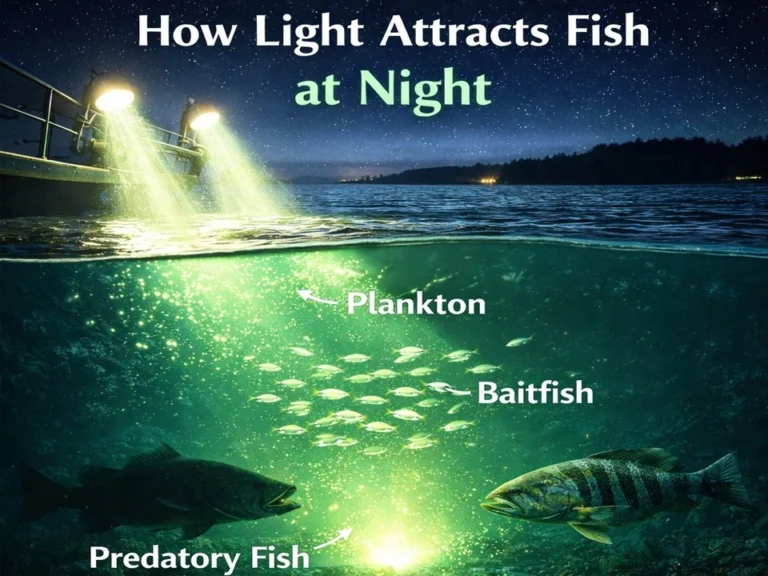
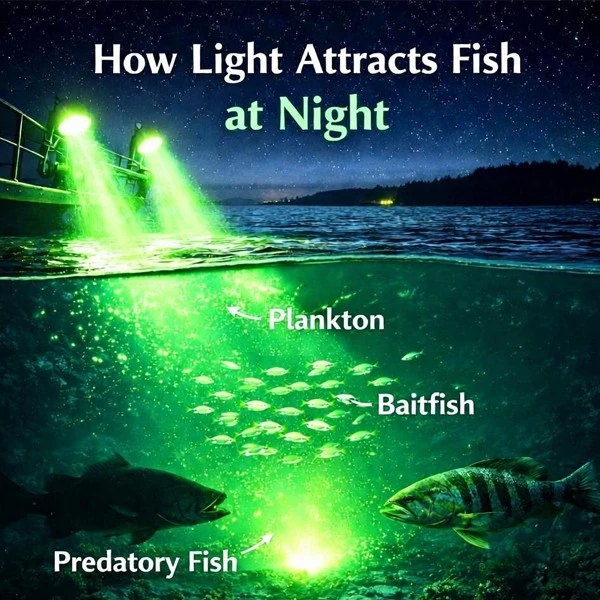
A reação em cadeia: do plâncton aos peixes predadores
As luzes de pesca não atraem peixes grandes diretamente.
O processo geralmente segue uma resposta em camadas:
- A luz primeiro atrai o plâncton e os microscópicos
- Pequenos peixes se reúnem para alimentar
- Peixes predadores maiores seguem o peixe-isca
Por que a luz verde funciona bem na prática de pesca noturna
De uma perspectiva prática, a luz verde oferece um equilíbrio entre brilho e perturbação.
É forte o suficiente para ativar a atividade subaquática, mas não excessivamente severo ou estressante para os peixes. Em muitas situações de pesca noturna, isso torna as luzes de pesca verdes mais fáceis de controlar e mais consistentes em desempenho.
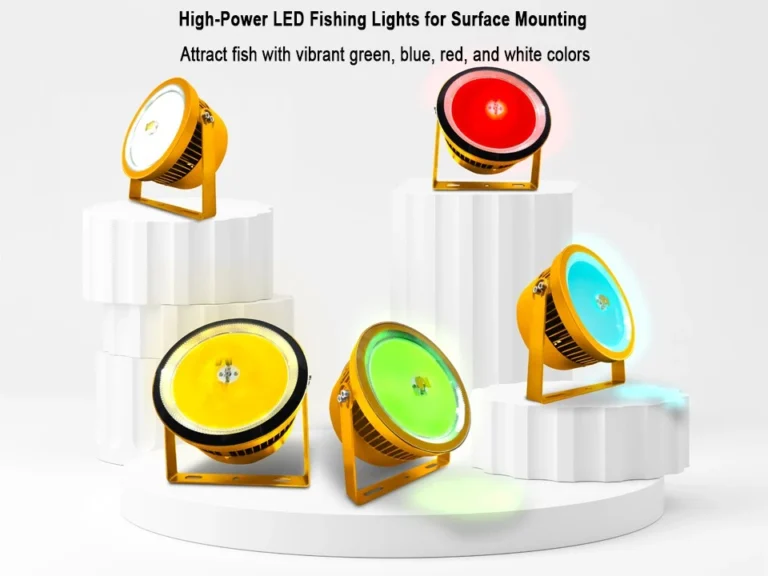
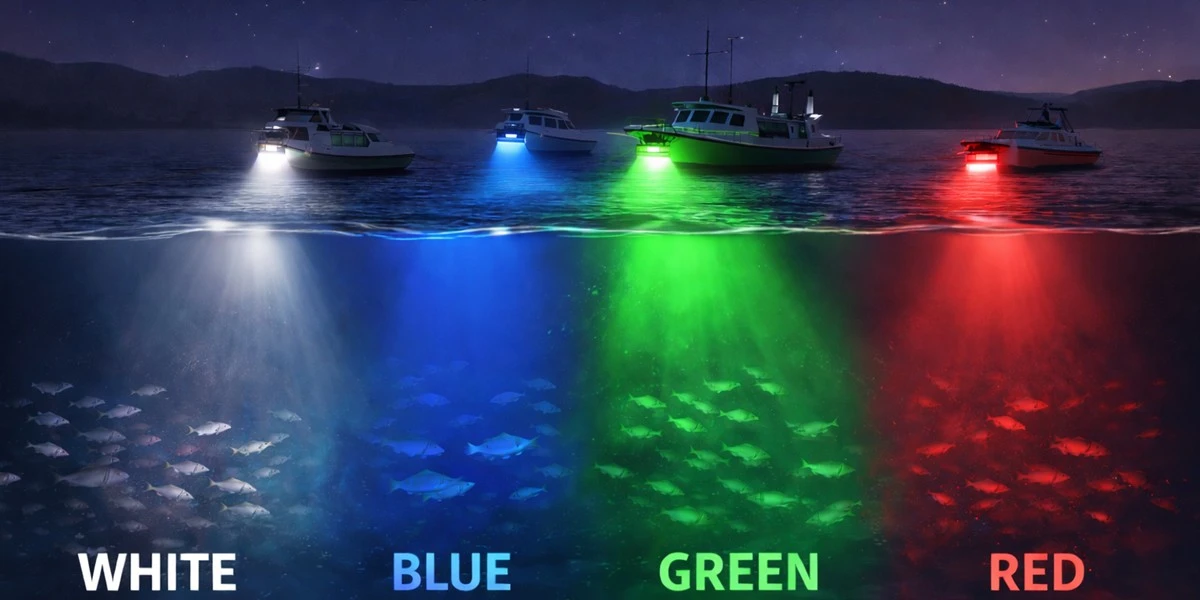
Luzes de pesca verde x azul x vermelho x ciano x branco – qual é a diferença?
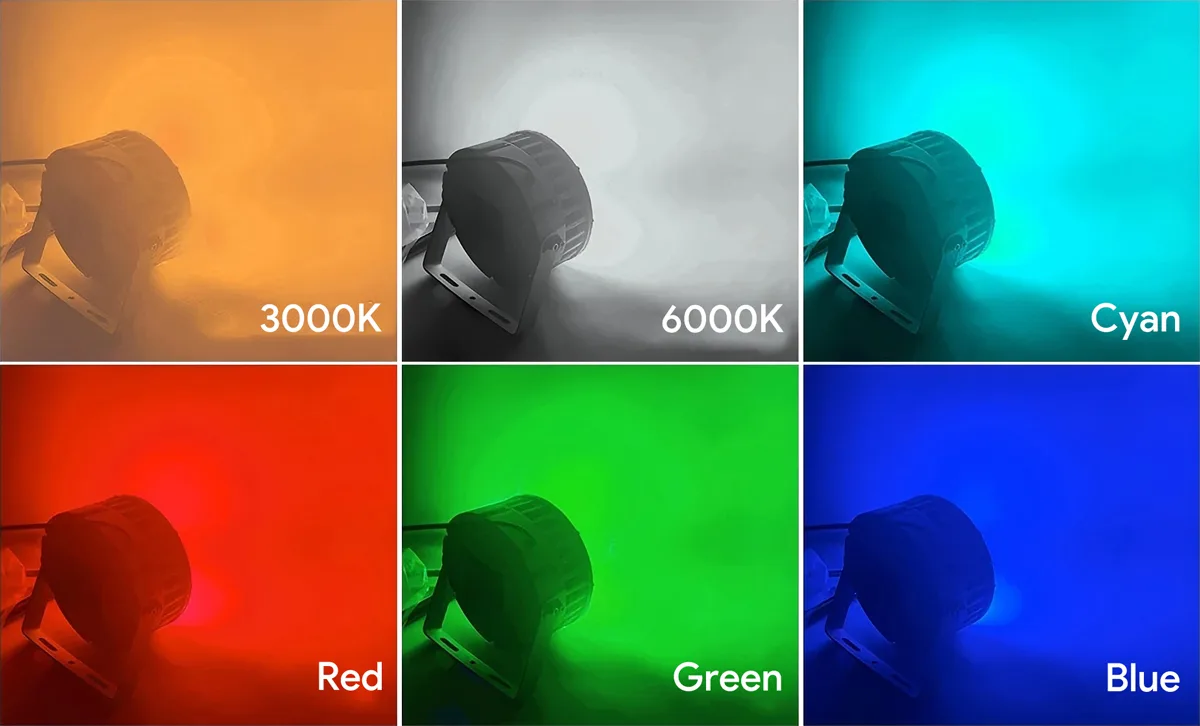
Escolher a cor certa da luz de pesca para 2026 depende do seu alvo e das condições da água. Cada cor tem um comprimento de onda diferente que afeta a profundidade que penetra e que vida marinha específica atrai.
Tabela de comparação rápida
| Cor | melhor para | eficácia |
| Verde | Universal / Melhor Geral | Atrai o plâncton de forma mais eficaz; trabalha em água doce e salgada. |
| Azul | água salgada profunda | Penetra mais profundamente em água salgada clara; atrai iscas de água salgada e caranguejos. |
| Branco | Águas rasas / camarão | Alta intensidade, mas raso; atrai iscas maiores (mas menos). |
| ciano | Taxas de captura comercial | Comprovado para superar o branco/verde para espécies específicas como a lula (Coleoidea). |
| Vermelho | Furtividade / visão noturna | Não atraem “insetos” ou assusta peixes tímidos; preserva sua visão noturna. |
Verde: o vencedor multiuso
verde (aprox. 520nm) é considerado o padrão-ouro para atrair a vida marinha porque estimula efetivamente o plâncton, a base da cadeia alimentar subaquática.
- Água doce: é a melhor escolha para lagos e rios, especialmente para espécies como tipo de peixe e robalo.
- A luz verde-agua turva fornece alto contraste, fazendo com que a água pareça mais clara, o que ajuda o peixe-isca a encontrar a fonte de luz.
Azul: Especializado em Águas Profundas
A luz azul (aprox. 470 nm) é altamente especializada em ambientes de água salgada e possui vantagens exclusivas.
- Desempenho offshore: penetra mais profundamente na água do mar clara do que em outras cores, tornando-a ideal para a pesca offshore.
- Aviso de água doce: a luz azul tende a falhar na atração de iscas em água doce, e pode até assustá-los.
- Espécies-alvo: particularmente eficazes para atrair caranguejos nadadores azuis e espécies pelágicas offshore específicas.
Branco: intenso e raso
A luz branca é comumente usada por sua alta intensidade, mas tem limitações em termos de penetração de profundidade.
- Grande isca: enquanto o verde atrai mais pequenos peixes-botas, a luz branca atrai iscas individuais maiores.
- Limitações: a luz branca se dissipa rapidamente na água e não penetra nas águas profundas de forma eficaz. É ideal para áreas rasas próximas ao barco ou à doca.
Cyan: a escolha “comercial”
Cyan Light (430–600nm) está ganhando popularidade em 2026 por seus benefícios exclusivos, preenchendo a lacuna entre o azul e o verde.
- Melhor rendimento: o ciano demonstrou atrair espécies como lula (Coleoidea), camarão (Penaeus merguiensis) e sardinhas de forma mais eficaz que a luz branca.
- Viagens mais profundas: tem um coeficiente de atenuação mais baixo do que a luz branca na água do mar, permitindo que ela se afaste e atinja profundidades maiores.
Vermelho: a opção furtiva
A luz vermelha não é normalmente usada para atrair peixes, mas serve para diversos fins funcionais que beneficiam os pescadores.
- Cegueira noturna: a luz vermelha permite que os pescadores vejam seus equipamentos sem arruinar sua visão noturna natural.
- Espécies tímidas: é ideal para atrair espécies de peixes cautelosas, como bagres ou robalo, que podem ser assustados com luzes mais brilhantes.

Como escolher a luz verde certa para pescar
Escolher uma luz verde de pesca não é simplesmente selecionar uma cor específica. Para obter uma atração consistente de peixes à noite, vários fatores práticos precisam ser considerados juntos. Compreender esses fundamentos ajuda a evitar configurações avantajadas, garantindo uma cobertura eficaz em condições reais de pesca.
Primeiro, considere a clareza da água. Em águas relativamente claras, a luz verde viaja com eficiência e mantém uma visibilidade forte em uma ampla área, tornando-a ideal para Luzes de pesca montadas na superfície em barcos ou docas. Em águas mais turvas ou ricas em plâncton, a luz verde ainda funciona bem, mas a distribuição uniforme do feixe se torna mais importante do que o brilho bruto.
Em segundo lugar, a saída de luz deve corresponder ao ambiente de pesca. Maior potência não significa automaticamente melhores resultados. Em muitos cenários de pesca noturna, a iluminação estável e uniformemente distribuída atrai mais iscas do que um feixe estreito e excessivamente intenso. É por isso que muitas operadoras preferem os faróis de pesca verde para cobertura da área, enquanto os holofotes de pesca verde são mais adequados para direcionar a luz em direção a uma zona específica.
Terceiro, preste atenção ao controle do feixe e à estabilidade da luz. Um ângulo de feixe controlado ajuda a concentrar a luz onde a atividade do peixe é esperada, enquanto a estabilidade elétrica garante uma saída consistente durante as operações noturnas. A luz bruxuleante ou instável reduz a eficácia, independentemente da cor.
Finalmente, considere a altura de montagem e o propósito de iluminação como parte do processo de seleção. As luzes montadas acima da linha d'água devem fornecer propagação suficiente para iluminar a superfície e as camadas superiores da água sem brilho excessivo. O objetivo não é inundar a água com luz, mas criar uma zona de alimentação estável e atraente à qual os peixes retornam repetidamente.
Ao se concentrar nas condições da água, no tipo de feixe e na estabilidade da produção, não apenas na cor - você pode selecionar uma luz verde de pesca que oferece desempenho confiável em diferentes situações de pesca noturna.
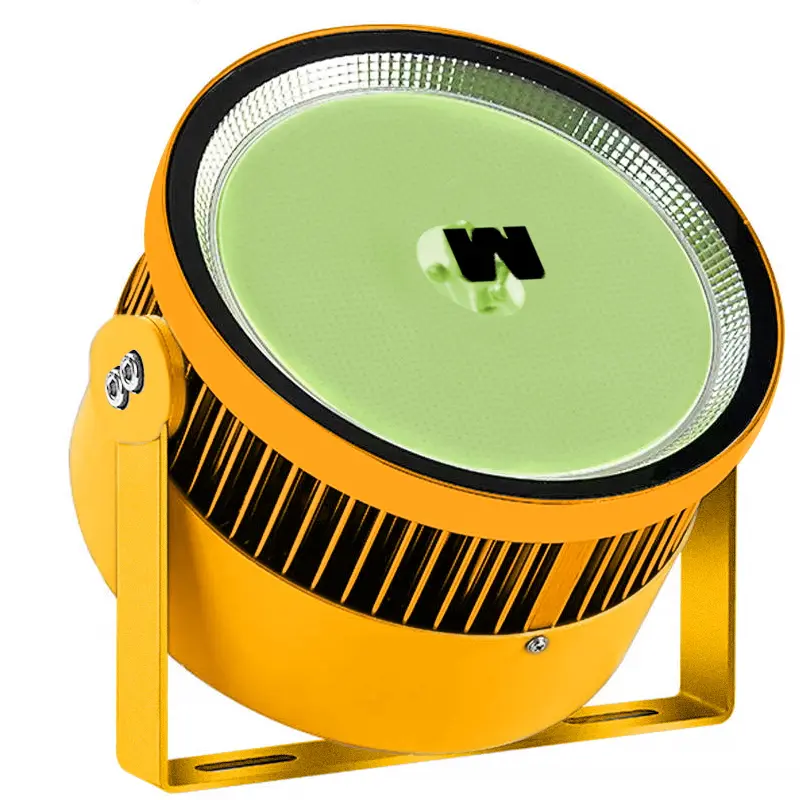
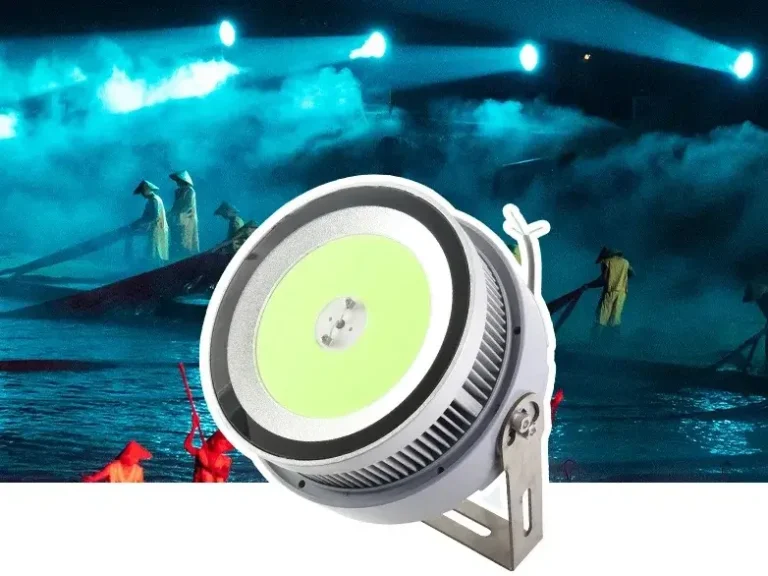
ILUMINAÇÃO DE PEIXES EM ESPIGA DE ALTA POTÊNCIA
Modelo n.: Tipo redondo
Tensão de entrada: AC100-320V
Sobrecarga: 10000V
Watt/pcs: 800W/1000W/1200W
Tipo de LED: COB
Tamanho (mm): Φ230 × 140
Cor: 3000K / 4000K / 5000K / 6000K/ Vermelho / Verde / Azul / Roxo
IRC: >80@3000K / 4000K / 5000K / 6000K/
Lúmen: >120lm/w@3000K / 4000K / 5000K / 6000K/
Grau IP: IP67
Onde as luzes de pesca verdes são comumente usadas
As luzes de pesca verde são amplamente adotadas em diferentes cenários de pesca noturna porque oferecem uma combinação equilibrada de penetração, cobertura e conforto visual. Em vez de se limitar a um uso único, as luzes verdes suportam a atração consistente de peixes em vários ambientes.
1. Pesca noturna montada em barco
navios de pesca. Essas luzes iluminam as camadas de água superficial e superior, formando uma zona de alimentação estável que atrai iscas e espécies predadoras maiores. Esta configuração é amplamente utilizada em barcos de pesca comercial e pesca recreativa.
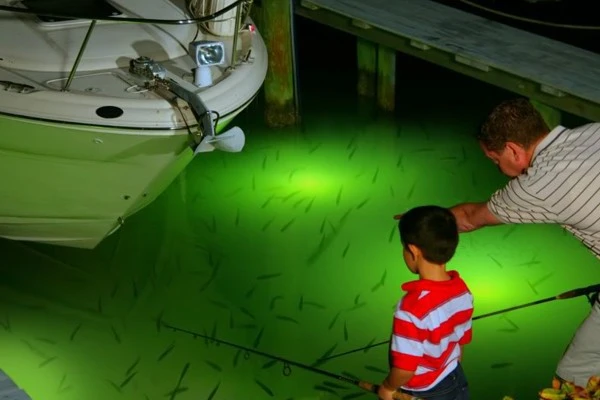
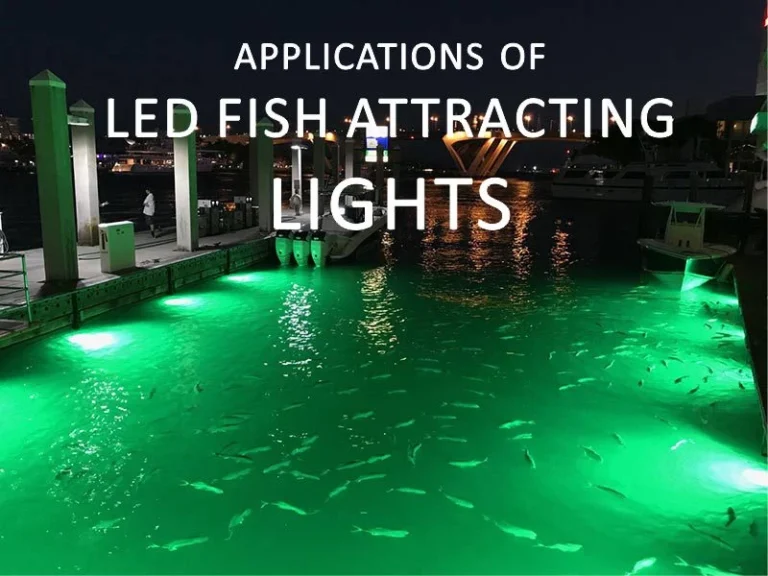
2. Áreas de pesca do cais e do cais
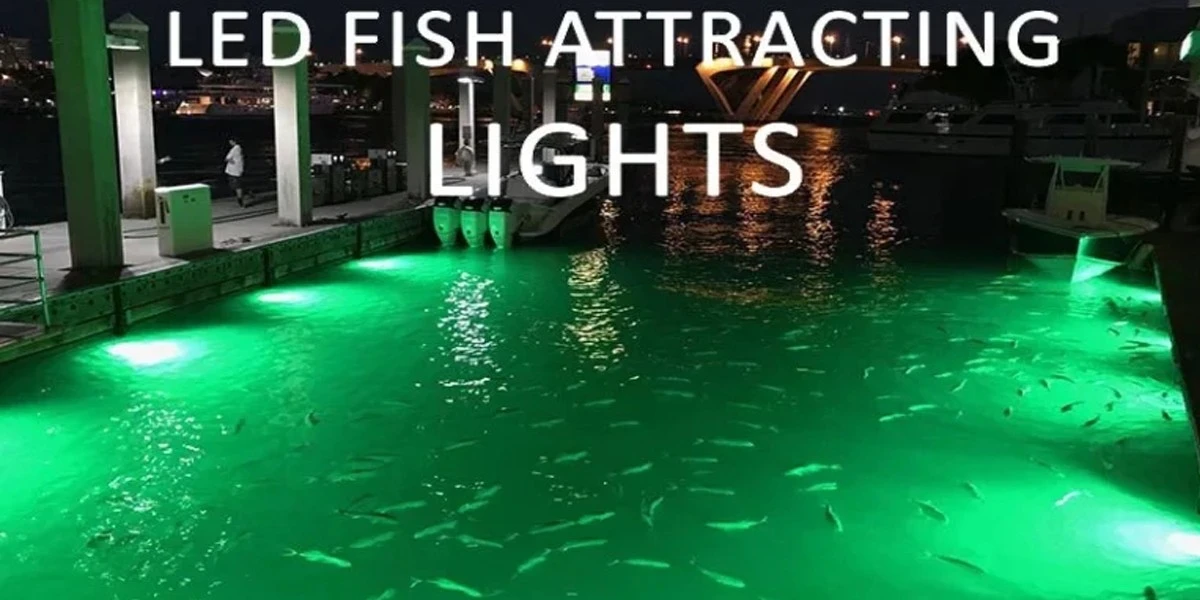
As luzes de pesca verde também são amplamente utilizadas para iluminação de cais e cais. Quando montados ao longo de docas ou cais, eles se estendem à água ao redor, incentivando o plâncton e o peixe-isso a se reunirem perto da estrutura. Com o tempo, isso cria um local de pesca confiável sem brilho ou distúrbios excessivos.
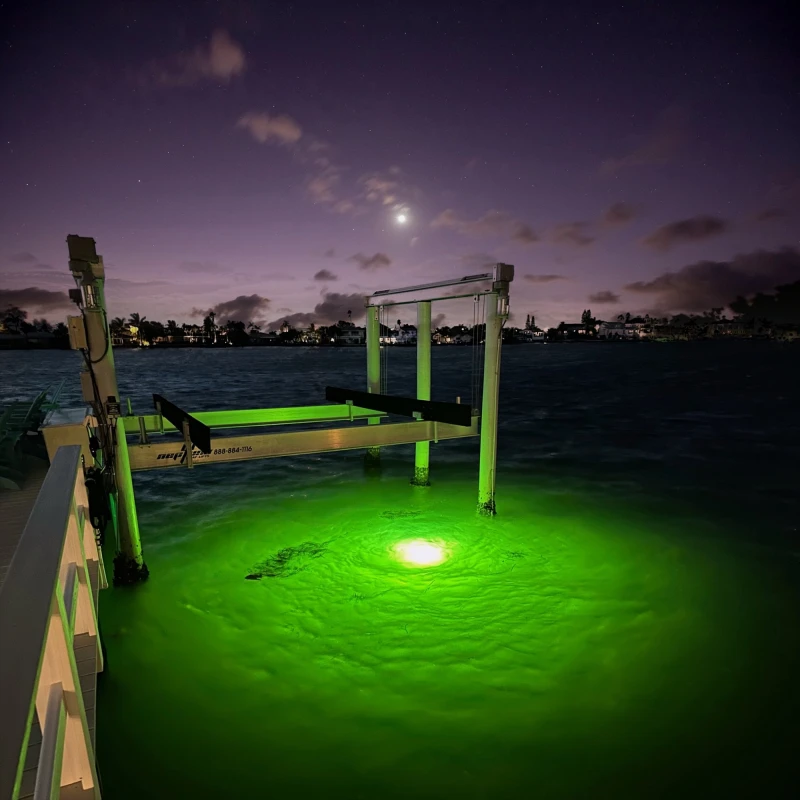
3. Nearshore e pesca costeira noturna
Em ambientes costeiros e costeiros, as luzes verdes da pesca aumentam a visibilidade noturna e a atividade dos peixes em águas rasas. Sua distribuição de feixe controlado os torna adequados para pesca costeira, pequenos portos e operações noturnas costeiras onde a iluminação precisa é preferida.
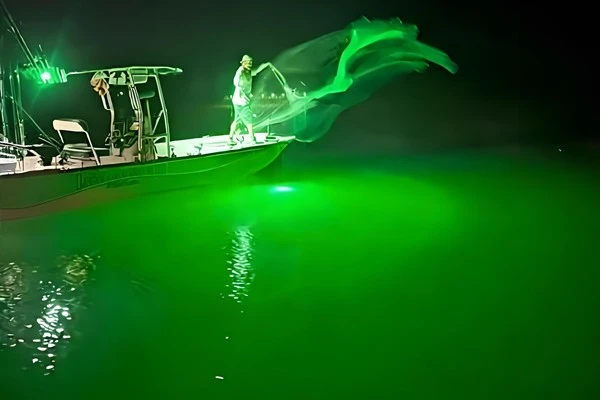
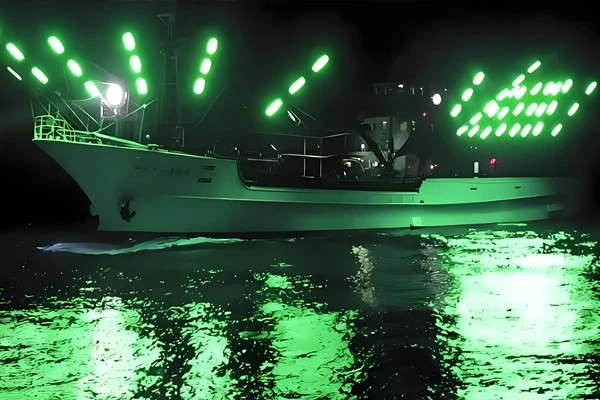
4. Operações de pesca offshore e comercial
Para pesca offshore e comercial, as luzes de pesca verdes costumam fazer parte de sistemas de iluminação maiores. A saída de luz consistente e o posicionamento equilibrado em todo o navio são mais importantes do que a intensidade da lâmpada individual, ajudando a manter a concentração de peixes durante as sessões de pesca noturnas prolongadas.
Essas aplicações explicam por que as luzes verdes de pesca continuam sendo uma escolha padrão entre barcos, docas e ambientes de pesca costeira em todo o mundo. Para obter mais detalhes sobre como essas luzes funcionam em diferentes configurações, confira As principais aplicações de peixes de LED que atraem luzes em barcos, docas, lagoas e projetos offshore.
Conclusão
As luzes de pesca verde são amplamente utilizadas na pesca noturna porque fornecem um equilíbrio confiável entre a penetração de água, a cobertura de feixe e a estabilidade visual. Na maioria das condições noturnas, a luz verde cria uma zona de alimentação clara e eficaz sem sobrecarregar o ambiente circundante.
No entanto, a cor por si só não determina a atração de peixes. A saída de luz, o controle de feixe e o posicionamento adequado geralmente desempenham um papel maior do que o brilho ou a escolha de cores por si só. Compreender esses fatores ajuda a alcançar resultados consistentes, evitando o consumo desnecessário de energia.
Se você está planejando uma configuração de pesca noturna para barcos ou docas, escolher a luz de pesca verde certa é apenas o primeiro passo. Explorar tipos de feixe, opções de montagem e design geral do sistema ajudará você a construir uma configuração de luz de pesca mais eficiente e estável.
Perguntas frequentes (FAQ)
Postagens relacionadas