Português
  English
  简体中文
简体中文  Deutsch
  Español
  Français
  Italiano
  日本語
日本語  한국어
한국어  Polski
  Русский
  Türkçe
  Nederlands
  Tiếng Việt
  ไทย
ไทย 
Na indústria de fabricação de eletrônicos, “PCB” e “PCBA” são mencionados quase diariamente. No entanto, esses dois conceitos geralmente causam confusão, mesmo entre startups de hardware ou equipes de compras sem histórico eletrônico.
Alguns acreditam que são meramente sinônimos, outros assumem erroneamente o PCBA é simplesmente uma “versão atualizada do PCB”, e alguns funcionários de compras ainda não estão claros sobre qual serviço realmente exigem ao solicitar cotações.
Na realidade, a distinção entre PCB e PCBA se estende além das definições, impactando diretamente os custos do produto, ciclos de entrega, riscos de qualidade e complexidade da cadeia de suprimentos. Especialmente no contexto de 2026, onde a eletrônica é altamente inteligente e a tecnologia de IA está profundamente integrada aos processos de fabricação, entendendo corretamente a distinção entre PCB e PCBA tornou-se fundamental para as empresas reduzirem os riscos e aprimorarem a eficiência.
Este artigo analisará sistematicamente as diferenças essenciais entre PCB e PCBA de múltiplas dimensões — definições técnicas, processos de fabricação, estruturas de custos, tendências do setor e decisões de aquisição — para ajudar engenheiros e funcionários de compras a fazer escolhas mais informadas nos estágios iniciais dos projetos.
O que é um PCB? (placa de circuito impresso)
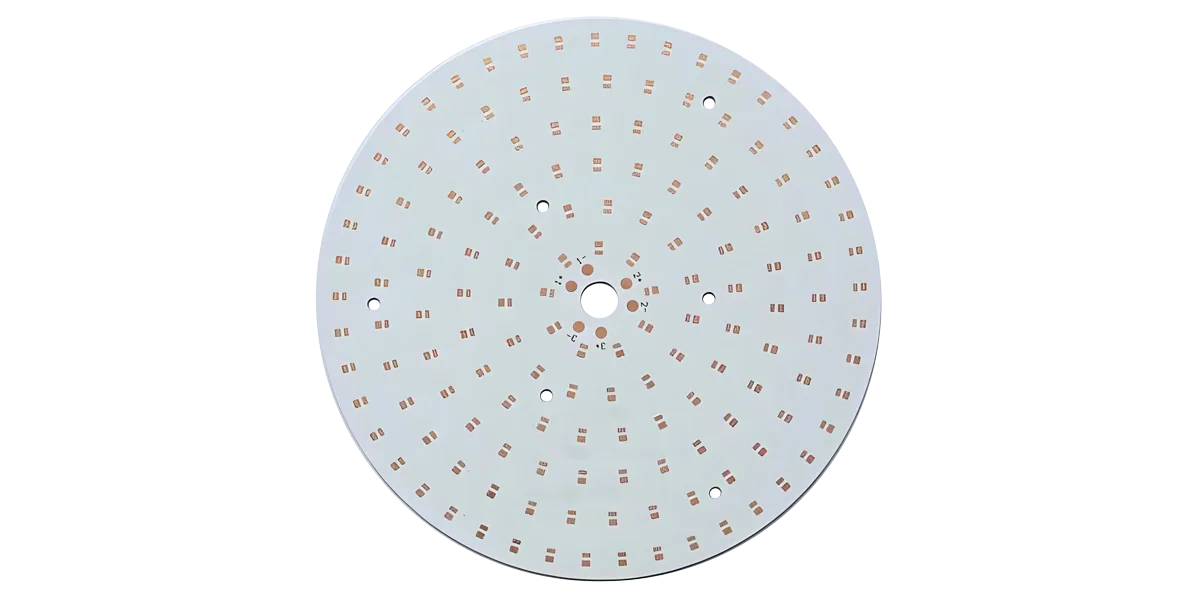
Um PCB (placa de circuito impresso) serve como suporte fundamental para componentes eletrônicos, permitindo conexões elétricas por meio de traços de folha de cobre, almofadas e vias. Um PCB refere-se exclusivamente à “placa nua” sem nenhum componente eletrônico montado nela. No entanto, forma a base física dos produtos eletrônicos, fornecendo o substrato para circuitos e facilitando conexões elétricas.
Os PCBs servem como ponto de partida para todos os sistemas de iluminação LED, sejam tiras de LED flexíveis ou módulos de LED de alta potência.
Componentes estruturais de PCBs LED
Um PCB LED típico geralmente inclui:
1. material de base
- FR-4: adequado para LEDs de baixa a média potência
- PCB Metal Core (MCPCB): Alumínio ou cobre, amplamente utilizado em tiras e módulos de LED de alta potência para um desempenho térmico superior
- Materiais de alta frequência: usados em sistemas de iluminação inteligente e LED IoT
2 . camada de cobre
A espessura do cobre (1 oz–6 oz) impacta diretamente:
- Capacidade de carga atual
- Controle de queda de tensão
- Desempenho de gerenciamento térmico de tiras de LED
3. máscara de solda
Previne curtos-circuitos e oxidação. Na indústria de LED, a máscara de solda branca é amplamente adotada por suas propriedades reflexivas superiores.
4. Serigrafia
As marcações indicam polaridade do LED, orientação e números de peça, facilitando a produção e manutenção em massa.
Tipos comuns de PCB na indústria de LED
Os tipos de PCB e aplicativos da indústria de LED são principalmente os seguintes:
| Tipo | Material | Cenário de aplicação |
| PCB de tiras LED flexível LED | Circuito impresso flexível (FPC) | Ranhuras leves, armários, ambientes de instalação irregulares |
| PCB do módulo LED | Placa de fibra de vidro FR-4 / placa de base de alumínio | Luzes lineares, luzes de teto (FR-4 para baixa potência, alumínio para alta potência) |
| PCB de tiras rígidas de LED | Placa de alumínio com base em alumínio/placa de cobre FR-4 | Iluminação linear, iluminação industrial |
| Placa de PCB personalizada LED | placa de pcb personalizada led | Iluminação profissional de alta qualidade |
O que é PCBA? (Conjunto da placa de circuito impresso)
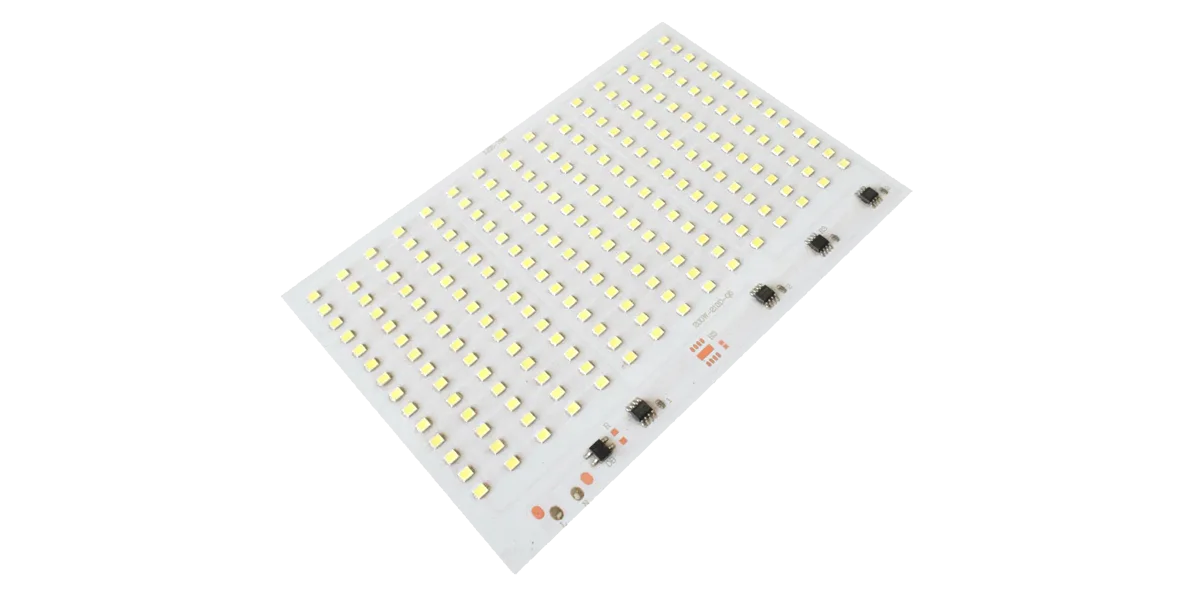
PCBA (conjunto de placa de circuito impresso) Refere-se à placa de circuito acabada produzida pela soldagem de componentes eletrônicos, como resistores, capacitores, ICs, LEDs e conectores em um PCB usando processos SMT ou THT. Possui propriedades elétricas e funcionais completas. É o sistema de circuito acabado depois que os componentes eletrônicos são soldados, montados e testados na PCB.
O PCBA é a etapa crítica que torna um PCB “Verdadeiramente funcional”.
1. Por que os produtos LED devem ser submetidos a PCBA?
sem PCBA:
- Os LEDs não podem acender.
- Os drivers de corrente constante não podem operar de forma estável.
- As funções de controle inteligente e escurecimento não podem ser implementadas.
Chips de LED soldados PCBA, resistores, capacitores, ICs do driver, conectores e outros componentes no PCB, transformando-o em um sistema de iluminação funcional.
2 Processos de montagem de PCBA de LED
- SMT (Tecnologia de montagem em superfície)
– Processo de transmissão de LED para tiras e módulos de LED
- Alta automação, eficiência e consistência
– Adequado para arranjos de LED de alta densidade
- THT (Tecnologia através de furos)
– Usado para interfaces de energia e terminais de alta corrente
- Alta resistência mecânica e estabilidade
– Montagem híbrida (SMT + THT)
– Comum em acessórios de LED comercial e industrial, equilibrando o desempenho e a confiabilidade.
Comparação dos processos de fabricação de PCB e PCBA (passo a passo)
Compreender os processos de fabricação é fundamental para entender suas diferenças.
O processo de fabricação de PCB envolve principalmente exposição, gravação, perfuração, revestimento, etc. Consulte o diagrama a seguir para o fluxo de trabalho específico:
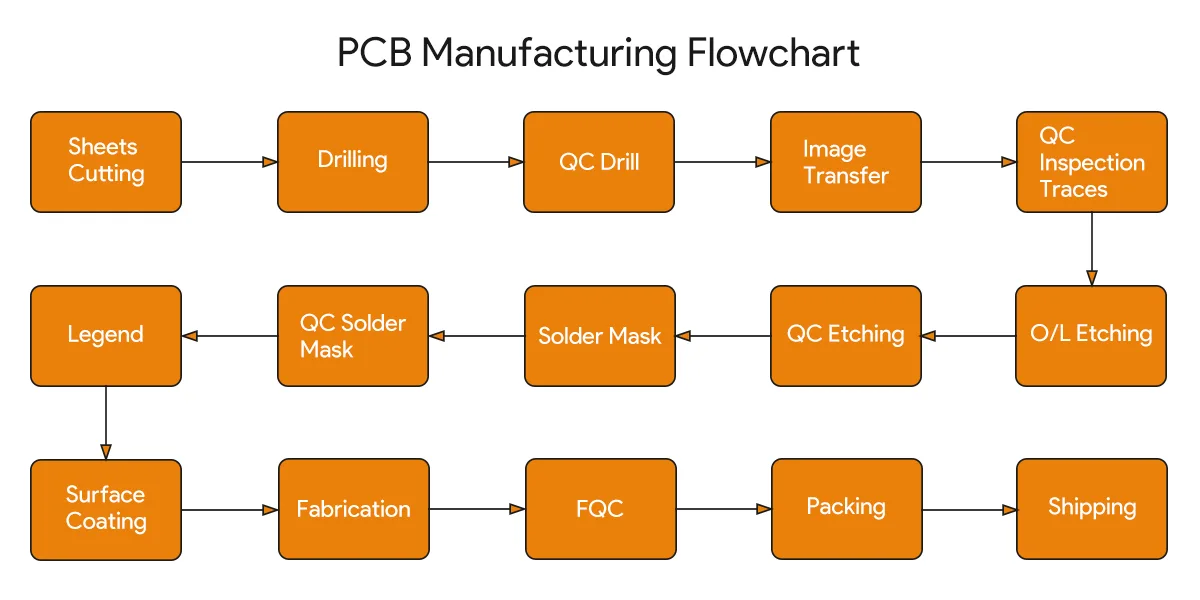
Nesta fase, o PCB completo permanece uma placa nua sem nenhuma iluminação ou funções de controle.
O processo de fabricação do PCBA inclui principalmente o posicionamento, montagem e teste de SMT. O fluxo de trabalho específico é ilustrado no gráfico abaixo:
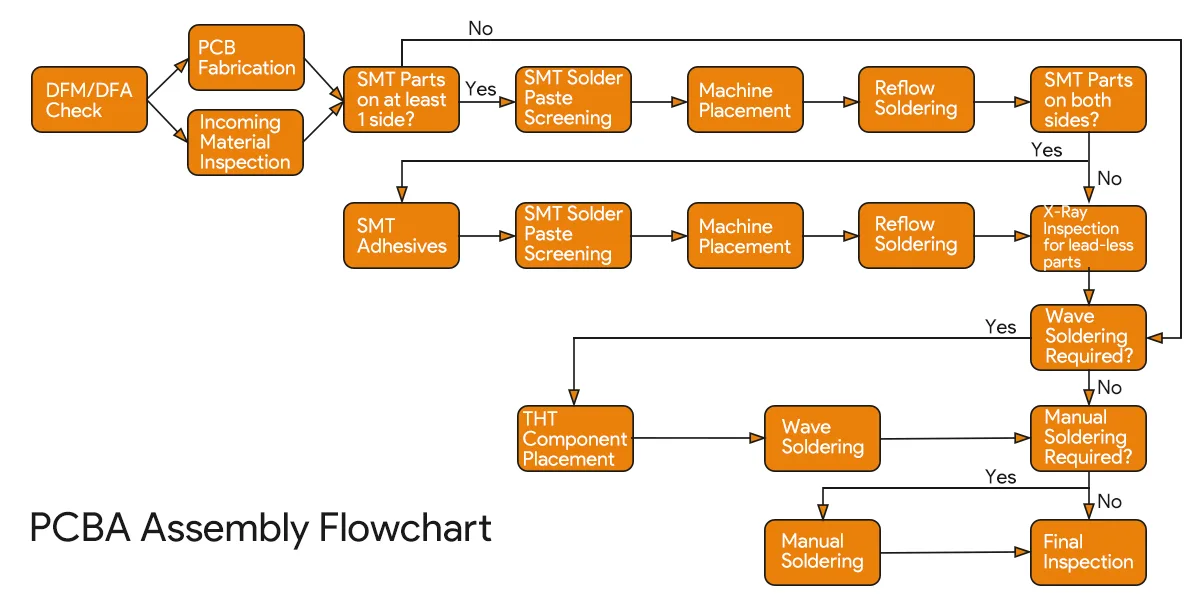
Conforme mostrado, o processo de PCBA é significativamente mais longo que a fabricação de PCB e depende mais de conhecimentos, equipamentos e recursos de gerenciamento.
PCB vs. PCBA: as principais diferenças de relance
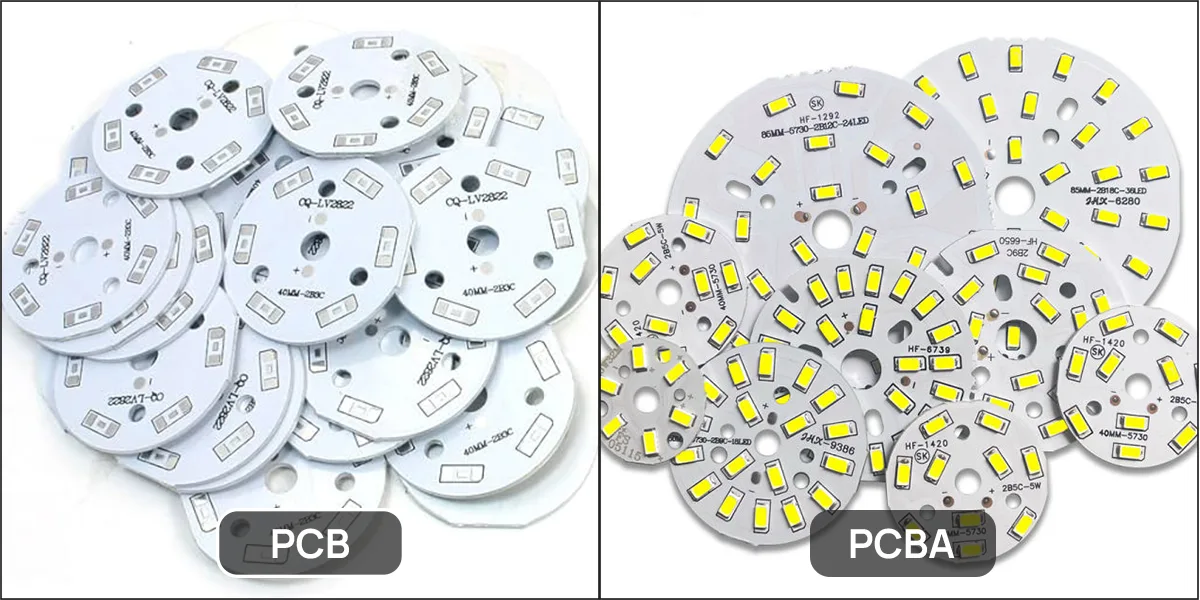
Qual é exatamente a diferença entre PCB e PCBA? Uma analogia simples: PCB = a estrutura fundamental, semelhante à estrutura e tubulação de um edifício; PCBA = o produto acabado funcional, um edifício totalmente energizado e operacional.
Em produtos de iluminação LED, um PCB vazio sozinho não pode emitir luz. Somente após concluir o PCBA, as tiras de LED ou módulos funcionam corretamente.
| Car | PCB (placa de circuito impresso) | PCBA (Conjunto da placa de circuito impresso) |
| Definição | Uma placa nua feita de substrato isolante e traços condutores de cobre, sem componentes eletrônicos | Um módulo funcional criado ao montar componentes eletrônicos (resistores, capacitores, ICs, etc.) em um PCB |
| função primária | Fornece caminhos de conexão elétrica e suporte mecânico para componentes | Executa funções eletrônicas reais, como processamento de sinal, gerenciamento de energia e lógica de controle |
| estado físico | “Placa nua” não preenchida | Totalmente montado e soldado “Módulo Acabado” |
| Aparência | Máscara de solda verde (ou outra cor) com traços e almofadas de cobre visíveis | Coberto com componentes, juntas de solda e cabos; layout funcional claramente visível |
| escopo de fabricação | Somente fabricação de placa | Componentes de origem + montagem + teste |
| Processo de produção | Corte de material → laminação de cobre → gravação de circuito → perfuração → acabamento superficial | Inspeção de entrada → Colocação SMT → Refluxo/soldagem por ondas → Inspeção e testes funcionais |
| Foco técnico chave | Precisão de traços, controle de impedância, precisão de gravação em nível de micron | Qualidade de solda, precisão de colocação, controle de rendimento (normalmente ≥99,9%) |
| estrutura de custos | Matérias-primas + processos de fabricação de PCBs | Componentes eletrônicos (BOM) + montagem + teste |
| Nível de custo típico | Relativamente baixo (PCB personalizado: aprox. $0.1–$5 POR PLACA) | Superior (os protótipos do PCBA geralmente começam a partir de $30, dependendo da BOM) |
| Saída de entrega | Portadora elétrica sem funcionalidade | Circuito eletrônico pronto para uso com funções definidas |
1. Diferenças funcionais
- PCB: fornece apenas vias de circuito
- PCBA: sistema LED totalmente operacional pronto para inicialização
2. Escopo de fabricação
- PCB: fabricação da placa de circuito
- PCBA: Componentes + Montagem + Teste
3. Documentação exigida (questões frequentes feitas com compras)
A fabricação de PCB requer:
- Arquivos Gerber
- Arquivos de NC Drill
O PCBA requer:
- Bom (conta de materiais)
- Pick-and-place (arquivos de coordenação)
- arquivos de estêncil
4. Testes e controle de qualidade
PCB:
- Teste de continuidade elétrica
- inspeção visual
- Medição da espessura do cobre
- teste de impedância
PCBA:
- inspeção de pasta de solda spi
- AOI Inspeção Óptica Automática
- Raios-X (BGA, inspeção da junta de solda do driver)
- TIC/Teste funcional (brilho, corrente, estabilidade)
- Testes de confiabilidade e envelhecimento
- Teste de fluxo luminoso e de desempenho elétrico
5. Embalagem e logística
- PCB: embalagem à prova de umidade a vácuo
- PCBA: Embalagem antiestática (ESD), bandejas personalizadas
Por que o PCBA é significativamente mais caro que o PCB?
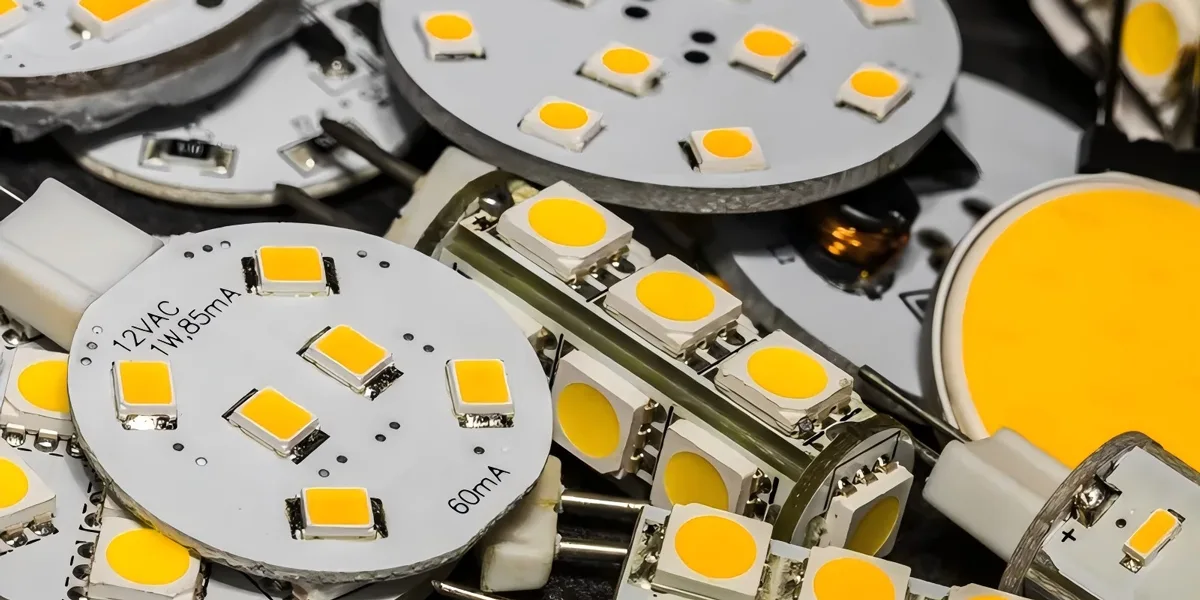
Esta é uma das perguntas mais frequentes pelo pessoal de compras. O custo mais alto do PCBA não se deve simplesmente a “aumento das taxas de processamento”, mas sim pelo resultado de vários fatores:
- Custos de componentes: Chips, resistores, capacitores, LEDs, ICs do driver e outros componentes geralmente constituem a maior parte dos custos do PCBA.
- Investimento em mão de obra e equipamento: máquinas de pick-and-place de alta velocidade, fornos de refluxo, sistemas AOI e equipamentos de teste são ativos de alto valor.
- Custos de rendimento e risco: Defeitos de solda, falhas de material e problemas de design, todos apresentam riscos de retrabalho ou sucata.
- Custos de gerenciamento da cadeia de supri: escassez de materiais, substituições de componentes e flutuações do cronograma de entrega exigem coordenação adicional.
Do ponto de vista dos negócios, o PCBA é fundamentalmente um “serviço de engenharia de sistema”, não apenas o processamento de fabricação.
Tendências do setor de 2026: como a IA transforma PCB/PCBA?
Em 2026, a inteligência artificial foi além dos estágios conceituais para se integrar profundamente à produção de PCB e PCBA, acelerando a mudança do setor em direção a uma fabricação altamente integrada e inteligente.
As principais tendências incluem:
- Análise de DFM assistida por IA: prevê possíveis problemas de fabricação antes da produção, reduzindo os testes.
- Detecção de defeitos AOI com AI: identifica falhas complexas, como juntas de solda a frio e desalinhamento por meio de aprendizado profundo, reduzindo as taxas de julgamento errôneo.
- Agendamento inteligente e previsão de materiais: Otimiza a utilização da capacidade, reduzindo a incerteza de entrega.
- Dados de qualidade de malha fechada: melhora continuamente o rendimento e a consistência por meio da análise de dados.
No futuro, as fábricas de PCBA habilitadas para IA ganharão vantagens significativas nos prazos de entrega, controle de qualidade e gerenciamento de custos.
Você deve optar por um PCB vazio ou um PCBA único?
Não há uma resposta única para todos - depende inteiramente do tipo de projeto.
Se você possui uma equipe experiente de eletrônicos e recursos SMT confiáveis e precisa apenas de placas nuas, os PCBs oferecem maior flexibilidade e podem ser mais econômicos.
Se você pretende reduzir os custos de coordenação, minimizar os riscos de qualidade e acelerar o tempo de colocação no mercado, o PCBA one-stop é normalmente a escolha superior.
Para produtos como placas de luz LED, módulos de led, e iluminação inteligente, o PCBA aumenta significativamente a consistência e a confiabilidade da entrega.
Armadilhas comuns de compras de PCB/PCBA
Os seguintes erros são encontrados frequentemente em projetos reais:
- Fornecendo arquivos de design incompletos ou não verificados
- Discrepâncias de BOM com design real
- Desprezando os requisitos de teste, focando exclusivamente no preço unitário
- Atribuindo projetos complexos de PCBA a fornecedores de PCB
Essas questões geralmente permanecem despercebidas durante a cotação, mas amplificam os riscos durante a produção em massa.
Guia de Decisão de Compras: Como você deve escolher?
Antes de finalizar sua seleção, priorize a avaliação desses fatores:
- Complexidade do projeto e tamanho do lote
- Recursos internos de engenharia e cadeia de suprimentos
- Requisitos para prazo de entrega e consistência
- Necessidade de um parceiro estável e de longo prazo
A escolha ideal não é necessariamente a cotação mais baixa, mas a solução com o menor risco geral.
Conclusão
Em resumo, PCBs e PCBAs têm papéis distintos, porém complementares, na fabricação de eletrônicos. Os PCBs fornecem a estrutura básica e as conexões elétricas, enquanto o PCBA oferece funcionalidade completa e valor comercial ao produto.
Para os fabricantes de iluminação LED, entender a distinção entre PCB e PCBA transcende as considerações técnicas - é uma decisão estratégica. A seleção da solução de fabricação e montagem adequada ajuda a reduzir custos, melhorar a qualidade e acelerar o lançamento de produtos nos mercados globais. À medida que a integração de produtos continua avançando, as soluções PCBA com recursos de engenharia e vantagens de controle de qualidade desempenharão um papel cada vez mais vital nos mercados globais de eletrônicos e iluminação LED.
FAQs
Postagens relacionadas