English
  简体中文
简体中文  Deutsch
  Español
  Français
  Italiano
  日本語
日本語  한국어
한국어  Polski
  Português
  Русский
  Türkçe
  Nederlands
  Tiếng Việt
  ไทย
ไทย 
In traditional LED strips, the light source requires power to emit light. However, self-illuminating LED strips uniquely maintain a soft afterglow even after power loss or shutdown. This capability not only enhances emergency lighting safety but also expands possibilities for architectural decoration, landscape illumination, and industrial applications.
Many buyers and contractors often wonder: How can these strips glow without power? The secret lies in phosphorescent powder incorporated into the encapsulation material, enabling a process of “absorbing light energy first, then gradually releasing it.”
What is a self-illuminating LED strip?
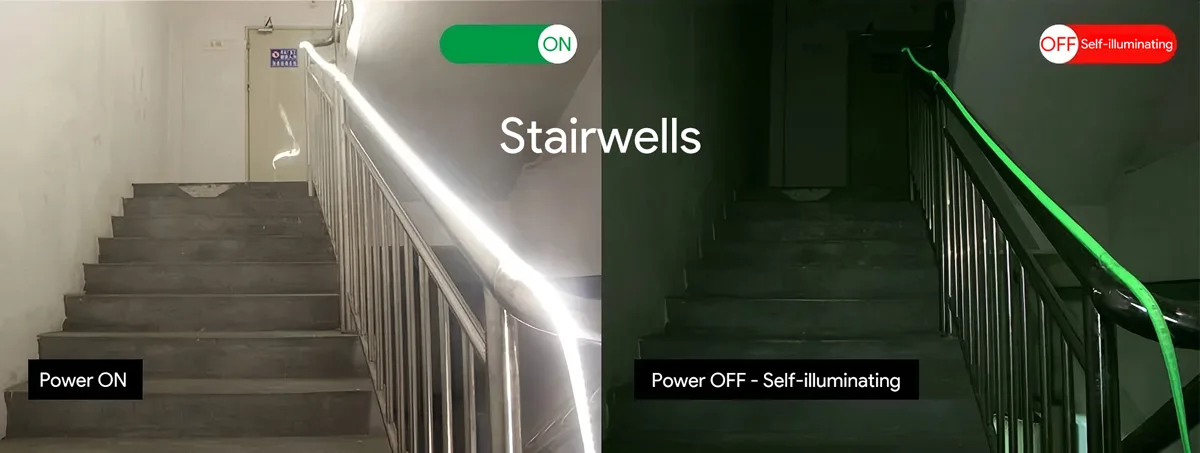
A self-illuminating LED strip is a specialized lighting product that combines traditional LED strips with phosphorescent powder. When powered normally, the LED light source “charges” the phosphorescent powder embedded within the transparent silicone or PU casing. When the strip is turned off or power is interrupted, this phosphorescent layer slowly releases stored energy, emitting a persistent green afterglow. This provides visible guidance or ambient lighting in dark environments without requiring an external power source.
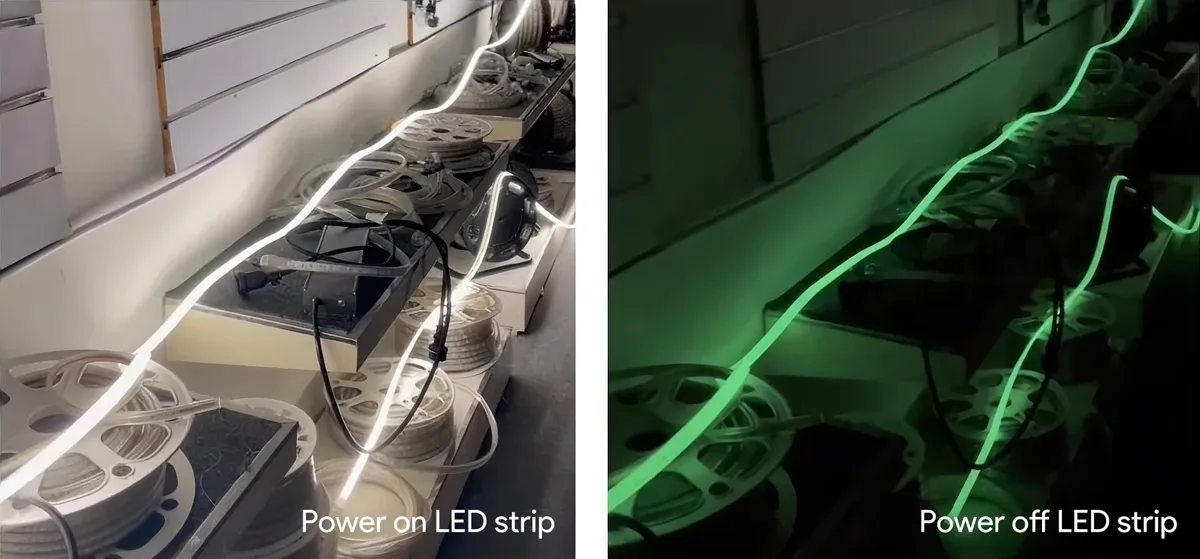
Core Features:
- Phosphorescent Material Energy Storage: Continues emitting light after LED shutdown, providing emergency visibility.
- Integrated Structure Design: Flexible LED chips encapsulated within a glow-in-the-dark casing ensure durability and uniform light distribution.
- Energy Efficiency & Safety: Delivers visual guidance during power outages without batteries or backup power, enhancing safety.
- Versatile Applications: Suitable for escape routes, stairwells, tunnels, industrial sites, architectural decoration, and low-light outdoor environments.
In simple terms, self-illuminating LED strips use LED technology and glow-in-the-dark materials to provide regular light and a glow during power outages, ensuring both safety and a nice look.
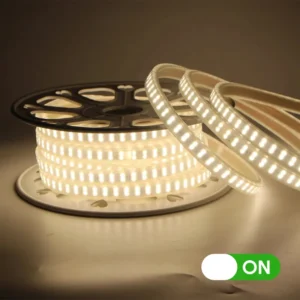
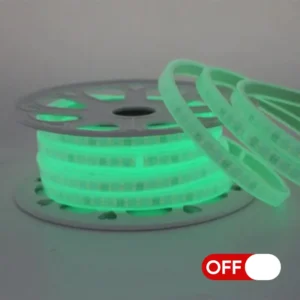
AC120V/AC220V Self-Illuminating LED Strips
Main Model: EQX12T180G-SI
LED Type: SMD2835
LED QTY: 180LEDs/m
PCB Width: 10mm/12mm
Length: 15m/25m/50m
Input Voltage: AC120V/AC220V
PF: >0.9
Power: 12W/m
Lumens: 1050lm/m
Color: 3000K/4000K/5000K/6500K
CRI: 80
IP Grade: IP65/IP67
Warranty: 3 years
Working Principle of Self-Luminous LED Strip Lights
Materials and Luminescence Mechanism
The core of self-luminous LED strip lights lies in the phosphor powder incorporated into their encapsulation material. During normal operation, the phosphor powder absorbs and stores a portion of the energy emitted by the LED light source.
- Energy Storage and Delayed Luminescence: When power is disconnected or an outage occurs, the phosphor gradually releases stored energy, emitting a persistent green or blue-green afterglow.
- Duration and Brightness: Luminescence intensity and duration depend on phosphor formulation, concentration, and housing transparency. High-quality products typically maintain a glow for several hours, with some extending to 6–12 hours.
This “absorb-store-release” mechanism enables the light strips to maintain visibility and directional guidance even in powerless environments.
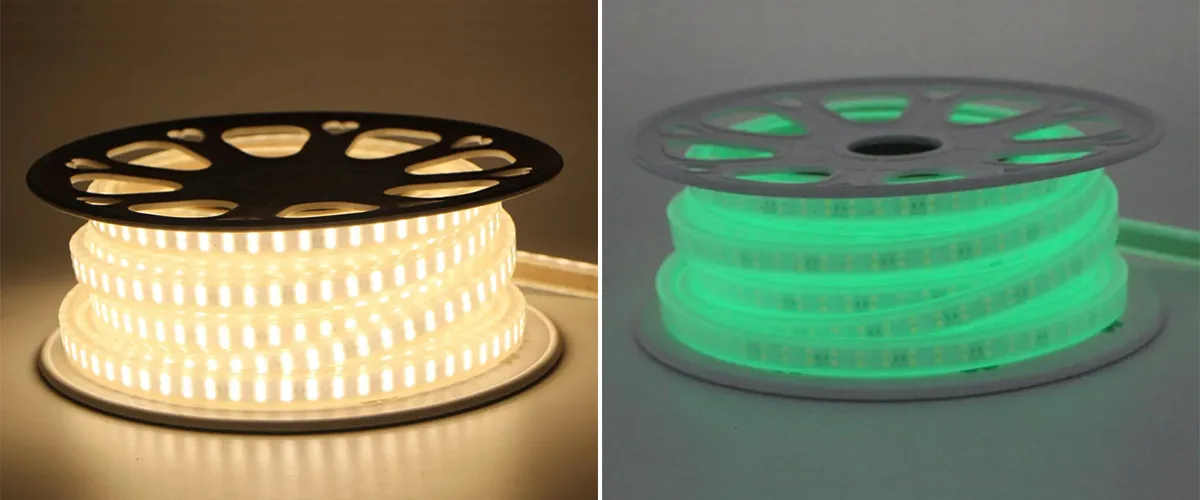
Optical and Structural Design
To ensure stable and uniform afterglow effects, self-illuminating LED light strips incorporate optimized structural features:
- Self-luminous encapsulation layer: Phosphor powder is incorporated into transparent silicone or PU casings, protecting LED chips while enabling light energy storage and night-glow performance.
- Layered Structure: The strip features a flexible LED light source core surrounded by a phosphorescent encapsulation layer. This layered design enhances durability and water resistance while ensuring more uniform glow distribution.
Through the integration of materials and structure, self-luminous LED strips simultaneously fulfill dual requirements for both daily and emergency lighting.
Manufacturing Process and Design Considerations
Process Flow
1. Extrusion Molding + Uniform Luminous Powder Injection: Utilizing high-precision extrusion molding, transparent silicone or PU material containing phosphorescent powder is uniformly coated over the outer layer of the light strip. This ensures even distribution of the luminous powder, preventing brightness inconsistencies or localized dark spots.
2. Integrated Encapsulation Process: LED chips, flexible circuits, and phosphor-coated layers are molded as a single unit for enhanced structural integrity. Compared to traditional multi-layer bonding, this integrated approach improves impact resistance while significantly boosting waterproofing and dustproofing capabilities, reducing risks of delamination or water ingress during prolonged use.
Safety and Weather-Resistant Design
1. Waterproof Rating (IP65–IP68): Offers varying ratings based on application needs. IP65 is suitable for indoor decoration, while IP67–IP68 is recommended for outdoor or industrial environments to ensure stable performance in rain or prolonged humid conditions.
2. Flame Retardancy and Insulation: Housed in flame-retardant silicone or engineered PU, the casing delays combustion in fire-prone environments while providing excellent insulation to reduce electric shock risks.
3. UV Resistance and Weatherability: Incorporates UV stabilizers and aging treatments to maintain transparency during prolonged sun exposure, preventing yellowing or cracking.
4. Mechanical Strength and Flexibility: A layered structure balances bendable flexibility with mechanical strength, accommodating complex installation environments while preserving afterglow performance.
Self-Luminous LED Strip Lighting Applications
1. Safety and Emergency Lighting
- Evacuation Routes and Stairwells: Remain visible during power outages to ensure safe evacuation.
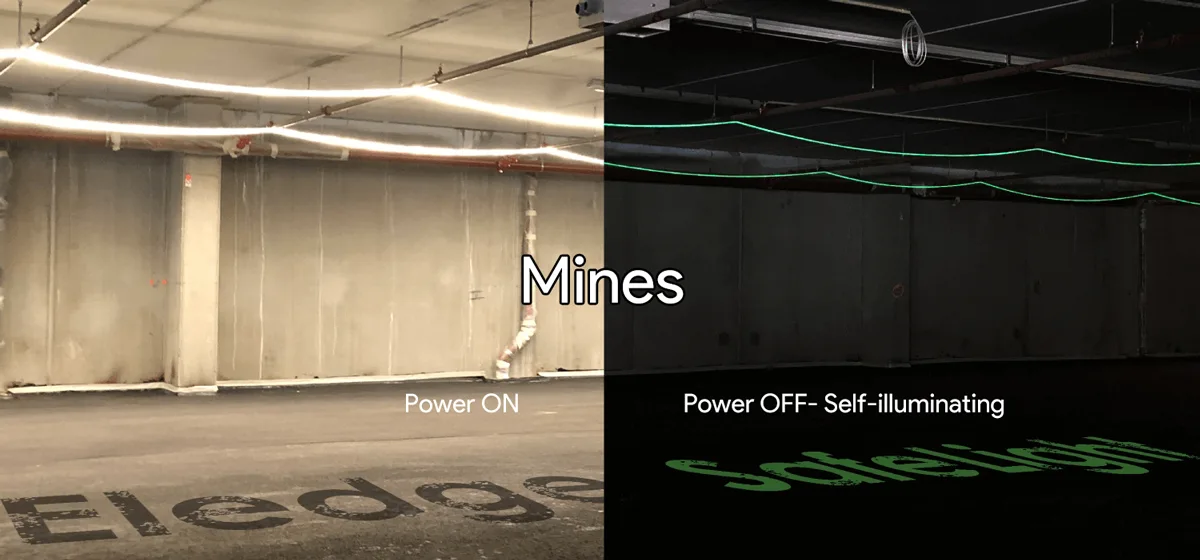
- Underground Spaces and Tunnels: Provides boundary guidance in low-light or power-failure conditions.
- Emergency Markings: Enhances visibility for fire extinguishers, exits, or emergency doors.
2. Industrial and Outdoor Environments
- Hazardous Areas: Continuously provide visible warnings in chemical plants, mines, or high-voltage equipment zones.
- Construction and Transportation: Used for construction fencing and road markings, maintaining visibility even without power.
- Ports and Maritime: Applications on buoys, docks, and decks enhance nighttime safety.
3. Architectural and Landscape Lighting
- Building Silhouettes: Enhances nighttime facade effects with both aesthetic appeal and functionality.
- Landscape Accents: Creates soft nocturnal ambiance in parks, walkways, and plazas.
- Commercial Displays: Delivers unique visual experiences for storefronts, exhibition halls, and bar decor.
Summary
Self-luminous LED strips achieve sustained glow after power loss by incorporating phosphor powder into their outer encapsulation. This technology not only enhances lighting safety and emergency preparedness but also demonstrates broad application potential in architectural landscapes, industrial settings, and commercial decor. With ongoing advancements in manufacturing processes and materials, such products will occupy an increasingly vital position in the future lighting market.
Related Posts