ไทย
ไทย  English
  简体中文
简体中文  Deutsch
  Español
  Français
  Italiano
  日本語
日本語  한국어
한국어  Polski
  Português
  Русский
  Türkçe
  Nederlands
  Tiếng Việt
การปรับปรุงระบบเสียงหมายถึงการควบคุมพฤติกรรมของเสียงภายในพื้นที่ เพื่อให้รองรับความสะดวกสบาย การสื่อสาร และการใช้งานประจำวัน แทนที่จะทำงานกับมัน เสียงที่ดีช่วยลดเสียงรบกวน จำกัดเสียงสะท้อนและเสียงก้อง และช่วยให้คำพูดยังคงชัดเจนและเข้าใจได้ เมื่อเสียงไม่ดี ผู้คนจะรู้สึกเหนื่อยล้า ฟุ้งซ่าน ความเครียด และผลผลิตที่ลดลง สิ่งนี้เป็นจริงในสำนักงานและพื้นที่ทำงานร่วมกัน แต่ยังรวมถึงในบ้าน โรงเรียน โรงพยาบาล และอาคารสาธารณะที่ความเป็นอยู่ที่ดีและความชัดเจนมีความสำคัญพอๆ กับสุนทรียศาสตร์
การปรับปรุงเสียงไม่ได้เกี่ยวกับการกำจัดเสียงอย่างสมบูรณ์ มันเกี่ยวกับการจัดการเสียงในลักษณะที่เหมาะกับการทำงานของพื้นที่
บทความนี้อธิบายวิธีการปฏิบัติในการปรับปรุงการสร้างเสียง ครอบคลุมการเลือกวัสดุ กลยุทธ์การจัดวาง และโซลูชันเสียงที่ทันสมัยที่ใช้ในโครงการจริง
1. “อะคูสติกอาคารที่ดี” หมายถึงอะไร?
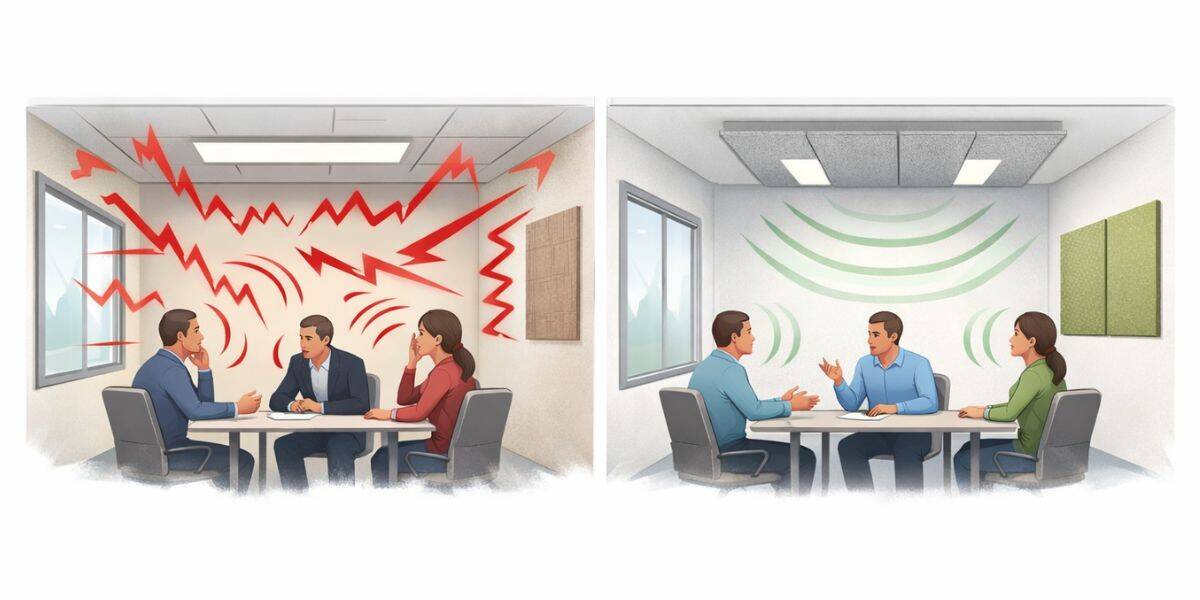
อะคูสติกสำหรับอาคารที่ดีหมายถึงประสิทธิภาพการควบคุมเสียงของพื้นที่เพื่อให้ตรงกับการใช้งานตามวัตถุประสงค์ สิ่งนี้เกี่ยวข้องมากกว่าการลดระดับเสียง ต้องเข้าใจว่าการเดินทางด้วยเสียง สะท้อน และรับรู้โดยผู้อยู่อาศัยอย่างไร
ความแตกต่างที่สำคัญอย่างหนึ่งคือระหว่างการดูดซับเสียง การปิดกั้นเสียง และการปิดบังเสียง การดูดซับเสียงช่วยลดเสียงสะท้อนและเสียงก้องโดยการจับพลังงานเสียงมากกว่าสะท้อนกลับ วัสดุต่างๆ เช่น แผงอะคูสติก ระบบเพดาน และผลิตภัณฑ์สักหลาดดูดซับคลื่นเสียงและป้องกันไม่ให้กระเด้งไปรอบๆ ห้อง ในทางตรงกันข้าม การปิดกั้นเสียงจะเน้นที่การป้องกันไม่ให้เสียงผ่านผนัง พื้น หรือเพดาน ซึ่งมักจะทำได้โดยมวล โครงสร้างสุญญากาศ และการแยกโครงสร้าง การปิดเสียงไม่ได้ลดเสียงรบกวนโดยตรง แต่จะแนะนำเสียงพื้นหลังที่ควบคุมซึ่งทำให้เสียงรบกวนน้อยลงซึ่งเป็นเรื่องปกติในสำนักงานแบบเปิดโล่ง
เสียงมักถูกมองว่าเป็นคำพ้องความหมายในการลดเสียงโดยไม่ได้ตั้งใจ แต่มุมมองนั้นแคบเกินไป พื้นที่อาจเงียบและยังมีเสียงที่ไม่ดีหากเสียงพูดไม่ชัดเจนหรือว่าห้องรู้สึกอึดอัดที่จะใช้ ในสำนักงาน เสียงที่ไม่ดีจะลดโฟกัสและเพิ่มภาระทางปัญญา ในอาคารที่พักอาศัย ส่งผลกระทบต่อความเป็นส่วนตัวและคุณภาพการนอนหลับ ในโรงเรียน เสียงมีอิทธิพลต่อผลการเรียนรู้และความเข้าใจในการพูด ในโรงพยาบาล ส่งผลกระทบต่อการฟื้นตัวของผู้ป่วยและประสิทธิภาพการทำงานของพนักงาน ในพื้นที่เชิงพาณิชย์ พวกเขาจะกำหนดประสบการณ์ของลูกค้าและเวลาที่ใช้ในสิ่งแวดล้อม
อะคูสติกอาคารที่ดีจะปรับสมดุลการดูดซับ การบล็อก และการจัดวางเพื่อสนับสนุนวิธีที่ผู้คนใช้พื้นที่นี้จริงๆ
2. ปัญหาเสียงทั่วไปในอาคาร
ปัญหาเกี่ยวกับเสียงที่เกิดขึ้นซ้ำๆ หลายปัญหาปรากฏขึ้นในอาคารสมัยใหม่ โดยเฉพาะอย่างยิ่งเมื่อการออกแบบให้ความสำคัญกับการเปิดกว้างและพื้นผิวที่แข็ง
- เสียงสะท้อนและเสียงก้องกังวานมากเกินไป
เสียงที่สะท้อนจากพื้นผิวที่ไม่ผ่านการบำบัดซ้ำแล้วซ้ำเล่าทำให้เกิดเสียงรบกวน ทำให้ช่องว่างรู้สึกดังและวุ่นวายกว่าที่เป็นจริง - ปัญหาความชัดเจนของคำพูด
เสียงสะท้อนรบกวนการพูดโดยตรง ลดความชัดเจนในห้องประชุม ห้องเรียน และสำนักงานเปิด และเพิ่มความเหนื่อยล้าในการฟัง - เสียงโอนระหว่างห้อง
เสียงเดินทางผ่านผนัง เพดาน พื้น และระบบอาคารที่ใช้ร่วมกัน ซึ่งส่งผลต่อความเป็นส่วนตัวในสภาพแวดล้อมที่อยู่อาศัย สำนักงาน และการดูแลสุขภาพ - การใช้พื้นผิวแข็งมากเกินไป
วัสดุต่างๆ เช่น แก้ว คอนกรีต drywall หิน และโลหะสะท้อนเสียงได้อย่างมีประสิทธิภาพ และมีส่วนช่วยในการควบคุมเสียงเพียงเล็กน้อยเมื่อใช้โดยไม่มีการชดเชย - เพดานสูงและรูปแบบเปิดโล่ง
ปริมาณมากและพื้นผิวที่ไม่ขาดตอนจะเพิ่มเส้นทางการสะท้อน ขยายเสียงก้อง เว้นแต่จะเพิ่มการดูดกลืนอย่างมีกลยุทธ์
3. วิธีปฏิบัติในการปรับปรุงระบบเสียง
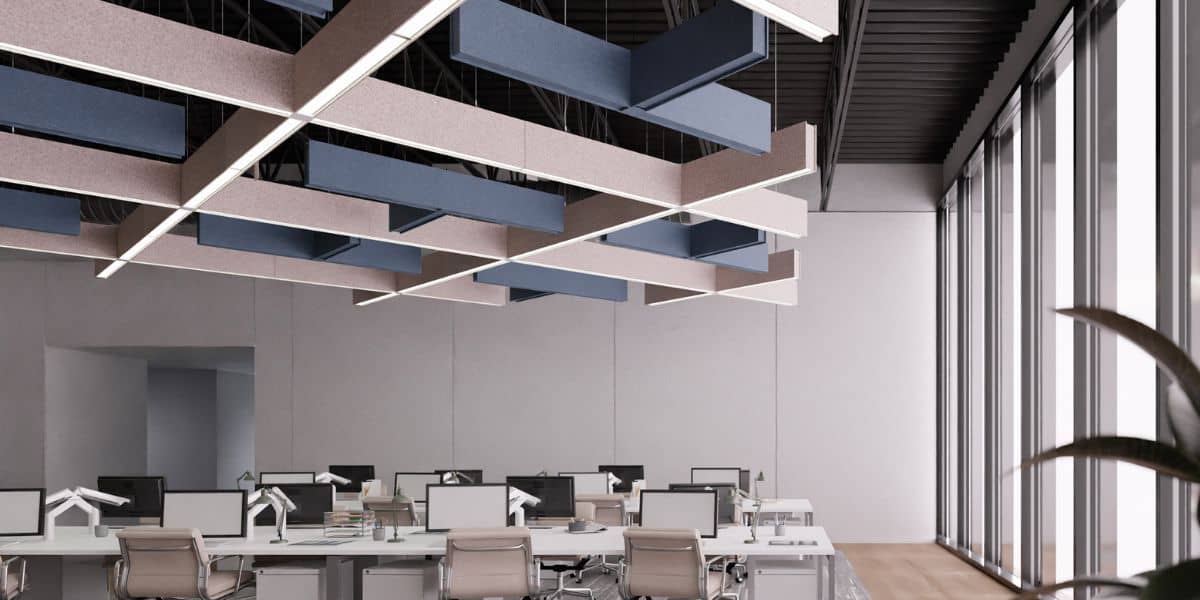
การปรับปรุงเสียงไม่จำเป็นต้องใช้วิธีแก้ปัญหาเดียว ผลลัพธ์ที่มีประสิทธิภาพมาจากการผสมผสานวัสดุ การจัดตำแหน่ง และกลยุทธ์การออกแบบที่กล่าวถึงพฤติกรรมของเสียงในพื้นที่
การดูดซับพื้นผิวบนผนังและเพดาน
การเพิ่มการดูดซึมไปยังพื้นผิวห้องเป็นหนึ่งในวิธีที่มีประสิทธิภาพมากที่สุดในการลดเสียงสะท้อนและปรับปรุงความชัดเจน แผงอะคูสติกแบบติดผนังมักใช้ แต่เพดานมักใช้ไม่ได้ผลแม้จะมีผลกระทบก็ตาม เสียงจะเคลื่อนขึ้นด้านบนตามธรรมชาติและสะท้อนพื้นผิวเพดานออก ทำให้เป็นพื้นที่ที่สำคัญสำหรับการรักษา
ควรวางพื้นผิวที่ดูดซับไว้โดยที่พลังงานเสียงสูงสุด เช่น บริเวณที่นั่งใกล้ เวิร์กสเตชัน และตำแหน่งการพูด เป้าหมายไม่ได้ครอบคลุมทุกพื้นผิว แต่เพื่อขัดจังหวะเส้นทางการสะท้อนและควบคุมเวลาก้องกังวาน
ทำไมเพดานจึงมีความสำคัญในการออกแบบอะคูสติก
เพดานมีอิทธิพลต่อเสียงมากกว่าที่หลายคนตระหนัก ในพื้นที่เปิดโล่ง การสะท้อนเพดานมีส่วนอย่างมากต่อระดับเสียงโดยรวม การรักษาเพดานช่วยให้นักออกแบบสามารถควบคุมเสียงได้โดยไม่ต้องเสียสละพื้นที่ผนังที่อาจจำเป็นสำหรับการจัดเก็บ จอแสดงผล หรือกระจก
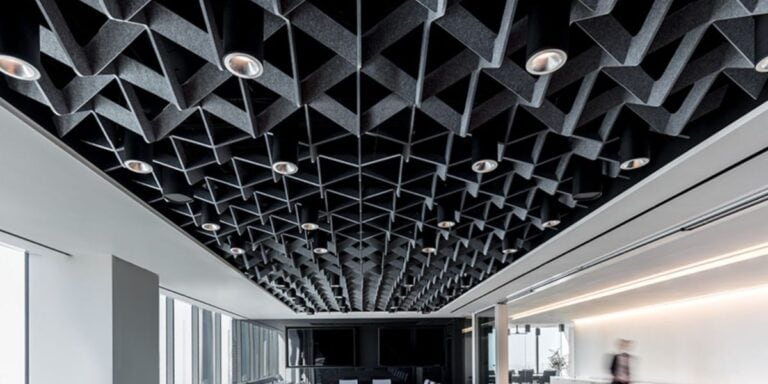
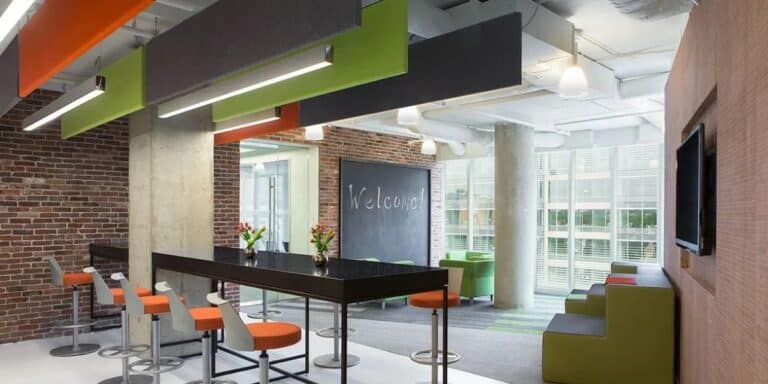
โซลูชันบนเพดาน ได้แก่ กระเบื้องอะคูสติก แผ่นกั้น และเมฆ ระบบเหล่านี้มีประโยชน์อย่างยิ่งในช่องว่างที่มีเพดานสูงหรือพื้นที่ผนังจำกัด โดยการวางการดูดกลืนเหนือผู้อยู่อาศัย เสียงจะถูกควบคุมใกล้กับแหล่งกำเนิด
บทบาทของอุปกรณ์เสียงในอาคารที่ทันสมัย
การตกแต่งภายในที่ทันสมัยมักต้องการองค์ประกอบมัลติฟังก์ชั่นที่ให้บริการทั้งด้านเทคนิคและด้านสุนทรียศาสตร์ นี่คือจุดที่อุปกรณ์อะคูสติกมีบทบาทสำคัญมากขึ้น องค์ประกอบเหล่านี้รวมการดูดซับเสียงเข้ากับฟังก์ชันอื่นๆ เช่น แสงหรือคำจำกัดความเชิงพื้นที่
โปรแกรมอะคูสติกมีคุณค่าอย่างยิ่งในสำนักงานร่วมสมัยและพื้นที่สาธารณะที่มีการออกแบบที่สะอาดตาและความยืดหยุ่นเป็นลำดับความสำคัญ พวกเขาอนุญาตให้รวมการรักษาด้วยเสียงเข้ากับการออกแบบโดยรวมแทนที่จะเพิ่มในภายหลัง
แสงอะคูสติกช่วยปรับปรุงเสียงได้อย่างไรโดยไม่ต้องเสียสละการออกแบบ
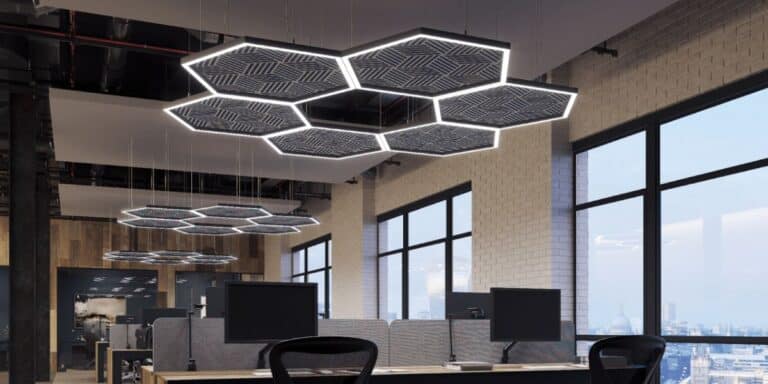
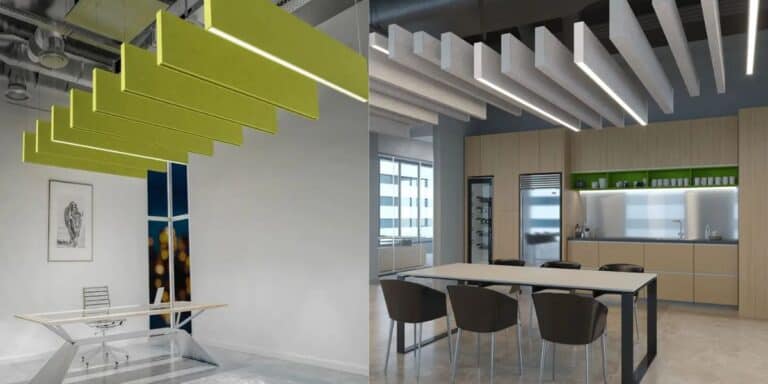
แสงอะคูสติก ผสมผสานวัสดุดูดซับเสียงเข้ากับแสงแบบบูรณาการ แนวทางนี้กล่าวถึงระบบอาคารที่จำเป็นสองระบบในคราวเดียว: การส่องสว่างและการควบคุมเสียง แทนที่จะเพิ่มแผงและโคมไฟแยกกัน นักออกแบบสามารถลดความยุ่งเหยิงของภาพในขณะที่ปรับปรุงประสิทธิภาพ
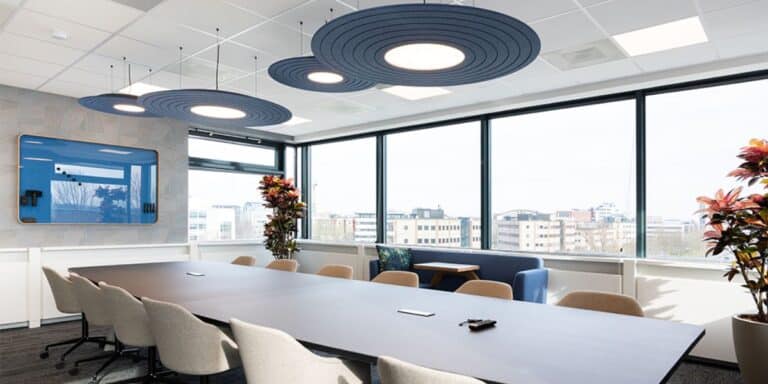
ใช้อย่างถูกต้อง แสงเสียงช่วยจัดการเสียงก้องในสำนักงานเปิด ห้องประชุม และพื้นที่ส่วนกลาง ผลิตภัณฑ์ที่ออกแบบมาเพื่อการนี้มักจะอยู่ในรูปของแผงหรืออุปกรณ์ยึดที่ดูดซับเสียงในขณะที่ให้แสงที่ใช้งานได้ เมื่อระบุอย่างรอบคอบแล้ว แสงอะคูสติกจะกลายเป็นส่วนหนึ่งของภาษาสถาปัตยกรรมของพื้นที่มากกว่าการแทรกแซงทางเทคนิคล้วนๆ ตัวอย่างของโซลูชันแบบบูรณาการดังกล่าวสามารถพบได้ในระบบไฟอะคูสติกที่ทันสมัยซึ่งออกแบบมาโดยเฉพาะสำหรับการตกแต่งภายในเชิงพาณิชย์
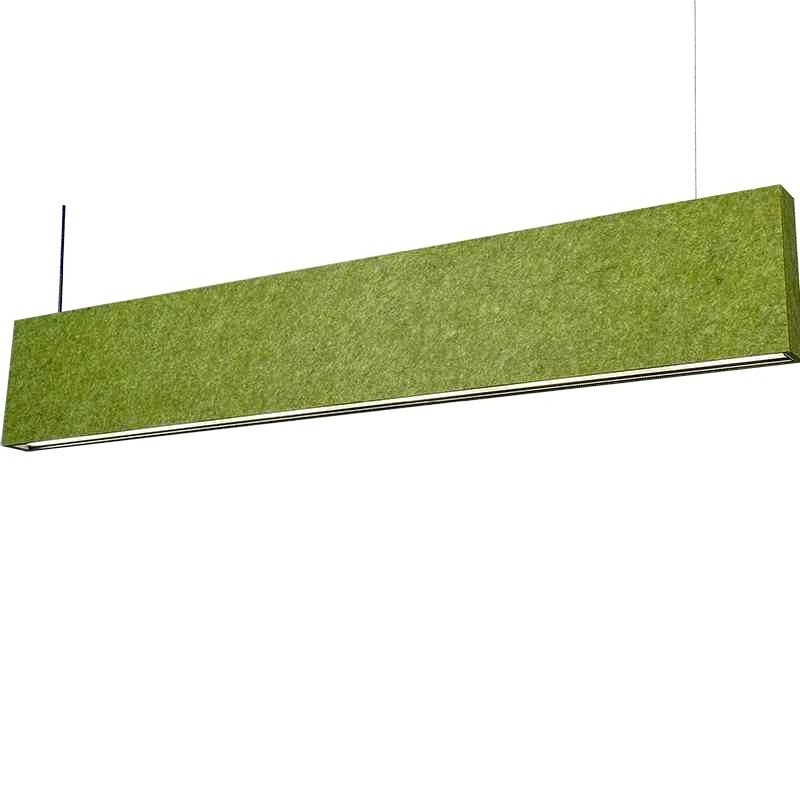
แสงไฟ LED เชิงเส้นแบบอะคูสติกแบบบางเฉียบ
- แรงดันไฟฟ้าขาเข้า: AC100-277V / AC220-240V,50-60HZ
- ขนาดตัวเรือน: W58 * H200 มม./W58 * H300 มม.
- ทิศทางการเปล่ง: ลง
- ตัวเลือกความยาว: 1218 มม. / 1220 มม. / 1288 มม
- CCT: 3000K / 4000K / 6000K
- กำลัง: 30W / 32W
- ฟลักซ์ส่องสว่าง: 100-110lm / w
- CRI: >90ra
- PF: >0.90
- กะพริบฟรี: ใช่
- มุมลำแสง: 36°
- เกรด IP: IP20
- รับประกัน: 5 ปี
- แผ่นอะคูสติกสักหลาดสี: สีแดง / สีเขียว / น้ำเงิน / สีเทามากกว่า 48 สี
ไฟสักหลาดและอุปกรณ์ตกแต่งภายในร่วมสมัย
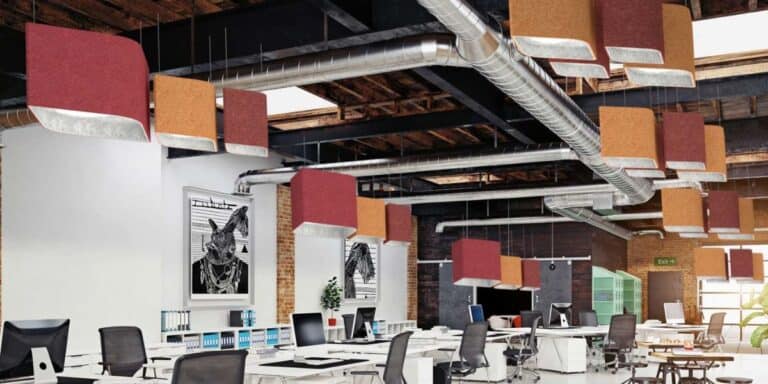
วัสดุที่ใช้สักหลาดมีการใช้กันมากขึ้นในการใช้งานด้านเสียงเนื่องจากคุณสมบัติดูดซับและความยืดหยุ่นในการออกแบบ แสงและอุปกรณ์ตกแต่งแบบสักหลาดทำให้ทั้งเสียงและภาพดูนุ่มนวล ทำให้เหมาะสำหรับพื้นที่การทำงานร่วมกัน เลานจ์ และสภาพแวดล้อมที่สร้างสรรค์
โซลูชันเหล่านี้ทำงานได้ดีในพื้นที่ที่ต้องการความสวยงามทางเทคนิคที่อบอุ่นและน้อยกว่า ฟิกซ์เจอร์อะคูสติกแบบสักหลาดสามารถลดเสียงก้องกังวานกลางและความถี่สูงได้ ในขณะที่ช่วยให้บรรยากาศสบายขึ้น
4. เคล็ดลับการออกแบบที่ปรับปรุงเสียง
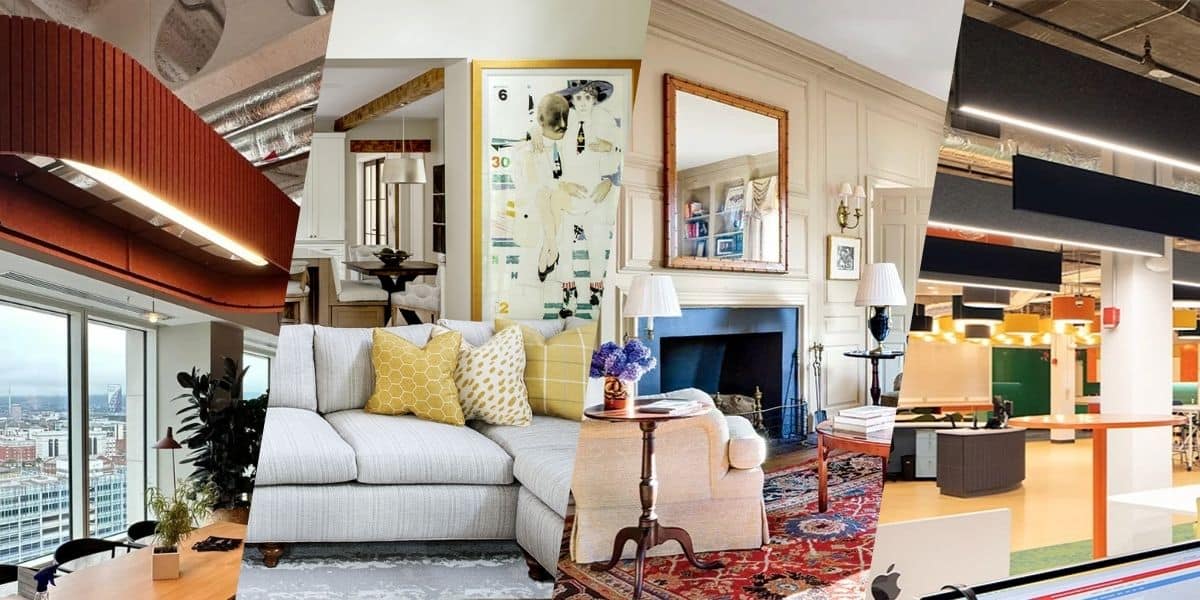
การปรับปรุงเสียงหลายอย่างสามารถทำได้ผ่านการออกแบบและตัวเลือกเลย์เอาต์โดยไม่ต้องเปลี่ยนโครงสร้างอาคาร
- กลยุทธ์การแบ่งเขต
แยกกิจกรรมที่มีเสียงดังจากกิจกรรมที่เงียบสงบโดยการวางแผนเลย์เอาต์โดยเจตนา เช่น การวางพื้นที่ประชุมให้ห่างจากโซนงานที่เน้น - การจัดวางเฟอร์นิเจอร์
ที่นั่งหุ้มเบาะ ชั้นหนังสือ พาร์ติชัน และหน่วยจัดเก็บช่วยดูดซับและกระจายเสียงเมื่ออยู่ในตำแหน่งตามเส้นทางสะท้อน - การใช้วัสดุที่อ่อนนุ่มและการตกแต่ง
พรม พรม ผ้าม่าน และเฟอร์นิเจอร์ที่หุ้มด้วยผ้าช่วยลดเสียงสะท้อน โดยเฉพาะอย่างยิ่งในพื้นที่ที่อยู่อาศัยและแบบผสมผสาน - จัดลำดับความสำคัญของตำแหน่งมากกว่าปริมาณ
องค์ประกอบดูดซับที่จัดวางอย่างดีจำนวนน้อยกว่ามักจะทำงานได้ดีกว่าการรักษาที่มากเกินไปซึ่งติดตั้งโดยไม่มีตรรกะทางเสียง
5. เปรียบเทียบวัสดุและโซลูชั่นอะคูสติก
| ประเภทของสารละลาย | หน้าที่หลัก | กรณีการใช้งานที่ดีที่สุด | ตัวโน้ต |
| แผ่นผนังอะคูสติก | การดูดซึม | สำนักงานทางเดิน | ลดเสียงสะท้อนและเพิ่มความชัดเจน |
| แผ่นกั้นเพดานหรือเมฆ | การดูดซึม | ช่องเปิด | ควบคุมเสียงก้องจากด้านบน |
| แผงไฟอะคูสติก | แสงและการดูดซึม | สำนักงาน พื้นที่ coworking | โซลูชันแบบสองวัตถุประสงค์ |
| โคมไฟสักหลาด | การดูดซึมและการออกแบบ | การตกแต่งภายในที่ทันสมัย | สมดุลทางภาพและเสียง |
| ระบบปิดบังเสียง | การควบคุมความฟุ้งซ่าน | เปิดสำนักงาน | รองรับกลยุทธ์การดูดซึม |
การเปรียบเทียบนี้เน้นว่าไม่มีวิธีแก้ปัญหาเดียวที่จัดการกับความท้าทายด้านเสียงทุกประการ แต่ละตัวเลือกทำหน้าที่เฉพาะในกลยุทธ์เสียงที่กว้างขึ้น
6. ที่แสงอะคูสติกเหมาะสมที่สุดในการออกแบบอาคาร
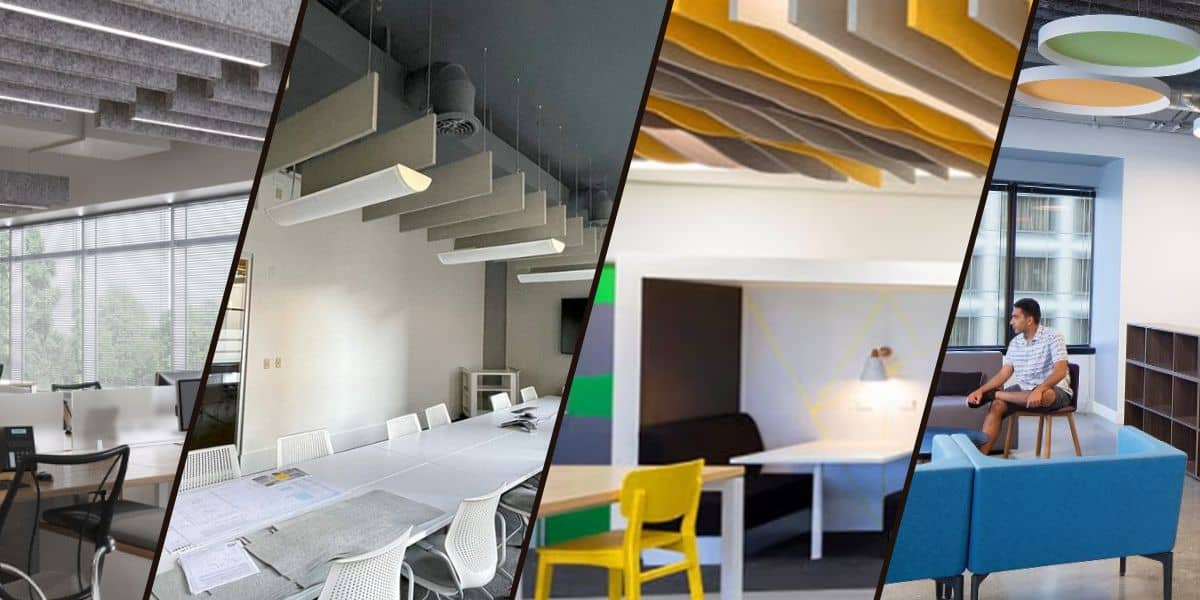
แสงอะคูสติกมีประสิทธิภาพมากที่สุดในพื้นที่ที่ทั้งการควบคุมเสียงและคุณภาพแสงมีความสำคัญ และโซลูชันที่อิงตามผนังมีจำกัด
ใน สำนักงานและพื้นที่ทำงานร่วมกัน, แสงไฟช่วยจัดการเสียงรบกวนในสภาพแวดล้อมแบบเปิดโล่ง ช่วยลดเสียงก้องในขณะที่ให้แสงสว่างที่สม่ำเสมอและเหมาะสมกับงาน สิ่งนี้รองรับการโฟกัสและลดความล้าโดยไม่เปลี่ยนลักษณะที่เปิดของพื้นที่
ห้องประชุม ได้รับประโยชน์จากแสงอะคูสติกเพราะความชัดเจนของคำพูดเป็นสิ่งสำคัญ การดูดซับบนเพดานใกล้กับโต๊ะช่วยลดแสงสะท้อนที่รบกวนการสนทนา ในขณะที่แสงแบบบูรณาการช่วยให้ผู้เข้าร่วมมองเห็นได้ชัดเจนยิ่งขึ้น
อาคารเรียน มักเผชิญกับข้อจำกัดบนพื้นที่ผนังเนื่องจากบอร์ด จอแสดงผล และที่เก็บของ แผงไฟอะคูสติก ให้การดูดซึมโดยไม่ต้องแข่งขันกับองค์ประกอบผนังที่ใช้งานได้ ปรับปรุงความชัดเจนของคำพูดในห้องเรียนและพื้นที่บรรยาย
การดูแลสุขภาพและพื้นที่สาธารณะ ต้องการเสียงที่สนับสนุนความสงบและเป็นส่วนตัว แสงเสียงสามารถช่วยลดเสียงรบกวนในบริเวณรอและทางเดินในขณะที่ยังคงการออกแบบเพดานที่สะอาดและไม่กระจัดกระจาย
ในกรณีเหล่านี้ แผงไฟอะคูสติกมีประโยชน์อย่างยิ่งเมื่อพื้นที่ผนังมีจำกัดหรือมีความละเอียดอ่อนทางสายตา ทำให้การรวมเพดานเป็นวิธีที่ใช้ได้จริงมากที่สุด
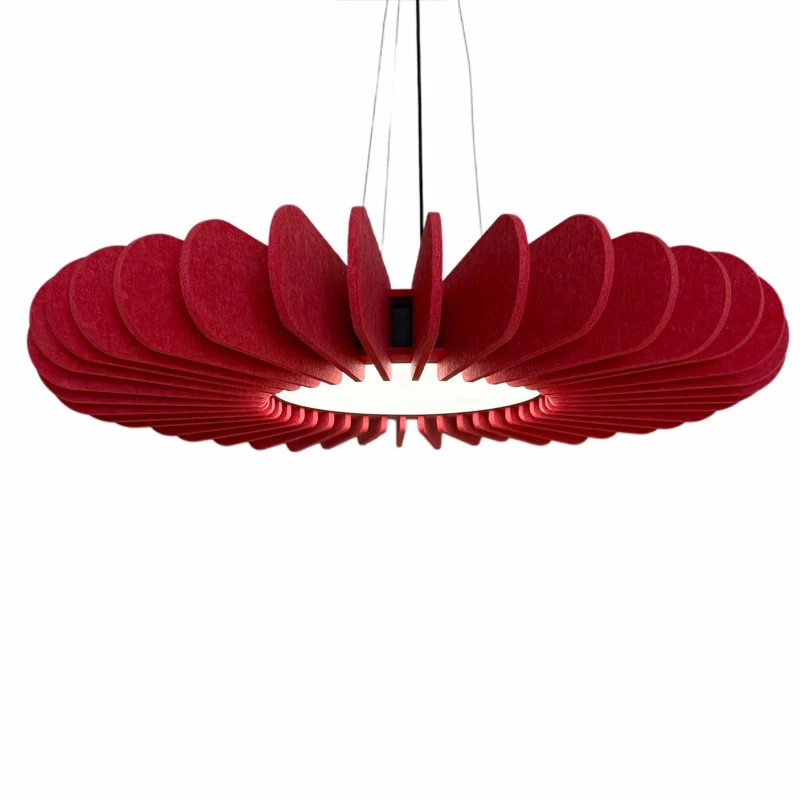
โคมไฟระย้า LED แบบอะคูสติกแบบบางเฉียบบางเฉียบ
- แรงดันไฟฟ้าขาเข้า: AC100-277V / AC220-240V,50-60HZ
- ขนาดตัวเรือน: 120 มม.
- ทิศทางการเปล่ง: ลง
- ขนาด DH: 50080mm
- CCT: 3000K / 4000K / 6000K
- กำลัง: 15W
- ฟลักซ์ส่องสว่าง: 100-110lm / w
- CRI: >90ra
- PF: >0.90
- ฟลิคเกอร์ฟรี: ใช่
- มุมลำแสง: 120 °
- เกรด IP: IP20
- รับประกัน: 5 ปี
- ตัวเลือกสีแผงอะคูสติก: สีแดง / สีเขียว / น้ำเงิน / สีเทามากกว่า 48 สี
7 . ข้อผิดพลาดทั่วไปในการออกแบบอะคูสติก
แม้แต่โครงการที่มีเจตนาดีก็มักจะขาดหายไปเนื่องจากสมมติฐานการออกแบบที่หลีกเลี่ยงได้
- ละเว้นพื้นผิวเพดาน
การรักษาเฉพาะผนังทำให้เครื่องบินสะท้อนแสงหลักไม่ถูกแตะต้อง โดยเฉพาะอย่างยิ่งในห้องที่มีพื้นแข็ง - อาศัยองค์ประกอบตกแต่งไม่มีคุณค่าทางเสียง
ไม่ใช่วัสดุที่อ่อนนุ่มทุกภาพที่ดูดซับเสียงได้อย่างมีประสิทธิภาพ นำไปสู่การปรับปรุงในโลกแห่งความเป็นจริงเพียงเล็กน้อย - คาดหวังทางออกเดียวที่จะแก้ปัญหาได้ทั้งหมด
เสียงต้องใช้วิธีการแบบอิงระบบที่รวมกลยุทธ์การดูดซับ การบล็อก และการจัดวาง - การจัดวางองค์ประกอบอะคูสติกไม่ดี
แม้แต่วัสดุคุณภาพสูงก็มีประสิทธิภาพต่ำกว่าเมื่อติดตั้งห่างจากจุดสะท้อนหลักหรือแหล่งกำเนิดเสียง
8. 2026 แนวโน้มในการสร้างเสียง
การสร้างเสียงกำลังเคลื่อนไปสู่การบูรณาการมากกว่าโซลูชันเสริม ระบบที่รวมแสง การดูดซับ และแม้แต่การจัดการอากาศกำลังกลายเป็นเรื่องธรรมดามากขึ้นเมื่อนักออกแบบแสวงหาประสิทธิภาพและความชัดเจนของภาพ
เกี่ยวกับหน่วยแยกงาน โปรแกรมอะคูสติก กำลังได้รับความนิยมเนื่องจากปรับให้เข้ากับรูปแบบที่เปลี่ยนไปโดยเฉพาะในสภาพแวดล้อมการทำงานแบบไฮบริด ความยืดหยุ่นเป็นข้อกำหนดหลักแล้ว
นอกจากนี้ยังมีการให้ความสำคัญกับความเป็นอยู่ที่ดี เสียงเป็นที่รู้จักมากขึ้นว่าเป็นปัจจัยหนึ่งที่ส่งผลต่อสุขภาพจิต ประสิทธิภาพการทำงาน และความสะดวกสบายโดยรวม ซึ่งส่งผลต่อการออกแบบพื้นที่ตั้งแต่ช่วงแรกๆ
บทสรุป
การปรับปรุงระบบเสียงต้องใช้แนวทางที่สมดุล โซลูชันที่มีประสิทธิภาพรวมการดูดซับเสียง การจัดวางอย่างชาญฉลาด และความเข้าใจในการใช้พื้นที่ ผนัง เพดาน เฟอร์นิเจอร์ และเลย์เอาต์ล้วนมีส่วนช่วยในการแสดงเสียง
โซลูชันแบบบูรณาการ เช่น แสงอะคูสติกและอุปกรณ์ติดตั้งเสียงที่ออกแบบมาอย่างดีช่วยให้การควบคุมเสียงอยู่ร่วมกับข้อกำหนดการออกแบบที่ทันสมัย เมื่อนำไปใช้อย่างรอบคอบ กลยุทธ์เหล่านี้จะสร้างพื้นที่ที่สะดวกสบาย ใช้งานได้จริง และสนับสนุนความเป็นอยู่ที่ดีโดยไม่ต้องพึ่งพาการรักษาที่มากเกินไปหรือล่วงล้ำ
คำถามที่พบบ่อย
กระทู้ที่เกี่ยวข้อง