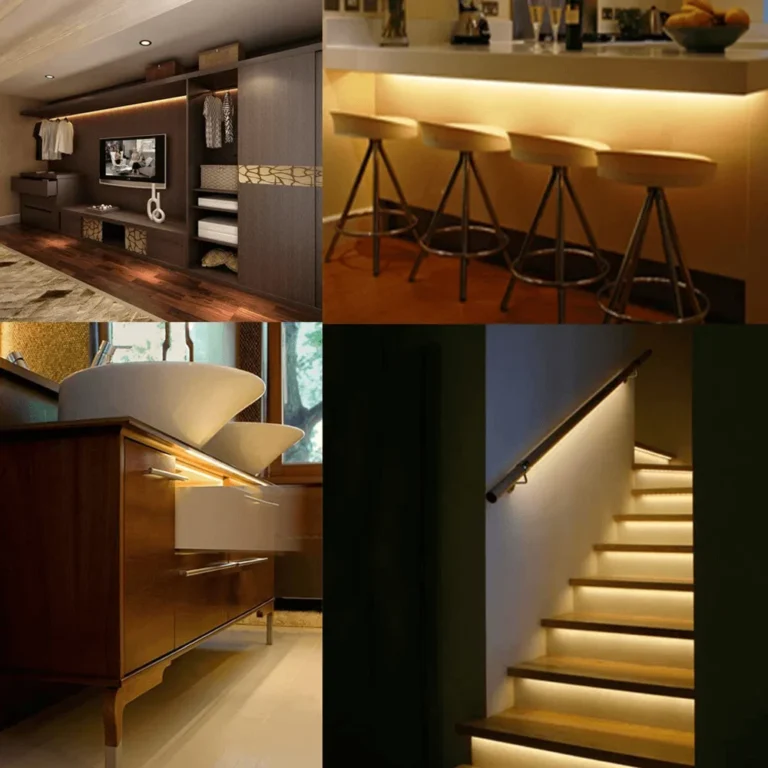
Tiếng Việt
  English
  简体中文
简体中文  Deutsch
  Español
  Français
  Italiano
  日本語
日本語  한국어
한국어  Polski
  Português
  Русский
  Türkçe
  Nederlands
  ไทย
ไทย 
Có, băng trắng LED có thể được sử dụng để chiếu sáng ngoài trời Nếu và chỉ khi nó là một dải LED COB chống thấm nước được đánh giá đúng được thiết kế để tiếp xúc với môi trường. Đèn LED dải COB không thấm nước tiêu chuẩn, thường được xếp hạng IP20, không thích hợp để sử dụng ngoài trời vì chúng thiếu khả năng chống ẩm, bụi, bức xạ UV và biến động nhiệt độ. Độ bền ngoài trời phụ thuộc vào ba yếu tố quan trọng: xếp hạng IP thích hợp, niêm phong và đóng gói hiệu quả, và thực hành lắp đặt đúng cách.
Bài viết này sẽ giải thích khi nào băng trắng LED có thể hoạt động an toàn ngoài trời, mức độ bảo vệ được yêu cầu, mức độ ảnh hưởng của môi trường ảnh hưởng đến hiệu suất và cách các phương pháp lắp đặt quyết định độ tin cậy lâu dài. Nó cũng sẽ làm rõ sự khác biệt giữa khả năng chống ẩm cơ bản và cấu trúc chống thấm thực sự. Đèn LED ngoài trời thường được sử dụng cho Chiếu sáng kiến trúc, chiếu sáng cảnh quan và lắp đặt chiếu sáng dải ngoài trời thương mại nơi cần chiếu sáng tuyến tính liên tục dọc theo mặt tiền tòa nhà, con đường và các yếu tố cấu trúc.
Tóm tắt nhanh
- Băng LED trắng chỉ có thể được sử dụng ngoài trời nếu đó là dải LED COB chống nước IP65, IP67 hoặc IP68.
- Băng LED trong nhà tiêu chuẩn (IP20) không bao giờ được lắp đặt ngoài trời vì nó thiếu độ ẩm và chống tia cực tím.
- Niêm phong, đầu nối chống thấm nước và thực hành lắp đặt thích hợp là điều cần thiết cho độ tin cậy lâu dài ngoài trời.
- Toàn bộ hệ thống — bao gồm nguồn điện và đầu nối — phải phù hợp với mức độ bảo vệ ngoài trời.
Hiểu xếp hạng IP để sử dụng ngoài trời
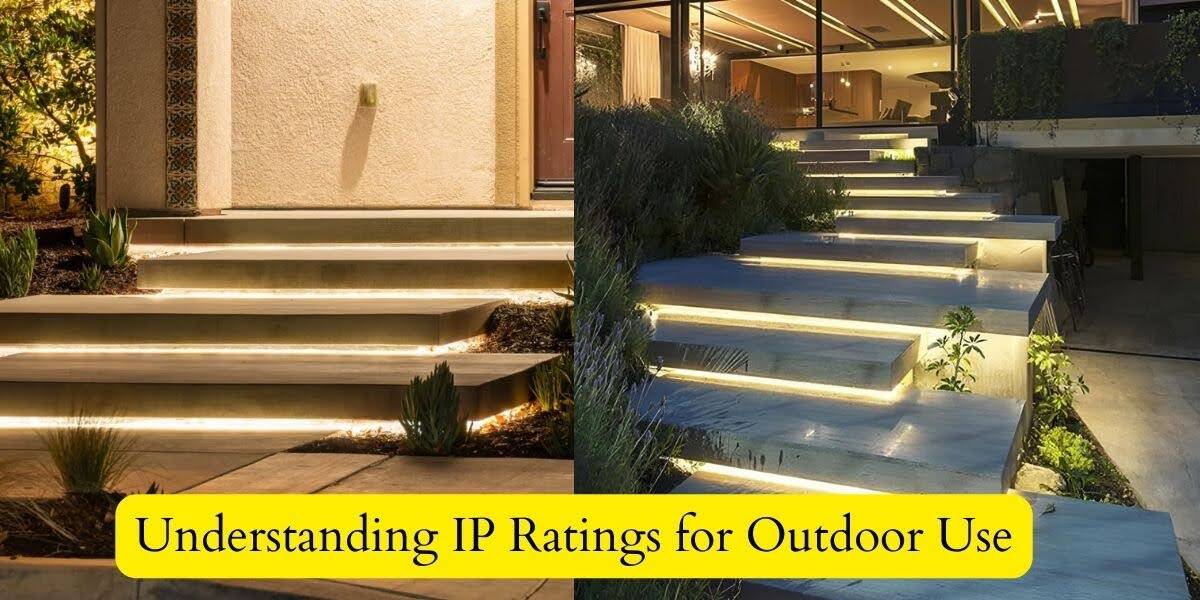
Tính phù hợp ngoài trời bắt đầu với việc hiểu xếp hạng IP (Bảo vệ xâm nhập). Xếp hạng IP xác định mức độ tốt của một sản phẩm điện chống lại sự xâm nhập từ chất rắn và chất lỏng. Đối với bất kỳ dải đèn LED COB nào dành cho môi trường bên ngoài, xếp hạng này xác định liệu nó có thể tồn tại trong thế giới thực hay không.
Dải LED IP20 COB không bảo vệ nước. Nó được thiết kế nghiêm ngặt cho điều kiện khô, trong nhà. Ngay cả độ ẩm nhẹ hoặc ngưng tụ cũng có thể gây ra sự oxy hóa của các miếng đồng tiếp xúc và các mối hàn. Sử dụng IP20 Đèn LED dải COB Ngoài trời sẽ dẫn đến sự xuống cấp nhanh chóng và có thể xảy ra ngắn mạch.
IP65 cho biết bảo vệ chống lại các tia nước áp suất thấp từ bất kỳ hướng nào. Một dải LED không thấm nước IP65 thường có lớp phủ silicon trên bề mặt LED. Xếp hạng này làm cho dải phù hợp cho các khu vực tiếp xúc với mưa hoặc bắn tung tóe, chẳng hạn như dưới mái hiên hoặc hàng hiên có mái che. Tuy nhiên, sản phẩm IP65 không được thiết kế để ngâm nước liên tục.
IP67 cung cấp khả năng bảo vệ mạnh mẽ hơn. Dải LED COB chống nước IP67 có thể chịu được việc ngâm nước tạm thời trong nước, thường lên đến 1 mét trong thời gian giới hạn. Những sản phẩm này thường được bọc trong ống đùn silicone hoặc ống bọc kín. Đánh giá này phù hợp với những khu vực có thể có nước đọng hoặc mưa lớn.
IP68 đại diện cho mức độ bảo vệ phổ biến cao nhất. Dải đèn LED COB chống thấm với định mức IP68 được đóng gói hoàn toàn và được thiết kế để chìm liên tục trong các điều kiện quy định. Chúng được sử dụng trong các đài phun nước, đặc điểm nước, hoặc môi trường ẩm ướt vĩnh viễn. Tuy nhiên, sự phù hợp của IP68 còn tùy thuộc vào thông số kỹ thuật của nhà sản xuất chứ không đơn giản là con số.
Điều quan trọng là phải phân biệt giữa các sản phẩm chống nước và chìm. Dải chống nước bắn xử lý mưa và độ ẩm ngẫu nhiên. Các dải chìm yêu cầu đóng gói hoàn toàn và kết nối kín. Chọn đúng xếp hạng là điều kiện đầu tiên để có khả năng tồn tại ngoài trời.
Tiêu chuẩn an toàn và chứng nhận ngành
Ngoài xếp hạng IP, các sản phẩm chiếu sáng dải LED ngoài trời thường được đánh giá theo tiêu chuẩn điện và an toàn quốc tế. Ví dụ, nhiều sản phẩm chiếu sáng LED thương mại tuân thủ UL (Phòng thí nghiệm bảo lãnh) Chứng nhận an toàn ở Bắc Mỹ, Chứng nhận ETL, Và CE đánh dấu sự phù hợp cho thị trường châu Âu. Các tiêu chuẩn tuân thủ môi trường như RoHS (Hạn chế các chất độc hại) Đảm bảo rằng các sản phẩm chiếu sáng LED không chứa các vật liệu nguy hiểm bị hạn chế. Các chứng nhận này cung cấp thêm sự đảm bảo rằng hệ thống chiếu sáng dải LED đáp ứng các yêu cầu về an toàn điện và bảo vệ môi trường được công nhận.
Yếu tố gây căng thẳng môi trường ngoài trời
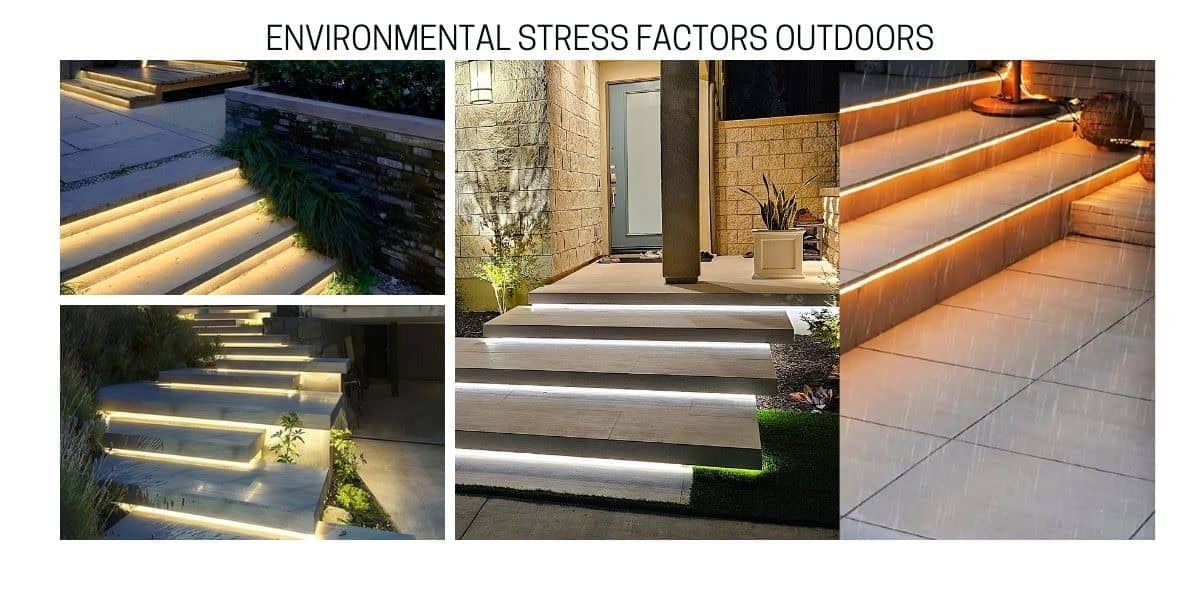
Môi trường ngoài trời tiếp xúc với nhiều yếu tố căng thẳng mà việc lắp đặt trong nhà không bao giờ gặp phải. Ngay cả một dải LED COB không thấm nước cũng phải được chọn và lắp đặt với những rủi ro này.
Tiếp xúc với nước:
Mưa, hệ thống tưới, ngưng tụ và độ ẩm có thể xâm nhập vào các dải bịt kín kém. Nước xâm nhập gây ăn mòn các vết đồng và mối hàn, dẫn đến chập chờn hoặc hỏng hoàn toàn.
Bức xạ UV:
Ánh sáng mặt trời liên tục làm suy giảm lớp phủ silicon chất lượng thấp. Tiếp xúc với tia cực tím có thể gây ố vàng, nứt nẻ, hoặc giòn trong vật liệu đóng gói, giảm sự bảo vệ theo thời gian.
Tiếp xúc với môi trường ngoài trời có thể ảnh hưởng dần dần đến vật liệu dải LED theo thời gian. Tiếp xúc tia cực tím liên tục có thể làm suy giảm từ từ các lớp đóng gói silicone, làm giảm độ trong suốt và tính linh hoạt. Hệ thống chiếu sáng dải LED ngoài trời chất lượng cao thường được thiết kế cho tuổi thọ của dịch vụ xấp xỉ 30.000–50.000 giờ hoạt động, tùy thuộc vào chất lượng lắp đặt, điều kiện môi trường và quản lý nhiệt.
Sự giãn nở và co lại nhiệt độ:
Nhiệt độ ngoài trời dao động đáng kể giữa ngày và đêm. Vật liệu PCB và lớp phủ silicone mở rộng và co lại với tốc độ khác nhau, có khả năng làm suy yếu các con dấu hoặc gây ra các vết nứt vi mô.
Bụi và mảnh vụn:
Bụi do gió có thể tích tụ trên các bề mặt tiếp xúc. Theo thời gian, các hạt mài mòn có thể làm hỏng lớp phủ bảo vệ hoặc giảm lượng ánh sáng.
Ăn mòn đầu nối:
Các đầu nối không được niêm phong và các điểm cắt lộ ra là điểm hỏng hóc phổ biến. Độ ẩm kết hợp với oxy làm tăng tốc độ oxy hóa các tiếp xúc kim loại.
Những yếu tố môi trường này giải thích tại sao dải LED COB không thấm nước không chỉ đòi hỏi bề mặt chống nước mà còn phải có hệ thống niêm phong tích hợp đầy đủ bao gồm nắp cuối, đầu nối và nguồn điện được bảo vệ. Độ bền ngoài trời phụ thuộc vào điểm yếu nhất trong hệ thống.
Những yếu tố môi trường này giải thích tại sao dải LED COB không thấm nước không chỉ đòi hỏi bề mặt chống nước mà còn phải có hệ thống niêm phong tích hợp đầy đủ bao gồm nắp cuối, đầu nối và nguồn điện được bảo vệ. Độ bền ngoài trời phụ thuộc vào điểm yếu nhất trong hệ thống.
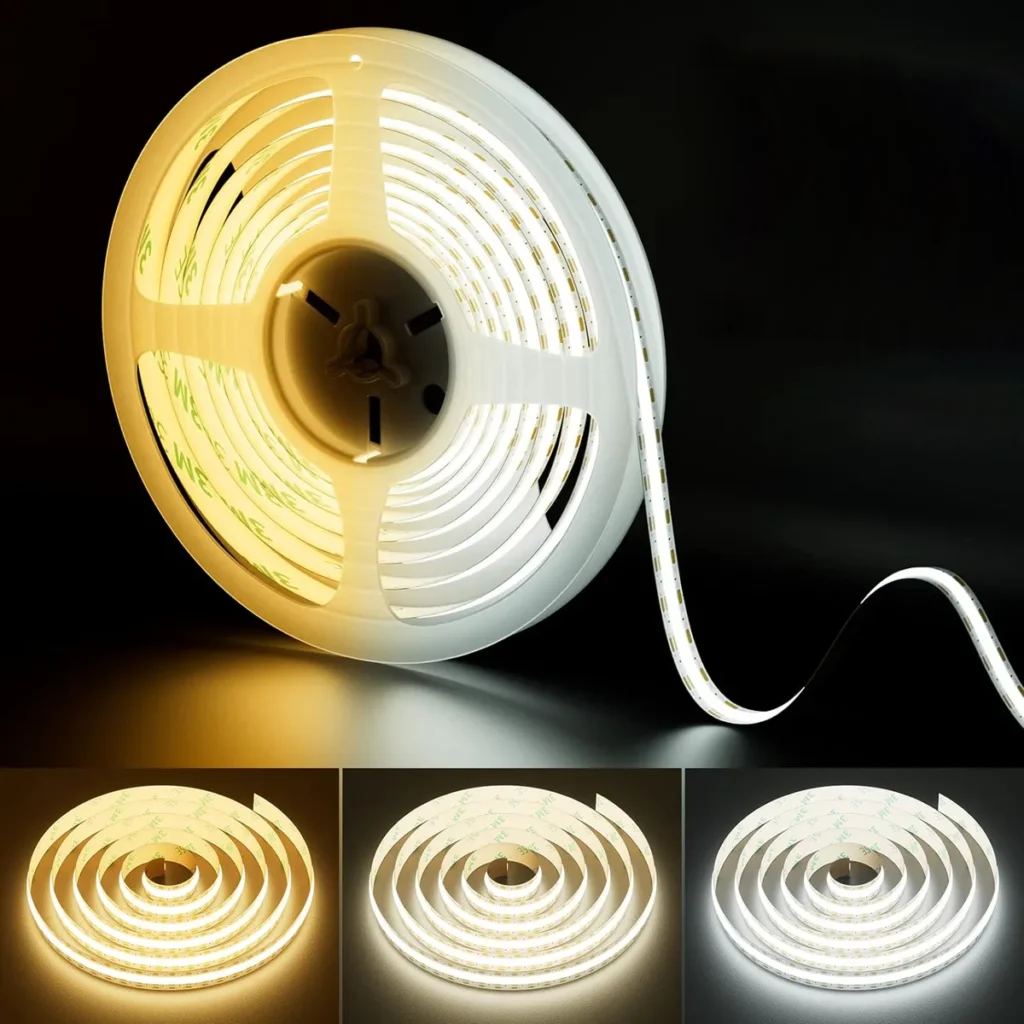
Đèn LED màu trắng có thể điều chỉnh được
- Mô hình chính: FYT10T608C
- Led QTY tùy chọn tùy chọn: 608/640Chips (Sanan)
- Tùy chọn chiều rộng PCB: 10mm
- Tùy chọn màu sắc: 2700K - 6500K có thể điều chỉnh
- CRI:> 90
- Điện áp đầu vào: DC12V/DC24V
- Công suất trên mét: 14W / 16W
- Hiệu quả: 90-110 lumen / watt
- Tùy chọn cấp độ IP: IP20/IP54/IP65/IP67/IP68
- Bảo hành: 3 năm
Phương pháp xây dựng chống thấm trong đèn dải LED COB
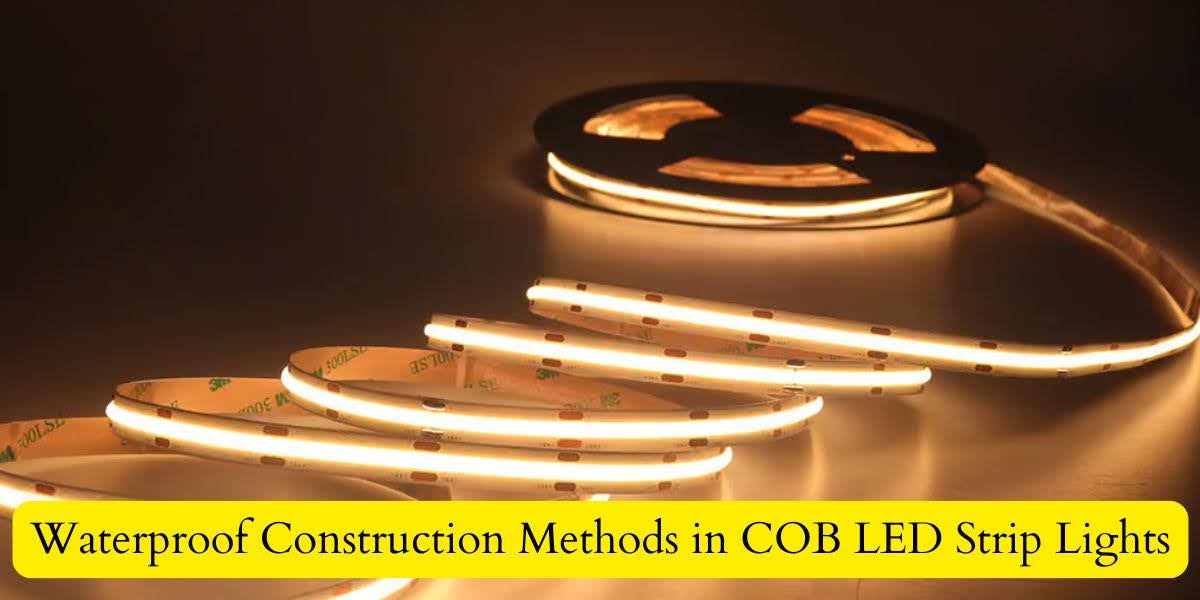
- Lớp phủ silicone (bịt kín bề mặt)
Một lớp silicone mỏng được áp dụng trên bề mặt phosphor LED. Phương pháp này thường hỗ trợ bảo vệ IP65 và bảo vệ chống bắn tung tóe và mưa nhẹ. Tuy nhiên, PCB dưới có thể vẫn bị lộ ra một phần, khiến nó không thích hợp để ngâm. - Đùn silicon (tạo bao bọc)
Dải LED COB được đưa vào ống hoặc ống tay silicon liên tục. Cả hai đầu được niêm phong bằng nắp đúc hoặc silicone phun. Cấu trúc này thường đạt được bảo vệ IP67 và cải thiện khả năng chống lại việc ngâm nước tạm thời. - đóng gói epoxy
Toàn bộ dải đèn LED COB được nhúng trong hợp chất nhựa cứng. Điều này cung cấp bảo vệ cơ học và độ ẩm mạnh mẽ nhưng làm giảm tính linh hoạt. Nó được sử dụng khi độ cứng kết cấu có thể chấp nhận được. - Niêm phong đúc phun toàn bộ (hệ thống IP68)
Trong đèn LED COB chống thấm cao cấp, niêm phong bao gồm các điểm vào được đúc, tuyến cáp tích hợp và đầu nối kín. Điều này ngăn chặn sự di chuyển của nước mao mạch dọc theo PCB và hỗ trợ xếp hạng chìm liên tục. - Lớp bảo vệ PCB
Các sản phẩm dải COB LED chất lượng cao bao gồm các lớp đồng chống ăn mòn, mặt nạ hàn bảo vệ và lớp phủ chống oxy hóa. Những bảo vệ bên trong này ngăn chặn sự xuống cấp do hơi ẩm gây ra ngay cả khi việc niêm phong bên ngoài bị căng thẳng. - Nắp cuối kín và điểm vào cáp
Mũ cuối phải được liên kết bằng kỹ thuật keo silicon hoặc quá nhiệt. Các đầu bịt kín kém là điểm hỏng hóc phổ biến nhất trong các công trình lắp đặt ngoài trời. - Hạn chế của việc dán keo ngoài trời
Chất kết dính nhạy cảm với áp suất tiêu chuẩn phân hủy dưới độ ẩm và chu kỳ nhiệt độ. Đèn LED Dải COB không thấm nước dành cho sử dụng bên ngoài không nên chỉ dựa vào chất kết dính để hỗ trợ kết cấu.
Trình diễn sau đây cho thấy cách niêm phong chống nước IP65 thực tế được áp dụng cho dải LED COB.

Yêu cầu lắp đặt để sử dụng ngoài trời
Ngay cả dải đèn LED COB chống thấm nước cao nhất cũng sẽ thất bại nếu lắp đặt không đúng cách. Lắp đặt đúng cách đảm bảo duy trì bảo vệ môi trường.
- Niêm phong tất cả các điểm cắt: Khi dải đèn LED COB được cắt theo chiều dài, các miếng đồng lộ ra phải được đóng lại bằng cách sử dụng nắp cuối không thấm nước hoặc keo silicon. Để lại các điểm cắt tiếp xúc sẽ đánh bại xếp hạng IP.
- Sử dụng các đầu nối chống nước: Đầu nối SNAP tiêu chuẩn không thích hợp ở ngoài trời. Chỉ nên sử dụng các đầu nối được đánh giá bằng hoặc cao hơn xếp hạng IP của dải.
- Cài đặt trong hồ sơ nhôm: Các kênh nhôm bảo vệ cơ học, cải thiện tản nhiệt và che chắn dải khỏi tiếp xúc trực tiếp với tia cực tím.
- Sử dụng kẹp gắn thay vì chỉ dựa vào chất kết dính: Thay đổi nhiệt độ ngoài trời làm suy yếu lớp nền kết dính. Clip bổ sung ngăn ngừa chảy xệ và tách rời.
- Bảo vệ nguồn điện: Trình điều khiển phải được lắp đặt trong thùng chống thấm nước hoặc được đánh giá để sử dụng ngoài trời. Trình điều khiển tiếp xúc là một điểm thất bại phổ biến.
- Đảm bảo thoát nước và thông gió: Tránh các dải niêm phong ở những khu vực có thể tích tụ nước. Thoát nước đúng cách ngăn ngừa tiếp xúc với nước kéo dài.
Độ tin cậy ngoài trời phụ thuộc nhiều vào kỷ luật lắp đặt cũng như xếp hạng sản phẩm.
Danh sách kiểm tra lựa chọn dải đèn LED ngoài trời
Trước khi chọn băng trắng LED chiếu sáng ngoài trời, cần đánh giá một số yếu tố kỹ thuật để đảm bảo hiệu suất đáng tin cậy.
| hệ số lựa chọn | Tại sao nó lại quan trọng |
|---|---|
| Xếp hạng IP | Xác định khả năng chống mưa, ẩm và bụi |
| Chống tia cực tím | Ngăn ngừa sự xuống cấp của lớp silicone dưới ánh sáng mặt trời |
| Nối kín đầu nối | Ngăn chặn sự xâm nhập của nước tại các điểm kết nối |
| Điện áp & bảo vệ trình điều khiển | Trình điều khiển ngoài trời phải phù hợp với đánh giá môi trường |
| Phương pháp cài đặt | Cấu hình nhôm và kẹp gắn cải thiện độ bền |
| Nắp kết thúc | Ngăn chặn nước vào qua các điểm cắt |
Danh sách kiểm tra này giúp người lắp đặt và kỹ sư xác định xem một sản phẩm dải đèn LED cụ thể có phù hợp với môi trường ngoài trời hay không.
Ứng dụng ngoài trời nơi dải đèn LED lõi trắng hoạt động tốt nhất
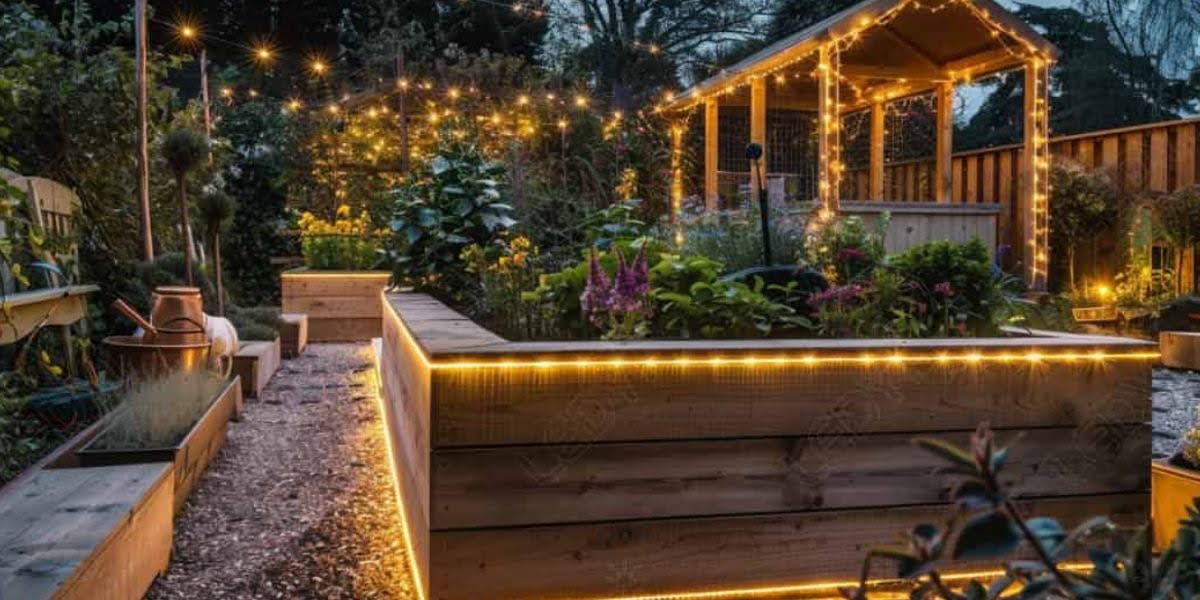
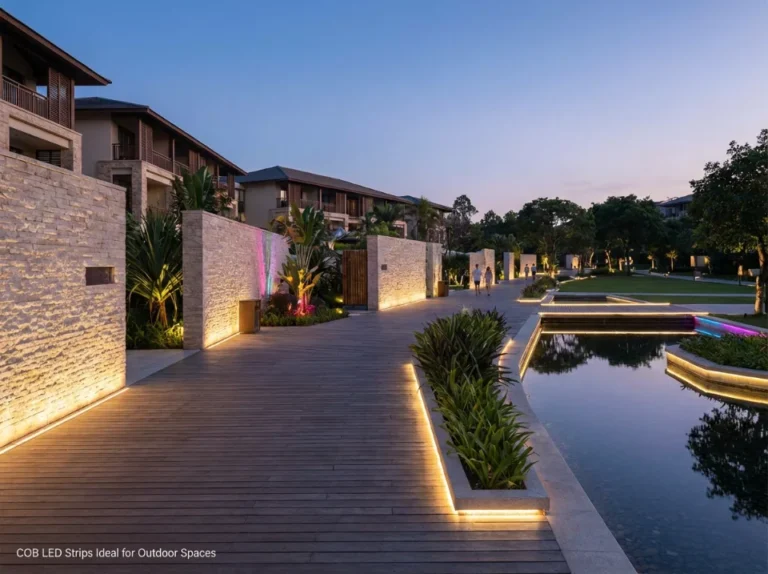
trong trắng dải đèn LED Đèn hoạt động đặc biệt tốt trong môi trường bên ngoài được kiểm soát, nơi không cần ngâm trực tiếp. Ánh sáng dưới ánh sáng là một ví dụ phổ biến. Được lắp đặt bên dưới phần nhô ra trên mái, một dải đèn LED COB không thấm nước cung cấp ánh sáng đồng đều cho các lối đi và mặt tiền của tòa nhà trong khi vẫn được che chắn khỏi lượng mưa trực tiếp.
Pergolas và cấu trúc sân trong cũng được hưởng lợi từ Lắp đặt dải LED COB. Khi được gắn bên trong các kênh nhôm và được bảo vệ khỏi nước đọng, việc phát ra ánh sáng liên tục giúp tăng cường khả năng hiển thị mà không cần các chấm LED bị lộ.
Ánh sáng điểm nhấn kiến trúc là một ứng dụng phù hợp khác. Dải đèn LED COB chống thấm nước có thể làm nổi bật các đường xây dựng, cột hoặc bề mặt có kết cấu, miễn là nó được lắp đặt trong các vỏ được đánh giá.
Ánh sáng đường đi trong vườn hoạt động hiệu quả khi dải được lắp đặt trong các kênh bảo vệ cao hơn mặt đất một chút. Nên tránh tiếp xúc trực tiếp với đất trừ khi sản phẩm được xếp hạng IP68.
Việc chìm trong hồ bơi, đài phun nước hoặc các tính năng của nước yêu cầu dải LED COB chống thấm IP68 được thiết kế đặc biệt để ngâm liên tục. Các sản phẩm IP65 hoặc IP67 tiêu chuẩn không đủ để tiếp xúc dưới nước vĩnh viễn. Nguyên tắc chính là phù hợp với đánh giá sản phẩm với nhu cầu môi trường.
Nhiều dự án chiếu sáng kiến trúc sử dụng hệ thống dải LED được đánh giá ngoài trời từ các nhà sản xuất chiếu sáng đã thành lập. Các công ty như Chiếu sáng Philips (Signify) Và thao diển quân sư Sản xuất giải pháp chiếu sáng tuyến tính chuyên nghiệp được sử dụng trong chiếu sáng mặt tiền kiến trúc, chiếu sáng cảnh quan và lắp đặt chiếu sáng ngoài trời thương mại. Các hệ thống này thường kết hợp công nghệ dải LED chống thấm với trình điều khiển chuyên dụng và các cấu hình gắn kín để đảm bảo độ tin cậy lâu dài trong môi trường bên ngoài.
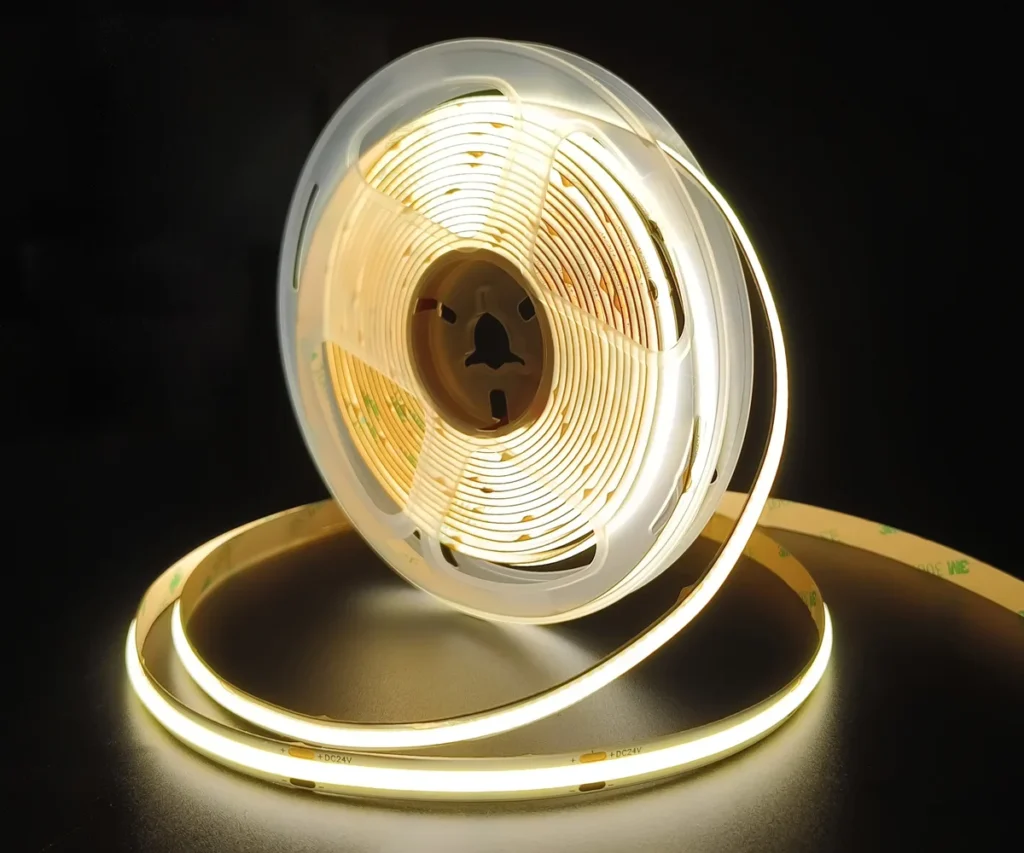
Đèn LED dải đèn LED
- Mô hình chính: FYX08T480C
- Led QTY tùy chọn: 320/384/480/528Chips (Sanan)
- Tùy chọn chiều rộng PCB: 8mm / 10mm
- Tùy chọn màu sắc: 2700K / 3000K / 4000K / 6500K / Đỏ / Xanh lá / Xanh / Tùy chỉnh
- CRI:> 90
- Điện áp đầu vào: DC12V/DC24V
- Công suất trên mỗi mét: 8W/10W/11W/14W
- Hiệu quả: 90-110 lum/Watt
- Tùy chọn cấp IP: IP20/IP54/IP65/IP67/IP68
- Bảo hành: 3 năm
Các kịch bản sử dụng ngoài trời được khuyến nghị
Đèn LED Dải COB chống thấm hoạt động tốt nhất trong môi trường ngoài trời được kiểm soát, nơi không cần ngâm trực tiếp.
Các ứng dụng điển hình bao gồm:
- Dưới mái hiên hoặc phần nhô ra của tòa nhà
- Pergolas và ánh sáng sân trong có mái che
- Ánh sáng kiến trúc trên mặt tiền tòa nhà
- Hệ thống chiếu sáng đường đi vườn được lắp đặt trên mặt đất
- Đèn chiếu sáng ngoài trời trang trí bên trong kênh nhôm
Khi băng trắng LED không nên sử dụng ngoài trời
Ngay cả dải LED COB chống thấm nước cũng có thể bị lỗi nếu được lắp đặt trong môi trường không phù hợp.
Tránh sử dụng băng trắng LED trong các trường hợp sau:
- Tiếp xúc mặt đất trực tiếp nơi nước có thể hồ bơi
- mở boong hoặc khu vực tiếp xúc mà không có bảo vệ thời tiết
- Cài đặt với đầu nối không được niêm phong hoặc các điểm cắt
- Hệ thống sử dụng nguồn điện định mức trong nhà
Hiệu suất dải LED COB trong nhà và chống thấm nước
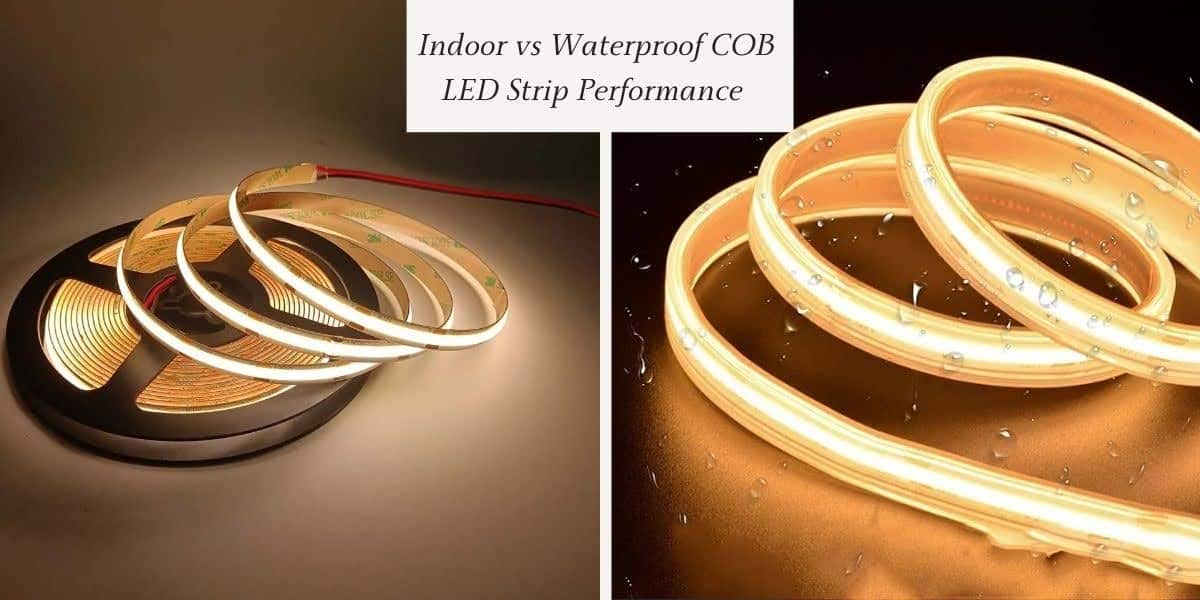
| mẫu | Dải LED COB trong nhà | Dải LED COB chống thấm nước |
| Cấp bảo vệ | IP20 (không bảo vệ nước) | IP65, IP67 hoặc IP68 |
| Môi trường phù hợp | Chỉ những không gian trong nhà khô | Khu vực ngoài trời tiếp xúc với mưa, hơi ẩm hoặc bụi |
| Tuổi thọ ngoài trời | rất ngắn; dễ bị thất bại | Độ bền lâu dài khi lắp đặt đúng cách |
| Yêu cầu cài đặt | Keo dán hoặc kẹp đơn giản | Đầu cắt niêm phong, sử dụng đầu nối chống nước |
Những sai lầm phổ biến cần tránh
Một trong những sai lầm phổ biến nhất là lắp đặt đèn dải LED IP20 COB ngoài trời với giả định rằng một khu vực có mái che giúp loại bỏ rủi ro. Ngay cả những không gian có mái che cũng trải qua độ ẩm và ngưng tụ. Không có bảo vệ chống thấm, ăn mòn bắt đầu nhanh chóng.
Một lỗi thường xuyên khác là không thể nối lại các đầu cắt. Khi một dải đèn LED COB được rút ngắn theo chiều dài tùy chỉnh, các miếng đồng lộ ra ngoài tạo ra đường dẫn trực tiếp cho sự xâm nhập của nước. Ngay cả một lượng nhỏ độ ẩm cũng có thể di chuyển dọc theo PCB.
Để trình điều khiển và nguồn điện tiếp xúc với thời tiết là một sự giám sát quan trọng khác. Dải LED COB chống thấm không bù cho nguồn điện không được xếp hạng. Toàn bộ hệ thống điện phải phù hợp với đánh giá môi trường.
Bỏ qua sự giãn nở nhiệt cũng có thể làm giảm tuổi thọ. Lắp đặt các dải chặt chẽ trong các kênh cứng mà không cho phép chuyển động nhẹ có thể gây căng thẳng cho các lớp đóng gói theo thời gian.
Cuối cùng, chỉ dựa vào lớp nền kết dính dẫn đến sự tách rời trong điều kiện ngoài trời. Cốt thép cơ khí là điều cần thiết cho việc lắp đặt an toàn, lâu dài.
Các yếu tố chính xác định độ tin cậy dải LED ngoài trời
Một số yếu tố kỹ thuật xác định liệu băng trắng LED có hoạt động đáng tin cậy trong môi trường ngoài trời hay không.
• Đánh giá chống nước chính xác (IP65 – IP68)
• Vật liệu đóng gói chống tia cực tím
• Niêm phong đầu nối và đầu cắt đúng cách
• Nguồn điện và trình điều khiển được bảo vệ bằng thời tiết
• Hỗ trợ cơ học sử dụng cấu hình nhôm hoặc kẹp gắn
Sự cố trong bất kỳ khu vực nào trong số này có thể làm giảm đáng kể tuổi thọ của việc lắp đặt dải đèn LED ngoài trời.
Phần kết luận
Băng LED trắng chỉ có thể được sử dụng cho ánh sáng ngoài trời chỉ khi nó là dải LED COB chống thấm nước được đánh giá đúng được thiết kế để tiếp xúc với môi trường. Đèn LED trong nhà tiêu chuẩn trong nhà không phù hợp với điều kiện ngoài trời do thiếu độ ẩm và chống tia cực tím.
Xếp hạng IP, tính toàn vẹn niêm phong, phương pháp đóng gói và chất lượng lắp đặt cùng nhau xác định hiệu suất và tuổi thọ. Lựa chọn dải đèn LED COB chống thấm nước chính xác và lắp đặt nó bằng cách sử dụng niêm phong, vỏ bọc và bảo vệ môi trường thích hợp đảm bảo hoạt động ngoài trời an toàn và bền bỉ.
Thành công ngoài trời phụ thuộc vào việc lựa chọn sản phẩm chính xác và lắp đặt chính xác, không chỉ đơn giản là sự hiện diện của đèn LED.
hỏi Ẩn
Bài viết liên quan