English
  简体中文
简体中文  Deutsch
  Español
  Français
  Italiano
  日本語
日本語  한국어
한국어  Polski
  Português
  Русский
  Türkçe
  Nederlands
  Tiếng Việt
  ไทย
ไทย 
Yes, LED white tape can be used for outdoor lighting if and only if it is a properly rated waterproof COB LED strip designed for environmental exposure. Standard non-waterproof COB LED strip lights, typically rated IP20, are not suitable for outdoor use because they lack protection against moisture, dust, UV radiation, and temperature fluctuations. Outdoor durability depends on three critical factors: appropriate IP rating, effective sealing and encapsulation, and correct installation practices.
This article will explain when LED white tape can safely function outdoors, what protection levels are required, how environmental stress affects performance, and how installation methods determine long-term reliability. It will also clarify the difference between basic moisture resistance and true waterproof construction. Outdoor LED strip lighting is commonly used for architectural lighting, landscape illumination, and commercial outdoor strip lighting installations where continuous linear illumination is required along building facades, pathways, and structural elements.
Quick Summary
- LED white tape can be used outdoors only if it is a waterproof COB LED strip rated IP65, IP67, or IP68.
- Standard indoor LED tape (IP20) should never be installed outdoors because it lacks moisture and UV protection.
- Proper sealing, waterproof connectors, and installation practices are essential for long-term outdoor reliability.
- The entire system—including power supply and connectors—must match the outdoor protection level.
Understanding IP Ratings for Outdoor Use
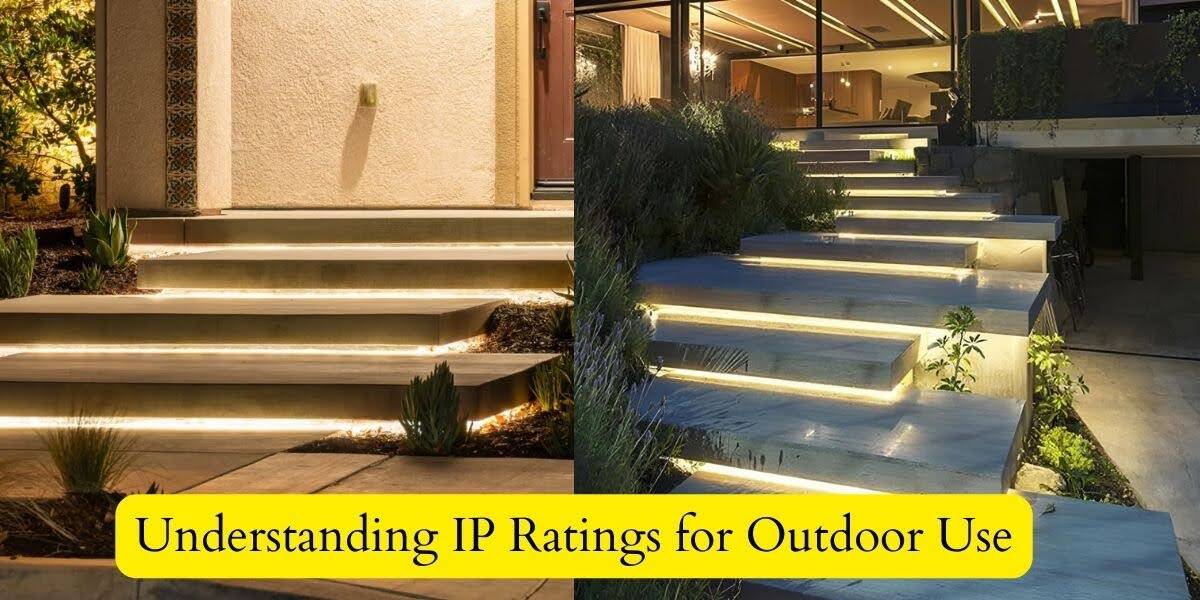
Outdoor suitability begins with understanding IP (Ingress Protection) ratings. An IP rating defines how well an electrical product resists intrusion from solids and liquids. For any COB LED light strip intended for exterior environments, this rating determines whether it can survive real-world exposure.
An IP20 COB LED strip offers no water protection. It is designed strictly for dry, indoor conditions. Even light humidity or condensation can cause oxidation of exposed copper pads and solder joints. Using IP20 COB LED strip lights outdoors will result in rapid degradation and possible short circuits.
IP65 indicates protection against low-pressure water jets from any direction. A waterproof COB LED strip rated IP65 typically features a silicone top coating over the LED surface. This rating makes the strip suitable for areas exposed to rain or splashing, such as under eaves or covered patios. However, IP65 products are not designed for continuous water immersion.
IP67 offers stronger protection. An IP67 waterproof COB LED strip can withstand temporary immersion in water, usually up to 1 meter for a limited duration. These products are typically encased in silicone extrusion tubing or sealed sleeves. This rating is suitable for areas where pooling water or heavy rainfall may occur.
IP68 represents the highest commonly available protection level. A waterproof COB LED strip with IP68 rating is fully encapsulated and designed for continuous submersion under specified conditions. These are used in fountains, water features, or permanently wet environments. However, IP68 suitability depends on manufacturer specifications, not simply the number.
It is important to distinguish between splash-resistant and submersible products. Splash-resistant strips handle rain and incidental moisture. Submersible strips require complete encapsulation and sealed connections. Selecting the correct rating is the first condition for outdoor viability.
Industry Certification and Safety Standards
In addition to IP ratings, outdoor LED strip lighting products are often evaluated according to international electrical and safety standards. For example, many commercial LED lighting products comply with UL (Underwriters Laboratories) safety certification in North America, ETL certification, and CE conformity marking for the European market. Environmental compliance standards such as RoHS (Restriction of Hazardous Substances) ensure that LED lighting products do not contain restricted hazardous materials. These certifications provide additional assurance that the LED strip lighting system meets recognized electrical safety and environmental protection requirements.
Environmental Stress Factors Outdoors
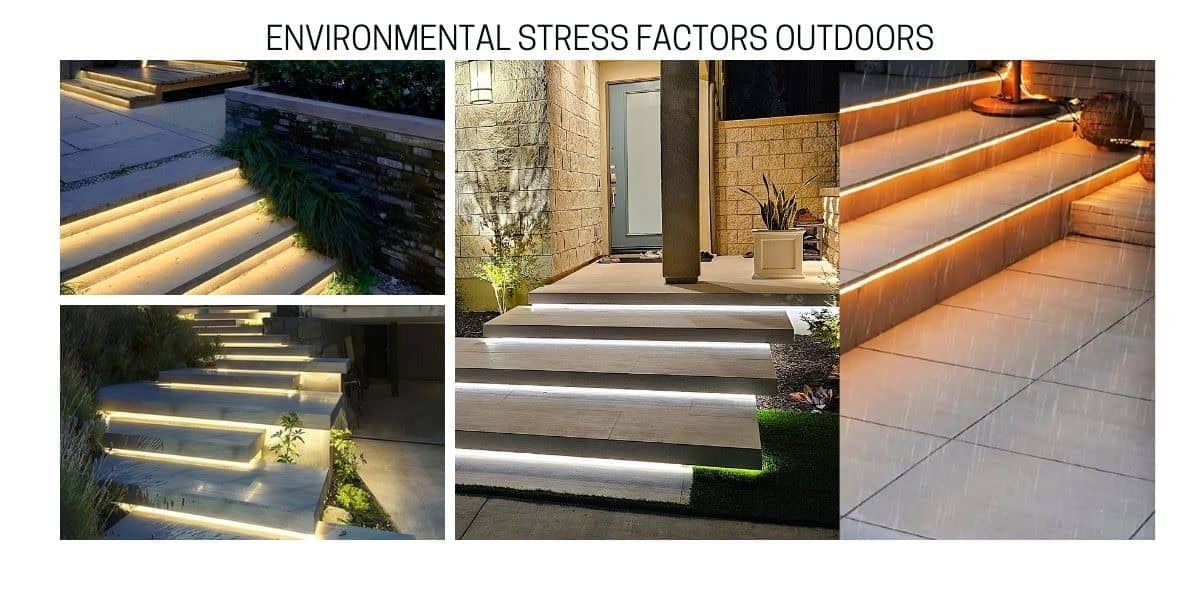
Outdoor environments expose lighting systems to multiple stress factors that indoor installations never encounter. Even a waterproof COB LED strip must be selected and installed with these risks in mind.
Water exposure:
Rain, irrigation systems, condensation, and humidity can penetrate poorly sealed strips. Water intrusion causes corrosion of copper traces and solder joints, leading to flickering or complete failure.
UV radiation:
Continuous sunlight degrades low-quality silicone coatings. UV exposure can cause yellowing, cracking, or brittleness in encapsulation materials, reducing protection over time.
Outdoor environmental exposure can gradually affect LED strip materials over time. Continuous ultraviolet exposure may slowly degrade silicone encapsulation layers, reducing transparency and flexibility. High-quality outdoor LED strip lighting systems are typically designed for service lifetimes of approximately 30,000–50,000 operating hours, depending on installation quality, environmental conditions, and thermal management.
Temperature expansion and contraction:
Outdoor temperatures fluctuate significantly between day and night. PCB materials and silicone coverings expand and contract at different rates, potentially weakening seals or causing micro-cracks.
Dust and debris:
Wind-driven dust can accumulate on exposed surfaces. Over time, abrasive particles may damage protective coatings or reduce light output.
Corrosion of connectors:
Unsealed connectors and exposed cut points are common failure points. Moisture combined with oxygen accelerates oxidation of metal contacts.
These environmental factors explain why a waterproof COB LED strip requires not just a water-resistant surface but a fully integrated sealing system that includes end caps, connectors, and protected power supplies. Outdoor durability depends on the weakest point in the system.
These environmental factors explain why a waterproof COB LED strip requires not just a water-resistant surface but a fully integrated sealing system that includes end caps, connectors, and protected power supplies. Outdoor durability depends on the weakest point in the system.
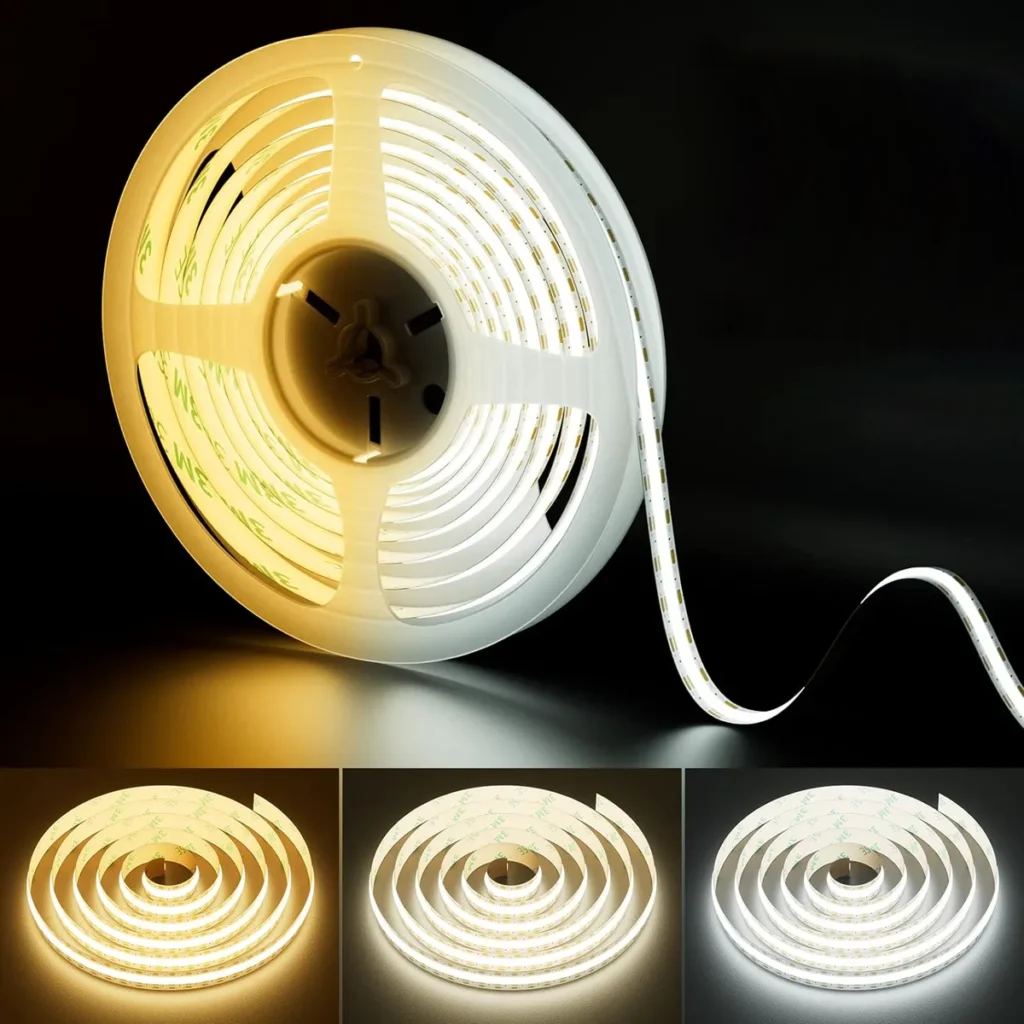
Tunable White COB LED Strip Light
- Main Model: FYT10T608C
- LED QTY per Meter Option: 608/640chips (Sanan)
- PCB Width Option: 10mm
- Color Option: 2700K – 6500K tunable
- CRI:>90
- Input Voltage: DC12V/DC24V
- Power per Meter: 14W/16W
- Efficiency: 90-110 lumen/watt
- IP Grade Option: IP20/IP54/IP65/IP67/IP68
- Warranty: 3years
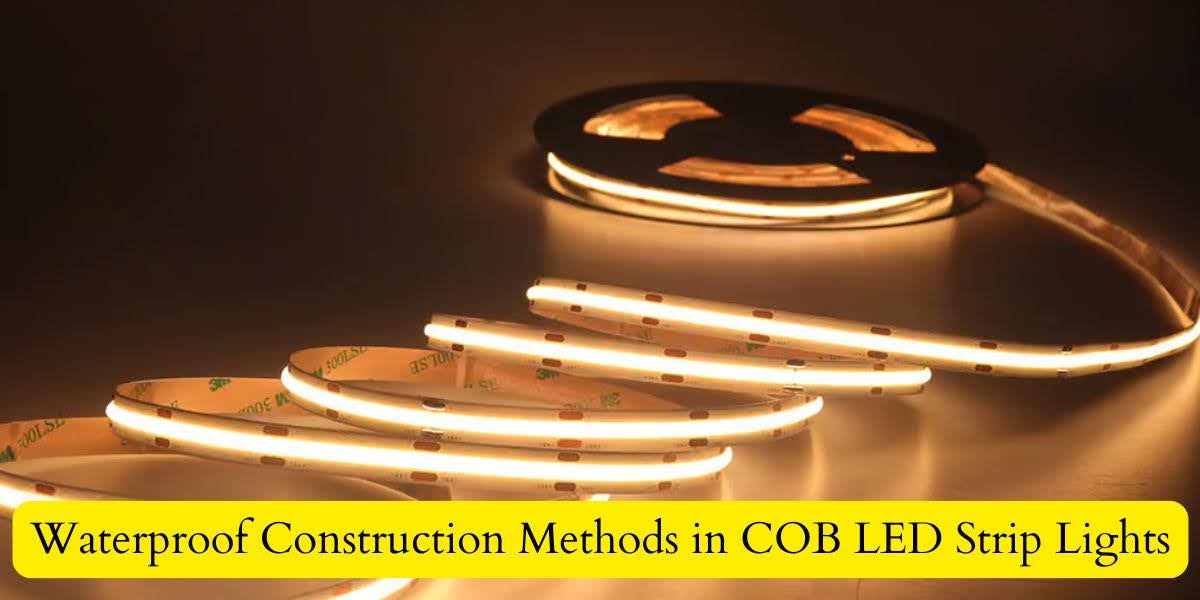
Waterproof Construction Methods in COB LED Strip Lights
- Silicone Top Coating (Surface Sealing)
A thin silicone layer is applied over the LED phosphor surface. This method typically supports IP65 protection and guards against splashes and light rain. However, the underside PCB may remain partially exposed, making it unsuitable for immersion. - Silicone Extrusion (Sleeve Encapsulation)
The COB LED strip is inserted into a continuous silicone tube or sleeve. Both ends are sealed using molded caps or injected silicone. This construction usually achieves IP67 protection and offers improved resistance against temporary water immersion. - Epoxy Encapsulation
The entire COB LED light strip is embedded in a hardened resin compound. This provides strong mechanical and moisture protection but reduces flexibility. It is used where structural rigidity is acceptable. - Full Injection-Molded Sealing (IP68 Systems)
In high-grade waterproof COB LED strip lights, sealing includes molded entry points, integrated cable glands, and sealed connectors. This prevents capillary water migration along the PCB and supports continuous submersion ratings. - PCB Protective Layers
High-quality COB LED strip products include corrosion-resistant copper layers, protective solder masks, and anti-oxidation coatings. These internal protections prevent moisture-induced degradation even if external sealing is stressed. - Sealed End Caps and Cable Entry Points
End caps must be bonded using silicone adhesive or overmolding techniques. Poorly sealed ends are the most common failure point in outdoor installations. - Limitations of Adhesive Backing Outdoors
Standard pressure-sensitive adhesive degrades under moisture and temperature cycling. Waterproof COB LED strip lights intended for exterior use should not rely solely on adhesive for structural support.
The following demonstration shows how IP65 waterproof sealing is practically applied to a COB LED strip.

Installation Requirements for Outdoor Use
Even the highest-rated waterproof COB LED strip will fail if installed incorrectly. Proper installation ensures that environmental protection is maintained.
- Seal all cut points: When a COB LED strip is cut to length, exposed copper pads must be resealed using waterproof end caps or silicone sealant. Leaving cut points exposed defeats the IP rating.
- Use waterproof connectors: Standard snap connectors are not suitable outdoors. Only connectors rated equal to or higher than the strip’s IP rating should be used.
- Install within aluminum profiles: Aluminum channels provide mechanical protection, improve heat dissipation, and shield the strip from direct UV exposure.
- Use mounting clips instead of relying only on adhesive: Outdoor temperature changes weaken adhesive backing. Supplemental clips prevent sagging and detachment.
- Protect the power supply: Drivers must be installed in waterproof enclosures or rated for outdoor use. Exposed drivers are a common failure point.
- Ensure drainage and ventilation: Avoid sealing strips in areas where water can accumulate. Proper drainage prevents prolonged water exposure.
Outdoor reliability depends as much on installation discipline as on product rating.
Outdoor LED Strip Selection Checklist
Before selecting LED white tape for outdoor lighting, several technical factors should be evaluated to ensure reliable performance.
| Selection Factor | Why It Matters |
|---|---|
| IP Rating | Determines protection against rain, moisture, and dust |
| UV Resistance | Prevents silicone coating degradation under sunlight |
| Connector Sealing | Prevents water intrusion at connection points |
| Voltage & Driver Protection | Outdoor drivers must match environmental rating |
| Installation Method | Aluminum profiles and mounting clips improve durability |
| End Cap Sealing | Prevents water entry through cut points |
This checklist helps installers and engineers determine whether a specific LED strip product is suitable for outdoor environments.
Outdoor Applications Where White COB LED Strip Works Best
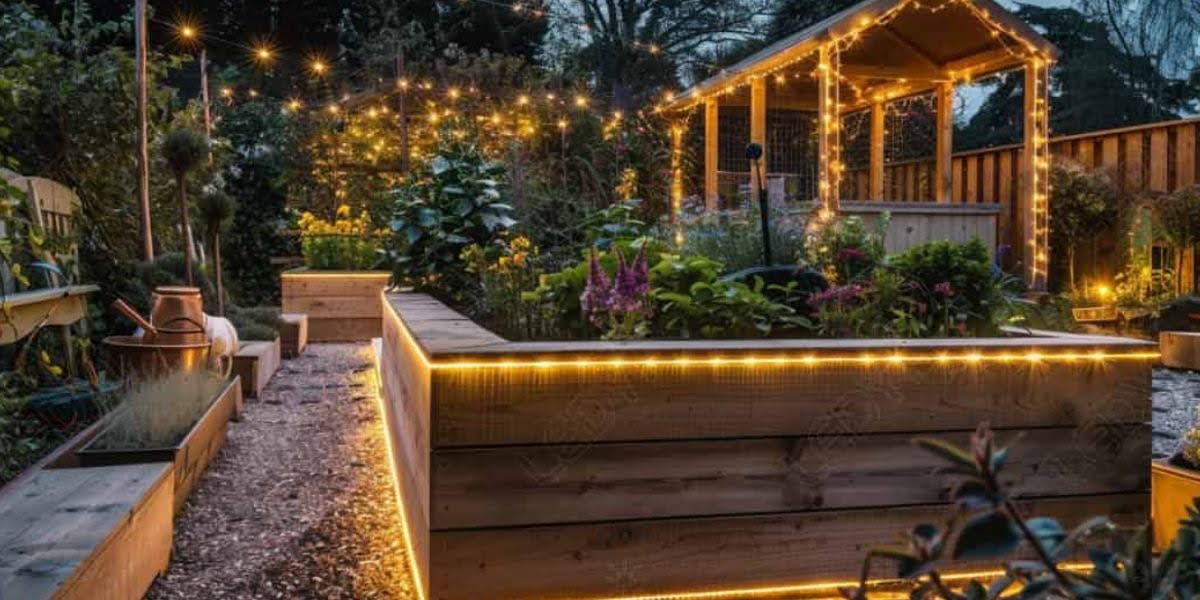
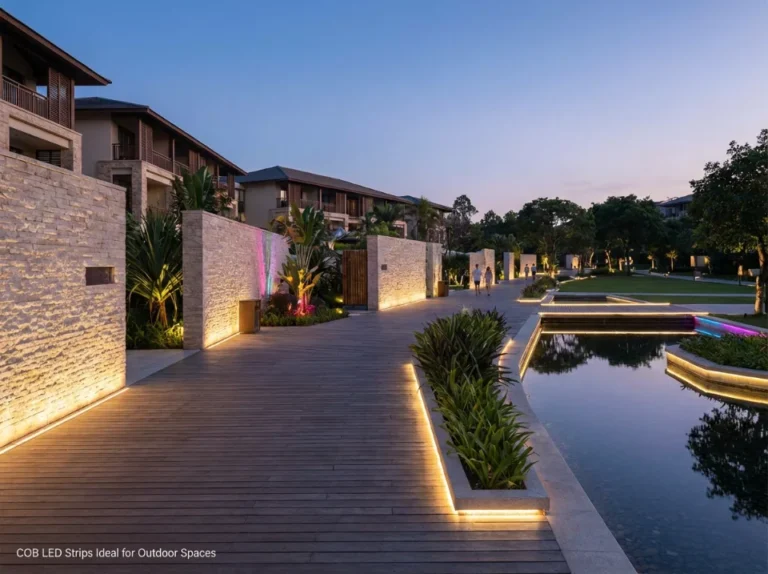
White COB LED strip lights perform particularly well in controlled exterior environments where direct immersion is not required. Under-eave lighting is a common example. Installed beneath roof overhangs, a waterproof COB LED strip provides uniform illumination for pathways and building facades while remaining shielded from direct rainfall.
Pergolas and patio structures also benefit from COB LED strip installation. When mounted inside aluminum channels and protected from standing water, the continuous light output enhances visibility without exposed LED dots.
Architectural accent lighting is another suitable application. A waterproof COB LED strip can highlight building lines, columns, or textured surfaces, provided that it is installed within rated housings.
Garden pathway lighting works effectively when the strip is installed in protective channels slightly above ground level. Direct soil contact should be avoided unless the product is IP68 rated.
Submersion in pools, fountains, or water features requires an IP68 waterproof COB LED strip specifically designed for continuous immersion. Standard IP65 or IP67 products are not sufficient for permanent underwater exposure. The key principle is matching the product rating to the environmental demand.
Many architectural lighting projects use outdoor-rated LED strip systems from established lighting manufacturers. Companies such as Philips Lighting (Signify) and OSRAM produce professional linear lighting solutions used in architectural facade lighting, landscape illumination, and commercial outdoor lighting installations. These systems typically combine waterproof LED strip technology with dedicated drivers and sealed mounting profiles to ensure long-term reliability in exterior environments.
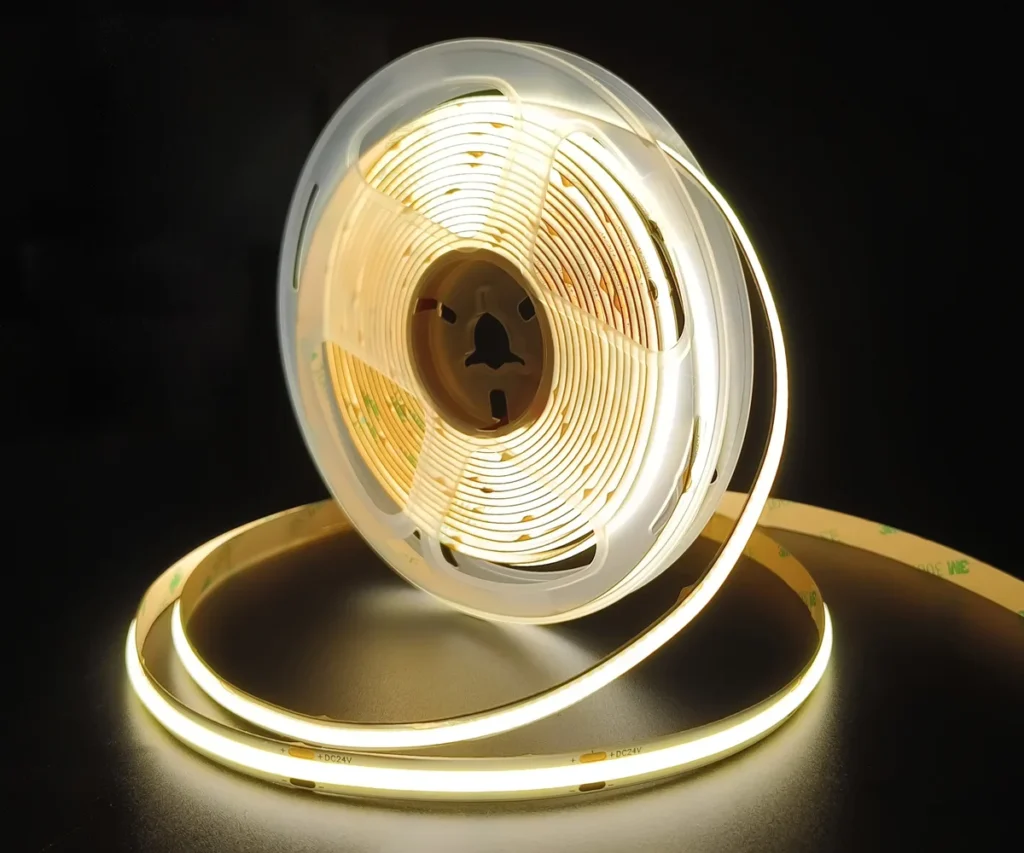
Mono COB LED Strip Light
- Main Model: FYX08T480C
- LED QTY per Meter Option: 320/384/480/528chips (Sanan)
- PCB Width Option: 8mm/10mm
- Color Option: 2700K/3000K/4000K/6500K/Red/Green/Blue/Customized
- CRI:>90
- Input Voltage: DC12V/DC24V
- Power per Meter:8W/10W/11W/14w
- Efficiency: 90-110 lumen/watt
- IP Grade Option: IP20/IP54/IP65/IP67/IP68
- Warranty:3 years
Recommended Outdoor Use Scenarios
Waterproof COB LED strip lights perform best in controlled outdoor environments where direct immersion is not required.
Typical applications include:
- Under roof eaves or building overhangs
- Pergolas and covered patio lighting
- Architectural accent lighting on building facades
- Garden pathway lighting installed above ground level
- Decorative outdoor lighting inside aluminum channels
When LED White Tape Should Not Be Used Outdoors
Even waterproof COB LED strips may fail if installed in unsuitable environments.
Avoid using LED white tape in the following situations:
- Direct ground contact where water can pool
- Open decks or exposed areas without weather protection
- Installations with unsealed connectors or cut points
- Systems using indoor-rated power supplies
Indoor vs Waterproof COB LED Strip Performance
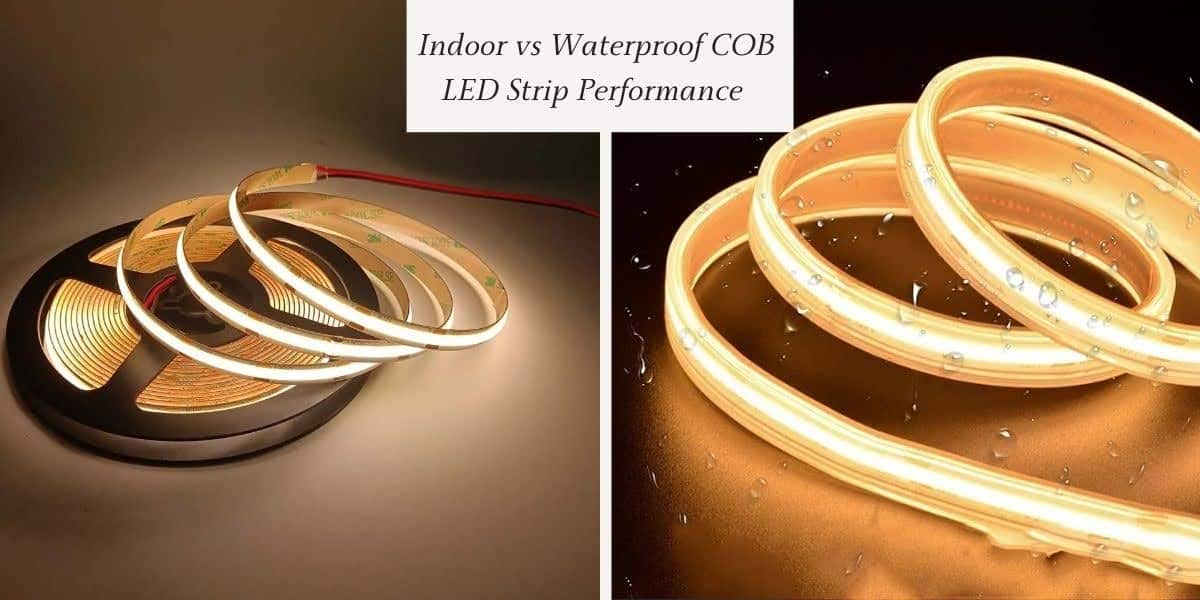
| Type | Indoor COB LED Strip | Waterproof COB LED Strip |
| Protection Level | IP20 (no water protection) | IP65, IP67, or IP68 |
| Suitable Environments | Dry indoor spaces only | Outdoor areas exposed to rain, moisture, or dust |
| Lifespan Outdoors | Very short; prone to failure | Long-term durability when properly installed |
| Installation Requirements | Simple adhesive or clips | Seal cut ends, use waterproof connectors |
Common Mistakes to Avoid
One of the most common mistakes is installing IP20 COB LED strip lights outdoors under the assumption that a covered area eliminates risk. Even covered spaces experience humidity and condensation. Without waterproof protection, corrosion begins quickly.
Another frequent error is failing to reseal cut ends. When a COB LED strip is shortened for custom length, the exposed copper pads create a direct path for water intrusion. Even a small amount of moisture can migrate along the PCB.
Exposing drivers and power supplies to weather is another critical oversight. A waterproof COB LED strip does not compensate for a non-rated power supply. The entire electrical system must match the environmental rating.
Ignoring thermal expansion can also reduce lifespan. Installing strips tightly in rigid channels without allowing for slight movement may stress encapsulation layers over time.
Finally, relying solely on adhesive backing leads to detachment in outdoor conditions. Mechanical reinforcement is essential for secure, long-term installation.
Key Factors That Determine Outdoor LED Strip Reliability
Several engineering factors determine whether LED white tape will perform reliably in outdoor environments.
• Correct waterproof rating (IP65–IP68)
• UV-resistant encapsulation materials
• Proper sealing of connectors and cut ends
• Weather-protected power supplies and drivers
• Mechanical support using aluminum profiles or mounting clips
Failure in any of these areas can significantly reduce the lifespan of outdoor LED strip installations.
Conclusion
LED white tape can be used for outdoor lighting only when it is a properly rated waterproof COB LED strip designed for environmental exposure. Standard indoor COB LED strip lights are not suitable for outdoor conditions due to their lack of moisture and UV protection.
IP rating, sealing integrity, encapsulation method, and installation quality collectively determine performance and lifespan. Selecting the correct waterproof COB LED strip and installing it using proper sealing, housing, and environmental protection practices ensures safe and durable outdoor operation.
Outdoor success depends on correct product selection and correct installation, not simply on the presence of LEDs.
FAQs
Related Posts