Signage & LED Strip Lighting Factory Since 2011

Signage & LED Strip Lighting Factory Since 2011

LED Strip Buying Guide Knowledge Hub

Learn how to choose the right LED strip lights based on voltage, brightness, CRI, waterproof rating, dimming compatibility, RGB control systems, installation environment, and long-term reliability — not just marketing specifications.

This knowledge hub helps contractors, lighting designers, distributors, sign makers, and project buyers compare LED strip technologies and avoid common purchasing mistakes before installation.

>
>
LED Strip Buying Guide

Find the Right LED Strip for Your Project

Choosing the wrong LED strip can lead to voltage drop, uneven brightness, color inconsistency, waterproof failures, overheating, poor dimming performance, and shortened lifespan.

Instead of selecting LED strip lights based on price or marketing claims alone, use the guide below to match your project requirements with the correct LED strip technology, voltage system, lighting effect, installation method, and environmental protection level.

Whether you are designing residential lighting, retail displays, architectural facades, signage systems, entertainment lighting, or OEM products, this quick selection guide helps simplify the buying process and reduce costly mistakes before installation.

Commercial Lighting

Commercial lighting projects typically prioritize reliability, installation efficiency, energy performance, visual comfort, and long-term maintenance costs. Unlike residential lighting, commercial environments often operate for extended hours and require consistent brightness, stable color performance, and scalable electrical infrastructure.

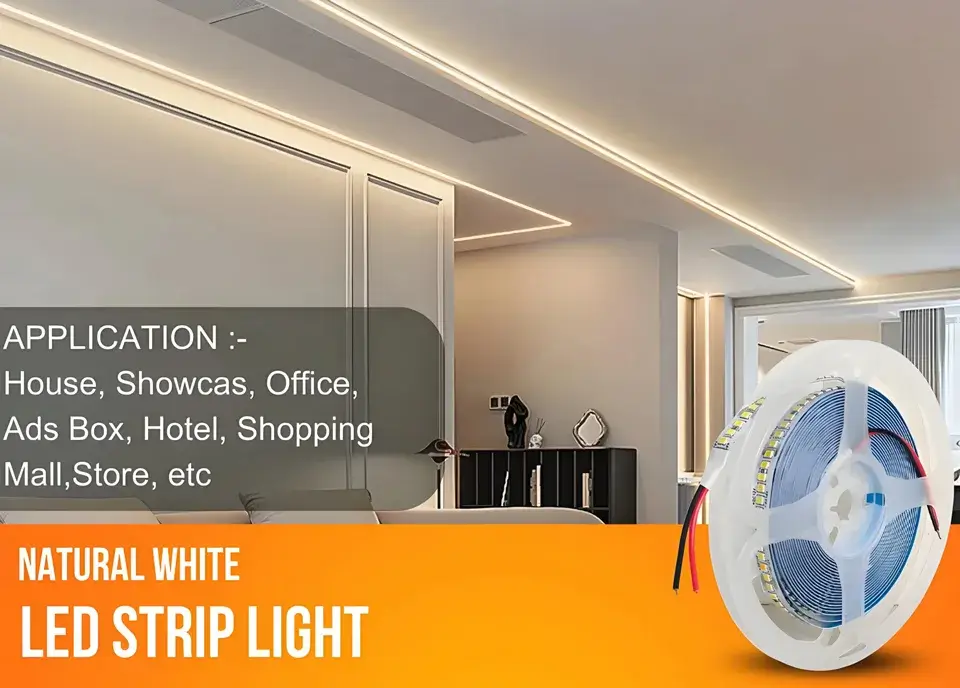
Typical applications include offices, retail stores, hotels, restaurants, shopping centers, educational facilities, and commercial display environments.

Commercial projects often involve long continuous runs where voltage drop becomes a major concern. 24V systems are generally preferred due to lower current requirements and improved brightness consistency.

For premium installations such as hotels and retail environments, high CRI LED strips are strongly recommended to improve product presentation and visual comfort.

Retail & Display Lighting

Retail lighting is designed to influence customer perception, improve product presentation, and enhance merchandising effectiveness.

Unlike general lighting, retail environments require excellent color rendering, uniform illumination, and carefully controlled color temperatures to maximize visual appeal.

Applications include:

  • Shelving
  • Display cabinets
  • Jewelry displays
  • Cosmetics counters
  • Grocery stores
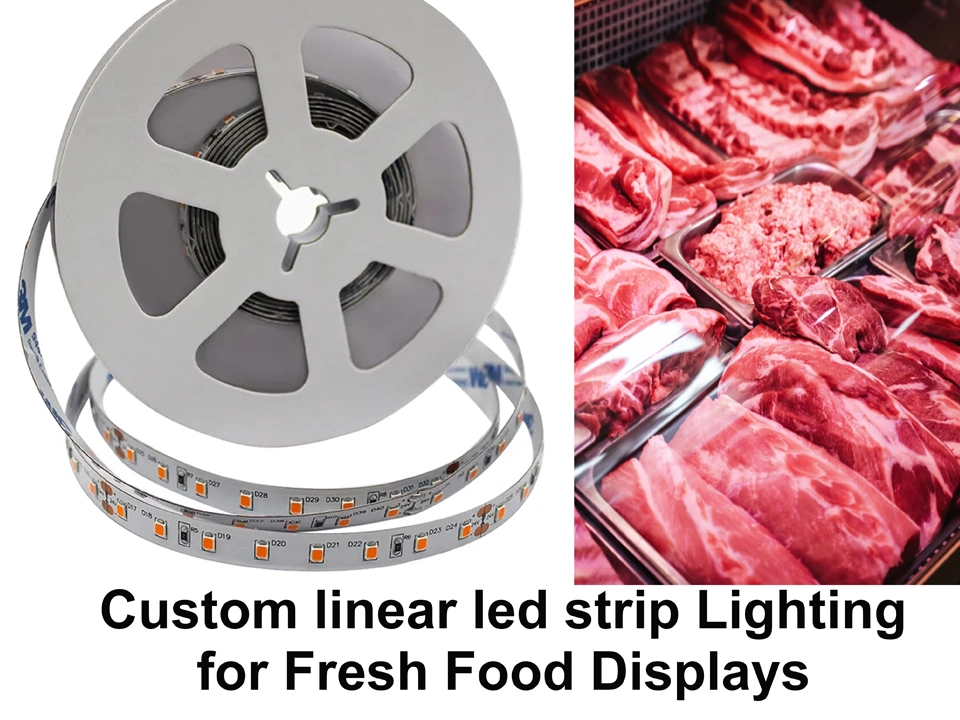
  • Meat displays
  • Luxury retail

Color quality is often more important than brightness. Poor CRI lighting can significantly alter product appearance and negatively affect customer purchasing behavior.

COB strips are increasingly popular in premium retail applications due to their seamless illumination and reduced hotspot visibility.

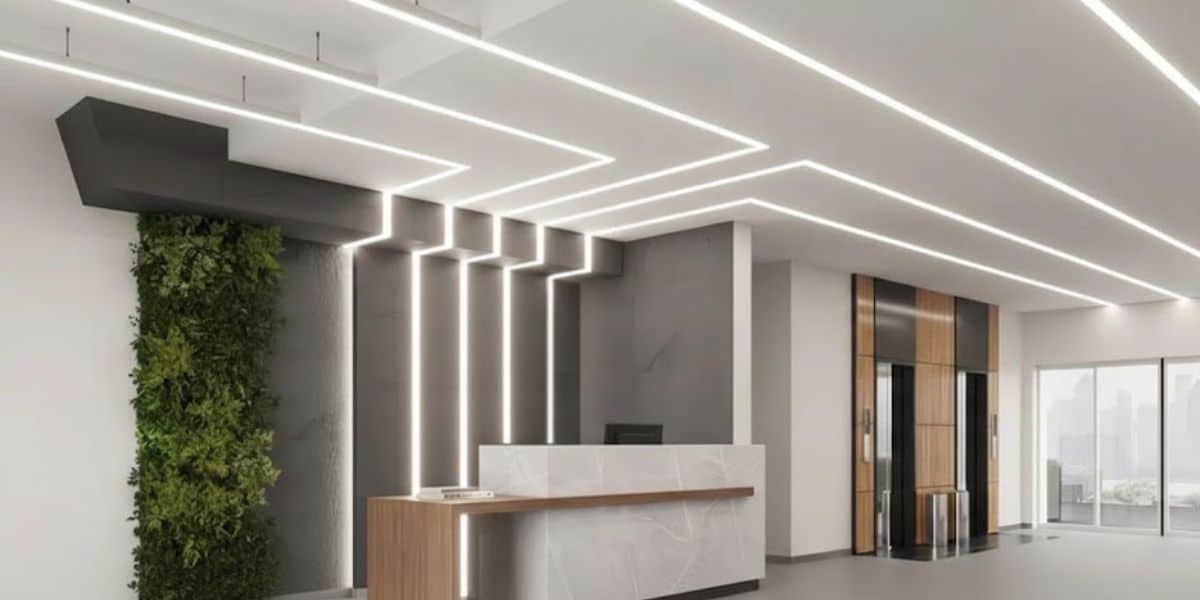
Architectural & Cover Lighting

Architectural lighting emphasizes visual comfort, uniform illumination, seamless integration, and premium aesthetics.

Typical applications include:

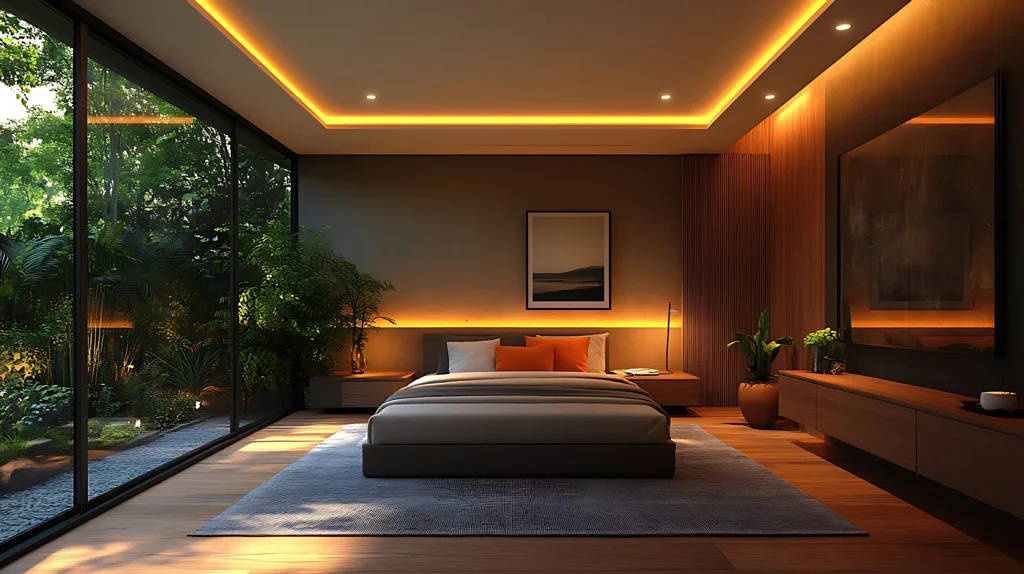
  • Ceiling coves
  • Luxury residences
  • Hotels
  • Museums
  • Commercial lobbies
  • High-end retail

Architectural installations often expose imperfections in LED strip quality. Dot visibility, color variation, voltage drop, and diffuser performance become highly noticeable.

COB LED strips are generally preferred due to their continuous light appearance.

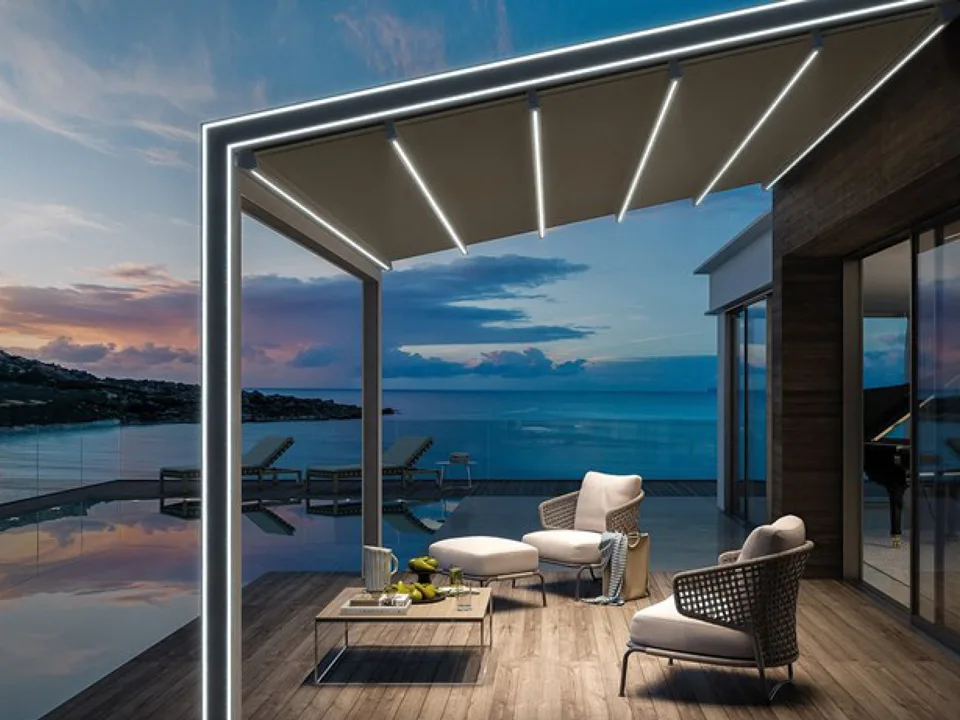
Outdoor & Facade Lighting

Outdoor installations must withstand environmental stress including UV exposure, moisture, temperature fluctuation, dust, and weathering.

Applications include:

  • Building facades
  • Outdoor signage
  • Landscape lighting
  • Architectural exteriors
  • Bridges
  • Public spaces

Waterproof performance is only one part of outdoor reliability. UV resistance, thermal expansion, silicone aging, connector sealing, and drainage planning are equally important.

RGB & Entertainment Lighting

Entertainment lighting focuses on dynamic visual effects, synchronization, color flexibility, and immersive experiences.

Typical applications include:

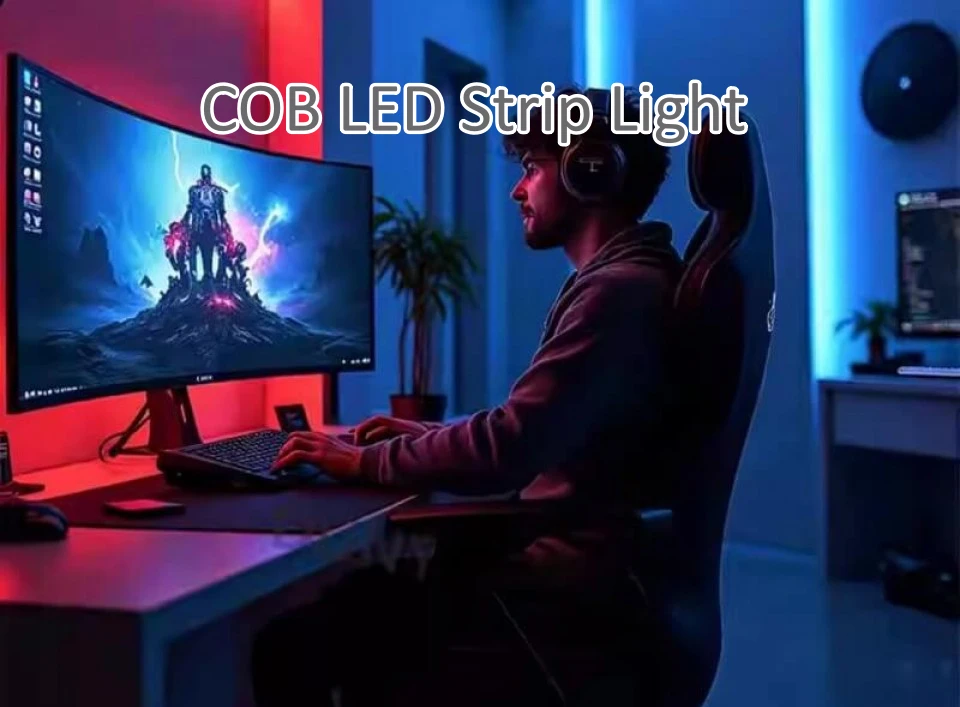
  • Gaming rooms
  • Home theaters
  • Event lighting
  • Stage lighting
    Bars
  • Clubs
  • Streaming setups

RGBIC and pixel-controlled systems require more than just selecting a strip. Controller capability, signal integrity, power injection planning, and software compatibility all influence final performance.

OEM & Custom Projects

OEM projects require balancing performance, customization, certification requirements, manufacturing consistency, and long-term supply stability.

Applications include:

  • Private label products
  • Lighting brands
  • Sign manufacturers
  • Commercial projects
  • Industrial equipment
  • Specialized lighting products

For OEM projects, manufacturing consistency is often more important than peak performance specifications. Component sourcing, LED binning, PCB quality, testing procedures, and supply chain stability directly affect product reliability.

Need Help Choosing the Right LED Strip System?

Our LED specialists can help you select the correct voltage, waterproof rating, LED type, dimming system, aluminum profile, and power supply configuration for your residential, commercial, signage, or OEM lighting project.

Professional LED Strip Buying Knowledge Center

As LED technology continues to evolve, selecting the correct LED strip light system now involves much more than choosing brightness or color alone.

Voltage architecture, PCB copper thickness, thermal management, CRI performance, waterproof protection, dimming compatibility, RGB control protocols, optical diffusion, installation structure, and long-term operating reliability all directly affect lighting quality, maintenance costs, and overall project success.

Different environments require completely different LED strip configurations. A retail shelf lighting project prioritizes CRI and visual accuracy, while an outdoor facade installation may require UV-resistant waterproof structures and DMX synchronization. Entertainment lighting systems often demand addressable RGB pixel control, while commercial architectural projects require stable long-run voltage performance and professional thermal dissipation systems.

This knowledge center is designed to help contractors, lighting designers, distributors, project buyers, sign makers, architects, and OEM manufacturers compare LED strip technologies, understand real engineering differences, and make more reliable purchasing decisions before installation begins.

LED Strip Technologies & Product Selection

Not all LED strip lights are built the same. Behind similar-looking products are major differences in LED packaging technology, PCB construction, thermal performance, optical diffusion, control architecture, waterproof structure, and manufacturing quality.

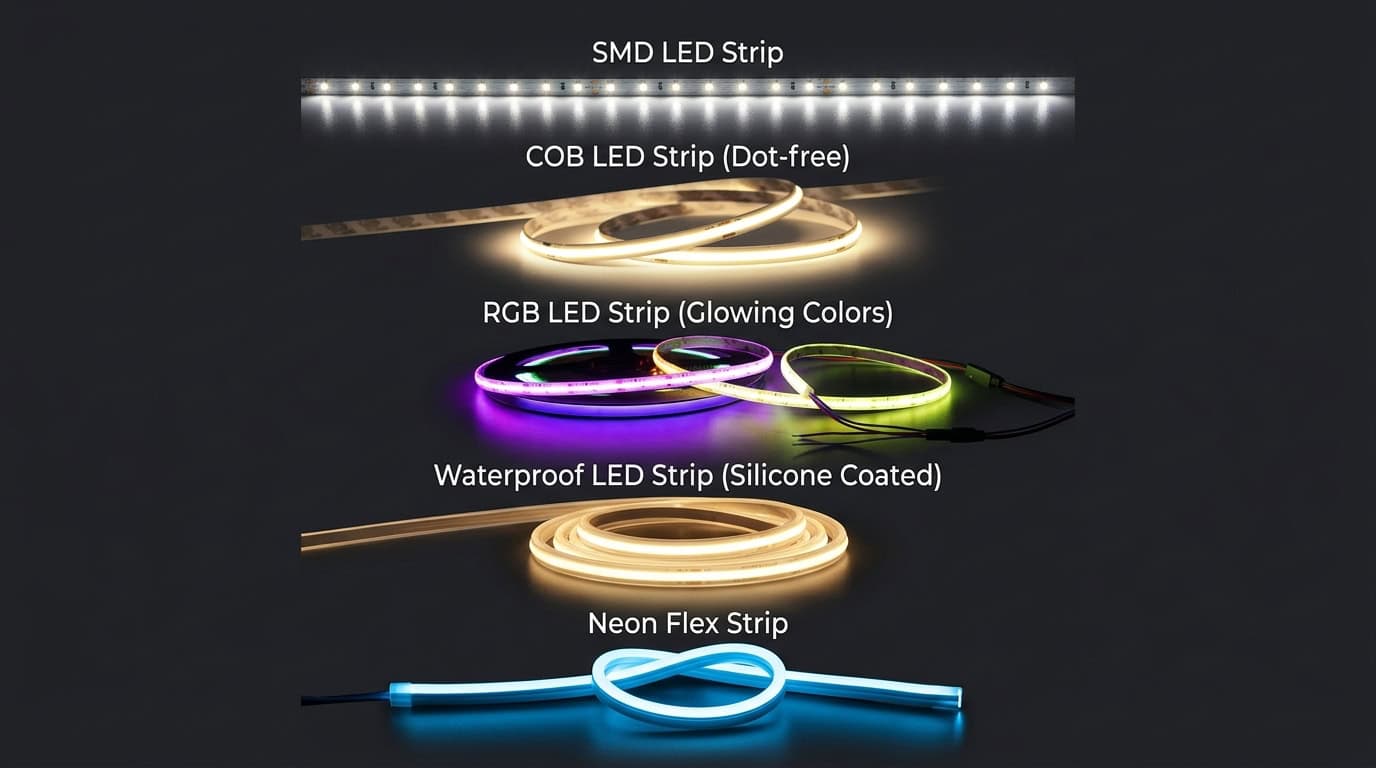
Understanding the engineering differences between COB, SMD, CSP, RGBIC, neon flex, side-emitting, and commercial-grade LED strip systems helps prevent performance issues and ensures the lighting solution matches the actual installation environment.

Incorrect product selection often leads to visible hotspots, uneven illumination, color inconsistency, excessive heat buildup, shortened lifespan, unstable brightness, or poor waterproof durability. Choosing the correct LED strip technology improves lighting consistency, thermal stability, installation efficiency, and long-term project reliability.

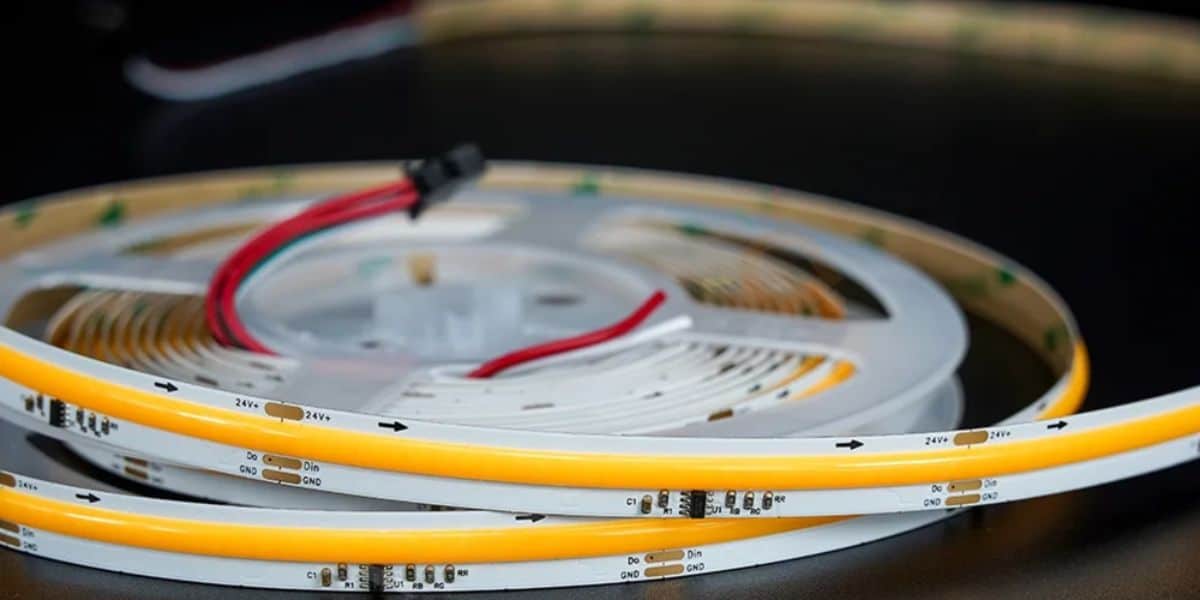
indoor COB strip light
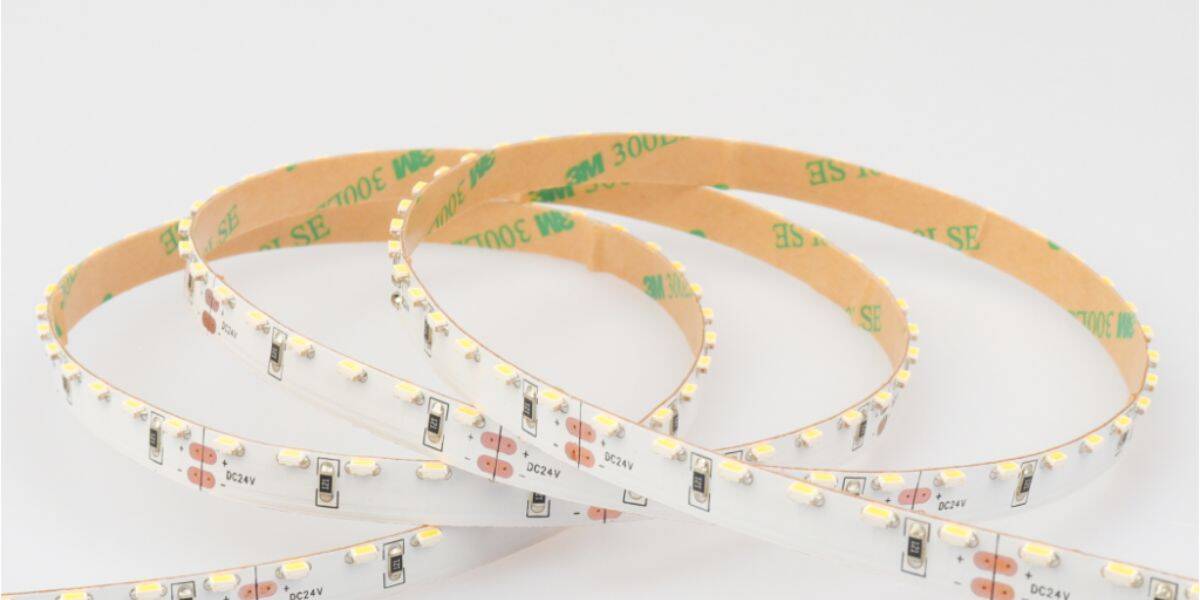
COB LED Strip for Indoor vs Outdoor Lighting - What's the Difference?
COB LED strip lighting has become an increasingly popular solution for both indoor and outdoor applications due to its uniform light output and clean linear appearance. However, not all COB LED strips are designed to perform the same way once installation environments change. Factors such as moisture exposure, temperature variation, electrical loading,...
Comparing COB vs CSP vs SCOB LED Strips - A Buyer’s Guide for Professionals
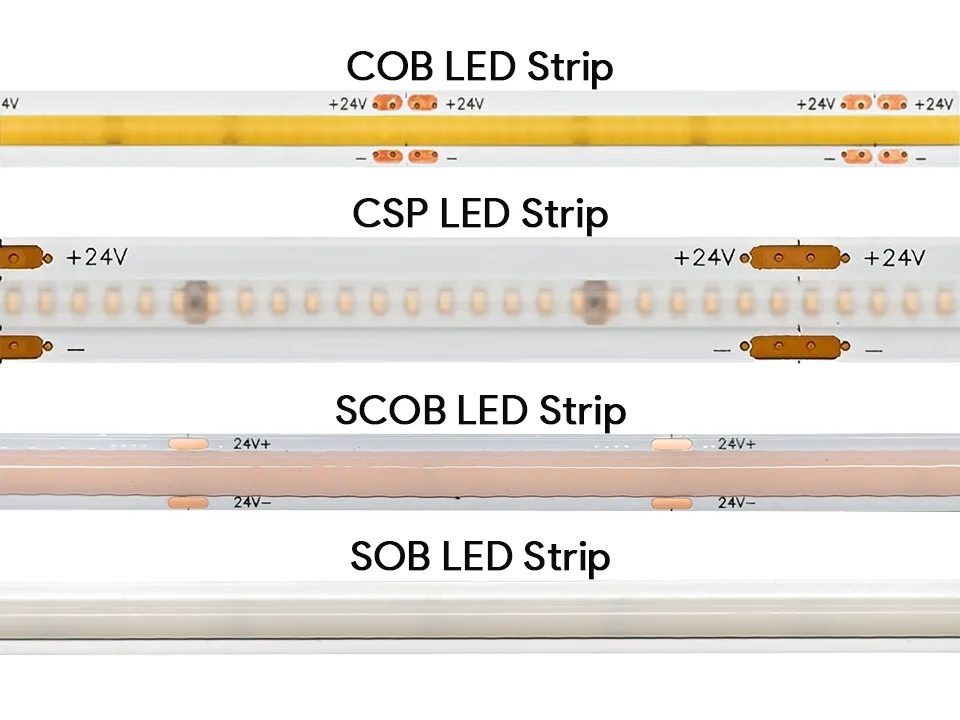
Comparing COB vs. CSP vs. SCOB vs. SOB LED Strips: A Buyer’s Guide for Professionals
With the continuous development and advancement of LED packaging technology, LED strips have been continuously optimized in terms of luminous efficiency, uniformity, flexibility, and heat dissipation performance, giving rise to a variety of new strip structures. Among these, COB (Chip on Board) has become the mainstream packaging method for high-density...
2835 LED light strips
How Do I Choose the Best 2835 LED Strip Lights for My Home?
Choosing the best 2835 LED strip lights for your home is a decision about light quality, visual comfort, and suitability for residential spaces, not about chasing technical specifications. The right choice depends on how the light will be used, where it will be installed, and how consistently it performs in everyday home environments. This guide is...
COB-LED-Strip-Light-Applications_Residential-Lighting
How to Choose LED Strips for Your Projects Quick Guide
In today’s lighting market, LED strip lights have become a popular choice for many consumers in decoration and lighting due to their advantages such as energy – saving, long lifespan, and flexibility. But did you know? The LED strip light family has numerous members, and different types of strip lights have their own unique functions and...
LED Linear Module vs LED Strip Light
LED Linear Module vs LED Strip Light: Which One Should You Choose
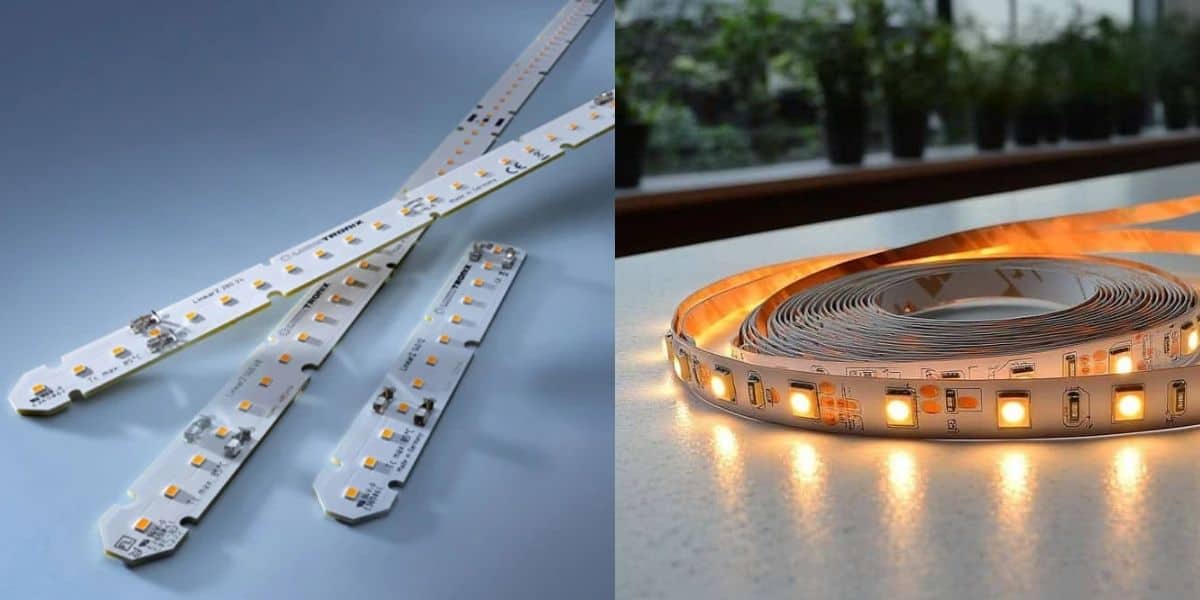
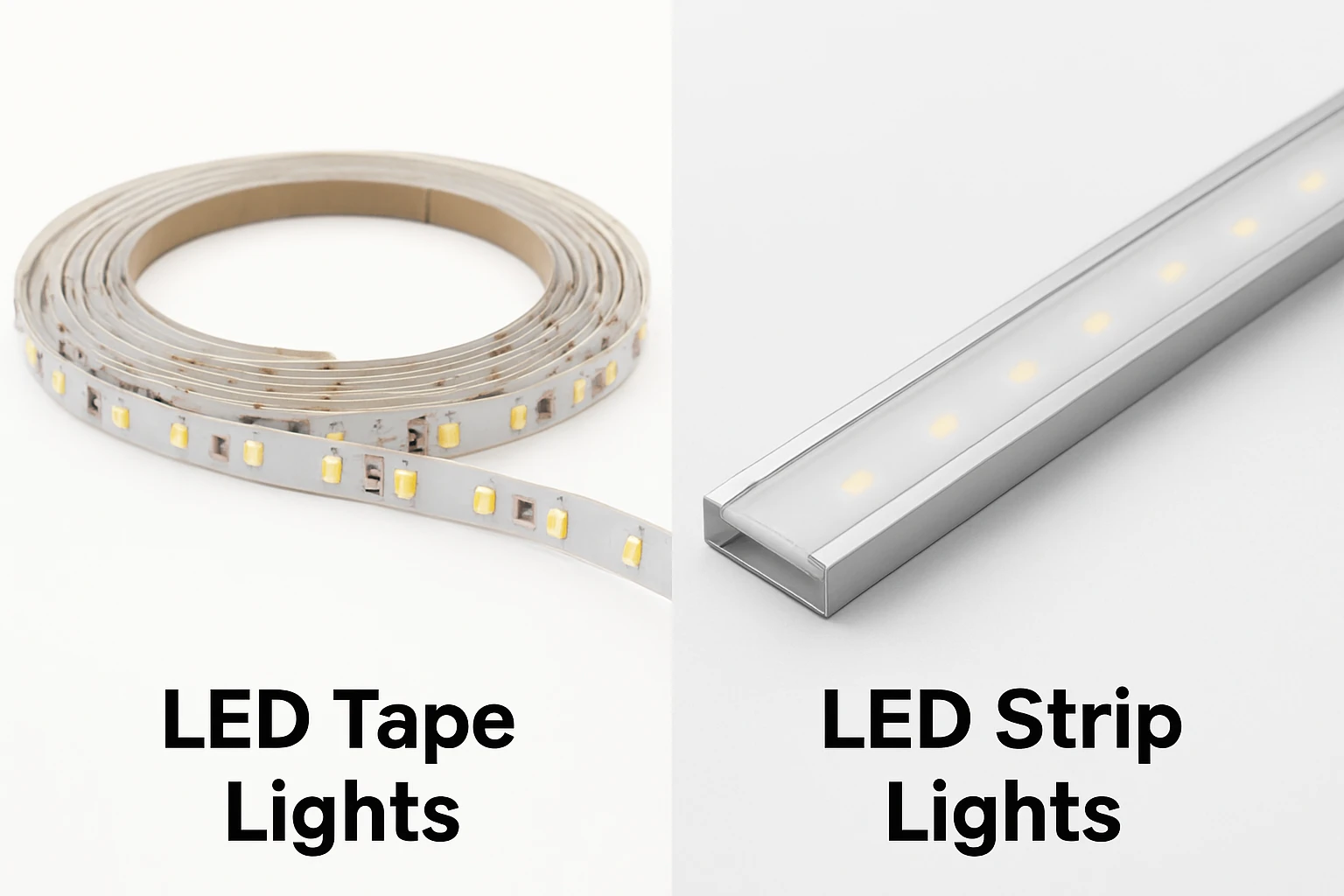
LED linear modules and LED strip lights are two common types of linear LED lighting systems. LED linear modules use rigid printed circuit boards (PCBs) designed for stable commercial lighting installations, while LED strip lights use flexible circuit boards intended for decorative or adaptable lighting applications. Although both products provide linear...
LED linear module vs LED strip light side by side comparison for commercial lighting
LED Linear Modules vs LED Strip Lights: Which Is Better for Commercial Lighting?
For commercial lighting, LED linear modules are generally preferred over LED strip lights. They provide superior thermal management, longer lifespan, higher reliability, and standardized mounting options. LED strip lights, while flexible and decorative, are mostly suitable for accent, residential, and low-power applications. Both technologies use LED...
LED Neon Strip vs LED Strip Lights
LED Neon Strip vs LED Strip Light: Which One Fits Your Project Best?
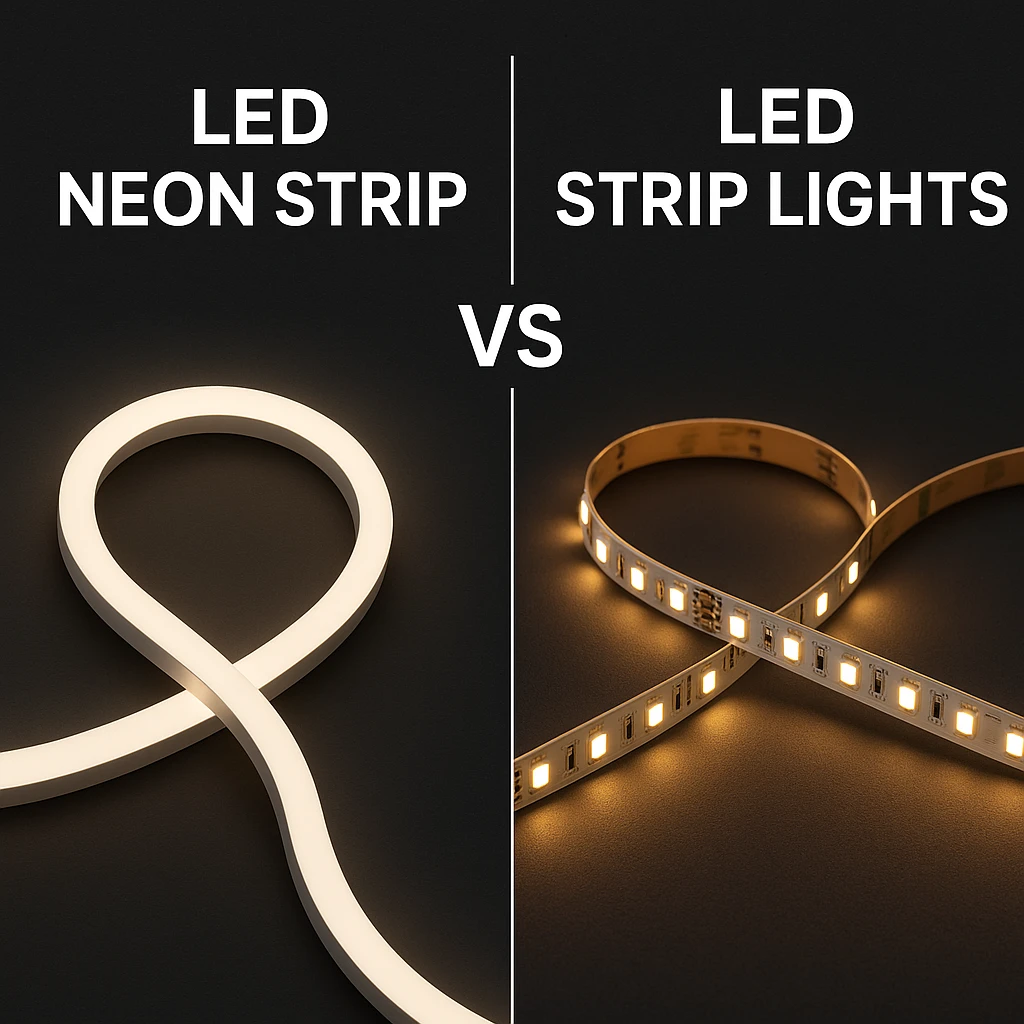
As LED lighting technology continues to evolve, lighting professionals, designers, and contractors are faced with an expanding range of solutions for both indoor and outdoor applications. Among the most widely used and visually impactful options are LED neon strips and standard LED strip lights. Though they may appear similar at first glance, their...
led sheet light v.s
LED Sheet Light vs. LED Strip Light: What’s the Difference?
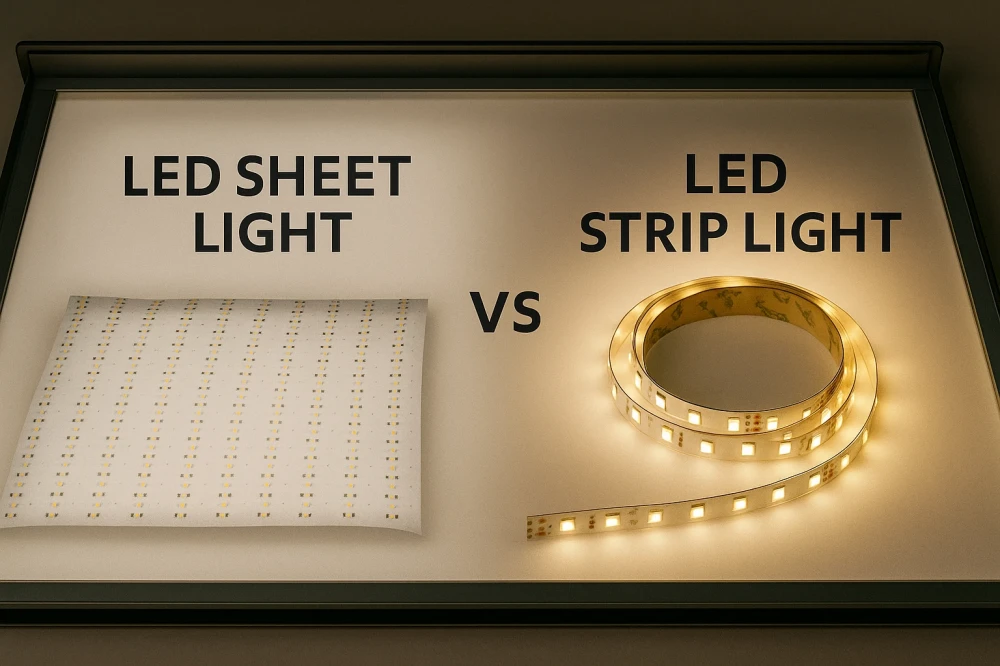
LED lighting has become a versatile choice for both commercial and decorative projects, offering solutions that range from large backlit surfaces to flexible accent lighting. Among the many options, LED sheet lights and LED strip lights are often compared because they share similar components but serve very different purposes. Understanding how they...
LED strip types comparison including SMD, COB, RGB, waterproof and neon flex for wholesale buyers
LED Strip Wholesale Price Guide: Types, Tiers & What You Actually Pay
Wholesale LED strip prices typically range from $0.50 to $15+ per meter, depending on factors such as LED chip type, CRI rating, IP protection level, and order volume. For buyers searching where is the best place to buy LED lights, understanding these variables is critical before comparing suppliers or requesting quotes. This guide breaks down the real...
LED tape lights LED strip lights
LED Tape Lights vs LED Strip Lights: What’s the Difference?
When it comes to linear lighting, terms like LED tape lights and LED strip lights are often used interchangeably. Both refer to flexible lighting solutions that deliver bright, energy-efficient illumination in compact forms. However, there are subtle differences between them in terms of structure, performance, and installation methods. Understanding...
best LED strips for color uniformity (1)
Philips LED Strips – 2025 Buyer's Guide for High power LED strip light
Philips MASTER and CorePro LED strips serve distinct lighting needs. The MASTER series is engineered for high-performance, color-critical applications with CRI ≥95, longer lifespan up to 50,000 hours, and tighter color consistency (SDCM ≤2). In contrast, the CorePro series provides a cost-effective solution for standard lighting projects with moderate...
Single-Color, CCT, RGB, RGBW, or RGBIC LED Strip_Which Type Fits Your Project Best
Single-Color, CCT, RGB, RGBW, or RGBIC LED Strip: Which Type Fits Your Project Best?
As LED technology continues to evolve, LED strip products have transformed from basic lighting solutions into comprehensive platforms that integrate lighting effects, interactivity, and intelligence. When faced with the five main types of LED strips—single-color, CCT, RGB, RGBW, and RGBIC—project decision-makers typically need to make the right choice...
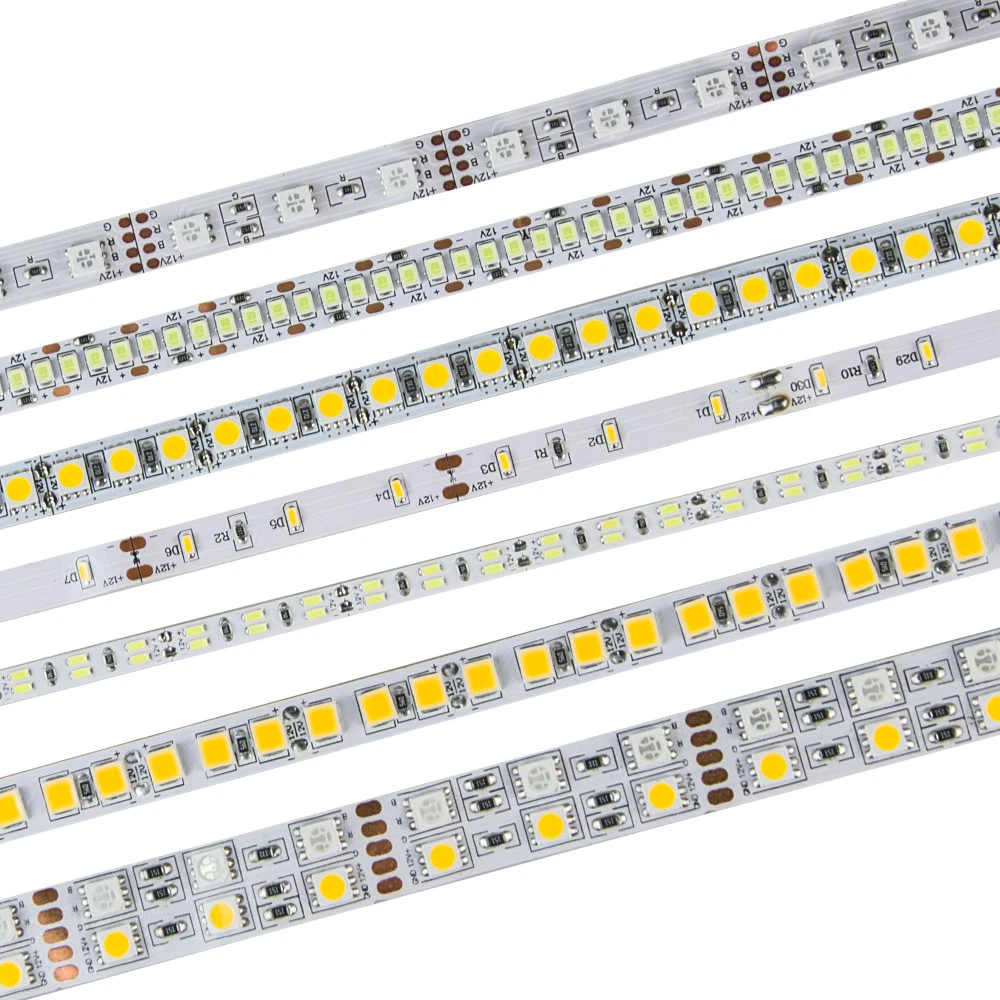
SMD3528 SMD2835 SMD5050 LED strip factory
SMD3528 vs SMD2835 vs SMD5050: Which LED Strip Light is the Best for Commercial and Architectural Lighting?
When selecting LED strip lights for commercial or architectural use, many professionals encounter terms like SMD3528, 2835, or 5050—yet few fully understand what these numbers mean. Far from being just model codes, they define the chip’s size, light output, efficiency, and application suitability. Misinterpreting them can result in suboptimal lighting...
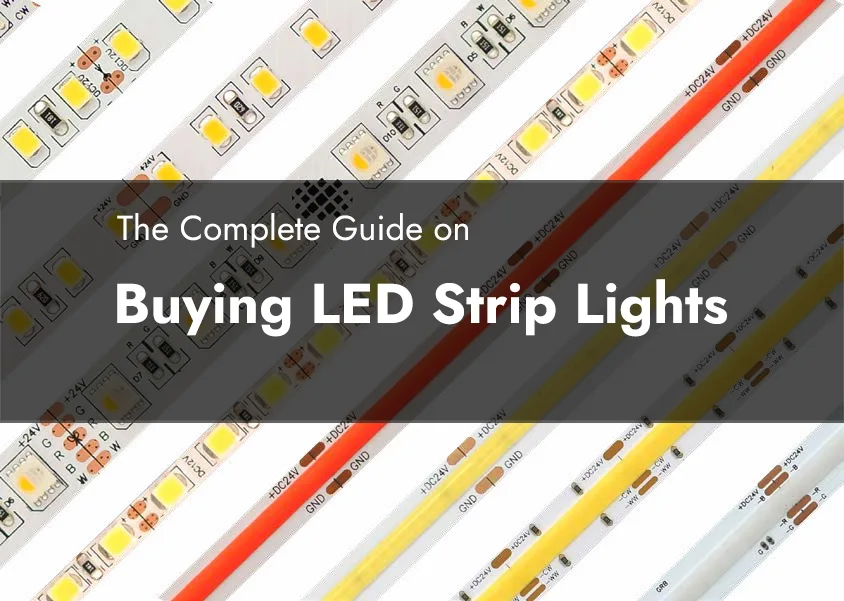
The Complete Guide on Buying LED Strip Lights
LED strip lights are an increasingly popular form of lighting and are an affordable option for commercial and residential lighting applications. Buying LED strip lights may seem relatively simple, but there are many things you need to consider to make sure you get the right type of LED strip lights for your project’s needs. SignliteLED, as one...
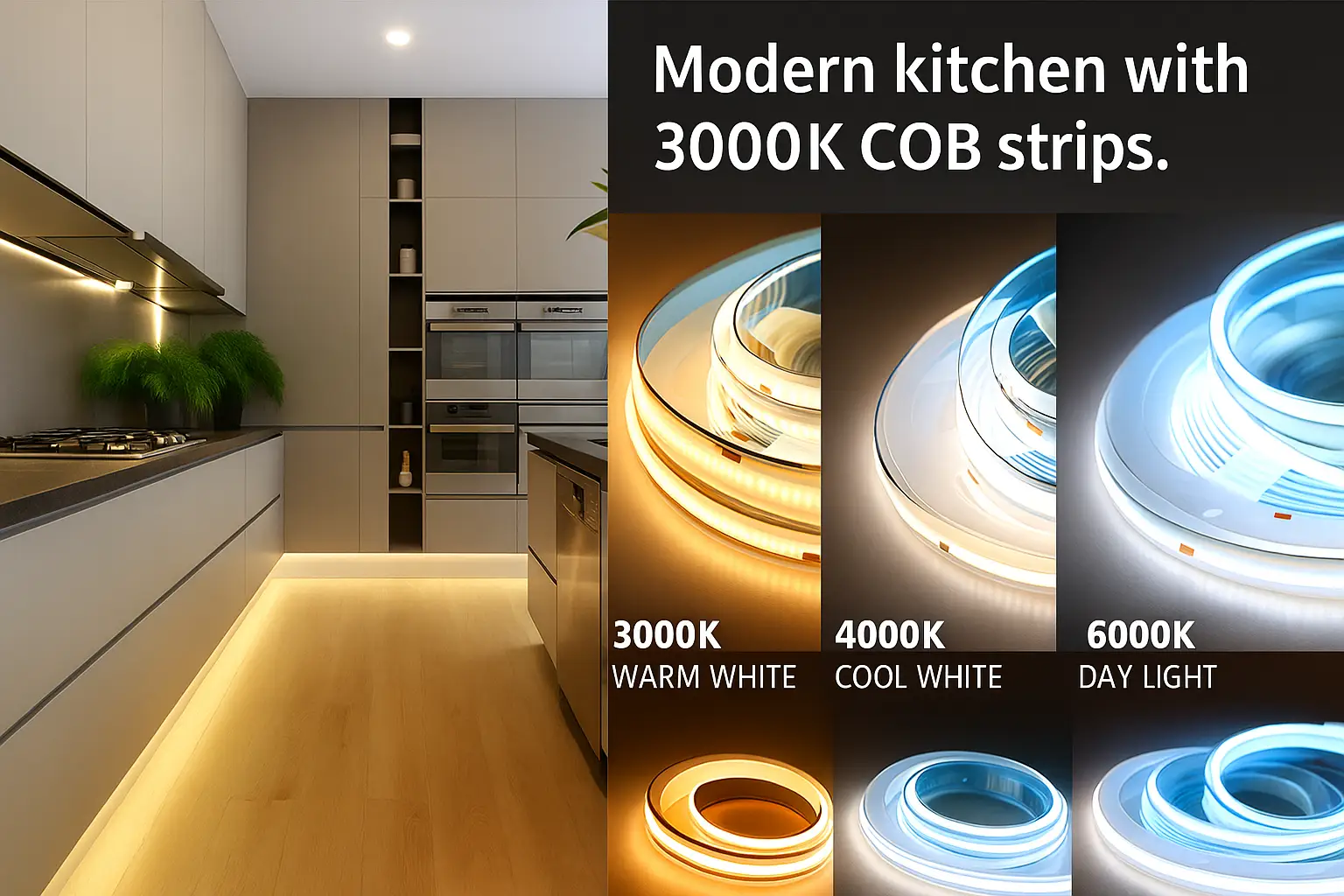
Modern kitchen with 3000K COB strips.
What Are the 20 Applications of COB LED Strip Lights vs SMD?
Chip-on-board LED strip lights represent a breakthrough in lighting technology, offering seamless, dot-free illumination that surpasses traditional SMD options. With high CRI values over 90, energy efficiency of 100-145 lm/W, and exceptional flexibility, these strips deliver uniform light across diverse environments. This guide explores the top 20 applications,...
cob rgbw led strip light 24v
What are the best brands for durable and bright 24V LED strip lighting?
The best brands for durable and bright 24V LED strip lighting are those that deliver stable 24V electrical performance, consistent brightness over long runs, reliable COB LED architectures, and proven durability under continuous commercial operation. Brightness alone does not define quality. A strong 24V LED strip brand must control voltage drop, manage...
Side-Emitting LED Strip
What Are the Best Brands for High-Quality Side Emitting LED Lights
High-quality side-emitting LED light brands are defined by measurable performance criteria such as CRI ≥90, SDCM ≤3, stable voltage architecture, controlled voltage drop, adequate thermal design, and consistent optical output rather than brand reputation alone. Side-emitting LED strips are used in architectural contours, signage channel letters, façade...

Voltage, Power & Electrical System Planning

Electrical system planning is one of the most overlooked causes of LED strip lighting failure. Voltage drop, unstable brightness, flickering, wire overheating, controller instability, color shifting, and premature component failure are commonly caused by incorrect electrical design rather than the LED strip itself.

As installation lengths increase and lighting systems become more complex, electrical planning becomes significantly more important. Long-run architectural lighting, RGB synchronization systems, commercial shelving, facade lighting, retail installations, and entertainment projects all require different approaches to voltage selection, current management, power injection, controller architecture, and thermal distribution.

Improper electrical planning increases maintenance costs, reduces lighting stability, creates installation limitations, and shortens system lifespan. Understanding how electrical structure affects LED strip performance is essential for building stable, scalable, and reliable lighting systems.

DC12V VS DC24V strip light
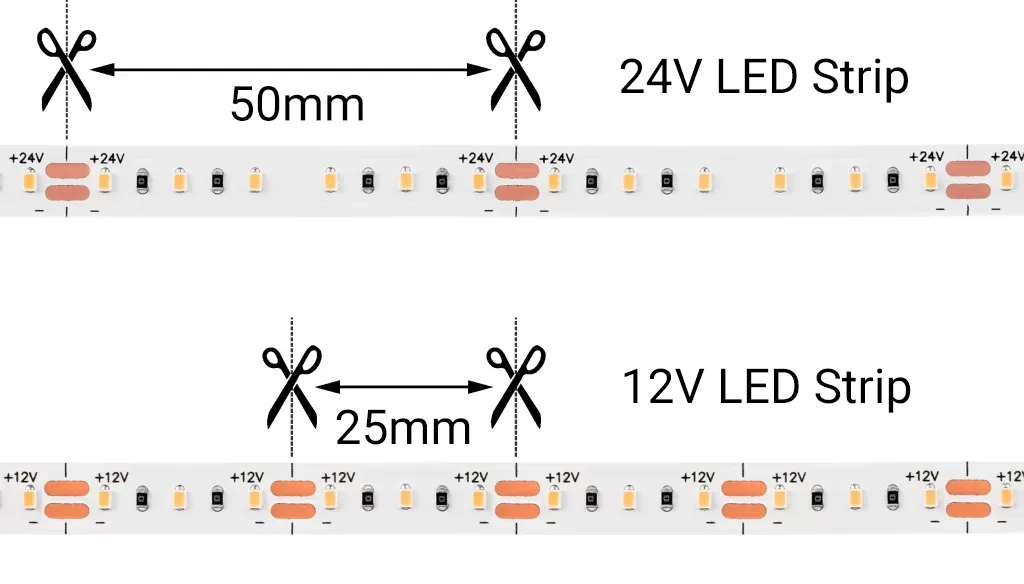
12V vs 24V LED Tape Strip Lights – Which Is Better
In modern lighting design, LED strip lights—also known as LED tape lights or LED tape strip lights—have become a go-to choice for both decorative and functional illumination. Yet, behind their clean lines and flexible form lies one key decision that often determines the success of a project: choosing between 12V and 24V LED tape lights. While both options...
Advantages of 12V LED Strip Lights_Smaller Cut Lengths
12V vs. 24V LED Strip Lights: How to Choose?
In the continuous evolution of modern lighting technology, LED strips have become a popular choice for lighting all kinds of scenes due to their energy-saving, long life, and wide applicability. From home decoration to commercial displays, from automotive interior lighting to outdoor landscaping, LED strips have gradually taken over an important share...
Constant voltage vs. constant current_Which LED light Strip is the Most Suitable for Commercial projects
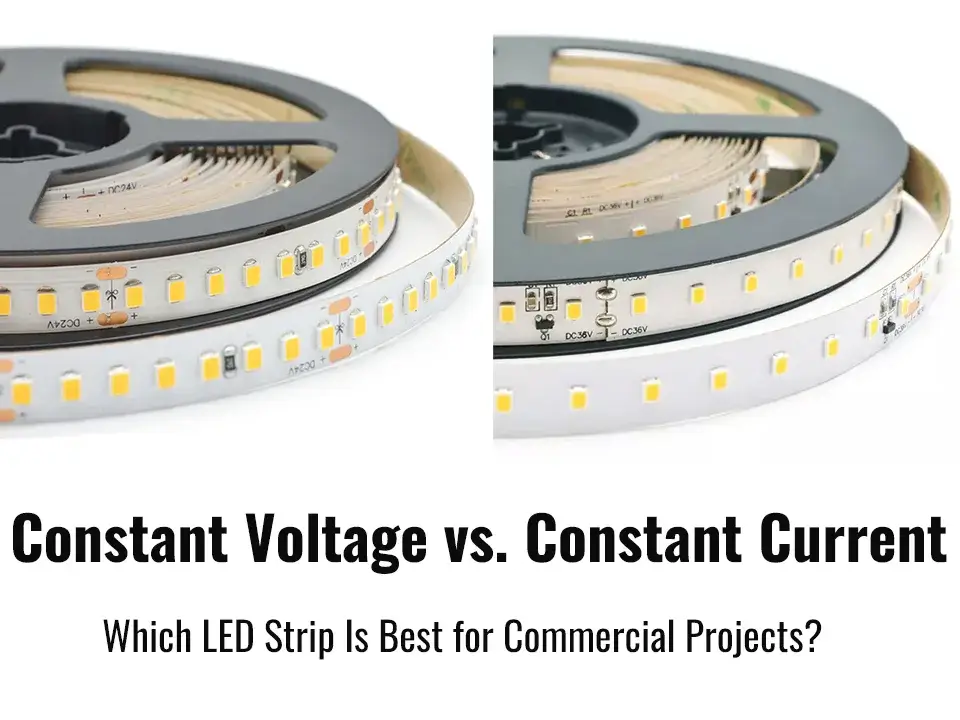
Constant Voltage vs. Constant Current: Which LED Strip Is Best for Commercial Projects?
For commercial lighting projects, if you prioritize long-distance stable power supply, consistent brightness, and longevity, then constant current LED strips are undoubtedly the superior choice. However, if the project budget is limited, the installation distance is short, and there are no stringent requirements for brightness uniformity, then constant...
mean well constant voltage LED power supply
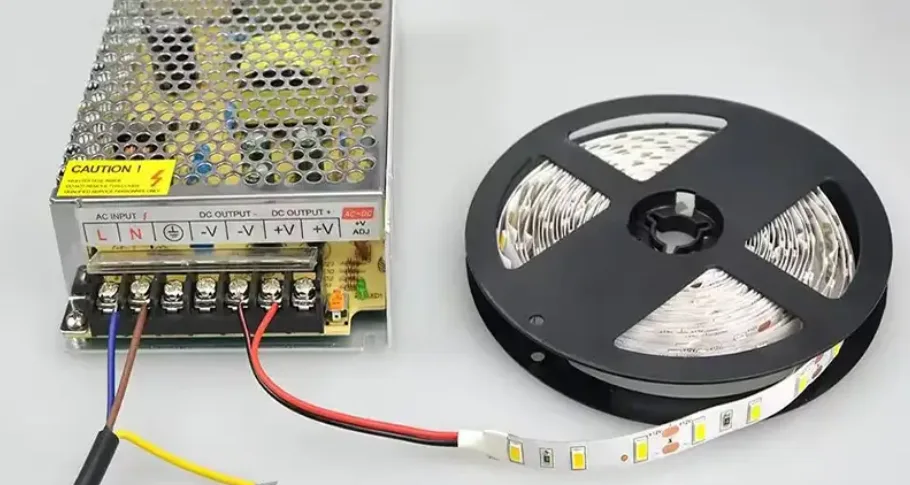
How to Choose and Buy the Right Power Supply for My LED Strip Lights
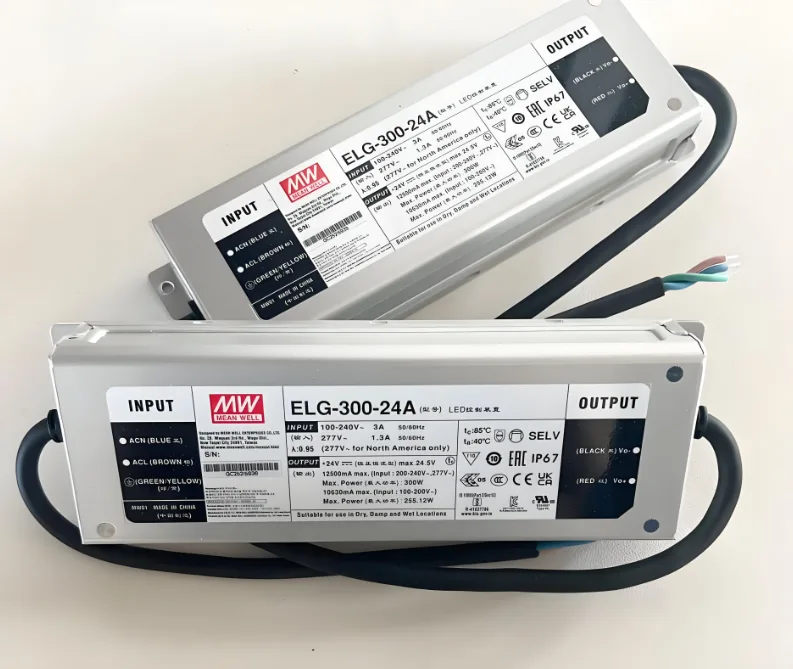
Why do LED strips use a constant voltage power supply? Most household and decorative LED strips (such as 12V/24V/5V) are driven by constant voltage power because of their simple installation, low cost, and easy-to-match controllers (such as RGB dimming). Recently, the LED strip light “net red player” in the home improvement industry, from...
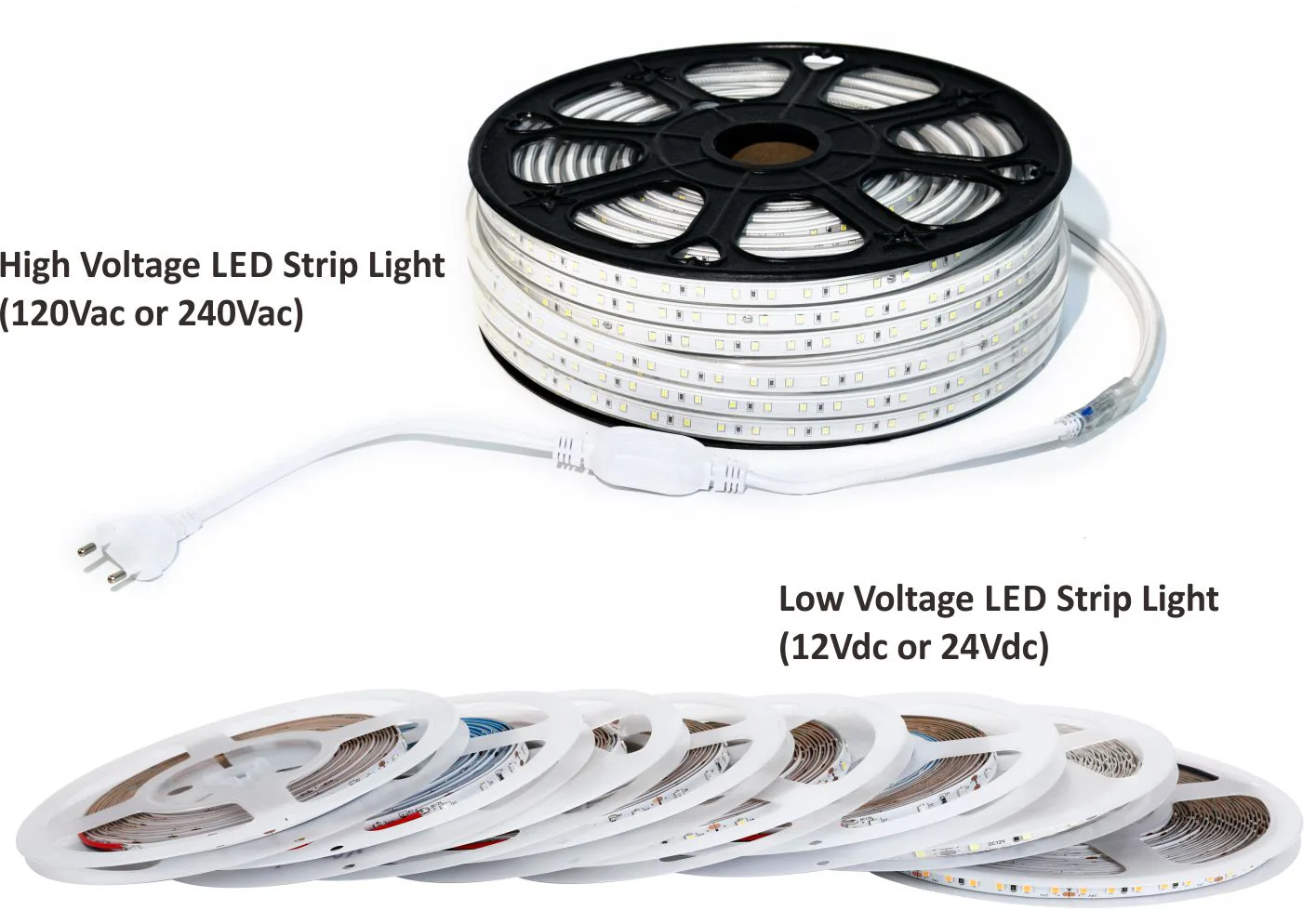
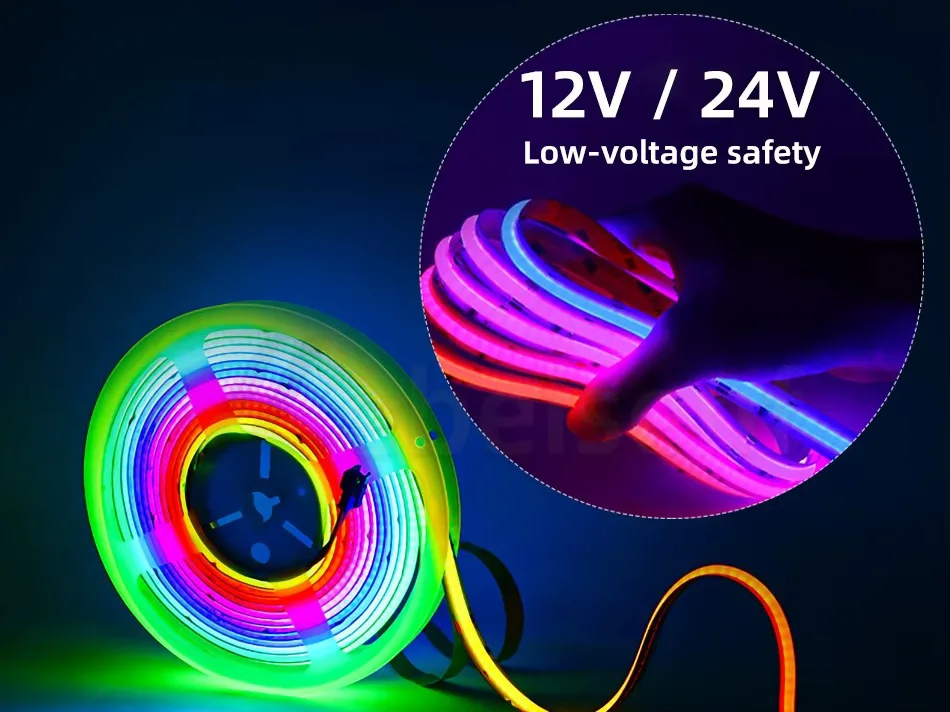
Low-Voltage-VS-High-Voltage-LED-Strip-Light
How to Choose Between Low Voltage and High Voltage LED Strip Lights?
LED strips have gained immense popularity due to their versatility. When embarking on a lighting project, one of the crucial decisions is whether to opt for high or low voltage LED strips. This choice can significantly impact factors such as installation complexity, energy efficiency, and overall project cost. Understanding the key differences between...
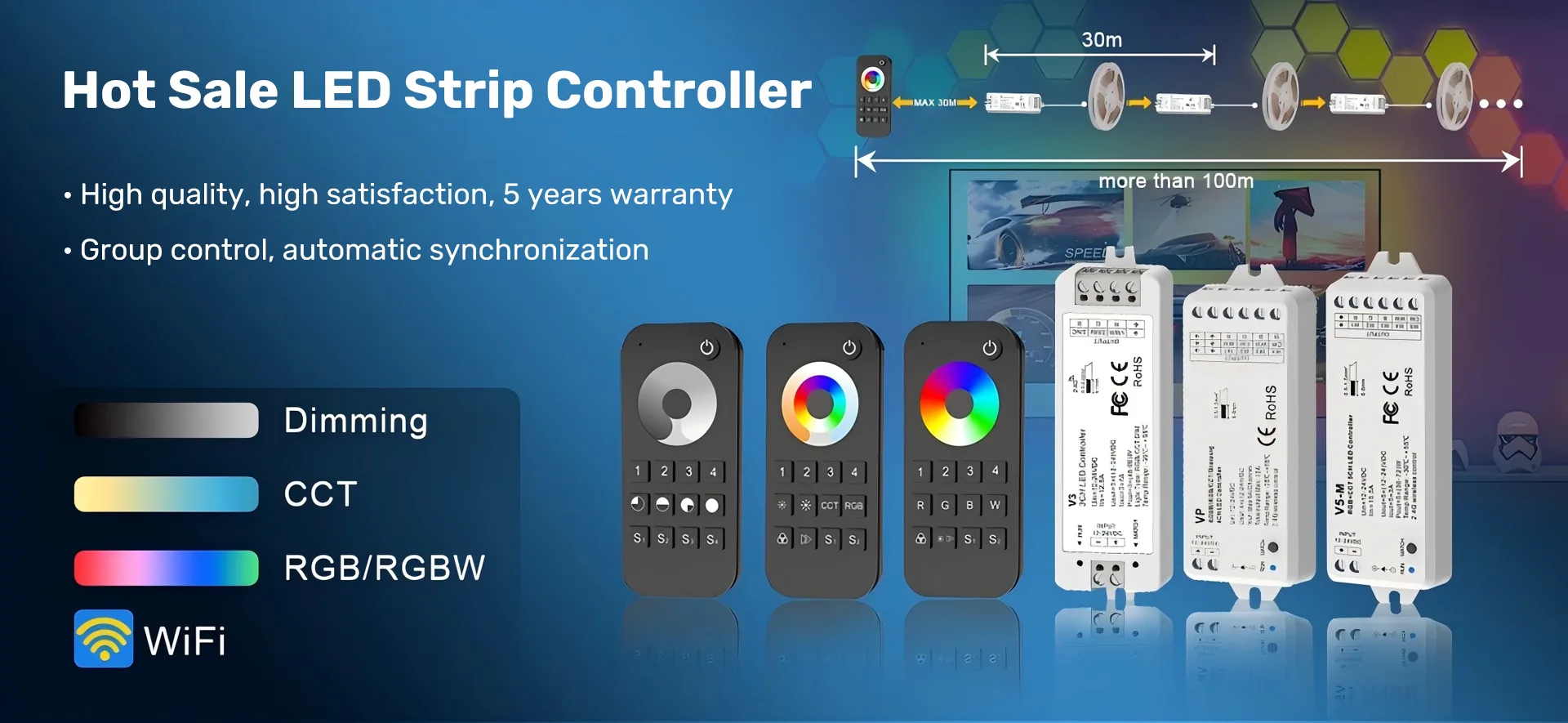
Hot sale LED strip controller
How to Choose LED Controller for LED Strip?
In a world rapidly shifting to smart, energy-efficient lighting, LED controllers have become a key component of lighting systems. With the led controller, we can control various LED strip lighting parameters such as brightness, color, and color temperature. Automation can also be set up to optimize energy efficiency, visual comfort, convenience, safety,...
How to Choose LED Light Strip Voltage
How to Choose LED Light Strip Voltage?
In modern lighting design, LED light strips have become a popular choice for home, commercial, and project decoration due to their flexibility and energy efficiency. However, faced with the two voltage specifications of 12V and 24V, many consumers often find themselves confused: which one is more suitable for their needs? The voltage difference not...
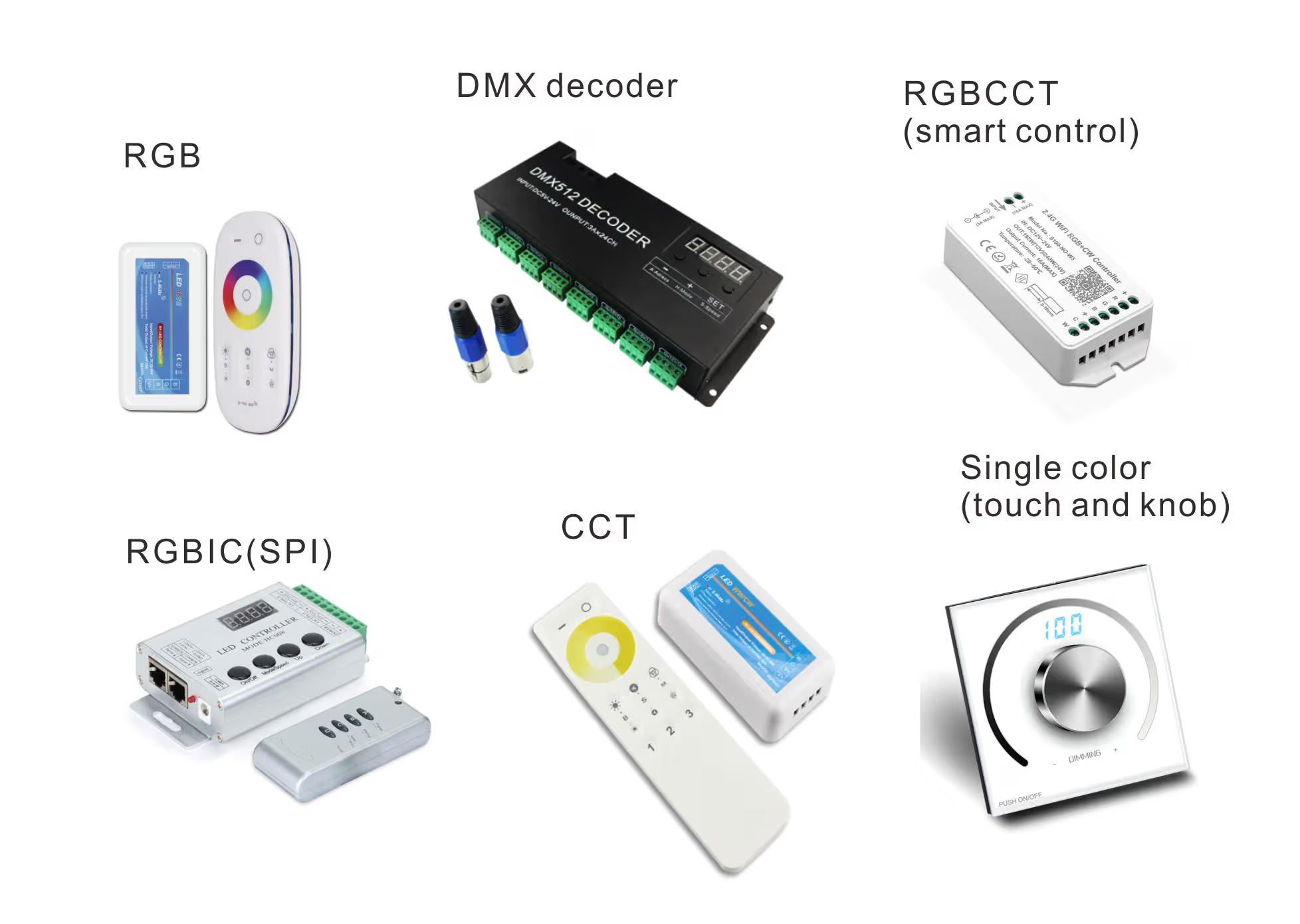
LED-strip-controller
How to choose LED strip controller
When selecting LED controller for strip, several factors should be took into consideration to ensure it matches strips and meets specified application requirements. Here are some key points: I. LED strip type and Specifications 1. Voltage and Current: First of all, be sure of operating voltage (such as 12V, 24V, etc.) and current needs of your LED strip...
Types of power supply and LED strip connection installation_External installation
How to Choose the Right Power Supply for LED Strip Lights?
When installing led strip or buying led strip, users often encounter the problem of how to buy power supply, to correctly choose the matching power supply, you must have a certain understanding of the basic knowledge of the power supply, such as several key parameters of the power supply: voltage, power, current, protection level, etc. In this way,...
High-Voltage-Driverless-LED-Strip-Light
Your Best Choice for 110V/220V LED Strip Light
In today’s colorful world, LED strip lights are widely used in various scenarios for their flexibility, high energy efficiency, and rich colors. In the family of LED strip lights, 110V/220V LED strip lights are becoming the new favorite in the market with their unique advantages. In this article, we will bring you an in-depth understanding of...

RGB, Dimming & Intelligent Lighting Control

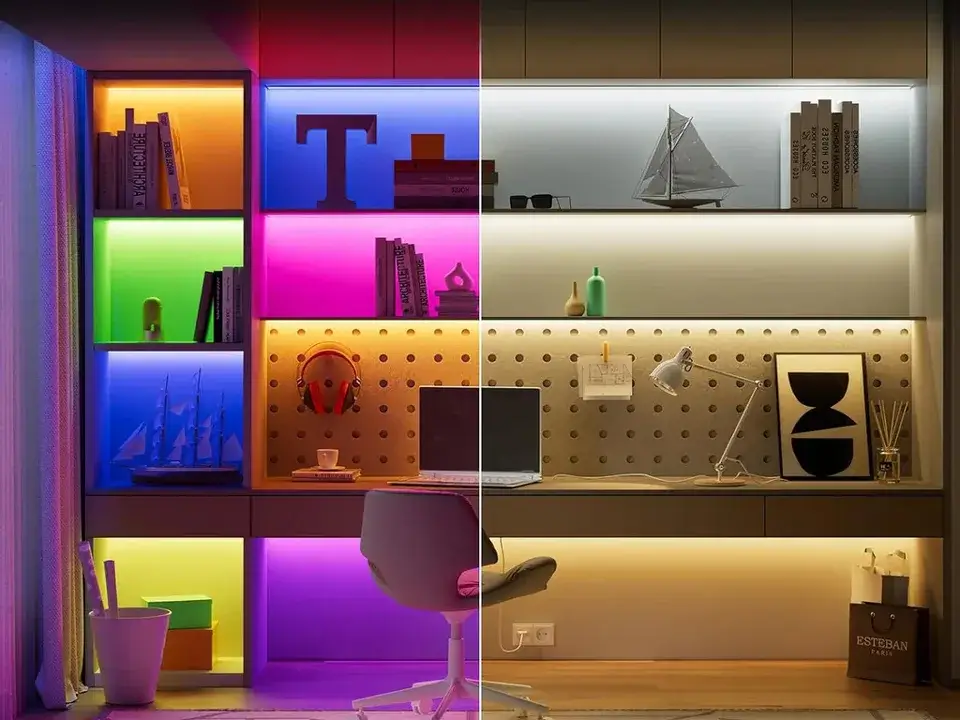
Modern LED strip systems are increasingly focused on intelligent lighting control, dynamic visual effects, synchronized RGB systems, tunable white environments, and immersive lighting experiences. Residential smart homes, commercial displays, architectural facades, gaming environments, entertainment systems, retail installations, and hospitality projects all demand different control technologies and lighting behaviors.

However, many lighting problems are caused by incompatible dimmers, unstable RGB controllers, incorrect signal architecture, insufficient data transmission, or misunderstanding the differences between analog RGB systems and digital pixel-controlled lighting. Choosing the correct RGB and dimming architecture improves lighting flexibility, visual quality, system scalability, and long-term operational stability.

Selecting the correct control platform is essential for stable operation, synchronization accuracy, visual consistency, and scalable lighting performance.

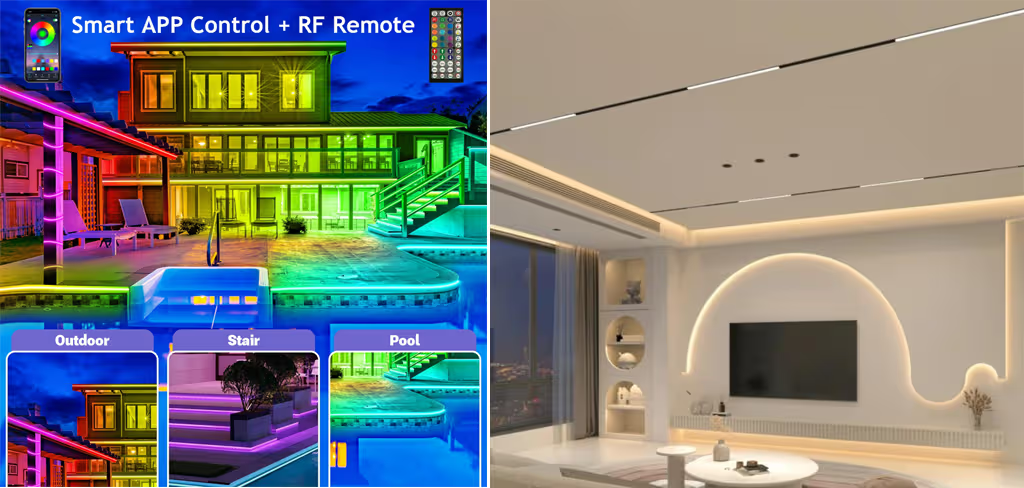
DMX LED Neon Flex for The architectural house
Best RGB LED Neon Strip for Facade Projects (2025 Update)
RGB LED Neon Strip is becoming the go-to solution for architects and lighting designers looking to create dynamic, colorful building facades. In this guide, we’ll explore why RGB Neon Flex is the best choice for outdoor architectural lighting. Why Use RGB LED Neon for Facade Lighting? In today’s architectural lighting design, creating striking visual...
RGB LED Strip
How to choose RGB led strip or IC RGB led strip?
What is RGB led strip? RGB stands for “Red, “Green” and “Blue”, each little LED in an RGB strip (alongside practically anything to do with lighting in screens) uses these primary colours as mixing them together can comprise any colour we can conceive. RGB lighting LED strip has to be a constant colour. Although you can...
RGBIC-Application
How to choose RGB strips
RGB strip is a hot-sale products in the market, it’s widely used in home lighting, signage lighting, facade lighting,etc. If you are about to buy one as ambient lighting in your house, and confused about how to choose from various of RGB strips, this article helps. Understanding RGB, RGBW , RGBWW, RGBCW, RGBCCT, RGBIC These acronyms refer to different...
Switching-between-colored-lighting-and-white-light-scenes-1
How to choose the Tunable White RGB LED Strip Lights?
What is the Tunable White RGB? RGB LED : RGB LED refers to an LED light bead composed of three LED chips: red, green, and blue. These three chips can emit red, green, and blue monochromatic light individually, and can also mix various colors including white light by controlling the magnitude and ratio of the current. It has a very high flexibility in...
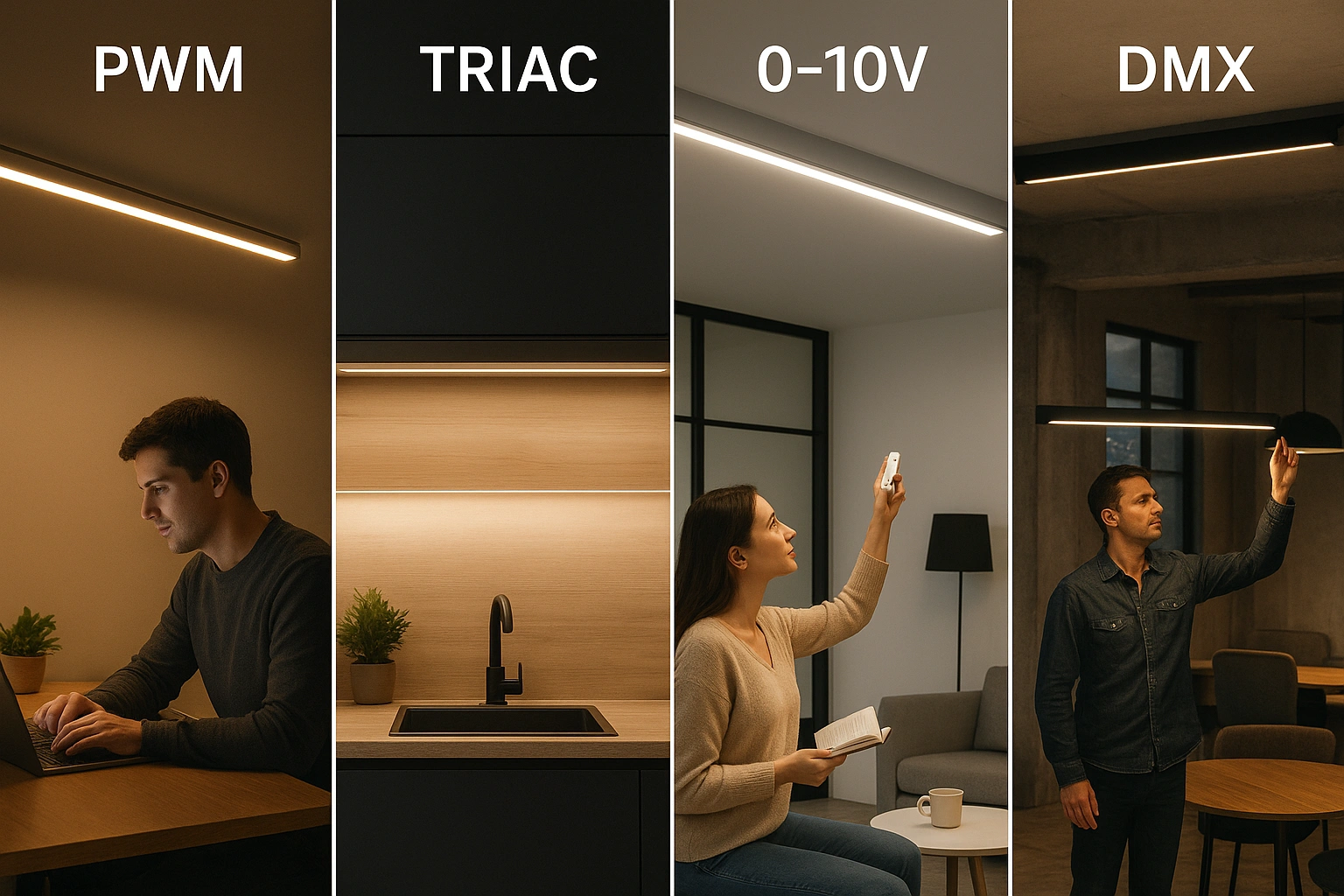
PWM TRIAC 0-10V DALI DMX
Top Dimmable LED Strip Light Options and How to Choose Them
In modern lighting projects, flexibility has become just as important as brightness or efficiency. Designers, engineers, and contractors are no longer satisfied with simple on/off control—they need lighting that adapts to different moods, functions, and energy goals. This is where dimmable LED strip lights play a crucial role. However, with multiple...
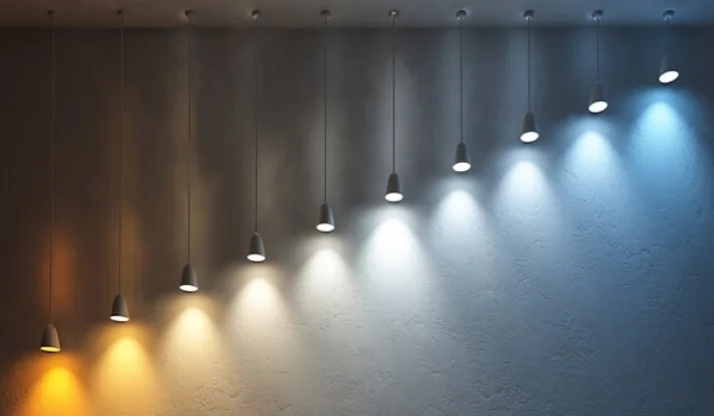
Warm-White-vs.-Soft-White-LED-Strip-Lights-Which-One-is-Best-for-You
Warm White vs. Soft White LED Strip Lights: Which One is Best for You?
Selecting the ideal lighting for each room in your home is crucial. Factors such as color temperature, brightness, wattage, and Kelvin ratings all contribute to the overall ambiance, but achieving the right balance is key. In different areas of your space, you may want to incorporate a range of color temperatures, which can enhance warmth and depth....
water flow LED strip
What Are the Best LED Lights for Creating Flowing Light Effects?
The best LED lights for creating flowing light effects are water flow LED strips because they are designed to produce a smooth, directional illusion of movement using controlled brightness changes along a white light strip. They do not rely on physical motion, color changes, or complex internal electronics. Instead, the effect is created externally...
cob rgbw led strip light 24v
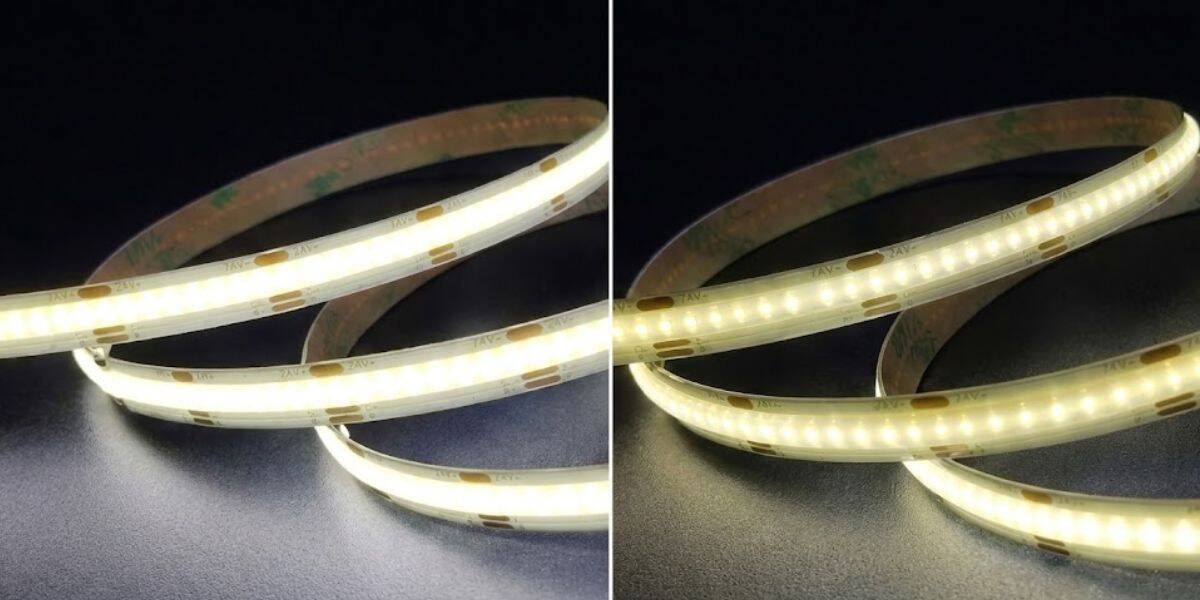
What are the best LED tape lights for dimming and color accuracy?
The best LED tape lights for dimming and color accuracy are those that maintain electrical stability, spectral consistency, and perceptual smoothness from full output down to near-zero light levels without visible flicker or color shift. In professional lighting terms, “best” does not mean brightest, cheapest, or most feature-rich. It means the LED...
outdoor strip light
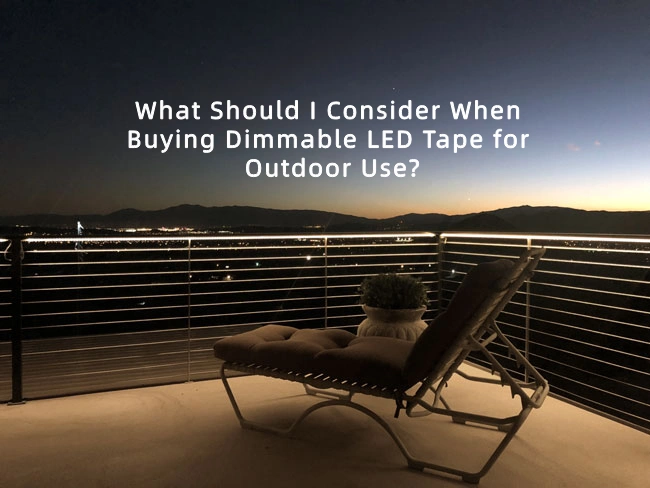
What Should I Consider When Buying Dimmable LED Tape for Outdoor Use?
Outdoor dimmable LED tape is widely used in architectural outlines, landscape lighting, and exterior decorative applications, where both lighting performance and environmental durability are essential. Compared with indoor installations, outdoor projects place higher demands on waterproof protection, dimming stability, and overall system compatibility....

Outdoor Installation, Waterproofing & Thermal Management

Environmental exposure is one of the biggest challenges affecting LED strip reliability and long-term performance. Outdoor lighting systems must withstand humidity, rain, UV radiation, temperature fluctuation, dust, thermal expansion, vibration, corrosion, and prolonged operating heat.

At the same time, installation structure directly affects waterproof reliability, heat dissipation, optical diffusion, adhesive stability, and maintenance accessibility. Many LED strip failures occur not because of LED quality alone, but because of poor waterproof structure, inadequate thermal management, weak installation materials, incompatible diffuser systems, or incorrect accessory selection.

Professional waterproofing and thermal management improve reliability, appearance, maintenance efficiency, and long-term operating performance. Professional installation planning is critical for achieving stable performance and long operating lifespan in both indoor and outdoor lighting systems.

6 Steps to Choose Outdoor Waterproof LED Strip Lights
Outdoor waterproof LED strip lights are ideal for creating stunning outdoor spaces. That’s because outdoor waterproof LED strip lights provide bright illumination and plenty of customizability without consuming a lot of energy. But when you’re looking for waterproof LED strip lights that can be used outdoors again, there’s more to...
best-aluminum-profiles-led-strip-lights-diffuser
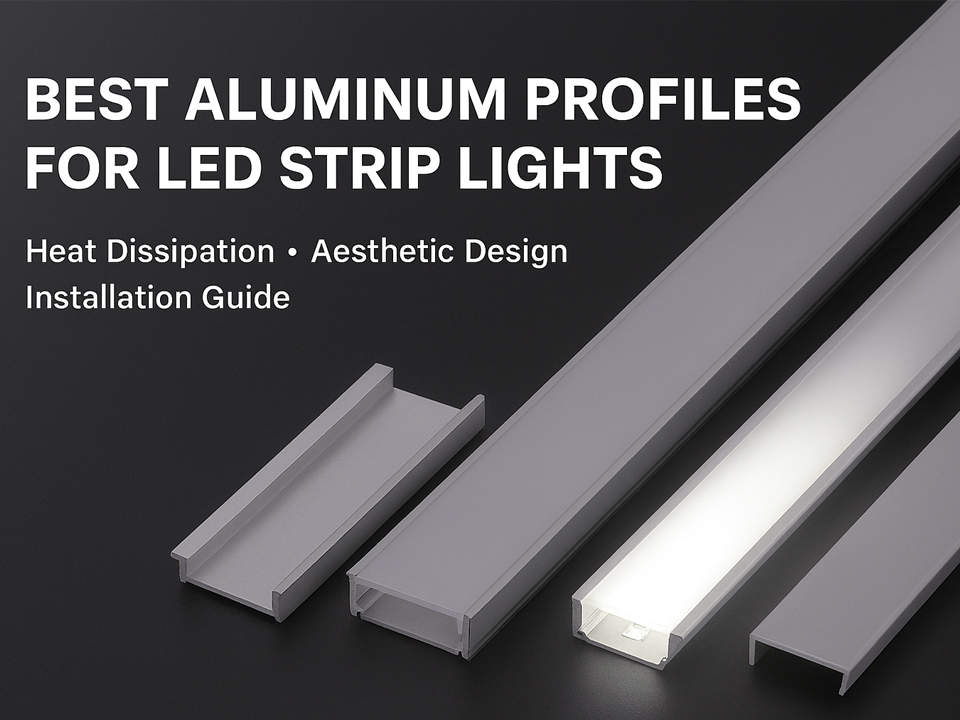
Best Aluminum Profiles for LED Strip Lights: Heat Dissipation and Aesthetic Guide
In LED strip lighting projects, the choice of an aluminum profile influences not only installation convenience but also thermal performance, light quality, and service life. For example, 6063-T5 aluminum—commonly used in LED profiles—has a thermal conductivity of around 201 W/(m·K), more than 1,000× higher than most plastics, allowing it to quickly...
Choose-a-suitable-diffuser-according-to-the-lighting-effect-you-want
How to choose a best LED Diffuser channel?
There are many choices for LED diffuser channels, also known as LED aluminum profiles or light strip diffusers. Let’s explore how to choose the right one. Using an LED diffuser channel enhances the aesthetic appeal of lighting and gives it a polished look. It also improves light diffusion for LED strip lights. Generally, LED Diffuser channel includes...
Various LED aluminum profiles and LED strip lights displayed together, including U-shape, V-shape, corner channels with and without diffusers
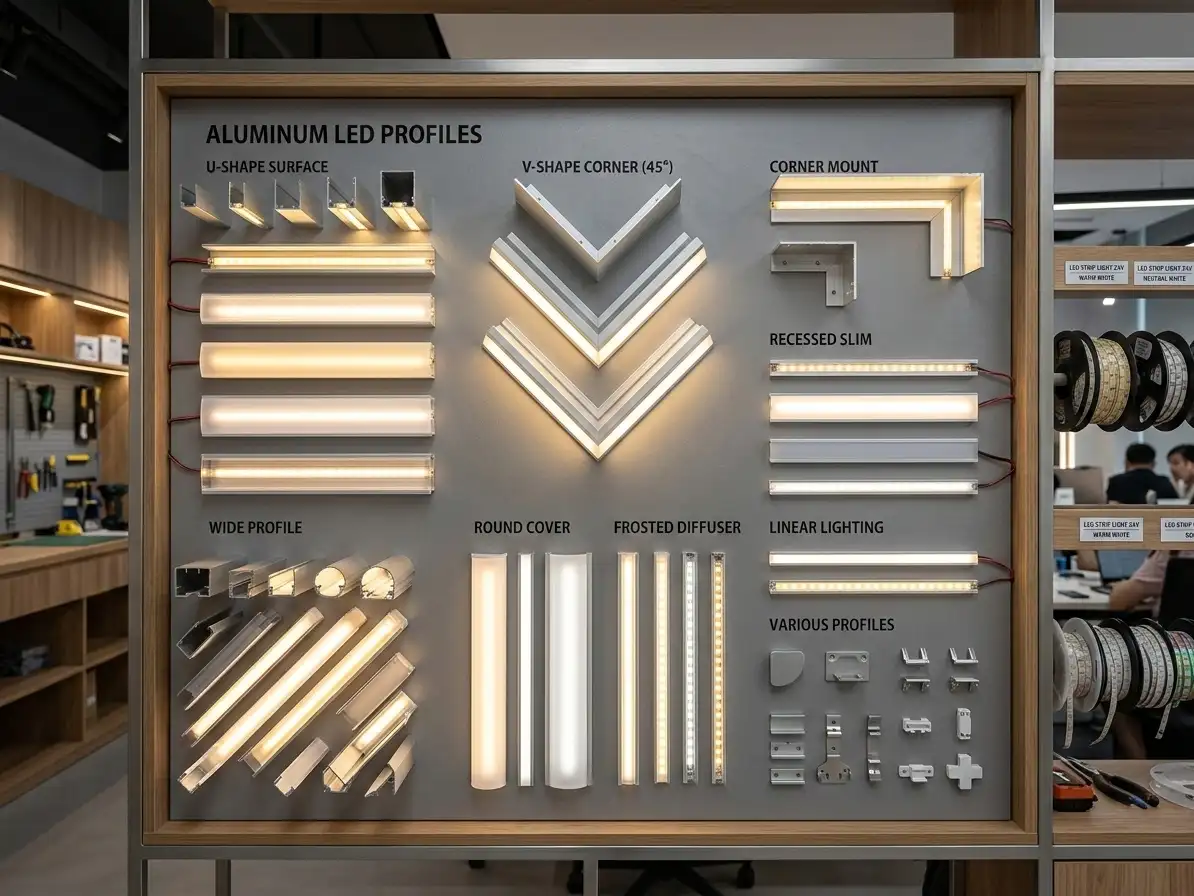
How to Choose the Right LED Profile for Different LED Strips
Choosing the right LED aluminum profile is essential for maximizing the performance, lifespan, and appearance of LED strip lighting. The correct profile depends on strip width, wattage, installation method, and lighting effect. Factors such as heat dissipation, diffuser type, and mounting location all influence which LED channel or extrusion will work...
Connectors-for-Different-Width-Strips
How to Choose the Right LED Strip Connector
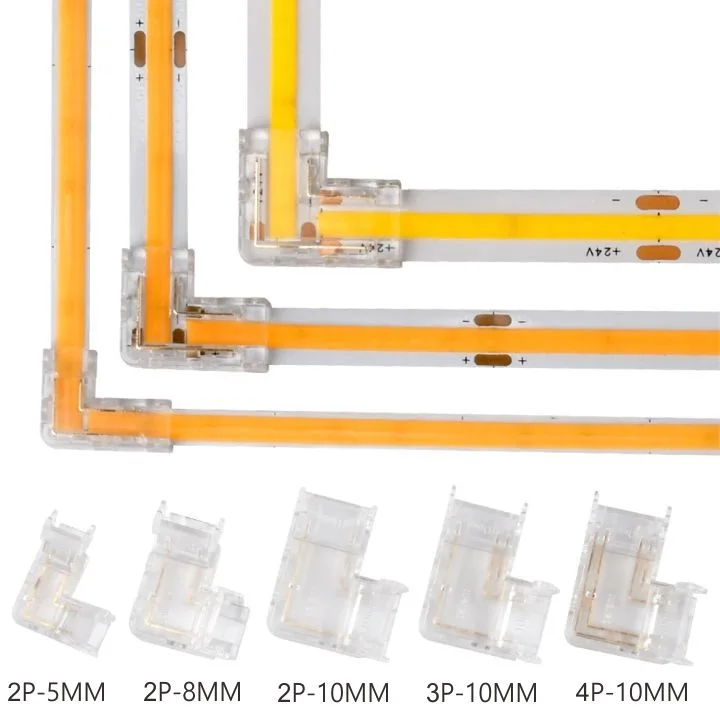
Connectors are important components to LED strip installations, proper connectors ensure secure connections and reliable performance for application like cabinet lighting , signage lighting, linear lighting. it’s crucial to choose the right connectors for LED strip, how to choose appropriate connectors, check it out here. What are LED Strip Connectors...
How to Choose the Right LED Strip Light Width
How to Choose the Right LED Strip Light Width?
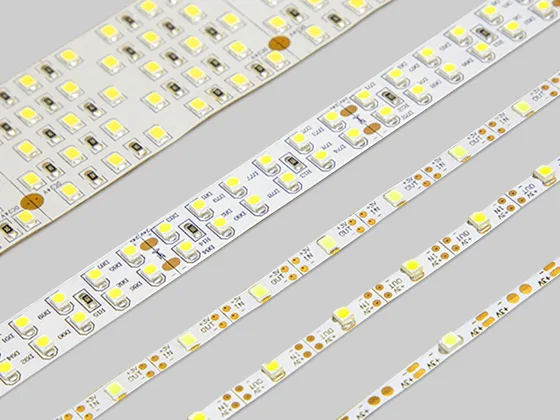
LED strip lights come in a variety of widths, lengths, and LED chip types, making them versatile for both residential and commercial lighting applications. When it comes to lighting projects, choosing the right width for LED strip lights can be a real headache. Have you ever felt overwhelmed by the task of selecting the appropriate LED strip light size?...
waterproof strip light for outdoor projects
How to Choose Waterproof LED Strip Lights for Outdoor Projects
When it comes to enhancing outdoor spaces, the right lighting can make all the difference. Whether you’re updating a patio, highlighting a pathway, or simply adding atmosphere to your backyard, making smart choices from the start ensures long-term satisfaction. But with so many options on the market, selecting the right product can feel overwhelming....
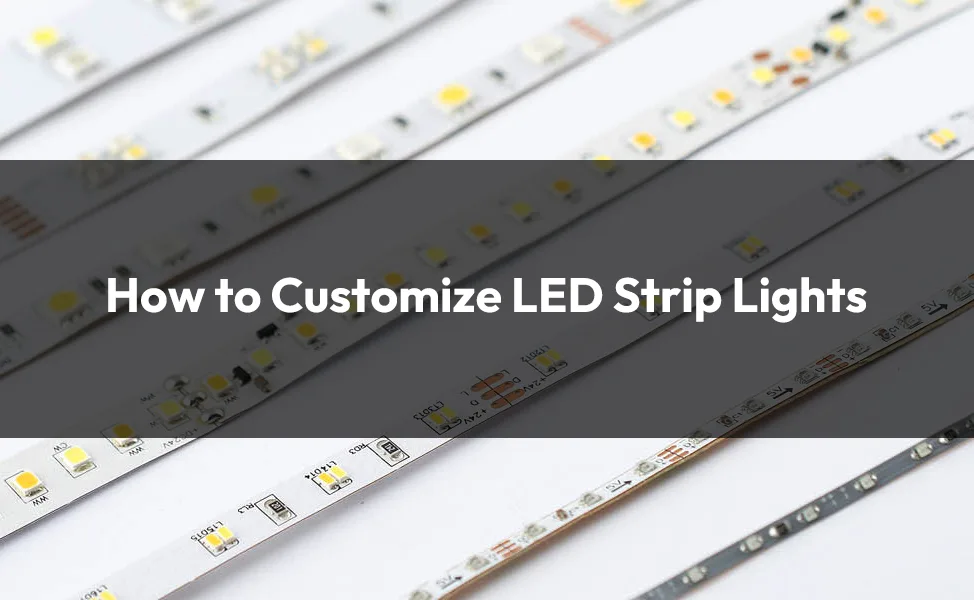
How to Customize LED Strip Lights
LED strip lights are the modern and more sophisticated form of light strips, and they come in quite various types and exceptions. And customizable LED strip lights are a fantastic way for you to create your brand and expand your brand awareness. If you are looking for a customizable LED strip light manufacturer in China, then you have come to the right...
Led-Strip1
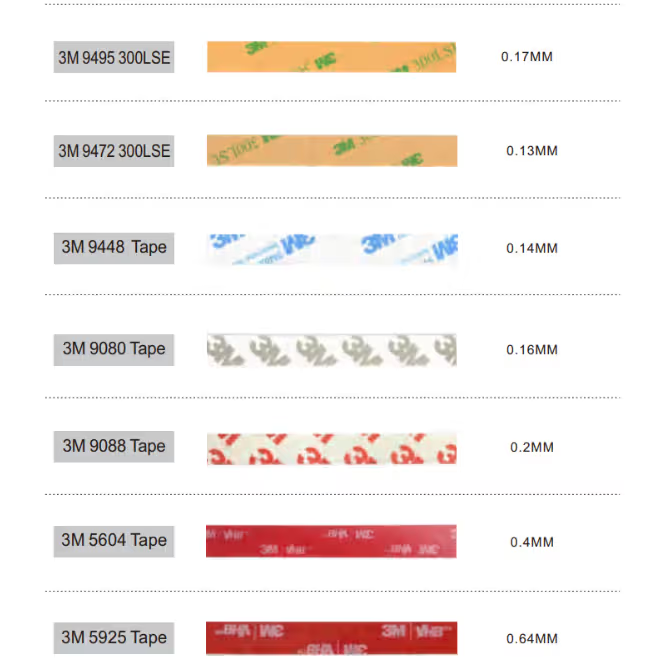
How to judge and choose the quality of led light strip adhesive tape?
In our production and sales of LED strip products for more than 10 years, we found that most customers pay more attention to the photoelectric parameters of the LED light belt itself and ignore the back glue, in fact, the light belt back glue should also receive the same degree of attention. Different applications, environments and surfaces should choose...
LED strip channel with clear, milky, and black diffuser covers showing different lighting effects
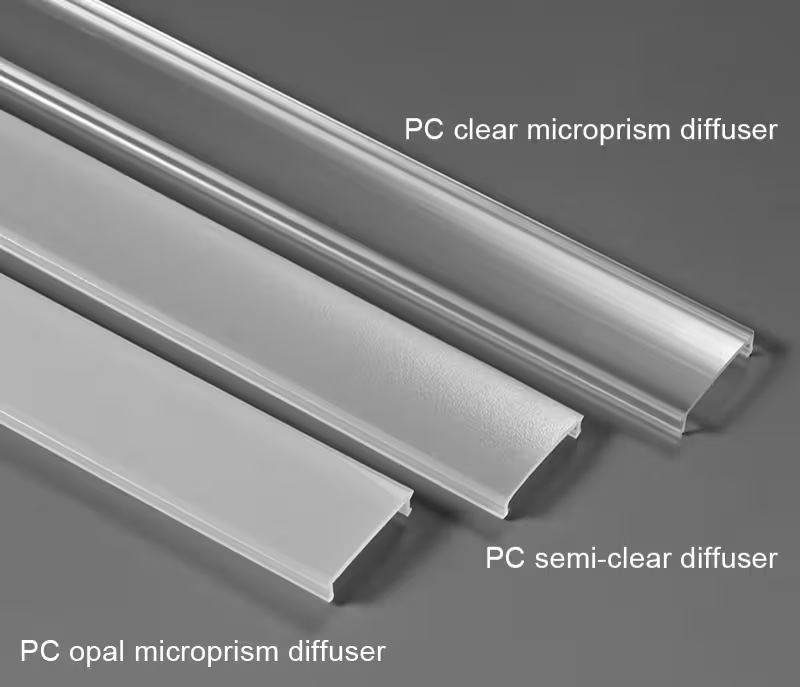
LED Channel Diffusers Matter: Clear vs Milky vs Black Covers
LED strip lighting has become a standard solution for architectural, commercial, and residential projects. However, even with high-quality LED strips and aluminum channels, many installations still suffer from visible light spots, glare, or uneven illumination. In most cases, the root cause is not the LED strip itself, but the diffuser cover. An LED...
The-Ultimate-Guide-to-Choosing-Outdoor-LED-Strip-Lights
The Ultimate Guide to Choosing Outdoor LED Strip Lights
Choosing the Correct Outdoor LED Strip Light LED lights can be categorized into three primary types based on their environmental suitability: non-weatherproof, weatherproof, and waterproof. Non-weatherproof LED lights are designed exclusively for indoor use. In contrast, weatherproof LED lights are suitable for outdoor applications, while waterproof...
large-scale projects
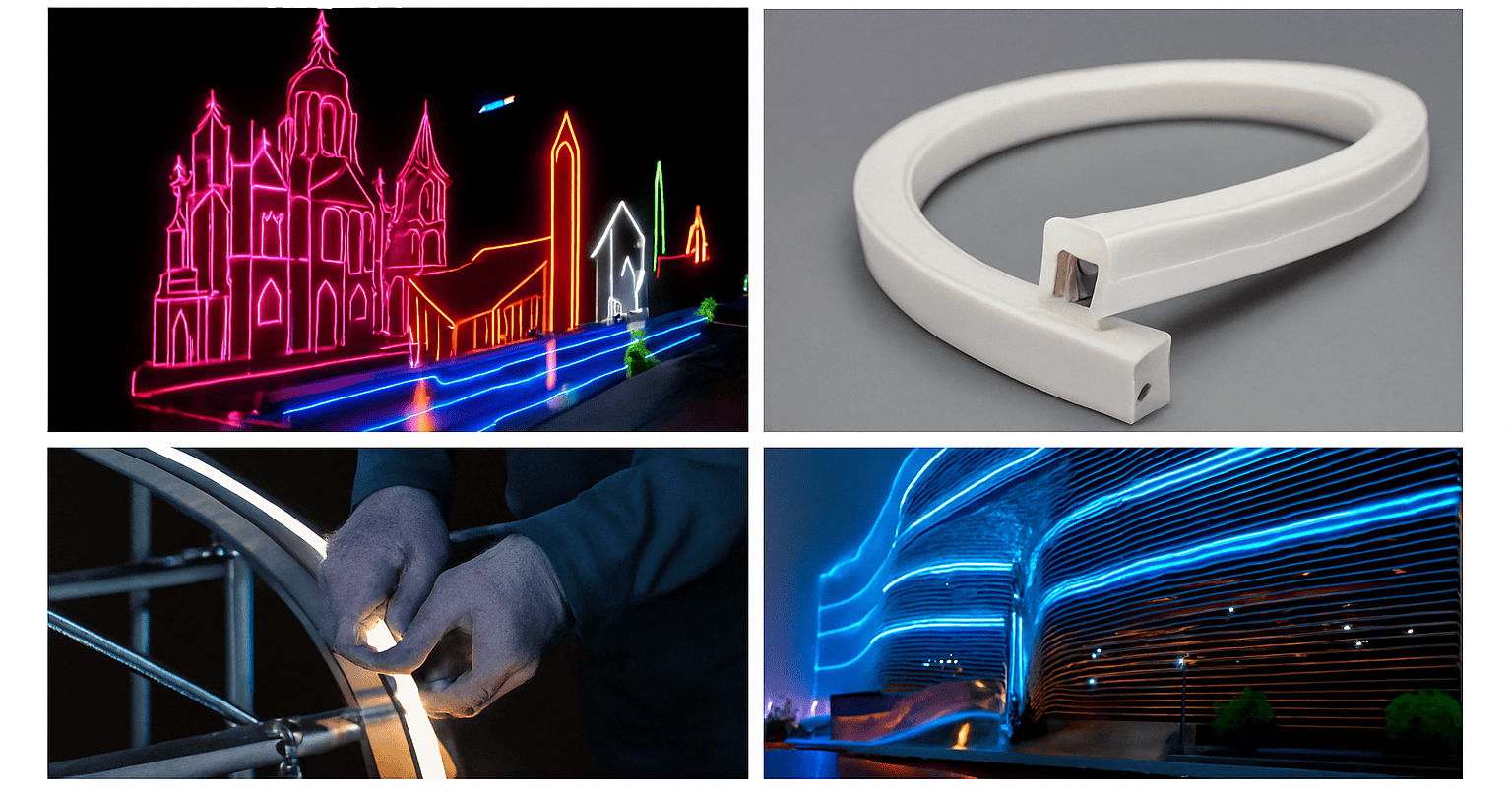
What to Consider When Buying LED Neon Flex for Large Projects
When it comes to large-scale projects, the decision to choose the right LED Neon Flex lighting is one of the most critical and impactful choices you’ll make. Whether you’re tasked with illuminating a high-traffic city billboard, creating a stunning lighting display for an event venue, or designing the lighting for a sprawling shopping mall...
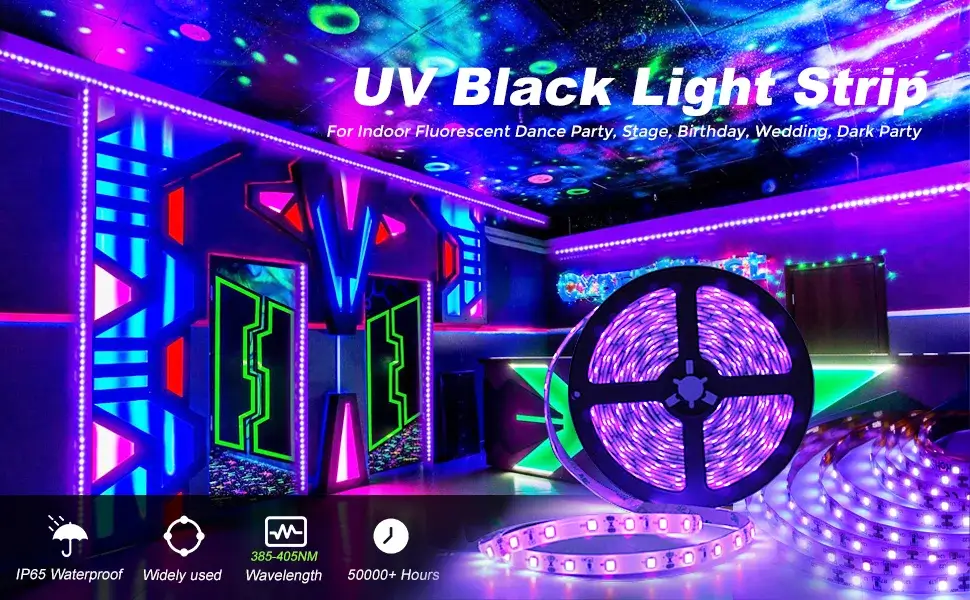
What to Look for When Buying a UV Blacklight LED Strip
When you’re ready to throw an awesome glow party, identify minerals, or create a unique ambiance, a UV blacklight LED strip is an excellent choice. However, products on the market vary widely in quality, ranging from tens to hundreds of dollars, with equally varied results. Buying the wrong one might leave you with only a faint purple glow, while...

Application-Specific LED Strip Buying Guides

Every lighting project has different performance priorities. Retail environments prioritize color accuracy and visual merchandising. Architectural facades require synchronized lighting control and environmental durability. Residential ambient lighting focuses on visual comfort and dimming smoothness. Entertainment systems demand dynamic RGB effects and intelligent control integration.

Application-based planning helps prevent overspecification, incompatible installations, unnecessary costs, and lighting systems that fail to meet real environmental or operational requirements. So, selecting LED strip systems based on real application requirements improves installation efficiency, visual quality, energy performance, reliability, maintenance accessibility, and long-term operational stability.

This section organizes LED strip recommendations according to real-world lighting applications to simplify the selection process and help buyers identify the most suitable solutions for their specific environments.

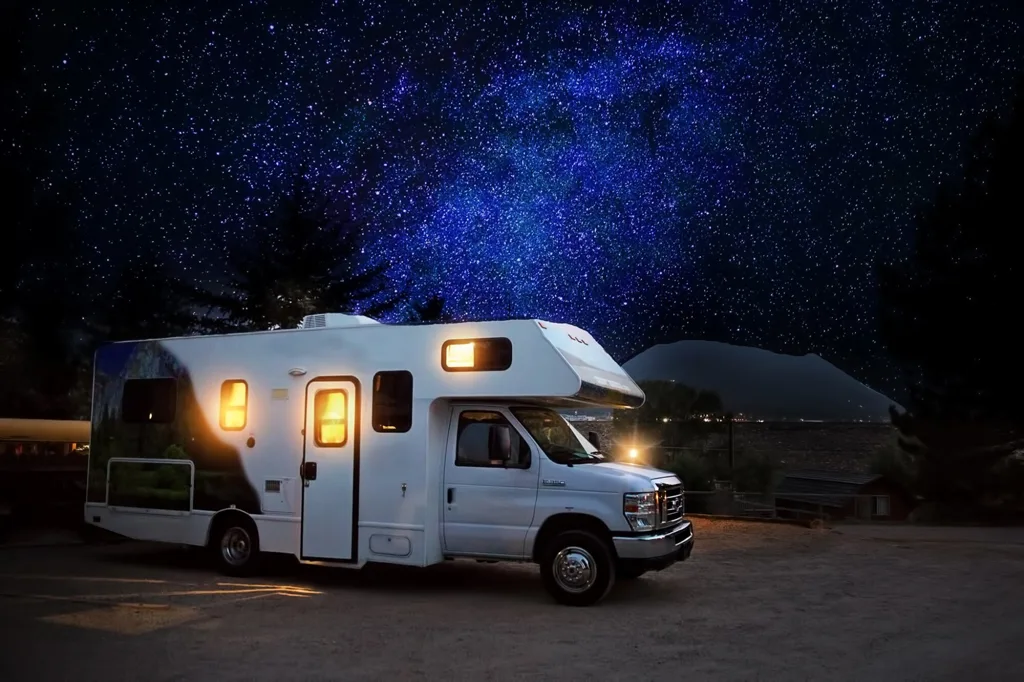
Why Is Lighting Essential for Van Conversions
Choosing the Best 12V Camper Lights Fixture
Why Is Lighting Essential for Van Conversions? More people are embracing the nomadic lifestyle, traveling in campers, RVs, vans, or converted buses. While living in a small camper may seem difficult to some, others spend years transforming old vehicles into cozy homes or road trip getaways. A camper van may be small, but with the right design, it can...
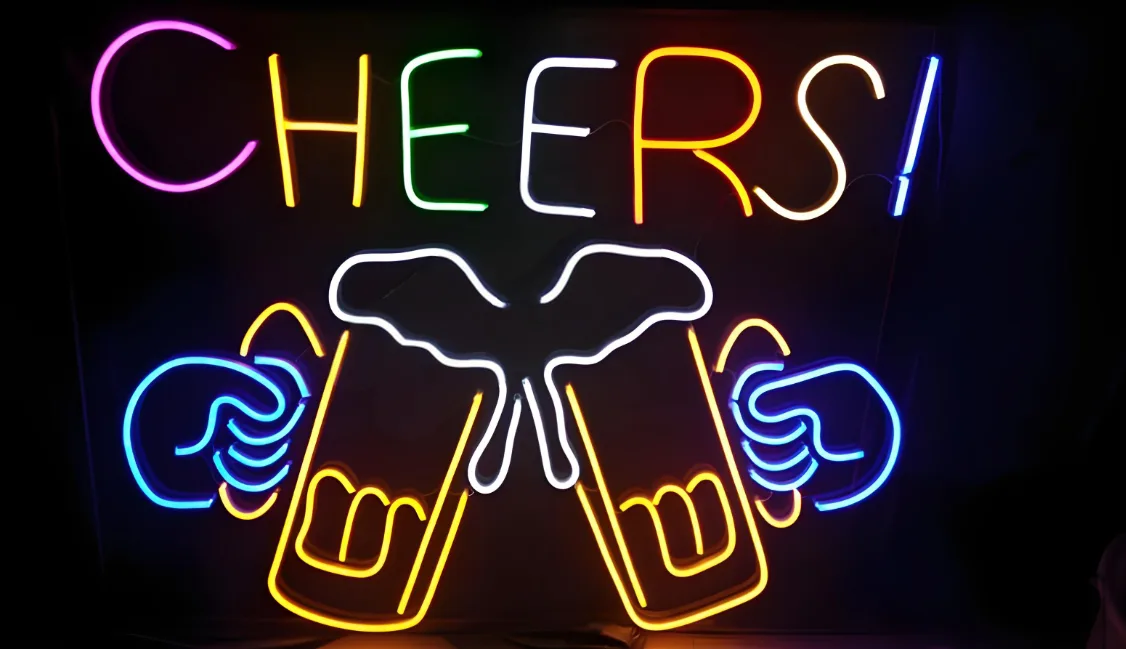
What is a neon sign
How to Buy Custom Neon Signs and Choose Materials?
Neon signs have become very popular in the last few years and are found in every corner of business. Shopping malls, hotels, and bars—all kinds of storefronts can be found everywhere. Neon signs are often used to create various shapes and words, and when they are used for neon lettering, they come alive with vibrant colors and come in a variety of styles....
high-cri-led-strip-food-display
How to Choose High CRI LED Strip Lights for Meat Displays
Introduction – Why Lighting Matters in Meat Displays In butcher shops and supermarket refrigerated shelves, lighting plays a critical role in driving sales of fresh meat. It’s not just about brightness—it’s about how accurately the meat’s color is rendered. The right lighting can make beef look juicy and fresh, while poor lighting may cause even high-quality...
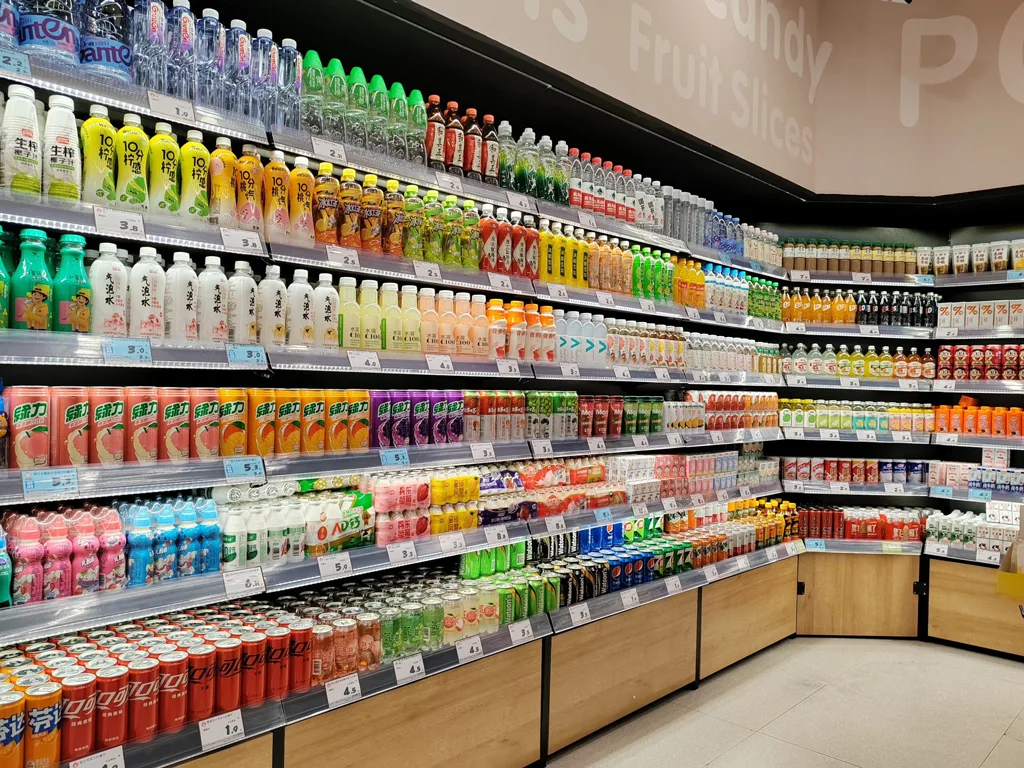
LED Shelf Lighting
How to Choose the Perfect LED Shelf Lighting for Your Space
Looking for a modern, energy-efficient way to light up your shelves? LED shelf lights are the perfect solution! Offering a wide range of customization options and easy installation, these lights will not only brighten your space but also help reduce energy costs. Let’s explore how LED shelf lighting can transform your setup and create the...
Why-Shall-You-Retrofit-Mirror-LED-Strip-Lights
How to Choose the Right LED Strip Lights for Mirrors: A Guide for Manufacturers and Project Contractors
In today’s commercial and hospitality environments, mirrors are no longer just reflective surfaces—they’re part of the visual experience. Whether in luxury hotel bathrooms, shopping mall restrooms, or high-end vanity installations, LED strip lighting for mirrors plays a crucial role in both functionality and aesthetics. For manufacturers and project...
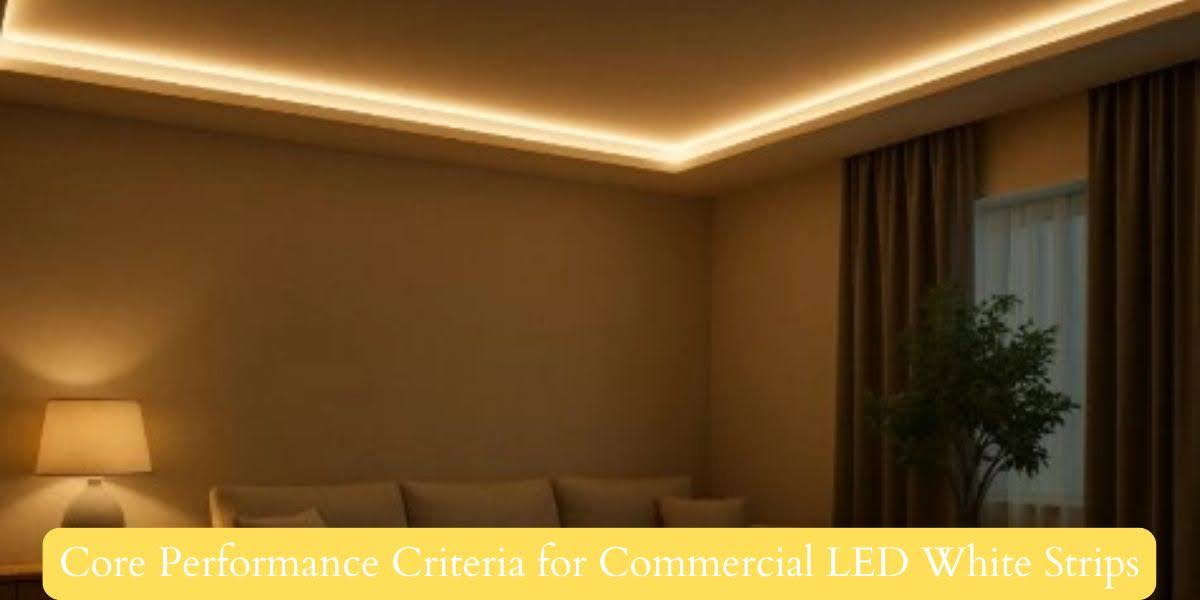
best cob led strip lights
What Are the Best LED White Strips for Commercial Lighting?
The best COB LED strip lights for commercial lighting are those that meet defined, measurable performance standards rather than aesthetic preferences or marketing claims. In commercial environments, “best” means high luminous efficacy typically in the 110–160 lm/W range at system level, color rendering index (CRI) of at least 80 for general applications...
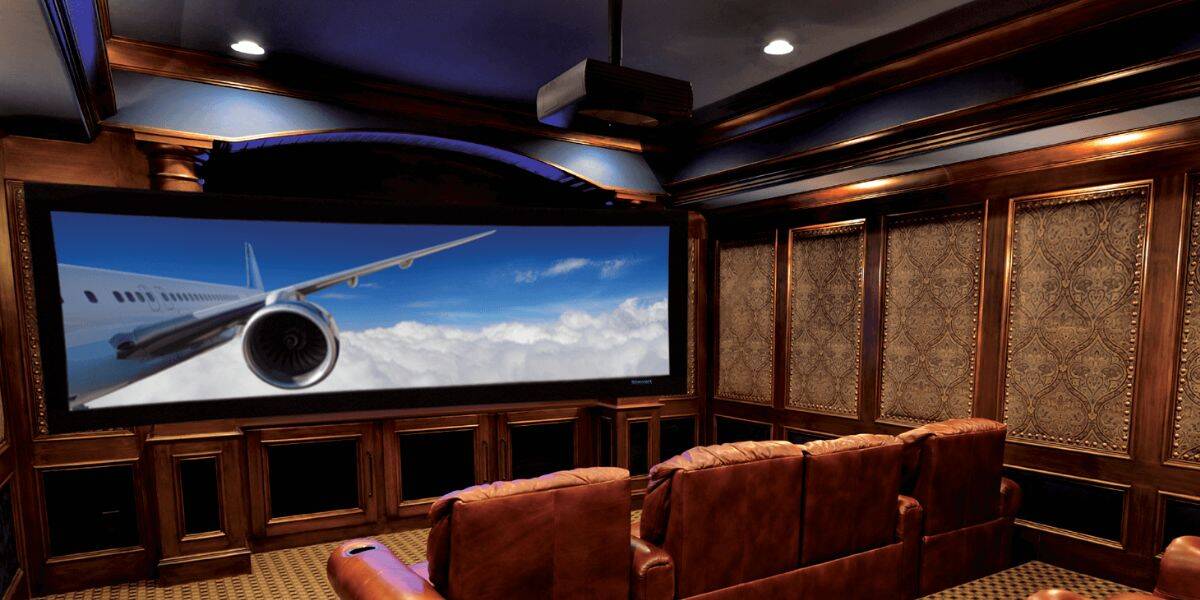
LED strips
Which Lighting Ideas Pair Best With Home Theater Ceilings: Recessed, LED Strips, and Dimmable Options?
The lighting ideas that pair most effectively with home theater ceilings are recessed lighting for functional visibility, LED strips for indirect ambient light, cove lighting for soft ceiling glow, and dimmable systems to adapt the room to different viewing moments. Together, these approaches help manage glare, preserve screen focus, and create an immersive...

Why LED Strip Projects Fail

Many LED strip lighting problems are not caused by the LEDs themselves, but by incorrect product selection, poor electrical planning, incompatible components, or misunderstanding real installation requirements. A large percentage of lighting failures in residential, commercial, retail, signage, and architectural projects can be traced back to purchasing decisions made before installation even begins.

Choosing LED strip lights based only on price, advertised brightness, or simplified marketing specifications often leads to uneven illumination, voltage drop, color inconsistency, flickering, waterproof failures, adhesive peeling, overheating, or shortened operating lifespan.

Different projects require completely different LED strip systems. A retail display, hotel corridor, outdoor facade, gaming setup, commercial shelf, or architectural cove lighting installation may all require different voltages, CRI levels, waterproof ratings, dimming systems, PCB structures, aluminum profiles, and thermal management solutions.

This knowledge hub helps homeowners, contractors, lighting designers, distributors, sign makers, and OEM buyers choose LED strip lighting systems based on real project requirements, long-term reliability, installation conditions, and engineering considerations — not just marketing claims.

Why LED Strip Projects Fail_Choosing the Wrong Voltage

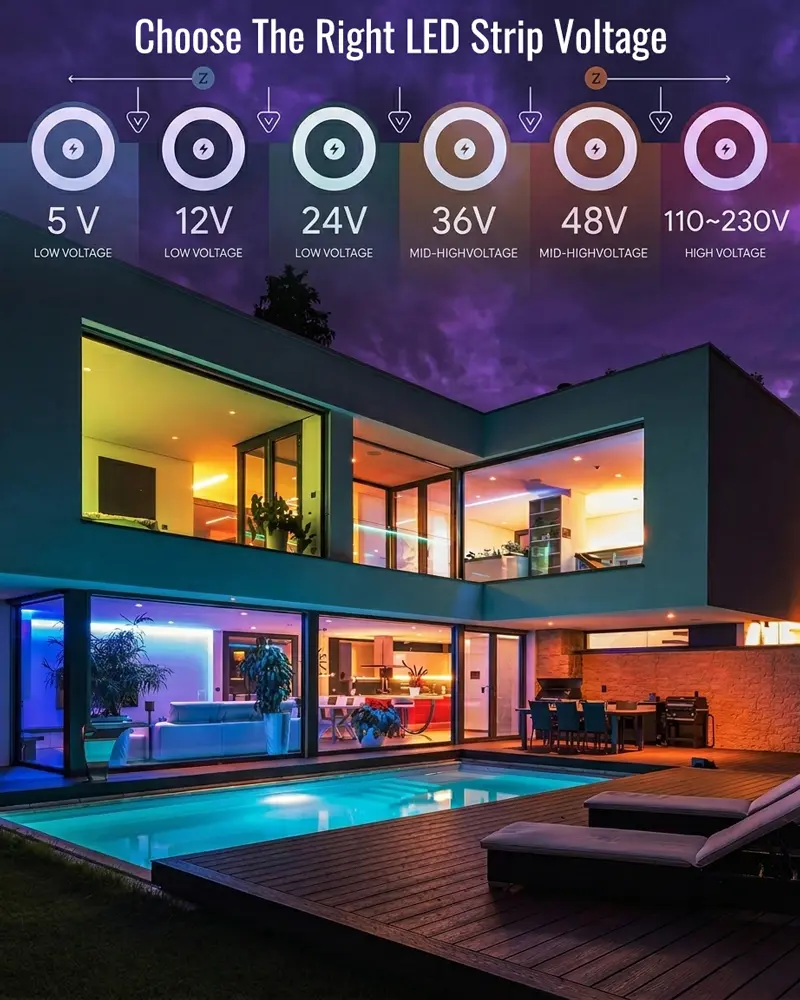
Voltage selection directly affects brightness consistency, maximum run length, wire thickness, power efficiency, and voltage drop performance.

Many users choose 12V LED strips for long installations without understanding that lower voltage systems experience higher current loads and more noticeable brightness reduction across extended runs.

For larger commercial, architectural, or long-run installations, 24V, 48V, or high-voltage LED strip systems are often more stable and efficient.

Common Problems:

  • Uneven brightness
  • Visible dimming at the end of the strip
  • Overheating wires
  • Excessive power injection requirements
  • Power instability
Why LED Strip Projects Fail_Ignoring CRI and Light Quality

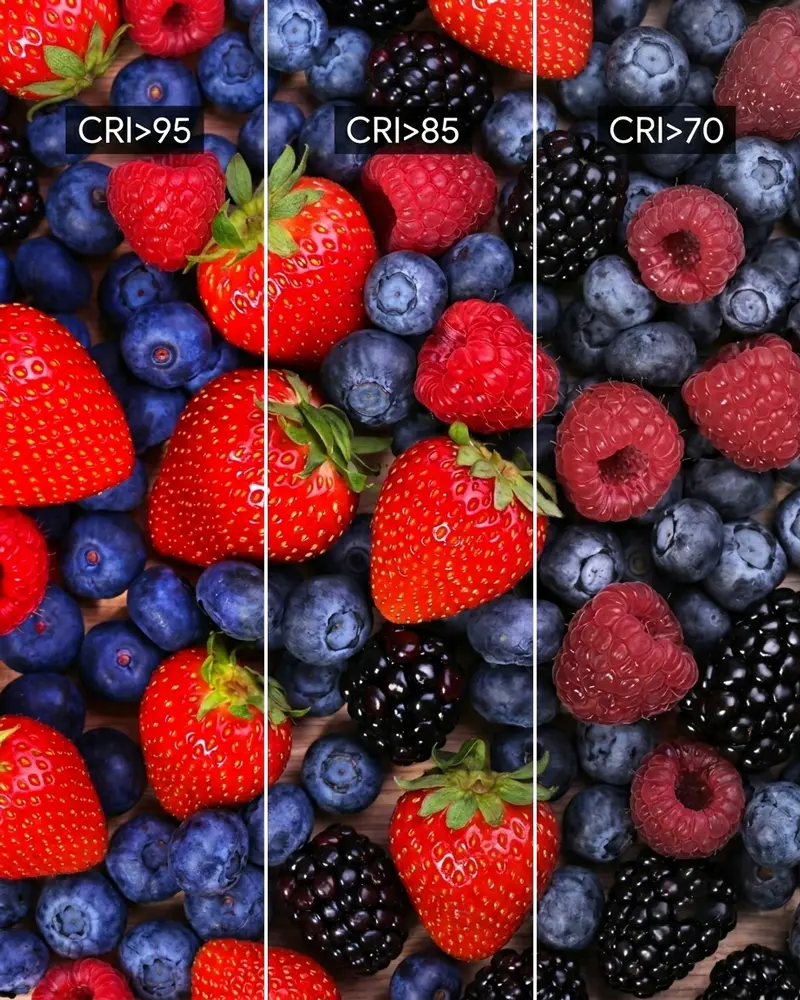
Brightness alone does not determine lighting quality. Many low-cost LED strips advertise high lumen output but use low-CRI LEDs that distort colors and reduce visual comfort.

Poor CRI performance is especially problematic in retail stores, restaurants, hotels, display shelving, salons, museums, meat displays, and architectural environments where accurate color rendering is critical.

For professional lighting applications, CRI90 or higher is typically recommended.

Common Problems:

  • Unnatural skin tones
  • Poor merchandise appearance
  • Washed-out colors
  • Low-end visual appearance
  • Inconsistent white tones
Why LED Strip Projects Fail_Underestimating Voltage Drop

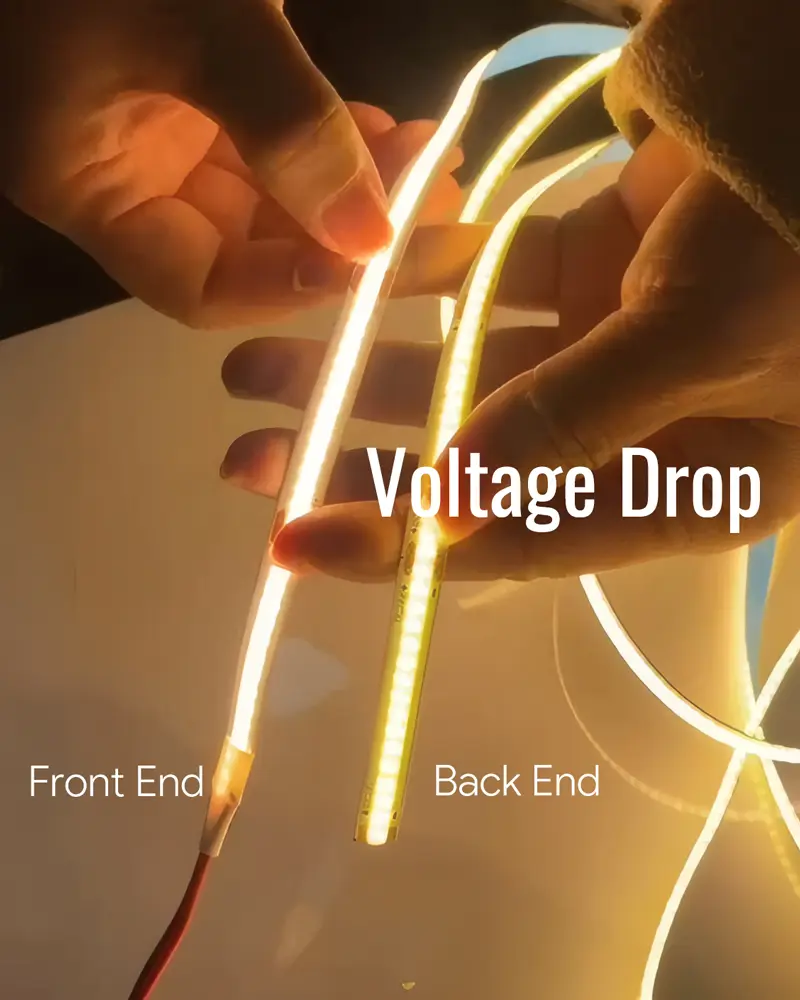
Voltage drop is one of the most common LED strip installation problems, especially in long-run applications.

As electricity travels through copper traces and wires, voltage gradually decreases, causing visible brightness loss and color shifting toward the end of the strip.

Low-quality PCB copper, insufficient wire gauge, excessive installation length, and poor electrical planning all increase voltage drop problems.

Commercial-grade LED strip systems often use thicker copper PCBs, shorter circuit segmentation, multiple power injection points, or higher voltage platforms to reduce these issues.

Common Problems:

  • Brightness fading
  • Color inconsistency
  • Pink or yellow color shifting
  • Reduced efficiency
  • Unstable lighting performance
Why LED Strip Projects Fail_Buying Low-Quality PCB Structures

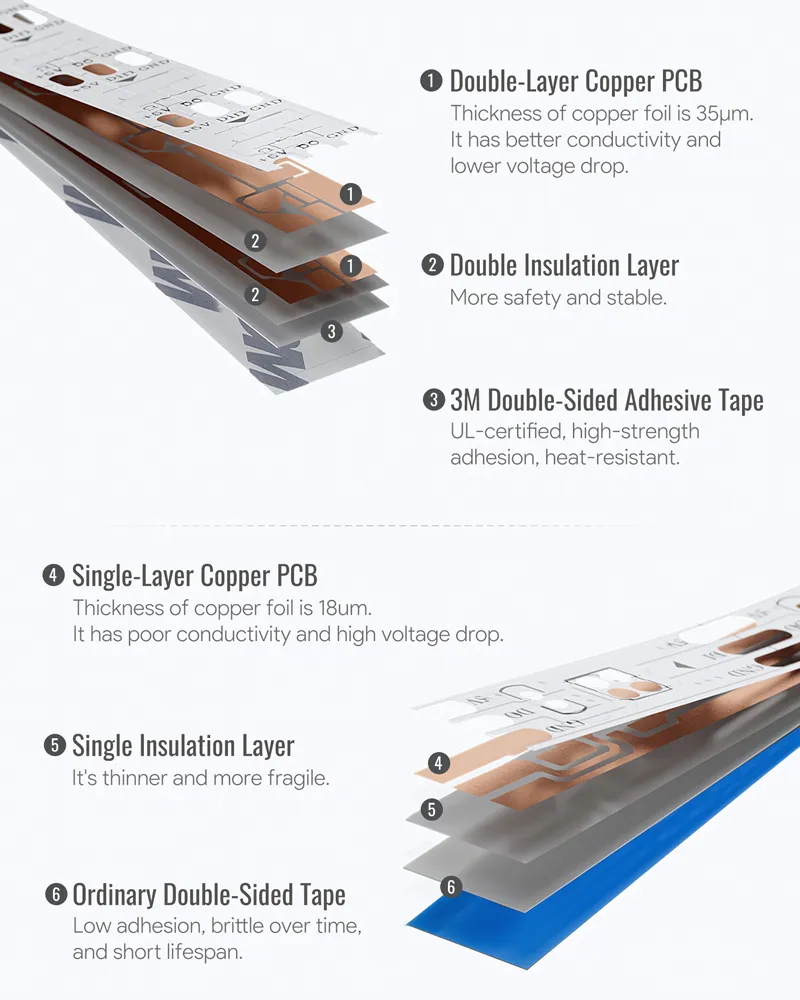
Many buyers focus only on LED chips while ignoring PCB quality, copper thickness, thermal conductivity, and solder reliability.

However, PCB construction is one of the most important factors affecting LED strip durability, heat dissipation, voltage stability, and long-term performance. Low-cost LED strips often use thinner copper layers, lower-quality flexible substrates, inconsistent soldering, and weaker adhesive materials.

Commercial and architectural installations typically require thicker copper PCBs and higher thermal stability to ensure consistent long-term operation.

Common Problems:

  • Overheating
  • Premature LED failure
  • Voltage instability
  • Burned solder joints
  • Reduced lifespan
Why LED Strip Projects Fail_Choosing the Wrong Waterproof Rating

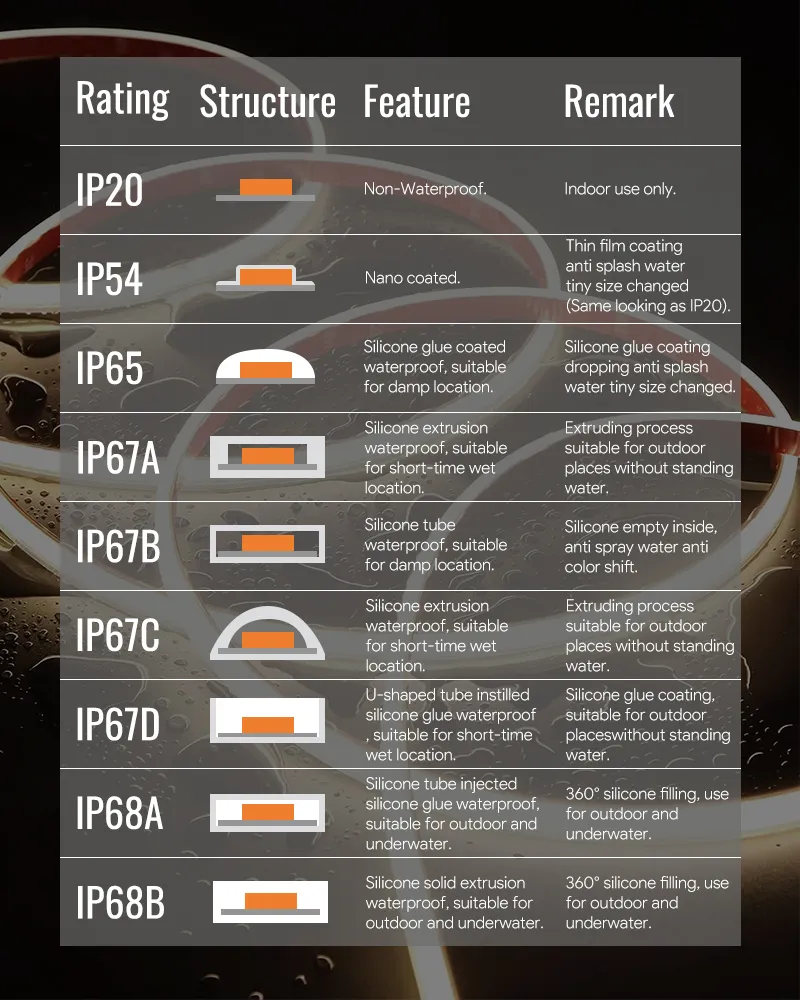
Not all waterproof LED strips are designed for the same environment. Many users incorrectly assume that any silicone-coated LED strip is suitable for outdoor installations, pools, wet areas, or architectural facades.

In reality, different waterproof ratings provide different levels of protection against humidity, rain, direct water exposure, dust, UV radiation, and environmental stress.

Outdoor installations also require consideration of drainage, thermal expansion, UV resistance, connector sealing, and long-term material yellowing.

Common Problems:

  • Moisture damage
  • Corrosion
  • Silicone cracking
  • Water ingress
  • Outdoor discoloration
  • Premature waterproof failure
Why LED Strip Projects Fail_Using Incompatible Dimming or RGB Systems

Not all LED strips are compatible with all dimmers, controllers, smart systems, or lighting protocols. Incorrect controller selection can cause flickering, unstable dimming, color inconsistency, synchronization issues, or communication failures.

Modern lighting systems may require compatibility with PWM dimming, TRIAC dimming, DALI, DMX512, SPI pixel control, Zigbee, WiFi, or smart home platforms.

Understanding the correct control method is critical for reliable lighting performance.

Common Problems:

  • Flickering
  • Unstable dimming
  • Controller overheating
  • Color mismatch
  • Signal instability
  • Poor synchronization
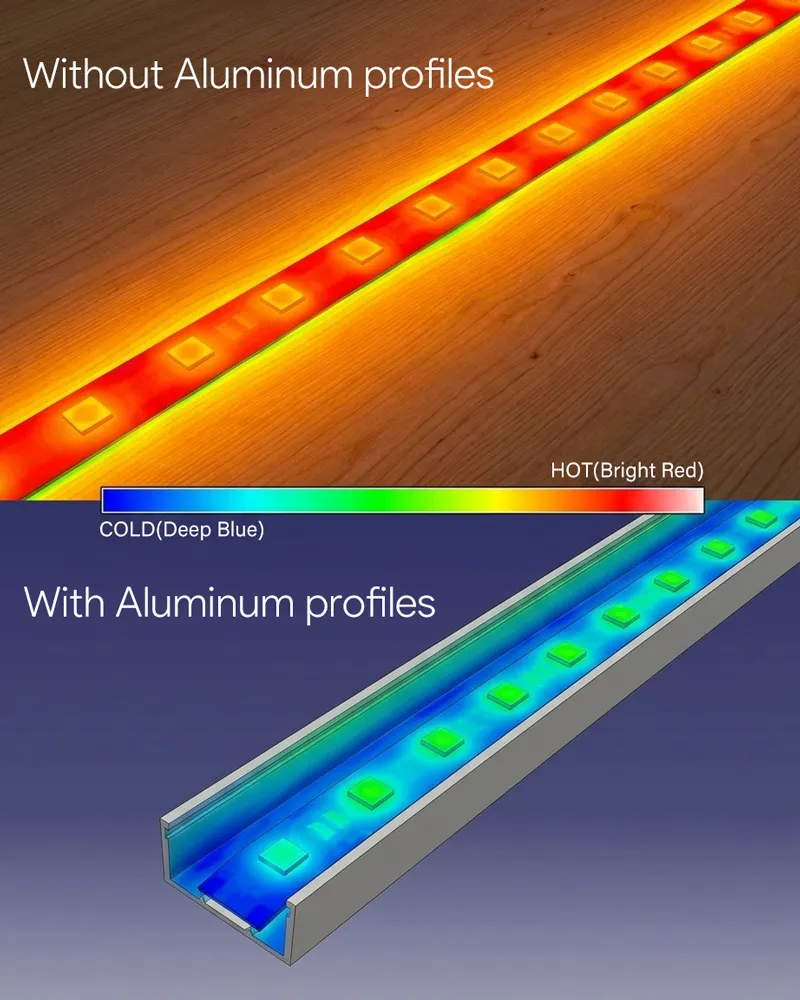
Why LED Strip Projects Fail_Ignoring Heat Dissipation and Aluminum Profiles

Heat is one of the biggest factors affecting LED lifespan and lumen maintenance. Many LED strip failures occur because the strips are installed directly onto low-conductivity surfaces without sufficient thermal management.

Aluminum profiles improve heat dissipation, protect LED strips from physical damage, reduce visible hotspots, and improve overall installation appearance.

High-power LED strips, COB strips, and commercial installations especially benefit from proper thermal management systems.

Common Problems:

  • Excessive heat buildup
  • Brightness degradation
  • Adhesive failure
  • Shortened lifespan
  • Yellowing silicone
  • LED discoloration
Why LED Strip Projects Fail_Choosing LED Strips Based on Price Alone

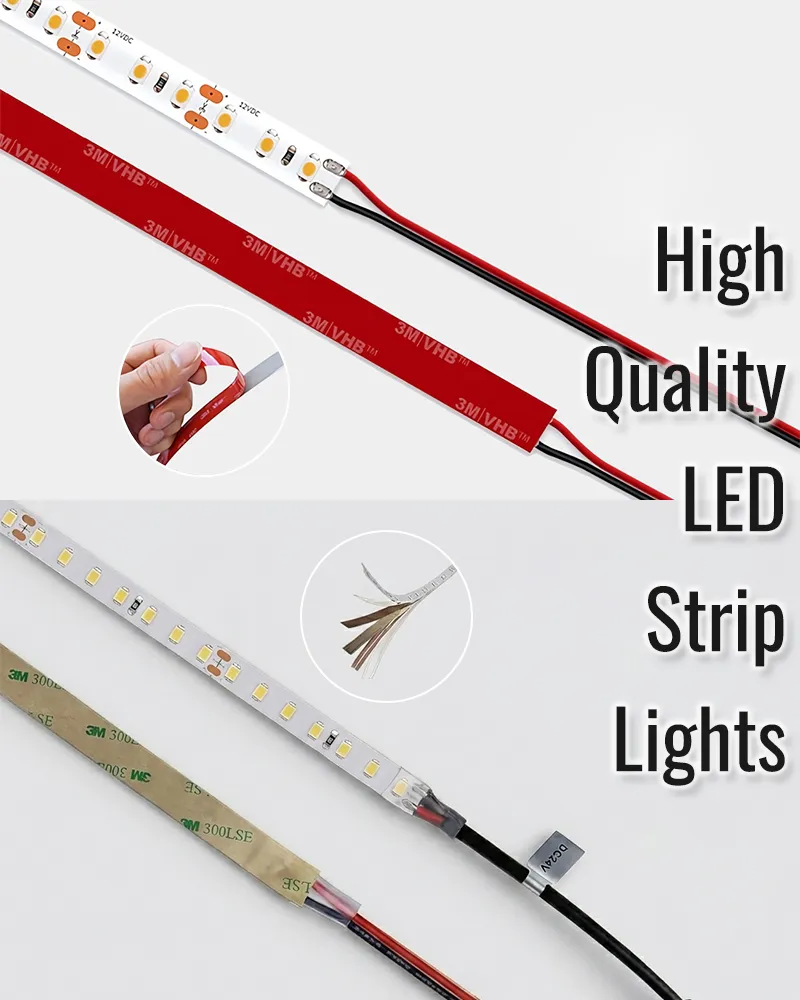
Price is an important factor when selecting LED strip lights, but choosing products based only on cost can lead to performance and reliability issues.

Many low-cost LED strips reduce manufacturing costs by using thinner copper layers, lower-grade LEDs, simplified PCB designs, or weaker adhesive materials. These compromises may not be obvious at first but often result in brightness loss, color inconsistency, overheating, or premature failure after installation.

For commercial, architectural, retail, signage, and OEM projects, product quality, component reliability, warranty coverage, and expected lifespan should be considered alongside price.

Common Problems:

  • High lumen depreciation
  • Inconsistent color temperature
  • Premature LED failure
  • Weak adhesive performance
  • Excessive voltage drop
  • Shortened service life
  • Higher long-term maintenance costs
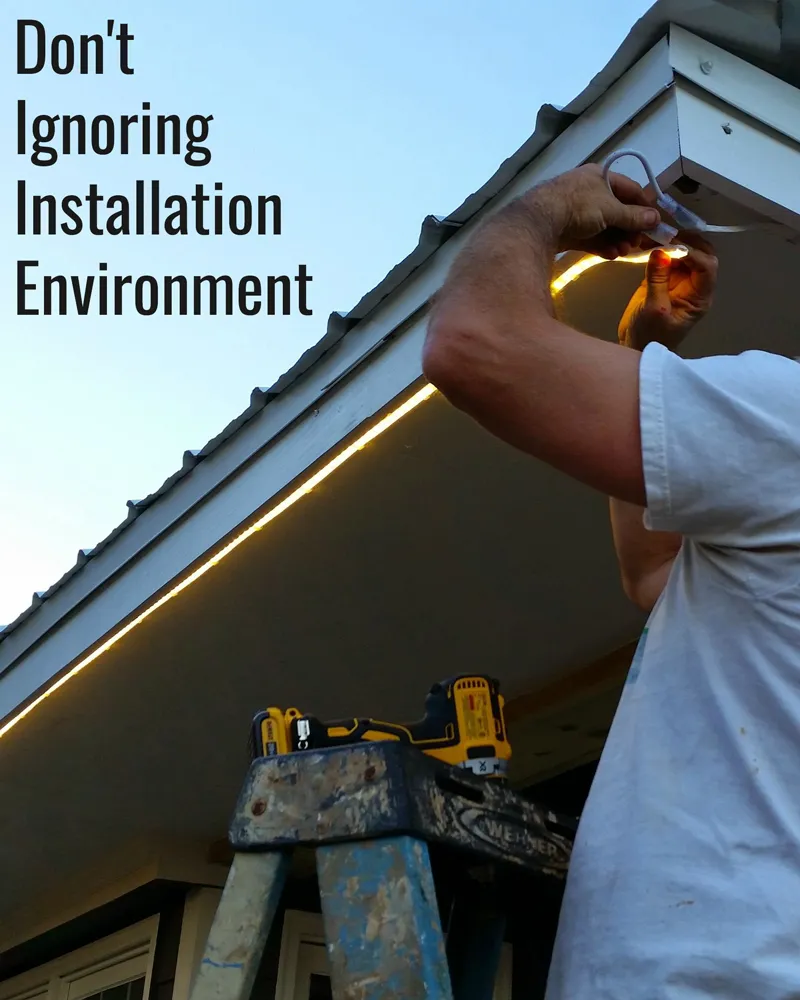
Why LED Strip Projects Fail_Ignoring Installation Environment

The installation environment plays a major role in determining which LED strip system is suitable for a project.

Many buyers focus on brightness, color, or voltage specifications while overlooking environmental conditions such as humidity, temperature fluctuations, UV exposure, dust accumulation, chemical exposure, vibration, or salt-air corrosion. As a result, LED strip systems that perform well indoors may fail prematurely when installed in more demanding environments.

Selecting LED strip lights without considering the installation environment often leads to reliability issues that could have been prevented during the purchasing stage.

Common Problems:

  • Water ingress and corrosion
  • Silicone yellowing and cracking
  • Adhesive failure
  • Premature waterproof degradation
  • Reduced LED lifespan
  • Color shifting over time
  • Increased maintenance frequency
Why LED Strip Projects Fail_Overlooking Long-Term Maintenance Requirements
Many LED strip installations are designed around initial appearance and installation cost without considering how the system will be maintained over its operational life.

As projects become larger and more complex, maintenance accessibility becomes increasingly important. Power supplies, controllers, connectors, drivers, and LED strips themselves may eventually require inspection, replacement, or upgrading. Systems that are difficult to access or repair can significantly increase labor costs and operational downtime.

Designing with maintenance in mind often improves long-term reliability, reduces ownership costs, and simplifies future upgrades or repairs.

Common Problems:

  • Difficult component replacement
  • High maintenance labor costs
  • Extended system downtime
  • Limited service accessibility
  • Expensive repair procedures
  • Frequent troubleshooting requirements
  • Reduced long-term reliability

LED Strip Selection & Purchasing FAQs

Selecting LED strip lights for a project often involves comparing different technologies, voltages, waterproof ratings, control systems, and installation requirements. Making the right choice can improve performance, reduce maintenance, and avoid costly mistakes.

The following FAQs answer some of the most common questions related to LED strip selection, specification, purchasing, and supplier evaluation. For basic LED strip concepts and technical explanations, please refer to our LED Strip Basics Knowledge Center.

Should I Choose COB or SMD LED Strip Lights for My Project?

Choose COB LED strips when you need smooth, dot-free illumination for applications such as under-cabinet lighting, hospitality projects, and architectural details. SMD LED strips are often a better choice when maximum brightness, RGB effects, or lower cost are priorities.

Which LED Strip Technology Offers the Best Value for Commercial Lighting?

For most commercial projects, high-quality SMD LED strips provide the best balance of performance, efficiency, flexibility, and cost. COB strips may justify their higher price when visual comfort and seamless light output are important.

Which LED Strip Type Produces the Most Uniform Light Output?

COB LED strips generally produce the most uniform light output because they use densely packed LED chips that create a continuous line of light with minimal visible hotspots.

Should I Choose RGB, RGBW, or RGBIC LED Strips?

RGB is suitable for basic color-changing effects. RGBW adds a dedicated white channel for better functional lighting. RGBIC allows individual segment control and dynamic lighting effects. The best choice depends on whether your priority is cost, white light quality, or advanced visual effects.

What CRI Level Should I Buy for Retail, Hospitality, and Commercial Projects?

CRI 90+ is recommended for retail, hospitality, museums, and premium commercial environments where color accuracy matters. CRI 80+ is typically sufficient for general commercial and decorative lighting applications.

Which LED Strip Is Best for Long Continuous Runs?

24V LED strips are generally preferred for long runs because they reduce voltage drop and require fewer power injection points. For very large installations, 48V or high-voltage systems may offer additional advantages.

Are Premium LED Strip Brands Worth the Extra Cost?

Premium brands often provide better LED binning, longer lifespan, more consistent color performance, stronger quality control, and better warranty support. For commercial projects, the long-term reliability often justifies the higher upfront investment.

How Can I Tell Whether an LED Strip Is Commercial Grade?

Look for high-quality LEDs, consistent color specifications, CRI ratings, proper thermal design, certified components, reliable warranties, and documented testing data. Commercial-grade products typically provide detailed technical specifications and compliance certifications.

Is 24V Worth the Extra Cost Compared with 12V LED Strips?

In most commercial and architectural projects, yes. 24V systems reduce voltage drop, support longer runs, simplify wiring, and improve overall installation efficiency.

When Should I Choose High-Voltage LED Strip Lights Instead of 24V Systems?

High-voltage LED strips are often suitable for very long runs such as building outlines, landscape lighting, and large-scale decorative installations where minimizing wiring complexity is important.

How Far Can a 24V LED Strip Run Before Power Injection Is Required?

The exact distance depends on power consumption and strip design, but many 24V LED strips can run between 5 and 10 meters before noticeable voltage drop requires power injection.

How Do I Choose the Correct Power Supply for My LED Strip Project?

Calculate the total wattage of all connected LED strips and select a power supply with at least 20–30% additional capacity to ensure stable operation and longer service life.

How Much Spare Capacity Should I Leave When Sizing an LED Driver?

A safety margin of 20–30% is generally recommended. For example, a 100W LED load should typically use a 120W–130W power supply.

Can Multiple LED Strips Share One Power Supply?

Yes, provided the power supply has sufficient capacity and the wiring is properly designed to avoid excessive voltage drop and uneven brightness.

Should I Use Constant Voltage or Constant Current Lighting Systems?

Most LED strip installations use constant voltage systems, typically 12V or 24V. Constant current systems are more common in specialized architectural and high-power lighting applications.

What Is the Best Voltage Option for Large Commercial Installations?

24V is the most common choice for commercial LED strip projects. For exceptionally large installations, 48V or high-voltage systems may improve efficiency and reduce wiring requirements.

Which RGB System Is Best for My Application: RGB, RGBW, RGBIC, SPI, or DMX?

RGB works well for basic color-changing applications. RGBW is ideal when both colored and white lighting are required. RGBIC and SPI systems support advanced pixel-level effects, while DMX is preferred for professional architectural and entertainment lighting projects.

When Do I Need an Addressable LED Strip Instead of Standard RGB?

Choose addressable LED strips when you need animations, chasing effects, dynamic patterns, or independent control of multiple LED segments.

How Do I Choose the Right LED Controller?

Consider compatibility with your LED strip type, required control functions, dimming needs, communication protocol, installation scale, and integration requirements with existing control systems.

What Dimming Method Works Best for Commercial LED Strip Installations?

PWM dimming is the most common solution for LED strips. For larger commercial projects, 0-10V, DALI, DMX, or smart building control systems may be more appropriate.

Can RGB LED Strips Replace White Lighting?

Not completely. While RGB strips can create white-looking light by mixing colors, RGBW or dedicated white LED strips generally provide better color quality, efficiency, and visual comfort.

What Should I Consider Before Buying RGBIC or Pixel LED Strips?

Evaluate controller compatibility, programming requirements, installation complexity, power distribution, maintenance needs, and the desired visual effects before selecting RGBIC or pixel-based systems.

Which Waterproof Rating Should I Choose for Outdoor LED Strip Lighting?

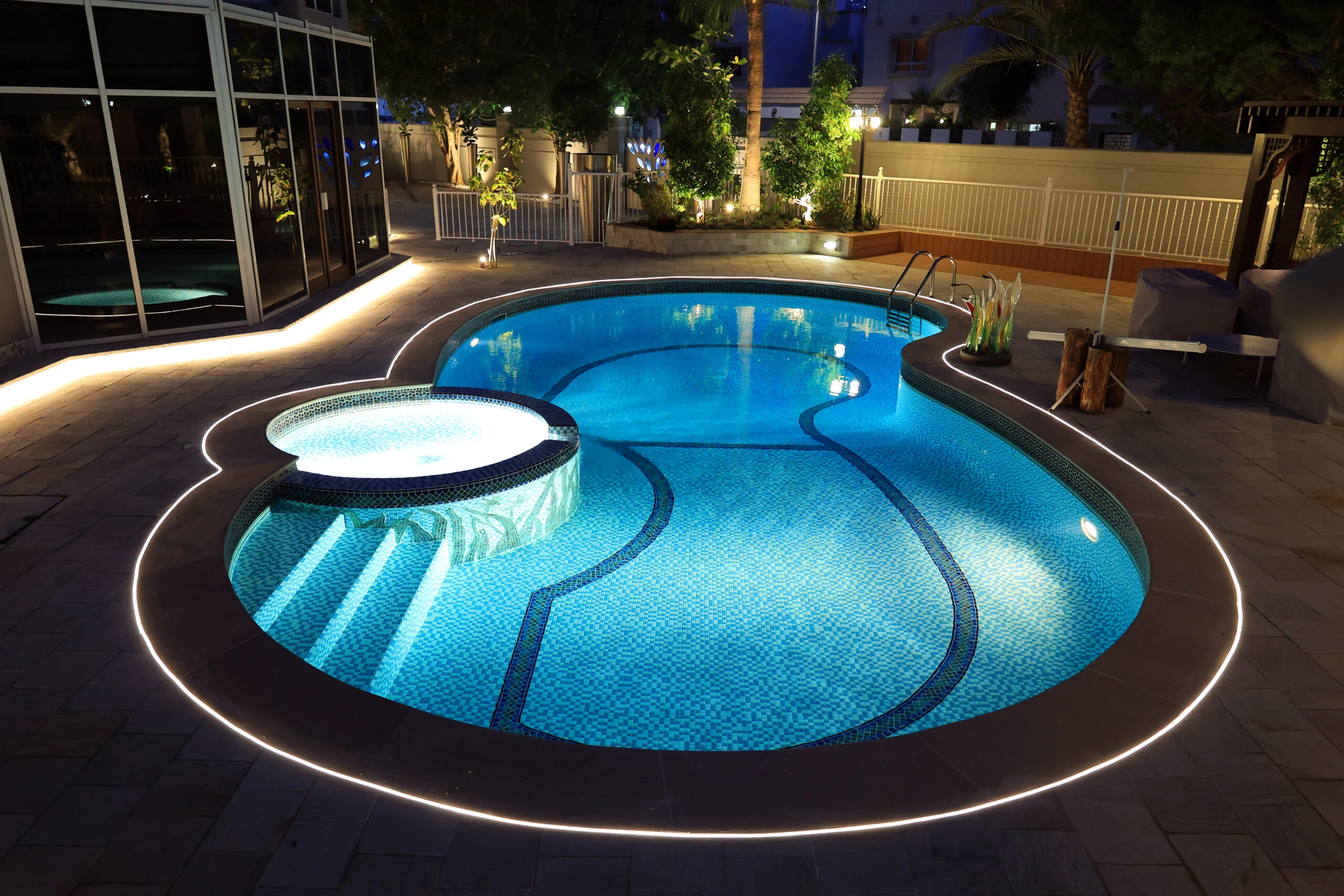
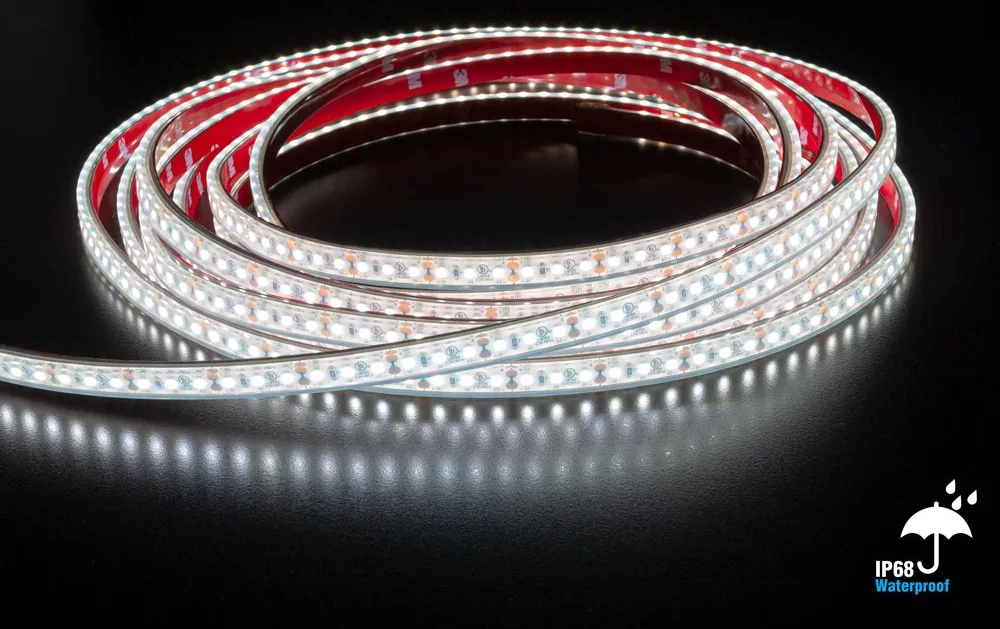
IP65 is suitable for splash-prone areas, IP67 for temporary immersion and outdoor exposure, and IP68 for continuous underwater or harsh environmental applications.

How Do I Select the Right Aluminum Profile for My LED Strips?

Choose a profile based on installation location, heat dissipation requirements, diffuser preference, mounting method, and the width of the LED strip being used.

Do I Really Need an Aluminum Channel for LED Strip Installation?

While not always required, aluminum channels improve heat management, protect the strip, enhance appearance, and often extend product lifespan.

Which Diffuser Cover Is Best: Clear, Milky, Frosted, or Black?

Clear covers maximize brightness, milky and frosted covers improve light diffusion and reduce hotspots, while black diffusers provide a premium appearance when the fixture is turned off.

How Can I Prevent Adhesive Failure in Long-Term Installations?

Clean mounting surfaces thoroughly, avoid dusty or oily substrates, use mounting clips when necessary, and consider additional mechanical fastening for demanding environments.

What Should I Consider When Buying LED Strips for Harsh Outdoor Environments?

Focus on waterproof protection, UV resistance, corrosion resistance, operating temperature range, installation method, and long-term durability under local environmental conditions.

How Do I Evaluate LED Strip Quality Before Placing a Bulk Order?

Review technical specifications, request samples, verify certifications, assess color consistency, inspect build quality, and evaluate supplier reliability before committing to large orders.

What Factors Affect LED Strip Wholesale Pricing?

Pricing is influenced by LED quality, chip brand, CRI level, PCB construction, waterproofing, certifications, production volume, customization requirements, and supplier location.

What Certifications Should Commercial Buyers Look For?

Common certifications include CE, RoHS, UL, ETL, UKCA, and other region-specific compliance standards depending on the target market.

How Do I Compare Different LED Strip Manufacturers?

Compare product quality, production capacity, certifications, customization capabilities, warranty terms, technical support, lead times, and overall supplier reputation.

What Information Should I Prepare Before Requesting a Custom LED Strip Project?

Provide details such as voltage, power consumption, color temperature, CRI requirements, waterproof rating, control method, installation environment, project quantity, and certification needs.

What Are the Most Common Mistakes When Sourcing LED Strip Lights from Overseas Suppliers?

Common mistakes include focusing only on price, skipping sample evaluation, overlooking certifications, ignoring warranty terms, failing to verify production capabilities, and underestimating logistics and communication challenges.

Scroll to Top

Get a Quote Now