English
 简体中文
 Deutsch
 Español
 Français
 Italiano
 日本語
 한국어
 Polski
 Português
 Русский
 Türkçe
 Nederlands
 Tiếng Việt
 ไทย

When it comes to linear lighting, terms like LED tape lights and LED strip lights are often used interchangeably. Both refer to flexible lighting solutions that deliver bright, energy-efficient illumination in compact forms. However, there are subtle differences between them in terms of structure, performance, and installation methods. Understanding these distinctions is essential for choosing the right lighting type for your project. In this article, we’ll break down what LED tape lights and LED strip lights really are, how they differ, and where each works best — so you can make a smarter and more effective lighting decision.
What Is LED Tape Light?
Definition:
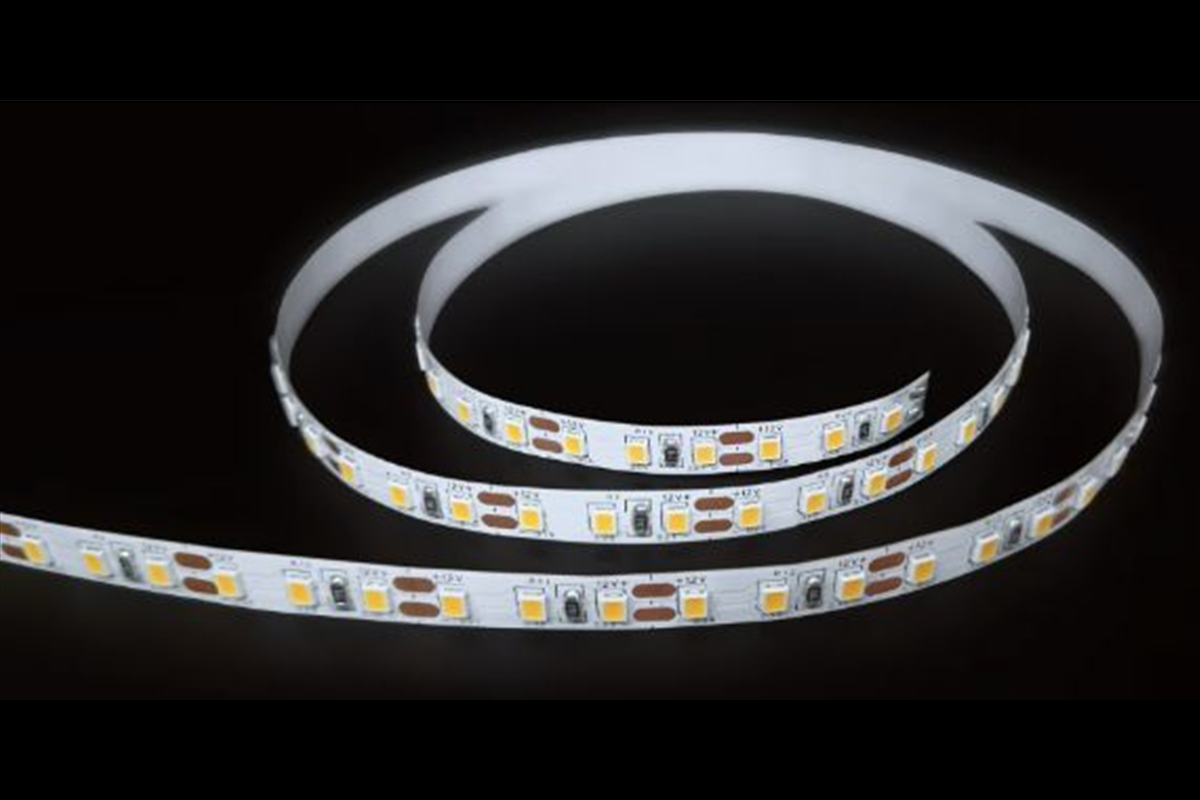
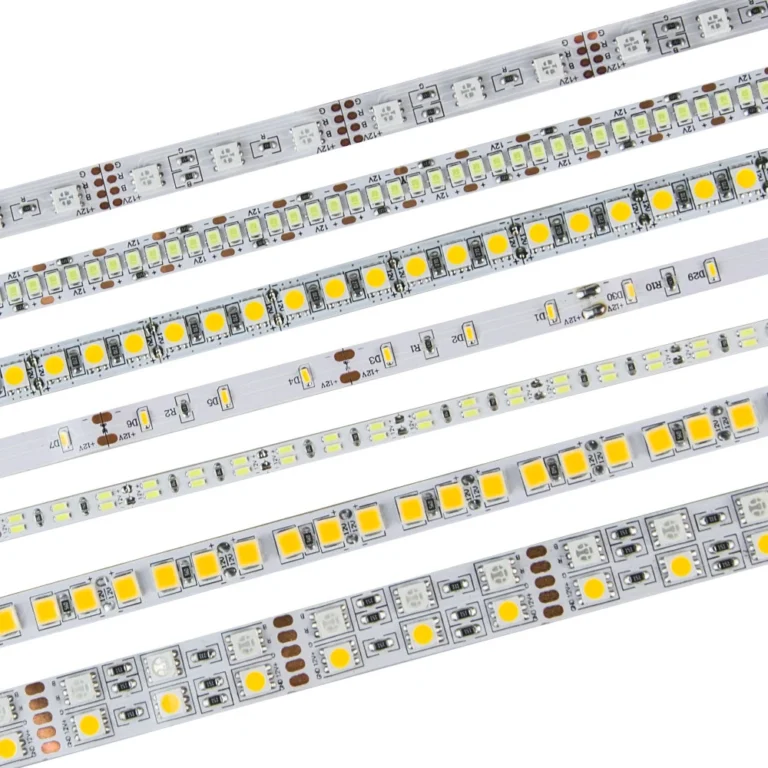
An LED tape light is a thin, flexible circuit board populated with surface-mounted light-emitting diodes (LEDs). It usually comes with an adhesive backing, allowing users to easily attach it to almost any clean surface.
Features:
LED tape lights are available in various lengths, voltages, and color temperatures. They are designed for versatility—cuttable and linkable to fit different spaces. Their ultra-slim design makes them ideal for concealed or decorative lighting applications.
Advantages:
Compared with traditional lighting, LED tape lights offer higher energy efficiency, lower heat emission, and longer lifespan. They are perfect for accent lighting, under-cabinet installations, and retail displays where space is limited but high-quality illumination is desired.

What Is LED Strip Light?
Definition:
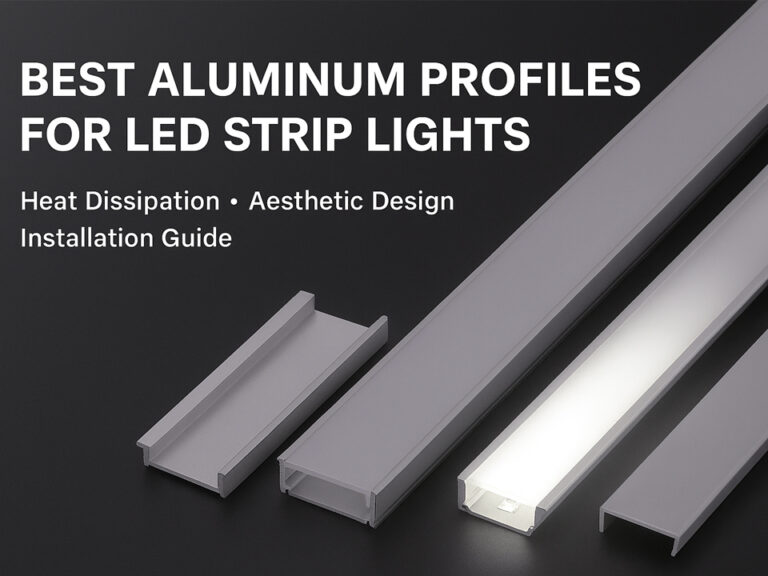
An LED strip light is a linear lighting product that consists of a flexible or semi-rigid printed circuit board fitted with high-brightness LEDs. Unlike basic LED tape lights, it often comes with protective coatings, aluminum profiles, or diffusers to enhance durability and light distribution.
Features:
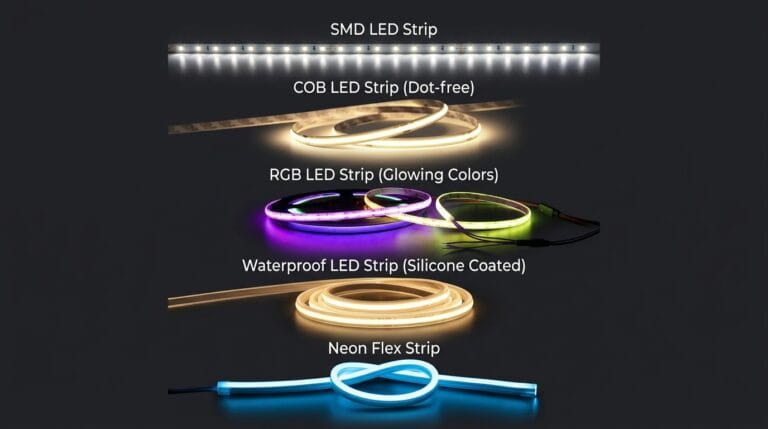
LED strip lights are available in different power ratings, lumen outputs, and waterproof grades. They can be single-color, tunable white, or RGB/RGBW for dynamic lighting control. Many LED tape strip lights are designed for professional installations, supporting dimming systems and smart lighting controllers.
Advantages:
These lights deliver higher brightness, better heat dissipation, and longer operational life. With their robust construction and wide compatibility, LED strip lights are ideal for architectural, office, and commercial lighting projects that require consistent and powerful illumination.

LED Tape Lights vs LED Strip Lights: Key Differences
In general, LED tape lights are flexible and ultra-thin, designed for easy bending and installation in narrow or curved spaces. LED strip lights, on the other hand, can be either flexible or rigid, depending on their structure and intended use. For example, COB LED strips can be categorized as both LED tape lights and LED strip lights because they combine flexibility with high brightness. However, LED neon lights and strip lights integrated with aluminum profiles are typically classified only as LED strip lights due to their added housing and rigidity.
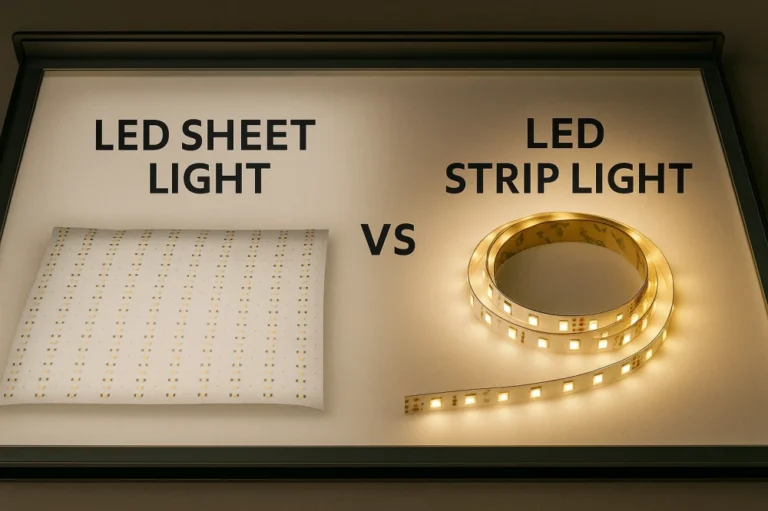
While the two share many similarities—both are linear lighting options that use LEDs for efficient illumination—they differ in several aspects such as installation method, design flexibility, and application focus. As summarized in the table below, LED tape lights prioritize aesthetics and concealment, while LED strip lights emphasize brightness, heat management, and long-term reliability.
| Feature | LED Tape Light | LED Strip Light |
| Flexibility | Fully flexible and bendable | Can be flexible or rigid |
| Installation | Peel-and-stick with adhesive backing | Mounted with clips, channels, or aluminum profiles |
| Thickness | Ultra-thin, ideal for hidden areas | Slightly thicker, suitable for open installations |
| Brightness | Moderate, accent-oriented | Higher lumen output for task or main lighting |
| Heat Dissipation | Limited, relies on surface contact | Excellent with heat sinks or aluminum housings |
| Applications | Decorative, under-cabinet, or shelf lighting | Architectural, office, or commercial projects |
Overall, understanding these distinctions helps ensure that your lighting choice aligns with the visual effect, performance, and durability your project requires.


How to Choose the Right One for Your Project
Selecting between LED tape lights and LED strip lights depends largely on your project’s purpose, lighting environment, and desired effect. If your goal is to achieve subtle accent lighting or highlight architectural details, LED tape lights are the better option. Their ultra-slim profile and easy installation make them perfect for spaces where lighting needs to be hidden—such as under cabinets, along stair edges, or behind mirrors.
For projects that require higher brightness, better heat dissipation, or continuous long-term operation, LED strip lights are the ideal choice. These are often used in commercial or professional environments, such as offices, showrooms, or retail displays, where strong illumination and durability are essential. When combined with aluminum channels or diffusers, LED tape strip lights can deliver uniform light output with improved protection and aesthetics.
For example, a kitchen renovation may use LED tape lights under cabinets to create a soft glow, while a hotel lobby or retail store would benefit more from LED strip lights that provide bright, consistent lighting for visual impact. In architectural applications, designers may even combine both types—using LED tape for ambient effects and LED strip lights for main lighting—to achieve a layered and professional result.
Ultimately, choosing the right lighting type ensures not only visual harmony but also long-term performance and energy efficiency for your project.
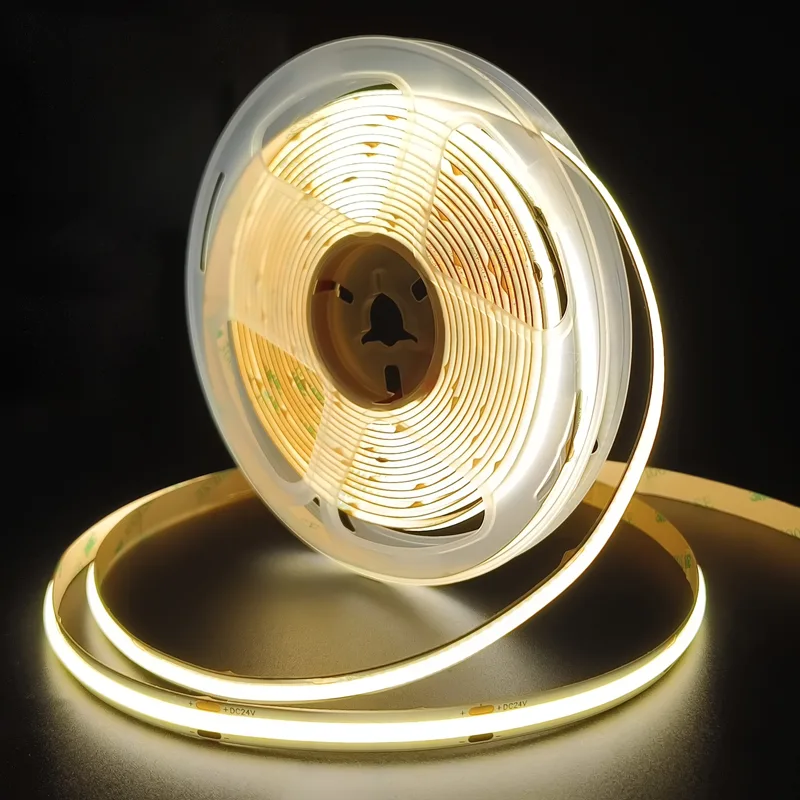
High Lumen COB LED Strip Light
- Main Model: FYX10T528C
- LED Chip QTY per Meter: 528chips (Sanan)
- CRI: >90
- PCB Width: 10mm
- Color Temperature: 2700K/3000K/4000K/6500K
- Input Voltage: DC12V/DC24V
- Power per Meter: 4W
- Efficiency: 115lm/W
- IP Grade: IP20/IP54/IP65/IP67/IP68
- Warranty: 3 years
Price: 1.05USD/m
Conclusion
Both LED tape lights and LED strip lights offer versatile, efficient, and visually appealing lighting solutions, but they serve different purposes. LED tape lights are best for decorative or accent lighting where flexibility and a clean look are key, while LED strip lights provide stronger illumination and durability for commercial or large-scale applications. Understanding their differences allows you to choose the most suitable option for your specific project.
At SignliteLED, we manufacture a wide range of high-quality LED strip lights, including LED tape lights, COB strips, neon flex, and aluminum profile-integrated strips. Our products deliver reliable performance, excellent brightness, and competitive pricing. Whether you need lighting for architectural, commercial, or decorative use, SignliteLED is ready to provide the best solution—contact us today for inquiries and quotations.
Related Posts