English
  简体中文
简体中文  Deutsch
  Español
  Français
  Italiano
  日本語
日本語  한국어
한국어  Polski
  Português
  Русский
  Türkçe
  Nederlands
  Tiếng Việt
  ไทย
ไทย 
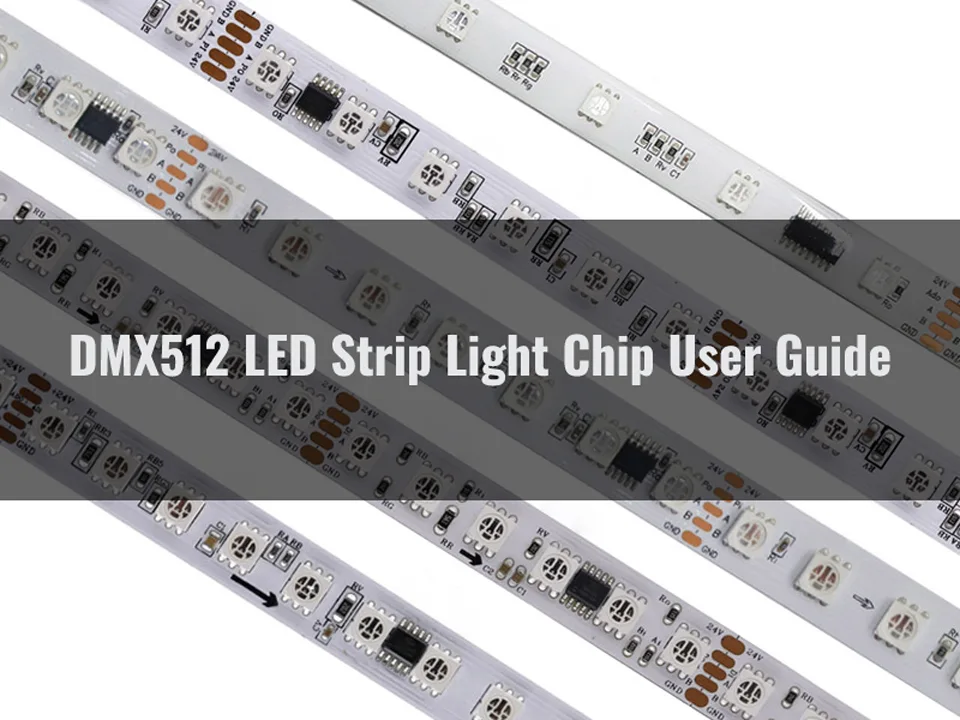
DMX512 LED Strip Light Chip User Guide
A comprehensive technical guide to DMX512 LED strip chips, protocols, and system compatibility.
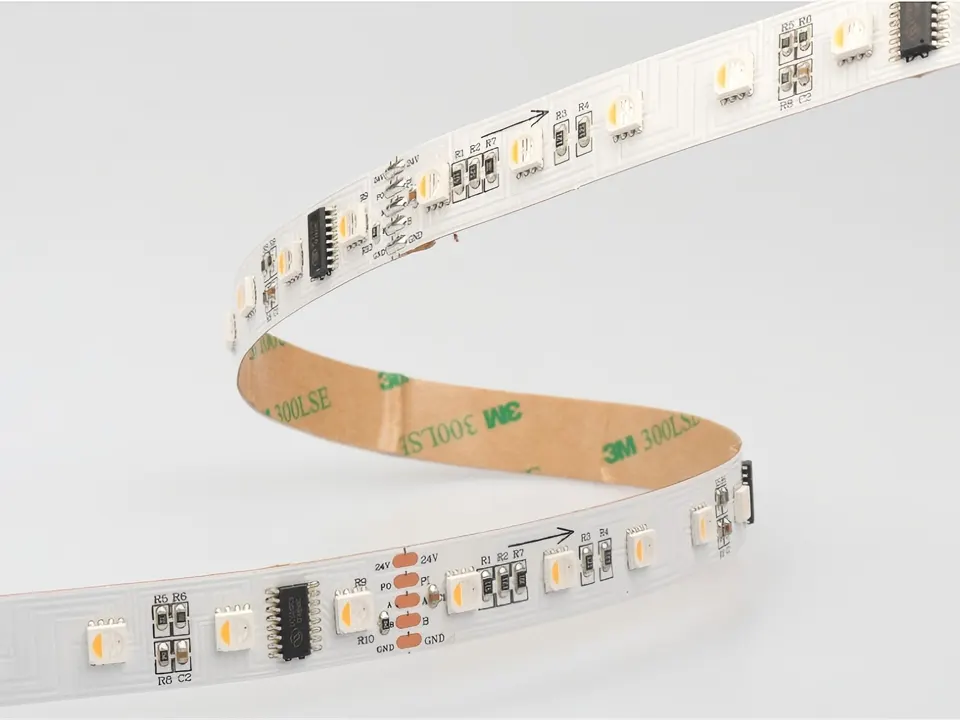
What is DMX RGBW LED Strip Light?
Understand what DMX LED strip lighting is, how it works, and where it is used in professional lighting projects.

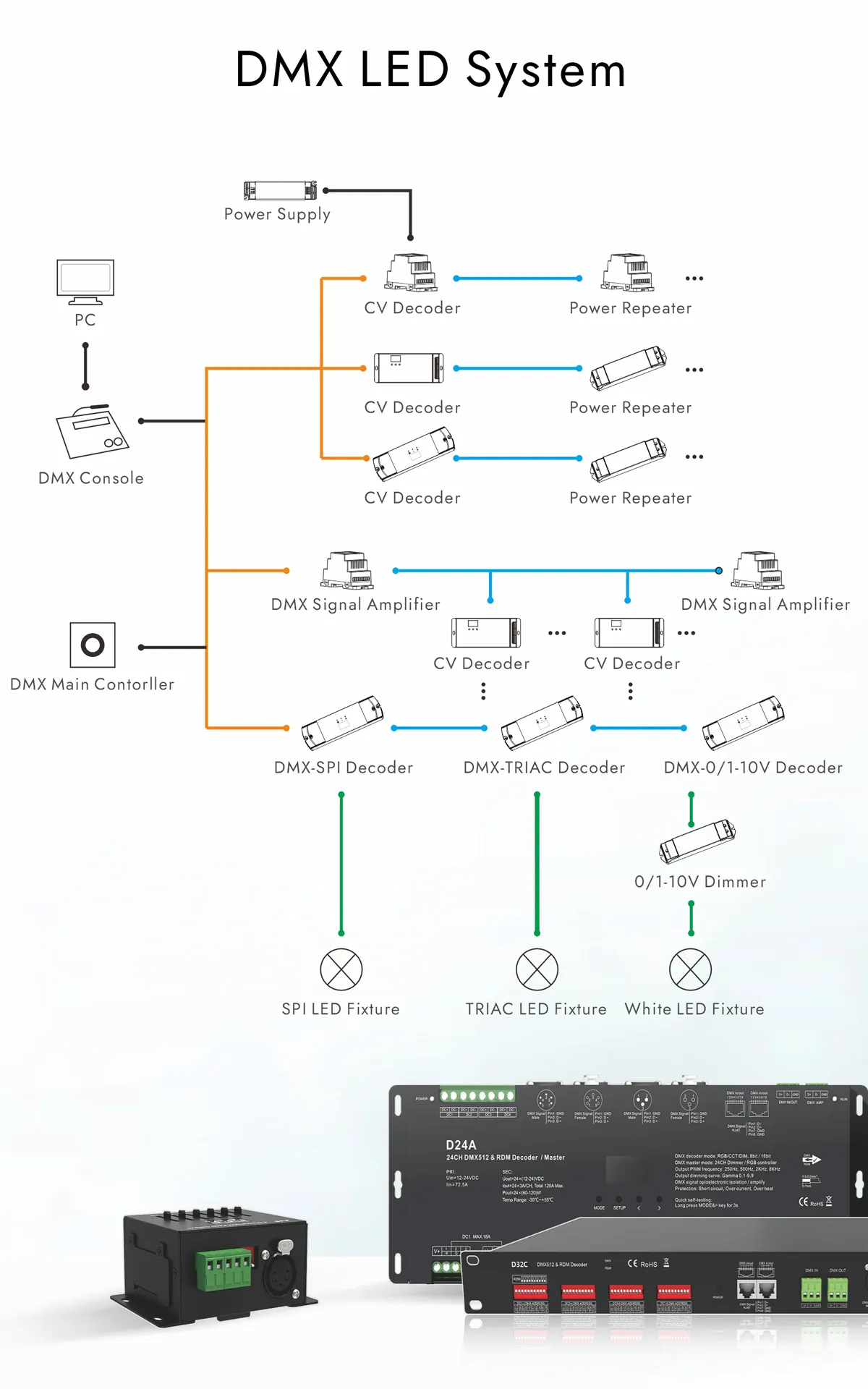
How does DMX control the LED strip light? and how to connect them?
Learn how DMX controls LED strips, including wiring, addressing, and system connections.
DMX512 chip as the core control module of DMX LED strip light, through the decoding of DMX512 protocol commands, precise regulation of LED light brightness, color, and dynamic effects. In building lighting, entertainment lighting, and other scenarios, the chip’s protocol compatibility and expansion capability significantly improve the level of...
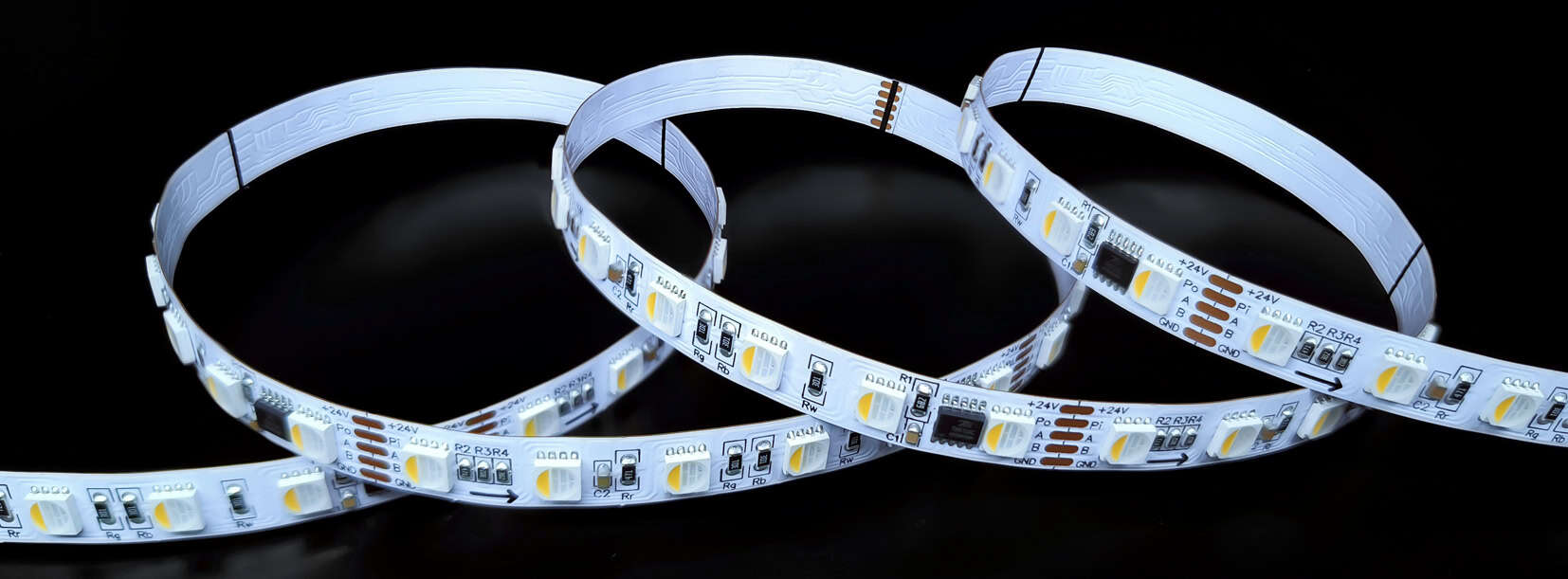
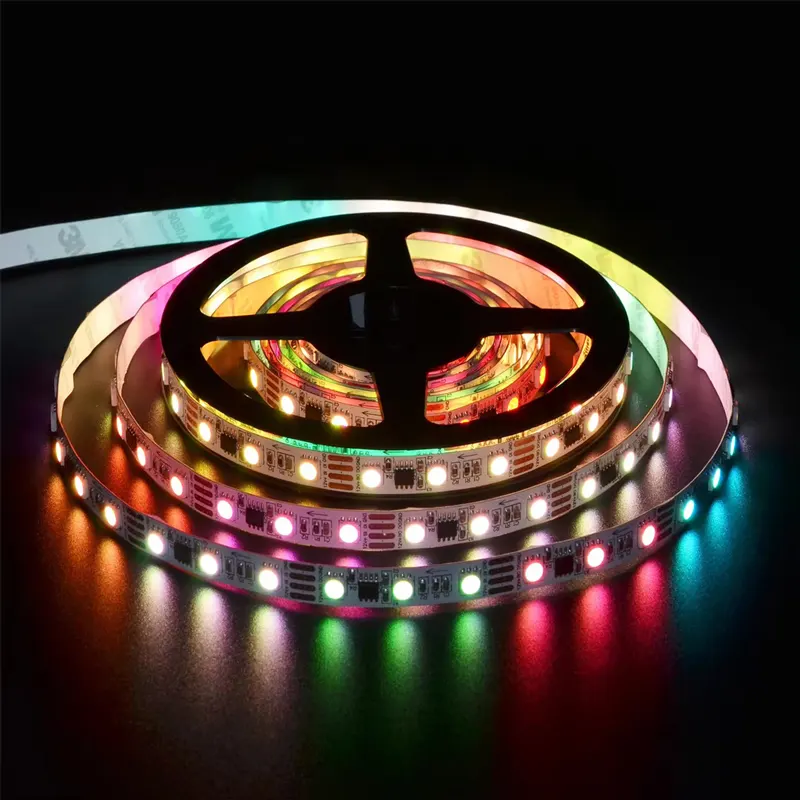
DMX RGBW LED Strips are pixel-programmable flexible strips that are controlled directly using DMX512 signals through the software of your choice. The strip can be controlled directly from a DMX console or controller without the need for a DMX to SPI converter or decoder. The four color chips of red, green, blue, and white (3000K/6000K) can be mixed....
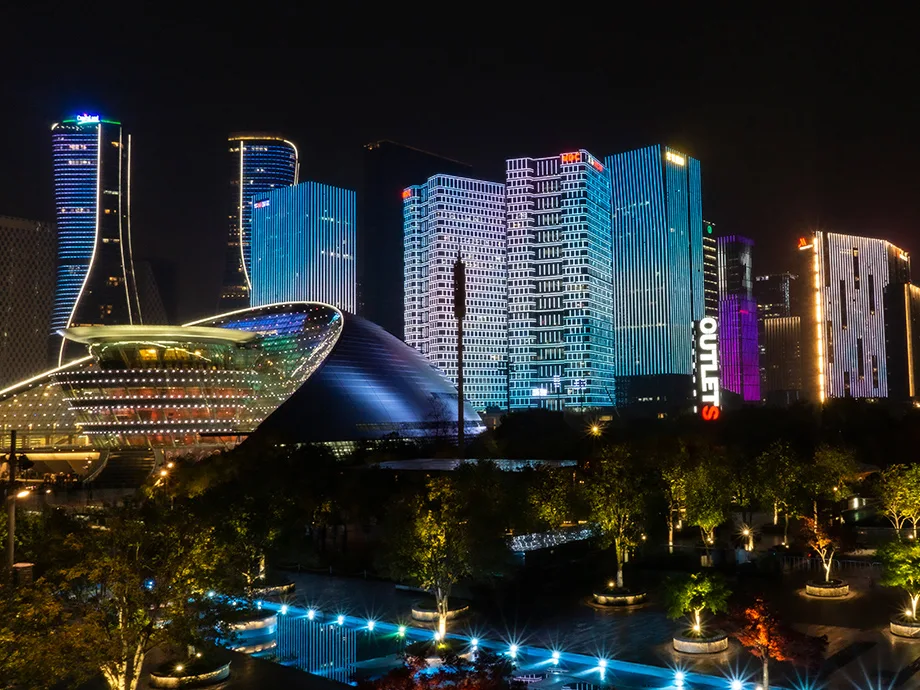
Good architectural lighting can highlight architectural aesthetics, create a comfortable atmosphere, enhance spatial hierarchy, improve the visual experience at night, convey cultural connotations, and take into account energy saving and environmental protection, giving the city a unique charm and vitality. Usually, designers personalize the design...
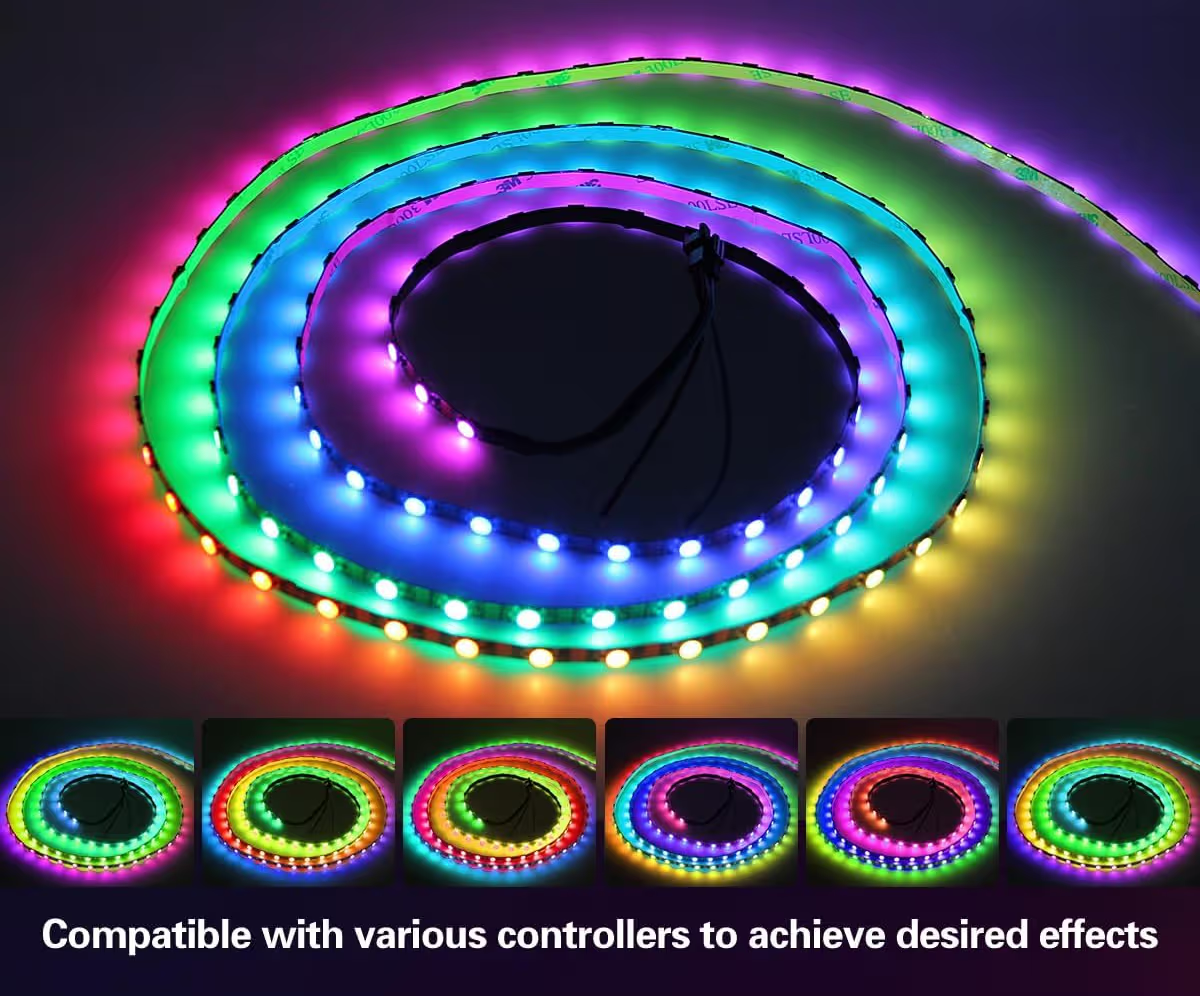
There are many signal styles of colorful LED light strips, but generally speaking, they can be divided into SPI colorful LED light strips and DMX512 colorful light strips. At the beginning, all the colorful products were DMX512 products, which were patented and had a special DMX software system to control the lights. The equipment was expensive and...
When you walk in the modern city at night, you will see the exterior walls of many buildings are brightly lit and colorful. Some lights change, like running lights, running water, or chasing. Meteor showers, flash flashes, etc., create a wonderful scene of various lights, and the change of lights is breathtaking. In fact, the light to achieve these...
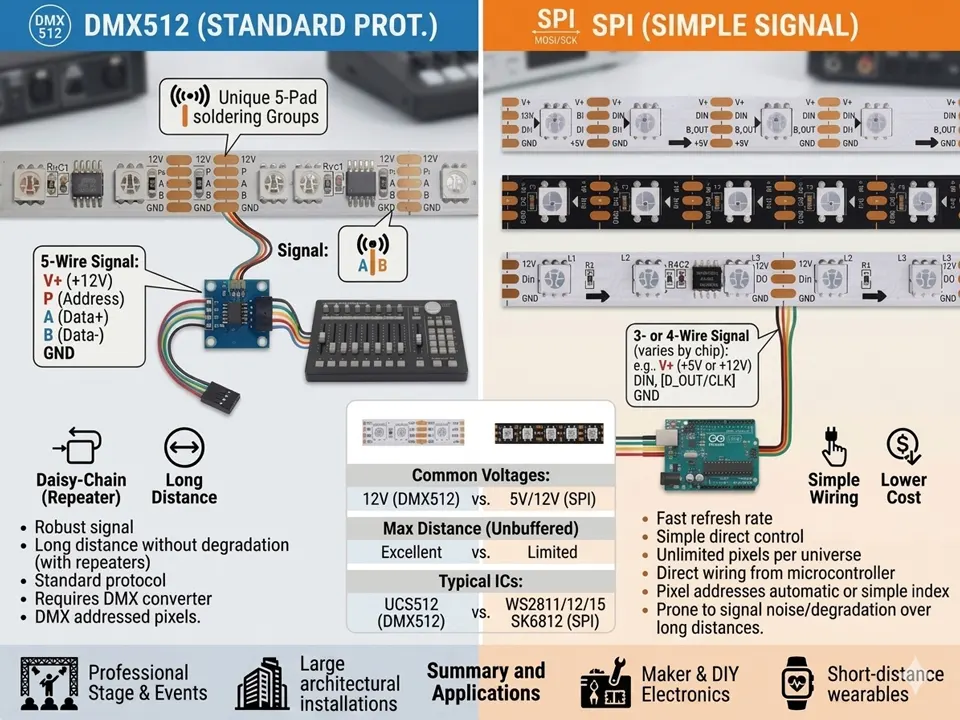
DMX512 and SPI (Serial Peripheral Interface) are two different communication protocols used to control LED strips, each with its own characteristics and applications: 1. DMX512 LED Strip: Protocol: DMX512 (Digital Multiplexing 512) is a standard protocol for lighting control. It allows the transmission of up to 512 channels of control data over a single...
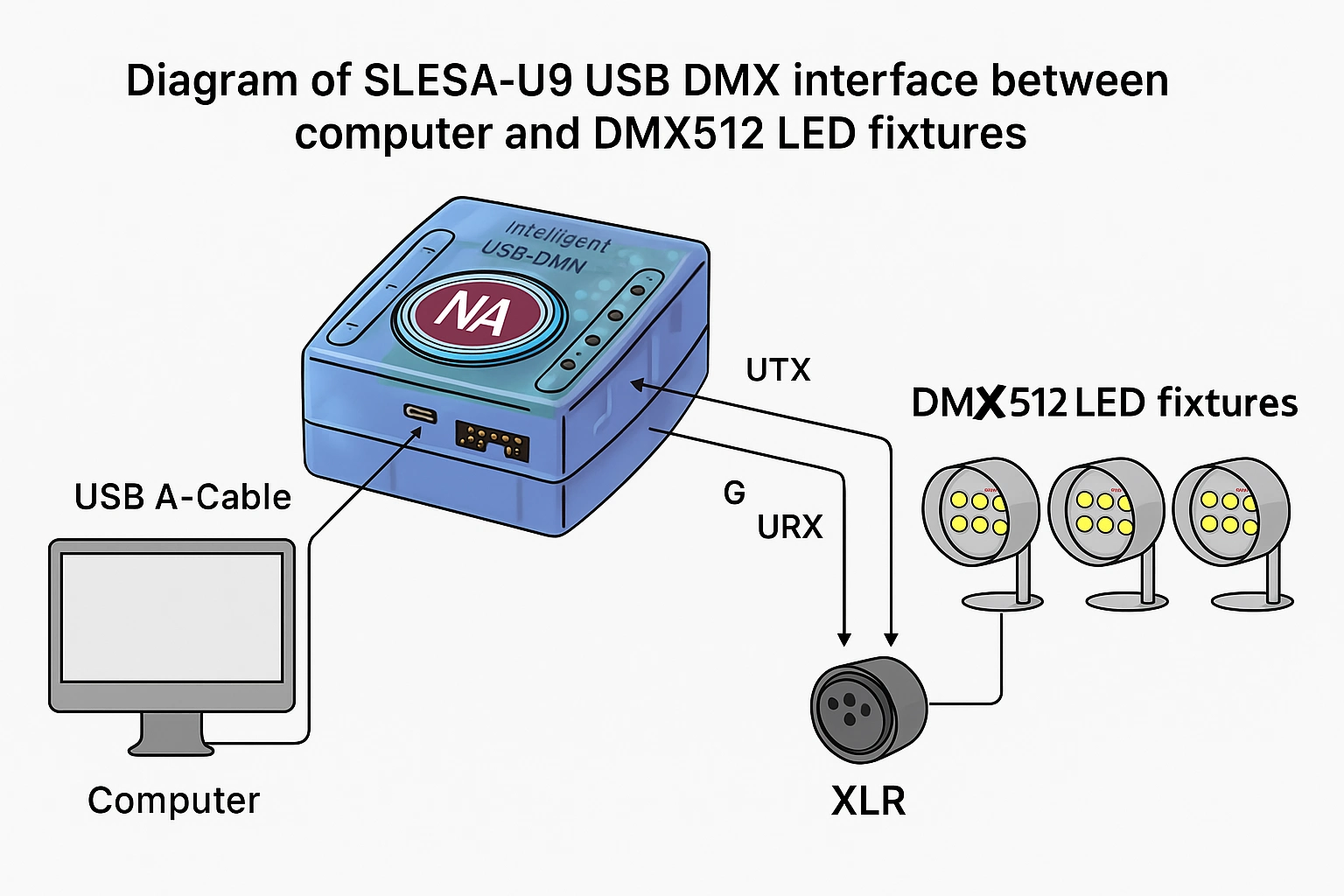
In 2025, lighting control technology continues to evolve with a focus on affordability, ease of integration, and versatility across diverse environments. Whether you’re setting up dynamic stage effects for live performances, enhancing ambiance in small venues like bars or churches, or creating immersive home theater experiences, selecting the...
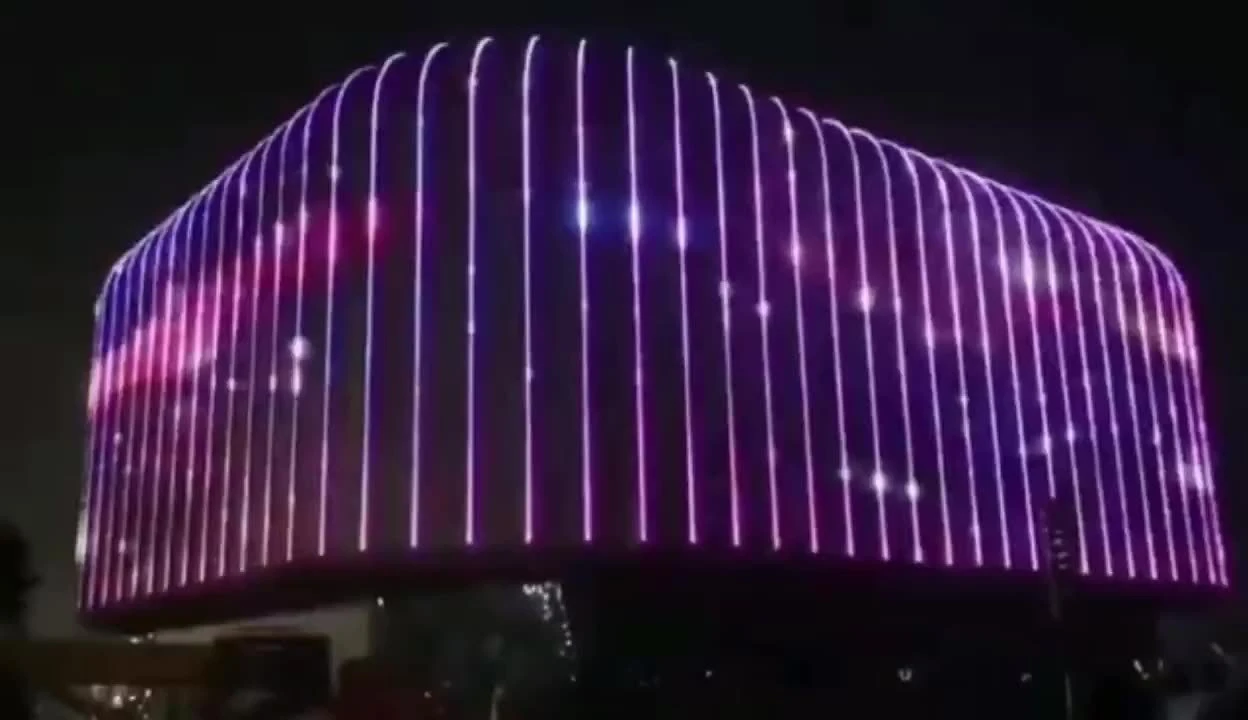
In recent years, flexible DMX512 neon LED strips have become a cornerstone of creative architectural and façade lighting. Unlike conventional LED strips, these products combine the flexibility of silicone neon housing with the precision of DMX512 digital control, enabling pixel-level dynamic effects, smooth gradients, and unlimited design possibilities....
The versatility of DMX controlled lighting allows it to be used in a wide range of applications. Among the most common applications are theaters, concerts, and clubs. However, DMX can also be used in museums, churches, shops, TV studios, and hotels. The possibilities are endless. The greatest advantage of DMX controlled lighting is that it offers full...
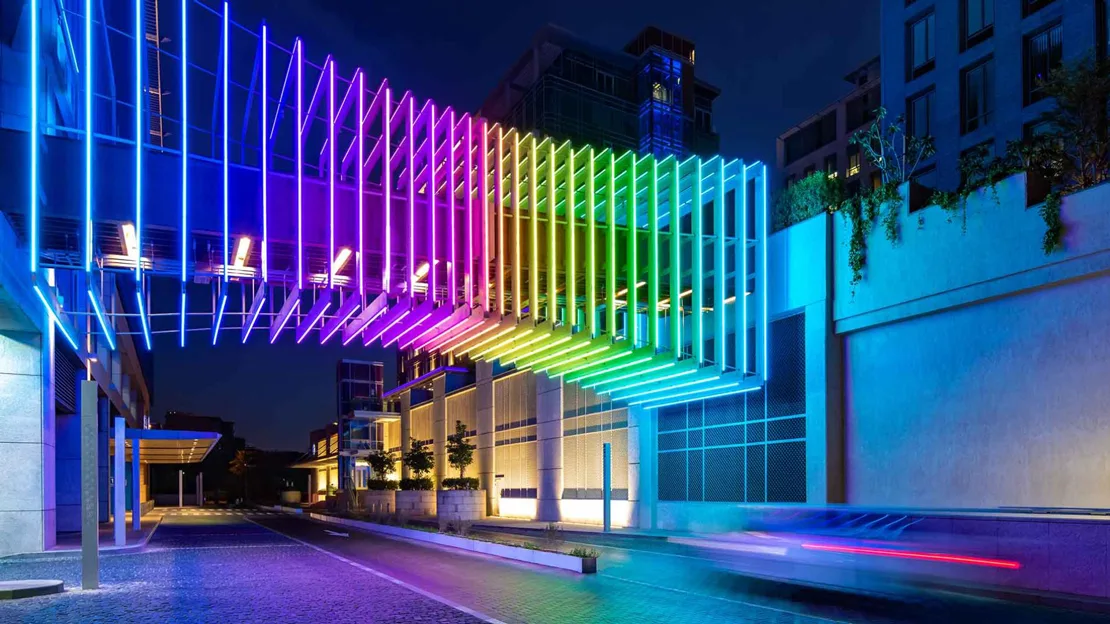
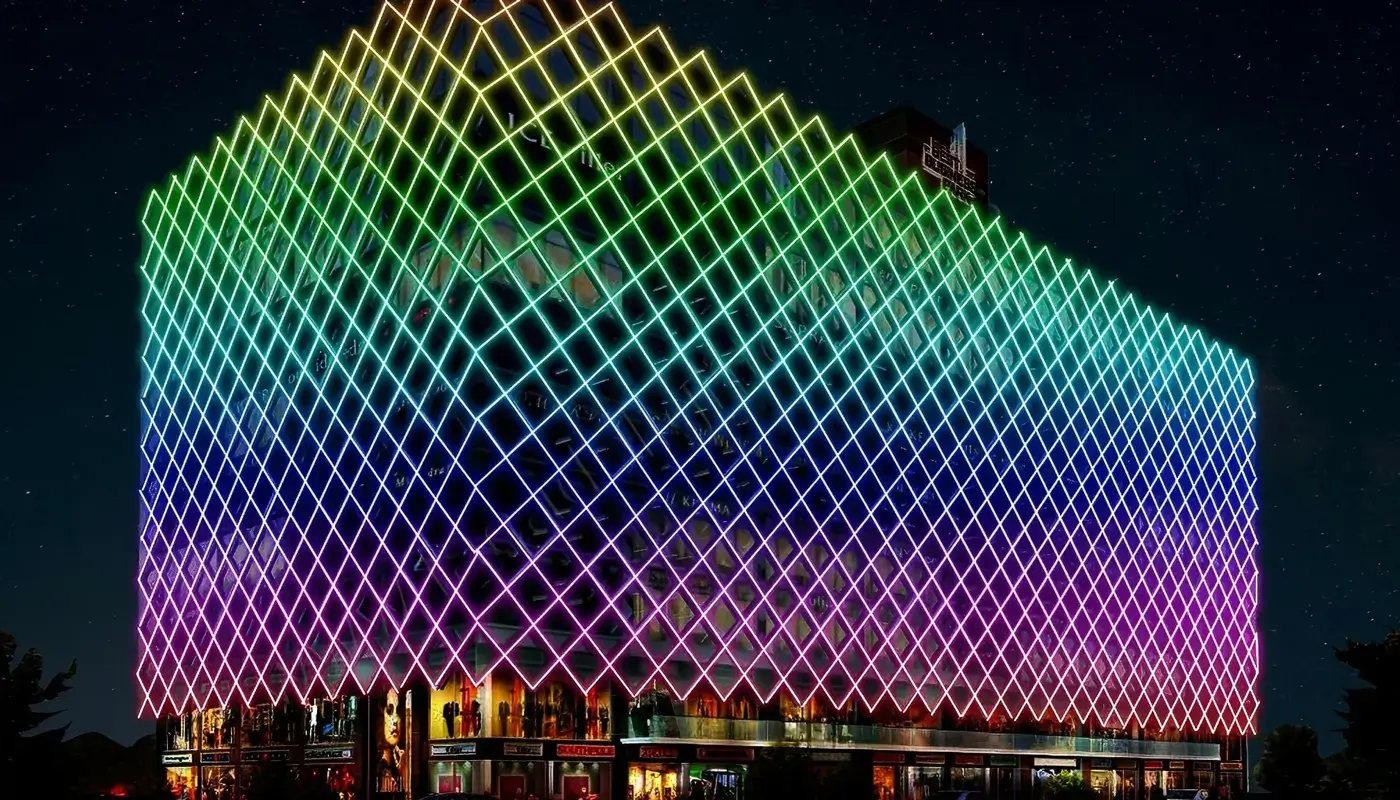
DMX512 control systems are widely used in modern architectural contour and façade lighting projects to achieve precise and dynamic lighting effects. In contrast to RGB strips, which can only change color as a whole, pixel LED neon strips are addressable on a point-by-point basis. You can control each pixel independently through the DMX controller to...
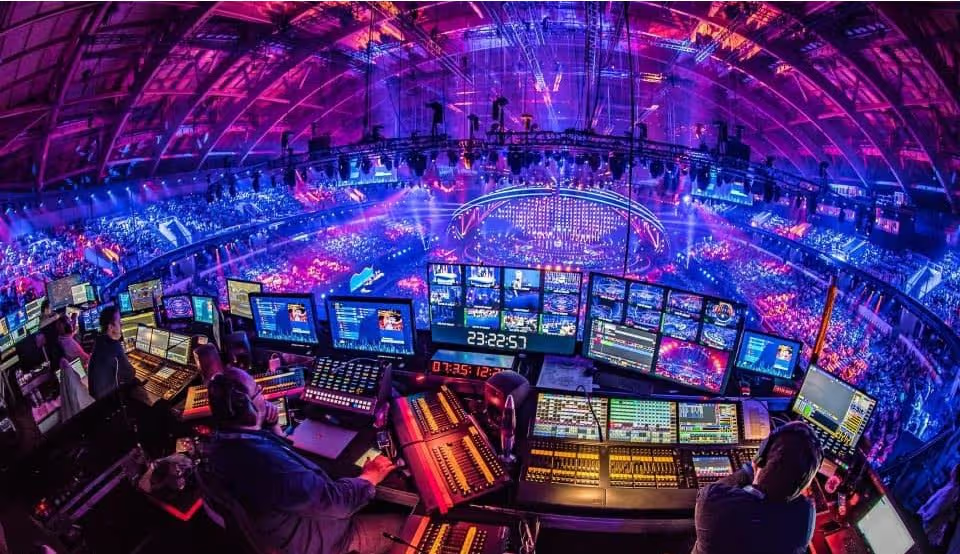
What is DMX First of all, we have to understand DMX(Digital Multiplex) first. It’s a protocol used for controlling LED lighting, often seen in stage lighting for creating intricate effects. DMX Universe Capacity Capacity means how many channels does DMX have, the most common one is DMX512 which shows it has 512 channels. Sometimes, we use more than...
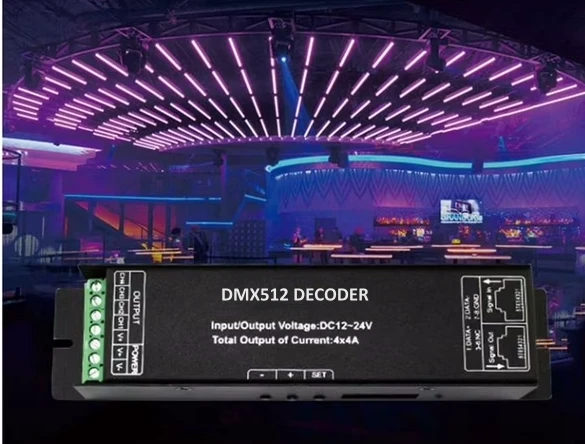
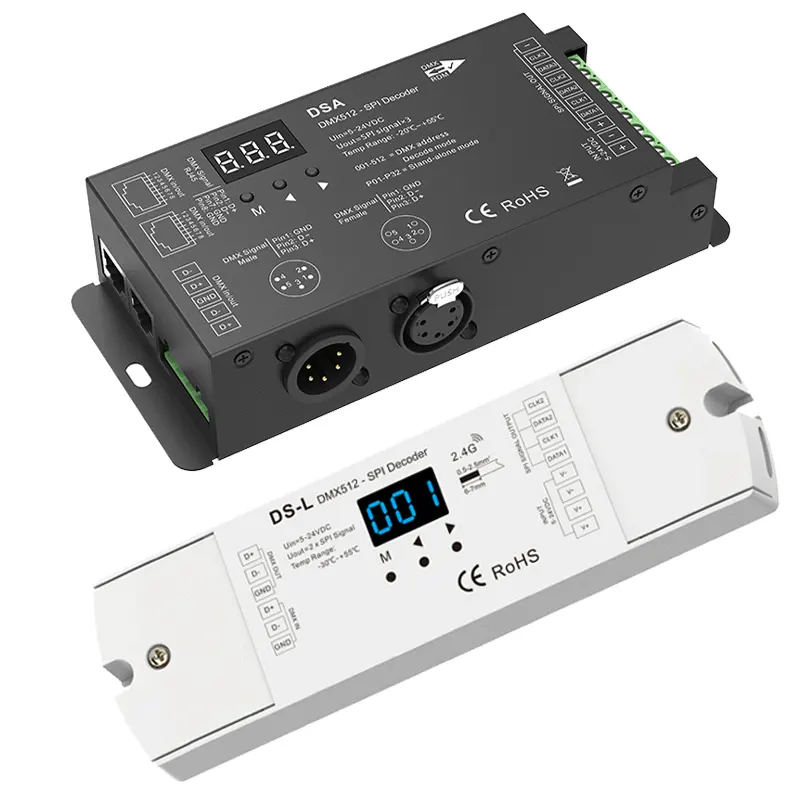
In professional lighting projects, DMX512 decoders are often treated as standard accessories, yet their differences can have a direct impact on system stability, dimming performance, and long-term reliability. With a wide range of DMX512 decoders available online—varying in output type, channel capacity, electrical design, and control features—choosing...
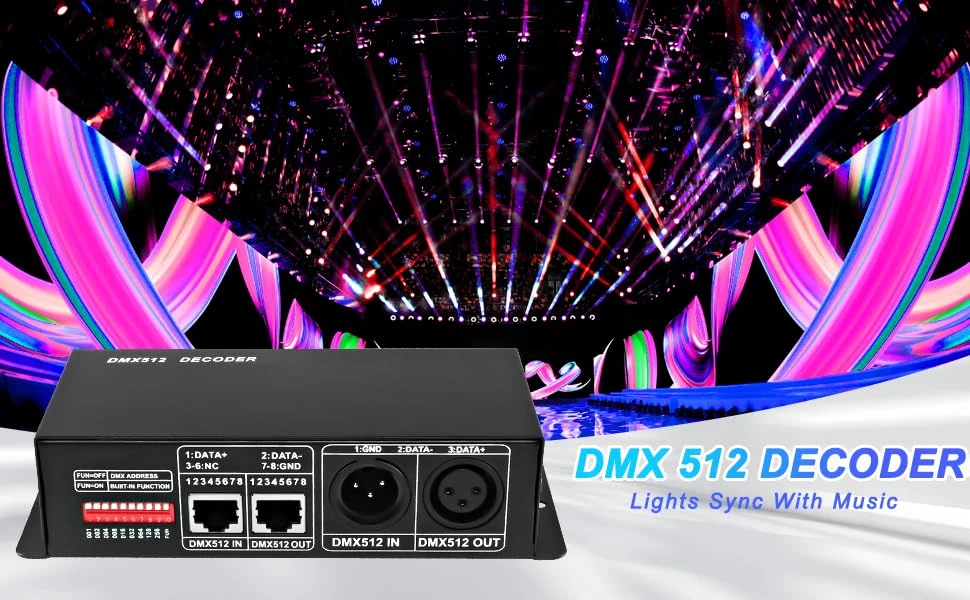
Choosing a DMX512 decoder may seem straightforward, but in real lighting projects, it often determines whether a system performs reliably or becomes a source of ongoing issues. Many users focus primarily on power ratings or basic compatibility, only to encounter problems such as flickering, unstable dimming, or inconsistent control after installation....
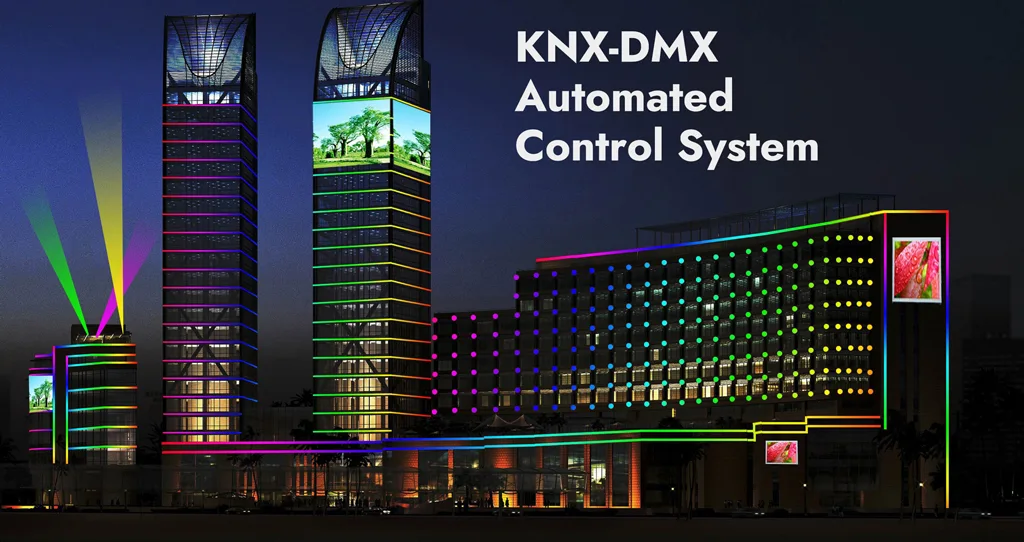
With the popularization of smart buildings and smart homes, lighting control has become an indispensable part of them. KNX and DMX512 are two commonly used lighting control protocols, which are widely used in smart homes and stage lighting, respectively. So, is it possible to use DMX512 in the KNX control system? The answer is yes. Thanks to advances...
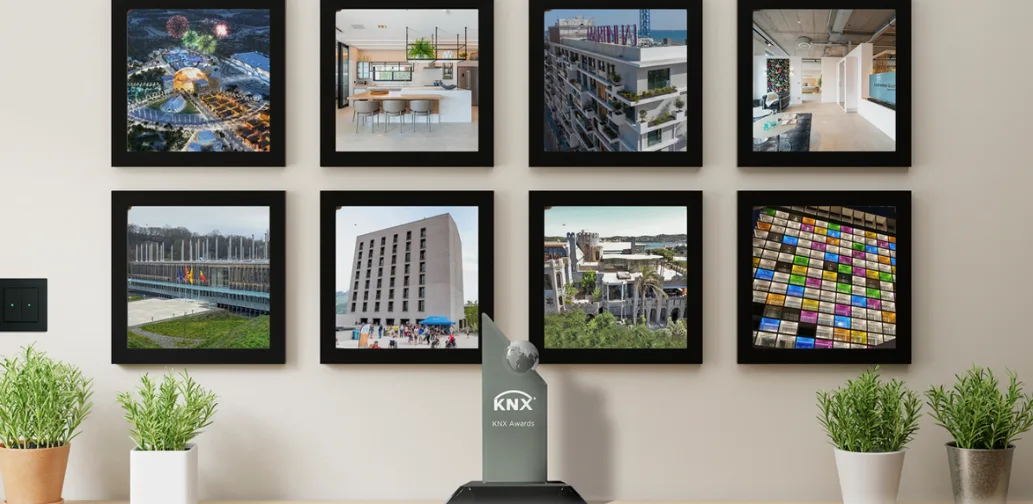
Whether it is a single family home or an office building, there is a growing demand for comfort and versatility in management such as air conditioning, lighting and access control systems. Efficient energy use is also becoming more and more important, but only intelligent control and active monitoring of equipment within all systems can achieve more...
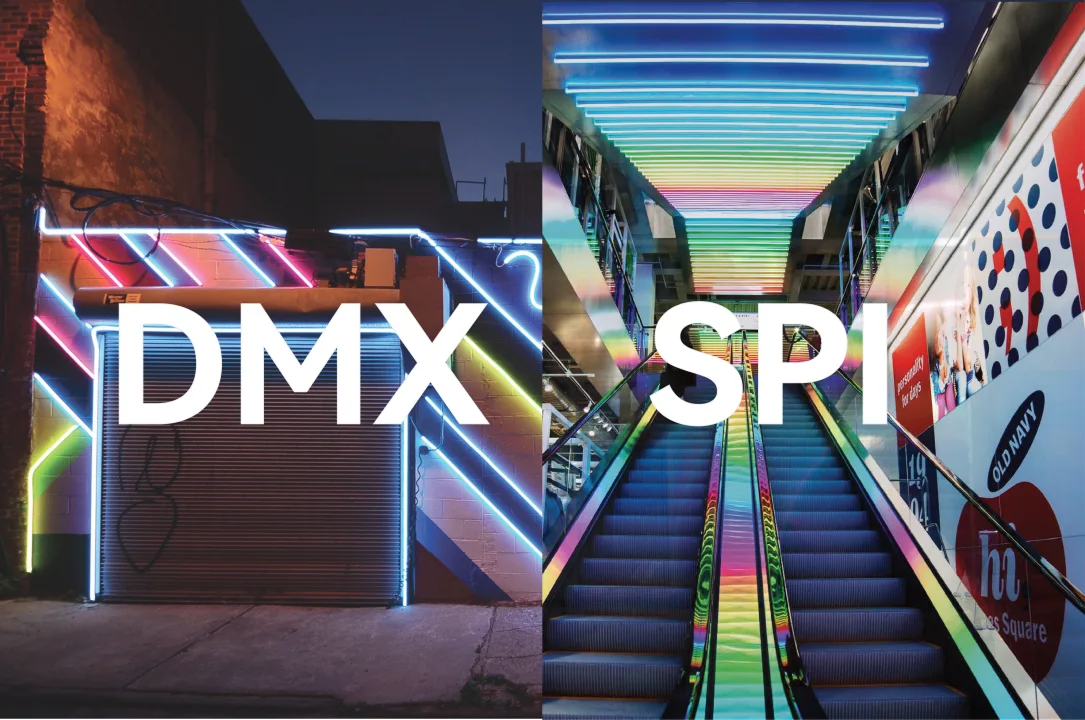
It is well known that digitally addressable LED strips are categorized into DMX LED strips and SPI LED strips, which have their own controllers or control systems. It is often thought that DMX control systems have nothing to do with SPI LED strip lighting; however, the truth is that there is a deep connection between DMX control and SPI LED strip control,...
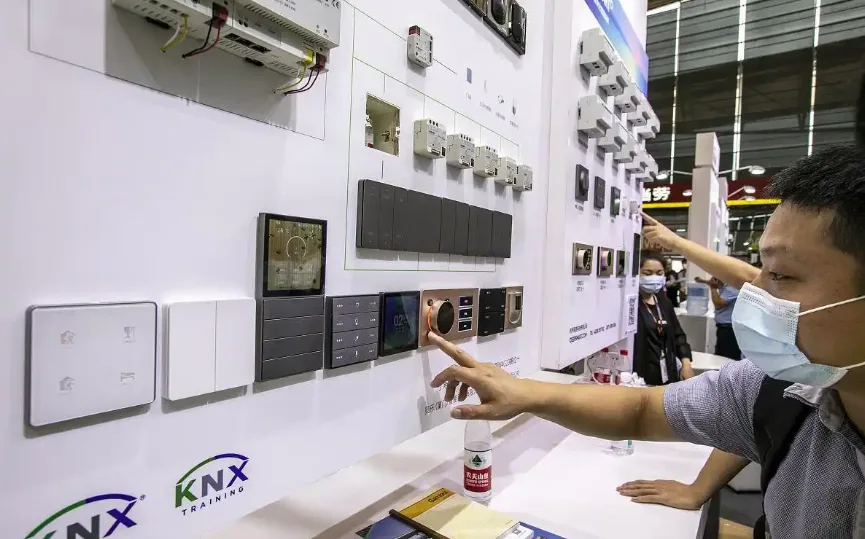
Related blogs following: Can DMX512 be used in KNX control systems?Guide to KNX Smart Control Systems What Is A KNX System? The KNX system (Konnex) is a standard based on an earlier 485 topology optimized to be homologous to 485. They are identical in that they have two communication lines and differ in that they have two auxiliary power lines. In addition,...
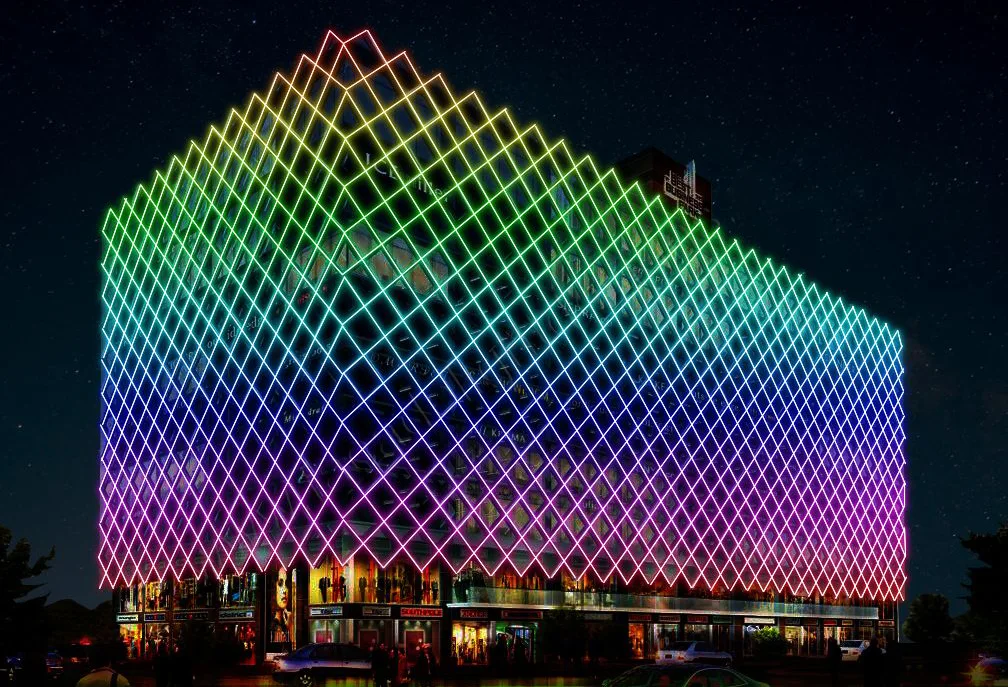
A new generation of LED architectural lighting is emerging: LED neon flex can fit perfectly into shaped building skins, consume 85% less energy than traditional neon, and with the DMX512 intelligent control system, 2.56 million color combinations can be realized in a single building. The spiral light effect of Shanghai Center Tower and the pixelated...
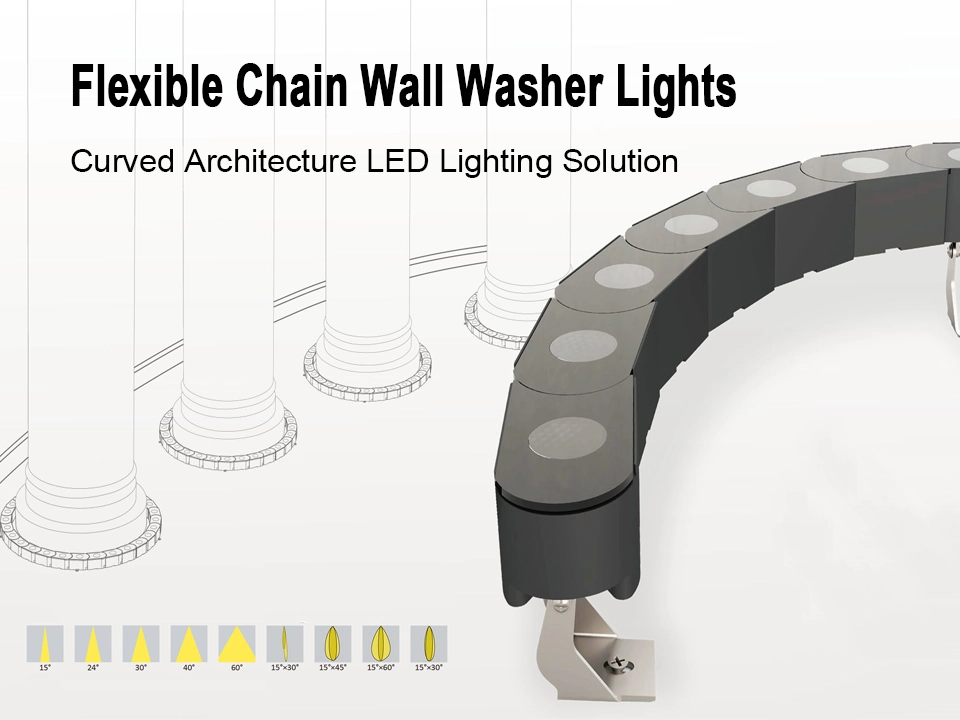
When a building façade starts to curve, twist, or turn sharply at a corner, most traditional rigid wall washers immediately run into trouble. You can force a straight bar onto a curved surface—but the result is usually uneven lighting, dark gaps, and frustrated installers. Flexible chain wall washers are specifically designed to enhance facade lighting...
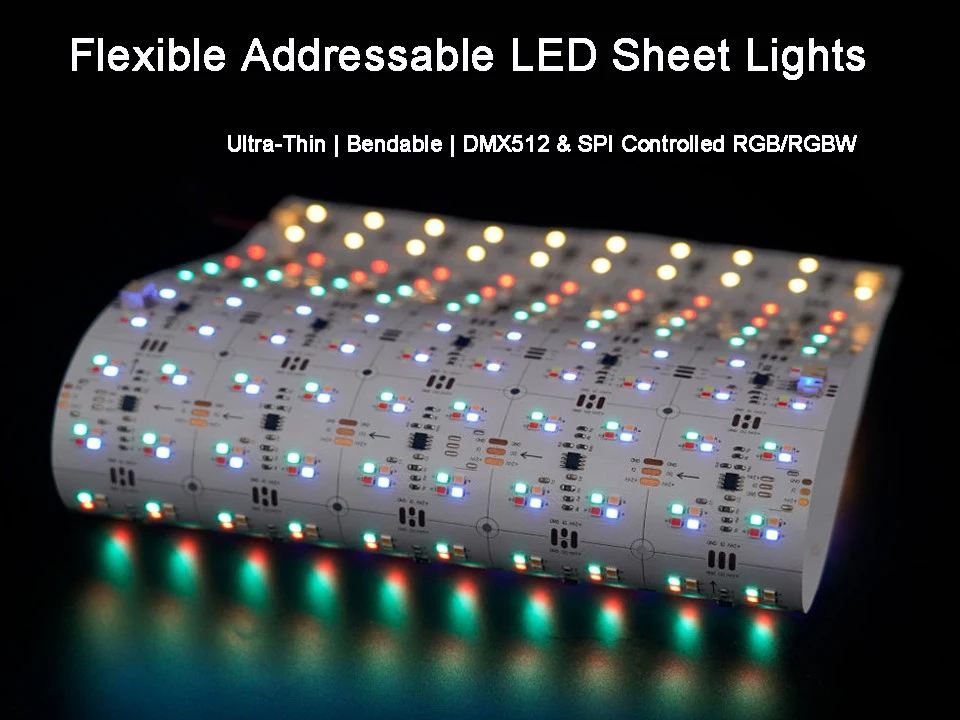
Imagine walking into a modern gallery, a sleek office lobby, or a cutting-edge exhibition space where the walls themselves seem alive with color. For architects, lighting designers, exhibition planners, and commercial space owners, this is exactly the challenge they face: traditional rigid lighting panels often cannot deliver dynamic effects, are difficult...

An LED dance floor is more than just a floor—it’s a centerpiece for any modern event. From weddings to nightclubs, corporate parties, and concerts, an LED light dance floor instantly creates a lively, immersive atmosphere. Made up of modular LED dance floor panels, these floors can display colorful patterns, animations, or even video, all synced with...
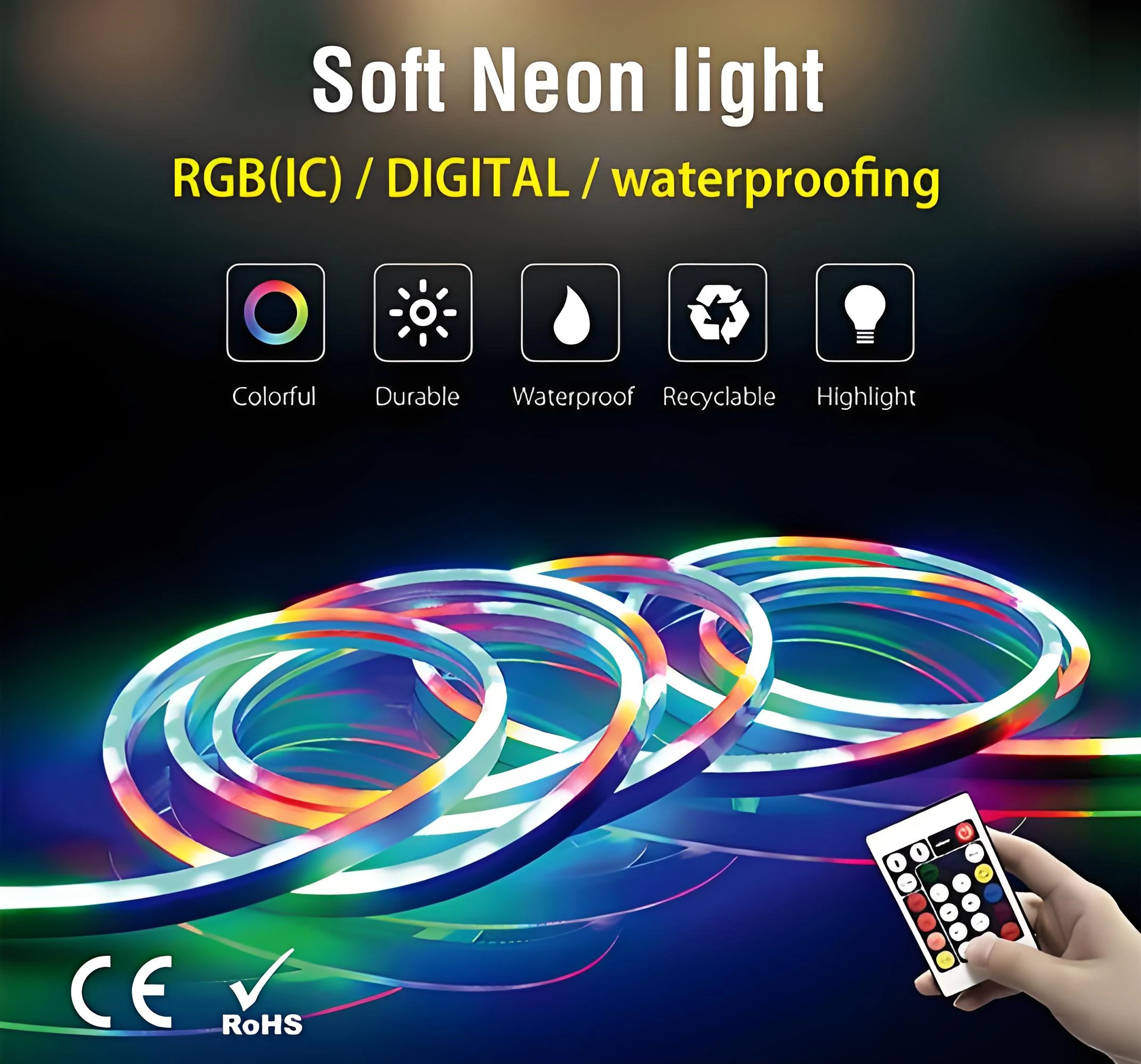
Outdoor facade lighting has become a powerful tool for shaping iconic building identities. With waterproof RGB LED neon strips and DMX control, architects and designers can create dynamic, color-changing effects that transform any facade. From towering skyscrapers to boutique hotels and shopping centers, dynamic, color-changing lighting solutions are...
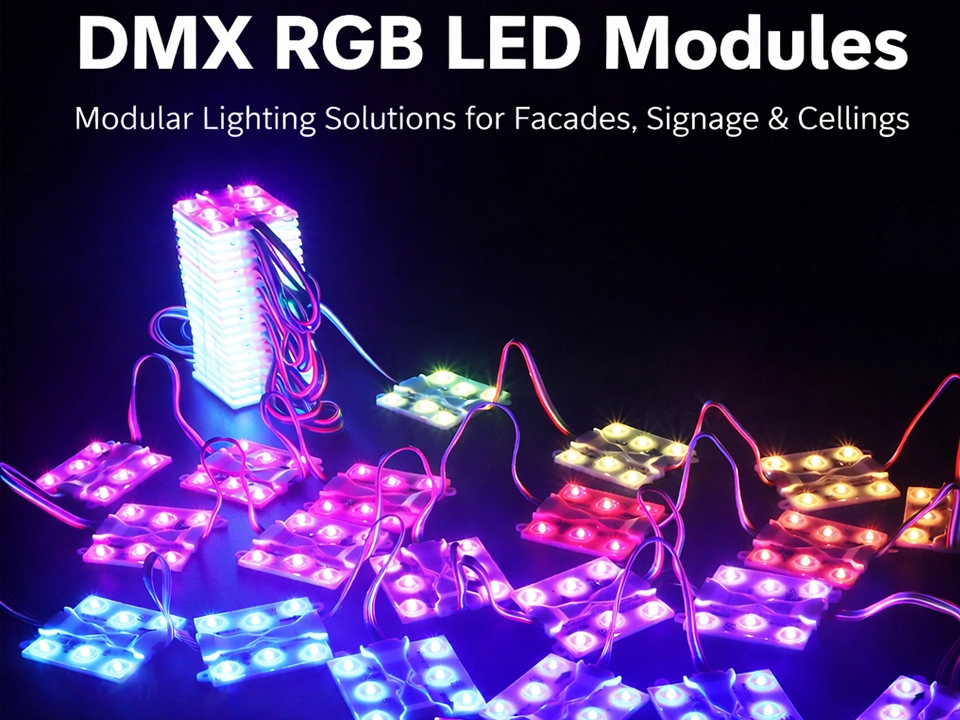
Imagine a building facade coming to life under the night sky, with signage colors shifting with the seasons and ceiling lights creating immersive, flowing light patterns. At the heart of this transformation are DMX RGB LED Modules—a cutting-edge lighting solution that combines pixel-level dynamic control and RGB/RGBW color-changing capabilities to offer...

Picture walking past a sleek office lobby, a lively commercial plaza, or a building façade that seems to glow from top to bottom — that’s the power of a well-designed wall wash. LED wall washer lights — from rigid and flexible strips to chain-modular and pixel-addressable systems — turn ordinary walls into dynamic canvases. Unlike conventional panels...
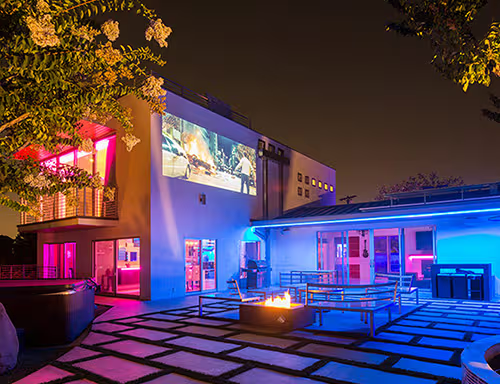
In the ever – evolving realm of modern lighting, 12V/24V RGB/RGBW waterproof DMX LED strip lights have emerged as a revolutionary force, reshaping the landscape of outdoor illumination. These advanced lighting strips combine powerful features with stunning visuals—delivering both performance and beauty in every application. Voltage Comparison:...
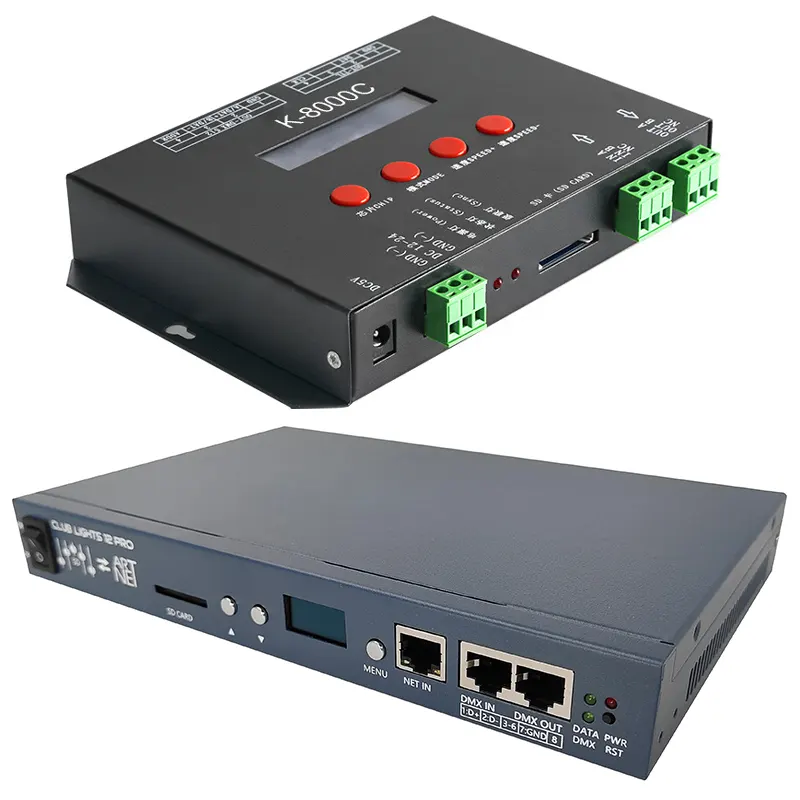
Best for:
- Dynamic color-changing lighting
- Multi-fixture synchronized control
- Medium to large-scale installations
Why Choose DMX?
- Based on the DMX512 protocol
- Reliable long-distance signal transmission
- Supports multi-zone and scalable systems
Typical Applications:
- Architectural facade lighting
- Commercial lighting systems
- Stage and event lighting
Best for:
- Individually addressable LED strips
- Pixel mapping and animation effects
Key Characteristics:
- Each LED can be controlled independently
- High flexibility for dynamic patterns
- Requires more complex wiring and controllers
Typical Applications:
- Media facades
- Decorative lighting
- Entertainment lighting
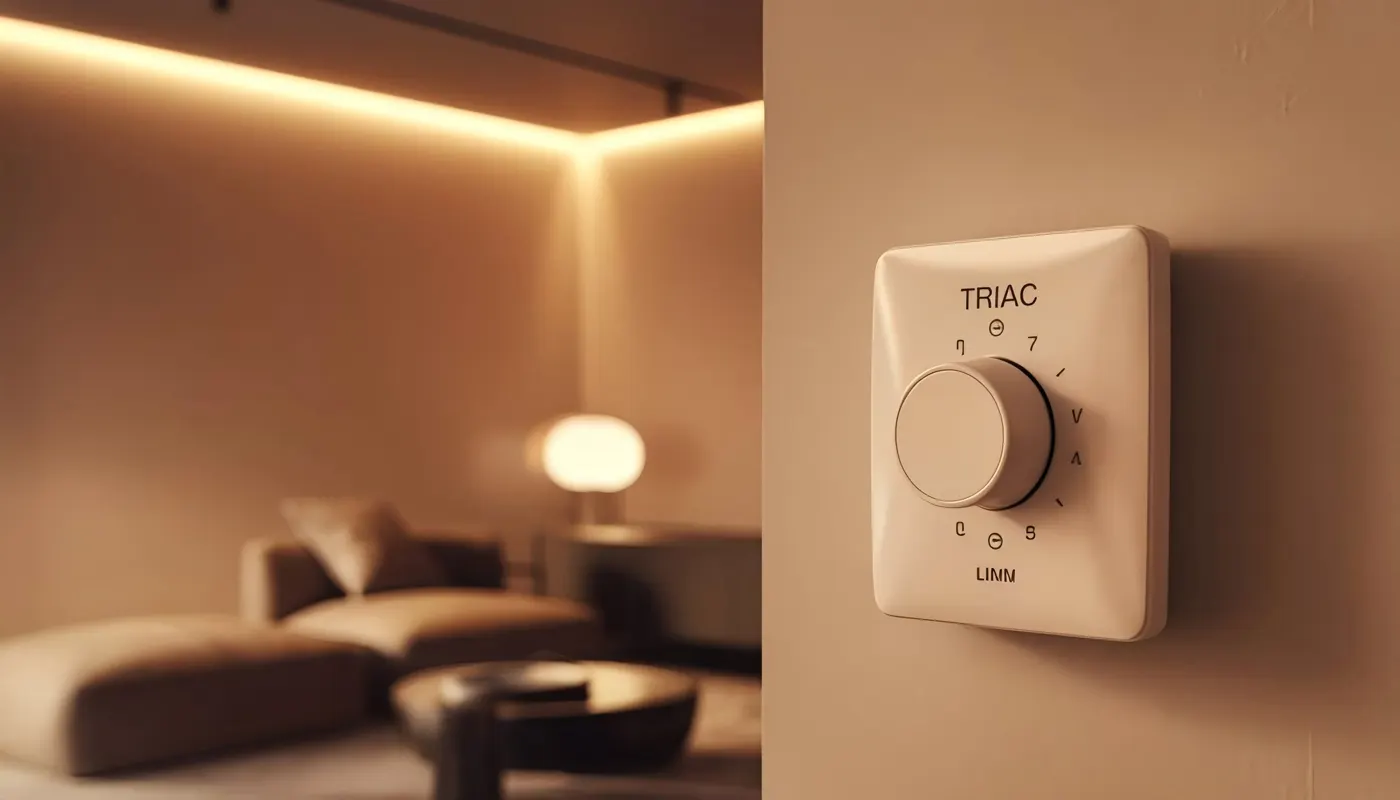
Best for:
- Single-color lighting
- Basic dimming or on/off control
Key Characteristics:
- Easy to install
- Cost-effective
- Limited control capabilities
Typical Applications:
- Residential lighting
- Small decorative installations