English
  简体中文
简体中文  Deutsch
  Español
  Français
  Italiano
  日本語
日本語  한국어
한국어  Polski
  Português
  Русский
  Türkçe
  Nederlands
  Tiếng Việt
  ไทย
ไทย 
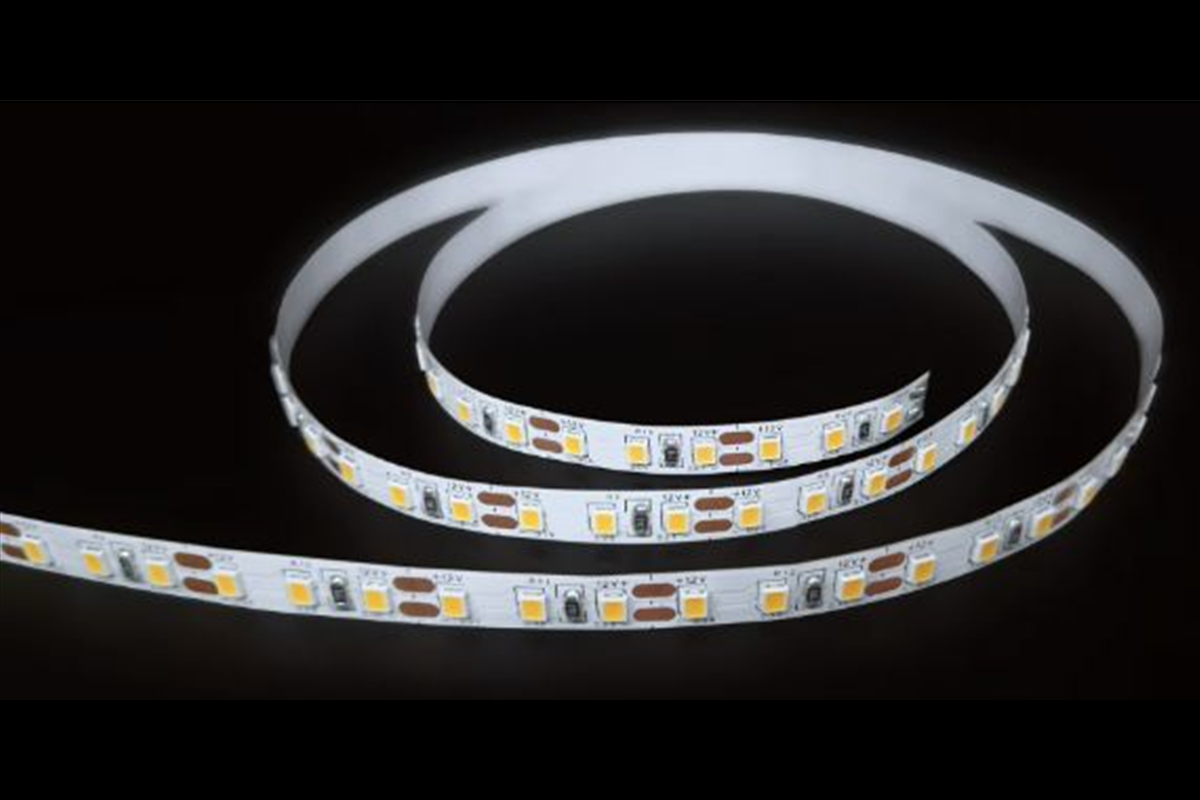
Figure 1. A supplier should be evaluated against the exact LED strip configuration being purchased—not a generic product name.
Buyer’s shortcut: Before comparing prices, ask each supplier to quote the same specification and provide evidence for its factory, certification scope, sample results and production controls. If the documents and samples hold up, place a pilot order before moving to volume.
China offers an enormous selection of LED strip factories, assemblers, trading companies and specialist manufacturers. That variety is useful, but it also makes supplier selection difficult. Two quotations may both say “24V COB strip, CRI 90,” while the products differ in PCB copper, color consistency, thermal design, waterproof construction, adhesive, testing method and production control.
This guide focuses on checks that a distributor, contractor or OEM buyer can carry out: writing the RFQ, checking factory control, comparing samples and transferring an approved sample into repeat production.
1. Why Choose an LED Strip Supplier From China?
2. How to Find a Professional LED Strip Supplier in China
3. Common Mistakes When Choosing an LED Strip Supplier
4. FAQ’s
1. Why Choose an LED Strip Supplier From China?
China’s main sourcing advantage is the concentration of the LED supply chain, not labor cost alone. Flexible PCBs, LED packages, resistors and ICs, silicone extrusion, connectors, drivers, controllers, aluminum profiles, packaging and export logistics can often be coordinated within one manufacturing region. This can shorten the path from a drawing or performance target to a production-ready system.
A Broad Product and Component Ecosystem
A specialist Chinese supplier may support standard SMD strips, dot-free COB strips, tunable white, RGB/RGBW, digital addressable products, neon flex and application-specific designs. Nearby component and processing resources also make it easier to adjust PCB width, cut length, voltage, power, CCT, CRI, waterproof construction, wire exit and packaging.
This breadth matters when a distributor wants several product families under one specification system, or when a lighting company needs the strip, driver, controller, connector and profile to work together. It does not mean every factory is equally capable. The buyer still needs to establish which processes are controlled in-house and which are outsourced.
Customization and Faster Engineering Iteration
Useful customization starts with measurable requirements. “Make it brighter” is not enough. The supplier should ask about power, efficacy, PCB temperature, feed points, diffusion depth, binning and color tolerance, then explain any limits created by the requested width or cut length.
For OEM buyers, common customization items include reel length, PCB printing, private labels, cartons, manuals, connector assemblies and matched control systems. The supplier should also explain tooling, sample approval, certification impact and minimum production quantity before the project is released.
Scalable Production With Competitive Total Cost
China can be cost-effective for volume production, but the correct comparison is total landed and life-cycle cost—not price per meter alone. A cheaper strip that requires more feed points, produces unstable color, fails in humid installations or changes materials without notice can be more expensive after installation.
| China sourcing advantage | Buyer benefit | What still needs verification |
|---|---|---|
| Concentrated LED supply chain | More component choices and faster sampling | Approved component brands, traceability and substitution rules |
| Wide SMD, COB and control-system range | One supplier can support several project types | Depth of engineering knowledge for each claimed product family |
| OEM/ODM flexibility | Custom PCB, ratings, cable, label and packaging | Clear tolerances, tooling ownership and revision control |
| Scalable manufacturing | Potentially competitive volume pricing and lead time | Actual line capacity, bottlenecks, QC resources and peak-season planning |
| Export experience | Better familiarity with documents and international logistics | Experience with the buyer’s exact market, product and Incoterm |
2. How to Find a Professional LED Strip Supplier in China
Step 1: Define the Product Before Searching
A vague inquiry attracts vague quotations. Before searching for suppliers, write down what will actually be purchased, packed and installed. If the product is still under development, identify which fields are fixed and which require engineering recommendations.
| RFQ field | Information to provide | Why it changes the quotation |
|---|---|---|
| Application | Cove, cabinet, retail display, signage, outdoor façade, machine or OEM luminaire | Determines output, protection, thermal and installation priorities |
| Strip construction | SMD or COB; single color, tunable white, RGB, RGBW or addressable | Changes PCB, controller, cut length and optical appearance |
| Electrical | 12V/24V/48V, W/m, maximum run, feed points and driver | Affects current, voltage drop, heat and cable selection |
| Optical | CCT/color, CRI, lumen target, SDCM or bin requirement | Defines LED selection and acceptable color variation |
| Mechanical | PCB width, reel length, cut length, wire and connector | Controls installation fit and manufacturing structure |
| Environment | Dry, damp, splash, outdoor, UV, chemical or high-temperature exposure | Determines encapsulation, sealing and material testing |
| Market | Destination country, sales channel and required certifications | Changes labels, documents, component choices and approval route |
| Commercial | Annual forecast, first order, packaging, Incoterm and delivery date | Allows a realistic MOQ, price and capacity plan |
Need Help Building Your LED Strip RFQ?
If some specifications are still open, send the application, target market and estimated quantity to the SignliteLED engineering team. The team can identify the missing RFQ details before quotation.
Step 2: Build a Shortlist From Several Channels
Google, B2B marketplaces, trade exhibitions, industry referrals and official manufacturer websites are useful starting points. Search with product-specific terms such as “custom COB LED strip manufacturer,” “LED strip light manufacturer China,” or “custom LED strip manufacturer from China” to narrow the shortlist. Then verify every candidate through technical documents, comparable samples and factory evidence.
A marketplace badge can help with initial screening, but it does not replace technical verification. Likewise, a modern website is a positive communication signal, not proof of factory control. Keep a shortlist of three to five candidates and record the legal company name, factory address, website, main product focus and contact person.
Step 3: Verify Who Controls Manufacturing
A trading company is not automatically unsuitable. Some provide strong sourcing and service. The critical question is who controls design, approved components, production release, inspection and corrective action. If the sales company cannot identify the actual factory or explain how changes are controlled, the buyer carries more risk.
Request a live factory video call or an on-site audit. Ask the supplier to show the company sign, production date, SMT or assembly area, waterproof process, aging area, laboratory, warehouse and the exact model being quoted. A prerecorded corporate video is useful background, but a live, model-specific walkthrough is better evidence.
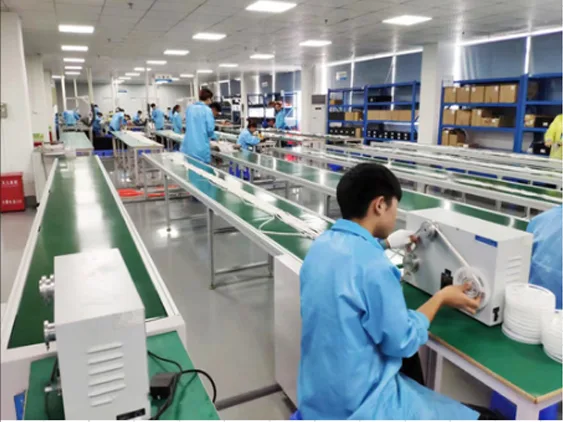
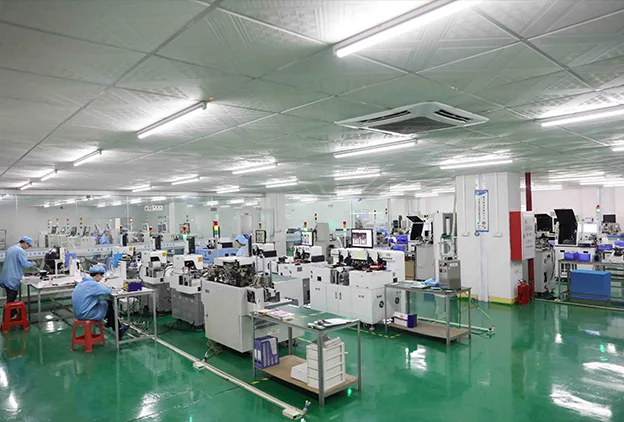
Figure 2. SignliteLED production equipment. During a supplier audit, connect visible capacity to the process and product actually being quoted.
Step 4: Test the Supplier’s Engineering Response
Send the same technical RFQ to every shortlisted supplier. Do not evaluate only how fast they reply. Evaluate whether the response identifies missing information, explains trade-offs and provides data with test conditions.
For example, if you ask for a brighter 5 mm strip, an engineering-led supplier may discuss copper area, current density, PCB temperature, maximum run and aluminum-profile requirements. A weak response may simply promise any lumen value without explaining how it will be achieved.
- • Can the supplier recommend a strip based on the application rather than sending the entire catalog?
- • Can it calculate voltage drop and maximum run length?
- • Can it explain the difference between nominal and measured power?
- • Can it state tolerances for CCT, CRI, power, dimensions and lumen output?
- • Can it provide a drawing, specification revision and wiring recommendation?
- • Can it explain what must change if the strip is placed in a waterproof sleeve or shallow profile?
Step 5: Check Product Range and Customization Depth
Product range is useful when it reflects genuine process knowledge. Review real model pages, specifications and downloadable files. For example, SignliteLED’s LED strip light range includes SMD, COB, digital addressable, neon and profile-related solutions. Buyers comparing dot-free products can review the COB LED strip series, while conventional component-based designs are available through the SMD LED strip range.
For complete linear-lighting systems, buyers should also verify compatibility between the strip, LED aluminum profile, LED power supply and LED controller rather than approving each component independently.
Do not count catalog pages. Ask which parameters can be changed without new tooling, which changes require a new PCB or extrusion, how samples are coded and how the final revision is transferred into production.
Step 6: Verify Certifications and Test Evidence
Do not ask only, “Do you have UL?” or “Is it CE?” First define the destination and shipped configuration: bare strip, strip plus driver, wireless kit, finished luminaire or component for an OEM product. Then ask for the certificate or report number, exact model scope, applicable standard, certificate holder, manufacturing factory and public database record where available.
A certificate for a power supply does not certify the complete kit. ISO 9001 is a management-system certificate, not a product approval. LM-80 is a test method for LED packages, arrays or modules, not a universal certification for a finished strip. An IP rating should be supported by the tested construction, including the end seals and connectors used in the installation.
For independent verification, buyers can search the official UL Product iQ, Intertek Directory of Listed Products and CSA Group Product Listing databases. ISO official ISO 9001 page describes a quality-management-system standard, not a product approval.
Review SignliteLED’s published certificate library, but verify which certificate applies to the quoted product. For waterproof selection, the LED strip IP rating guide explains common constructions and limitations.
Step 7: Compare Samples Under the Same Conditions
Order comparable samples from two or three shortlisted suppliers. Use the same driver, profile, ambient temperature, stabilization time and measurement method. Record the model and sample code so that the approved unit can become a signed golden sample.
| Sample check | Recommended buyer method | Acceptance evidence |
|---|---|---|
| Dimensions and construction | Measure PCB width, cut length, reel length, wire and connector; inspect soldering and encapsulation | Drawing and sample match within agreed tolerance |
| Electrical performance | Measure input voltage, current, W/m and voltage at the far end after stabilization | Recorded test setup and pass/fail limits |
| Optical performance | Measure lumen output, CCT, CRI and color consistency using suitable equipment | Data report linked to the sample code |
| Thermal behavior | Operate in the specified profile and environment; record PCB/profile temperature after stabilization | Maximum temperature and operating conditions documented |
| Visual uniformity | Compare hotspots, dark sections, color shift and dimming behavior in the intended diffuser depth | Approved reference photos and golden sample |
| Waterproof claim | Review the exact construction and accredited test report; use qualified testing for formal IP validation | Report sample, seal design and production item agree |
Avoid improvised stress tests.
Step 8: Audit Quality Control and Mass-Production Transfer
A sample proves that one unit can be made. The supplier’s quality system must prove that the same construction can be repeated. Review incoming inspection, first-article approval, in-process checks, aging, final inspection, lot coding, retained samples and complaint handling.
Before the purchase order, lock critical items such as LED source or bin, PCB construction, resistors or ICs, adhesive, silicone or sleeve, cable, connector and driver. The supplier should not substitute these items without written review. For certified products, a change may also require certification-body evaluation.
According to its About Us page, SignliteLED uses integrating-sphere, distribution-photometer, salt-spray, high-temperature and high-humidity equipment. A buyer should request the actual test report, sample identity, equipment, date and acceptance criteria relevant to the order.
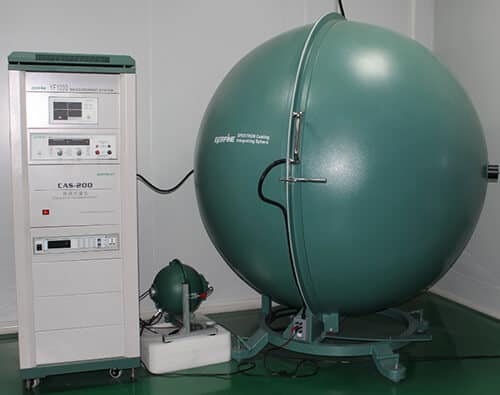
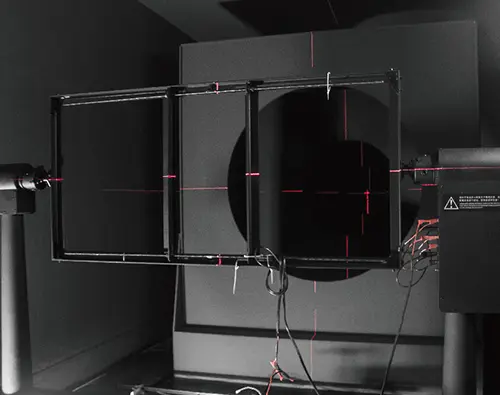
Figure 3. SignliteLED photometric testing equipment. Buyers should request a report tied to the tested sample, date and acceptance criteria.

Video: SignliteLED 220V COB LED Strip — Product Construction and Installation
Select the image to watch the 220V COB LED strip product demonstration.

Video: A Customized Linear Lighting Product for an Export Project
The video shows why application, matching components and custom assembly should be discussed before quotation.
For additional production and application footage, watch SignliteLED factory tours and product testing videos.
Step 9: Compare Commercial Terms and Start With a Pilot Order
Once technical candidates pass sample review, compare commercial terms on the same specification. Ask for MOQ, sample and tooling fees, lead time, capacity reservation, packaging, payment schedule, Incoterm, warranty scope, defect handling and change-notification terms.
MOQ, Samples and Lead Time: What Buyers Should Confirm
| Commercial Item | What Buyers Should Confirm |
|---|---|
| MOQ | Request separate minimum quantities for standard products, custom PCB designs, waterproof constructions and OEM packaging. |
| Samples | Confirm whether the sample is standard or customized, the sample fee, sample lead time, specification revision and whether it represents the planned production model. |
| Lead time | Separate engineering confirmation, material preparation, sample production, mass production, aging and QC, and shipping time. |
| Pilot order | Agree on pilot-order quantity, inspection criteria and whether the approved sample will become the production reference. |
| Repeat orders | Confirm material availability, LED-bin consistency, production capacity and written change-notification requirements. |
For SignliteLED standard models, buyers can ask for current sample availability and production lead time. Customized PCB, waterproof construction, cable, connector or OEM packaging should be quoted after the specification and bill of materials have been reviewed. The purchase schedule should only be confirmed after the application, target quantity and required construction have been agreed.
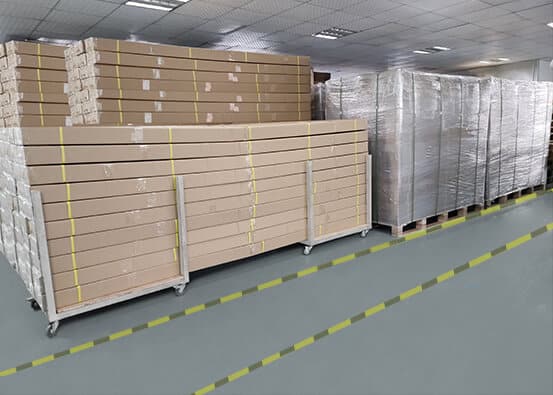
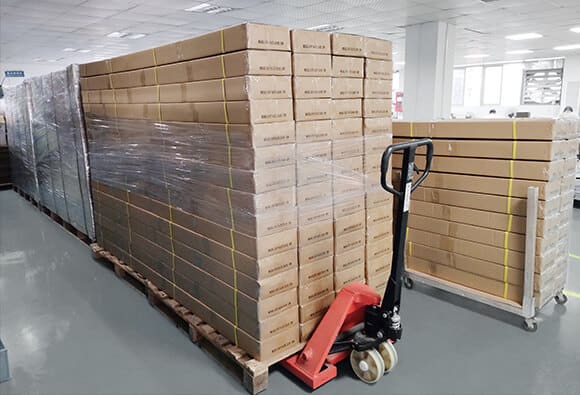
Figure 4. Packaged inventory and warehouse staging at SignliteLED. Stock status and shipment dates should be confirmed for each order.
Use a pilot order to test communication, document accuracy, packaging and batch consistency before committing the annual forecast. The purchase order should reference the approved specification revision and golden sample, not only the supplier’s model number.
| Supplier scorecard | Suggested weight | What a strong result looks like |
|---|---|---|
| Application and engineering fit | 20% | Clear questions, calculations, trade-offs and documented recommendation |
| Sample performance | 20% | Meets measurable limits under a shared test method |
| Quality system and traceability | 20% | Controlled BOM, lot records, change approval and corrective action |
| Certification and documents | 15% | Exact model, market, factory and active record can be verified |
| Production and delivery | 10% | Capacity and lead time are explained with realistic constraints |
| Communication | 10% | Answers are complete, consistent and technically accountable |
| Commercial terms | 5% | Transparent total cost, warranty, payment and Incoterm |
3. Common Mistakes When Choosing an LED Strip Supplier
Choosing the Lowest Price Before Aligning the Specification
Price comparisons are meaningless when PCB copper, LED bin, power tolerance, adhesive, wire and waterproof structure differ. Normalize the specification first, then compare cost.
Sending Only a Product Photo
A photo does not define voltage, power, CCT, CRI, cut length, maximum run, environment or control system. Send an application-based RFQ and identify which parameters may be recommended by the supplier.
Accepting Certification Logos Without Checking Scope
A logo in a catalog may belong to another product family. Ask for the record and match model, standard, holder, factory and market. Confirm whether it covers a component or finished system.
Treating a Good Sample as Proof of Mass-Production Quality
A hand-selected sample can perform well even when routine production is inconsistent. Freeze the golden sample and critical BOM, then require lot-level inspection evidence.
Ignoring Color Consistency and Tolerances
CRI and CCT labels alone do not define color consistency. Agree on binning or SDCM, measurement condition and acceptable lot-to-lot variation—especially for retail, hospitality and architectural projects.
Specifying an IP Number Without Defining the Installation
The strip body, cable exit, cut end, connector and field installation must work as one sealed system. “IP67 strip” does not mean every cut and connector remains IP67 after installation.
Allowing Silent Component Substitution
Changing an LED, resistor, PCB, adhesive, silicone, cable or driver can affect safety, color, temperature, life and certification. Put written change approval into the purchase order.
Skipping Pilot Orders and Shipment Documents
A pilot order tests much more than the product. It reveals whether labels, cartons, inspection reports, invoice descriptions, origin information and delivery communication are reliable.
How SignliteLED Supports Buyer Verification
SignliteLED can be checked against the same criteria used throughout this guide. Its published information covers a 3,000 m² Shenzhen facility, OEM/ODM support, ERP and QC workflows, and SMD, COB, digital LED strip and neon flex production. Buyers should still match each certificate, test report and production record to the exact model quoted.
Review SignliteLED’s factory and manufacturing capabilities, or browse its COB and SMD LED strip product ranges when preparing a supplier shortlist.
Conclusion
A practical sourcing sequence is to define the application, shortlist relevant suppliers, verify manufacturing control, compare engineering replies, test samples under the same method, review QC records and place a pilot order. Put the approved specification revision and golden-sample references into the purchase order.
Good suppliers also flag missing information and practical limits before quoting. That matters more than agreeing to every request, because the final construction has to remain stable after the sample moves into production.
FAQ’s
How do I verify that an LED strip supplier in China is a real manufacturer?
Check the legal company and factory address, request a live factory walkthrough, review the production and QC processes, and ask to see the quoted model on the line. The word “factory” proves little by itself. What matters is who controls the design, BOM, production release, inspection and corrective action.
What information should I include in an LED strip RFQ?
Include application, strip type, voltage, W/m, maximum run, PCB width, cut length, CCT or color, CRI, color tolerance, IP construction, driver, controller, connector, profile, destination market, certification needs, packaging, quantity and delivery target. Mark unknown fields as “supplier to recommend.”
How many suppliers should I sample?
For an important new program, two or three technically qualified suppliers are usually enough for a controlled comparison. Ordering samples from too many companies creates data without a consistent evaluation method. Shortlist first, then test comparable configurations.
Which certificates should a Chinese LED strip supplier provide?
The answer depends on the product and destination. Ask for product-specific safety, EMC, radio, environmental or performance evidence that applies to the exact shipped configuration. Do not assume that CE, UL, ETL, RoHS, ISO 9001, LM-80 and IP reports prove the same thing.
How can I prevent material substitution after approving the sample?
Approve a specification revision, golden sample and critical-component list. State that substitutions require written approval and, where relevant, certification review. Require the batch report and lot code to connect production to the approved construction.
Should I buy from a factory or a trading company?
Direct factory control can simplify engineering and traceability, but a technically strong trading company may add value. Evaluate transparency and control rather than the company label. You should know where the product is made and who is accountable for quality and changes.
Is it safe to import LED strip lights from China?
It can be, provided the product is correctly specified, tested and documented for its market and use. Country of origin alone does not determine safety. The importer must still verify the complete system, certification scope, labels and supplier controls.
Can a Chinese manufacturer produce custom LED strips?
Yes. Common options include PCB width, voltage, power, LED density, CCT, CRI, cut length, waterproof structure, wire, connector, reel length and OEM packaging. Ask which changes require tooling, a new PCB, additional testing or certification review.
Ready to Source Reliable LED Strips From China?
Whether you need custom COB LED strips, OEM packaging or controlled color consistency, SignliteLED can review your application, specifications and target market before quotation.
Written by: Elaine Zhu, General Manager at SignliteLED
Technical Review: Jason Chen, R&D Leader at SignliteLED
Email: info@signliteled.com
Related Posts