English
  简体中文
简体中文  Deutsch
  Español
  Français
  Italiano
  日本語
日本語  한국어
한국어  Polski
  Português
  Русский
  Türkçe
  Nederlands
  Tiếng Việt
  ไทย
ไทย 
The best LED lights for creating flowing light effects are water flow LED strips because they are designed to produce a smooth, directional illusion of movement using controlled brightness changes along a white light strip. They do not rely on physical motion, color changes, or complex internal electronics. Instead, the effect is created externally through a controller that sequences light intensity in a predictable, continuous pattern. This makes them well suited for architectural and decorative applications where a clean, flowing visual is needed without added complexity.
This article explains what a flowing light effect actually is, why water flow LED strips are used for it, how the effect is generated, where it is commonly applied, and what realistic expectations users should have.
What Is a Flowing Light Effect?
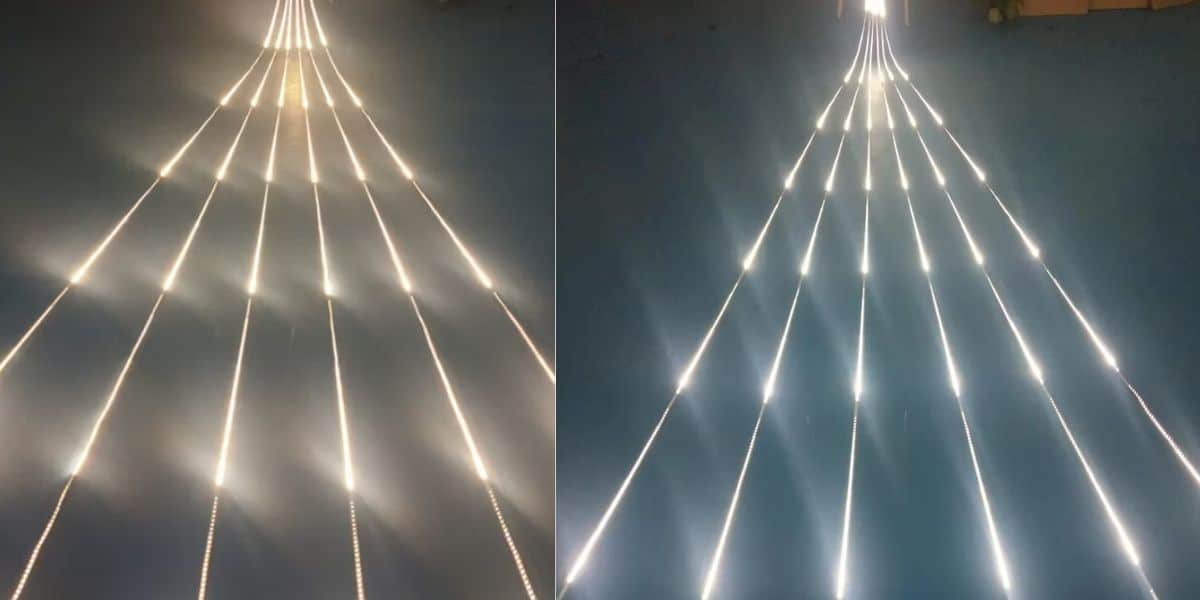
A flowing light effect is a visual illusion of movement created when light appears to travel smoothly in one direction along a surface or line.
It is important to be clear about what this means. The light itself does not move, and nothing physically shifts inside the strip. What the viewer sees as “flow” is the result of controlled brightness changes that guide the eye along the strip in a continuous sequence. When done correctly, this produces a calm, water-like motion rather than a flashing or animated look.
Why Water Flow LED Strips Are Used for Flowing Effects
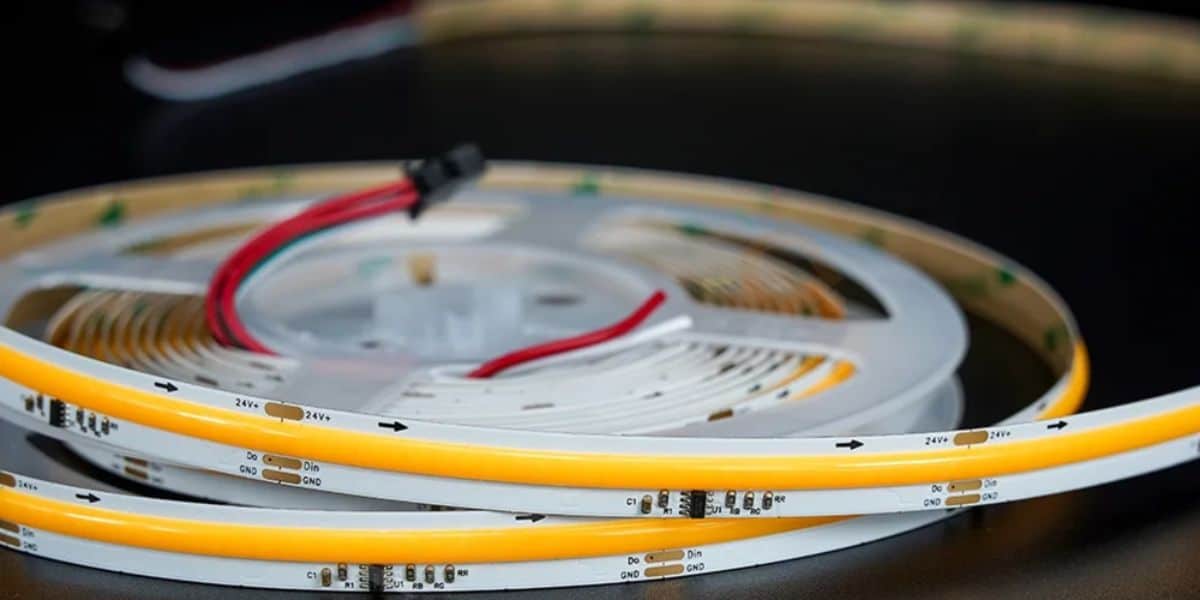
Water flow LED strips are used for flowing effects because they are optimized for uniform white light output and consistent behavior along their length. This consistency is critical. Any unevenness in brightness or gaps in illumination would immediately break the illusion of flow.
These strips are white-light-only products. There is no RGB functionality and no color variation. This limitation is intentional. A single color temperature allows the brightness transitions to appear smooth and natural, which is essential for creating a believable flowing effect.
In practical installations, a water flow LED strip is typically paired with an external controller that manages how brightness rises and falls across sections of the strip. Because the strip itself behaves predictably, the controller can produce a clean visual progression without unexpected jumps or visual noise. This reliability is why this category is commonly chosen for flow-style lighting rather than general-purpose LED strips.
How the Flow Effect Is Created
The flow effect is created entirely through controller-managed brightness sequencing.
There is no intelligence, animation, or motion built into the strip itself. Instead, the controller gradually increases brightness in one section while reducing it in another. As this sequence progresses along the length of the strip, the human eye interprets the pattern as movement.
A few important points clarify how this works in real installations:
- The strip emits steady white light at all times
- The controller determines when and where brightness changes occur
- The speed and smoothness depend on controller settings, not the strip
- Subtle transitions create the most realistic flowing appearance
When the sequencing is too aggressive, the result looks artificial or distracting. When it is controlled and even, the effect resembles a gentle stream of light moving across a surface.
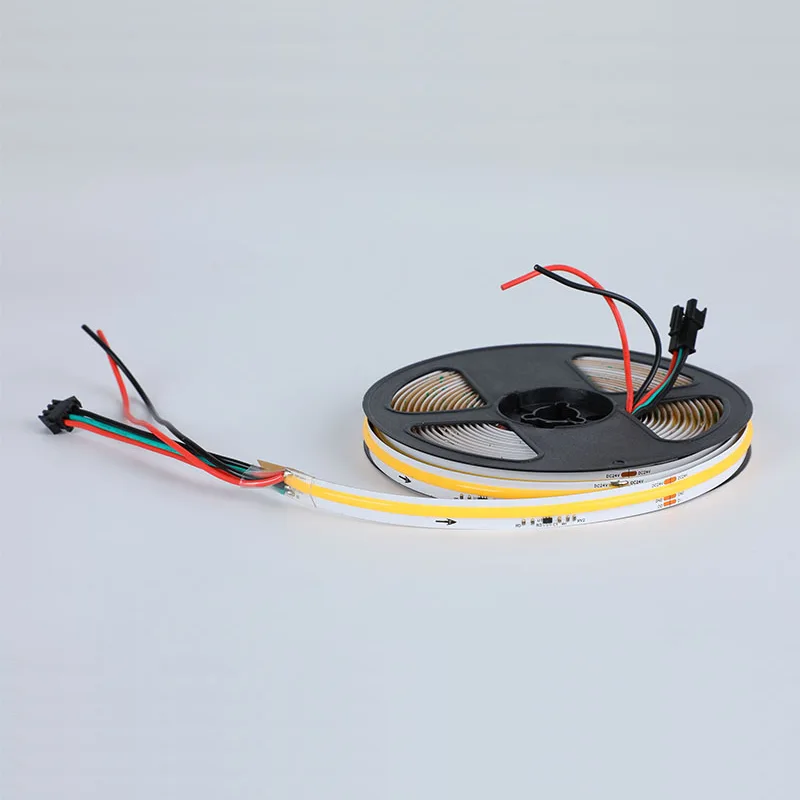
Running Water Flowing COB LED Strip Light
- Main Model: FYA10T360C addressable
- LED Chip QTY per Meter: 360chips, 576chips (Sanan)
- IC Type: WS2811
- CRI: >90
- PCB Width: 10mm
- Color Temperature: 3000K/4000K/6000K/Dual color(2700K & 6500K)
- Input Voltage: DC24V
- Power per Meter: 360chips – 11W, 576chips – 10W+10W
- Cuttable Length: 360chips – 83.33mm, 576chips – 41.66mm
- IP Grade: IP20/IP54/IP65/IP67/IP68
- Warranty: 3 years
Where Flowing LED Effects Are Commonly Used
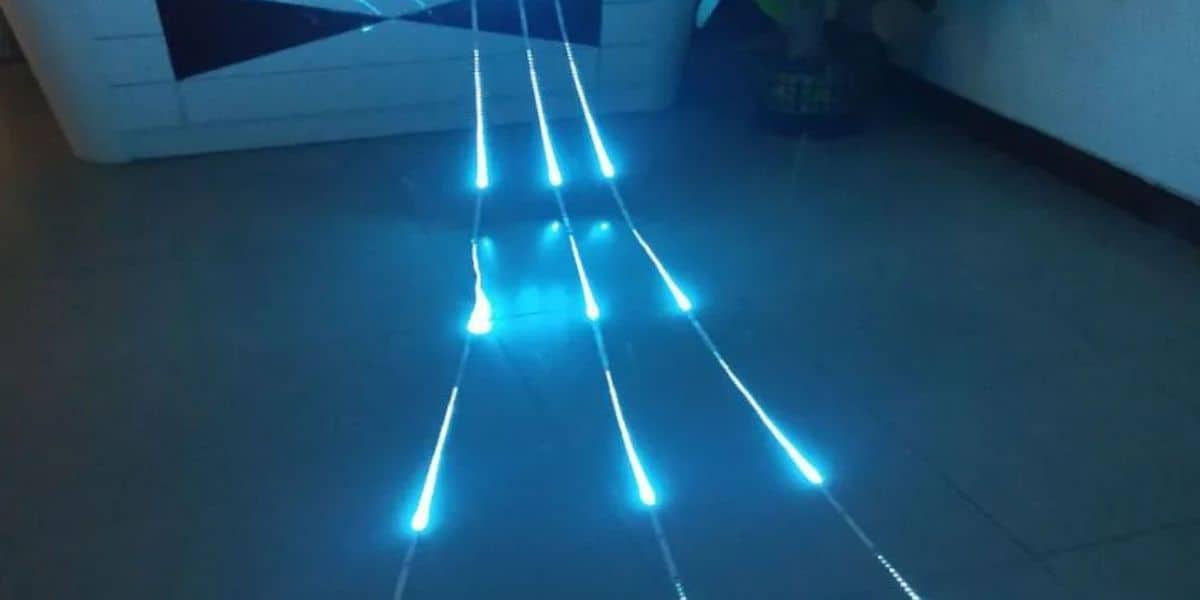
Flowing light effects are used in applications where visual continuity and calm motion enhance the space rather than dominate it.
Architectural Accents
In architectural settings, flowing effects are often applied along ceilings, coves, corridors, or feature walls. The goal is to guide the eye through a space or emphasize direction without using harsh lighting transitions.
Home Interiors
In residential environments, flowing effects appear in stair details, wall recesses, or indirect lighting zones. Because the light is white only, it integrates easily with neutral interior designs and does not compete with furnishings or finishes.
Events and Decorative Installations
Temporary installations sometimes use flowing effects to create atmosphere without complex programming. The predictable behavior of these strips makes setup straightforward and visually consistent across long runs.
In all of these cases, the effect works best when it is subtle and uninterrupted. The design relies more on placement and control settings than on brightness or novelty.
What Flowing LED Strips Can and Cannot Do
Understanding limitations is essential to using flowing light correctly.
What They Can Do
- Create a smooth illusion of directional movement
- Provide consistent white light across long runs
- Support calm, architectural lighting designs
- Work reliably with external controllers
What They Cannot Do
- Produce color-changing or RGB effects
- Generate motion on their own
- Act as animated displays
- Replace decorative lighting meant for visual impact
A flowing LED strip is not meant to be dynamic or expressive in the way decorative or color-based lighting is. Its role is controlled, restrained, and architectural.
Common Misunderstandings to Avoid
Several misunderstandings frequently lead to disappointment with flowing light installations.
One common mistake is expecting the strip itself to generate motion. Without a controller managing brightness sequencing, the strip behaves like a standard white LED strip.
Another misunderstanding is assuming color effects are possible. These products are white only. There is no option for color shifts or RGB-style transitions.
Overuse is also an issue. Setting brightness changes too fast or too strong breaks the illusion of flow and makes the effect look artificial. Flowing light works best when it is understated and continuous.
Finally, placement matters. Installing the strip where the direction of flow is unclear or frequently interrupted reduces the visual impact and makes the effect harder to perceive.
Conclusion
The best LED lights for creating flowing light effects are water flow LED strips because they provide uniform white light and predictable behavior that allows controllers to create smooth brightness sequencing. The flowing appearance is a visual illusion, not physical movement, and it depends entirely on how the light is controlled and applied. When used with realistic expectations and careful design, these strips deliver clean, architectural flow effects without unnecessary complexity.
FAQs
Related Posts