English
  简体中文
简体中文  Deutsch
  Español
  Français
  Italiano
  日本語
日本語  한국어
한국어  Polski
  Português
  Русский
  Türkçe
  Nederlands
  Tiếng Việt
  ไทย
ไทย 
Selecting the ideal lighting for each room in your home is crucial. Factors such as color temperature, brightness, wattage, and Kelvin ratings all contribute to the overall ambiance, but achieving the right balance is key. In different areas of your space, you may want to incorporate a range of color temperatures, which can enhance warmth and depth. In this article, we’ll explore the various types of lights available to assist you in choosing the perfect lighting solutions for every room.
Common Types of Household Lamps
The lighting options most commonly found in homes generally fall into three main categories:
1. Fluorescent Lamps (CFLs): Known for their energy efficiency and durability, these lamps feature a spiral design and are suitable for both indoor and outdoor lighting fixtures.
2. Halogen lamps: Typically used in outdoor settings such as floodlights and spotlights, halogen lamps can also be utilized in interior recessed and track lighting. However, they are not as energy efficient as CFLs or LEDs and generate heat when in operation.
3. LED lamps: These lamps are recognized for their longevity and energy-saving properties, available in various color temperatures, making them perfect for any room in the house.
It’s important to note that incandescent lights were prohibited in the United States starting in 2023 due to their high energy consumption. Nevertheless, specific incandescent lamps for appliances, like those used in ovens and microwaves, remain available for purchase.
What to Know About Watts and Kelvins
There are two important terms to know when discussing lights: watts and Kelvins.
A watt is the measurement of power used by an incandescent lamp. If you’ve switched to LED lamps, you’re dealing with lumens as the measure of power; the watt-to-lumen conversion is usually listed on the lamp’s box.
A Kelvin is the measure of a light’s color temperature. The color temperature is not the same as the actual light temperature. Kelvins measure how the emitted light looks, not its temperature when you touch it.
Different Color Temperatures of LED Strips
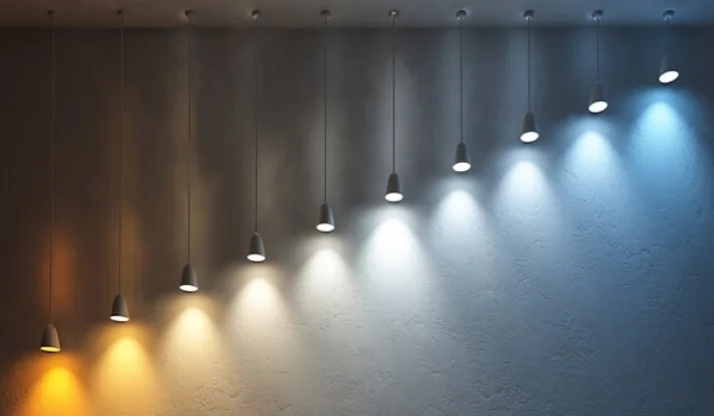
Here’s a quick breakdown of the color temperature range for four of the most common types of led strips:
Soft White
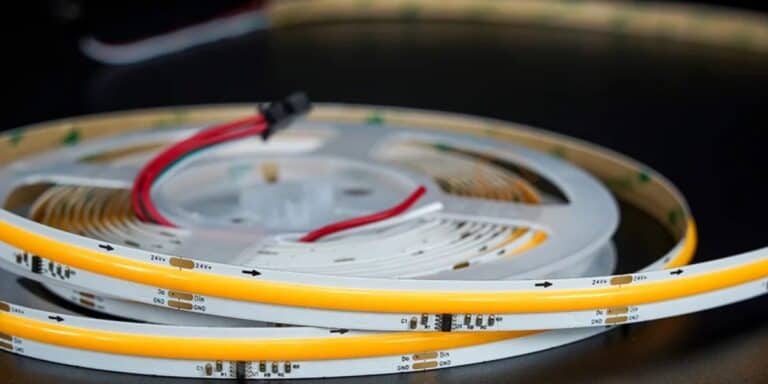
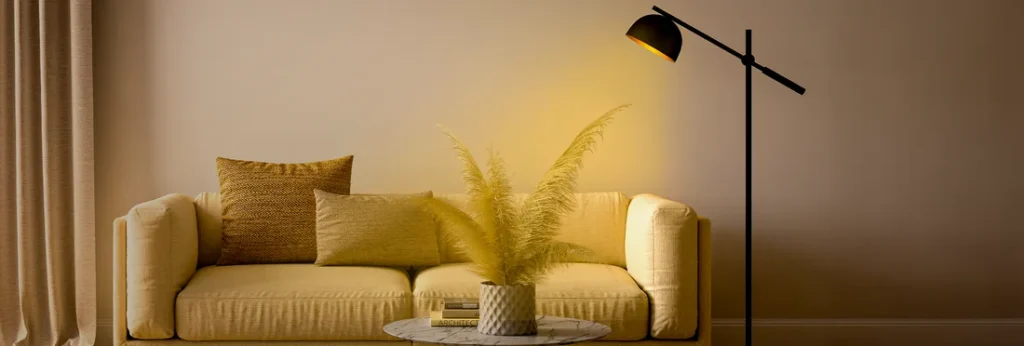
Soft white led strips register between 2,700 and 3,000 Kelvin. They emit a soft yellow glow. They illuminate rooms without being too harsh, offering ambient illumination to bedrooms, living rooms, and other spots where you like to get cozy, relax, or sleep.
Warm White
These led strips are higher on the Kelvin scale, registering between 3,000 and 4,000 Kelvin. Warm white led strips emit a warm yellow-white glow. As such, they are good for your home’s kitchens, bathrooms, hallways, and other high-traffic areas.
Cool or Bright White
All led strips seem to be bright and hot, but cool or bright white led strips specifically refer to color temperatures between 4,000 and 5,000 Kelvin.3 Cool or bright white lights emit white and blue tones. These are better for offices, garages, and other places where you might be working or completing tasks that need brighter lights to see clearly.
Daylight
In between 5,000 and 6,500 on the Kelvin scale, daylight led strips are even bluer in tone than bright or cool bulbs. Like natural daylight, which allows you to see clearly, daylight led strips are best for seeing every detail. Not surprisingly, this is the type of light that you’ll find in hospitals, large offices, and classrooms—even at home in that illuminated makeup mirror on your vanity.
Warm White vs. Soft White
If you use incandescent bulbs for lamps and fixtures at home, you’re probably familiar with soft and warm white lighting. They are closer together on the Kelvin scale and emit similar yellowish-white tones.
As its name suggests, soft white light offers a softer glow than warm. However, they are close enough to emit a semi-yellow glow on the Kelvin scale. It’s OK to use a mix of them in your home, though it’s best to use all the same types of led strips in the same room for a more uniform aesthetic.

How LED Strips Affect Ambiance
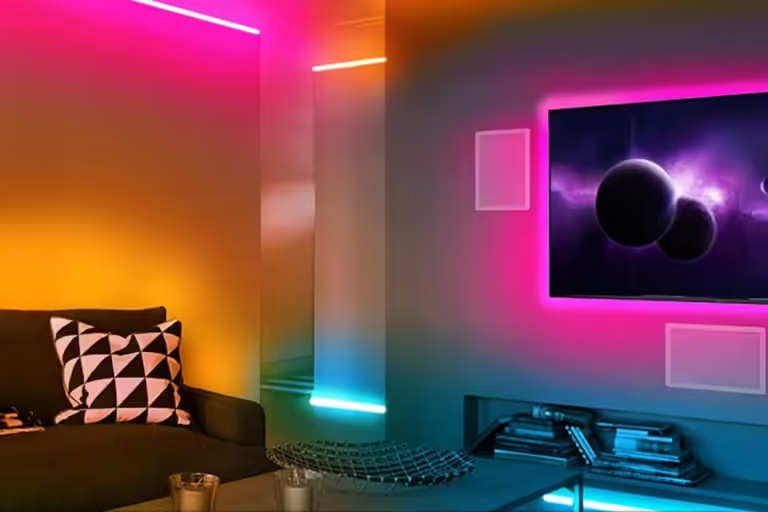
Mood lighting varies the amount and intensity of lighting to affect a space’s ambiance. The right lighting depends on the room’s purpose; for example, you’ll need stronger illumination in work areas such as a kitchen, office, or garage.
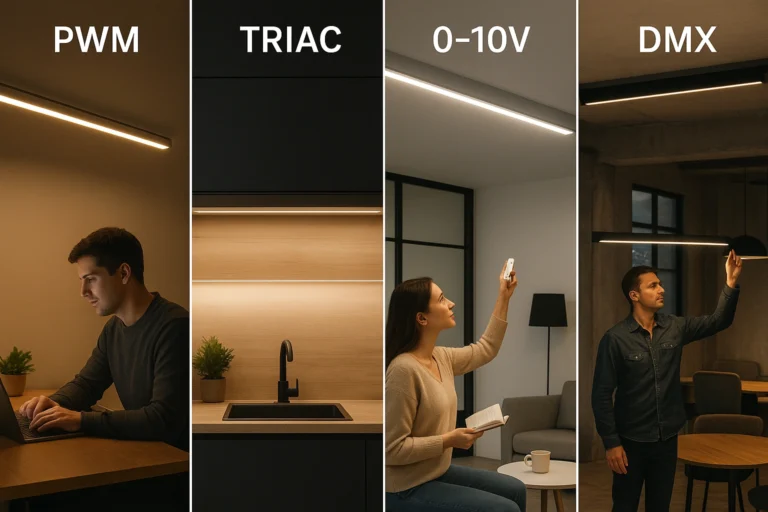
It’s important to know that whatever type of led strips you install into a room, dimmer switches can help you regulate the intensity of that led strips. With just a swipe of a fingertip, you can easily transform the ambiance of a room; for example, you can create a soft, ambient glow in the living room during movie night rather than sit in the complete dark in front of a flickering screen.
Where to Use Warm White LED Strips
Use warm white led strips where you need a bit of energy with your illumination:
Kitchens
Bathrooms
Hallways
Where to Use Soft White LED Strips
Use soft white led strips in rooms where you want an illuminated space that’s also somewhat cozy and relaxing:
Bedrooms
Living rooms
Dining rooms
Additional lighting tips to help you get the right color light for your room
Here are several lighting suggestions to help you achieve the perfect color ambiance for your space.
Customize Your Lighting Color: While the led strip itself determines the color of the light, you can change how it influences the mood of a room by selecting a different lampshade. For instance, if you want to soften a bright daylight led strip, opt for a warmer-toned shade. Conversely, you can enhance a soft white led strip’s brightness with a cooler lampshade.
Utilize Smart Lighting Features: The type of task you’re engaged in can influence your lighting preferences. Many modern led strips offer various settings, allowing you to effortlessly switch between daylight and soft white tones. Depending on your smart lighting setup, you can control these changes via an app for maximum convenience.
Combine Lighting Styles: When sharing a room with different areas, such as a workspace and a relaxation zone, you don’t have to use matching lights. Consider using a brighter, cooler light at your desk for focused tasks, while choosing a softer, warmer light over your reading chair. This way, your lighting will complement your lifestyle and make your space more functional.
To sum up, it is impossible to say in general terms whether warm white or soft white light strips are more suitable to use. When choosing, it is recommended to consider comprehensively based on personal needs, usage scenarios, and personal preferences. If you want to create a warm home atmosphere, you can choose warm white light; if you want the light to be more balanced and not too dazzling, you can choose soft white. At the same time, factors such as the quality, energy consumption, and service life of the light strip must also be considered.
FAQ
1. Do soft white light led strips have a yellow appearance?
Absolutely! Soft white led strips tend to emit a yellowish-white glow. Warm white led strips also present a yellow tone, but there’s a subtle difference that sets them apart from soft white. While it’s fine to use both types in your home, it’s advisable not to mix them within the same light fixture. For instance, if you’re replacing led strips in a chandelier, be sure to select led strips with a matching color temperature for a cohesive look.
2. What kind of light led strip is ideal for a bedroom?
For bedrooms, soft white lighting is the optimal choice, as it creates a warm and inviting atmosphere. If you enjoy reading before sleeping, using a soft white led strip in your bedside lamp would be ideal because it avoids the harsh blue hues often associated with brighter white lights. Studies indicate that exposure to blue light, such as that emitted by computers, phones, and tablets, can interfere with your ability to fall asleep at night.
3. Which type of led strip emits the brightest white illumination?
Bulbs classified as daylight, ranging from 5000K to 6500K, are known to produce the most intense white light. These led strips are ideal for enhancing the brightness in interior spaces, such as bathrooms that lack windows or have limited natural light.
4. Is cool or warm lighting more appealing?
Cool-toned led strips tend to create a more appealing ambiance, making them perfect for modern interiors and contemporary kitchens. On the other hand, warmer lighting is more suitable for areas like libraries, living rooms, or traditional kitchen settings.
Related Posts