English
  简体中文
简体中文  Deutsch
  Español
  Français
  Italiano
  日本語
日本語  한국어
한국어  Polski
  Português
  Русский
  Türkçe
  Nederlands
  Tiếng Việt
  ไทย
ไทย 
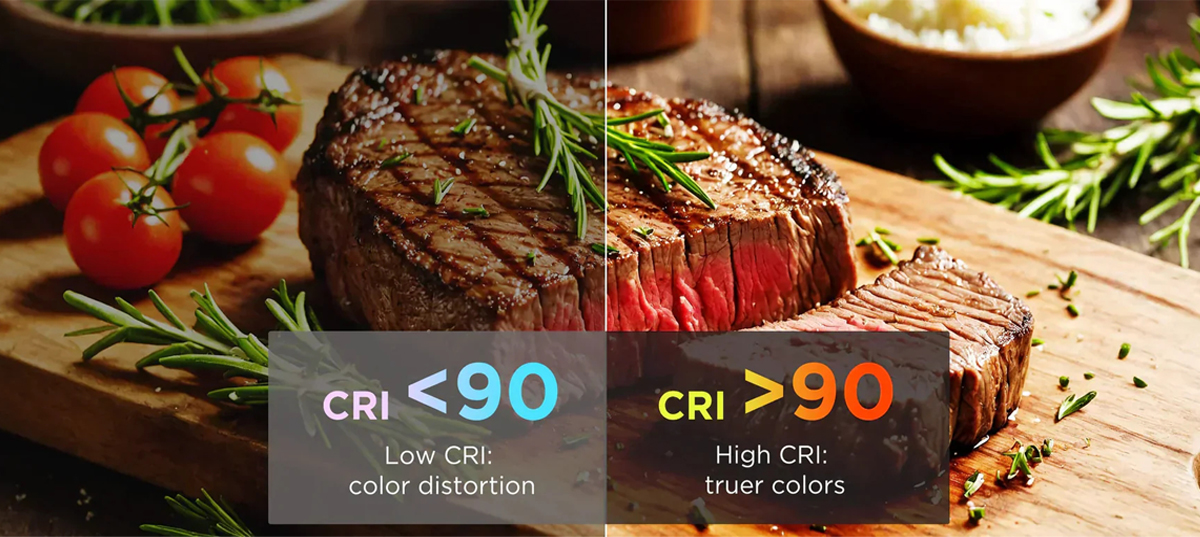
Have you ever noticed that some LED lights make fresh meat look brown, human skin appear pale, or wood furniture lose its natural warmth?
The problem is often not brightness — it is poor color rendering.
In modern LED lighting, color quality has become just as important as lumen output and energy efficiency. Whether in retail stores, supermarkets, museums, architectural projects, photography studios, or residential interiors, lighting professionals increasingly rely on high-CRI LED strip lights to reproduce colors more accurately and naturally.
However, CRI alone does not tell the full story.
Many LED strip lights advertised as “CRI 90” still fail to reproduce deep reds, skin tones, and saturated colors correctly. This is why professional lighting designers now pay closer attention to metrics such as R9, TM-30, spectral distribution (SPD), and color consistency (SDCM) when evaluating LED lighting performance.
This guide explains everything you need to know about LED color rendering — from CRI 70 to CRI 99, from basic color accuracy to full-spectrum LED technology. You will learn how color rendering works, why R9 matters more than many people realize, how TM-30 improves upon traditional CRI standards, and how to choose the right high-CRI LED strip lights for professional applications.
Whether you are a lighting designer, OEM buyer, contractor, engineer, retailer, or LED brand owner, understanding color quality is essential for creating lighting environments that look visually comfortable, natural, and commercially effective.
Key Takeaways
- ·CRI measures how accurately a light source reproduces colors.
- CRI 90+ is preferred for professional LED strip lighting applications.
- R9 plays a major role in skin tones, food displays, and warm-color rendering.
- SDCM affects color consistency across LED strip installations.
- TM-30 provides a more advanced way to evaluate light quality.
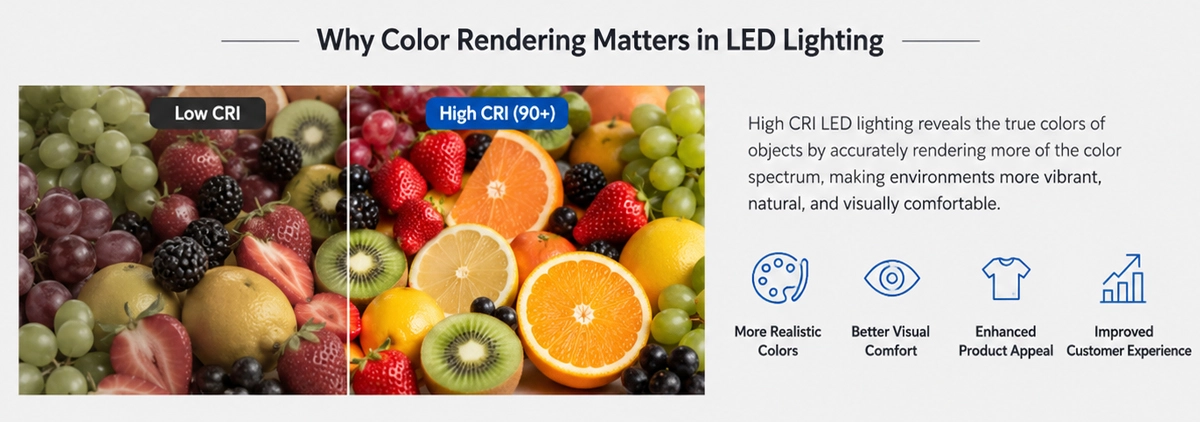
How Human Eyes Perceive Color Under Different LED Spectrums
Human eyes do not see color directly from objects themselves.
Instead, color perception depends on how light reflects off surfaces and enters our eyes.
Because of this, the spectral quality of a light source plays a major role in how natural or distorted colors appear.
Sunlight is considered the ideal reference because it contains a smooth and continuous spectrum across visible wavelengths. Under natural sunlight, colors usually appear balanced, vivid, and realistic.
However, not all LED strip lights produce a continuous spectrum. Low-quality LEDs often contain spectral gaps — especially in deep red wavelengths — which can cause colors to appear dull, grayish, or unnatural even when brightness is sufficient.
This is why poor-quality lighting may make:
- Meat look brown
- Skin tones appear pale
- Wooden interiors lose warmth
High-CRI LED strip lights use optimized phosphor formulations and improved spectral engineering to create a more balanced light spectrum, resulting in more accurate and visually comfortable color reproduction.
Modern lighting design therefore focuses not only on brightness, but also on spectral quality and visual experience.
CRI vs SDCM: Color Accuracy vs Color Consistency
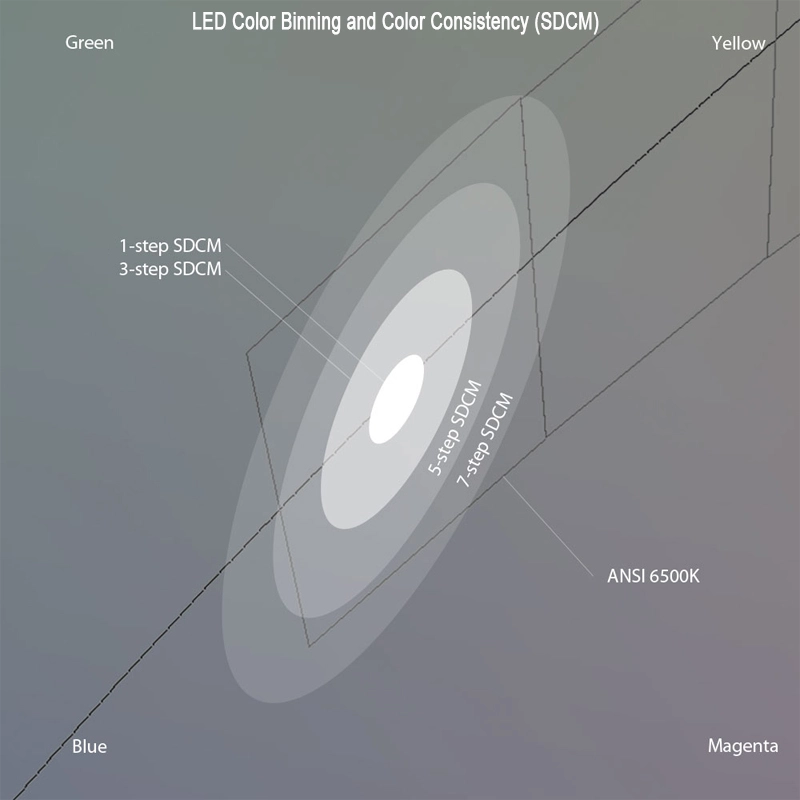
While CRI (Color Rendering Index) defines how accurately a light source reproduces colors compared to natural light, it does not guarantee that every LED strip produced will look exactly the same.
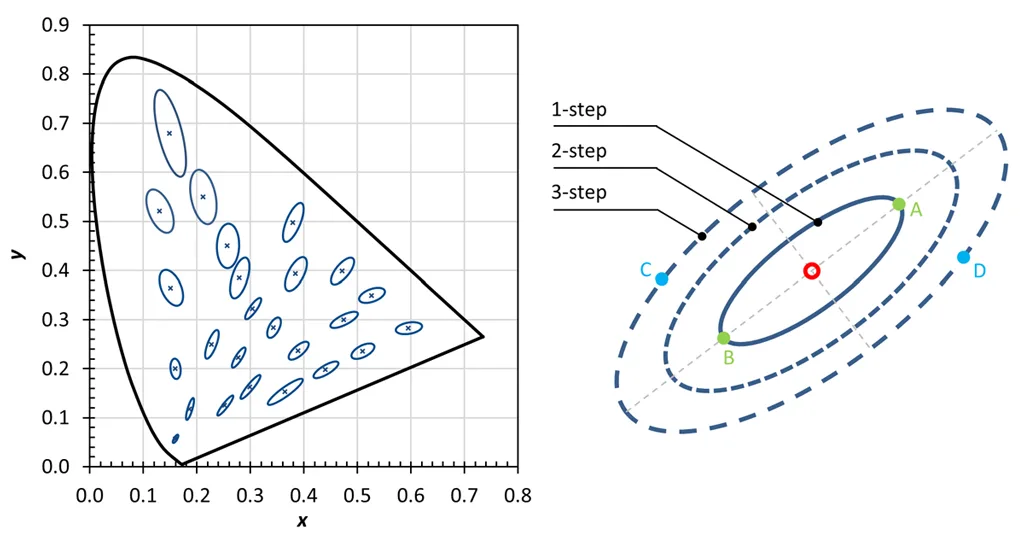
This is where SDCM (Standard Deviation of Color Matching), also known as MacAdam Ellipses, becomes essential.
CRI focuses on color accuracy, meaning how “true” colors appear under a light source. A high CRI LED strip (e.g., CRI 90+) can reproduce colors more naturally and vividly, especially skin tones, fabrics, and food displays.
However, even two LED strips with the same CRI rating can still look slightly different if their color consistency is poor.
SDCM solves this problem by measuring color variation between production batches. It defines how tightly the actual LED output is controlled around a target color coordinate.
For example:
- 1–2 step SDCM: extremely tight color consistency (premium architectural lighting)
- 3–4 step SDCM: standard commercial quality
- 5–7 step SDCM: noticeable color variation between batches
In real-world lighting projects—especially architectural linear lighting, retail environments, and large-scale installations—SDCM is just as important as CRI. A high-CRI light with poor SDCM can still result in visible color mismatch across long LED strip runs or different production batches.
This is why professional lighting designers evaluate both CRI and SDCM together to ensure both color accuracy and color consistency in real applications.
Why R9 Matters More Than Many Buyers Realize
Many LED strip lights today are advertised as “CRI 90” or even “High CRI.”
However, two LED lights with the same CRI rating can still produce dramatically different visual results.
The reason is R9.
Traditional CRI calculations mainly evaluate eight low-saturation test colors (R1–R8). Deep red colors, represented by R9, are not included in the standard Ra calculation. As a result, some LED strip lights can technically achieve CRI 90 while still reproducing reds very poorly.
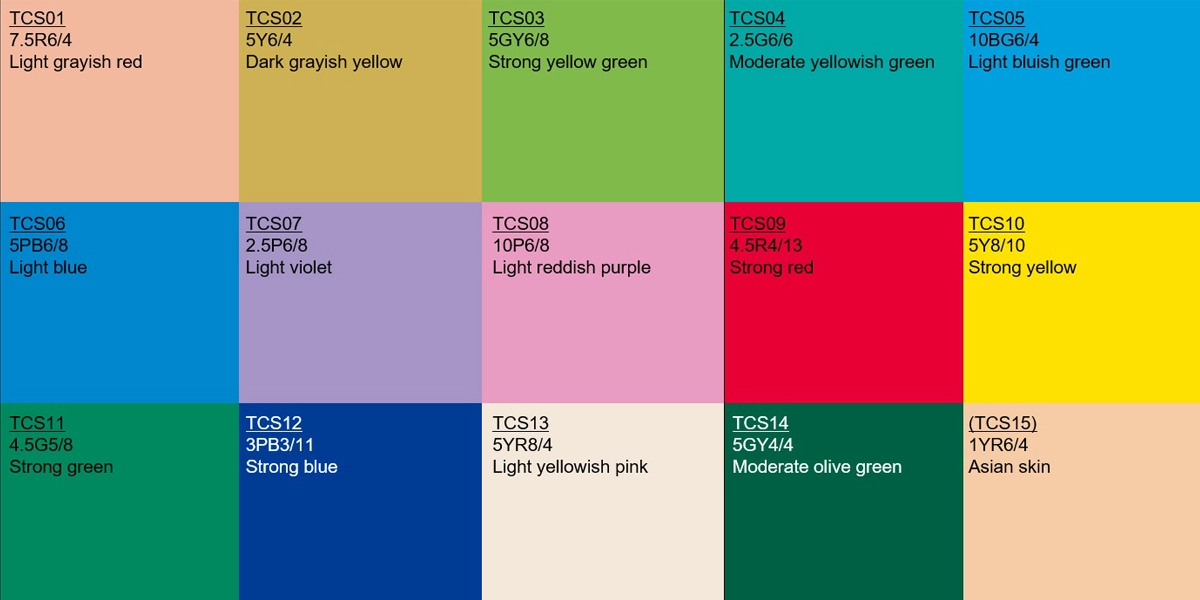
This becomes especially important in applications involving deep reds and warm tones, such as:
- Fresh meat displays
- Skin-tone lighting
- Retail environments
- Hospitality spaces
Low-R9 LEDs often make reds appear dull, brownish, or gray even when the overall CRI rating appears high.
High-R9 LED strip lights, on the other hand, provide stronger deep-red spectral output, resulting in richer, warmer, and more natural color reproduction.
In many commercial lighting projects, R9 can have a greater visual impact than the CRI number itself.
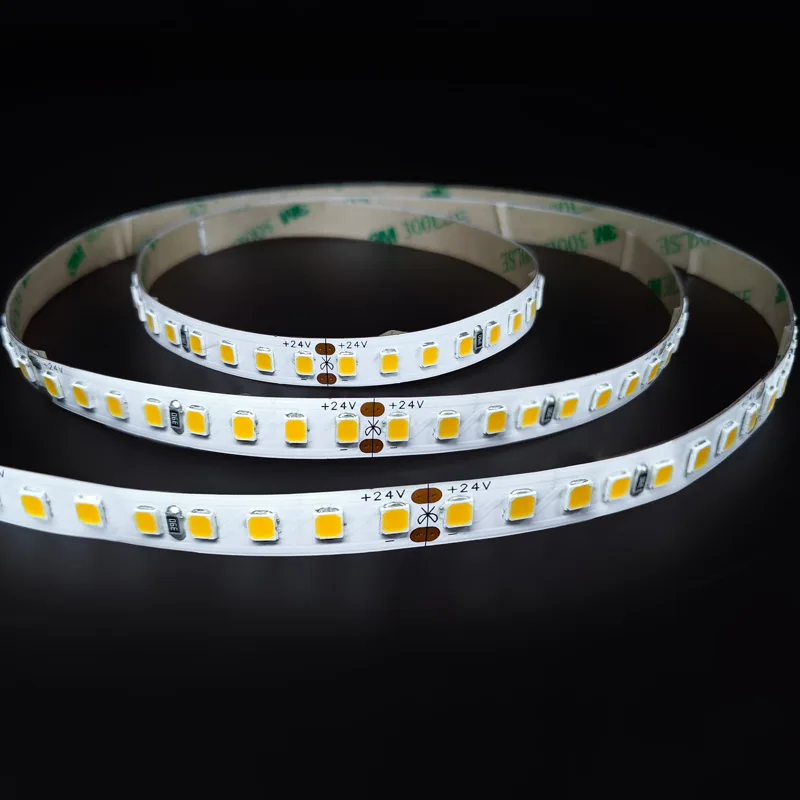
Recommended High-R9 LED Strip Solutions
For food displays, retail shelving, and hospitality projects,
high CRI alone is not enough.
- 128 SMD2835 LEDs per meter
- 10mm PCB width
- CRI90+ with R9
- Up to 200lm/W high efficiency
- Fully Dimmable
- Strong double sided 3M adhesive tape
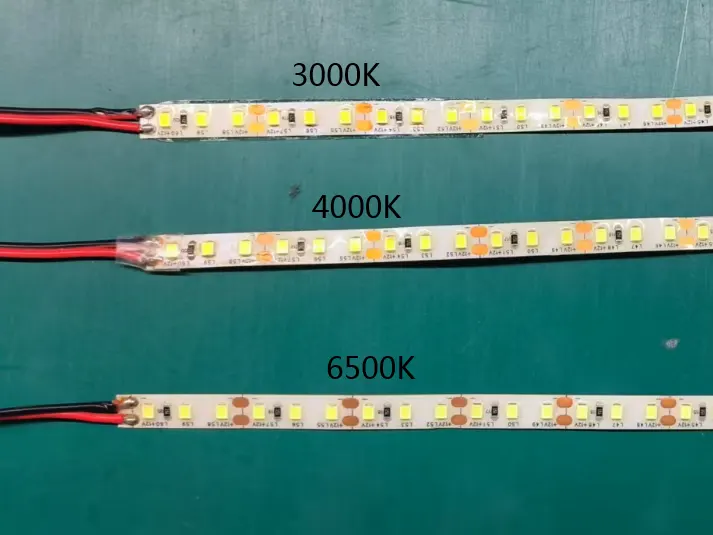
- 3000K, 4000K and 6500K color temperatures optional
- Single one color BIN, 3 steps SDCM available
- Can be OEM/ODM and customizable
CRI 70 vs 80 vs 90 vs 95 vs 99: What’s the Real Difference?
Not all high-CRI LED strip lights deliver the same visual performance.
As CRI levels increase from 70 to 99, colors generally appear more natural, balanced, and visually comfortable — especially in professional lighting environments.
At the same time, higher CRI usually requires more advanced phosphor engineering, tighter spectral control, and lower luminous efficiency.
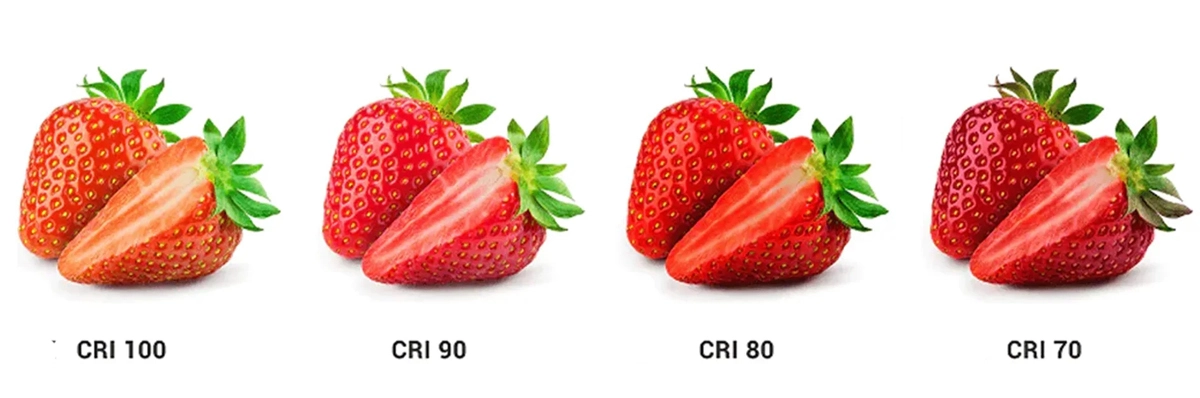
CRI 70 — Basic Functional Lighting
Primarily designed for efficiency and visibility rather than color quality. Commonly used in industrial spaces, warehouses, and outdoor utility lighting where appearance is less important.
CRI 80 — Standard Commercial Lighting
The most common baseline for general commercial lighting. Suitable for offices, supermarkets, and basic retail environments, although deep reds and warm tones may still appear slightly weak or flat.
CRI 90 — Professional Lighting Standard
Widely considered the ideal balance between color quality, efficiency, and cost. Colors appear richer and more natural, making CRI 90 a popular choice for retail, hospitality, architectural, and residential lighting projects.
CRI 95 — Premium Color Rendering
Provides more refined color depth, smoother tonal transitions, and stronger red rendering. Often used in museums, luxury retail, studios, and high-end interior environments where visual quality is highly important.
CRI 99 — Full Spectrum & Specialized Applications
Designed to reproduce a spectrum extremely close to natural sunlight. Typically used in medical, laboratory, photography, and color-critical applications where maximum color fidelity is required.
CRI Comparison Table
| CRI Level | Visual Quality | Typical Applications |
| CRI 70 | Basic color rendering | Industrial, warehouse, outdoor lighting |
| CRI 80 | Standard commercial quality | Offices, supermarkets, general retail |
| CRI 90 | Professional-grade lighting | Retail, hospitality, residential interiors |
| CRI 95 | Premium visual performance | Museums, studios, luxury retail |
| CRI 99 | Near-sunlight color fidelity | Medical, laboratories, photography |
For most professional LED strip lighting projects, CRI 90–95 offers the best balance between visual quality, efficiency, and overall project cost.
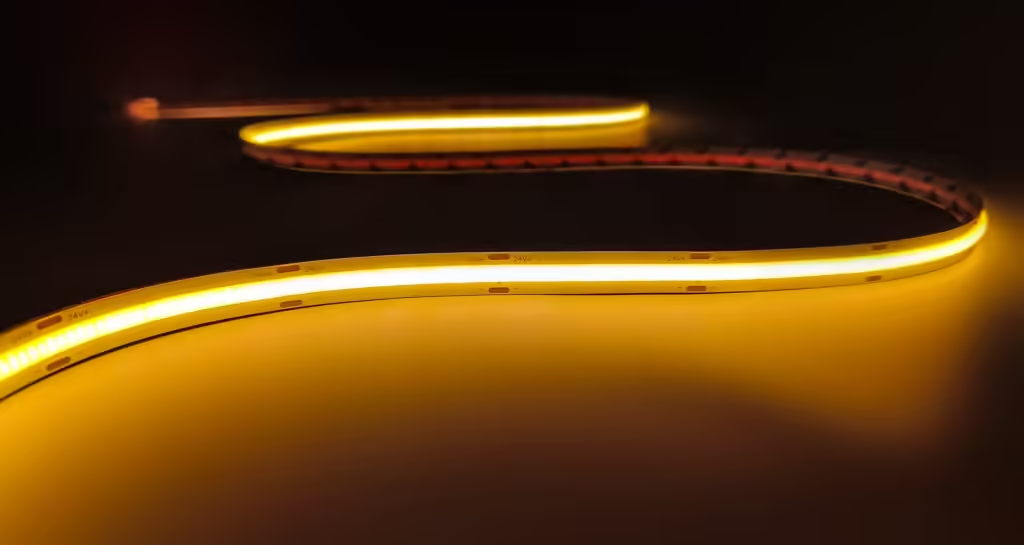
480Chips LED COB Strip Light for Decorative Lighting
- 480chips/m, 100lm/W, dot-free
- Available in color temperature 2700K to 6500K
- Dimmable
- 180 degree beam angle
- CRI90+, for decorative lighting
- Solderless, reel to reel technology
How to Choose the Right CRI for Different LED Strip Lighting Applications
Choosing the right CRI is not about selecting the highest number available.
The key is matching the CRI level to the real visual demands of the project. In many cases, a well-chosen CRI delivers better value than simply pursuing the highest specification.
| Application Type | Recommended CRI | Why It Matters |
| Warehouses, parking areas, industrial facilities | CRI 70–80 | Prioritizes efficiency, visibility, and cost control |
| Offices, retail stores, hospitality, residential interiors | CRI 90 | Provides a strong balance of color quality, comfort, and efficiency |
| Museums, galleries, studios, luxury retail, premium food displays | CRI 95+ | Delivers enhanced color depth, realism, and presentation quality |
While CRI is an important indicator, it should not be evaluated alone. R9 performance, SDCM consistency, color temperature, TM-30 metrics, and overall lighting design all contribute to how colors are ultimately perceived in a space.
For most commercial and architectural LED strip lighting projects, CRI 90 remains the most practical and widely specified choice.
Beyond CRI: Why TM-30 Is Becoming the New Standard
For decades, CRI has been the most widely used standard for evaluating color rendering in LED lighting.
However, many lighting professionals now recognize that CRI alone cannot fully describe how colors actually appear under a light source.
This is why TM-30 has gained increasing attention in modern lighting design.
Developed by the Illuminating Engineering Society (IES), TM-30 is a more advanced color evaluation method that analyzes a much wider range of colors than traditional CRI measurements.
Unlike CRI, which mainly focuses on average color fidelity, TM-30 evaluates two important aspects simultaneously:
- Rf (Fidelity Index) → how accurately colors are reproduced
- Rg (Gamut Index) → how saturated or vivid colors appear
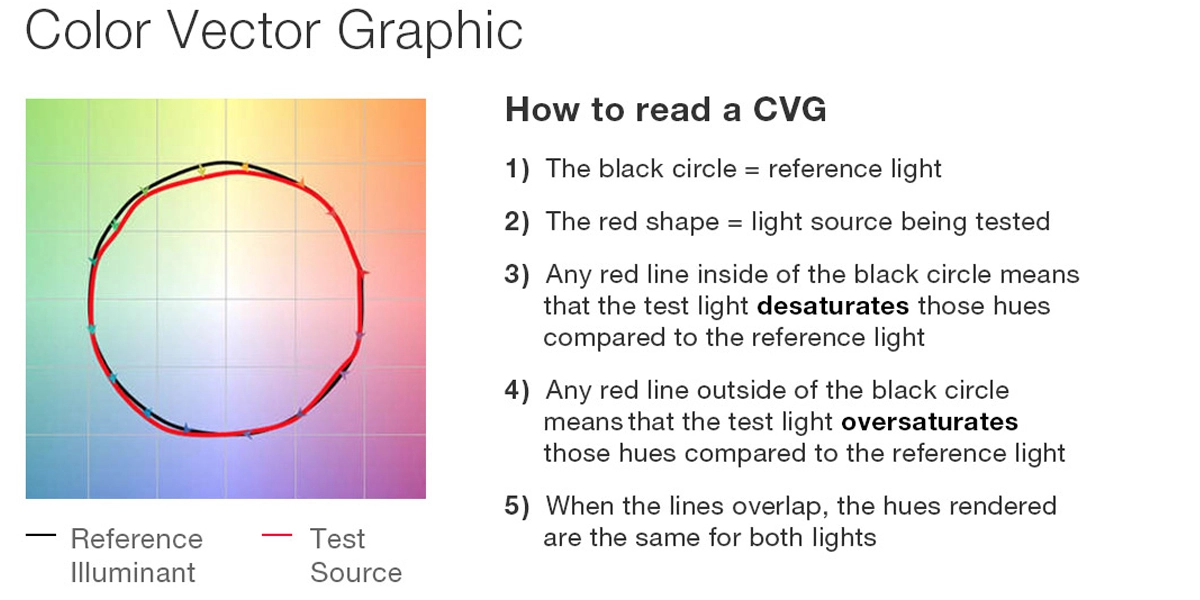
This allows lighting designers to better understand whether a light source makes colors appear:
- More natural
- More vivid
- Oversaturated
- Or visually dull
TM-30 is especially useful in:
- Retail lighting
- Architectural lighting
- Museum environments
- Hospitality projects
- Premium commercial applications
Although CRI remains the most recognized specification in the LED industry, TM-30 is increasingly viewed as the future direction of professional color-quality evaluation.
For most LED strip lighting projects today, CRI, R9, and SDCM together already provide a strong foundation for evaluating light quality. TM-30 simply offers a deeper level of analysis for advanced applications.
Where High CRI LED Strip Lights Make the Biggest Difference
High CRI LED strip lights are not necessary for every lighting project.
However, in environments where visual appearance directly affects customer perception, atmosphere, or product presentation, color rendering quality can make a significant difference.
In many professional applications, better lighting does not simply make a space brighter — it makes colors feel more natural, materials appear more premium, and environments become visually more comfortable.
Retail & Product Displays
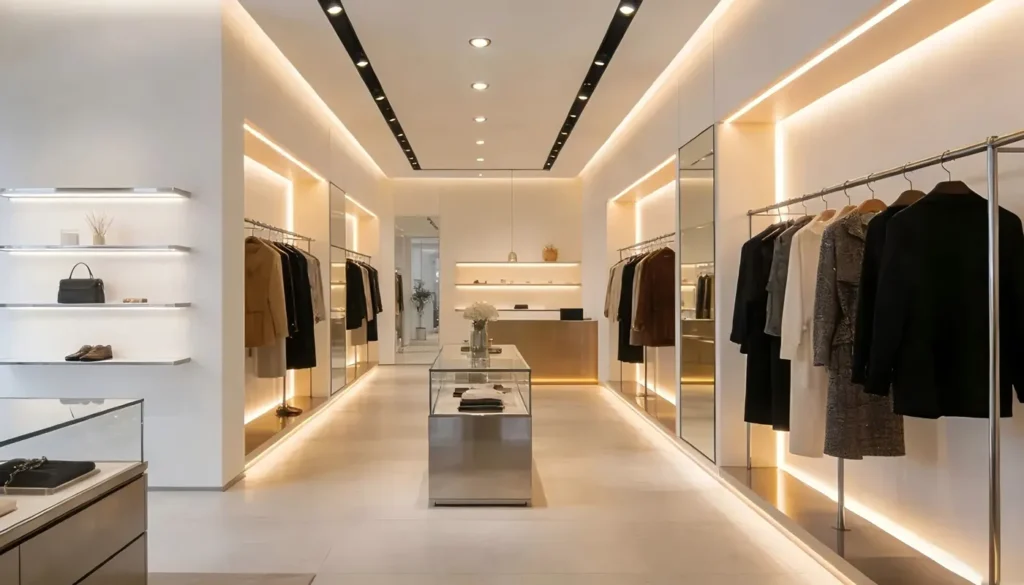
In retail environments, lighting directly influences how customers perceive products.
Low-CRI lighting can make fabrics, packaging, cosmetics, and merchandise appear dull or inconsistent. High-CRI LED strip lights help restore natural color appearance, allowing products to look more vibrant, accurate, and visually appealing.
This is especially important in:
- Fashion retail
- Jewelry stores
- Cosmetic displays
- Luxury product showcases
High-CRI lighting also helps reduce the artificial or “washed-out” feeling often associated with lower-quality commercial lighting.
Food & Fresh Displays
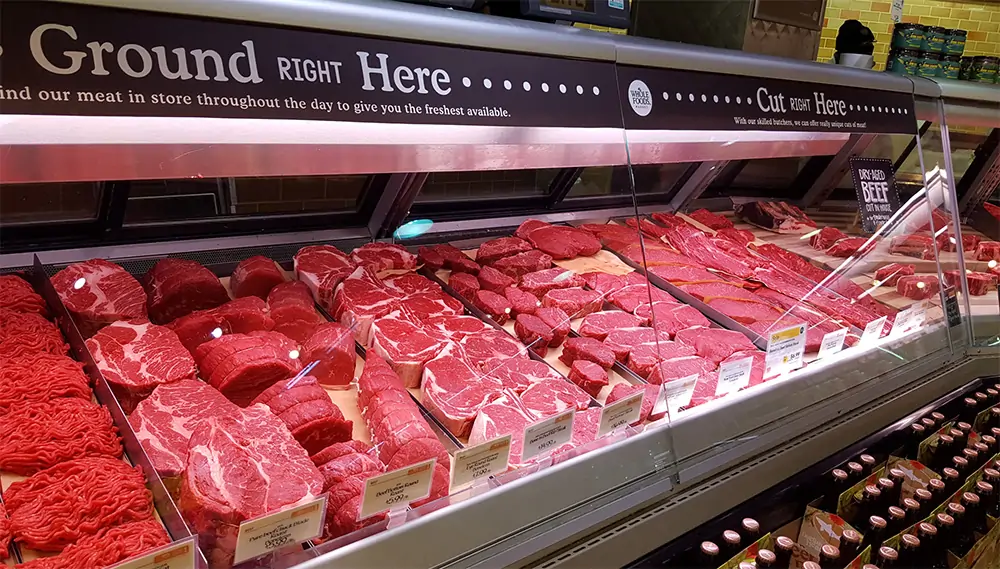
Food presentation is one of the most color-sensitive lighting applications.
Fresh meat, fruits, vegetables, baked goods, and dairy products can appear significantly less appealing under poor-quality lighting. In particular, deep reds and warm tones are heavily influenced by R9 performance.
High-CRI LED strip lights with strong R9 values help food appear:
- Fresher
- More natural
- More vibrant
- More visually appetizing
This is why supermarkets, fresh-food retailers, and premium food displays increasingly prioritize high-CRI lighting solutions.
Hospitality & Residential Interiors
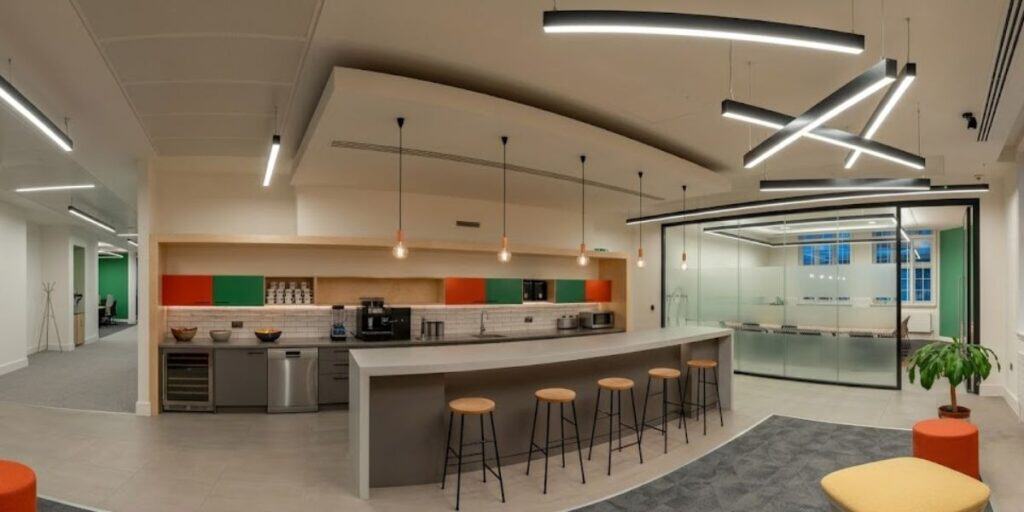
In hospitality and residential spaces, lighting quality strongly affects atmosphere and emotional comfort.
High-CRI lighting helps interior materials such as: Wood, Stone, Fabrics, Decorative finishes appear more natural and textured.
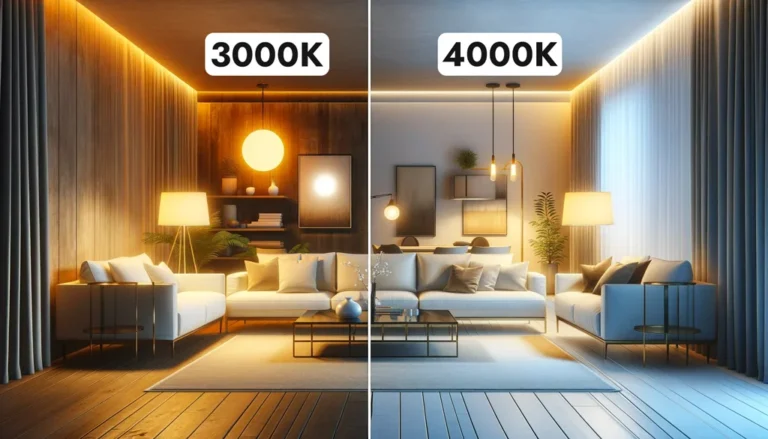
Combined with warm color temperatures such as 2700K or 3000K, high-CRI LED strip lighting can create softer, more comfortable, and more premium interior environments.
This is particularly valuable in:
- Architectural linear lighting
- Hotels
- Restaurants
- Luxury residences
- Lounge spaces
Photography, Studio & Broadcast Lighting
Professional cameras are often more sensitive to color inconsistencies than the human eye.
Low-quality lighting may cause:
- Green tint shifts
- Unnatural skin tones
- Poor color balance
- Inconsistent video rendering
For photography and broadcast environments, high-CRI lighting improves skin-tone accuracy and overall color realism.
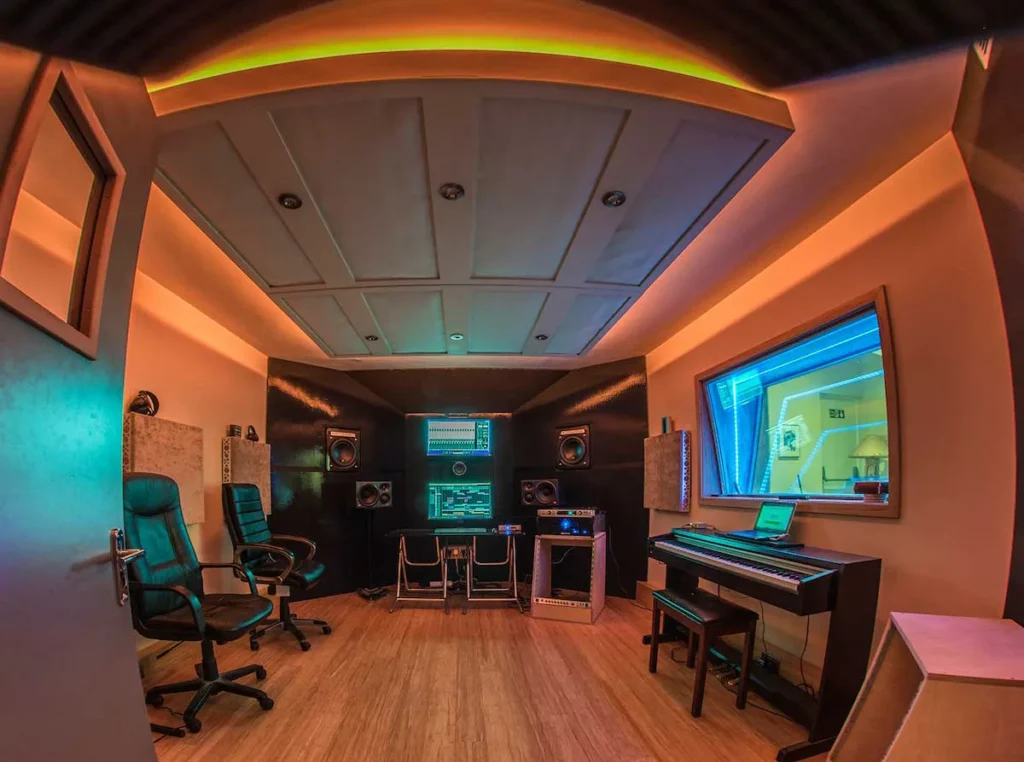
Museums & Art Galleries
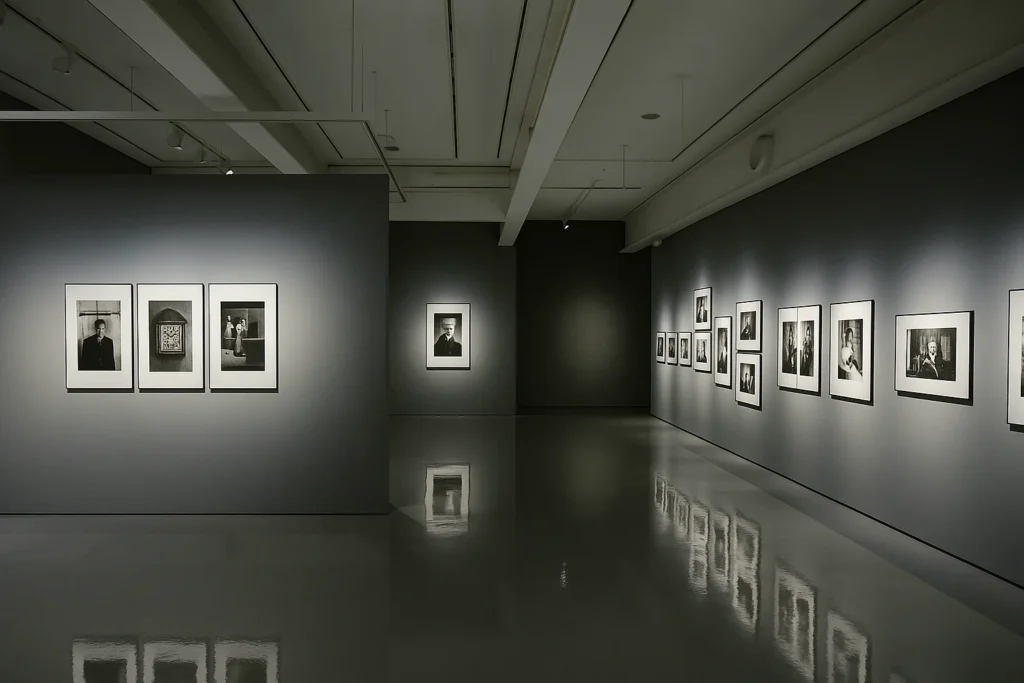
Museums and galleries require lighting that preserves the true appearance of artwork and materials.
High-CRI lighting allows viewers to experience colors, textures, and fine details more accurately while maintaining a visually comfortable environment.
In premium exhibition environments, lighting consistency and spectral quality often become just as important as brightness itself.
This is why many museums and galleries use carefully controlled high-CRI lighting systems for long-term display applications.
Full Range of Customized & OEM/ODM SMD LED Strip Lights Solutions
Instead of only standard configurations, we provide full OEM/ODM customization options to match different project requirements, including:
- CRI level customization (80 / 90 / 95+)
- PCB width options
- LED density adjustment
- Voltage & control system compatibility
- Waterproof & coating solutions
This ensures every project can achieve the right balance between performance, cost, and installation flexibility.

Why Higher CRI LED Strip Lights Are More Difficult to Manufacture
Producing high-CRI LED strip lights involves far more than simply increasing a specification number.
As CRI levels rise, manufacturers must achieve a more balanced light spectrum while maintaining color consistency, thermal stability, and lighting efficiency at the same time.
This becomes especially challenging beyond CRI 90, where accurate reproduction of deep reds, skin tones, wood textures, and warm materials requires much tighter spectral control.
How Manufacturing Complexity Increases from CRI 80 to CRI 99
| CRI Level | Spectral Requirement | Manufacturing Difficulty | Typical Efficiency | Common Applications |
| CRI 70–80 | Basic color rendering | Low | Higher lm/W | Industrial, utility, basic commercial lighting |
| CRI 90 | Improved red-spectrum balance | Medium | Moderate efficiency | Retail, hospitality, architectural lighting |
| CRI 95+ | Advanced full-spectrum tuning | High | Slightly lower efficiency | Museums, luxury retail, studio lighting |
| CRI 99 | Near sunlight-level spectral precision | Very High | Lowest efficiency | Medical, laboratory, color-critical applications |
Higher-CRI LED lighting usually requires:
- More advanced phosphor engineering
- Tighter LED binning control
- Better spectral consistency
- More stable thermal management
This is also one reason why high-density COB LED strip technology has become increasingly popular in premium architectural lighting projects, thanks to its smoother light output and improved visual uniformity.
Frequently Asked Questions
Final Thoughts
High CRI LED strip lights play a critical role in applications where color accuracy, visual comfort, and product presentation directly impact user experience and commercial value.
From retail displays to hospitality, office environments, and architectural lighting, selecting the right CRI level ensures optimal visual performance while balancing cost, efficiency, and long-term reliability.
Modern lighting design is increasingly shifting from specification-based selection to application-driven decision-making, where CRI performance, LED quality, and system consistency work together to determine overall lighting outcomes.
Looking for the Right High CRI LED Strip Solution?
We provide customized and OEM/ODM LED strip lighting solutions tailored to different project requirements, including CRI selection, PCB design, LED density, and installation environments.
Explore More:
- High CRI LED Strips
- LED Strip Lights
- COB LED Strip Lights
- LED Strip Lights for Commercial Applications
Written by Elaine Zhu
General Manager at SignliteLEDTechnically reviewed by Jason Chen
R&D Leader, SignliteLED
Email: info@signliteled.com
Related Posts