Tiếng Việt
  English
  简体中文
简体中文  Deutsch
  Español
  Français
  Italiano
  日本語
日本語  한국어
한국어  Polski
  Português
  Русский
  Türkçe
  Nederlands
  ไทย
ไทย 
Bạn đã bao giờ nhận thấy rằng một số đèn LED làm cho thịt tươi có màu nâu, da người có vẻ nhạt, hoặc đồ nội thất bằng gỗ mất đi sự ấm áp tự nhiên?
Vấn đề thường không phải là độ sáng - đó là màu sắc kém.
Trong ánh sáng LED hiện đại, chất lượng màu sắc đã trở nên quan trọng không kém gì đầu ra lumen và hiệu quả năng lượng. cho dù trong các cửa hàng bán lẻ, siêu thị, bảo tàng, dự án kiến trúc, studio chụp ảnh hay nội thất dân cư, các chuyên gia chiếu sáng ngày càng phụ thuộc vào Đèn dải LED CRI cao để tái tạo màu sắc chính xác và tự nhiên hơn.
Tuy nhiên, chỉ riêng CRI không kể toàn bộ câu chuyện.
Nhiều đèn LED dải được quảng cáo là “CRI 90” vẫn không thể tái tạo màu đỏ đậm, tông màu da và màu sắc bão hòa một cách chính xác. Đây là lý do tại sao các nhà thiết kế ánh sáng chuyên nghiệp hiện nay chú ý hơn đến các số liệu như R9, TM-30, phân phối quang phổ (SPD) và tính nhất quán màu (SDCM) khi đánh giá hiệu suất chiếu sáng LED.
Hướng dẫn này giải thích mọi thứ bạn cần biết về LED màu - từ CRI 70 đến CRI 99, từ độ chính xác màu cơ bản đến công nghệ LED toàn phổ. Bạn sẽ tìm hiểu cách thức hoạt động của màu sắc, tại sao R9 lại quan trọng hơn nhiều người nhận ra, TM-30 cải thiện như thế nào theo tiêu chuẩn CRI truyền thống và cách chọn đèn dải LED CRI cao phù hợp cho các ứng dụng chuyên nghiệp.
Cho dù bạn là nhà thiết kế ánh sáng, người mua OEM, nhà thầu, kỹ sư, nhà bán lẻ hoặc chủ sở hữu thương hiệu LED, việc hiểu chất lượng màu sắc là điều cần thiết để tạo ra môi trường chiếu sáng trông thoải mái, tự nhiên và hiệu quả về mặt thương mại.
Chìa khóa rút ra
- · CRI đo lường chính xác cách một nguồn sáng tái tạo màu sắc chính xác.
- CRI 90+ được ưu tiên sử dụng cho các ứng dụng chiếu sáng dải LED chuyên nghiệp.
- R9 đóng một vai trò quan trọng trong tông màu da, hiển thị thực phẩm và kết xuất màu ấm.
- SDCM ảnh hưởng đến tính nhất quán màu sắc trên các cài đặt dải LED.
- TM-30 cung cấp một cách nâng cao hơn để đánh giá chất lượng ánh sáng.
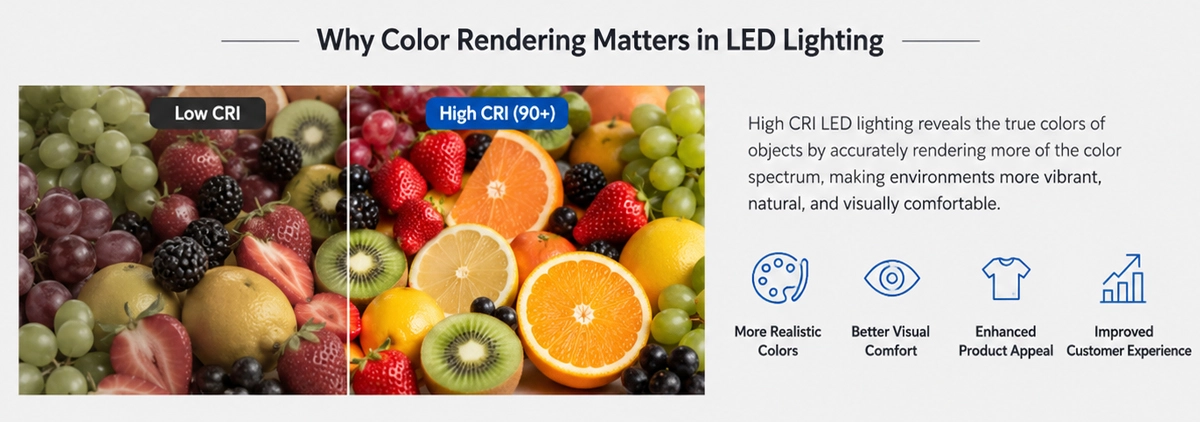
Cách mắt người cảm nhận màu sắc dưới các phổ LED khác nhau
Mắt người không nhìn thấy màu trực tiếp từ các vật thể.
Thay vào đó, nhận thức màu sắc phụ thuộc vào cách ánh sáng phản chiếu ra khỏi bề mặt và đi vào mắt chúng ta.
Do đó, chất lượng quang phổ của một nguồn sáng đóng vai trò chính trong việc xuất hiện các màu sắc tự nhiên hoặc biến dạng như thế nào.
Ánh sáng mặt trời được coi là tham chiếu lý tưởng vì nó chứa một quang phổ trơn tru và liên tục qua các bước sóng nhìn thấy được. Dưới ánh sáng mặt trời tự nhiên, màu sắc thường xuất hiện cân bằng, sống động và thực tế.
Tuy nhiên, không phải tất cả các đèn LED dải đều tạo ra quang phổ liên tục. Đèn LED chất lượng thấp thường chứa các khoảng trống quang phổ - đặc biệt là ở các bước sóng màu đỏ sâu - có thể khiến màu sắc trở nên xỉn màu, xám xịt hoặc không tự nhiên ngay cả khi độ sáng là đủ.
Đây là lý do tại sao ánh sáng kém chất lượng có thể tạo ra:
- thịt trông nâu
- Tông màu da xuất hiện nhợt nhạt
- Nội thất bằng gỗ mất ấm
Đèn dải LED CRI cao sử dụng công thức phosphor được tối ưu hóa và cải tiến kỹ thuật quang phổ để tạo ra quang phổ ánh sáng cân bằng hơn, giúp tái tạo màu sắc chính xác và thoải mái hơn.
Do đó, thiết kế ánh sáng hiện đại không chỉ tập trung vào độ sáng, mà còn tập trung vào chất lượng quang phổ và trải nghiệm hình ảnh.
CRI vs SDCM: màu sắc chính xác so với tính nhất quán màu
trong khi CRI (Chỉ mục kết xuất màu) Xác định cách chính xác một nguồn sáng tái tạo màu sắc so với ánh sáng tự nhiên, nó không đảm bảo rằng mọi dải đèn LED được sản xuất sẽ trông giống hệt nhau.
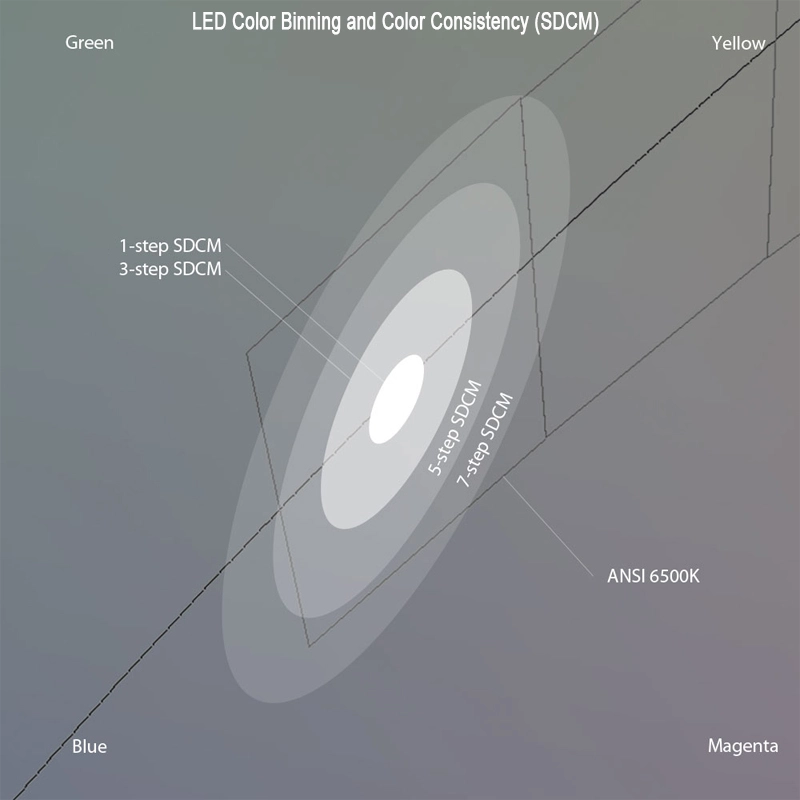
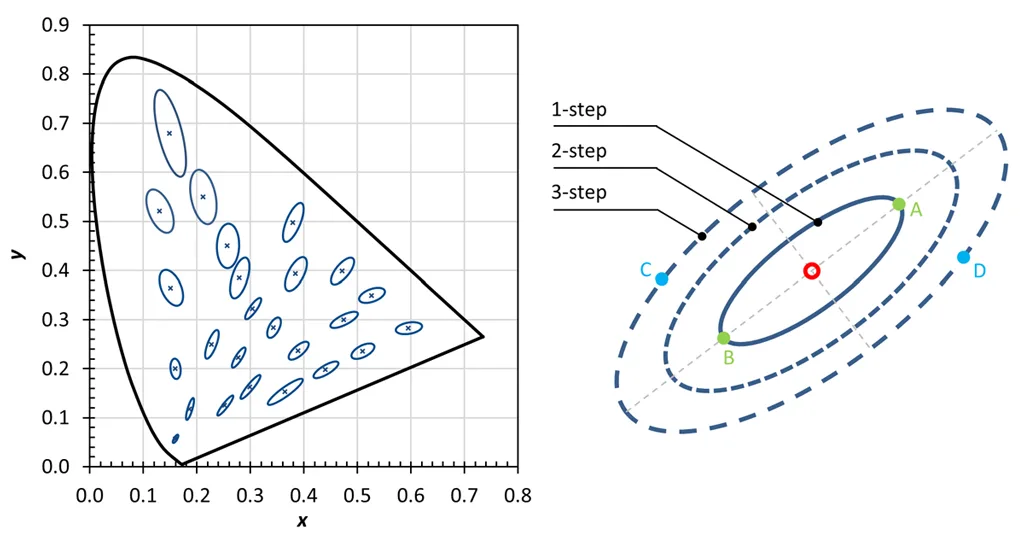
Đây là nơi SDCM (độ lệch chuẩn của màu sắc phù hợp), còn được gọi là hình elip Macadam, trở nên cần thiết.
CRI tập trung vào độ chính xác của màu sắc, nghĩa là màu sắc “thật” xuất hiện dưới nguồn sáng. Dải LED CRI cao (ví dụ: CRI 90+) có thể tái tạo màu sắc tự nhiên và sống động hơn, đặc biệt là tông màu da, vải và màn hình thực phẩm.
Tuy nhiên, ngay cả hai dải LED có cùng xếp hạng CRI vẫn có thể trông hơi khác nếu độ đồng nhất của chúng kém.
SDCM giải quyết vấn đề này bằng cách đo sự thay đổi màu sắc giữa các lô sản xuất. Nó xác định mức độ chặt chẽ đầu ra LED thực tế được kiểm soát xung quanh tọa độ màu mục tiêu.
Ví dụ:
- 1–2 bước SDCM: Độ đồng màu cực kỳ chặt chẽ (ánh sáng kiến trúc cao cấp)
- 3–4 bước SDCM: Chất lượng thương mại tiêu chuẩn
- 5–7 bước SDCM: Sự thay đổi màu sắc đáng chú ý giữa các lô
Trong các dự án chiếu sáng trong thế giới thực — đặc biệt là ánh sáng tuyến tính kiến trúc, môi trường bán lẻ và lắp đặt quy mô lớn — SDCM cũng quan trọng như CRI. Đèn CRI cao với SDCM kém vẫn có thể dẫn đến sự không khớp màu có thể nhìn thấy trên các dải LED dài hoặc các lô sản xuất khác nhau.
Đây là lý do tại sao các nhà thiết kế ánh sáng chuyên nghiệp đánh giá cả CRI và SDCM cùng nhau để đảm bảo độ chính xác màu sắc và tính nhất quán của màu sắc trong các ứng dụng thực tế.
Tại sao R9 lại quan trọng hơn nhiều người mua nhận ra
Nhiều đèn LED dải ngày nay được quảng cáo là “CRI 90” hoặc thậm chí là “CRI cao”.
Tuy nhiên, hai đèn LED có cùng xếp hạng CRI vẫn có thể tạo ra kết quả hình ảnh khác nhau đáng kể.
Lý do là R9.
Tính toán CRI truyền thống chủ yếu đánh giá tám màu thử nghiệm độ bão hòa thấp (R1 – R8). Màu đỏ đậm, được đại diện bởi R9, không được đưa vào tính toán RA tiêu chuẩn. Do đó, một số đèn LED dải về mặt kỹ thuật có thể đạt được CRI 90 về mặt kỹ thuật trong khi vẫn tái tạo màu đỏ rất kém.
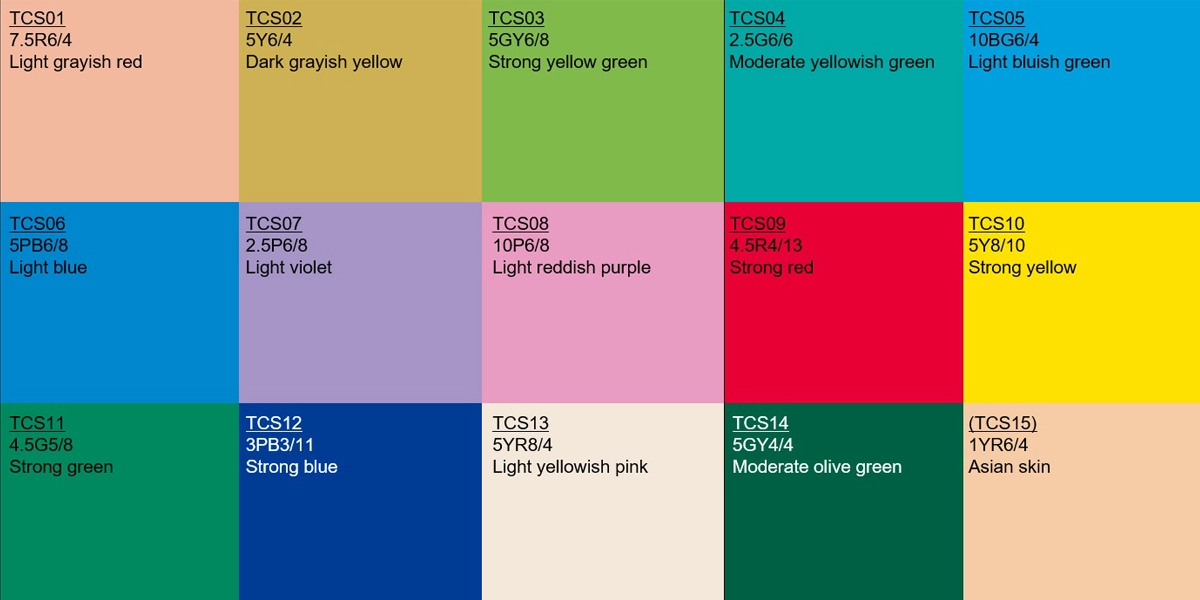
Điều này trở nên đặc biệt quan trọng trong các ứng dụng liên quan đến màu đỏ đậm và tông màu ấm, chẳng hạn như:
- trưng bày thịt tươi
- ánh sáng màu da
- Môi trường bán lẻ
- Không gian khách sạn
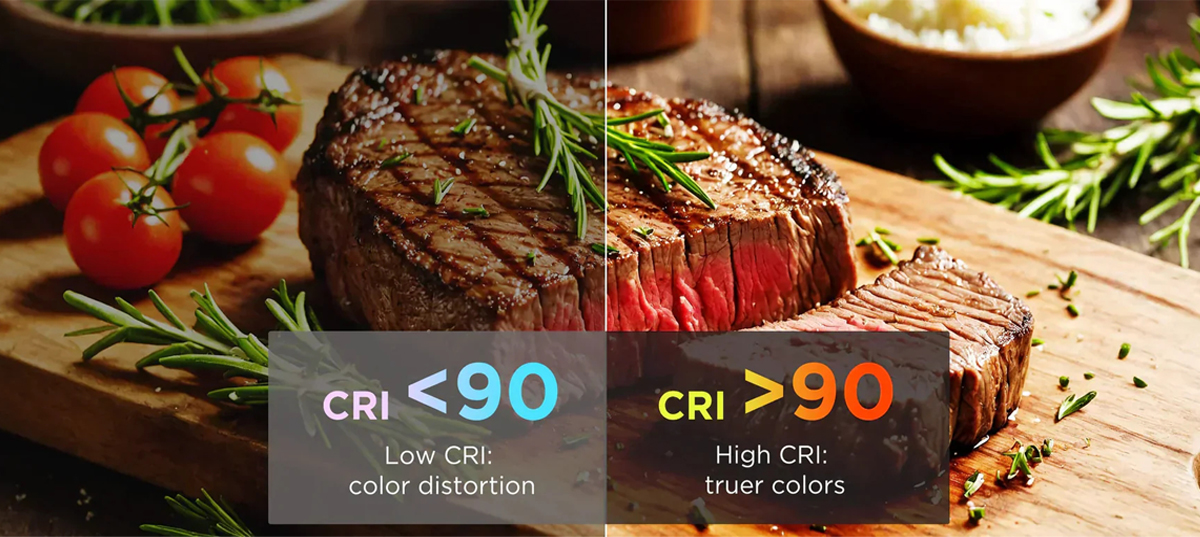
Đèn LED R9 thấp thường làm cho màu đỏ có vẻ mờ, nâu hoặc xám ngay cả khi xếp hạng CRI tổng thể xuất hiện cao.
Mặt khác, đèn LED dải R9 cao cung cấp đầu ra quang phổ màu đỏ đậm mạnh hơn, dẫn đến khả năng tái tạo màu sắc phong phú hơn, ấm hơn và màu sắc tự nhiên hơn.
Trong nhiều dự án chiếu sáng thương mại, R9 có thể có tác động trực quan lớn hơn so với bản thân số CRI.
Giải pháp dải LED cao R9 được khuyến nghị
Đối với các cửa hàng thực phẩm, kệ bán lẻ và các dự án khách sạn,
CRI cao một mình là không đủ.
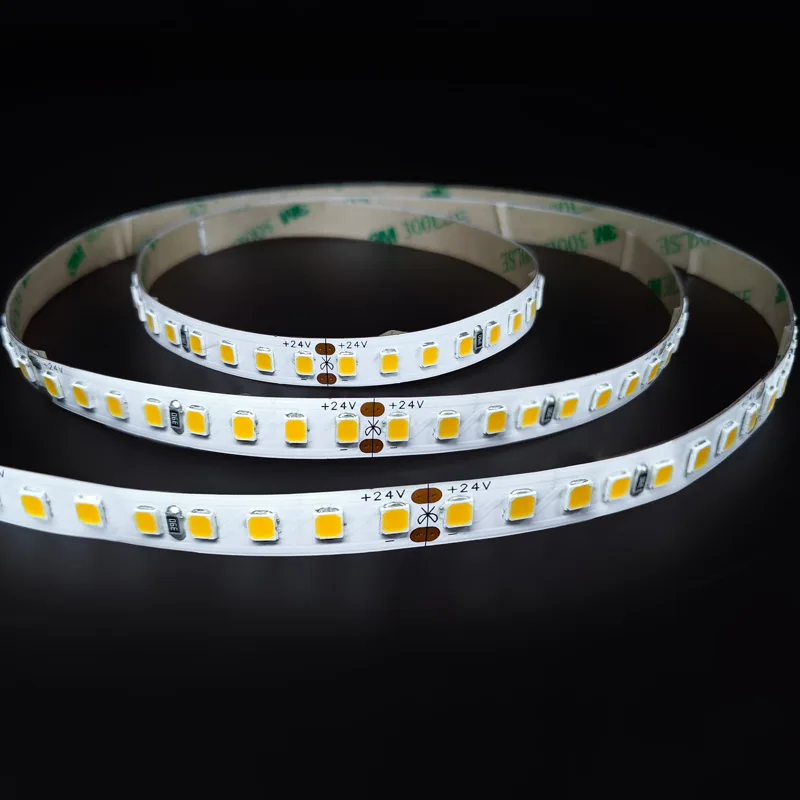
- 128 đèn LED SMD2835 trên mỗi mét
- Chiều rộng PCB 10mm
- CRI90 + với R9
- Hiệu suất cao lên đến 200lm / W
- Hoàn toàn có thể làm sáng
- Băng dính 3m mạnh mẽ
- 3000K, 4000K và 6500K nhiệt độ màu tùy chọn
- Một thùng màu duy nhất, 3 bước SDCM có sẵn
- Có thể là OEM / ODM và có thể tùy chỉnh
CRI 70 vs 80 vs 90 vs 95 vs 99: Sự khác biệt thực sự là gì?
Không phải tất cả các đèn dải LED CRI cao đều mang lại hiệu suất trực quan giống nhau.
Khi mức CRI tăng từ 70 lên 99, màu sắc thường trông tự nhiên hơn, cân bằng và thoải mái về mặt thị giác - đặc biệt là trong môi trường ánh sáng chuyên nghiệp.
Đồng thời, CRI cao hơn thường đòi hỏi kỹ thuật phosphor tiên tiến hơn, kiểm soát quang phổ chặt chẽ hơn và hiệu suất phát sáng thấp hơn.
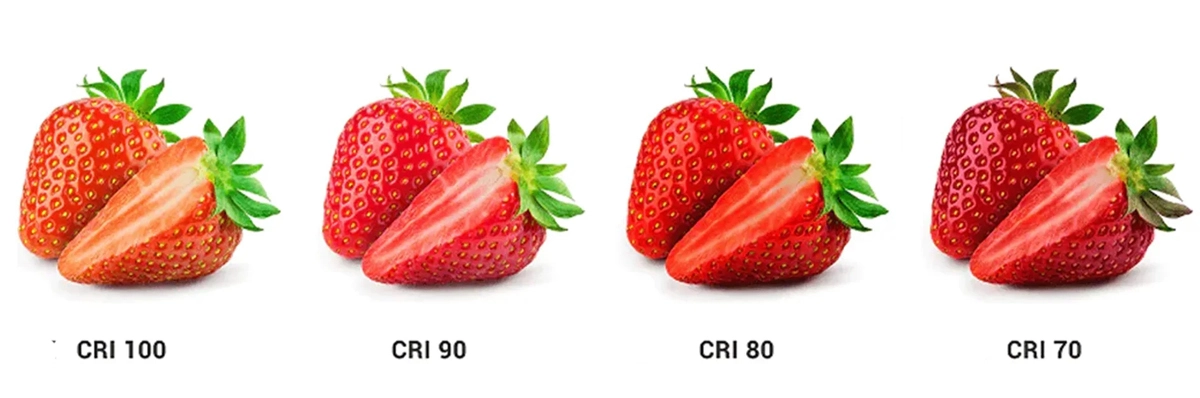
CRI 70 - Chiếu sáng chức năng cơ bản
Chủ yếu được thiết kế để hiệu quả và khả năng hiển thị hơn là chất lượng màu sắc. Thường được sử dụng trong không gian công nghiệp, nhà kho và ánh sáng tiện ích ngoài trời, nơi ngoại hình ít quan trọng hơn.
CRI 80 - Chiếu sáng thương mại tiêu chuẩn
Đường cơ sở phổ biến nhất cho chiếu sáng thương mại nói chung. Thích hợp cho văn phòng, siêu thị và môi trường bán lẻ cơ bản, mặc dù màu đỏ đậm và tông màu ấm vẫn có thể hơi yếu hoặc phẳng.
CRI 90 - Tiêu chuẩn chiếu sáng chuyên nghiệp
Được coi là sự cân bằng lý tưởng giữa chất lượng màu, hiệu quả và chi phí. Màu sắc trông phong phú và tự nhiên hơn, làm cho CRI 90 trở thành lựa chọn phổ biến cho các dự án bán lẻ, khách sạn, kiến trúc và chiếu sáng dân cư.
CRI 95 - Màu sắc cao cấp
Cung cấp độ sâu màu tinh tế hơn, chuyển đổi âm thanh mượt mà hơn và kết xuất màu đỏ mạnh hơn. Thường được sử dụng trong các bảo tàng, bán lẻ sang trọng, studio và môi trường nội thất cao cấp, nơi chất lượng hình ảnh rất quan trọng.
CRI 99 - Full Spectrum & Ứng dụng chuyên dụng
Được thiết kế để tái tạo một quang phổ cực kỳ gần với ánh sáng mặt trời tự nhiên. Thường được sử dụng trong y tế, phòng thí nghiệm, nhiếp ảnh và các ứng dụng quan trọng màu sắc, nơi cần độ trung thực màu tối đa.
Bảng so sánh CRI
| Cấp độ CRI | chất lượng thị giác | Ứng dụng điển hình |
| CRI 70 | Kết xuất màu cơ bản | Công nghiệp, nhà kho, chiếu sáng ngoài trời |
| CRI 80 | Chất lượng thương mại tiêu chuẩn | Văn phòng, siêu thị, bán lẻ |
| CRI 90 | Chiếu sáng cấp chuyên nghiệp | Bán lẻ, nhà hàng, nội thất dân cư |
| CRI 95 | Hiệu suất trực quan cao cấp | Bảo tàng, Studio, Bán lẻ cao cấp |
| CRI 99 | Độ trung thực màu gần ánh sáng mặt trời | Y tế, Phòng thí nghiệm, Nhiếp ảnh |
Đối với hầu hết các dự án chiếu sáng dải LED chuyên nghiệp, CRI 90–95 Cung cấp sự cân bằng tốt nhất giữa chất lượng hình ảnh, hiệu quả và chi phí tổng thể của dự án.
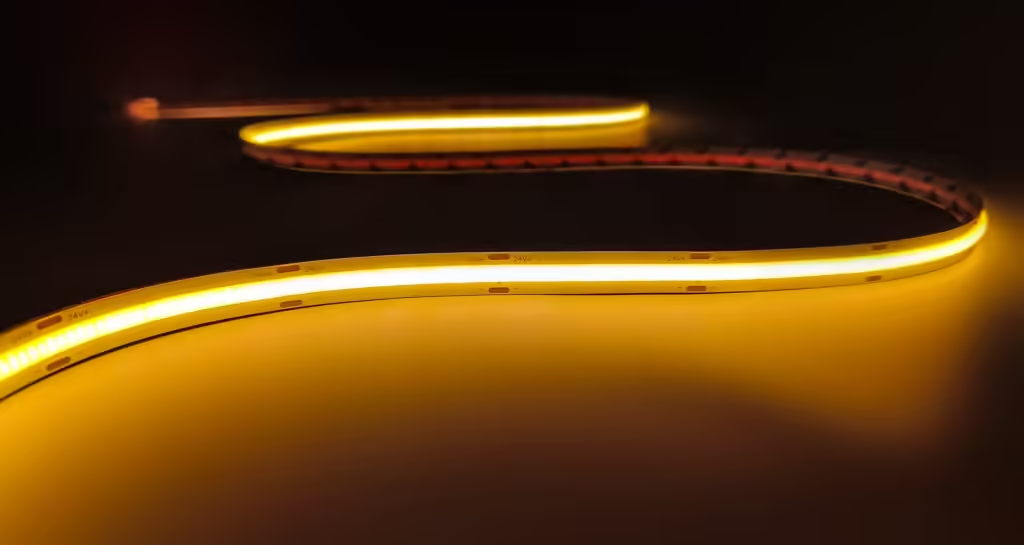
480chips LED dải đèn LED cho ánh sáng trang trí
- 480chips/m, 100lm/W, không chấm
- Có sẵn ở nhiệt độ màu 2700K đến 6500K
- có thể làm được
- Góc chùm 180 độ
- CRI90+, cho chiếu sáng trang trí
- Không hàn, cuộn vào công nghệ cuộn
Cách chọn CRI phù hợp cho các ứng dụng chiếu sáng dải LED khác nhau
Chọn CRI phù hợp không phải là chọn số cao nhất hiện có.
Điều quan trọng là khớp mức CRI với nhu cầu trực quan thực tế của dự án. Trong nhiều trường hợp, CRI được lựa chọn tốt mang lại giá trị tốt hơn là chỉ theo đuổi thông số kỹ thuật cao nhất.
| Loại ứng dụng | CRI được đề xuất | Tại sao nó lại quan trọng |
| Kho bãi, bãi đậu xe, công nghiệp | CRI 70–80 | Ưu tiên hiệu quả, khả năng hiển thị và kiểm soát chi phí |
| Văn phòng, cửa hàng bán lẻ, nhà hàng, nội thất dân cư | CRI 90 | Mang đến sự cân bằng mạnh mẽ về chất lượng màu sắc, sự thoải mái và hiệu quả |
| Bảo tàng, Phòng trưng bày, Studio, Bán lẻ sang trọng, trưng bày thực phẩm cao cấp | CRI 95+ | Cung cấp độ sâu màu sắc, tính chân thực và chất lượng trình bày nâng cao |
Trong khi CRI là một chỉ số quan trọng, nó không nên được đánh giá một mình. Hiệu suất R9, tính nhất quán SDCM, nhiệt độ màu, số liệu TM-30 và thiết kế ánh sáng tổng thể đều góp phần vào cách màu sắc cuối cùng được cảm nhận trong một không gian.
Đối với hầu hết các dự án chiếu sáng dải LED thương mại và kiến trúc, CRI 90 vẫn là sự lựa chọn thiết thực và được quy định rộng rãi nhất.
Ngoài CRI: Tại sao TM-30 đang trở thành tiêu chuẩn mới
Trong nhiều thập kỷ, CRI đã là tiêu chuẩn được sử dụng rộng rãi nhất để đánh giá độ hoàn màu trong ánh sáng LED.
Tuy nhiên, nhiều chuyên gia chiếu sáng hiện nay nhận ra rằng chỉ riêng CRI không thể mô tả đầy đủ về cách màu sắc thực sự xuất hiện dưới một nguồn sáng.
Đây là lý do tại sao TM-30 ngày càng được chú ý trong thiết kế ánh sáng hiện đại.
Được phát triển bởi Hiệp hội Kỹ thuật Illumination (IES), TM-30 là một phương pháp đánh giá màu sắc tiên tiến hơn, phân tích phạm vi màu rộng hơn nhiều so với các phép đo CRI truyền thống.
Không giống như CRI, chủ yếu tập trung vào độ trung thực màu trung bình, TM-30 đánh giá đồng thời hai khía cạnh quan trọng:
- RF (Chỉ số độ trung thực) → Màu sắc được tái tạo chính xác như thế nào
- RG (Chỉ số Gamut) → Màu sắc bão hòa hoặc màu sắc xuất hiện như thế nào
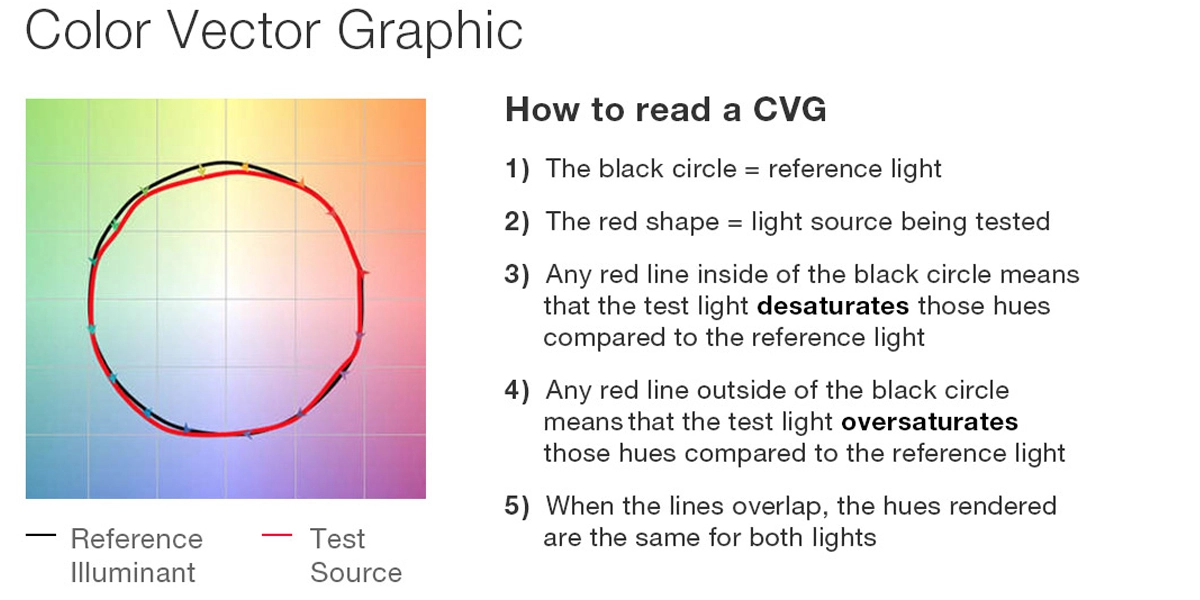
Điều này cho phép các nhà thiết kế ánh sáng hiểu rõ hơn liệu nguồn sáng có làm cho màu sắc xuất hiện hay không:
- tự nhiên hơn
- sống động hơn
- làm quá độ
- hoặc thị giác buồn tẻ
TM-30 đặc biệt hữu ích trong:
- Bán lẻ ánh sáng
- ánh sáng kiến trúc
- Bảo tàng môi trường
- Dự án khách sạn
- Ứng dụng thương mại cao cấp
Mặc dù CRI vẫn là thông số kỹ thuật được công nhận nhiều nhất trong ngành công nghiệp LED, TM-30 ngày càng được coi là hướng đi trong tương lai của việc đánh giá chất lượng màu chuyên nghiệp.
Đối với hầu hết các dự án chiếu sáng dải LED hiện nay, CRI, R9 và SDCM cùng nhau đã cung cấp một nền tảng vững chắc để đánh giá chất lượng ánh sáng. TM-30 chỉ đơn giản là cung cấp một mức độ phân tích sâu hơn cho các ứng dụng nâng cao.
Đèn dải LED CRI cao tạo ra sự khác biệt lớn nhất ở đâu
Đèn dải LED CRI cao không cần thiết cho mọi dự án chiếu sáng.
Tuy nhiên, trong môi trường mà sự xuất hiện trực quan ảnh hưởng trực tiếp đến nhận thức của khách hàng, bầu không khí hoặc trình bày sản phẩm, chất lượng kết xuất màu có thể tạo ra sự khác biệt đáng kể.
Trong nhiều ứng dụng chuyên nghiệp, ánh sáng tốt hơn không chỉ đơn giản là làm cho không gian sáng hơn - nó làm cho màu sắc trở nên tự nhiên hơn, vật liệu xuất hiện cao cấp hơn và môi trường trở nên thoải mái hơn về mặt thị giác.
Bán lẻ & trưng bày sản phẩm
Trong môi trường bán lẻ, ánh sáng ảnh hưởng trực tiếp đến cách khách hàng cảm nhận sản phẩm.
CRI chiếu sáng thấp có thể làm cho vải, bao bì, mỹ phẩm và hàng hóa có vẻ xỉn màu hoặc không nhất quán. Đèn dải LED CRI cao giúp khôi phục lại màu sắc tự nhiên, cho phép sản phẩm trông rực rỡ, chính xác và hấp dẫn hơn về mặt thị giác.
Điều này đặc biệt quan trọng trong:
- bán lẻ thời trang
- Cửa hàng trang sức
- trưng bày mỹ phẩm
- Sản phẩm sang trọng trưng bày
CRI chiếu sáng cao cũng giúp giảm cảm giác nhân tạo hoặc “rửa sạch” thường liên quan đến ánh sáng thương mại chất lượng thấp hơn.
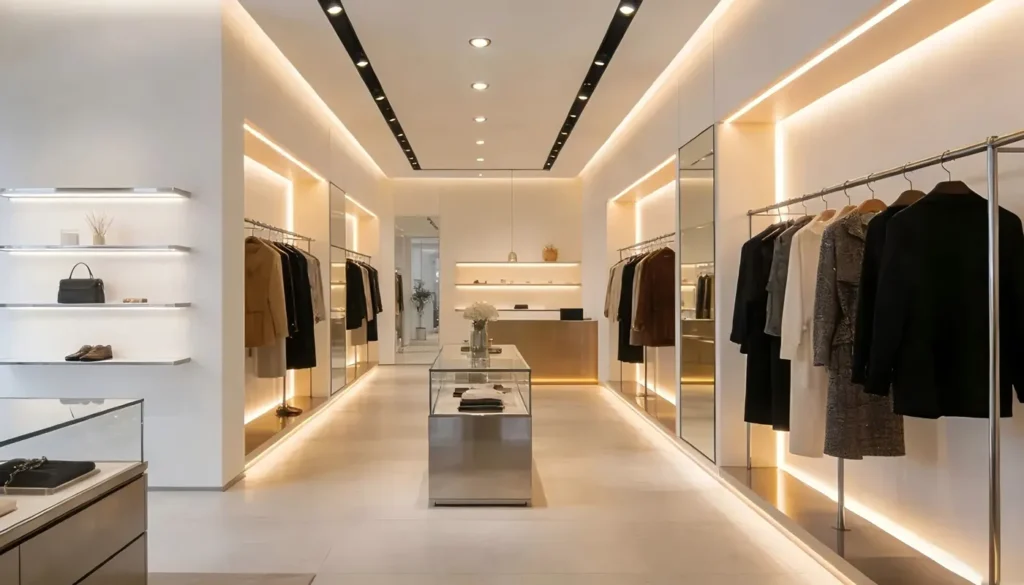
Thực phẩm & trưng bày tươi
Trình bày thực phẩm là một trong những ứng dụng chiếu sáng nhạy cảm với màu sắc nhất.
Thịt tươi, trái cây, rau, đồ nướng và các sản phẩm từ sữa có thể trông kém hấp dẫn hơn đáng kể dưới ánh sáng kém chất lượng. Đặc biệt, màu đỏ đậm và tông màu ấm chịu ảnh hưởng nặng nề bởi hiệu suất của R9.
Đèn dải LED CRI cao cấp có giá trị R9 mạnh mẽ giúp thực phẩm xuất hiện:
- sinh viên mới học
- tự nhiên hơn
- sôi động hơn
- ngon miệng hơn
Đây là lý do tại sao các siêu thị, nhà bán lẻ thực phẩm tươi sống và các cửa hàng thực phẩm cao cấp ngày càng ưu tiên các giải pháp chiếu sáng CRI cao.
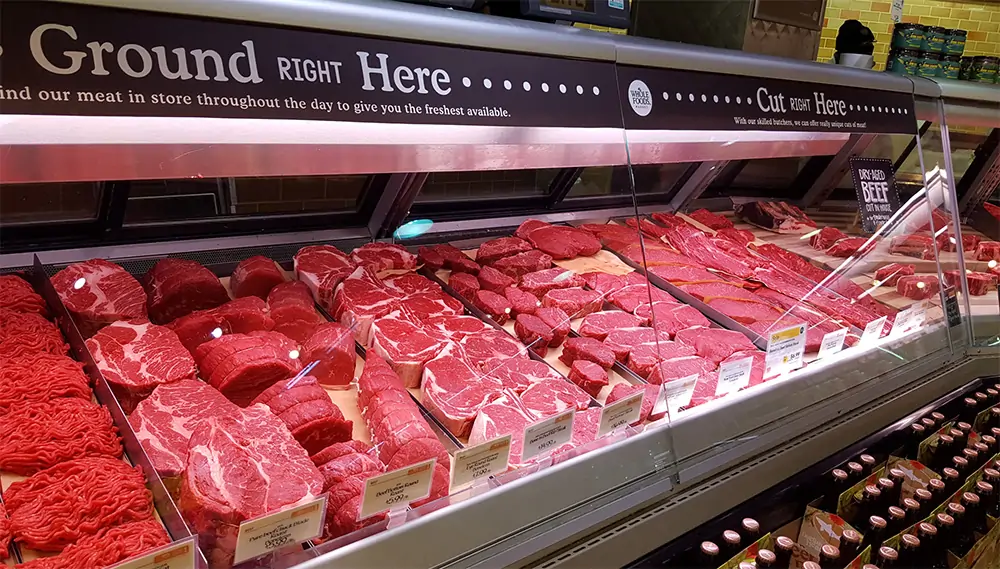
Nhà hàng và nội thất dân cư
Trong không gian khách sạn và dân cư, chất lượng ánh sáng ảnh hưởng mạnh mẽ đến bầu không khí và sự thoải mái về cảm xúc.
CRI chiếu sáng cao giúp các vật liệu nội thất như: gỗ, đá, vải, trang trí hoàn thiện vẻ ngoài tự nhiên và kết cấu hơn.
Kết hợp với nhiệt độ màu ấm như 2700K hoặc 3000K, ánh sáng dải LED cao CRI có thể tạo ra môi trường nội thất mềm mại, thoải mái hơn, và cao cấp hơn.
Điều này đặc biệt có giá trị trong:
- chiếu sáng tuyến tính kiến trúc
- chổ trống
- quán trọ
- nhà ở sang trọng
- không gian phòng chờ
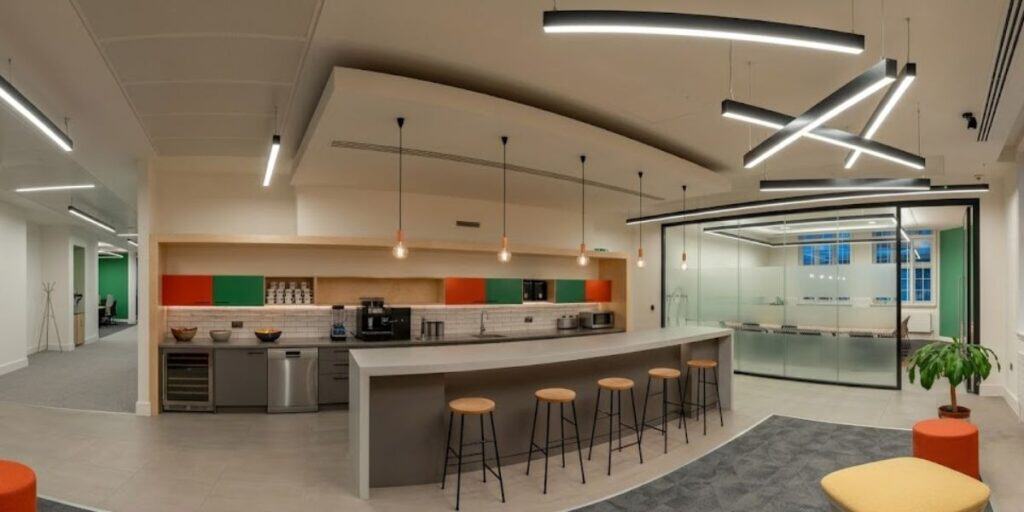
Chụp ảnh, studio & ánh sáng phát sóng
Máy ảnh chuyên nghiệp thường nhạy cảm với sự mâu thuẫn màu sắc hơn so với mắt người.
Ánh sáng chất lượng thấp có thể gây ra:
- thay đổi màu xanh lá cây
- Tông màu da không tự nhiên
- Cân bằng màu kém
- Kết xuất video không nhất quán
Đối với môi trường chụp ảnh và phát sóng, ánh sáng CRI cao cải thiện độ chính xác của tông màu da và tính chân thực màu sắc tổng thể.
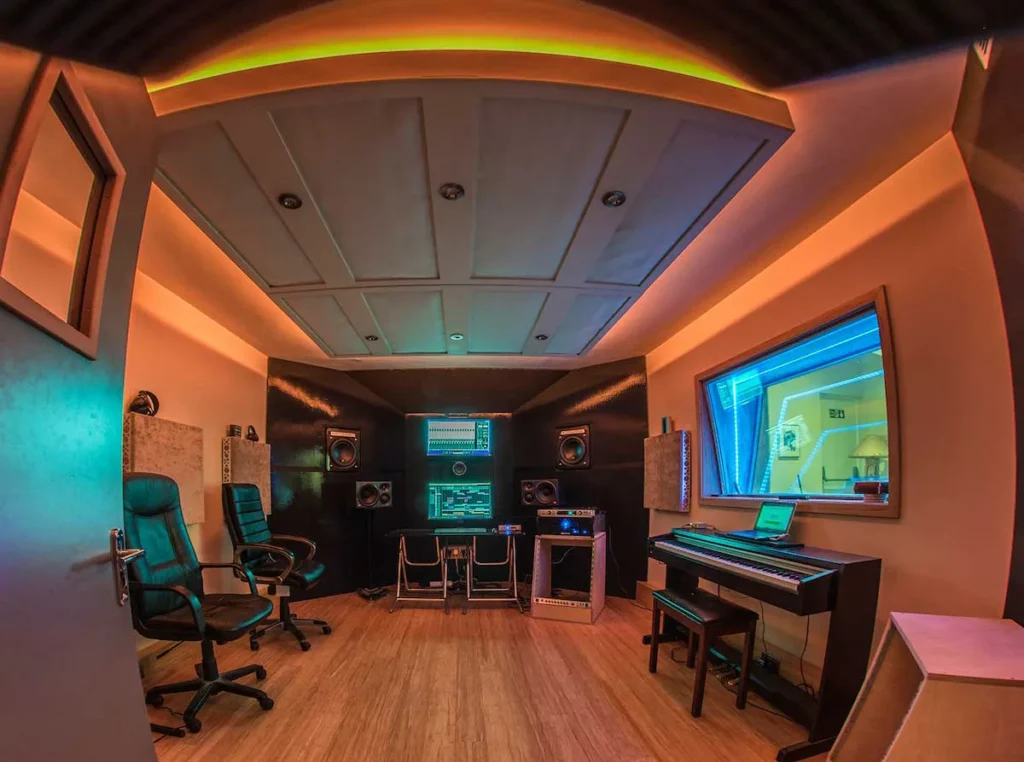
Bảo tàng & Phòng trưng bày nghệ thuật
Các bảo tàng và phòng trưng bày yêu cầu ánh sáng để bảo tồn vẻ ngoài thực sự của tác phẩm nghệ thuật và vật liệu.
CRI chiếu sáng cao cho phép người xem trải nghiệm màu sắc, kết cấu và chi tiết tinh xảo chính xác hơn trong khi vẫn duy trì một môi trường trực quan thoải mái.
Trong môi trường triển lãm cao cấp, tính nhất quán của ánh sáng và chất lượng quang phổ thường trở nên quan trọng như độ sáng của chính nó.
Đây là lý do tại sao nhiều bảo tàng và phòng trưng bày sử dụng hệ thống chiếu sáng CRI cao được kiểm soát cẩn thận cho các ứng dụng hiển thị lâu dài.
Đầy đủ các giải pháp đèn LED dải LED OEM / ODM / ODM
Thay vì chỉ cấu hình tiêu chuẩn, chúng tôi cung cấp các tùy chọn tùy chỉnh OEM / ODM đầy đủ để phù hợp với các yêu cầu dự án khác nhau, bao gồm:
- CRI mức tùy chỉnh (80/90/95+)
- Tùy chọn chiều rộng PCB
- Điều chỉnh mật độ LED
- Điện áp & điều khiển tương thích hệ thống
- Giải pháp chống thấm & phủ
Điều này đảm bảo mọi dự án có thể đạt được sự cân bằng phù hợp giữa hiệu suất, chi phí và tính linh hoạt trong lắp đặt.

Tại sao đèn dải LED CRI cao hơn khó sản xuất hơn
Việc sản xuất đèn dải LED CRI cao liên quan đến nhiều hơn là chỉ đơn giản là tăng số thông số kỹ thuật.
Khi mức CRI tăng lên, các nhà sản xuất phải đạt được phổ ánh sáng cân bằng hơn trong khi vẫn duy trì tính nhất quán màu sắc, ổn định nhiệt và hiệu quả chiếu sáng cùng một lúc.
Điều này trở nên đặc biệt khó khăn hơn so với CRI 90, nơi tái tạo chính xác các màu đỏ đậm, tông màu da, kết cấu gỗ và vật liệu ấm áp đòi hỏi sự kiểm soát quang phổ chặt chẽ hơn nhiều.
Mức độ phức tạp của sản xuất tăng từ CRI 80 lên CRI 99
| Cấp độ CRI | yêu cầu quang phổ | Khó khăn sản xuất | Hiệu quả điển hình | Các ứng dụng chung |
| CRI 70–80 | Kết xuất màu cơ bản | thấp kém | LM / W cao hơn | Công nghiệp, tiện ích, chiếu sáng thương mại cơ bản |
| CRI 90 | Cân bằng phổ màu đỏ được cải thiện | trung bình | Hiệu quả vừa phải | Bán lẻ, Khách sạn, ánh sáng kiến trúc |
| CRI 95+ | Điều chỉnh toàn phổ tiên tiến | địa vị cao | Hiệu quả thấp hơn một chút | Bảo tàng, Bán lẻ sang trọng, Chiếu sáng studio |
| CRI 99 | Độ chính xác phổ gần mức ánh sáng mặt trời | rất cao | Hiệu quả thấp nhất | Y tế, phòng thí nghiệm, các ứng dụng quan trọng màu |
CRI chiếu sáng LED cao hơn thường yêu cầu:
- Kỹ thuật phosphor tiên tiến hơn
- Điều khiển binning LED chặt chẽ hơn
- Tính nhất quán quang phổ tốt hơn
- Quản lý nhiệt ổn định hơn
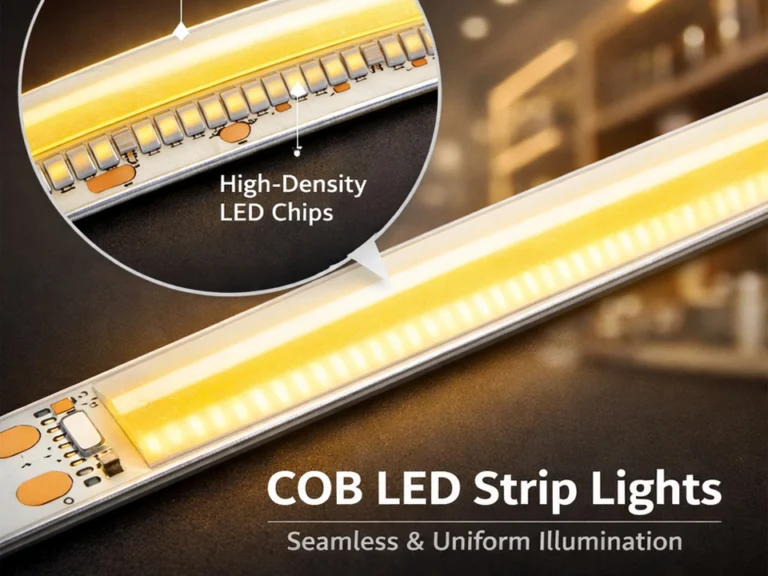
Đây cũng là một lý do tại sao mật độ cao dải đèn LED Công nghệ ngày càng trở nên phổ biến trong các dự án chiếu sáng kiến trúc cao cấp, nhờ vào công nghệ ánh sáng mượt mà hơn và cải thiện tính đồng nhất về mặt thị giác.
Câu hỏi thường gặp
Suy nghĩ cuối cùng
Đèn dải LED CRI cao đóng vai trò quan trọng trong các ứng dụng mà độ chính xác màu sắc, sự thoải mái về thị giác và trình bày sản phẩm ảnh hưởng trực tiếp đến trải nghiệm người dùng và giá trị thương mại.
Từ màn hình bán lẻ đến khách sạn, môi trường văn phòng và ánh sáng kiến trúc, việc chọn cấp CRI phù hợp đảm bảo hiệu suất thị giác tối ưu đồng thời cân bằng chi phí, hiệu quả và độ tin cậy lâu dài.
Thiết kế chiếu sáng hiện đại ngày càng chuyển từ lựa chọn dựa trên đặc điểm kỹ thuật sang ra quyết định dựa trên ứng dụng, trong đó hiệu suất CRI, chất lượng đèn LED và tính nhất quán của hệ thống kết hợp với nhau để xác định kết quả chiếu sáng tổng thể.
Tìm kiếm giải pháp dải CRI LED cao phù hợp?
Chúng tôi cung cấp các giải pháp chiếu sáng dải LED tùy chỉnh và OEM / ODM phù hợp với các yêu cầu khác nhau của dự án, bao gồm lựa chọn CRI, thiết kế PCB, mật độ đèn LED và môi trường lắp đặt.
Khám phá thêm:
Viết bởi Elaine Zhu
Tổng giám đốc tại SignliteLEDĐánh giá kỹ thuật bởi Jason Chen
Lãnh đạo R & D, có dấu hiệu
Email: info@signliteled.com
Bài viết liên quan