Polski
  English
  简体中文
简体中文  Deutsch
  Español
  Français
  Italiano
  日本語
日本語  한국어
한국어  Português
  Русский
  Türkçe
  Nederlands
  Tiếng Việt
  ไทย
ไทย 
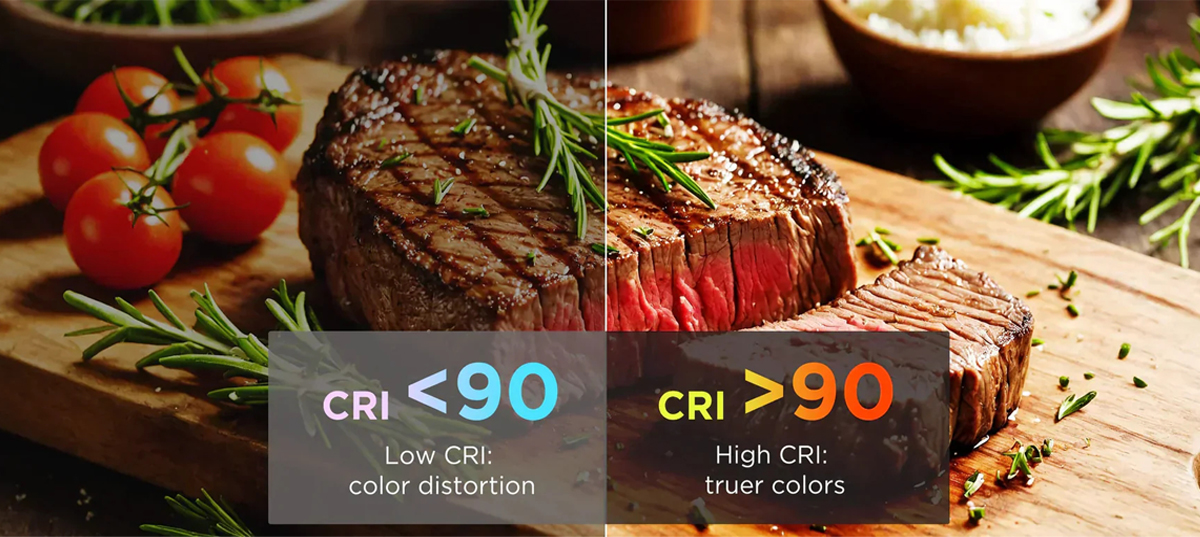
Czy zauważyłeś kiedyś, że niektóre diody LED sprawiają, że świeże mięso wygląda na brązowe, ludzka skóra wydaje się blada, a drewniane meble tracą swoje naturalne ciepło?
Problemem nie jest często jasność — to słabe odwzorowanie kolorów.
W nowoczesnym oświetleniu LED jakość kolorów stała się równie ważna jak moc wyjściowa i energooszczędność. Czy to w sklepach detalicznych, supermarketach, muzeach, projektach architektonicznych, studiach fotograficznych czy wnętrzach mieszkalnych, specjaliści od oświetlenia coraz bardziej polegają na Światła paskowe LED o wysokiej zawartości CRI Aby odtworzyć kolory dokładniej i naturalnie.
Jednak sam CRI nie opowiada całej historii.
Wiele świateł LED reklamowanych jako „CRI 90” nadal nie odtwarza prawidłowo czerwieni, odcieni skóry i nasyconych kolorów. Dlatego profesjonalni projektanci oświetlenia zwracają teraz większą uwagę na takie parametry, jak R9, TM-30, dystrybucja spektralna (SPD) i spójność kolorów (SDCM) podczas oceny wydajności oświetlenia LED.
W tym przewodniku wyjaśniono wszystko, co musisz wiedzieć o renderowaniu kolorów LED — od CRI 70 do CRI 99, od podstawowej dokładności kolorów po technologię LED o pełnym spektrum. Dowiesz się, jak działa rendering kolorów, dlaczego R9 ma większe znaczenie niż wielu ludzi zdaje sobie sprawę, jak TM-30 poprawia tradycyjne standardy CRI i jak wybrać odpowiednie światła paskowe LED o wysokiej wartości do profesjonalnych zastosowań.
Niezależnie od tego, czy jesteś projektantem oświetlenia, kupującym OEM, wykonawcą, inżynierem, sprzedawcą, czy właścicielem marki LED, zrozumienie jakości kolorów jest niezbędne do stworzenia środowisk oświetleniowych, które wyglądają na wygodne wizualnie, naturalne i komercyjnie efektywne.
Kluczowe na wynos
- ·CRI mierzy, jak dokładnie źródło światła odtwarza kolory.
- CRI 90+ jest preferowany w profesjonalnych aplikacjach oświetleniowych taśm LED.
- R9 odgrywa główną rolę w odcieniach skóry, wyświetlaczach żywności i oddawaniu ciepłych kolorów.
- SDCM wpływa na spójność kolorów w instalacjach taśm LED.
- TM-30 zapewnia bardziej zaawansowany sposób oceny jakości światła.
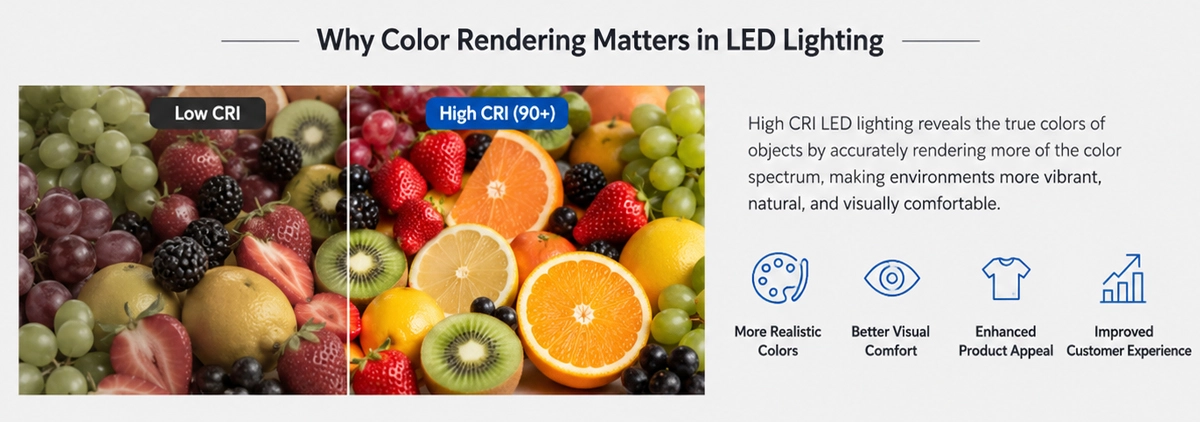
Jak ludzkie oczy postrzegają kolor w różnych widmach LED
Ludzkie oczy nie widzą koloru bezpośrednio z samych przedmiotów.
Zamiast tego, postrzeganie kolorów zależy od tego, jak światło odbija się od powierzchni i wchodzi do naszych oczu.
Z tego powodu jakość spektralna źródła światła odgrywa główną rolę w tym, jak naturalne lub zniekształcone kolory wyglądają.
Światło słoneczne jest uważane za idealne odniesienie, ponieważ zawiera gładkie i ciągłe widmo na widzialnych długościach fal. W naturalnym świetle słonecznym kolory zwykle wydają się zrównoważone, żywe i realistyczne.
Jednak nie wszystkie diody LED taśmowe wytwarzają ciągłe widmo. Diody LED o niskiej jakości często zawierają przerwy widmowe — zwłaszcza w głębokich czerwonych długościach fal — co może powodować, że kolory wydają się matowe, szarawe lub nienaturalne, nawet gdy jasność jest wystarczająca.
Dlatego oświetlenie złej jakości może sprawić, że:
- Mięso wygląda brązowo
- odcienie skóry wydają się blade
- Drewniane wnętrza tracą ciepło
Światła taśmowe LED o wysokiej zawartości CRI wykorzystują zoptymalizowane formuły fosforu i ulepszoną inżynierię spektralną, aby stworzyć bardziej zrównoważone widmo światła, co skutkuje bardziej dokładnym i wizualnym odwzorowaniem kolorów.
Nowoczesne projektowanie oświetlenia skupia się zatem nie tylko na jasności, ale także na jakości widmowej i wrażenia wizualne.
CRI vs SDCM: dokładność kolorów vs spójność kolorów
podczas gdy CRI (wskaźnik oddawania barw) Określa, jak dokładnie źródło światła odtwarza kolory w porównaniu z naturalnym światłem, nie gwarantuje, że każda wyprodukowana taśma LED będzie wyglądać dokładnie tak samo.
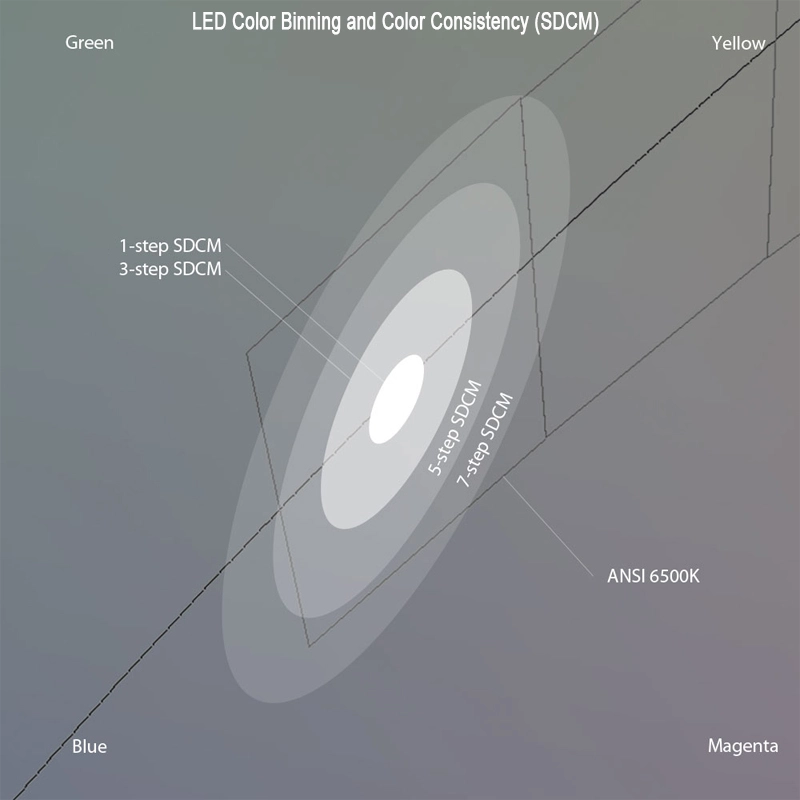
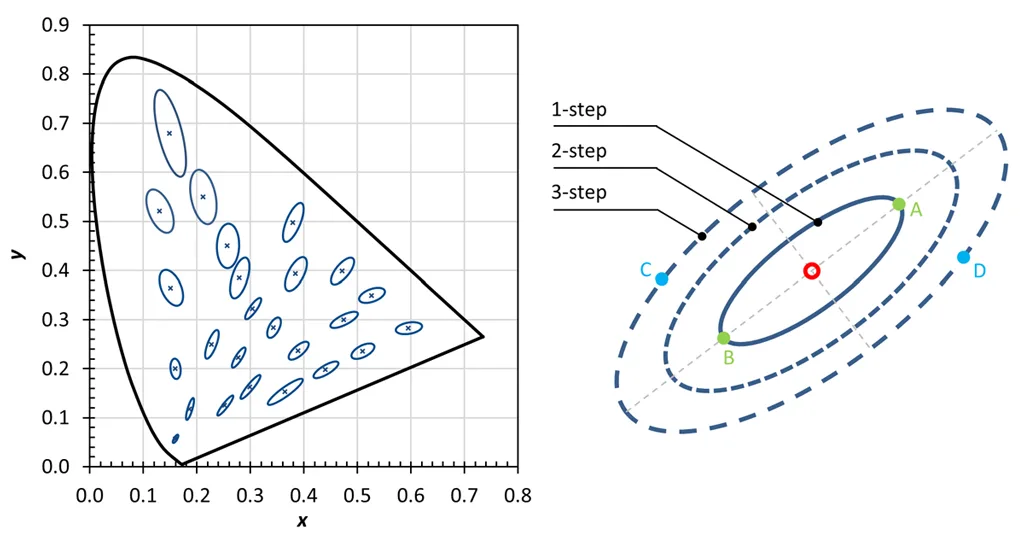
W tym miejscu niezbędne staje się SDCM (odchylenie standardowe dopasowania kolorów), znane również jako elipsy makadamowe.
CRI koncentruje się na dokładności kolorów, co oznacza, jak „prawdziwe” kolory pojawiają się pod źródłem światła. Pasek LED o wysokim CRI (np. CRI 90+) może odtwarzać kolory bardziej naturalnie i żywo, zwłaszcza odcienie skóry, tkaniny i wyświetlacze żywności.
Jednak nawet dwa paski LED o tej samej ocenie CRI mogą nadal wyglądać nieco inaczej, jeśli ich spójność kolorów jest słaba.
SDCM rozwiązuje ten problem, mierząc zmienność kolorów między partiami produkcyjnymi. Określa, jak mocno rzeczywiste wyjście LED jest kontrolowane wokół docelowej współrzędnej koloru.
Na przykład:
- 1–2 krok SDCM: wyjątkowo ciasna spójność kolorów (oświetlenie architektoniczne premium)
- 3–4 krok SDCM: standardowa jakość komercyjna
- 5–7 kroków SDCM: zauważalna zmienność kolorów między partiami
W rzeczywistych projektach oświetleniowych — zwłaszcza oświetleniu liniowym architektonicznym, środowiskach handlowych i instalacjach na dużą skalę — SDCM jest tak samo ważne jak CRI. Światło o wysokiej zawartości CRI ze słabym SDCM może nadal powodować widoczne niedopasowanie kolorów w długich paskach LED lub różnych partiach produkcyjnych.
Dlatego profesjonalni projektanci oświetlenia oceniają razem zarówno CRI, jak i SDCM, aby zapewnić zarówno dokładność kolorów, jak i spójność kolorów w rzeczywistych zastosowaniach.
Dlaczego R9 ma większe znaczenie, niż wielu kupujących zdaje sobie sprawę
Wiele dzisiejszych świateł LED jest reklamowanych jako „CRI 90” lub nawet „High CRI”.
Jednak dwie diody LED o tej samej ocenie CRI mogą nadal dawać dramatycznie różne wyniki wizualne.
Powodem jest R9.
Tradycyjne obliczenia CRI oceniają głównie osiem kolorów testu o niskim nasyceniu (R1–R8). Kolory ciemnoczerwone, reprezentowane przez R9, nie są uwzględnione w standardowym obliczeniu RA. W rezultacie niektóre diody LED z taśmą LED mogą technicznie osiągnąć CRI 90, jednocześnie bardzo słabo odtwarzając czerwienie.
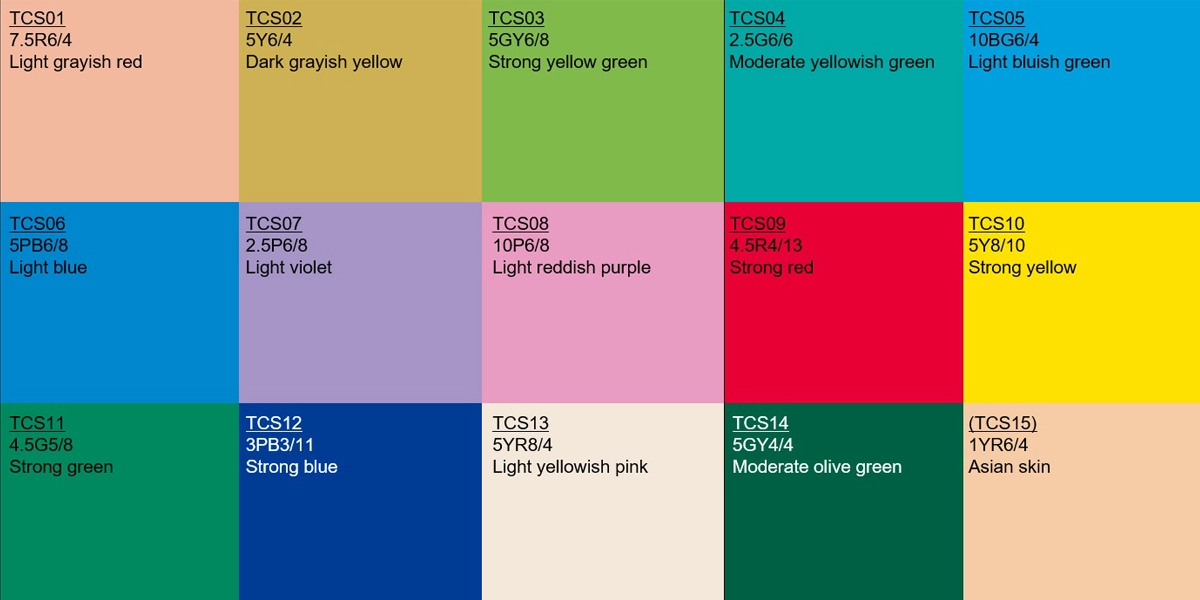
Staje się to szczególnie ważne w zastosowaniach obejmujących głębokie czerwienie i ciepłe odcienie, takie jak:
- Ekspozycje świeżego mięsa
- Oświetlenie w odcieniu skóry
- Środowiska detaliczne
- Przestrzenie gościnności
Diody LED o niskim R9 często sprawiają, że czerwienie wydają się matowe, brązowawe lub szare, nawet gdy ogólna ocena CRI wydaje się wysoka.
Z drugiej strony, światła paskowe LED High-R9 zapewniają mocniejsze, ciemnoczerwone wyjście spektralne, co skutkuje bogatszym, cieplejszym i bardziej naturalnym odwzorowaniem kolorów.
W wielu komercyjnych projektach oświetleniowych R9 może mieć większy wpływ wizualny niż sam numer CRI.
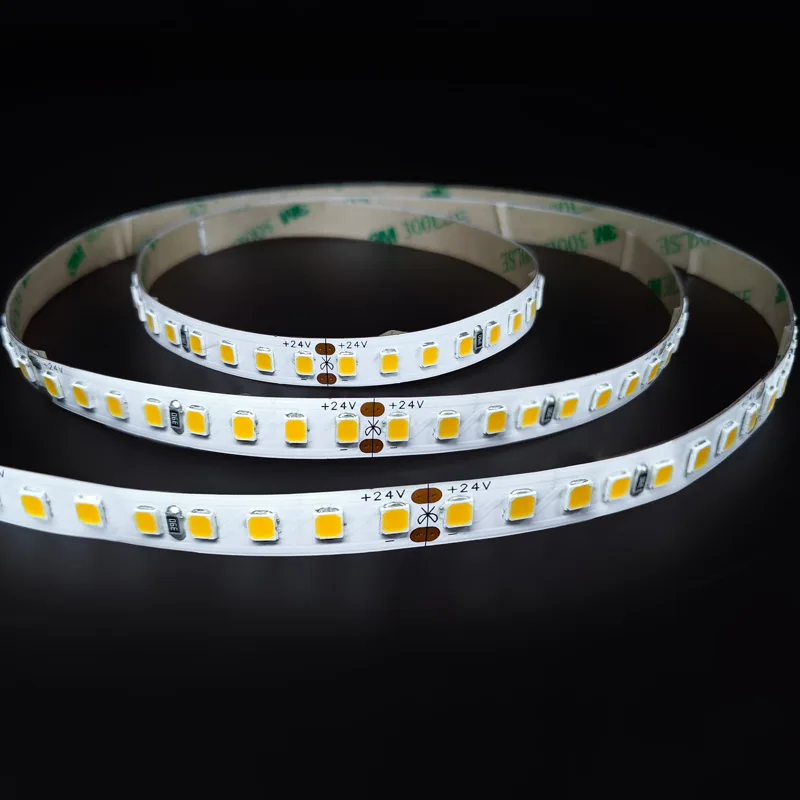
Zalecane rozwiązania taśmowe LED High-R9 LED
do wystawy żywności, regałów handlowych i projektów hotelarskich,
Sam wysoki CRI to za mało.
- 128 diod LED SMD2835 na metr
- Szerokość płytki drukowanej 10 mm
- CRI90+ z R9
- Wysoka wydajność do 200lm/W
- W pełni ściemnialny
- Mocna dwustronna taśma samoprzylepna 3M
- Opcjonalne temperatury barwowe 3000 K, 4000 K i 6500 K
- Pojedynczy jednokolorowy BIN, dostępny 3-stopniowy SDCM
- Może być OEM/ODM i konfigurowalny
CRI 70 vs 80 vs 90 vs 95 vs 99: jaka jest prawdziwa różnica?
Nie wszystkie lampki LED o wysokiej zawartości CRI zapewniają taką samą wydajność wizualną.
Wraz ze wzrostem poziomu CRI z 70 do 99 kolory wydają się bardziej naturalne, zrównoważone i wygodne wizualnie — zwłaszcza w profesjonalnych środowiskach oświetleniowych.
Jednocześnie wyższe CRI zwykle wymaga bardziej zaawansowanej inżynierii luminoforu, ściślejszej kontroli spektralnej i niższej wydajności świetlnej.
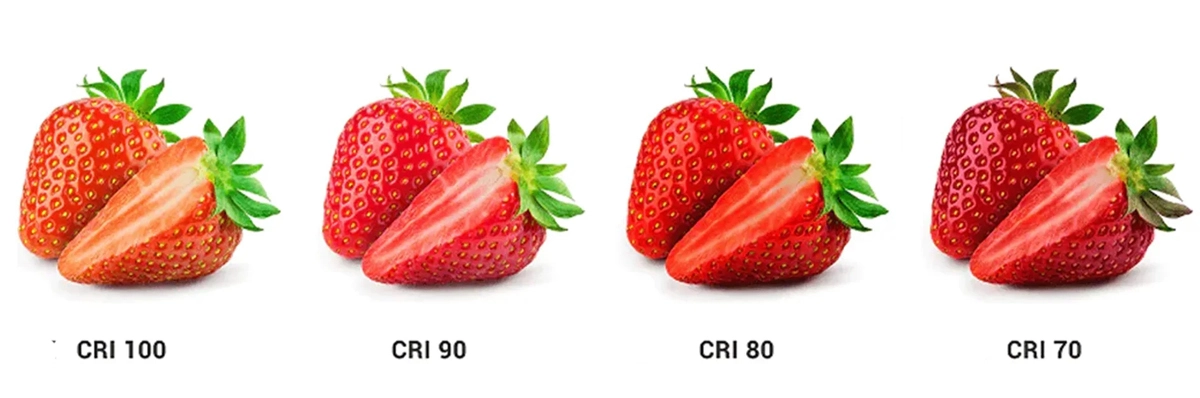
CRI 70 — podstawowe oświetlenie funkcjonalne
Zaprojektowany przede wszystkim z myślą o wydajności i widoczności, a nie na jakości kolorów. Powszechnie stosowany w przestrzeniach przemysłowych, magazynach i oświetleniu użytkowym na zewnątrz, gdzie wygląd jest mniej ważny.
CRI 80 — standardowe oświetlenie komercyjne
Najpopularniejsza linia bazowa dla ogólnego oświetlenia komercyjnego. Nadaje się do biur, supermarketów i podstawowych środowisk handlowych, chociaż głębokie czerwienie i ciepłe odcienie mogą nadal wydawać się nieco słabe lub płaskie.
CRI 90 — profesjonalny standard oświetlenia
Powszechnie uważa się, że jest to idealna równowaga między jakością, wydajnością i kosztem. Kolory wydają się bogatsze i bardziej naturalne, co czyni CRI 90 popularnym wyborem dla projektów handlowych, hotelarskich, architektonicznych i mieszkalnych.
CRI 95 — renderowanie kolorów premium
Zapewnia bardziej wyrafinowaną głębię kolorów, płynniejsze przejścia tonalne i mocniejsze czerwone renderowanie. Często używany w muzeach, luksusowych sklepach, studiach i wysokiej klasy środowiskach wnętrz, w których jakość wizualna jest bardzo ważna.
CRI 99 — pełne spektrum i aplikacje specjalistyczne
Zaprojektowany, aby odtworzyć spektrum bardzo zbliżone do naturalnego światła słonecznego. Zwykle stosowany w medycznych, laboratoryjnych, fotograficznych i krytycznych kolorach, gdzie wymagana jest maksymalna wierność kolorów.
Tabela porównawcza CRI
| Poziom CRI | Jakość wizualna | Typowe zastosowania |
| 70 | Podstawowe odwzorowanie kolorów | Oświetlenie przemysłowe, magazynowe, zewnętrzne |
| Źródło 80 | Standardowa jakość handlowa | Biura, supermarkety, ogólna handel detaliczny |
| Źródło 90 | Profesjonalne oświetlenie klasy | Handel detaliczny, hotelarstwo, wnętrza mieszkalne |
| ŹR 95 | Premium Visual Perform | Muzea, studia, luksusowy handel detaliczny |
| ŹR 99 | Wierność koloru prawie słonecznego | Medyczne, Laboratoria, Fotografia |
W przypadku większości profesjonalnych projektów oświetlenia taśmowego LED, CRI 90–95 Oferuje najlepszą równowagę między jakością wizualną, wydajnością i ogólnym kosztem projektu.
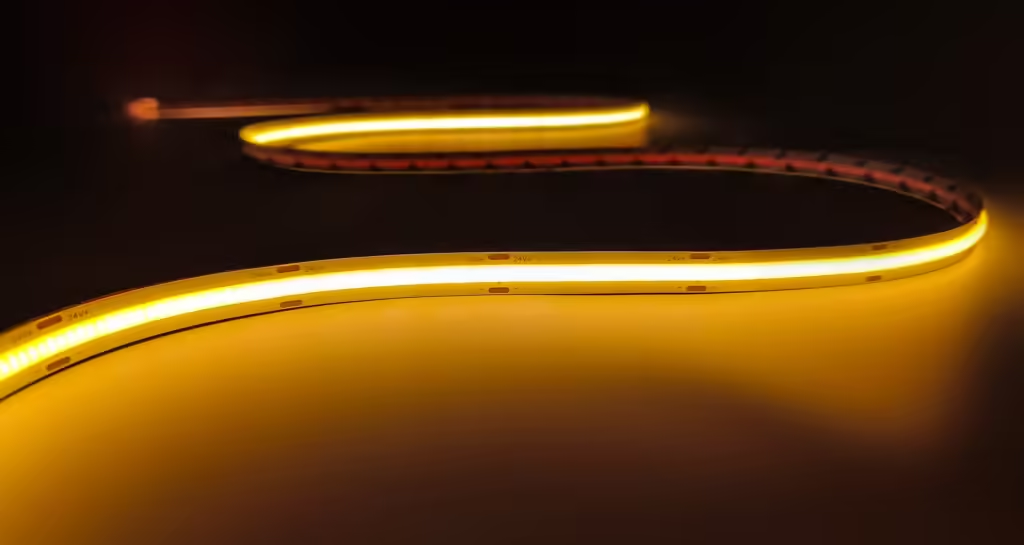
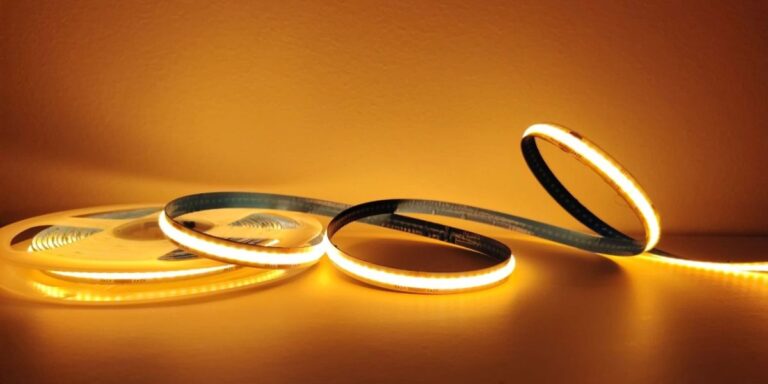
480Chips LED COB Strip Light do oświetlenia dekoracyjnego
- 480 chipów/m, 100lm/W, bez kropek
- Dostępne w temperaturze barwowej od 2700 K do 6500 K
- Możliwość ściemniania
- Kąt wiązki 180 stopni
- CRI90+, do oświetlenia dekoracyjnego
- Bezlutowa technologia zwijania z rolki na rolkę
Jak wybrać odpowiedni CRI dla różnych aplikacji oświetleniowych taśm LED
Wybór odpowiedniego CRI nie polega na wyborze najwyższej dostępnej liczby.
Kluczem jest dopasowanie poziomu CRI do rzeczywistych wymagań wizualnych projektu. W wielu przypadkach dobrze dobrany CRI zapewnia lepszą wartość niż po prostu dążenie do najwyższej specyfikacji.
| Typ aplikacji | Zalecane CRI | Dlaczego to ma znaczenie |
| Magazyny, parkingi, obiekty przemysłowe | CRI 70–80 | Priorytet stawia na sprawność, widoczność i kontrolę kosztów |
| Biura, sklepy detaliczne, hotelarstwo, wnętrza mieszkalne | Źródło 90 | Zapewnia silną równowagę między jakością, komfortem i wydajnością koloru |
| Muzea, galerie, studia, luksusowy handel, ekspozycje żywności premium | CRI 95+ | Zapewnia zwiększoną głębię kolorów, realizm i jakość prezentacji |
Chociaż CRI jest ważnym wskaźnikiem, nie należy go oceniać samodzielnie. Wydajność R9, spójność SDCM, temperatura barwowa, metryki TM-30 i ogólny projekt oświetlenia przyczyniają się do tego, jak kolory są ostatecznie postrzegane w przestrzeni.
W przypadku większości komercyjnych i architektonicznych projektów oświetlenia taśm LED CRI 90 pozostaje najbardziej praktycznym i szeroko określonym wyborem.
Beyond CRI: Dlaczego TM-30 staje się nowym standardem
Od dziesięcioleci CRI jest najczęściej używanym standardem oceny oddawania kolorów w oświetleniu LED.
Jednak wielu specjalistów od oświetlenia uznaje teraz, że samo CRI nie może w pełni opisać, jak kolory faktycznie pojawiają się pod źródłem światła.
Dlatego TM-30 zyskał coraz większą uwagę w nowoczesnym oświetleniu.
Opracowana przez Illuminating Engineering Society (IES), TM-30 jest bardziej zaawansowaną metodą oceny kolorów, która analizuje znacznie szerszy zakres kolorów niż tradycyjne pomiary CRI.
W przeciwieństwie do CRI, który skupia się głównie na średniej wierności kolorów, TM-30 ocenia jednocześnie dwa ważne aspekty:
- RF (Indeks wierności) → Jak dokładnie odwzorowane są kolory
- RG (indeks gamutu) → Jak wyglądają nasycone lub żywe kolory
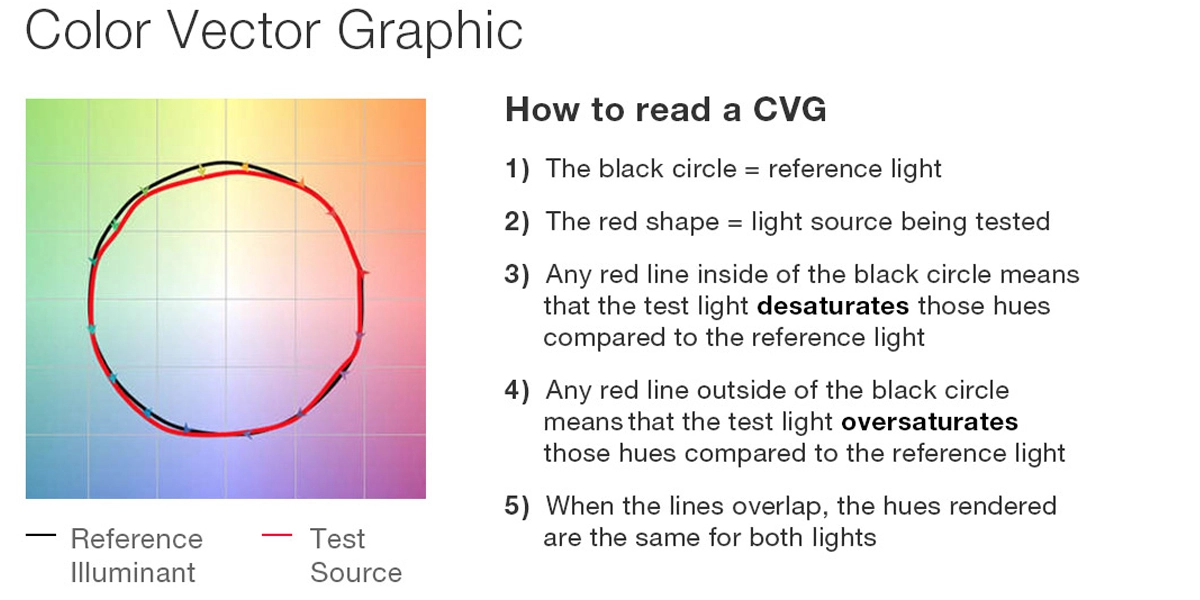
Dzięki temu projektanci oświetlenia lepiej zrozumieć, czy źródło światła sprawia, że pojawiają się kolory:
- Bardziej naturalny
- Bardziej żywy
- przesycony
- lub wizualnie nudny
TM-30 jest szczególnie przydatny w:
- Oświetlenie detaliczne
- Oświetlenie architektoniczne
- Środowiska muzealne
- Projekty hotelarskie
- Premium aplikacje komercyjne
Chociaż CRI pozostaje najbardziej rozpoznawalną specyfikacją w branży LED, TM-30 jest coraz częściej postrzegany jako przyszły kierunek profesjonalnej oceny jakości kolorów.
W przypadku większości dzisiejszych projektów oświetlenia taśmy LED CRI, R9 i SDCM razem już stanowią mocną podstawę do oceny jakości światła. TM-30 oferuje po prostu głębszy poziom analizy dla zaawansowanych aplikacji.
Gdzie światła paskowe LED High CRI mają największą różnicę
Światła pasowe LED High CRI nie są konieczne dla każdego projektu oświetlenia.
Jednak w środowiskach, w których wygląd bezpośrednio wpływa na postrzeganie, atmosferę lub prezentację produktu, jakość renderowania kolorów może mieć znaczącą różnicę.
W wielu profesjonalnych zastosowaniach lepsze oświetlenie nie tylko rozjaśnia przestrzeń — sprawia, że kolory są bardziej naturalne, materiały wydają się bardziej premium, a otoczenie staje się wizualnie bardziej wygodne.
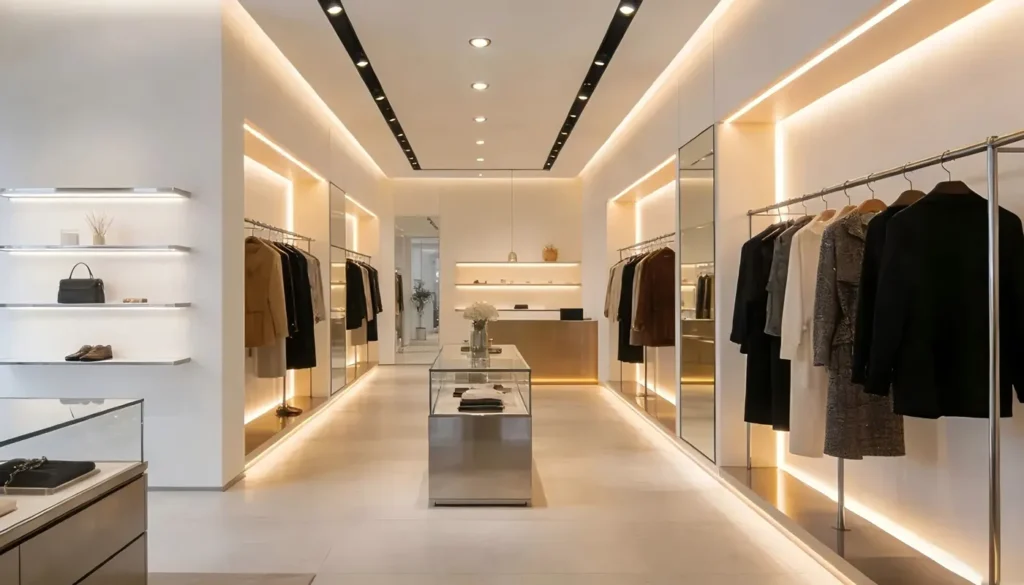
Wyświetlacze detaliczne i produkty
W środowiskach handlowych oświetlenie bezpośrednio wpływa na postrzeganie produktów przez klientów.
Oświetlenie o niskim CRI może sprawić, że tkaniny, opakowania, kosmetyki i towary wydają się nudne lub niespójne. Wysokiej jakości diody LED o wysokiej zawartości CRI pomagają przywrócić naturalny wygląd, dzięki czemu produkty wyglądają bardziej żywe, dokładne i atrakcyjne wizualnie.
Jest to szczególnie ważne w:
- Sprzedaż detaliczna mod
- sklepy jubilerskie
- Wyświetlacze kosmetyczne
- Prezentacje produktów luksusowych
Wysokie oświetlenie pomaga również zmniejszyć sztuczne lub „wyprane” uczucie, często związane z niższą jakością komercyjnego oświetlenia.
Jedzenie i świeże wyświetlacze
Prezentacja żywności jest jedną z najbardziej wrażliwych na kolory aplikacji oświetleniowych.
Świeże mięso, owoce, warzywa, wypieki i produkty mleczne mogą wydawać się znacznie mniej atrakcyjne przy słabej jakości oświetleniu. W szczególności głębokie czerwienie i ciepłe odcienie są pod silnym wpływem wydajności R9.
Światła paskowe LED o wysokim wskaźniku CRI z silnymi wartościami R9 pomagają w pojawieniu się jedzenia:
- świeżo
- Bardziej naturalny
- Bardziej żywe
- Bardziej apetyczny wizualnie
Właśnie dlatego supermarkety, sprzedawcy świeżo upieczone i ekspozycje żywności premium coraz częściej traktują priorytetowo rozwiązania oświetleniowe o wysokim poziomie CRI.

Wnętrza hotelowe i mieszkalne
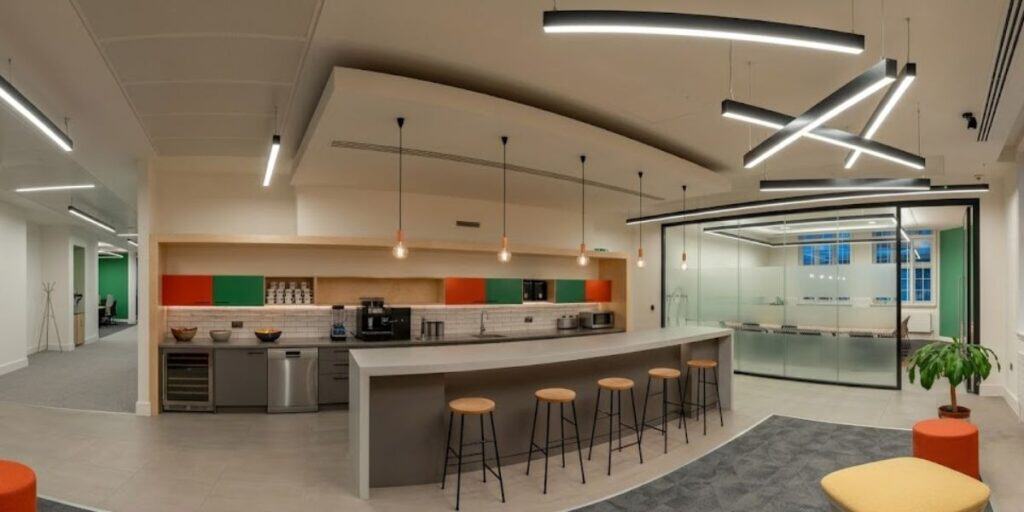
W hotelarstwie i mieszkalnictwa jakość oświetlenia silnie wpływa na atmosferę i komfort emocjonalny.
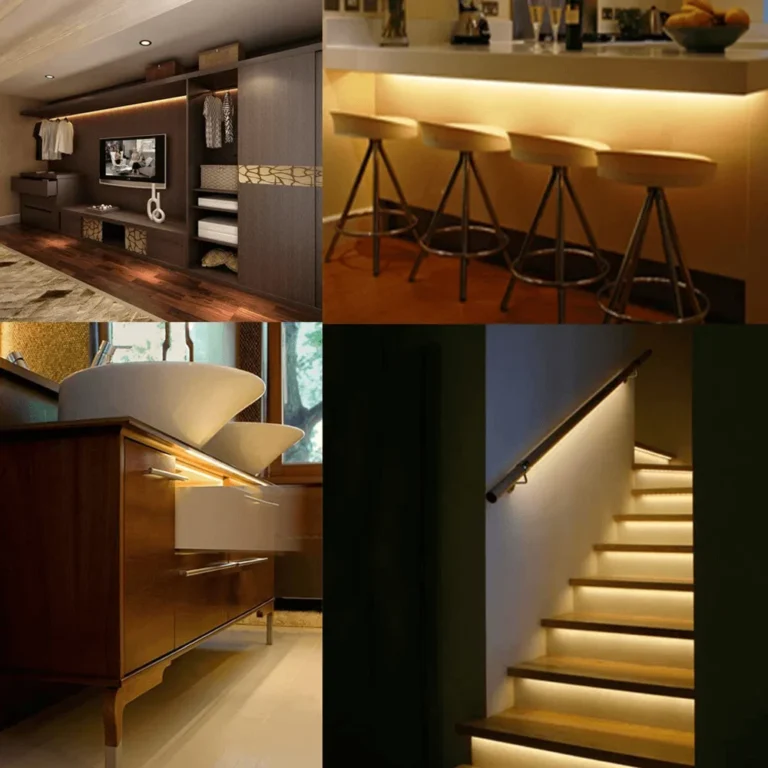
Oświetlenie o wysokim współczynniku CRI pomaga w materiałach wewnętrznych, takich jak: drewno, kamień, tkaniny, wykończenia dekoracyjne wydają się bardziej naturalne i teksturowane.
W połączeniu z ciepłymi temperaturami barwowymi, takimi jak 2700K lub 3000K, oświetlenie paskowe LED o wysokiej zawartości CRI może stworzyć bardziej miękkie, wygodniejsze i bardziej premium w środowisku wewnętrznym.
Jest to szczególnie cenne w:
- Architektoniczne oświetlenie liniowe
- hotele
- Restauracje
- Luksusowe rezydencje
- Pomieszczenia wypoczynkowe
Fotografowanie, studio i oświetlenie transmisji
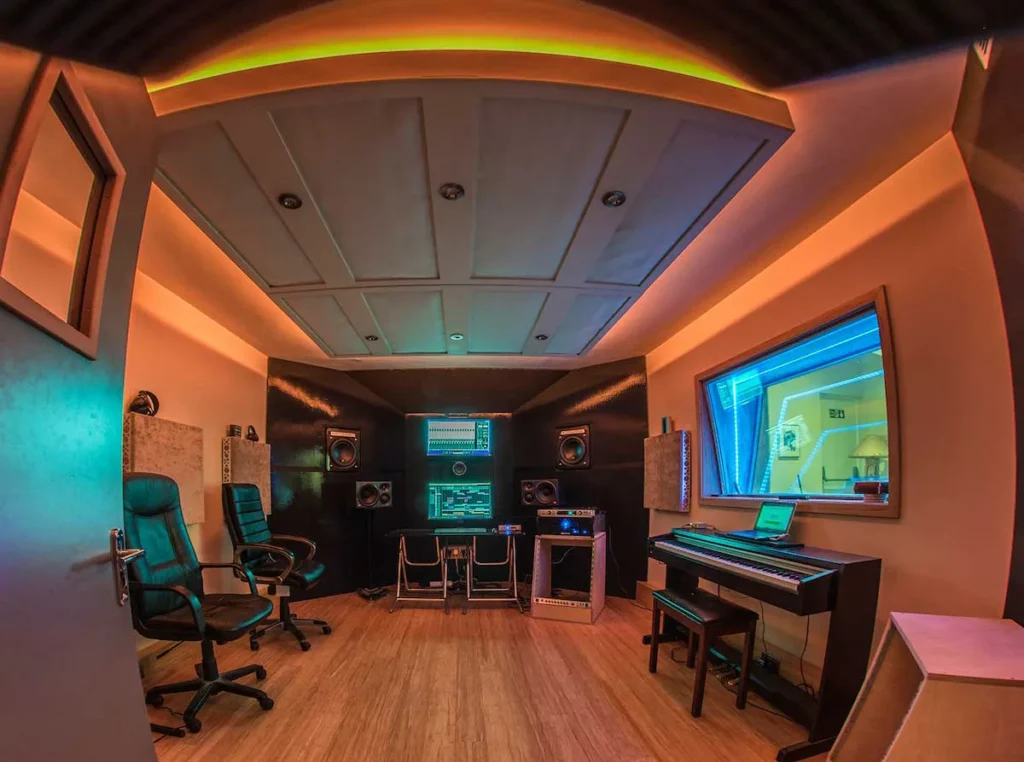
Profesjonalne aparaty fotograficzne są często bardziej wrażliwe na niespójności kolorów niż ludzkie oko.
Niska jakość oświetlenia może spowodować:
- Zielone zmiany odcienia
- Nienaturalne odcienie skóry
- Słaba równowaga kolorów
- Niespójne renderowanie wideo
W środowiskach fotograficznych i nadawczych oświetlenie o wysokim współczynniku CRI poprawia dokładność odcieni skóry i ogólny realizm kolorów.
Muzea i galerie sztuki
Muzea i galerie wymagają oświetlenia, które zachowuje prawdziwy wygląd dzieł sztuki i materiałów.
Oświetlenie o wysokim współczynniku CRI pozwala widzom bardziej dokładnie doświadczyć kolorów, tekstur i drobnych szczegółów, zachowując jednocześnie komfortowe wizualnie środowisko.
W środowiskach wystawowych premium spójność oświetlenia i jakość widmowa często stają się tak samo ważne jak sama jasność.
Dlatego wiele muzeów i galerii korzysta ze starannie kontrolowanych systemów oświetlenia o wysokim poziomie CRI do długotrwałych zastosowań w wyświetlaniu.
Pełna gama niestandardowych i ODM SMD taśm LED Solutions Solutions
Zamiast tylko standardowych konfiguracji zapewniamy pełne opcje dostosowywania OEM/ODM, aby dopasować różne wymagania projektowe, w tym:
- Dostosowanie poziomu CRI (80 / 90 / 95+)
- Opcje szerokości PCB
- Regulacja gęstości LED
- Kompatybilność z systemem napięć i sterowania
- Rozwiązania wodoodporne i
Dzięki temu każdy projekt może osiągnąć odpowiednią równowagę między wydajnością, kosztem i elastycznością instalacji.

Dlaczego światła paskowe LED o wyższym CRI są trudniejsze do wyprodukowania
Produkcja świateł paskowych LED o wysokiej zawartości CRI to znacznie więcej niż tylko zwiększenie liczby specyfikacji.
Wraz ze wzrostem poziomu CRI, producenci muszą osiągnąć bardziej zrównoważone spektrum światła, zachowując jednocześnie spójność kolorów, stabilność termiczną i wydajność oświetlenia.
Staje się to szczególnie trudne poza CRI 90, gdzie dokładne odwzorowanie głębokich czerwieni, odcieni skóry, tekstur drewna i ciepłych materiałów wymaga znacznie ściślejszej kontroli spektralnej.
Jak wzrasta złożoność produkcji od CRI 80 do CRI 99
| Poziom CRI | Wymagania spektralne | Trudność w produkcji | Typowa wydajność | Typowe zastosowania |
| CRI 70–80 | Podstawowe odwzorowanie kolorów | Niski | Wyższe LM/W | Przemysłowe, użytkowe, podstawowe oświetlenie komercyjne |
| Źródło 90 | Poprawiono równowagę czerwonego widma | Średni | Umiarkowana wydajność | Handel detaliczny, hotelarstwo, oświetlenie architektoniczne |
| CRI 95+ | Zaawansowane strojenie w pełnym spektrum | Wysoki | Nieco niższa wydajność | Muzea, luksusowy handel, oświetlenie studyjne |
| ŹR 99 | Precyzja widmowa na poziomie światła słonecznego | bardzo wysoki | Najniższa wydajność | Zastosowania medyczne, laboratoryjne, krytyczne dla kolorów |
Oświetlenie LED o wyższym poziomie CRI zwykle wymaga:
- Bardziej zaawansowana inżynieria fosforowa
- Ściśniejsza kontrola binningu LED
- Lepsza spójność widmowa
- Bardziej stabilne zarządzanie term
To także jeden z powodów, dla których wysoka gęstość Taśma LED COB Technologia staje się coraz bardziej popularna w projektach oświetlenia architektonicznego premium, dzięki płynniejszej natężeniu światła i lepszej jednolitości wizualnej.
Często zadawane pytania
Przemyślenia końcowe
Światła paskowe LED High CRI odgrywają kluczową rolę w aplikacjach, w których dokładność kolorów, komfort wizualny i prezentacja produktu bezpośrednio wpływają na wrażenia użytkownika i wartość handlową.
Od wyświetlaczy detalicznych po hotelarstwo, środowiska biurowe i oświetlenie architektoniczne, wybór odpowiedniego poziomu CRI zapewnia optymalną wydajność wizualną, jednocześnie równoważąc koszty, wydajność i długoterminową niezawodność.
Nowoczesne projektowanie oświetlenia coraz bardziej przesuwa się z wyboru opartego na specyfikacji na podejmowanie decyzji oparte na aplikacjach, gdzie wydajność CRI, jakość LED i spójność systemu współpracują ze sobą, aby określić ogólne wyniki oświetlenia.
Szukasz odpowiedniego rozwiązania paska LED High CRI?
Dostarczamy niestandardowe rozwiązania oświetleniowe taśm LED OEM/ODM dostosowane do różnych wymagań projektowych, w tym wyboru CRI, projektowania PCB, gęstości LED i środowisk instalacyjnych.
Dowiedz się więcej:
Napisane przez Elaine Zhu
Dyrektor Generalny przy Sygnalizator LEDTechnicznie sprawdzony przez Jasona Chen
Lider R&D, Signlited
Adres e-mail: info@signliteled.com
Powiązane posty