Polski
  English
  简体中文
简体中文  Deutsch
  Español
  Français
  Italiano
  日本語
日本語  한국어
한국어  Português
  Русский
  Türkçe
  Nederlands
  Tiếng Việt
  ไทย
ไทย 
wpuszczenie
Projekty podświetlenia kamienia wymagają czegoś więcej niż tylko źródła światła — wymagają starannie zaprojektowanego systemu oświetlenia, który może zapewnić jednolite oświetlenie na dużych, półprzezroczystych powierzchniach, przy jednoczesnym zachowaniu prostoty instalacji i stabilności elektrycznej.
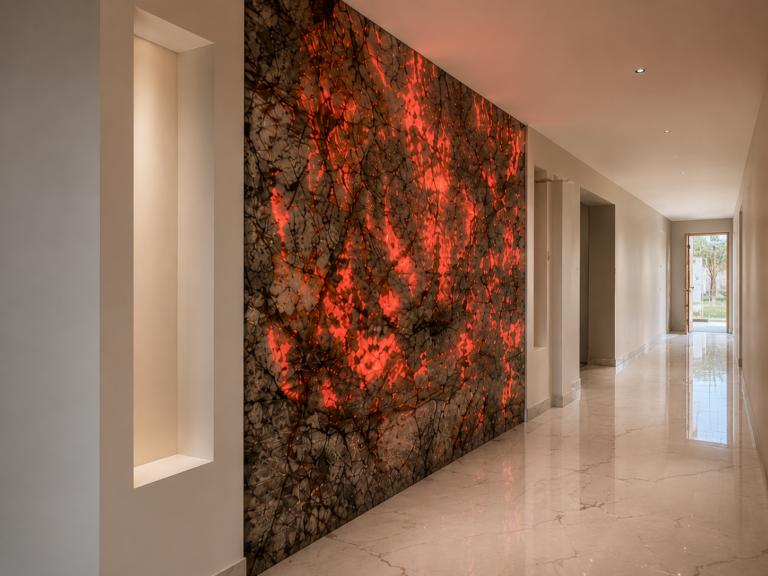
W tym projekcie holenderski producent oświetlenia opracował serię dużych architektonicznych kamiennych paneli ściennych. Głównym wyzwaniem było nie tylko uzyskanie jednolitego wizualnie efektu podświetlenia, ale także zaprojektowanie architektury systemu, która mogłaby skalować się na wielu dużych panelach przy minimalnej złożoności okablowania.
Ten przypadek pokazuje, jak światło arkusza LED Technologia została zaprojektowana w uproszczony, panelowy system oświetlenia z wykorzystaniem scentralizowanego zasilania i sterowania opartego na Casambi.

Przegląd projektu
| Pozycja | bliższe |
| Typ projektu | Podświetlenie kamienia architektonicznego |
| Zastosowanie | Duże panele ścienne z kamienia wewnętrznego |
| Materiał | Półprzezroczysty kamień naturalny |
| Rozwiązanie oświetleni | Przestrajalny biały system arkuszy LED |
| System sterowania | Casambi / PWM / 0–10V |
| Główne wyzwanie | Jednolite podświetlenie o wysokim obciążeniu z uproszczonym okablowaniem |
| Wynik końcowy | Bezszwowy system oświetlenia architektonicznego opartego na panelu |
Kluczowe na wynos
- Projekt wymagał projektu oświetlenia na poziomie systemu, a nie tylko wyboru źródła światła.
- Każdy panel kamienny został zaprojektowany z 1 zasilaczem + 1 architekturą systemu sterowania.
- Panele o dużym obciążeniu (do ~450 W) wymagały dokładnej oceny ograniczeń sterowników i rozkładu obciążenia.
- Casambi został wybrany jako podstawowa platforma kontrolna ze względu na elastyczność bezprzewodową i zmniejszoną złożoność okablowania.
- Równoległe okablowanie arkuszy LED miało kluczowe znaczenie dla zapewnienia jednolitej jasności na dużych powierzchniach.
- Ostateczny system wyeliminował wiele małych sterowników, znacznie zmniejszając złożoność instalacji na miejscu.
Przegląd projektu: Niestandardowe podświetlenie kamienia w skandynawskim studiu projektowym
Projekt ten został opracowany dla holenderskiego producenta oświetlenia pracującego nad serią architektonicznych instalacji podświetlenia ściennego.
W aplikacji wielkoformatowe półprzezroczyste kamienne panele stosowane w wewnętrznych przestrzeniach architektonicznych, gdzie system oświetlenia wymagał jednolitego podświetlenia bez hotspotów, przy jednoczesnym zachowaniu prostej i skalowalnej konstrukcji elektrycznej do instalacji na miejscu.
W przeciwieństwie do standardowych projektów oświetlenia dekoracyjnego, ta obudowa wymagała starannej koordynacji między:
- Przezierność materiału kamienia
- Gęstość układu arkusza LED
- Rozkład mocy w dużych panelach
- Prostota systemu sterowania (kompatybilność Casambi / 0–10V)
Od wczesnego etapu projekt polegał nie tylko na wyborze źródła światła, ale o zaprojektowaniu kompletnej architektury systemu oświetleniowego, która mogłaby być praktycznie zainstalowana i kontrolowana na dużą skalę.
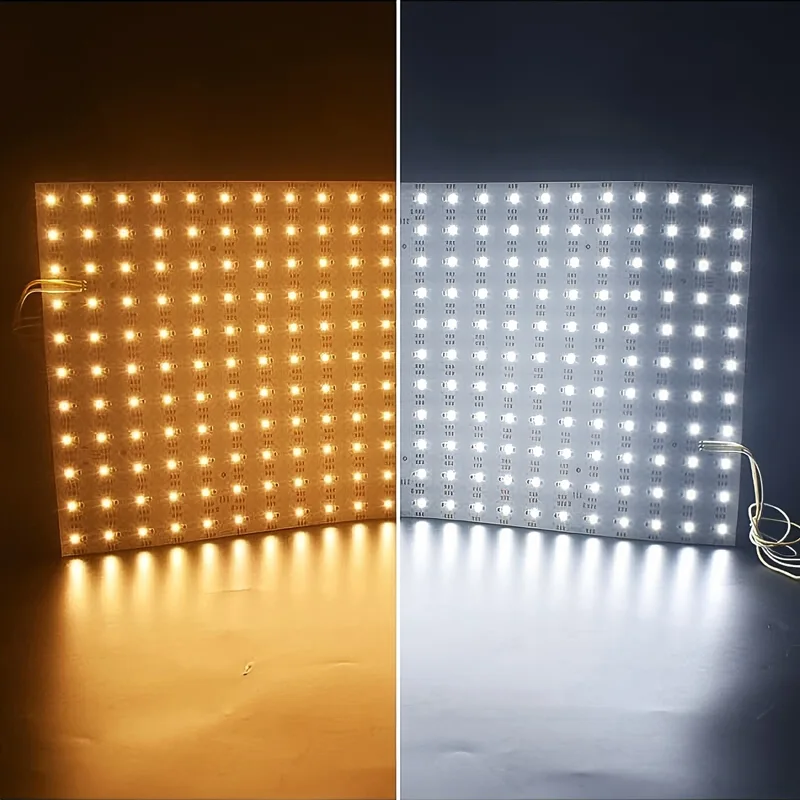
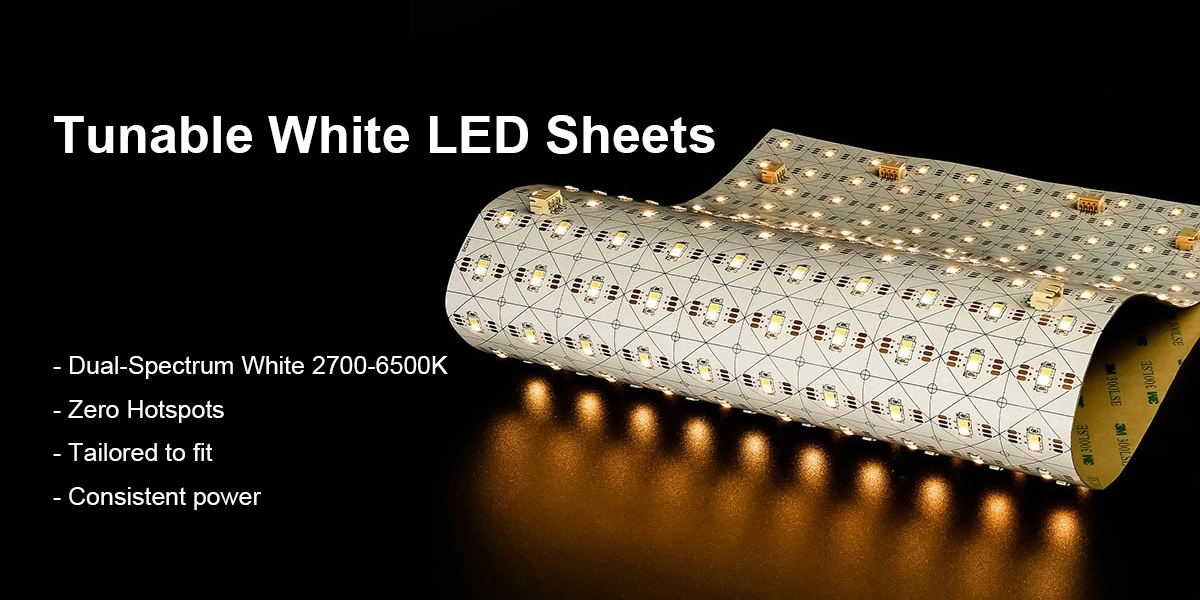
Przestrajalne białe arkusze LED
Rozmiar (LXH): 250mm x 250mm/490mm x 245mm
Typ LED: 2835 SMD
Ilość LED: 200 sztuk/484 sztuk
Napięcie robocze: DC 24V
Moc: 16W/40W
Zakres regulacji temperatury barwowej: 2700K – 6500K
Strumień świetlny: 1600 lm/m/3800lm/m
Indeks oddawania kolorów: >90ra
Minimalna długość cięcia: 25mm x 25 mm/22,3 mm x22,3 mm
Możliwość ściemniania: tak
Kąt wiązki: 120°
Cele projektowe klienta
Wymagania klienta i cele systemu
Od wczesnego etapu projektowania klienta skupiono się nie tylko na osiągnięciu wysokiej jakości podświetlenia kamienia, ale co ważniejsze, na zdefiniowaniu skalowalnej i wydajnej instalacyjnej architektury systemu, która mogłaby być replikowana na wielu dużych panelach.
Wymagania projektowe stopniowo stały się bardziej zorientowane na system niż na produkt, z następującymi kluczowymi celami:
- Każdy kamienny panel powinien działać jako niezależna jednostka oświetleniowa
- Uproszczona konstrukcja 1 zasilacza na panel + 1 system sterowania na panel
- Unikaj używania wielu małych sterowników w celu zmniejszenia złożoności okablowania na miejscu
- Zapewnij jednolite podświetlenie pełnej powierzchni bez widocznych hotspotów
- Obsługa przestrajalnej bieli (2700K–6500K) dla elastyczności architektonicznej
- Zachowaj kompatybilność zarówno z systemem sterowania bezprzewodowego Casam, jak i przewodowymi systemami sterowania 0–10 V
- Upewnij się, że system może być zainstalowany i konserwowany przy minimalnej regulacji na miejscu
Podczas fazy dyskusji stało się jasne, że głównym wyzwaniem był nie tylko rozkład obciążenia elektrycznego, ale także sposób zrównoważenia elastyczności sterowania, ograniczeń sterowników i praktyczności instalacji w jednej uproszczonej architekturze.
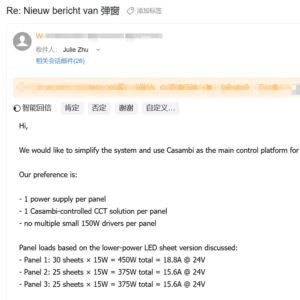
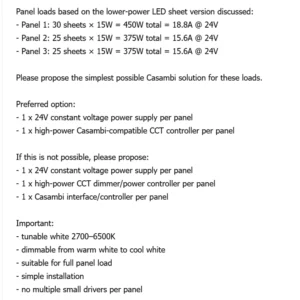
Obliczanie obciążenia i ograniczenia systemu
Analiza obciążenia elektrycznego i ograniczenia systemu
W oparciu o ostateczną konfigurację arkusza LED potwierdzoną podczas dyskusji inżynierskiej, każdy panel z kamienia został zaprojektowany przy użyciu układu arkuszy LED o dużej gęstości, działającego przy stałym napięciu 24 V.
Całkowite obciążenie elektryczne na panel obliczono w następujący sposób:
- Panel 1 (2676 × 1200 mm): 30 arkuszy LED → ok. 450W (~18,75 A przy 24 V)
- Panel 2 (2397 × 1194 mm): 25 arkuszy LED → ok. 375 W (~15,6 A @ 24V)
- Panel 3 (2397 × 1200 mm): 25 arkuszy LED → ok. 375 W (~15,6 A @ 24V)
Potwierdziło to, że każdy panel działał w zakresie dużej mocy dla systemów arkuszy LED o stałym napięciu, co wymaga starannego rozważenia zarówno rozmiaru zasilania, jak i strategii dystrybucji prądu.
Przegląd obciążenia projektu (na panel)
| płyta | Rozmiar (mm) | Arkusze LED | Całkowite obciążenie | Aktualny @24v |
| Panel 1 | 2676 × 1200 | 30 szt | ~450W | ~18,75A |
| Panel 2 | 2397 × 1194 | 25 szt | ~375W | ~15,6A |
| Panel 3 | 2397 × 1200 | 25 szt | ~375W | ~15,6A |
Ograniczenie na poziomie systemu: ograniczenia sterownika i kontroli
Podczas walidacji systemu zidentyfikowano istotne ograniczenie techniczne:
Większość dostępnych sterowników Casambi i 0–10 V LED dla tej kategorii ma zazwyczaj około 150 W na jednostkę sterownika.
Stworzyło to jasne wyzwanie projektowe systemu:
- Każde obciążenie panelu (375W–450W) przekroczyło pojemność pojedynczego sterownika
- Konwencjonalna konstrukcja wymagałaby zatem 3-4 sterowników na panel
- To znacznie zwiększyłoby złożoność okablowania, czas instalacji i punkty awarii
Jednocześnie celem projektowym klienta było jednoznaczne utrzymanie architektury „jeden panel = jeden zasilacz + jeden system sterowania”, co bezpośrednio kolidowało z rozproszonym podejściem wielosterowowym.
Wymagania dotyczące okablowania i dystrybucji
Kolejnym krytycznym wymogiem inżynieryjnym było zachowanie połączenia z arkuszami LED.
Ze względu na dużą liczbę arkuszy LED na panel, system musiał być zaprojektowany z architekturą okablowania równoległego po stronie wejściowej, zapewniając:
- Równy rozkład napięcia we wszystkich arkuszach LED
- Zapobieganie spadkowi napięcia na długich kablach
- Stała jasność i temperatura barwowa na całej powierzchni kamienia
Ta strategia okablowania jest niezbędna w przypadku aplikacji podświetlania wielkopowierzchniowych, gdzie nawet niewielka nierównowaga napięcia może skutkować widocznymi niespójnościami jasności.
Wniosek inżynieryjny (etap przed rozwiązaniem rozwiązania)
Z perspektywy projektowania systemu projekt przedstawił trzy główne ograniczenia:
- Wysokie obciążenie całkowite na panel (do ~450W)
- Ograniczenia sterownika (~150 W na jednostkę sterującą)
- Wymagania dotyczące uproszczonej architektury pojedynczego kontrolera na panel
Ograniczenia te jasno dały do zrozumienia, że ostateczne rozwiązanie będzie musiało priorytetowo traktować uproszczenie systemu i scentralizowane logikę sterowania, a nie tradycyjne podejście do kierowcy rozproszonego.

Opcje kontroli inżynierskiej i logika decyzji
Ocena systemu sterowania i decyzja inżynierska
Biorąc pod uwagę obciążenie elektryczne na panel i wymaganie dla uproszczonej architektury „jeden panel – jeden system sterowania”, kilka strategii sterowania zostało ocenionych w fazie inżynierskiej.
Wybór nie był oparty na samych funkcjach, ale na kompatybilności systemu z obciążeniami arkuszy LED o dużej mocy, ograniczeniami sterowników i ograniczeniami instalacyjnymi.
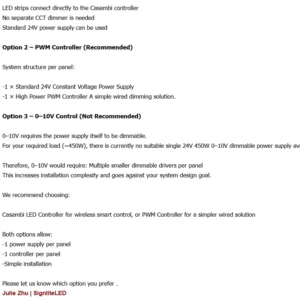
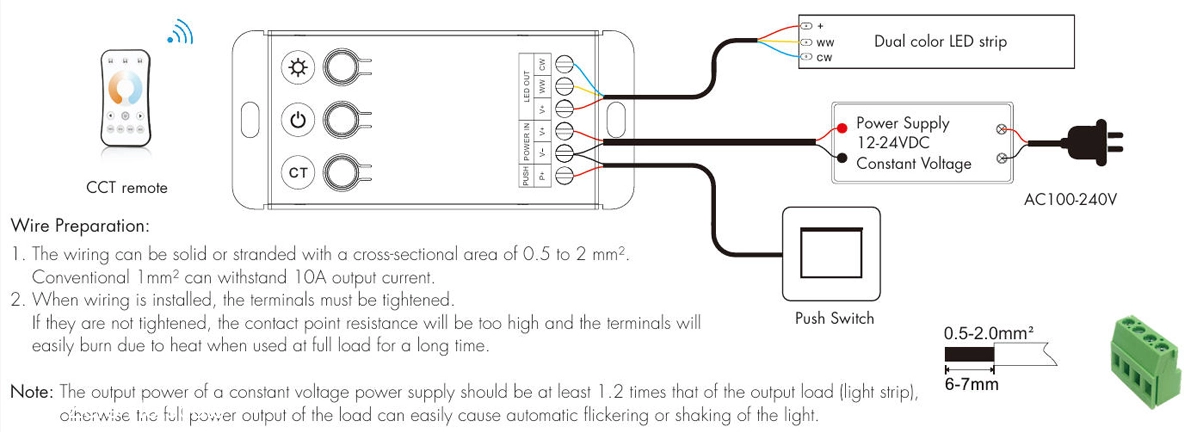
Opcja 1 — bezprzewodowy system sterowania Casam (preferowane rozwiązanie)
System Casambi został oceniony jako podstawowa architektura kontrolna dla tego projektu.
Z perspektywy systemu jego kluczową zaletą jest to, że logika sterowania jest zintegrowana na poziomie sterownika, co pozwala:
- Bezprzewodowe ściemnianie i regulowana białą kontrola (2700K–6500K)
- Bezpośrednie sterowanie oparte na aplikacji bez zewnętrznego okablowania sterowania
- Zmniejszona złożoność okablowania na miejscu
- Lepsza skalowalność dla wielu paneli architektonicznych
W tym projekcie Casambi został dostosowany do wymagań klienta:
“1 system sterowania na panel przy minimalnej złożoności instalacji”
Jednak ze względu na ograniczenia mocy poszczególnych sterowników Casam (~150 W na jednostkę) system nadal wymagał starannej strategii grupowania sterowników w ramach pojedynczej architektury panelu.
Opcja 2 — regulacja ściemniania PWM (alternatywa przewodowa)
Sterowanie PWM zostało uznane za bardziej konwencjonalne ściemnianie przewodowe.
Jego główne cechy to:
- Wysoka stabilność dla systemów LED o stałym napięciu
- Prosta integracja z zasilaczami 24V
- Niższy koszt systemu w porównaniu do rozwiązań bezprzewodowych
Z inżynierskiego punktu widzenia, PWM został sklasyfikowany jako opcja awaryjna, odpowiednia do konfiguracji testowych lub instalacji bezprzewodowych, w których prostota i kontrola kosztów są traktowane priorytetowo nad inteligentną funkcjonalnością.

Opcja 3 — system sterowania 0–10V (niezalecany dla tego projektu)
Metoda sterowania 0–10V również została oceniona, ale zidentyfikowana jako nieodpowiednia dla tej konkretnej architektury systemu.
Główne ograniczenia to:
- Wymaga ściemniania sterowników na poziomie zasilania
- Każdy sterownik zazwyczaj ograniczony do ~150W mocy
- Duże panele wymagałyby wielu rozproszonych sterowników
- Zwiększona złożoność okablowania i zmniejszona wydajność instalacji
To bezpośrednio kolidowało z kluczowym celem projektu: „Unikaj wielu małych kierowców na panel i jak najbardziej uprościć instalację”
W rezultacie 0–10V zostało wyłączone z ostatecznego projektu systemu dla tej aplikacji.

Porównanie systemu sterowania
| Typ kontroli | stosowność | Zalety | Ograniczenia | Ostateczna decyzja |
| kasbi | Zalecane | Bezprzewodowy, elastyczny, skalowalny | Ograniczenie mocy kierowcy (~150W) | wybrany |
| piasek | Średni | Prosty, stabilny, niski koszt | Brak inteligentnej kontroli | Opcja kopii zapasowej |
| 0–10V | Nie polecam | Tradycyjna metoda kontroli | Wymaga wielu sterowników | odrzucony |
Podsumowanie decyzji inżynieryjnych
Po ocenie wszystkich trzech strategii kontroli wybór był napędzany przez ograniczenia na poziomie systemu, a nie poszczególne cechy produktu.
Ostateczne kryteria decyzyjne to:
- Kompatybilność z panelami z blachy LED o dużym obciążeniu (375W–450W)
- Minimalna liczba sterowników na panel
- Zmniejszona złożoność okablowania na miejscu
- Skalowalność na wielu dużych panelach architektonicznych
- Elastyczność dla przyszłej integracji inteligentnego o
W oparciu o te czynniki, kierunek projektowania systemu naturalnie zbiegł się w kierunku architektury sterowanej skoncentrowanej na Casam w połączeniu ze scentralizowanym stałym rozkładem mocy napięcia.
Architektura końcowa systemu
Ostateczny zatwierdzony projekt systemu
Po ocenie wymagań dotyczących obciążenia elektrycznego, ograniczeń systemu sterowania i ograniczeń instalacyjnych uzgodniono ostateczną architekturę systemu w oparciu o uproszczone i skalowalne podejście projektowe.
W ostatecznej konfiguracji przyjęto niezależną strukturę sterującą opartą na panelach, w której każdy kamienny panel ścienny działa jako samodzielna jednostka oświetleniowa.
Konfiguracja systemu (na podstawie panelu)
Każdy panel został zaprojektowany z następującą konstrukcją:
- 1 × 24 V zasilanie stałego napięcia
- 1 × Scentralizowany system sterowania (Casambi lub PWM w zależności od zastosowania)
- Arkusze LED połączone w konfiguracji równoległej
Ta architektura zapewniła, że każdy panel mógł działać niezależnie, zachowując spójną wydajność oświetlenia na dużych powierzchniach architektonicznych.
Przydział obciążenia na panel
Ostateczny system został wdrożony w oparciu o potwierdzone obciążenia elektryczne:
- Panel 1: ~450W całkowite obciążenie
- Panel 2: ~375W całkowite obciążenie
- Panel 3: ~375W całkowite obciążenie
Każdy zasilacz został wybrany z odpowiednim marginesem bezpieczeństwa, aby zapewnić stabilną, długotrwałą pracę w warunkach ciągłego obciążenia.
Wdrożenie systemu sterowania
Strategia kontroli została sfinalizowana w następujący sposób:
- Panele 1 i 2: bezprzewodowa kontrola białego, dostrajanego do białego sterowania (2700K–6500K)
- Panel 3: 0–10V przewodowe ściemnianie (zgodnie z wymaganiami systemu klienta)
- Konfiguracja testu: Rozwiązanie ściemniania PWM do oceny i weryfikacji próbki
To podejście mieszanej kontroli zapewniło zgodność z różnymi wymaganiami projektowymi przy zachowaniu jednolitego architektury elektrycznej.
Zasada okablowania i dystrybucji
Wszystkie arkusze LED w każdym panelu były połączone w konfiguracji równoległej okablowania na etapie wejściowym, zapewniając:
- Równy rozkład napięcia we wszystkich arkuszach LED
- Stabilna spójność jasności na dużych powierzchniach
- Eliminacja widocznych gradientów jasności lub hotspotów
- Uproszczona strategia konserwacji i wymiany
Ta metoda okablowania jest szczególnie krytyczna w przypadku zastosowań podświetlania kamienia na dużą skalę, gdzie jednolite wyjście optyczne jest kluczowym wymogiem projektowym.
Wynik systemu
Ostateczne rozwiązanie z powodzeniem osiągnęło pierwotne cele projektu:
- Uproszczona architektura systemu (jeden panel = jeden zespół napędowy + jeden system sterowania)
- Zmniejszona złożoność instalacji na miejscu
- Stabilne działanie przy dużym obciążeniu na panel (do ~450W)
- Elastyczne opcje sterowania (Casambi, 0–10V, PWM)
- Jednolite działanie podświetlenia na wszystkich powierzchniach kamiennych
Konkluzja inżynierska
Projekt pokazuje, w jaki sposób technologia blach LED może być zintegrowana z modułowym systemem oświetlenia architektonicznego, w którym projektowanie elektryczne, strategia sterowania i wymagania instalacyjne są zoptymalizowane jako jedno ujednolicone rozwiązanie inżynierskie.
Zamiast polegać na rozproszonym podejściu sterownika, ostateczna architektura traktowała priorytetowo:
Uproszczenie systemu, scentralizowana logika sterowania i skalowalny projekt oparty na panelach
Takie podejście znacznie poprawiło wydajność instalacji przy zachowaniu wysokiej jakości wizualnych zastosowań w aplikacjach podświetlenia kamienia architektonicznego.
Konfiguracja systemu końcowego
| składnik | specyfikacja | notatki |
| Zasilanie | Stałe napięcie 24V | 1 na panel |
| System sterowania | Casambi / PWM / 0–10V | W oparciu o wymagania panelowe |
| Układ LED | Okablowanie równoległe | Zapewnia jednolitą jasność |
| Maksymalne obciążenie | 375W–450W na panel | System arkuszy LED o wysokiej gęstości |
Walidacja systemu (wyniki testów oświetlenia)
Test walidacji systemu i oświetlenia test wydajności
Po ostatecznej instalacji systemu przeprowadzono pełny test oświetlenia w celu sprawdzenia jednorodności i stabilności podświetlenia arkusza LED we wszystkich kamiennych panelach.
System został oceniony w rzeczywistych warunkach pracy, w tym w pełnym obciążeniu i pełnym pokryciu panelu.
Test potwierdził następujące kluczowe wyniki wydajności:
- Równomierny rozkład światła na dużych powierzchniach kamiennych
- Nie wykryto widocznych hotspotów ani ciemnych stref
- Stabilna spójność temperatury barwowej (zakres 2700K–6500K)
- Brak zauważalnego spadku napięcia lub niespójności jasności na tablicach LED
- Stabilna praca w warunkach pełnego obciążenia na panel (do ~450W)
Architektura okablowania równoległego okazała się kluczowa dla zapewnienia spójnego rozkładu napięcia, co bezpośrednio przyczyniło się do jednorodnej wydajności optycznej systemu podświetlenia kamienia.
Z perspektywy walidacji systemu ostateczny zainstalowany wynik potwierdził, że architektura oparta na panelach nadaje się do zastosowań oświetlenia architektonicznego wielkopowierzchniowego wielkopowierzchniowego.

Poniższy film przedstawia system arkuszy LED zainstalowany w projekcie podświetlenia kamienia, pokazujący rzeczywiste działanie oświetlenia w świecie rzeczywistym w warunkach operacyjnych.

FAQ
Podsumowanie projektu i wartość inżynierska
Wartość inżynierska
Ten projekt pokazuje, w jaki sposób można z powodzeniem zaprojektować technologię arkuszy LED w skalowalny system podświetlenia architektonicznego dzięki podejściu projektowemu na poziomie systemu.
Zamiast skupiać się wyłącznie na wydajności oświetlenia, projekt został opracowany wokół trzech podstawowych zasad inżynierii:
- Stabilna wydajność optyczna w układach arkuszy LED o dużej gęstości
- Uproszczona architektura elektryczna oparta na panelach
- Scentralizowana strategia kontroli dla instalacji na dużą skalę
Aplikacje odpowiednie dla tej architektury systemu
Ta oparta na panelach architektura oświetlenia blachowego LED jest szczególnie odpowiednia do:
- Podświetlenie kamienne architektoniczne podświetlenie ścian
- Prześwitujące instalacje z kamienia o dużej powierzchni
- Luksusowy hotelowy lobby z ścianami
- Oświetlenie ścienne odbioru
- Podświetlane dekoracyjne powierzchnie wewnętrzne
- Niestandardowe projekty oświetlenia architektonicznego wymagające uproszczonego okablowania i scentralizowanego sterowania
Potrzebujesz wsparcia dla projektu podświetlenia kamienia?
Nasz zespół inżynierów może pomóc w:
- Optymalizacja układu arkuszy LED
- Zasilanie i obliczanie obciążenia
- Wybór systemu Casambi / PWM / 0–10V
- Zalecenia dotyczące architektury okabl
- Ocena jednorodności podświetlenia
- Dostosowanie arkuszy LED OEM
Niezależnie od tego, czy projektujesz ścianę z elementami hotelu, instalację z półprzezroczystości kamienia, czy system podświetlenia architektonicznego wielkopowierzchniowego, możemy pomóc zoptymalizować strukturę oświetlenia w oparciu o wymagania projektowe.
Auther: Julie Zhu
Menedżer produktu
E-mail: julie.zhu@signlite.com.cn
Komórka / WhatsApp: +86 137 2872 4759

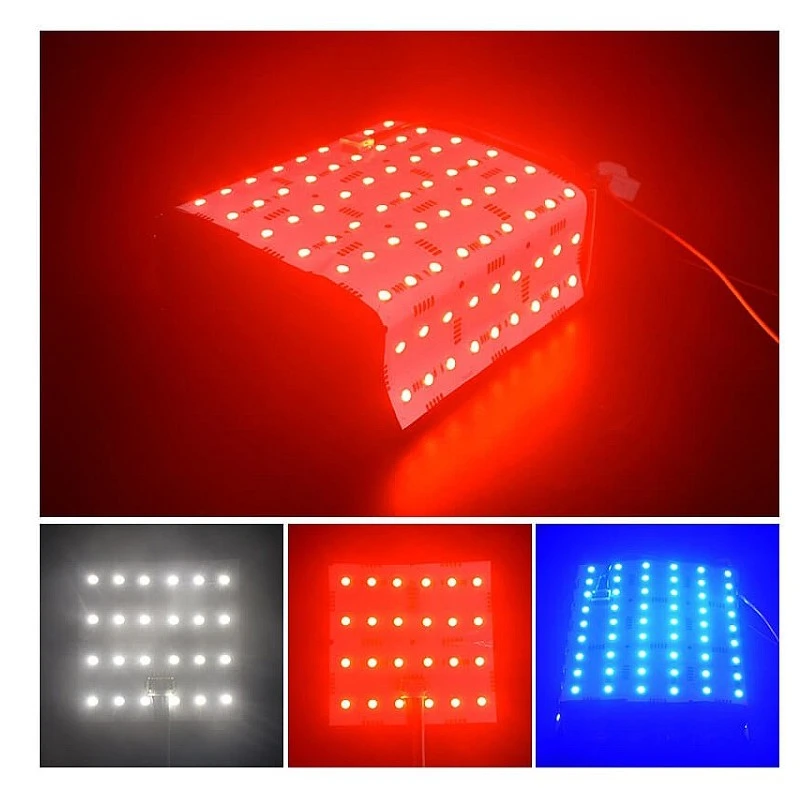
Lampy led RGBW
Rozmiar (LXW): 250mm x 250mm/490mm x 250mm
Typ LED: 5050 RGBW 4 w 1 diody SMD diody
Ilość LED: 150LED/288LEDS
Napięcie robocze: DC 24V
Moc: 24 W/48 W
Emitujący kolor: RGB + Ciepła biel (3000K), RGB + Naturalna biel (4000K), RGB + Cool White (6000K)
Wydajność świetlna: 90lm/W
Minimalna długość cięcia: 50mm x 50mm/20.4mm x122.5mm
Kąt wiązki: 120°
Możliwość ściemniania: tak
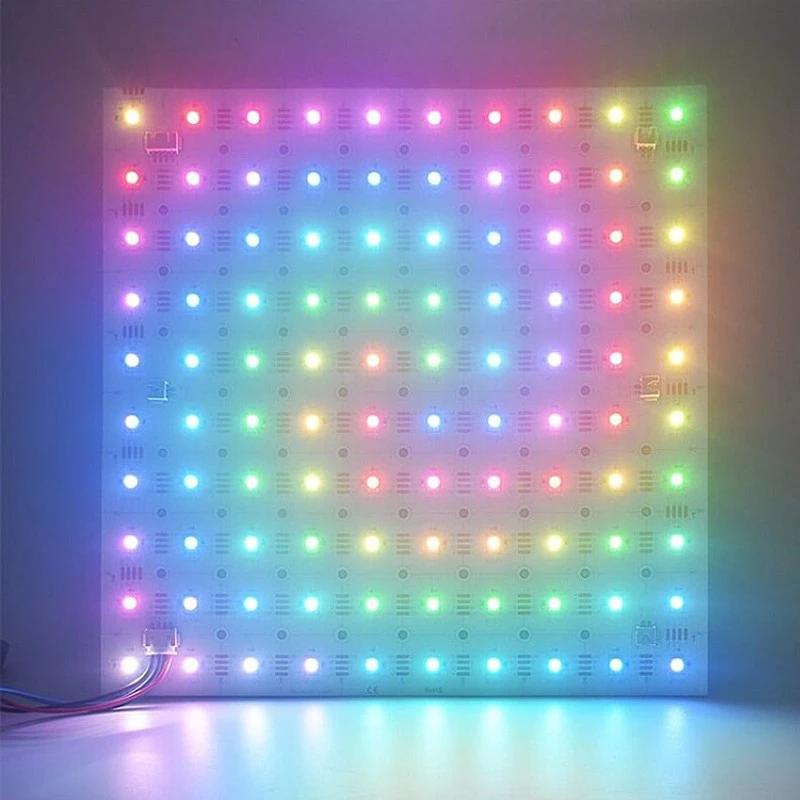
Adresowalne arkusze LED
Rozmiar (LXW): 250mm x 250mm
Diody LED: 100 sztuk 5050 SMD
Typ IC: wbudowany WS2812
Ilość IC: 100 sztuk
Kolor: RGBB
Napięcie robocze: DC 12V
Prąd: 1.08A
Moc: 13W
Strumień świetlny: 20lm/led
Długość fali: 620-625nm (czerwony), 520-525nm (zielony), 465-470nm (niebieski)
Kąt wiązki: 120°
Powiązane posty