Deutsch
  English
  简体中文
简体中文  Español
  Français
  Italiano
  日本語
日本語  한국어
한국어  Polski
  Português
  Русский
  Türkçe
  Nederlands
  Tiếng Việt
  ไทย
ไทย 
Vorstellung
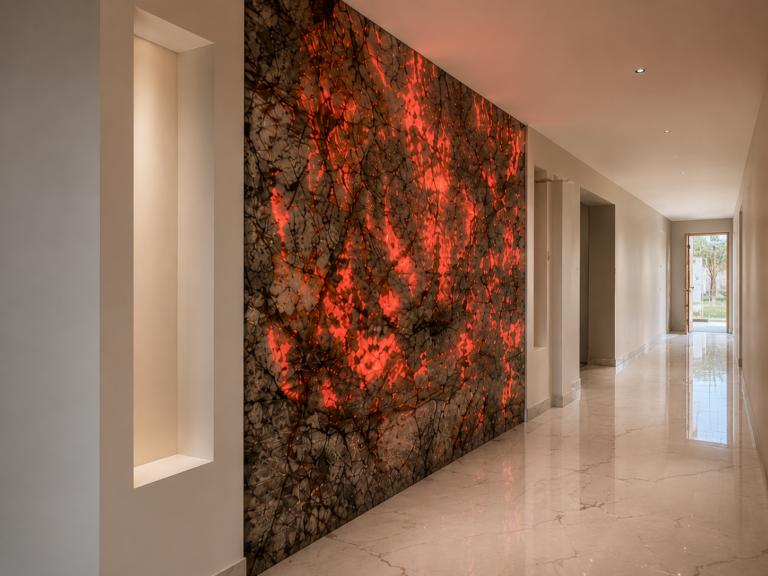
Steinhintergrundbeleuchtungsprojekte erfordern mehr als nur eine Lichtquelle. Sie erfordern ein sorgfältig entwickeltes Beleuchtungssystem, das eine gleichmäßige Beleuchtung über große durchscheinende Oberflächen liefert und gleichzeitig die Einfachheit der Installation und die elektrische Stabilität beibehält.
In diesem Projekt entwickelte ein in den Niederlanden ansässiger Beleuchtungshersteller eine Reihe großer architektonischer Steinwandpaneele. Die Hauptherausforderung bestand nicht nur darin, einen optisch einheitlichen Hintergrundbeleuchtungseffekt zu erzielen, sondern auch eine Systemarchitektur zu entwerfen, die über mehrere große Panels mit minimaler Verdrahtungskomplexität skaliert werden konnte.
Dieser Fall zeigt, wie LED-Bogenlicht Die Technologie wurde in ein vereinfachtes, Panel-basiertes Beleuchtungssystem mit zentralisierter Stromversorgung und Casambi-basierter Steuerung umgewandelt.

Projektübersicht
| Artikel | Detail |
| Projekttyp | Hintergrundbeleuchtung der architektonischen Steine |
| Anmeldung | Große Innenmauerplatten |
| Material | Transluzenter Naturstein |
| Beleuchtungslösung | Tunable White LED-Blatt-System |
| Regelung | Casambi / PWM / 0–10V |
| größte Herausforderung | Hochlastgleiche Hintergrundbeleuchtung mit vereinfachter Verdrahtung |
| Endergebnis | Nahtloses Panel-basiertes Architekturbeleuchtungssystem |
Schlüssel zum Mitnehmen
- Das Projekt erforderte ein Beleuchtungsdesign auf Systemebene, nicht nur eine Auswahl der Lichtquelle.
- Jede Steinplatte wurde mit einer 1-Stromversorgung + 1 Steuerungsarchitektur entworfen.
- Hochlastfelder (bis ~450W) erforderten eine sorgfältige Bewertung der Fahrerbeschränkungen und Lastverteilung.
- Casbi wurde aufgrund seiner drahtlosen Flexibilität und der geringeren Verdrahtungskomplexität als primäre Steuerungsplattform ausgewählt.
- Die parallele Verdrahtung von LED-Blättern war entscheidend, um eine gleichmäßige Helligkeit auf großen Flächen zu gewährleisten.
- Das endgültige System eliminierte mehrere kleine Treiber und reduzierte die Installationskomplexität vor Ort erheblich.
Projektübersicht: Die kundenspezifische Anfrage eines nordischen Designstudios
Dieses Projekt wurde für einen niederländischen Beleuchtungshersteller entwickelt, der an einer Reihe von architektonischen Hintergrundbeleuchtungsanlagen für die Wandarbeit arbeitet.
Die Anwendung umfasste großformatige lichtdurchlässige Steinplatten, die in architektonischen Innenräumen verwendet wurden, bei denen das Beleuchtungssystem einen gleichmäßigen Hintergrund beleuchtet hatte, ohne dass Hotspots skalierbar waren und gleichzeitig eine einfache und skalierbare elektrische Struktur für die Installation vor Ort beibehalten wurden.
Im Gegensatz zu Standard-Dekorbeleuchtungsprojekten erforderte dieser Fall eine sorgfältige Abstimmung zwischen:
- Steinmaterial-Transluzenz
- Dichte des LED-Blatts
- Stromverteilung über große Panels
- Einfachheit des Steuerungssystems (CAMBI / 0–10V Kompatibilität)
Schon früh ging es bei dem Projekt um die Auswahl einer Lichtquelle, sondern auch um die Entwicklung einer kompletten Beleuchtungssystemarchitektur, die praktisch installiert und maßstabsgetreu gesteuert werden konnte.
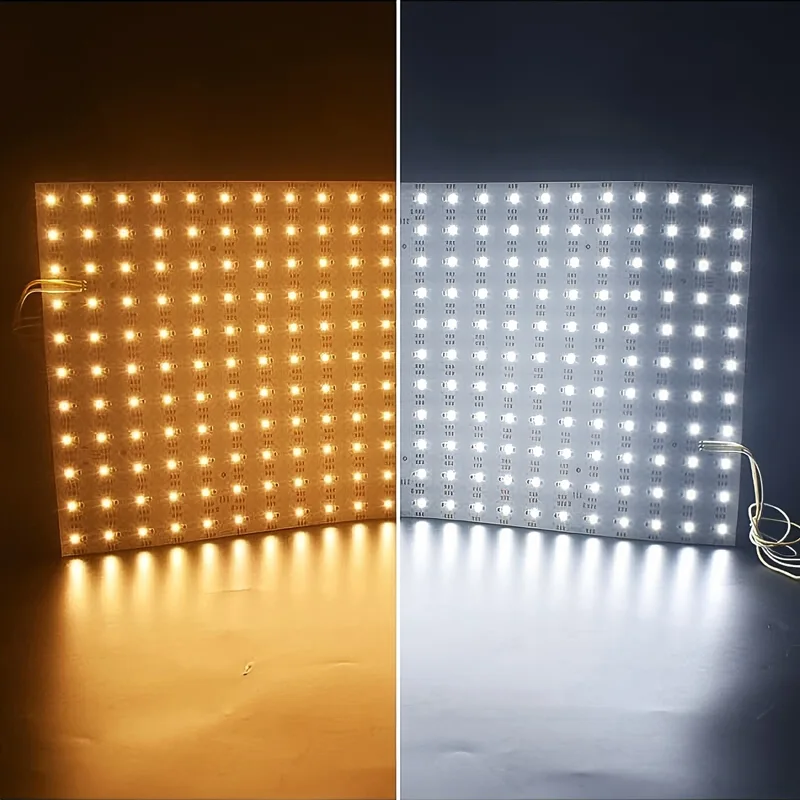
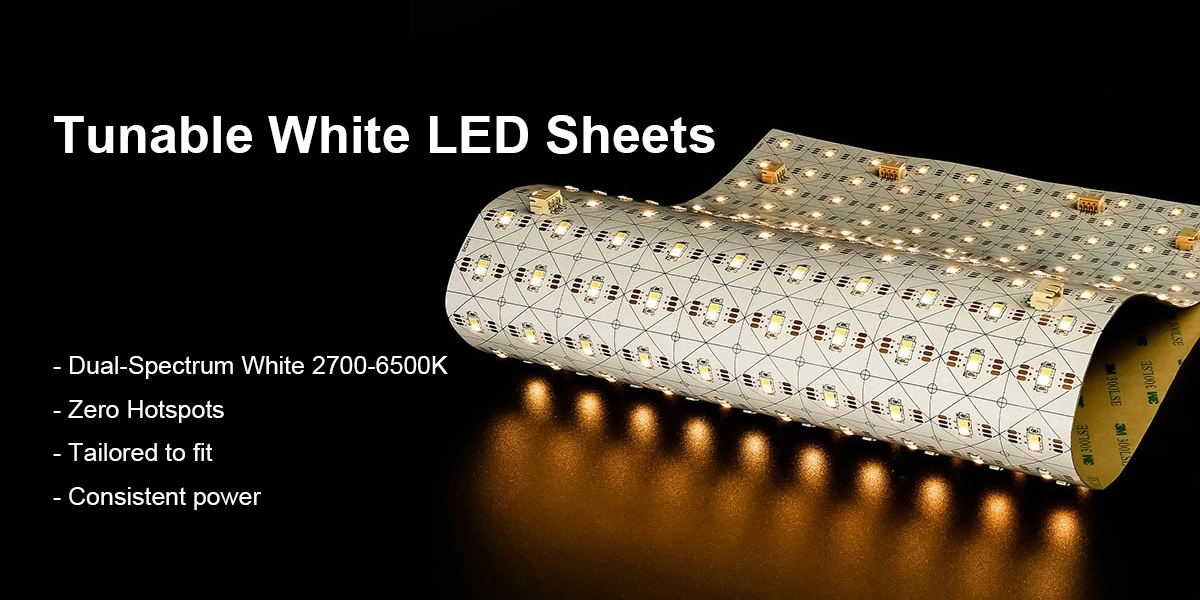
Tunable weiße LED-Blätter
Größe (LxH): 250mmx 250mm/490mmx245mm
LED-Typ: 2835 SMD
LED-Menge: 200pcs/484pcs
Arbeitsspannung: DC 24V
Leistung: 16W / 40W
Farbtemperatur einstellbarer Bereich: 2700K – 6500K
Lichtstrom: 1600lm/m/3800lm/m
Farbwiedergabeindex: >90RA
Mindestlänge: 25mmx25mm/22.3 mm x22,3mm
Dimmbar: ja
Abstrahlwinkel: 120°
Ziele für Kundendesign
Kundenanforderungen und Systemziele
Schon in der frühen Phase des Entwurfs lag der Fokus des Kunden auf der Erzielung einer hochwertigen Steinhintergrundbeleuchtung, sondern vor allem auf der Definition einer skalierbaren und installationseffizienten Systemarchitektur, die über mehrere große Panels nachgebildet werden konnte.
Die Projektanforderungen wurden allmählich eher systemorientiert als produktorientiert, mit folgenden Hauptzielen:
- Jede Steinplatte sollte als unabhängige Beleuchtungseinheit betrieben werden
- Eine vereinfachte Struktur von 1 Netzteil pro Panel + 1 Steuerungssystem pro Panel
- Vermeiden Sie die Verwendung mehrerer kleiner Treiber, um die Komplexität der Verkabelung vor Ort zu verringern
- Sicherstellung der vollflächigen Hintergrundbeleuchtung ohne sichtbare Hotspots
- Unterstützen Sie Tunable White (2700K–6500K) für architektonische Flexibilität
- Kompatibilität mit drahtlosen Casbi-Steuerung und 0–10-V-Kabelsteuerungen
- Stellen Sie sicher, dass das System mit minimaler Anpassung vor Ort installiert und gewartet werden kann
Während der Diskussionsphase wurde deutlich, dass die Hauptherausforderung nicht nur die Verteilung der elektrischen Last, sondern auch die Balance zwischen der Flexibilität der Steuerung, der Einschränkungen der Treiber und der praktischen Installation in einer einzigen vereinfachten Architektur war.
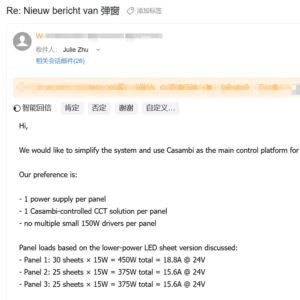
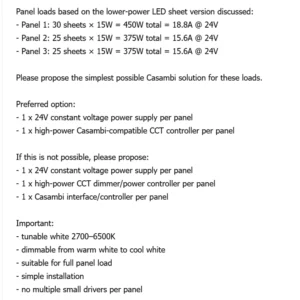
Lastberechnung & Systembeschränkungen
Elektrische Lastanalyse und Systembeschränkungen
Basierend auf der endgültigen LED-Bogenkonfiguration, die während der Engineering-Diskussion bestätigt wurde, wurde jede Steinplatte unter Verwendung eines LED-Blatt-Layouts mit hoher Dichte entworfen, das bei 24 V konstanter Spannung arbeitet.
Die gesamte elektrische Last pro Tafel wurde wie folgt berechnet:
- Tafel 1 (2676 × 1200 mm): 30 LED-Blätter → ca. 450 W (~18,75A bei 24V)
- Tafel 2 (2397 × 1194 mm): 25 LED-Blatt → ca. 375W (~15,6A bei 24V)
- Tafel 3 (2397 × 1200 mm): 25 LED-Blatt → Ca. 375W (~15,6A bei 24V)
Dies bestätigte, dass jedes Panel in einem Hochleistungsbereich für LED-Blattsysteme mit konstanter Spannung arbeitete, was sowohl die Größenbestimmung der Stromversorgung als auch die Stromverteilungsstrategie sorgfältig prüfte.
Übersicht über die Projektlast (pro Panel)
| Paneel | Größe (mm) | LED-Blätter | Gesamtbeladung | Aktuelle @ 24V |
| Tafel 1 | 2676 × 1200 | 30 Stück | ~ 450W | ~ 18.75a |
| Tafel 2 | 2397 × 1194 | 25 Stück | ~ 375W | ~ 15.6a |
| Tafel 3 | 2397 × 1200 | 25 Stück | ~ 375W | ~ 15.6a |
Einschränkung auf Systemebene: Einschränkungen bei Treiber- und Steuerungsfunktionen
Während der Systemvalidierung wurde eine wichtige technische Einschränkung festgestellt:
Die meisten verfügbaren Casbi- und 0–10-V-LED-Treiber für diese Kategorie sind in der Regel mit ungefähr 150 W pro Treibereinheit ausgelegt.
Dies führte zu einer klaren Systemdesign-Herausforderung:
- Jede Panellast (375W–450W) überschritt die Kapazität eines einzelnen Fahrers
- Ein konventionelles Design würde daher 3–4 Fahrer pro Panel erfordern
- Dies würde die Komplexität der Verkabelung, die Installationszeit und die Ausfallpunkte erheblich erhöhen
Gleichzeitig bestand das Entwurfsziel des Kunden darin, eine Architektur „One Panel = One Power Supply + One Control System“ aufrechtzuerhalten, die direkt mit einem verteilten Multi-Driver-Ansatz in Konflikt stand.
Verdrahtungs- und Verteilungsanforderungen
Eine weitere kritische technische Anforderung war das Verbindungsverhalten der LED-Blatt.
Aufgrund der großen Anzahl von LED-Blättern pro Panel musste das System mit einer parallelen Verdrahtungsarchitektur auf der Eingangsseite ausgelegt werden, um Folgendes sicherzustellen:
- Gleiche Spannungsverteilung über alle LED-Blätter
- Verhinderung von Spannungsabfall über lange Kabelstrecken
- Gleichmäßige Helligkeit und Farbtemperatur über die gesamte Steinoberfläche
Diese Verdrahtungsstrategie ist für großflächige Hintergrundbeleuchtungsanwendungen von entscheidender Bedeutung, bei denen selbst geringe Spannungsungleichgewichte zu Inkonsistenzen sichtbarer Helligkeit führen können.
Engineering-Fazit (Vorlösungsphase)
Aus Sicht des Systemdesigns stellte das Projekt drei Hauptbeschränkungen auf:
- Hohe Gesamtlast pro Tafel (bis ~450W)
- Treiberbeschränkungen (~150W pro Steuergerät)
- Anforderung an vereinfachte Single-Controller-per-Panel-Architektur
Diese Einschränkungen machten deutlich, dass die endgültige Lösung die Systemvereinfachung und die zentralisierte Steuerlogik priorisieren müsste, anstatt einen herkömmlichen Ansatz für verteilte Treiber.

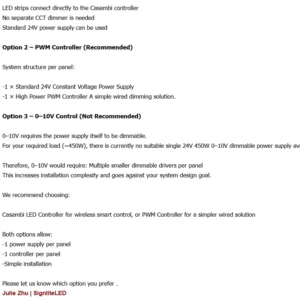
Engineering-Steuerungsoptionen & Entscheidungslogik
Bewertung des Kontrollsystems & Engineering-Entscheidung
Angesichts der elektrischen Last pro Panel und der Anforderung einer vereinfachten Architektur „One Panel – One Control System“ wurden in der Engineering-Phase mehrere Regelstrategien evaluiert.
Die Auswahl basierte nicht allein auf den Funktionen, sondern auf der Systemkompatibilität mit Hochleistungs-LED-Blattlasten, Treiberbeschränkungen und Installationsbeschränkungen.
Option 1 — Casambi-Riss-Steuerungssystem (bevorzugte Lösung)
Das Casambi-System wurde als primäre Steuerungsarchitektur für dieses Projekt bewertet.
Aus Systemsicht besteht sein Hauptvorteil darin, dass die Steuerlogik auf der Fahrerebene integriert ist und Folgendes ermöglicht:
- Drahtloses Dimmen und abstimmbares Weiß (2700K–6500K)
- Direkte App-basierte Steuerung ohne externe Steuerungsverdrahtung
- Reduzierte Komplexität der Verkabelung vor Ort
- Bessere Skalierbarkeit für Architekturinstallationen mit mehreren Panels
In diesem Projekt wurde Casambi an den Anforderungen des Kunden ausgerichtet:
„1 Steuerungseinheit pro Panel mit minimaler Installationskomplexität“
Aufgrund der Leistungsbegrenzung einzelner Casbi-Treibereinheiten (~150 W pro Einheit) erforderte das System jedoch weiterhin eine sorgfältige Treibergruppierungsstrategie unter einer einzigen Panel-Architektur.
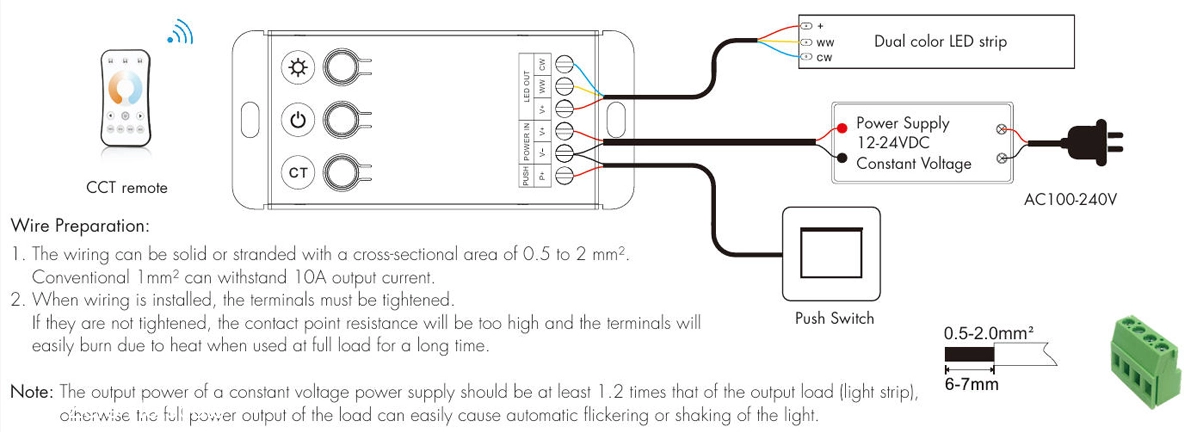
Option 2 — PWM-Dimmregelung (verdrahtete Alternative)
Die PWM-Steuerung wurde als konventionellere drahtgebundene Dimmlösung angesehen.
Zu den Hauptmerkmalen gehören:
- Hohe Stabilität für LED-Systeme mit konstanter Spannung
- Einfache Integration mit 24V-Netzteilen
- Niedrigere Systemkosten im Vergleich zu drahtlosen Lösungen
Aus technischer Sicht wurde PWM als Fallback-Option eingestuft, die für Testaufbauten oder nicht drahtlose Installationen geeignet ist, bei denen Einfachheit und Kostenkontrolle gegenüber intelligenten Funktionen priorisiert werden.

Option 3 — 0–10V-Steuerung (nicht für dieses Projekt empfohlen)
Die 0–10-V-Kontrollmethode wurde ebenfalls bewertet, aber für diese spezielle Systemarchitektur als nicht geeignet identifiziert.
Die wichtigsten Einschränkungen waren:
- Benötigt dimmbare Treiber auf Netzteilebene
- Jeder Fahrer ist normalerweise auf ~ 150 W Kapazität begrenzt
- Große Panels würden mehrere verteilte Treiber erfordern
- Erhöhte Verdrahtungskomplexität und reduzierte Installationseffizienz
Dies stand in direktem Widerspruch zum Hauptziel des Projekts: „Vermeiden Sie mehrere kleine Treiber pro Panel und vereinfachen Sie die Installation so weit wie möglich.“
Infolgedessen wurden 0–10 V für diese Anwendung vom endgültigen Systemdesign ausgeschlossen.

Vergleich der Steuerung
| Kontrolltyp | Eignung | Vorteile | Beschränkungen | Schlussentscheidung |
| Cabi | Empfohlen | drahtlos, flexibel, skalierbar | Treiberleistungsbegrenzung (~150W) | ausgewählt |
| PWM | Mittel | Einfach, stabil, kostengünstig | Keine intelligente Steuerung | Sicherungsoption |
| 0–10v | Nicht empfohlen | Traditionelle Kontrollmethode | Benötigt mehrere Treiber | abgelehnt |
Zusammenfassung der technischen Entscheidungen
Nach der Bewertung aller drei Kontrollstrategien wurde die Auswahl eher durch Einschränkungen auf Systemebene als durch einzelne Produktmerkmale bestimmt.
Die endgültigen Entscheidungskriterien waren:
- Kompatibilität mit Hochlast-LED-Plattenplatten (375W–450W)
- Mindestanzahl von Treibern pro Panel
- Reduzierte Verdrahtungskomplexität vor Ort
- Skalierbarkeit über mehrere große architektonische Panels
- Flexibilität für die Integration von Smart Lights
Basierend auf diesen Faktoren konvergierte die Systemauslegungsrichtung natürlich zu einer casambi-zentrierten Steuerarchitektur in Kombination mit einer zentralen Leistungsverteilung mit konstanter Spannung.
Endgültige Systemarchitektur
Endgültiges genehmigtes Systemdesign
Nach der Bewertung der Anforderungen an die elektrischen Last, Einschränkungen des Steuerungssystems und der Installationsbeschränkungen wurde die endgültige Systemarchitektur auf der Grundlage eines vereinfachten und skalierbaren Entwurfsansatzes vereinbart.
Die endgültige Konfiguration übernahm eine unabhängige Steuerstruktur, bei der jede Steinwandplatte als eigenständige Beleuchtungseinheit arbeitet.
Systemkonfiguration (pro Panel-Basis)
Jedes Panel wurde mit folgendem Aufbau entworfen:
- 1 × 24V Konstantspannungs-Netzteil
- 1 × Zentrales Steuerungssystem (CASAMBI oder PWM je nach Anwendung)
- LED-Blatt-Array in Parallelkonfiguration verbunden
Diese Architektur stellte sicher, dass jede Platte unabhängig arbeiten konnte und gleichzeitig die Lichtleistung auf großen architektonischen Oberflächen aufrechterhielt.
Lastzuweisung pro Panel
Das Endsystem wurde auf der Grundlage der bestätigten elektrischen Lasten implementiert:
- Tafel 1: ~450W Gesamtlast
- Tafel 2: ~375W Gesamtlast
- Tafel 3: ~375W Gesamtlast
Jede Stromversorgung wurde mit einer angemessenen Sicherheitsmarge ausgewählt, um einen stabilen Langzeitbetrieb unter Dauerlastbedingungen zu gewährleisten.
Implementierung des Kontrollsystems
Die Kontrollstrategie wurde wie folgt abgeschlossen:
- Panels 1 & 2: Wireless Tunable White Control (2700K–6500K)
- Panel 3: 0–10 V kabelgebundene Dimmsteuerung (nach Anforderung des Client-Systems)
- Testaufbau: PWM-Dimmlösung zur Auswertung und Probenprüfung
Dieser Mixed-Control-Ansatz sorgte für die Kompatibilität mit verschiedenen Projektanforderungen und gleichzeitig beibehalten einer einheitlichen elektrischen Architektur.
Verdrahtungs- und Verteilungsprinzip
Alle LED-Blätter innerhalb jedes Paneels wurden in der Eingangsstufe in einer parallelen Verdrahtungskonfiguration verbunden, um Folgendes sicherzustellen:
- Gleiche Spannungsverteilung über alle LED-Blätter
- Stabile Helligkeitskonsistenz über große Oberflächen
- Eliminierung sichtbarer Helligkeitsverläufe oder Hotspots
- Vereinfachte Wartungs- und Austauschstrategie
Dieses Verdrahtungsverfahren ist besonders bei großflächigen Stein-Hintergrundbeleuchtungen von entscheidender Bedeutung, bei denen eine einheitliche optische Ausgabe eine wichtige Anforderung ist.
Systemergebnis
Die endgültige Lösung hat die ursprünglichen Projektziele erfolgreich erreicht:
- Vereinfachte Systemarchitektur (eine Platte = ein Netzteil + ein Steuerungssystem)
- Reduzierte Installationskomplexität vor Ort
- Stabile Hochlastbetriebseinheit pro Panel (bis ~450W)
- Flexible Steuerungsoptionen (CASAMBI, 0–10V, PWM)
- Gleichmäßige Hintergrundbeleuchtung über alle Steinoberflächen
Engineering-F
Das Projekt zeigt, wie die LED-Bogentechnologie in ein modulares Architekturbeleuchtungssystem integriert werden kann, in dem die elektrische Konstruktion, die Steuerungsstrategie und die Installationsanforderungen als einheitliche technische Lösung optimiert werden.
Anstatt sich auf einen verteilten Treiberansatz zu verlassen, priorisierte die endgültige Architektur:
Systemvereinfachung, zentrale Steuerungslogik und skalierbares Panel-basiertes Design
Dieser Ansatz verbesserte die Installationseffizienz erheblich und bewahrte gleichzeitig eine qualitativ hochwertige visuelle Leistung für architektonische Hintergrundbeleuchtungsanwendungen.
Endgültige Systemkonfiguration
| Komponente | genaue Angaben | Notizen |
| Stromversorgung | 24V konstante Spannung | 1 pro Tafel |
| Regelung | Casambi / PWM / 0–10V | Basierend auf Panel-Anforderungen |
| LED-Layout | Parallelverdrahtung | sorgt für gleichmäßige Helligkeit |
| Maximale Last | 375W–450W pro Paneel | LED-Blatt-System mit hoher Dichte |
Systemvalidierung (Beleuchtungstestergebnisse)
Systemvalidierung und Lichtleistungstest
Nach der endgültigen Systeminstallation wurde ein vollständiger Beleuchtungstest durchgeführt, um die Gleichmäßigkeit und Stabilität der LED-Backl-Hintergrundbeleuchtung über alle Steinplatten zu überprüfen.
Das System wurde unter realen Betriebsbedingungen bewertet, einschließlich Volllastbetrieb und vollständiger Panelabdeckung.
Der Test bestätigte die folgenden wichtigen Ergebnisse:
- Gleichmäßige Lichtverteilung über große Steinflächen
- Keine sichtbaren Hotspots oder dunklen Zonen erkannt
- Stabile Farbtemperaturkonsistenz (2700K–6500K Bereich)
- Kein spürbarer Spannungsabfall oder Helligkeitsinkonsistenz über LED-Sheet-Arrays
- Stabiler Betrieb unter Volllastbedingungen pro Panel (bis ~450W)
Die parallele Verdrahtungsarchitektur erwies sich als entscheidend für die Sicherstellung einer konsistenten Spannungsverteilung, was direkt zur gleichmäßigen optischen Leistung des Steinhintergrundbeleuchtungssystems beitrug.
Aus Sicht der Systemvalidierung bestätigte das endgültige installierte Ergebnis, dass die plattenbasierte Architektur für großflächige architektonische Steinbeleuchtungsanwendungen geeignet ist.

Das folgende Video zeigt das im Stein-Hintergrundlicht installierte LED-Bogensystem, das die reale, einheitliche Beleuchtungsleistung unter Betriebsbedingungen demonstriert.

FAQ
Projektübersicht & Engineering-Wert
Ingenieurs-Wert
Dieses Projekt zeigt, wie die LED-Blatt-Technologie durch einen Entwurfsansatz auf Systemebene erfolgreich in ein skalierbares architektonisches Hintergrundbeleuchtungssystem umgewandelt werden kann.
Anstatt sich ausschließlich auf die Lichtleistung zu konzentrieren, wurde das Projekt nach drei grundlegenden technischen Prinzipien entwickelt:
- Stabile optische Leistung über LED-Plattenlayouts mit hoher Dichte
- Vereinfachte Panel-basierte elektrische Architektur
- Zentrale Steuerungsstrategie für Großinstallationen
Anwendungen, die für diese Systemarchitektur geeignet sind
Diese plattenbasierte LED-Bogenbeleuchtungsarchitektur eignet sich besonders für:
- Hintergrundbeleuchtung der architektonischen Steinmauer
- Großflächentransluzente Steininstallationen
- Luxushotel-Lobby mit Wänden
- Wandbeleuchtung für kommerzielle Rezeption
- Hinterleuchtete dekorative Innenflächen
- Benutzerdefinierte architektonische Beleuchtungsprojekte, die vereinfachte Verkabelung und zentrale Steuerung erfordern
Benötigen Sie Unterstützung für ein Steinhintergrundbeleuchtungsprojekt?
Unser Engineering-Team kann helfen bei:
- Optimierung der LED-Blatt-Lay
- Strom- und Lastberechnung
- Casambi / PWM / 0–10 V Systemauswahl
- Empfehlungen zur Verdrahtungsarchitektur
- Bewertung der Gleichmäßigkeit der Hintergrundbeleuchtung
- OEM-LED-Blatt-Anpassung
Ob Sie eine Hotel-Feature-Wand, eine durchscheinende Steininstallation oder ein architektonisches Großraum-Hintergrundbeleuchtungssystem entwerfen, wir können die Beleuchtungsstruktur auf Ihren Projektanforderungen optimieren.
Auther: Julie Zhu
Produktmanager
E-Mail: julie.zhu@signlite.com.cn
Handy / WhatsApp: +86 137 2872 4759

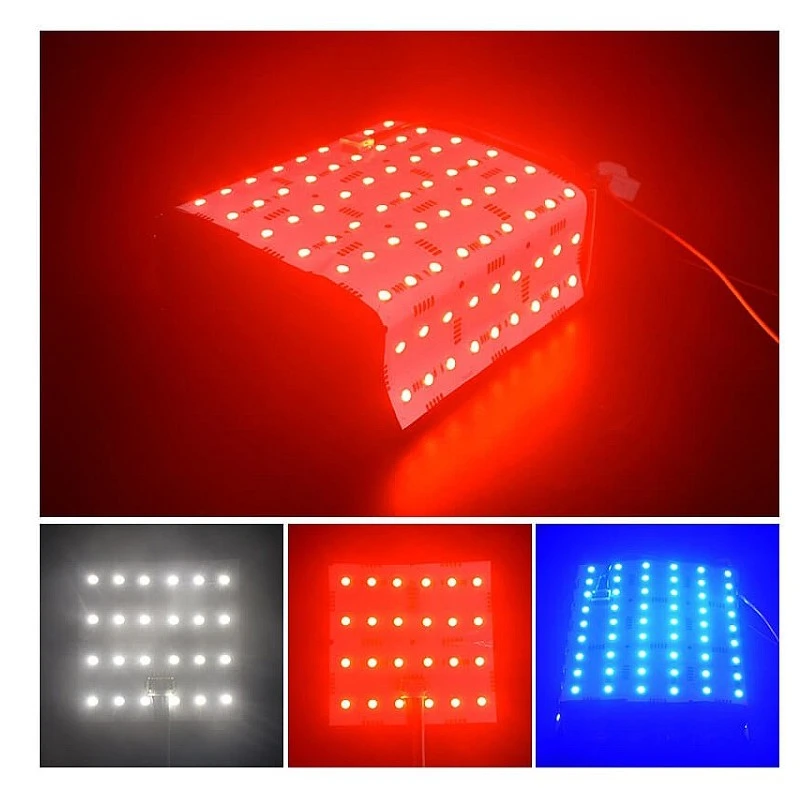
RGBW LED-Blatt-Leuchten
Größe (LxB): 250mmx250mm/490mmx250mm
LED-Typ: 5050 RGBW 4 in 1 SMD-LEDs
LED-Menge: 150LEDs/288LEDs
Arbeitsspannung: DC 24V
Leistung: 24 W / 48 W
Emitting Farbe: RGB + Warmweiß (3000K), RGB + Naturweiß (4000K), RGB + Kühles Weiß (6000K)
Lichteffizienz: 90lm/W
Mindestlänge: 50mmx50mm/20.4mm x122.5mm
Abstrahlwinkel: 120°
Dimmbar: ja
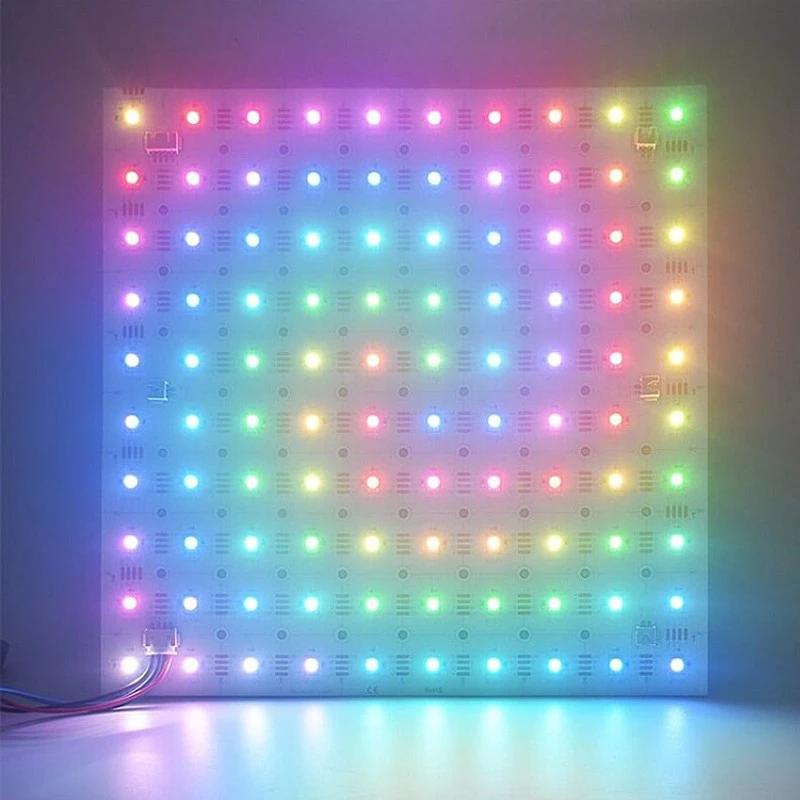
Adressierbare LED-Blätter
Größe (LxB): 250mmx250mm
LEDs: 100 Stück 5050 SMD
IC-Typ: Eingebauter WS2812
IC-Menge: 100 Stück
Farbe: RGBIC
Arbeitsspannung: DC 12V
Aktuell: 1.08A
Leistung: 13W
Lichtstrom: 20lm/LED
Wellenlänge: 620-625nm(rot), 520-525nm(grün), 465-470nm(blau)
Abstrahlwinkel: 120°
Verwandte Artikel