Polski
  English
  简体中文
简体中文  Deutsch
  Español
  Français
  Italiano
  日本語
日本語  한국어
한국어  Português
  Русский
  Türkçe
  Nederlands
  Tiếng Việt
  ไทย
ไทย 
szybka odpowiedź
Podczas oceny pasków LED COB Diod LED Neon Flex na zewnątrz, odpowiedź zależy całkowicie od środowiska instalacji i poziomu ekspozycji.
Tak — listwy LED COB o stopniu ochrony IP67 mogą zastąpić LED Neon Flex na zewnątrz w wpuszczanych, osłoniętych lub chronionych mechanicznie aplikacjach, takich jak oświetlenie zatoczki, oświetlenie krajobrazowe, oświetlenie pod stołem i ukryte akcenty elewacyjne. W tych warunkach otaczająca struktura zapewnia ochronę przed promieniowaniem UV, deszczem i fizycznym wpływem, umożliwiając paski COB osiągnięcie podobnej wydajności wizualnej przy niższych kosztach materiału.
Jednak w przypadku w pełni odsłoniętych instalacji zewnętrznych, takich jak oświetlenie linii dachowych, kontury budynków, przestrzenie publiczne o dużym natężeniu ruchu i stałe oświetlenie elewacyjne, LED Neon Flex pozostaje bardziej niezawodnym długoterminowym rozwiązaniem. Jego w pełni obudowana struktura zapewnia doskonałą odporność na degradację UV, wnikanie wilgoci i przypadkowe uderzenia, co z czasem powoduje niższe wymagania konserwacyjne.
Podsumowując, decyzja nie jest określana wyłącznie na podstawie wodoodporności, ale przez ogólny poziom narażenia, w tym promieniowanie UV, naprężenia mechaniczne i długotrwałe zużycie środowiskowe. Paski LED COB najlepiej nadają się do ochrony środowiska, podczas gdy LED Neon Flex jest przeznaczony do samoobrony w odsłoniętych warunkach zewnętrznych.
Dlaczego taśma LED COB zastępuje Neon Flex w niektórych projektach na świeżym powietrzu?
Jeszcze kilka lat temu wybór między paskiem LED COB a LED Neon Flex do projektów outdoorowych był rzadko kwestionowany. Neon Flex był domyślną opcją dla ciągłego liniowego oświetlenia zewnętrznego, podczas gdy pasek COB był zazwyczaj zarezerwowany dla środowisk wewnętrznych lub wysoce chronionych instalacji architektonicznych.
To założenie się zmienia. Od 2020 r. koszt taśmy LED COB o stopniu ochrony IP67 znacznie spadł, dzięki czemu produkty COB o wysokiej ochronie są dostępne dla znacznie szerszego zakresu projektów. Jednocześnie postępy w technologii pakowania COB znacznie poprawiły jakość światła. Bezdotowa, jednolita wizualnie wydajność, która niegdyś wyróżnia się neonową flex, jest teraz możliwa do osiągnięcia dzięki wielu nowoczesnym paskom COB.
W miarę zacieśniania budżetów, a właściciele projektów poszukują większej efektywności kosztowej, kupujący, którzy wcześniej nie domyślnie się w Neon Flex, coraz częściej oceniają, czy dodatkowa ochrona i trwałość są niezbędne dla każdego zastosowania na zewnątrz. Rezultatem jest prawdziwa decyzja o zakupie, a nie proste porównanie produktów.
Ponieważ więcej specyfikatorów ocenia wydajność na zewnątrz COB w porównaniu z Neon Flex, kluczowym pytaniem nie jest już to, czy oba produkty mogą działać na zewnątrz, ale czy jedno może realistycznie zastąpić drugie bez pogorszenia niezawodności, wymagań konserwacyjnych lub żywotności projektu.
W Signlited od ponad 15 lat dostarczamy zarówno taśmy LED COB, jak i produkty Neon Flex do projektów oświetlenia architektonicznego i komercyjnego. W ostatnich latach jednym z najczęstszych pytań ze strony Speciafiers, Contractor i OEM nabywców było to, czy nowoczesny pasek COB z oceną IP67 może zastąpić Neon Flex na zewnątrz przy zachowaniu długoterminowej wydajności.
Aby odpowiedzieć na to pytanie, należy spojrzeć poza jasność i wygląd oraz skupić się na cechach konstrukcyjnych, które decydują o trwałości na zewnątrz.
Jak paski LED COB w porównaniu do LED Neon Flex na zewnątrz?
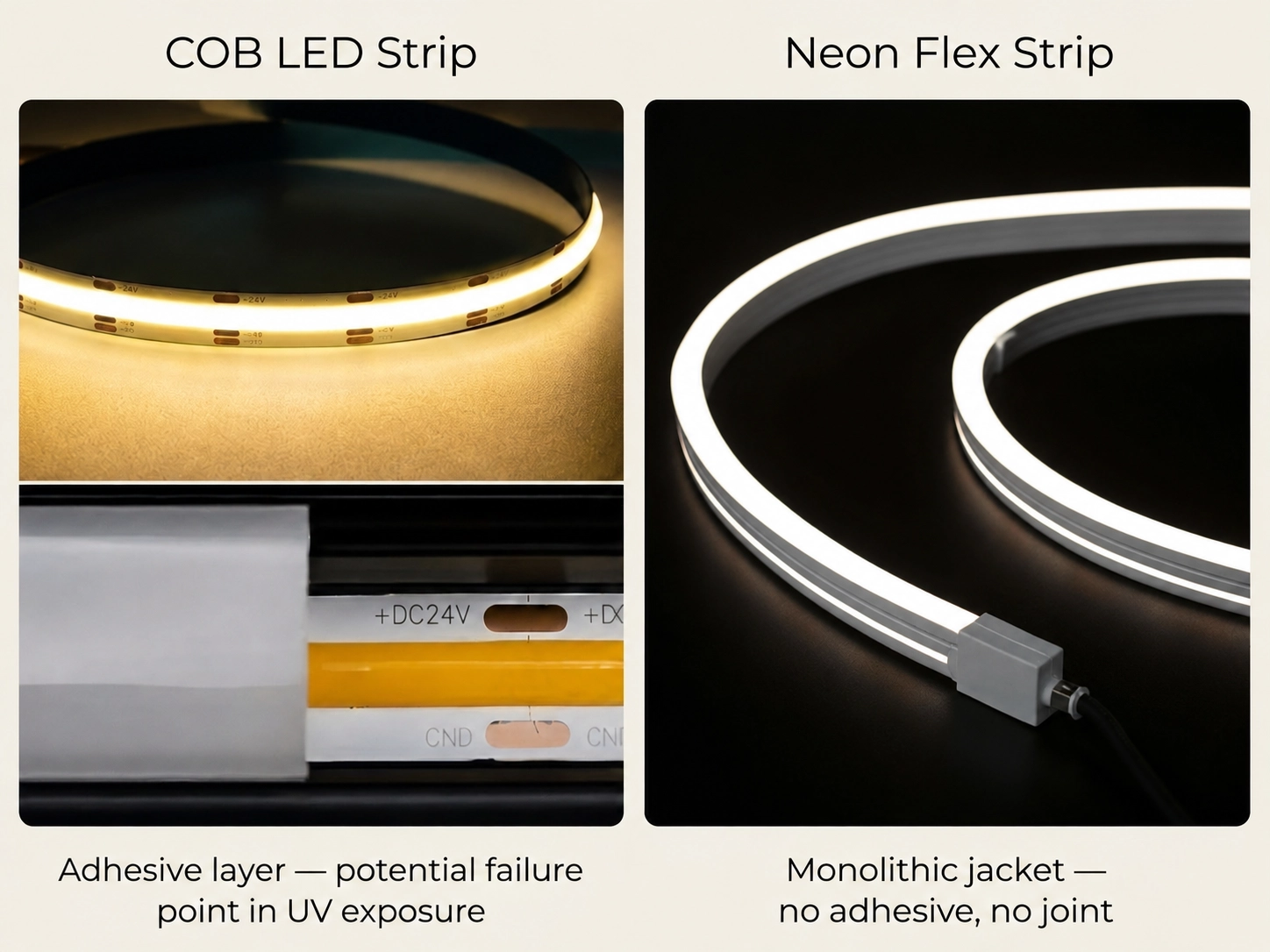
największy Różnica między paskiem LED COB a NEON FLEX LED Na zewnątrz nie jest jasność, temperatura barwowa ani wydajność. W ten sposób każdy produkt zapewnia ochronę przed warunkami atmosferycznymi, ekspozycją na promieniowanie UV, wpływem fizycznym i długotrwałym zużyciem środowiska.
A Taśma LED COB Umieszcza warstwę emitującą światło bezpośrednio na elastycznej płytce drukowanej. Wersje zewnętrzne z oceną ochronną zapewniają ochronę dzięki powłokom silikonowym lub silikonowym rękawom, zazwyczaj zapewniając ochronę IP65, IP67 lub IP68. Ponieważ źródło światła pozostaje stosunkowo blisko powierzchni, wiele instalacji zewnętrznych wykorzystuje kanały aluminiowe w celu poprawy ochrony mechanicznej i zarządzania termicznego. Kanały nie są jednak obowiązkowe. W zależności od zastosowania, zewnętrzne paski COB można również montować przy użyciu taśmy samoprzylepnej VHB o wysokiej wiązania, zacisków montażowych, klejenia silikonowego lub innych mechanicznych metod mocowania.
LED Neon Flex wykorzystuje inne podejście. Diody LED są w pełni zamknięte w ciągłej kurtce z PVC lub silikonu, która działa jako dyfuzor, wodoodporna bariera, osłona UV i obudowa ochronna. Ta zintegrowana konstrukcja oznacza, że produkt zapewnia znaczną ochronę bez konieczności dodatkowych kanałów lub obudów. Ta konstrukcja oparta na silikonu jest również tym, co pozwala na kształtowanie neonowego flexu wokół krzywek architektonicznych i narożników — zobacz nasz przegląd LED Neon Flex do oświetlenia architektonicznego, aby dowiedzieć się więcej o tym, jak ta elastyczność jest wykorzystywana w projektowaniu elewacji.
W rezultacie różnice w wydajności zewnętrznej między tymi dwoma produktami są w dużej mierze napędzane przez ich konstrukcję konstrukcyjną.
Porównanie wydajności na zewnątrz: pasek LED COB vs LED Neon Flex
| Czynnik | Taśma LED COB | LED Neon Flex | Dlaczego to ma znaczenie na zewnątrz |
| Metoda ochrony | Powłoka silikonowa lub rękaw | Pełna enkapsulacja | Określa odporność na warunki atmosferyczne i uszkodzenia fizyczne |
| Ochrona mechaniczna | Może wymagać dodatkowej ochrony w zależności od zastosowania | Wbudowana ochrona | Ważne w środowisku publicznym i narażonym |
| Najlepsza dostępna ocena IP | IP68 | IP68 | Nadaje się do trudnych warunków pogodowych |
| Odporność na promieniowanie UV | Dobry | Doskonały | Wpływa na długoterminową trwałość materiału |
| Odporność na uderzenia | grzecznie | Doskonały | ważne, gdzie może wystąpić przypadkowy kontakt |
| Jednolitość wizualna | Doskonały | Doskonały | Oba mogą osiągnąć oświetlenie bez kropek |
| Złożoność instalacji | Umiarkowane (metoda instalacji jest różna) | Niższy | Cob często wymaga dodatkowych elementów montażowych |
| Koszt materiału | Niższy | Wyższy | Porównanie kosztów zakupu |
| Oczekiwanie na 5 lat konserwacji | Umiarkowany | Niski | Wpływa na całkowity koszt posiadania |
| Oczekiwana długość życia w odsłoniętych środowiskach | 30 000–40 000 h | 50 000 h+ | Określa wartość długoterminową |
Z tego porównania wyłania się kilka ważnych wzorców:
- Oba produkty mogą uzyskać wodoodporną ochronę na zewnątrz.
- Oba produkty mogą wytwarzać gładkie, ciągłe, bezdotowe oświetlenie.
- Pasek LED COB oferuje niższy początkowy koszt materiału.
- LED Neon Flex zapewnia silniejszą ochronę przed ekspozycją na promieniowanie UV, uderzeniami i zużyciem środowiska.
- Różnica w wydajności staje się coraz bardziej znacząca wraz ze wzrostem ekspozycji instalacji.
W przypadku chronionych aplikacji na zewnątrz praktyczna różnica między tymi dwoma produktami może być stosunkowo niewielka. W przypadku w pełni odsłoniętych linii dachowych, fasad, przestrzeni publicznych i długoterminowych projektów architektonicznych zintegrowana konstrukcja ochronna LED Neon Flex często skutkuje niższymi wymaganiami konserwacyjnymi i dłuższą żywotnością.
Mówiąc prościej, pasek LED COB działa najlepiej, gdy środowisko instalacyjne zapewnia ochronę, podczas gdy led NEON Flex działa najlepiej, gdy sam produkt musi wytrzymać bezpośrednie naświetlanie na zewnątrz.
Kiedy pasek LED COB może zastąpić LED Neon Flex na zewnątrz?
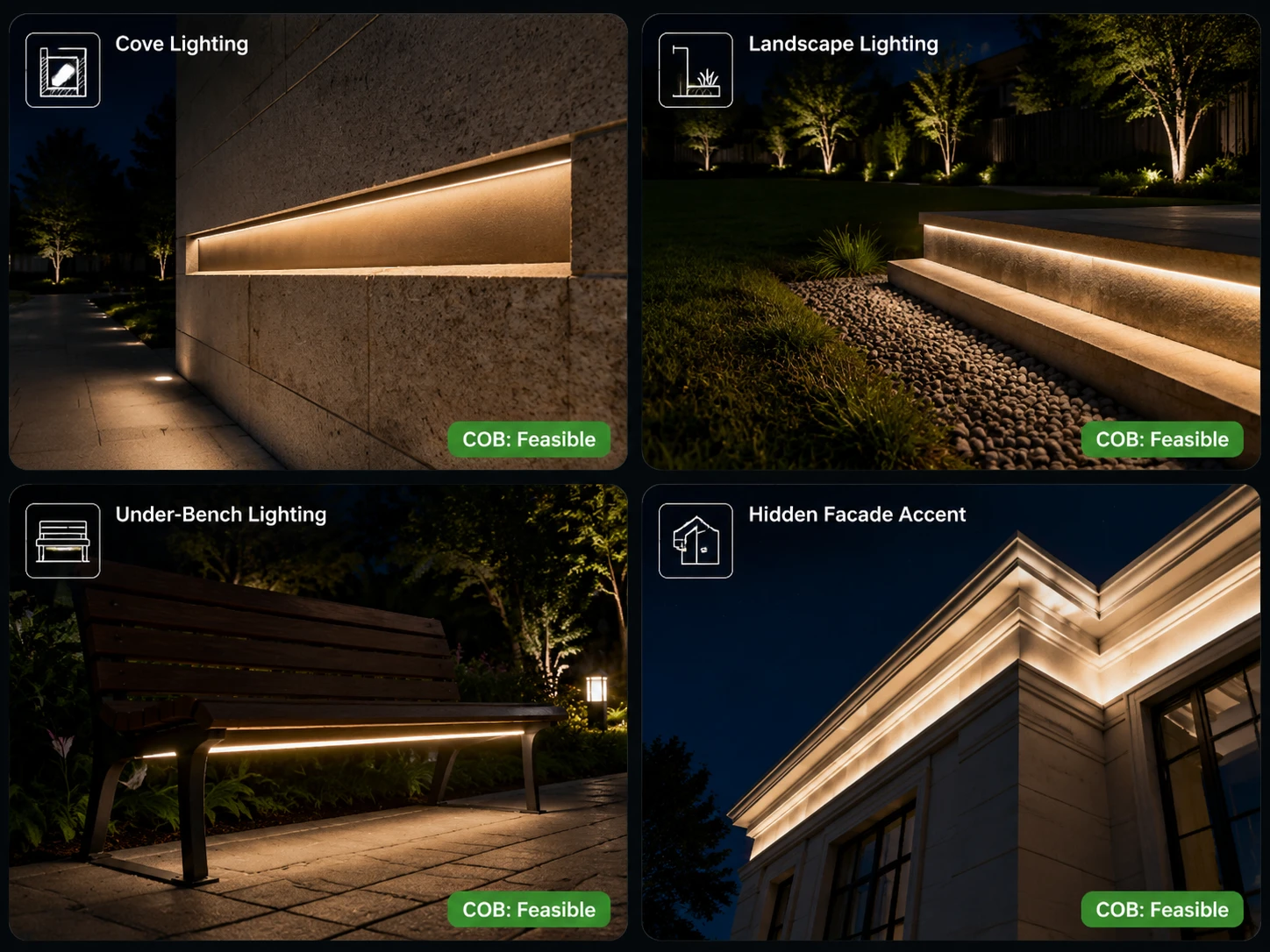
Istnieje kilka aplikacji zewnętrznych, w których taśma LED COB o stopniu ochrony IP67 może służyć jako w pełni realny zamiennik LED Neon Flex. W tych scenariuszach środowisko instalacyjne zapewnia znaczną część ochrony, którą Neon Flex zwykle wbudowuje w swoją strukturę. Gdy uderzenie mechaniczne, bezpośrednie działanie promieniowania UV i stojąca woda są ograniczone, COB może zapewnić porównywalną wydajność oświetlenia przy niższych kosztach materiału.
Zatoka i oświetlenie architektoniczne wpuszczane
Oświetlenie zatoczki i wpuszczane detale architektoniczne stanowią najsilniejszą obudowa zastępcza paska COB. Gdy źródło światła jest zainstalowane wewnątrz koryta, szczeliny, wnęki na parapet lub wnęki architektonicznej, otaczająca konstrukcja chroni ją przed przypadkowym uderzeniem i zmniejsza bezpośrednie narażenie na działanie warunków atmosferycznych. Ponieważ kanały aluminiowe są zazwyczaj włączane do tych instalacji jako część szczegółów projektu, zarządzanie termiczne jest już omówione. Z perspektywy widza różnica wizualna między paskiem kolbowym a neonowym flexem jest często znikoma.
Oświetlenie krajobrazu i ogrodu
Zastosowania krajobrazowe, takie jak studnie drzew, granice sadzenia, podnośniki schodów, poręcze i krawędzie szlaków to kolejny obszar, w którym COB niezawodnie działa na zewnątrz. Instalacje te na ogół doświadczają ograniczonego kontaktu fizycznego i pośredniego narażenia środowiskowego. Dla kupujących pytających, czy oświetlenie taśmowe LED może być używane na zewnątrz, chronione oświetlenie krajobrazu jest jednym z najczystszych przykładów, w których odpowiedź brzmi tak.
W wielu projektach pasek COB jest wybierany jako alternatywa światła neonowego LED na zewnątrz, ponieważ zapewnia ciągłą linię światła, jednocześnie redukując koszty materiałów. Po zainstalowaniu przy użyciu odpowiedniej metody montażu i oznaczonej z mocą IP67 lub wyższym, zapewnia niezawodną wydajność w środowiskach zewnętrznych o niskim wpływie. Neon Flex pozostaje powszechnym wyborem również do oświetlenia krajobrazu — zobacz nasz Przewodnik po neonowym flexie do oświetlenia architektonicznego Aby uzyskać wskazówki dotyczące instalacji, jeśli to lepiej pasuje do Twojego projektu.
Oświetlenie pod ławkę i pokład
Chronione oświetlenie pod ławką i pokładu jest również dobrze dostosowane do technologii COB. Źródło światła jest zazwyczaj umieszczone pod konstrukcjami siedzeń lub materiałami tarasowymi, gdzie bezpośrednie światło słoneczne, narażenie na deszcz i przypadkowy kontakt są minimalne. W tych warunkach pasek COB może osiągnąć taki sam wynik wizualny i oczekiwania dotyczące żywotności, jak Neon Flex, oferując jednocześnie niższy koszt materiału z góry.
Ukryte oświetlenie akcentujące fasadę
Ukryte oświetlenie akcentujące fasadę skupia się na oświetlaniu powierzchni architektonicznych, a nie na eksponowaniu samej oprawy oświetleniowej. Typowe instalacje obejmują montaż za detalami radzenia sobie, pod okapami lub wewnątrz żeberka architektoniczne. Gdy pasek COB jest połączony z nieprzezroczystym aluminiowym kanałem i matowym dyfuzorem, oprawa pozostaje ukryta, zapewniając płynne, ciągłe zmywanie światła. W tych chronionych pozycjach dodatkowe hermetyzacja zapewniana przez Neon Flex często daje niewielką praktyczną przewagę.
| Zastosowanie | COB wykonalne? | notatki |
| Zatoka / Oświetlenie architektoniczne wpuszczane | Tak | Najlepszy scenariusz |
| Oświetlenie krajobrazu i ogrodu | Tak | Użyj IP67+ |
| Oświetlenie pod ławkę i pokład | Tak | Pozycja chroniona |
| Ukryte oświetlenie akcentujące fasadę | Tak | Wymagany kanał aluminiowy |
W przypadku wszystkich czterech aplikacji wspólnym czynnikiem jest ochrona. Gdy sama instalacja osłania system oświetlenia przed naprężeniem środowiskowym i mechanicznym, pasek LED COB może często zastąpić neonowe ledowe flex bez poświęcania wydajności.
Kiedy wybrać LED Neon Flex do oświetlenia zewnętrznego?
Celem tego przewodnika nie jest twierdzenie, że pasek LED COB jest zawsze lepszą opcją. W rzeczywistości istnieje kilka aplikacji na zewnątrz, w których LED Neon Flex pozostaje bardziej praktycznym, trwałym i opłacalnym rozwiązaniem przez cały okres eksploatacji instalacji.
Wspólną cechą tych projektów jest to, że system oświetlenia jest w pełni odsłonięty i musi wytrzymać stres środowiskowy bez polegania na otaczającej konstrukcji w celu ochrony.
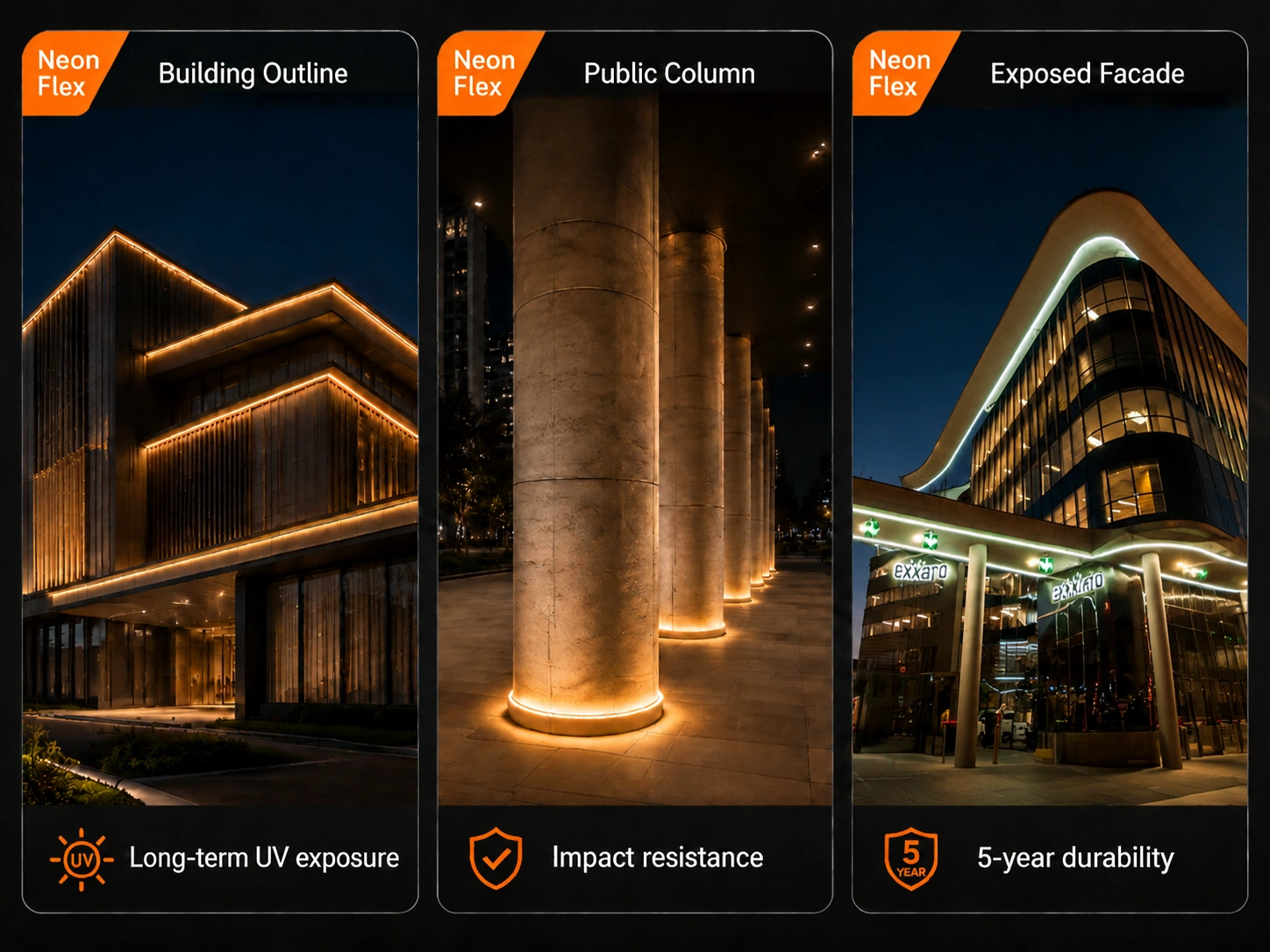
Kontur budynku i oświetlenie linii dachu
Projekty zarysu dachu i budynków Umieść ciągłe oświetlenie liniowe bezpośrednio na ścieżce promieniowania UV, deszczu napędzanego wiatrem, wahań temperatury i odłamków unoszących się w powietrzu. Instalacje często przekraczają 50–200 metrów i oczekuje się, że będą działać przez wiele lat przy minimalnej konserwacji.

Pasek COB zainstalowany w kanałach aluminiowych może być technicznie stosowany w tych aplikacjach, ale wprowadzono dodatkowe punkty awarii:
- Silikonowe uszczelki na zaślepkach mogą z czasem ulec pogorszeniu.
- Wnikanie wody może wystąpić przy słabo uszczelnionych połączeniach.
- Ekspozycja na promieniowanie UV przyspiesza starzenie się klejów i elementów pomocniczych.
- Wilgoć może zostać uwięziona w słabo odwodnionych systemach kanałów.
LED Neon Flex eliminuje wiele z tych zagrożeń dzięki monolitycznej, zamkniętej w kapsułce strukturze. Ponieważ płaszcz ochronny jest zintegrowany z produktem, nie ma warstwy klejowej narażonej na długotrwałą degradację promieniowania UV i mniej punktów podatności związanych z instalacją. Właściwy montaż odgrywa również rolę w długotrwałej niezawodności podczas ciągłych przebiegów linii dachu — zobacz nasz rozkład Outdoorowe rozwiązania do montażu neonowego flex dla architektów i instalatorów Wskazówki dotyczące wyboru kanałów aluminiowych w porównaniu z klipsami montażowymi.
Pomieszczenia publiczne o dużym natężeniu ruchu
W środowiskach publicznych wodoodporność często nie jest głównym problemem. wpływ fizyczny jest.
Aplikacje takie jak:
- Kolumny architektoniczne
- Ławki publiczne
- Oświetlenie dekoracyjne naziemne
- Wygląd gościnności
- Spacery komercyjne na zewnątrz
są regularnie narażone na przypadkowy kontakt ze strony pieszych, sprzęt do czyszczenia, narzędzia konserwacyjne, wózki bagażowe i ruchome meble.
Pasek COB zamontowany w aluminiowym kanale może zostać uszkodzony przez wystarczająco silne uderzenie. Dla porównania, elastyczna silikonowa lub PVC kurtka Neon Flex pochłania wstrząsy i powraca do kształtu bez narażania systemu oświetlenia.
Dla kupujących zastanawiających się, czy można bezpiecznie pozostawić włączoną taśmę LED, oba produkty są przeznaczone do ciągłej pracy. Jednak Neon Flex generalnie radzi sobie z długotrwałą eksploatacją w odsłoniętych środowiskach bardziej niezawodnie, ponieważ jego struktura łączy w jednym systemie ochronę termiczną, mechaniczną i środowiskową.
Stałe oświetlenie elewacji
Stałe oświetlenie elewacyjne prezentuje najbardziej wymagające warunki zewnętrzne. Hotele, budynki komercyjne, nieruchomości nadbrzeżne i publiczne projekty architektoniczne często wymagają systemów oświetleniowych, które mogą działać przez pięć lat lub dłużej bez znaczącej interwencji.
W tych instalacjach kilka czynników faworyzuje Neon Flex:
- Doskonała odporność na promieniowanie UV
- Lepsza długoterminowa stabilność koloru
- Wyższa odporność na ekspozycję na powietrze solne
- Zmniejszone ryzyko awarii hydroizolacji
- Niższa częstotliwość konserwacji
Aby uzyskać bliższe przyjrzenie się, dlaczego Neon Flex z oceną IP67 działa niezawodnie w tych warunkach, zobacz nasz przewodnik na temat Dlaczego wodoodporny IP67 Neon Flex to najlepszy wybór do oświetlenia elewacji zewnętrznej.
Z perspektywy wsparcia producenta przedwczesne awarie w instalacjach COB na zewnątrz są rzadko spowodowane przez same chipy LED. Częściej awarie wynikają z degradacji uszczelnienia, nieodpowiedniego projektu odwadniania, niewłaściwych praktyk instalacyjnych lub długoterminowej ekspozycji na promieniowanie UV wpływające na elementy nośne. Ryzyko te jest znacznie zmniejszone w wysokiej jakości systemach neonowych flex.
| Zastosowanie | Preferowany neonowy flex? | Główny powód |
| Kontur budynku / oświetlenie linii dachu | Tak | Długotrwałe narażenie na środowisko |
| Przestrzenie publiczne o dużym natężeniu ruchu | Tak | Odporność na uderzenia |
| Stałe oświetlenie elewacji | Tak | Odporność na promieniowanie UV i długotrwała trwałość |
Gdy oczekuje się, że instalacja pozostanie w pełni narażona przez lata, LED Neon Flex zazwyczaj zapewnia najniższe obciążenie konserwacyjne i najbardziej przewidywalną długoterminową wydajność.
Właściwy montaż odgrywa również rolę w długotrwałej niezawodności, szczególnie w przypadku ciągłych przebiegów linii dachu i fasad.
Czy taśma LED COB jest tańsza niż LED Neon Flex do projektów outdoorowych?
Głównym powodem, dla którego kupujący rozważają zastąpienie led neon flex paskiem LED COB jest koszt. Na pierwszy rzut oka COB wydaje się oferować wyraźną przewagę finansową, ponieważ sam pas jest zazwyczaj tańszy na metr.
Jednak projekty outdoorowe powinny być oceniane na podstawie całkowitego kosztu posiadania (TCO), a nie samego kosztu materiału.
Na ostateczny koszt projektu wpływają cztery główne czynniki:
- Koszt materiału — Pasek COB jest zwykle tańszy na metr.
- Wymagania dotyczące kanału alumini — Większość instalacji COB na zewnątrz wymaga kanałów, dyfuzorów, zaślepek i akcesoriów montażowych.
- Praca instalacyjna — Neon Flex jest generalnie szybszy w instalacji, ponieważ nie jest wymagany montaż kanału.
- Konserwacja długotrwała — Odsłonięte instalacje często wymagają mniejszej liczby napraw i wymian, gdy używa się neonowego flexu.
Wpływ tych kategorii kosztów staje się bardziej widoczny wraz ze wzrostem wielkości projektu.
Całkowity koszt porównania własności (100 m odsłoniętej zewnętrznej linii dachu)
| Składnik kosztów | Podejście paska LED COB | Ledowe podejście neonowe elastyczne |
| Materiał taśmy / elastyczny (na metr, IP67+) | $2 – $4/M → $200 – $400 Razem | $3 – $6/M → $300 – $600 Razem |
| Kanał aluminiowy + akcesoria (na metr) | $1.5 – $3/M → $150 – $300 Razem | Niewymagane → $0 |
| Praca instalacyjna | Dodaje ok. 15–25% na wierzchu materiału + koszt kanału dzięki montażowi i uszczelnieniu kanału | Dodaje ok. 8–151TP3 t na górze kosztów materiałowych; szybsza instalacja ciągła |
| Oczekiwane 5-letnie konserwacje (Eksponowane środowisko) | Szacuje się, że 10–201 TP3T początkowego kosztu materiału w naprawach/wymianach w ciągu 5 lat | Szacuje się, że 3–81 TP3T początkowego kosztu materiału w ciągu 5 lat |
| Całkowity szacowany koszt (materiał + kanał + robocizna) | $420 – $875 | $324 – $690 |
| Całkowity szacowany koszt 5 lat (w tym konserwacja) | $460 – $1,050 | $334 – $745 |
Dane liczbowe są ilustracyjnymi szacunkami opartymi na typowych przedziałach cen hurtowych dla produktów z oceną IP67+ (ceny FOB) i nie stanowią oficjalnej oferty. Rzeczywiste koszty projektu różnią się w zależności od specyfikacji, wielkości zamówienia i regionu instalacji.
W przypadku instalacji ukrytych, takich jak wnęki wpuszczane, tarasy chronione i chronione elementy krajobrazu, niższy koszt materiałowy COB często przekłada się na rzeczywiste oszczędność projektu, ponieważ oczekiwania konserwacji pozostają podobne.
Do aplikacji narażonych, takich jak:
- Oświetlenie linii dachu
- Kontury budynków
- Oświetlenie elewacji przybrzeżnej
- Publiczne instalacje architektoniczne
Obliczenia znacząco się zmieniają. Dodatkowy sprzęt instalacyjny, dłuższy czas instalacji i większe prawdopodobieństwo interwencji konserwacyjnej mogą zmniejszyć lub wyeliminować początkową przewagę kosztów materiałowych.
Doświadczeni specyfikatorzy oświetleniowi coraz częściej oceniają koszt zainstalowania w stosunku do oczekiwanego okresu użytkowania, a nie ceny produktu za metr. Takie podejście zapewnia bardziej realistyczny obraz wartości projektu.
Niższy koszt materiału paska COB jest rzeczywisty — ale w przypadku odsłoniętych zastosowań na zewnątrz całkowity koszt posiadania w ciągu pięciu lat często sprzyja neonowi Flex.
Co jest lepsze dla różnych projektów oświetlenia zewnętrznego: taśma LED COB czy led neonowy flex?
Najprostszym sposobem na podjęcie decyzji jest ocena, jak dużą ochronę zapewnia już środowisko instalacyjne.
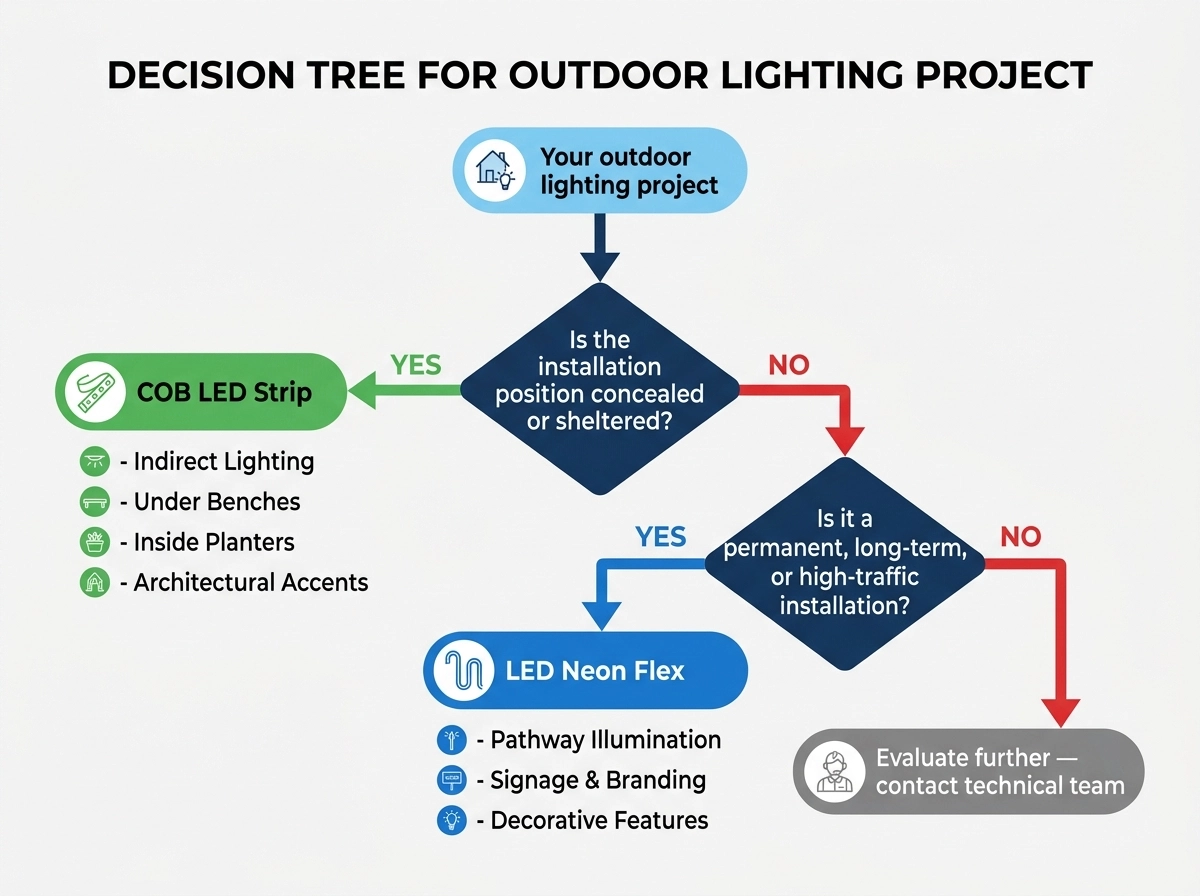
Jeśli środowisko chroni system oświetlenia, często wystarczająca taśma LED COB jest wystarczająca.
Jeśli system oświetlenia musi chronić się przed warunkami atmosferycznymi, ekspozycją na promieniowanie UV i kontaktem fizycznym, LED Neon Flex jest zwykle bezpieczniejszym wyborem długoterminowym.
Rozważ następujące typy projektów:
- Oświetlenie hotelowe Garden Pathway ukryte pod kamienną krawędzią — wybierz pasek LED COB
Oświetlenie jest wpuszczane i chronione przez otaczające elementy hardscape. Ekspozycja na promieniowanie UV jest ograniczona, wpływ fizyczny jest mało prawdopodobny, a widocznym rezultatem jest po prostu ciągła linia światła wzdłuż ścieżki. W tym środowisku COB zapewnia doskonałą wartość. - 200-metrowe oświetlenie przybrzeżne dachu z pięcioletnim wymaganiem eksploatacji — wybierz LED Neon Flex
Ciągłe narażenie na działanie soli, promieniowania UV, deszczu i wiatru powoduje znaczne obciążenie systemu oświetlenia. Kapsułkowana struktura Neon Flex zmniejsza wymagania konserwacyjne i poprawia długoterminową niezawodność. - Zadaszony taras Restauracja Oświetlenie pod ławką — wybierz pasek LED COB
Instalacja korzysta z nadbudowy, ograniczonej ekspozycji na warunki pogodowe i minimalnego ryzyka przypadkowego kontaktu. Niższy koszt materiałowy COB tworzy znaczącą przewagę budżetową bez pogorszenia wydajności. - Oświetlenie kolumnowe na poziomie gruntu na placu publicznym — wybierz LED Neon Flex
Środowiska publiczne doświadczają częstych przypadkowych kontaktów ze strony pieszych, sprzętu czyszczącego i czynności konserwacyjnych. Neon Flex zapewnia doskonałą odporność na uderzenia i mniejsze ryzyko konserwacji. - Oświetlenie zatoki mieszkalnej zainstalowane za okapami — wybierz pasek LED COB
Ponieważ detal architektoniczny już zapewnia ochronę i ukrywanie pogody, dodatkowa hermetyzacja Neon Flex oferuje ograniczone praktyczne korzyści. COB zapewnia porównywalny wynik wizualny przy niższych kosztach zainstalowanych.
Te przykłady pokazują, że decyzja jest zwykle napędzana przez poziom ekspozycji, a nie jakość oświetlenia. W wielu chronionych aplikacjach zewnętrznych COB może z powodzeniem zastąpić Neon Flex. W mocno narażonych środowiskach zalety trwałości neonowego flex często uzasadniają jego wyższy koszt początkowy.
Wniosek
Czy paski LED COB zastąpią LED Neon Flex na zewnątrz?
Odpowiedź brzmi tak – ale tylko w odpowiednim środowisku.
W przypadku wpuszczanego oświetlenia architektonicznego, osłoniętych instalacji krajobrazowych, oświetlenia pod stołem i ukrytych akcentów elewacyjnych, taśma LED COB o stopniu ochrony IP67 może często zapewniać taki sam efekt wizualny jak LED Neon Flex przy niższych kosztach materiału. Gdy sama instalacja zapewnia ochronę, COB jest często bardziej ekonomicznym wyborem.
Jednak w przypadku odsłoniętych linii dachów, przestrzeni publicznych, projektów przybrzeżnych i stałego oświetlenia elewacji, LED Neon Flex pozostaje bezpieczniejszą inwestycją długoterminową. Jego osłonięta struktura zapewnia doskonałą ochronę przed ekspozycją na promieniowanie UV, uderzeniami, wnikaniem wilgoci i zużyciem środowiska, co skutkuje niższymi wymaganiami konserwacyjnymi w okresie eksploatacji projektu.
Ostatecznie decyzja powinna opierać się na poziomie ekspozycji, a nie na samej cenie produktu. Jeśli środowisko chroni system oświetlenia, wybierz COB. Jeśli system oświetlenia musi się chronić, wybierz LED Neon Flex.
Jakich informacji potrzebujesz przed poproszeniem o wycenę Cob LED lub led neonowy flex?
Po zidentyfikowaniu aplikacji, podanie poprawnych informacji technicznych na etapie zapytania pomaga zmniejszyć liczbę zmian ofert, niedopasowania specyfikacji i opóźnienia projektów.
W przypadku zapytań o pasek LED COB
Proszę podać:
- Wymagana klasa IP (IP65, IP67 lub IP68)
- Wat na metr
- Napięcie robocze
- Temperatura barwowa (CCT)
- Wymaganie CRI (jeśli dotyczy)
- Wymagania dotyczące spójności CCT (kroki Macadam)
- Całkowita długość przebiegu
- Maksymalna długość jednego biegu
- Wymagany interwał cięcia
- Czy profil aluminiowy zostanie dostarczony przez klienta, czy pozyskiwany z paskiem
- Środowisko instalacji (wzniesiono, poziomo, pod ławką, akcent fasadowy itp.)

W przypadku zapytań LED Neon Flex
Proszę podać:
- Wymagana ocena IP (IP67 lub IP68)
- Typ koloru (jednokolorowy, przestrajalny biały, RGB lub RGBW)
- Napięcie robocze
- Kierunek gięcia (górny lub boczny gięcie)
- Wymagania dotyczące promienia minimalnego promienia gięcia
- Całkowita długość projektu
- Metoda montażu
- Wymagany interwał cięcia
- Czy wymagane są niestandardowe sekcje cięcia LED Neon Flex Custom Cut Cut Se
- Dopuszczalna tolerancja długości na zamówienie
- Środowisko instalacji (roofline, fasada, przestrzeń publiczna, projekt przybrzeżny itp.)
Im bardziej kompletne informacje o projekcie, tym łatwiejsze staje się określenie, czy pasek LED COB lub rozwiązanie LED Neon Flex zapewni najlepszą równowagę wydajności, wydajności instalacji i długoterminowej wartości.
Skąd wiesz, czy pasek LED COB czy NEON FLEX jest odpowiedni dla Twojego projektu?
Przed złożeniem oferty na ofertę warto przygotować następujące informacje:
- Miejsce instalacji
- Poziom ekspozycji (schroniony lub w pełni narażony)
- Wymagana ocena IP
- Oczekiwana żywotność
- Długość przebiegu
- Wymagania dotyczące mocy
- Wymagania kolorystyczne
- Priorytety budżetowe (najniższy koszt z góry vs najniższy długoterminowy koszt utrzymania)
Podanie tych szczegółów pozwala zespołowi inżynieryjnemu zarekomendować najbardziej odpowiednie rozwiązanie i uniknąć nadmiernego określania lub niedostatecznego określenia systemu oświetlenia.
FAQ
Powiązane posty