Tiếng Việt
  English
  简体中文
简体中文  Deutsch
  Español
  Français
  Italiano
  日本語
日本語  한국어
한국어  Polski
  Português
  Русский
  Türkçe
  Nederlands
  ไทย
ไทย 
Tìm kiếm nhà sản xuất bảng hiệu logo ô tô 3D và bạn sẽ nhận được hàng trăm danh sách thị trường gần giống hệt nhau. Nhiều người trong số họ công khai sử dụng tên thương hiệu xe hơi thật trong tiêu đề sản phẩm. Hầu như không ai trong số họ cho bạn biết ai thực sự xây dựng bảng hiệu, nó được làm bằng gì hoặc liệu người bán có quyền sao chép logo đó ngay từ đầu hay không.
Điểm cuối cùng quan trọng hơn hầu hết người mua nhận ra, bởi vì rủi ro không ở lại với người bán. Nếu một lô hàng mang nhãn hiệu trái phép đến hải quan, thì lô hàng của nhà nhập khẩu sẽ được giữ.
Một nhà sản xuất thực sự hữu ích cho sản phẩm này có thể tạo ra một dấu hiệu cho tác phẩm nghệ thuật chính xác, kết thúc và hiệu ứng ánh sáng của bạn - và hỏi về quyền của bạn đối với logo trước khi nó bắt đầu sản xuất, thay vì chỉ đơn giản là nhận đơn đặt hàng.
Hướng dẫn này bao gồm chủ sở hữu nhà để xe sang trọng và nhà, những người đam mê xe hơi, văn phòng, đại lý hoặc người mua phòng trưng bày.
câu trả lời nhanh
Logo ô tô được chiếu sáng 3D là một logo có chiều, được nâng lên - thường là acrylic, kim loại hoặc kết hợp - với đèn LED được tích hợp trong đó.
Chọn bản dựng: Yêu cầu ánh sáng hào quang (đèn ngược) nếu bạn muốn một mặt kim loại rắn hoặc mạ crôm với ánh sáng trên bức tường phía sau, và bức tường của bạn mịn và mờ. Yêu cầu ánh sáng mặt nếu bản thân logo phải phát sáng, hoặc nếu bức tường của bạn có bóng, tối, lát gạch hoặc có kết cấu nặng.
Ngân sách: Danh sách thị trường hiện tại đặt các phần tường được thực hiện theo đơn đặt hàng ở mức khoảng US$50–300, nhưng chỉ coi đó là điểm chuẩn - đó không phải là một báo giá có thể so sánh được cho đến khi kích thước, lớp hoàn thiện, nguồn điện, phần cứng gắn kết và các điều khoản vận chuyển phù hợp.
Tìm nhà sản xuất: Xem danh sách thị trường trước đây vào trang web riêng của nhà máy, khớp với giấy phép kinh doanh, tên hóa đơn và người thụ hưởng thanh toán, đồng thời yêu cầu cung cấp ảnh hoặc video được cấp nguồn trước khi giao hàng.
Trước bất kỳ điều đó, hãy xác nhận một điều: nếu logo thuộc về một thương hiệu xe hơi chứ không phải cho bạn, bạn cần được ủy quyền để tái tạo nó. Một nhà cung cấp không bao giờ đặt ra câu hỏi này không bảo vệ bạn.
Dấu hiệu logo ô tô 3D là gì?
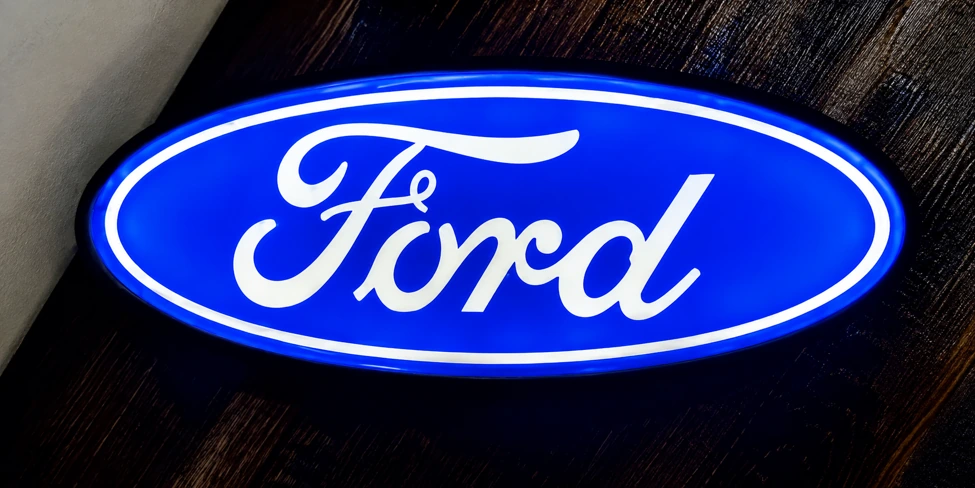
Nó là một bản sao ba chiều gắn trên tường của một logo với đèn LED tích hợp - được xây dựng giống như cách xây dựng bảng chỉ dẫn kiến trúc, chỉ ở quy mô nhỏ hơn và thường cho một bức tường bên trong.
Nó không phải là một dấu hiệu in phẳng. Hình dạng được cắt, tạo hình hoặc chế tạo để nó đứng ngoài bề mặt, đó là những gì tạo ra đường bóng và ánh sáng hào quang. Một bảng in có ánh sáng phía sau nó là một hộp đèn, không phải là một bảng hiệu 3D.
nó không phải là một biểu tượng xe. Các tìm kiếm cho “Led Logo Car” trả lại rất nhiều huy hiệu nhỏ được chiếu sáng gắn trên lưới tản nhiệt hoặc khởi động của ô tô - những danh sách này được tính bằng đô la từ một chữ số đến thấp với số lượng đơn đặt hàng tối thiểu từ mười chiếc trở lên. Biển hiệu là một mặt hàng được chế tạo, đặt hàng theo đơn đặt hàng.
Nó thường được đặt hàng như trang trí nội thất hoặc thương hiệu tường, Nhưng yêu cầu lắp đặt và điện vẫn phụ thuộc vào vị trí và phương pháp đấu dây. Kiểm tra các yêu cầu cục bộ trước khi chọn lắp đặt có dây cứng.
logic xây dựng là cùng một logic được sử dụng cho ký tự kênh và dấu hiệu hộp đèn - Một mặt được hình thành, một bức tường bên ("trở lại"), một nguồn ánh sáng LED bên trong và một nguồn điện.
ai thực sự mua những thứ này và những gì thay đổi theo loại người mua
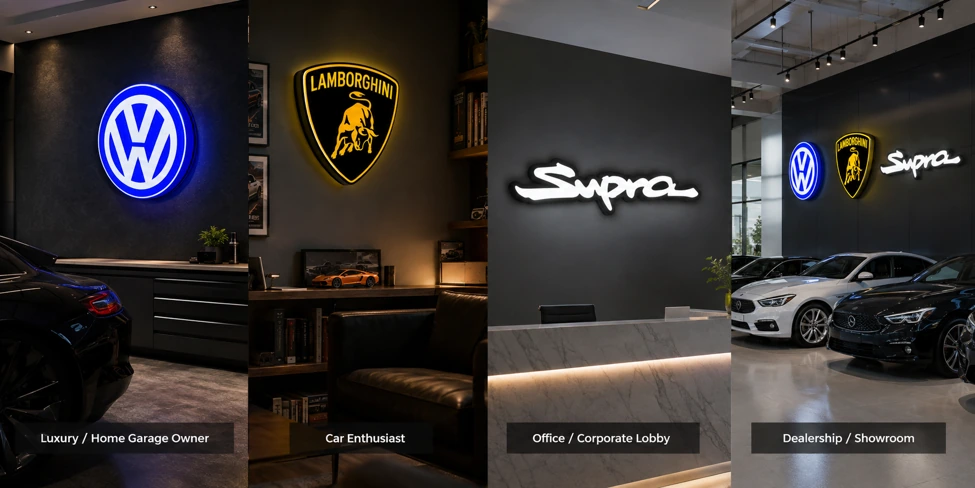
Đặc điểm kỹ thuật cho sản phẩm này thay đổi bởi người mua nhiều hơn bất cứ điều gì khác.
| người mua | làm thế nào để kích thước nó | Điều họ quan tâm nhất | Số lượng điển hình | Câu hỏi về quyền biểu trưng |
| Chủ sở hữu nhà để xe sang trọng / nhà | Kiểm tra mẫu giấy đầy đủ trên tường | Chất lượng hoàn thiện, có thể làm mờ để sử dụng buổi tối | 1 miếng | thường áp dụng - logo thuộc về một thương hiệu xe hơi |
| người say mê xe | Kiểm tra mẫu giấy đầy đủ trên tường | Độ chính xác của thương hiệu cụ thể, giá cả | 1 miếng | Hầu như luôn luôn áp dụng |
| Văn phòng/khu công ty | Kiểm tra mẫu giấy kích thước đầy đủ ở khoảng cách xem bình thường | Màu sắc thương hiệu chính xác và kết thúc kim loại | 1–2 miếng | thường không áp dụng - đó là logo của riêng họ |
| Đại lý / Showroom | Kiểm tra mẫu giấy kích thước đầy đủ ở khoảng cách qua sàn | Độ bền trong thời gian dài, độ sáng nhất quán trên các đơn vị | 2–20 miếng | thường được giải quyết thông qua thỏa thuận đại lý |
Người mua nhà để xe và người đam mê là những người mua một mảnh. Đó không phải là vấn đề, nhưng nó có nghĩa là đơn giá sẽ trông cao so với danh sách hàng loạt và bạn nên trả tiền cho một mẫu thay vì nhận một mẫu miễn phí.
Người mua văn phòng nên tập trung vào độ chính xác màu sắc - Cung cấp tham chiếu Pantone và một lớp hoàn thiện bằng kim loại cụ thể, không phải ảnh chụp màn hình trang web của bạn.
Người mua showroom nên hỏi về đánh giá tuổi thọ LED và thời hạn bảo hành cụ thể, không chỉ giá cả - Một biển báo chạy mười hai giờ một ngày, mỗi ngày, là một vấn đề kỹ thuật khác với một biển báo chạy ba giờ vào cuối tuần.
Xác nhận quyền của bạn đối với logo trước khi bạn đặt hàng
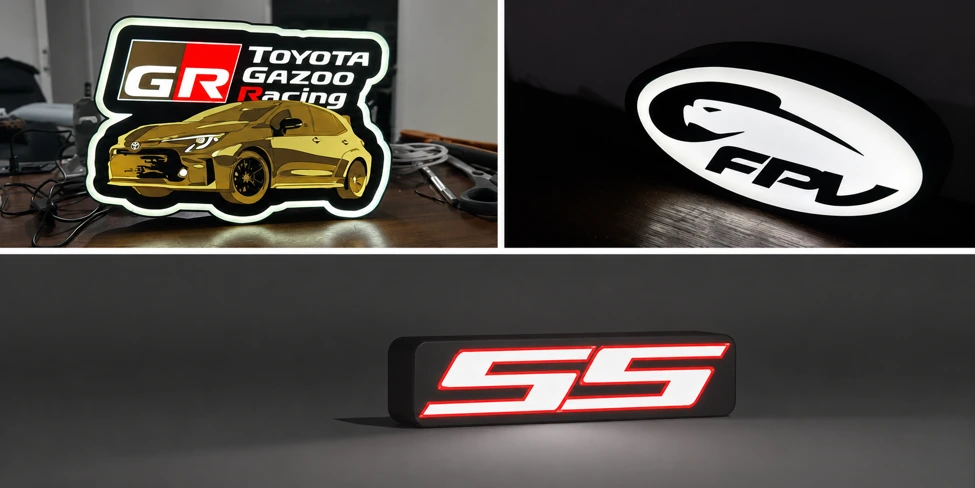
Nếu logo thuộc về nhà sản xuất ô tô và không thuộc về bạn, bạn cần được phép sao chép nó. Đây là phần của quá trình mà các danh sách thị trường bỏ qua hoàn toàn và nó là phần có khả năng khiến người mua phải trả giá cao nhất.
Đây là cơ chế, theo nghĩa đơn giản. Chủ sở hữu nhãn hiệu có thể ghi nhãn hiệu đã đăng ký của họ với Hải quan và Bảo vệ Biên giới Hoa Kỳ thông qua hệ thống ghi điện tử của mình. Khi một dấu được ghi lại, CBP trạng thái Nó có “cơ quan pháp lý để giam giữ, thu giữ, tước đoạt và cuối cùng là tiêu hủy IP vi phạm hàng hóa vào Hoa Kỳ.”
Điều này không phải là lý thuyết cho lĩnh vực ô tô. Trong một vụ thu giữ các bộ phận ô tô giả ở Philadelphia được vận chuyển từ Trung Quốc, CBP báo cáo rằng hàng hóa mang nhãn hiệu vi phạm Chevrolet, Buick và Dodge - những dấu hiệu đã được ghi nhận thông qua chương trình ghi lại điện tử. Liên minh châu Âu vận hành thực thi biên giới tương đương theo quy định (EU) Không 608/2013, cho phép người nắm quyền nộp đơn yêu cầu hành động với cơ quan hải quan.
Vì vậy, rủi ro thực tế không phải là một mối đe dọa pháp lý trừu tượng. Đó là lô hàng của bạn bị giữ, và bạn mất cả dấu hiệu và số tiền bạn đã trả cho nó.
Khi điều này áp dụng cho bạn: Bạn đang tái tạo logo, huy hiệu, dấu từ, hoặc một biến thể gần của thương hiệu xe hơi và bạn không phải là thương hiệu, đại lý được ủy quyền hoặc người được cấp phép.
Khi không áp dụng: Logo là của riêng công ty bạn. bạn là người nắm giữ quyền. Hoặc bạn đã ủy quyền bằng văn bản - thỏa thuận đại lý, giấy phép thương hiệu hoặc sự cho phép trực tiếp từ chủ sở hữu thương hiệu. Các đại lý được nhượng quyền và các phòng trưng bày được ủy quyền thương hiệu thường đã có điều này thông qua các thỏa thuận hiện có của họ; nếu bạn ở vị trí đó, bước đi đúng đắn chỉ đơn giản là kiểm tra xem thỏa thuận của bạn nói gì về biển báo trước khi bạn đặt hàng, không phải cho rằng bạn bị chặn.
Nếu bạn muốn giao diện mà không có logo: Một thiết kế ban đầu vẫn mang lại cho bạn sản phẩm. Một biển báo nhà để xe được xây dựng xung quanh tên viết tắt của riêng bạn, một hình bóng xe hơi, một chỉ định mô hình mà bạn có quyền hoặc một dấu hiệu trừu tượng có thể được chế tạo bằng cách sử dụng các phương pháp xây dựng tương tự và tránh rủi ro cụ thể khi tái tạo logo của thương hiệu xe hơi - miễn là thiết kế thay thế không vi phạm quyền của người khác.
Một bài kiểm tra hữu ích khi bạn so sánh các nhà cung cấp: Gửi yêu cầu của bạn và xem liệu có ai hỏi về việc ủy quyền hay không. Một nhà cung cấp nhận đơn đặt hàng logo thương hiệu mà không có một câu hỏi nào cho bạn biết điều gì đó về cách nó xử lý rủi ro - và bạn là người mang rủi ro đó ở biên giới, không phải họ.
Phần này là thông tin chung về cách thức thực thi biên giới hoạt động, không phải tư vấn pháp luật. Nếu bạn đang đặt hàng biển hiệu mang nhãn hiệu của bên thứ ba và không chắc chắn liệu bạn có được phép hay không, hãy xác nhận vị trí của bạn với Cố vấn IP đủ điều kiện tại quốc gia của bạn.
Các loại xây dựng: Halo-Light vs Face-Light vs Edge-Lit
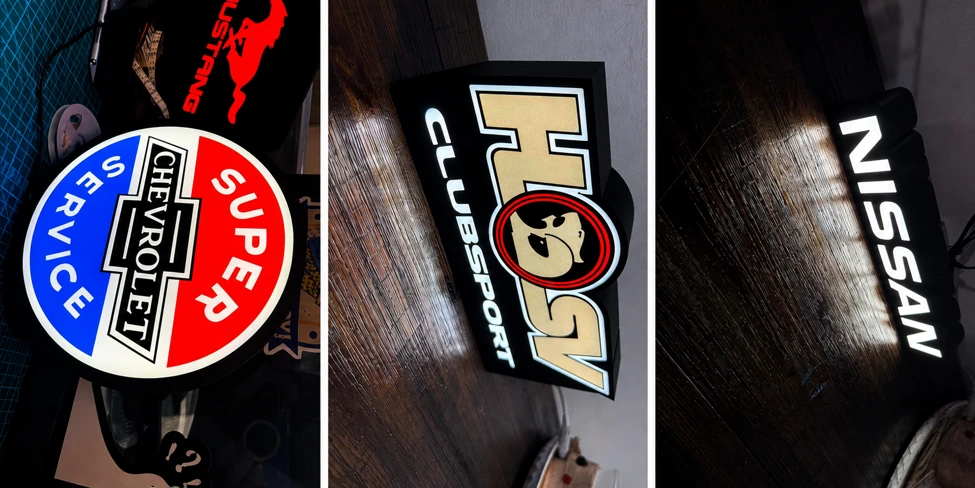
Hầu như mọi bảng hiệu logo được chiếu sáng 3D trên thị trường là một trong ba bản dựng. Biết được cái nào bạn muốn là một trong những thứ hữu ích nhất mà bạn có thể đưa vào một cuộc điều tra, bởi vì nó thay đổi vật liệu, giá cả và hiệu quả.
| sự cấu tạo | Nó sáng như thế nào | nó trông như thế nào | tốt nhất cho |
| Halo-Light (Là ánh sáng ngược) | Đèn LED hướng vào tường từ bên trong logo; mặt giữ vững | Logo vững chắc với đường viền phát sáng phía sau nó | Ngoại hình cao cấp; nhà để xe, văn phòng, nội thất showroom |
| Ánh sáng mặt (backlit) | Đèn LED hướng về phía trước qua một khuôn mặt acrylic trong mờ | Logo chính nó phát sáng | Khả năng hiển thị cao; tái tạo màu thương hiệu |
| Acrylic chiếu sáng cạnh | Đèn LED đưa ánh sáng vào cạnh của bảng acrylic rõ ràng | Logo được khắc phát sáng trong một bảng điều khiển rõ ràng | mỏng, hiện đại; bàn làm việc nhỏ hoặc các mảnh tường |
Thuật ngữ khác nhau giữa các nhà cung cấp - một số người gọi các biển báo sáng hào quang là "đèn chiếu sáng ngược" vì ánh sáng đi ngược lại, trong khi những người khác sử dụng "đèn nền" để có khuôn mặt phát sáng. Trong cuộc điều tra của bạn, hãy nói nơi bạn muốn ánh sáng thoát ra thay vì chỉ dựa vào thuật ngữ.
Mặt sáng hào quang đục - được chải bằng thép không gỉ, nhôm sơn hoặc hoàn thiện bằng crôm - và ánh sáng tràn vào bức tường phía sau nó. Nó phụ thuộc nhiều vào cài đặt, được đề cập bên dưới.
chiếu sáng khuôn mặt bằng cách chiếu sáng một khuôn mặt trong mờ, Vì vậy, bạn có thể tái tạo màu thương hiệu trực tiếp trong acrylic hoặc vinyl được áp dụng. Nó cũng dễ tha thứ hơn cho bề mặt tường, vì tường không phải là một phần của hiệu ứng.
Mặt mạ crôm hoặc kim loại chải là một loại hoàn thiện, không phải là loại ánh sáng. Giao diện “xe cao cấp” mà người mua thường mô tả là khuôn mặt chrome hoặc chải kết hợp với ánh sáng hào quang. Nói to cả hai phần trong cuộc điều tra của bạn - vật liệu khuôn mặt và phương pháp chiếu sáng - bởi vì chúng được trích dẫn riêng biệt.
Nhận hiệu ứng hào quang đúng
Kết quả quầng kém thường đến từ mối quan hệ giữa tường, khoảng cách chờ, khoảng cách mô-đun và góc chùm - không chỉ từ đầu ra LED.
Khoảng cách bế tắc. Biển hiệu phải ngồi ngoài tường cho ánh sáng lan tỏa. Thực hành thương mại ký hiệu đặt khoảng cách từ 1 đến 2 inch (khoảng 25–50 mm), với 1 đến 1,5 inch phổ biến nhất trên các bản dựng hiện tại - khoảng cách rộng hơn 1,5 đến 2 inch là sự ngăn chặn từ các biển báo thời neon. Quá gần và bạn sẽ nhận được một vòng điểm sáng cứng; quá xa và ánh sáng sẽ rửa trôi.
bề mặt tường. Một bức tường mờ hoặc satin mịn với tông màu nhẹ đến trung bình mang lại nhiều vầng hào quang đồng đều nhất. Một bức tường bóng hoặc cao phản ánh các mô-đun LED riêng lẻ, vì vậy bạn sẽ thấy một hàng các chấm sáng thay vì một ánh sáng mịn. Kết cấu nặng, khối xây tối và các đường vữa sâu gây ra vấn đề ngược lại - chúng hấp thụ ánh sáng và phá vỡ quầng sáng. Nếu bức tường của bạn được sơn bóng, lát gạch hoặc đá thô sẫm, hãy nói như vậy trong cuộc tìm hiểu của bạn; một công trình chiếu sáng mặt thường chỉ đơn giản là sự lựa chọn tốt hơn cho căn phòng đó.
Khoảng cách mô-đun. Một quy tắc khả thi từ chế tạo bảng hiệu: Khoảng cách các mô-đun LED ở khoảng cách khoảng một đến hai lần khoảng cách giữa các mô-đun và bề mặt mà chúng đang chiếu sáng. Đối với các mô-đun chùm rộng, phần cuối rộng hơn của phạm vi đó sẽ được áp dụng - một hướng dẫn của nhà sản xuất đưa ra tỷ lệ 2: 1, do đó, độ sâu 50 mm có nghĩa là các mô-đun cách nhau khoảng 100 mm. Đối với HALO hoạt động cụ thể, các mô-đun góc rộng 170 độ hoặc lớn hơn đều trải đều nhất trong một lần ném ngắn.
Thông số kỹ thuật để xác nhận trước khi báo giá
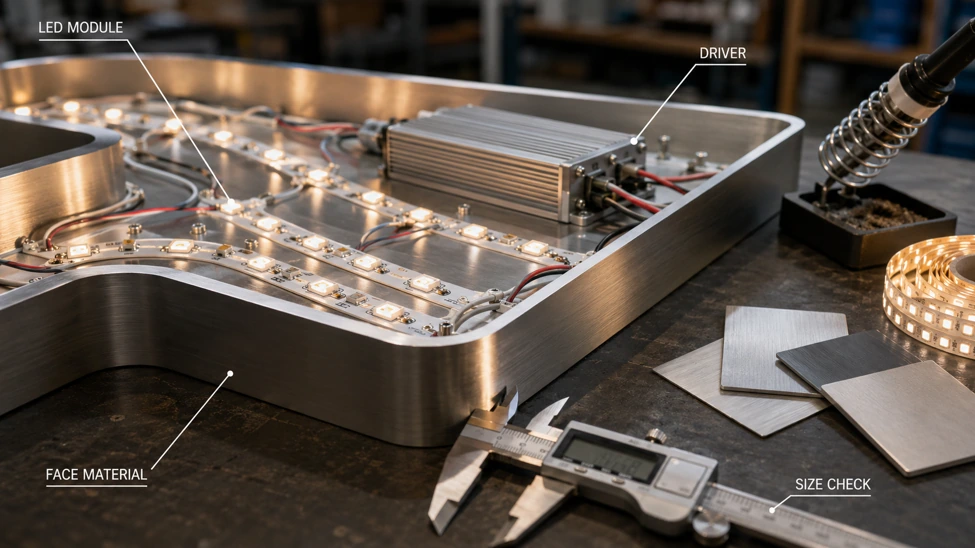
Đây là thông tin mà một nhà máy thực sự cần.
| sự chỉ rỏ | Gửi gì | Tại sao nó lại quan trọng |
| nghệ thuật | Tác phẩm nghệ thuật vector (.ai, .eps hoặc vector pdf) | Hình ảnh raster thường cần vẽ lại trước khi cắt chính xác hoặc gia công CNC |
| Kích thước tổng thể | Chiều rộng và chiều cao tổng thể tính bằng mm hoặc inch | Kích thước ảnh hưởng đến vật liệu, số lượng LED, bao bì và vận chuyển |
| Độ sâu / trở lại | Độ sâu trả lại yêu cầu tính bằng mm | Kiểm soát đường bóng và lan rộng Halo |
| Chất liệu mặt và kết thúc | Acrylic, chải không gỉ, nhôm sơn, mạ crôm | Thay đổi chế tạo, hoàn thiện, trọng lượng và giá cả |
| Tham chiếu màu | mã pantone hoặc ral | "Blue đậm" không phải là một đặc điểm kỹ thuật |
| Loại ánh sáng | ánh sáng hào quang, ánh sáng mặt hoặc ánh sáng cạnh | Xác định toàn bộ bản dựng nội bộ |
| màu nhạt | Màu trắng ấm, trắng mát, RGB hoặc màu thương hiệu bắt buộc | RGB yêu cầu một bộ điều khiển, được trích dẫn riêng |
| điện áp | DC12V hoặc DC24V | Xác nhận điện áp DC của biển báo và đầu vào nguồn điện tại điểm đến |
| không rỏ | liệu có cần làm mờ hay không và phương pháp điều khiển ưu tiên | Ảnh hưởng đến việc lựa chọn trình điều khiển và bộ điều khiển |
| sự lắp | tuôn ra, đứng hoặc treo | Phần cứng thường không được bao gồm theo mặc định |
| Vị trí đầu ra cáp / tài xế | nơi cáp điện phải thoát ra và liệu người lái xe có phải tiếp cận được để bảo dưỡng không | thường quyết định quá muộn, sau khi mở tường hoặc điểm cứng đã được sửa |
| cảnh chung quanh | Trong nhà, bán ngoài trời, ngoài trời | Đặt xếp hạng IP cần thiết |
đèn LED và điện áp. Các dấu hiệu định dạng nhỏ thường chạy trên DC12V. ký mô-đun được chỉ định bởi loại chip, số lượng LED và công suất - ví dụ: mô-đun SMD2835 ở mức 1 đến 4 đèn LED cho mỗi mô-đun, vẽ khoảng 0,3 W đến 1,2 W, mỗi Phạm vi mô-đun chiếu sáng Được xây dựng cho chính xác loại biển báo kèm theo này. Trên một logo nhỏ, nơi các đèn LED nằm gần phía sau khuôn mặt, các mô-đun đầu ra thấp hơn được đặt gần nhau hơn thường mang lại hiệu quả rửa đồng đều hơn so với các mô-đun đầu ra cao hơn. Nếu sự nhất quán màu sắc trên nhiều đơn vị quan trọng - một phòng trưng bày đặt hàng một số dấu hiệu - yêu cầu binning 3 bước (SDCM), thì thước đo dung sai cho mức độ phù hợp của các đèn LED; số bước thấp hơn có nghĩa là khớp chặt hơn.
Nguồn điện. Trình điều khiển nên có kích thước cao hơn tải thực tế, không bằng nó. Một nguyên tắc chung là chỉ định Nguồn điện 1,2-1,5 lần Tổng công suất của đèn LED, vì vậy nó không chạy ở giới hạn của nó. Hỏi xem trình điều khiển có được bao gồm trong báo giá hay không và phích cắm có phù hợp với quốc gia của bạn hay không - đây là một thiếu sót thường xuyên đối với các đơn đặt hàng xuất khẩu.
mờ. Cảnh báo thực tế là khả năng làm mờ và khả năng tương thích mờ không phải là điều giống nhau. Bộ điều khiển PWM Chạy dưới khoảng 1 kHz có thể tạo ra các hiện vật nhấp nháy có thể nhìn thấy và nhấp nháy máy ảnh, và những thứ này hiển thị hầu hết ở chu kỳ nhiệm vụ thấp - đó chính xác là nơi một biển báo nhà để xe xung quanh dành cả đời. Yêu cầu bộ điều khiển trên 1 kHz, và xác nhận bộ điều khiển độ sáng và trình điều khiển đã được kiểm tra cùng nhau thay vì chỉ đánh giá riêng lẻ.
xếp hạng IP. ip65 Che các tia nước áp suất thấp và mưa lớn; IP67 thêm ngâm tạm thời vào một mét trong 30 phút và là lựa chọn thực tế cho các vị trí tiếp xúc thực sự.
tường và sẵn sàng điện. Gửi một bức ảnh của chính bức tường, không chỉ các tác phẩm nghệ thuật logo. Cho nhà cung cấp vật liệu tường và hoàn thiện, nguồn điện nào có sẵn gần đó, cho dù bạn muốn có dây cắm cắm hay kết nối có dây cứng và người lái xe sẽ ngồi ở đâu sau khi lắp đặt - một trình điều khiển cần thay thế định kỳ phải có thể tiếp cận được, không được niêm phong phía sau biển báo.
Tìm nhà sản xuất tiềm năng ở đâu ở Trung Quốc
Sử dụng thị trường để khám phá giá, nhưng hãy xây dựng danh sách rút gọn thực sự của bạn từ các nhà cung cấp có danh tính và khả năng sản xuất mà bạn có thể xác minh.
| ống thông hơi | Những gì bạn thực sự tìm thấy | tốt nhất cho | Hạn chế chính |
| Alibaba / Made-in-China | Nhiều danh sách, phù hợp cho điểm chuẩn ban đầu | Đánh giá nhanh về giá | Loại người bán và địa điểm sản xuất thực tế vẫn cần xác minh; tập trung cao nhất của danh sách rủi ro nhãn hiệu |
| trang web riêng của nhà máy | Thông tin kỹ thuật và năng lực thuộc sở hữu của nhà cung cấp | Đơn đặt hàng cần thảo luận kỹ thuật trực tiếp | mất nhiều thời gian hơn để tìm |
| Triển lãm thương mại (Hội chợ Canton, Triển lãm ký hiệu) | tiếp xúc trực tiếp, mẫu vật lý | Đơn hàng đa đơn vị và showroom | không thực tế cho một mảnh |
| Giới thiệu từ nhà cung cấp bảng hiệu kiến trúc | Nhà máy với kỹ thuật chiếu sáng thực | Các công trình đòi hỏi kỹ thuật | Chỉ có sẵn nếu người giới thiệu có kinh nghiệm nhà cung cấp có liên quan |
Thị trường là cách nhanh nhất để tìm hiểu phạm vi giá và cách chậm nhất để tìm nhà máy. Được kiểm tra trên Made-in-China.com vào tháng 8 năm 2026, danh sách dưới “Led Logo xe” chạy từ dưới US$1 cho một biểu tượng xe nhỏ đến nhiều hơn US$8.600 cho một bảng hiệu bên ngoài phòng trưng bày đầy đủ. Các mảnh tùy chỉnh gắn trên tường được tập hợp giữa khoảng US$50 và US$300 với số lượng đặt hàng tối thiểu là một mảnh, trong khi các mặt hàng Sub-$20 chủ yếu là huy hiệu xe nhỏ với số lượng tối thiểu từ mười chiếc trở lên. Mức chênh lệch đó không phải là một bậc thang giảm giá - nó là một số sản phẩm khác nhau chia sẻ một cụm từ tìm kiếm.
Trong cùng một bản quét tháng 8 năm 2026, nhiều danh sách có tên cụ thể là xe ô tô trong tiêu đề sản phẩm. Nếu danh mục công khai của nhà cung cấp được xây dựng theo cách đó, điều đó cho bạn biết cách nó tiếp cận câu hỏi về quyền nói chung.
Đối với các triển lãm thương mại và giới thiệu, logic tương tự cũng áp dụng: một nhà sản xuất đã xây dựng CHÂN CHÂN CHỦ, hộp đèn, và bảng chỉ dẫn kiến trúc có khả năng chế tạo và chiếu sáng sản phẩm này cần sản phẩm này, ngay cả khi logo xe được chiếu sáng không phải là danh mục đầu tiên trên trang web của nó.
làm thế nào để kiểm tra một nhà sản xuất cho sản phẩm cụ thể này
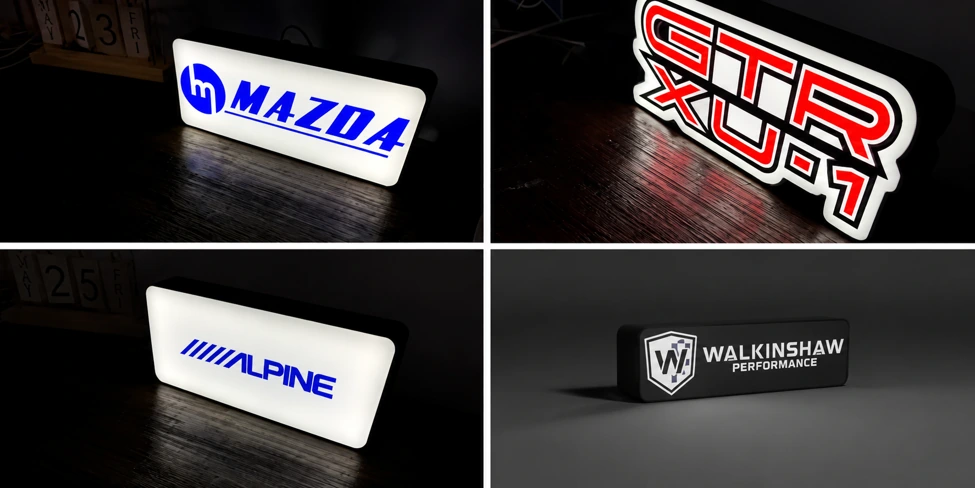
Câu hỏi cốt lõi là ai sẽ tạo ra dấu hiệu của bạn, nó sẽ được thực hiện ở đâu và pháp nhân nào chịu trách nhiệm về lệnh.
Xin giấy phép kinh doanh và kiểm tra chi tiết. Giấy phép kinh doanh của Trung Quốc cho biết tên công ty đã đăng ký, mã tín dụng xã hội thống nhất, địa chỉ đã đăng ký và phạm vi kinh doanh. Đọc phạm vi kinh doanh, nhưng coi nó như một tín hiệu hơn là bằng chứng. Một nhà sản xuất cũng có thể nắm giữ phạm vi giao dịch và xuất khẩu. Nếu phạm vi không đề cập đến việc sản xuất có liên quan, hãy hỏi trực tiếp ai sẽ chế tạo biển báo và kiểm tra câu trả lời đó dựa trên địa chỉ đã đăng ký và hướng dẫn sản xuất trực tiếp. Sau đó xác nhận tên trên giấy phép trùng với tên trên hóa đơn và người thụ hưởng ngân hàng. Sự không phù hợp giữa công ty mà bạn tương ứng và tài khoản bạn đang thanh toán đáng giá để dừng lại cho đến khi nó được giải thích.
Yêu cầu hướng dẫn trực tiếp tại nhà máy - Một cuộc gọi video nơi ai đó đi bộ trên sàn sản xuất và bạn có thể yêu cầu họ hướng máy ảnh vào một máy cụ thể. Đối với sản phẩm này, yêu cầu xem thiết bị cắt CNC hoặc laser và khu vực hoàn thiện, bởi vì những điều đó xác định liệu hình thức 3D và bề mặt hoàn thiện có thực sự tốt hay không.
Hỏi xem họ làm thử nghiệm gì. Một nhà cung cấp tuyên bố sản xuất nội bộ phải có thể đặt tên và hiển thị thiết bị thử nghiệm của mình. Các thử nghiệm lão hóa, tích hợp các phép đo hình cầu cho sản lượng ánh sáng, thử nghiệm phun muối cho các lớp hoàn thiện bằng kim loại, và các buồng nhiệt độ và độ ẩm là tiêu chuẩn trong các nhà máy bảng hiệu LED đã được thành lập. Như một điểm tham chiếu, Cơ sở riêng của chúng tôi là một nhà máy tự sản 3.000 m² ở Thâm Quyến hoạt động từ năm 2011, với thiết bị đo quang học Everfine, buồng phun muối và độ ẩm nhiệt độ, và các chứng nhận sản phẩm hoặc thành phần bao gồm UL, ETL, DLC, TUV, CE và RoHS trong phạm vi áp dụng của chúng.
Đặt câu hỏi về quyền biểu trưng và lắng nghe câu trả lời. Một nhà cung cấp hỏi ai sở hữu tác phẩm nghệ thuật trước khi báo giá là nhà cung cấp có quy trình tuân thủ. Một điều không nhất thiết phải không trung thực, nhưng nó cũng không thay mặt bạn quản lý rủi ro.
Phê duyệt mẫu và kiểm tra chất lượng
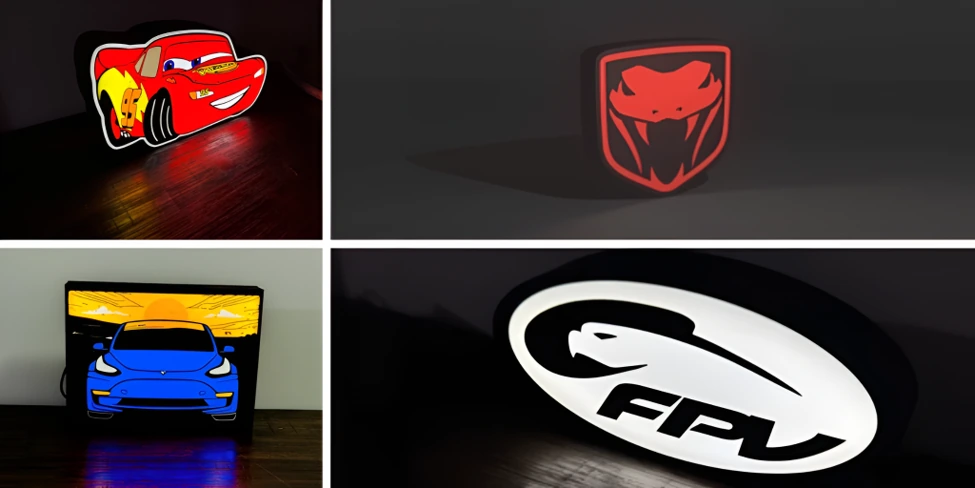
Đối với đơn đặt hàng một mảnh, mẫu là thành phẩm. Yêu cầu các bức ảnh hoàn thiện rõ ràng trong ánh sáng ban ngày và video được bật nguồn trong phòng tối - và đối với các biển báo sáng, hãy yêu cầu chụp vầng hào quang trên bề mặt thử nghiệm mờ mịn.
Kiểm tra kết thúc trước. Tìm kiếm màu sắc nhất quán trên toàn bộ khuôn mặt, không có đường nối có thể nhìn thấy được trong đó các phần của biểu mẫu 3D nối, làm sạch các cạnh trên các đường cong và các góc bên trong chặt chẽ và không có kết cấu vỏ màu cam trên bề mặt sơn hoặc chrome. Trên kim loại chải, hướng hạt phải chạy nhất quán trên mảnh.
Sau đó kiểm tra nó sáng. Hai lỗi đáng chú ý là điểm nóng - các mảng sáng nơi các đèn LED riêng lẻ hiển thị qua khuôn mặt hoặc phản chiếu trên tường - và sự thay đổi màu sắc giữa các phần khác nhau của cùng một dấu hiệu.
Nếu bạn chỉ định làm mờ, hãy yêu cầu xem nó ở cài đặt thấp nhất.
Nếu bạn đặt hàng nhiều đơn vị, Yêu cầu tất cả chúng được chụp cùng nhau, được bật nguồn, trong một khung hình.
Danh sách kiểm tra RFQ cho dấu hiệu logo xe hơi
Gửi cái này trong một tin nhắn.
- nghệ thuật - Tệp vector, cộng với ghi chú về ai sở hữu logo và ủy quyền của bạn nếu đó là thương hiệu của bên thứ ba
- chiều kích - Chiều rộng và chiều cao tổng thể tính bằng mm và độ sâu bạn muốn
- Loại ánh sáng ------------------------------
- Chất liệu mặt và kết thúc - với tham chiếu pantone hoặc ral, hoặc ảnh của kết thúc, ý bạn là
- màu nhạt - Trắng ấm, Trắng mát, RGB hoặc nhiệt độ màu cụ thể
- không rỏ - yêu cầu hay không, và phương pháp kiểm soát nếu bạn có sở thích
- Môi trường gắn kết - Văn phòng trong nhà, nhà để xe, cửa sổ phòng trưng bày bán ngoài trời, hoặc hoàn toàn ngoài trời
- bề mặt tường - Đối với các dấu hiệu hào quang, hãy mô tả màu tường, màu sáng và kết cấu, và đính kèm ảnh
- Vị trí đầu ra cáp / tài xế - Cáp nguồn phải thoát ra đâu và người lái xe sẽ ngồi ở đâu
- cơ sở báo giá - Yêu cầu mọi nhà cung cấp báo giá về cùng một thời hạn vận chuyển và nêu rõ những gì được bao gồm
- Bằng chứng phê duyệt - Yêu cầu ảnh hoàn thiện ánh sáng ban ngày, video trong phòng tối được cấp nguồn và kiểm tra hào quang tường mờ nếu có
- quyền thay mặt - Điện áp và loại phích cắm của quốc gia bạn, và cho dù bạn muốn cắm vào hay cắm điện
- số nhiều - bao gồm cả việc nhiều đơn vị có thể tuân theo, vì điều đó ảnh hưởng đến quyết định công cụ
- Điểm đến và thời hạn - Giao hàng tận nơi hoặc cửa, và ngày bạn cần
Sao chép danh sách kiểm tra này vào yêu cầu của bạn và gửi cùng một phiên bản cho mọi nhà cung cấp được liệt kê trong danh sách rút gọn.
So sánh các báo giá trên tổng phạm vi, không phải đơn giá
So sánh phạm vi hạ cánh - biển báo, bộ phận điện, phần cứng, bằng chứng, đóng gói, vận chuyển hàng hóa, thuế và bảo hành - không chỉ đơn giá. Đơn giá thấp có thể tạo ra chi phí hạ cánh cao hơn khi các mặt hàng đó bị loại trừ.
Phạm vi thị trường US$50300 hiện tại cho các mảnh tường tùy chỉnh chỉ là một tiêu chuẩn; nó không phải là một báo giá có thể so sánh được cho đến khi phạm vi và điều khoản vận chuyển phù hợp.
| mục hàng | Những gì để xác nhận | Tại sao nó thay đổi chi phí thực |
| 电源适配器 | bao gồm hoặc bổ sung, và loại phích cắm nào | Trình điều khiển và phích cắm chính xác ở nước là một loại trừ phổ biến |
| Lắp đặt phần cứng | Bốc xếp, mẫu, sửa chữa bao gồm? | Nguồn cung ứng phù hợp tại địa phương rất chậm và khó khăn |
| thiết kế chứng minh | Có bao nhiêu vòng sửa đổi được bảo hiểm | Các vòng bổ sung có tính phí và thêm ngày |
| Điều khoản vận chuyển | EXW, FOB hoặc DDP | EXW không bao gồm vận chuyển hàng hóa, thuế và thông quan hoàn toàn |
| Thuế và thuế | ai trả tiền, và họ được trích dẫn | Thường là chi phí ẩn lớn nhất cho một lô hàng nhỏ |
| sự đóng gói | Thùng carton tiêu chuẩn hoặc thùng tùy chỉnh | ảnh hưởng đến cả chi phí và điều kiện đến |
| Các mốc thanh toán | Điều gì kích hoạt mỗi khoản thanh toán | Gắn đòn bẩy của bạn với điểm phê duyệt, không chỉ với ngày sản xuất |
| Người nhận tiền/người nhận hợp đồng | Nó có phù hợp với giấy phép và nhà máy mà bạn đã xác minh không? | Thanh toán một thực thể mà bạn chưa bao giờ xác minh hoàn tác việc kiểm tra bạn đã làm |
| thời gian dẫn đầu | cam kết bằng văn bản, từ khi | “Hai tuần” từ việc phê duyệt tác phẩm nghệ thuật không phải là hai tuần kể từ khi thanh toán |
| sự bảo đảm | thời hạn, và liệu nó bao gồm các bộ phận, lao động hay vận chuyển trở lại | Các điều khoản khác nhau rất nhiều giữa các nhà cung cấp - hãy lấy nó bằng văn bản thay vì giả định |
Yêu cầu mọi nhà cung cấp báo giá trên cùng các điều khoản - cùng kích thước, cùng một kết thúc, cùng một thời hạn vận chuyển.
Từ đơn đặt hàng đến giao hàng: sản xuất, kiểm tra và vận chuyển
- Yêu cầu nhà cung cấp nêu điểm bắt đầu sản xuất bằng văn bản. Đối với các dấu hiệu tùy chỉnh, nó thường được gắn với phê duyệt tác phẩm nghệ thuật cũng như thanh toán. Trình tự thường là bằng chứng nghệ thuật, sự chấp thuận, chế tạo, hoàn thiện, lắp đặt và đấu dây LED, sau đó kiểm tra. Yêu cầu một bức ảnh tiến độ ở giai đoạn hoàn thiện - đó là điểm cuối cùng mà sự cố bề mặt có thể được khắc phục mà không cần bắt đầu lại.
- Nhấn mạnh vào hình ảnh và video trước khi giao hàng. Video được bật nguồn trong phòng tối, cộng với những bức ảnh rõ ràng về kết thúc trong ánh sáng ban ngày, cung cấp cho bạn những gì bạn cần. Đối với các đơn hàng nhiều đơn vị hoặc giá trị cao hơn, hãy quyết định trước khi thanh toán xem bằng chứng do nhà cung cấp có đủ hay không hoặc liệu việc kiểm tra trước khi giao hàng độc lập có xứng đáng với chi phí tăng thêm hay không.
- Bao bì đáng được quan tâm cụ thể với sản phẩm này. Dấu hiệu có chiều với mặt mạ crôm hoặc mặt được chải dễ bị tổn thương hơn so với biển báo phẳng - dạng nâng lên có tác động đến các cạnh của nó, và các bề mặt được đánh bóng và chrome xước do chuyển động bên trong thùng carton. Hỏi cái gì bảo vệ khuôn mặt cụ thể chứ không phải chỉ là hộp có chắc chắn hay không. Bọt hoặc phim trực tiếp trên khuôn mặt, bảo vệ góc trên dạng 3D và thùng carton cứng bên ngoài là những điều đáng để xác nhận.
- Chụp ảnh bất kỳ thiệt hại bao bì bên ngoài nào trước khi bạn mở nó, Lưu ý thiệt hại có thể nhìn thấy trên bản ghi của nhà cung cấp dịch vụ nếu có thể và kiểm tra nguồn điện ngay khi phương pháp lắp đặt cho phép một cách an toàn.
- Nếu dấu hiệu đến bị hư hỏng hoặc không theo thông số kỹ thuật, Đồng ý trước - lý tưởng nhất là trước khi bạn trả tiền - người xử lý thiệt hại hàng hóa, lỗi sản xuất và thành phần không thành công sau này, họ sẽ cần bằng chứng gì (ảnh đóng gói và video kiểm tra năng lượng ở trên bao gồm hầu hết các bộ phận đó) và liệu biện pháp khắc phục là các bộ phận thay thế, làm lại hay hoàn lại tiền.
- Xác nhận ai xử lý hỗ trợ bảo hành và cách thức. Đối với một đơn đặt hàng quốc tế, câu hỏi thực tế là yêu cầu bảo hành thực sự liên quan đến: các bộ phận thay thế được vận chuyển cho bạn, hoặc toàn bộ bảng hiệu được trả lại. Nhận được câu trả lời đó trước khi bạn trả tiền, không phải sau khi một cái gì đó không thành công.
OEM và đơn đặt hàng tùy chỉnh: Điều gì sẽ xảy ra
Đối với người mua đặt hàng theo thương hiệu của riêng họ, hoặc đặt hàng nhiều lần, một vài điểm bổ sung. Kích thước, vật liệu mặt, kết thúc, phương pháp chiếu sáng, màu sáng, phương pháp lắp và điện áp hoạt động đều có thể chỉ định trên một dấu hiệu đặt hàng.
Nếu bạn có kế hoạch sắp xếp lại sau, hãy giải quyết công cụ và quyền sở hữu tệp trước. Hỏi xem liệu công cụ có phải là khoản phí một lần hay được tích hợp trong đơn giá, ai giữ tệp tác phẩm nghệ thuật và thông số kỹ thuật đã được phê duyệt trong hồ sơ, và liệu đơn đặt hàng sau này có được khớp với mẫu đã được phê duyệt đó hay được trích dẫn lại từ đầu hay không.
Xác nhận ai chọn và bảo hành các mô-đun LED, trình điều khiển và bộ điều khiển, liệu những bộ phận đó đã được kiểm tra cùng nhau trong bảng hiệu đã hoàn thành hay chưa và liệu các bộ phận thay thế có còn sẵn hay không. Sản xuất mô-đun nội bộ có thể cải thiện khả năng truy xuất thành phần, nhưng nó không thay thế thử nghiệm dấu hiệu hoàn chỉnh hoặc quy trình hỗ trợ bằng văn bản.
Nhận báo giá
Nếu bạn đã sẵn sàng chỉ định một dấu hiệu, danh sách kiểm tra RFQ ở trên là tuyến đường nhanh nhất để báo giá có thể sử dụng. SigniLited đã sản xuất đèn chiếu sáng biển báo và các biển báo chiếu sáng ở Thâm Quyến từ năm 2011, từ một Cơ sở tự sản 3.000m² Với phép đo quang, phun muối và nhiệt độ ẩm, và các chứng nhận sản phẩm hoặc thành phần bao gồm UL, ETL, DLC, TUV, CE và ROHS trong phạm vi áp dụng của chúng. CHÚNG TÔI SẢ Chữ cái được chiếu sáng tùy chỉnh và dấu hiệu logo trên OEM và ODM.
Nếu tác phẩm nghệ thuật của bạn mang nhãn hiệu của bên thứ ba, hãy chuẩn bị sẵn giấy phép của bạn khi bạn yêu cầu - nó sẽ lưu lại một vòng qua lại trước khi quá trình sản xuất có thể bắt đầu.
Liên hệ với chúng tôi Với tác phẩm nghệ thuật và đặc điểm kỹ thuật của bạn, và chúng tôi sẽ trích dẫn nó.
Câu hỏi thường gặp
Viết bởi: Richard Liang, Giám đốc sản phẩm & quy trình tại SignliteLED
Đánh giá kỹ thuật: Jason Chen, trưởng nhóm R&D tại Signited
Email: info@signliteled.com
Bài viết liên quan