Tiếng Việt
  English
  简体中文
简体中文  Deutsch
  Español
  Français
  Italiano
  日本語
日本語  한국어
한국어  Polski
  Português
  Русский
  Türkçe
  Nederlands
  ไทย
ไทย 
Đèn LED chiếu sáng đã trở thành giải pháp tiêu chuẩn cho các dự án kiến trúc, thương mại, dân cư. Tuy nhiên, ngay cả với dải đèn LED chất lượng cao và kênh nhôm, nhiều công trình lắp đặt vẫn bị các điểm ánh sáng nhìn thấy, chói hoặc chiếu sáng không đồng đều. Trong hầu hết các trường hợp, nguyên nhân gốc rễ không phải là bản thân dải đèn LED, mà là nắp khuếch tán.
Một nắp khuếch tán LED không chỉ đơn thuần là một phụ kiện thẩm mỹ. Nó là một thành phần quang học quan trọng ảnh hưởng trực tiếp đến sự đồng nhất ánh sáng, sự thoải mái về thị giác, hiệu quả và sự xuất hiện chuyên nghiệp tổng thể của một hệ thống chiếu sáng. Trong khi các kênh LED nhôm hoạt động chủ yếu như các tản nhiệt để bảo vệ tuổi thọ của đèn LED, bộ khuếch tán quyết định mức độ ánh sáng được nhận biết.
Hướng dẫn này tập trung vào ba tùy chọn bộ khuếch tán phổ biến nhất được sử dụng trong các kênh dải LED: nắp rõ ràng, màu trắng đục và màu đen. Bằng cách hiểu sự khác biệt, vật liệu, sự cân bằng hiệu suất và cân nhắc lắp đặt, bạn có thể đưa ra quyết định sáng suốt phù hợp với cả yêu cầu kỹ thuật và kỳ vọng trực quan.
Bộ khuếch tán kênh LED là gì và tại sao nó lại quan trọng
Một bộ khuếch tán kênh LED (còn được gọi là nắp hoặc ống kính) là thành phần polycarbonate hoặc PMMA gắn vào cấu hình LED nhôm. Mục đích chính của nó là phân tán ánh sáng từ các dải LED để loại bỏ các điểm nóng, bảo vệ đèn LED khỏi bụi và tiếp xúc vật lý, đồng thời kiểm soát góc chùm để có một kết thúc chuyên nghiệp.
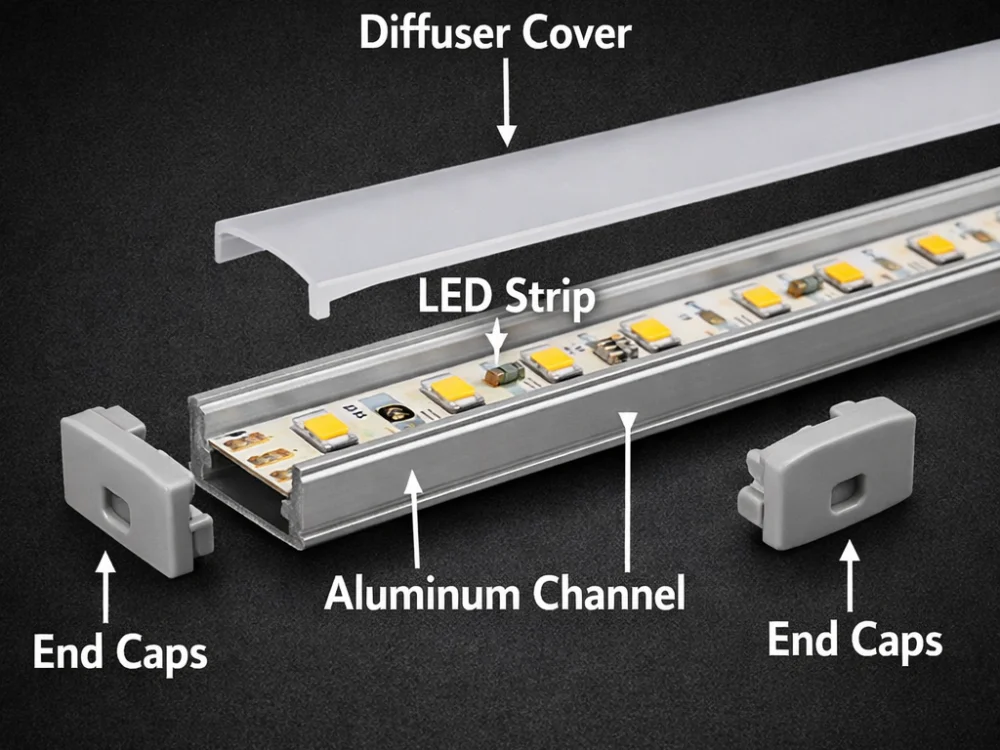
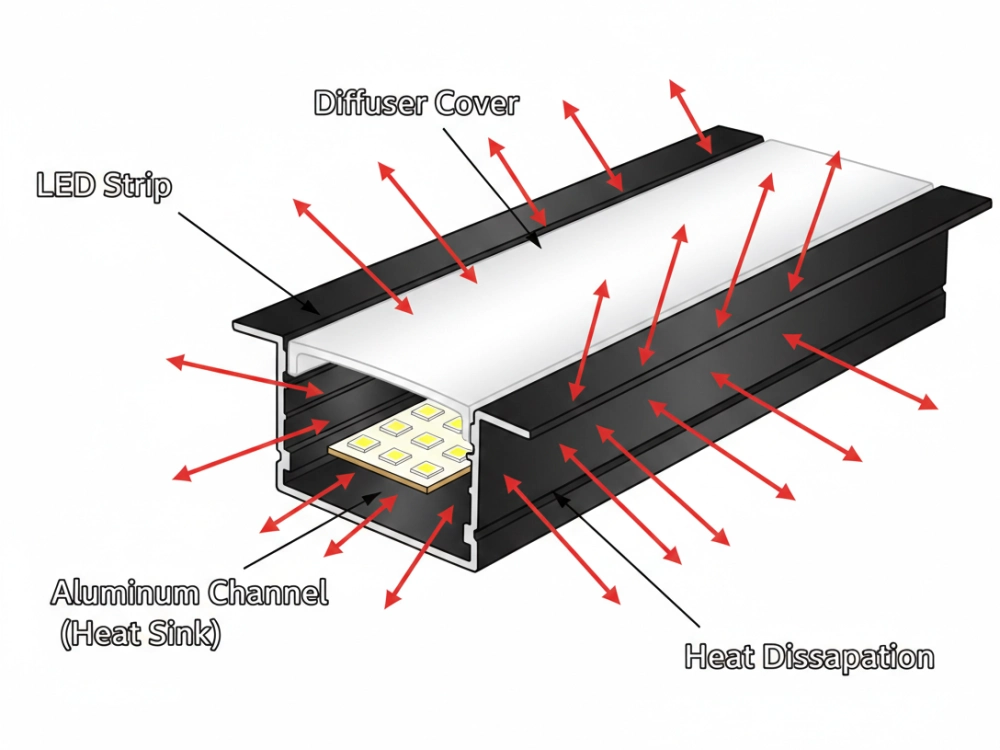
Trong một hệ thống kênh dải LED hoàn chỉnh, cấu hình nhôm và bộ khuếch tán dải LED hoạt động cùng nhau. Kênh nhôm tản nhiệt, ổn định nhiệt độ mối nối LED và kéo dài tuổi thọ. Mặt khác, bộ khuếch tán quản lý sự phân phối ánh sáng và kiểm soát độ chói. Việc bỏ qua một trong hai yếu tố thường dẫn đến chất lượng ánh sáng kém hoặc hỏng sớm.
Từ quan điểm quang học, bộ khuếch tán ảnh hưởng đến ba yếu tố cốt lõi:
- Tính đồng nhất nhẹ và khả năng hiển thị chấm
- Giảm chói và thoải mái thị giác
- Ngoại hình thẩm mỹ khi đèn sáng và tắt
Do đó, hiểu được việc lựa chọn bộ khuếch tán là điều cần thiết cho cả nhà thiết kế ánh sáng và người mua dự án.
Vấn đề vật chất: PMMA so với Polycarbonate so với PVC
Hiệu suất của bộ khuếch tán kênh LED phụ thuộc nhiều vào vật liệu được sử dụng. Mặc dù nhiều bộ khuếch tán thoạt nhìn giống nhau, nhưng hành vi lâu dài của họ có thể khác nhau đáng kể.
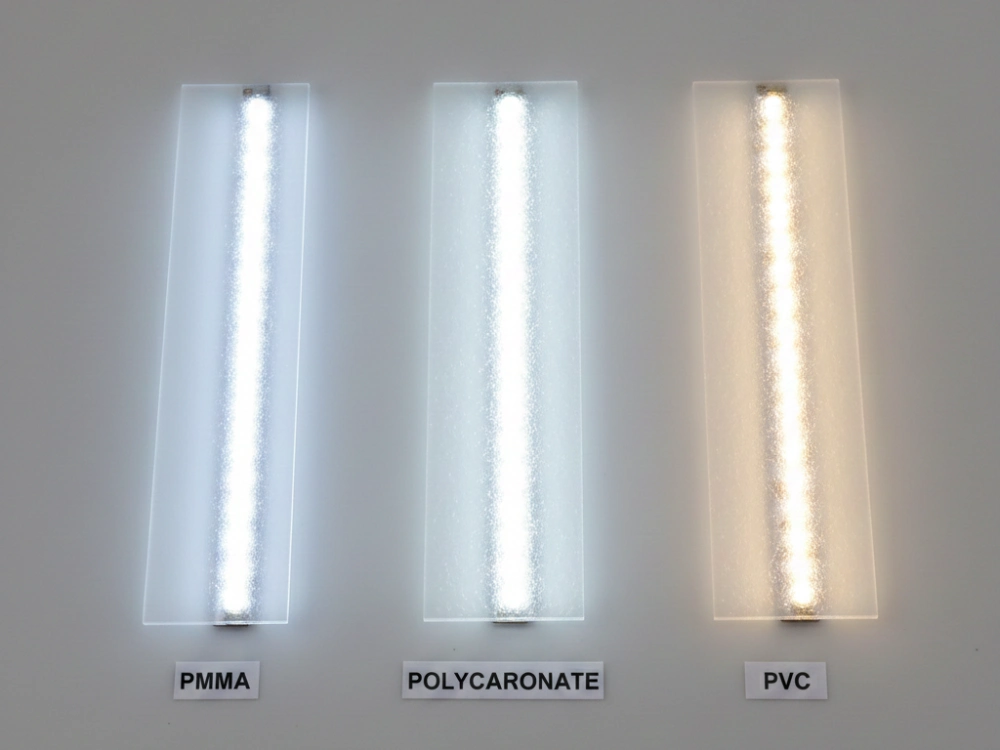
Ma trận so sánh hiệu suất vật liệu
| đặc điểm vật liệu | PMMA (Acrylic) | Polycarbonate (PC) | PVC (tiêu chuẩn) |
| truyền ánh sáng | Cao (~ 92%) | Cao (~88%) | Trung bình (~ 80%) |
| Chống tia cực tím | Tuyệt vời (không vàng) | Tốt (cần thiết cho bộ ổn định) | nghèo (vàng trong 1–2 năm) |
| Chống va đập | trung bình | cực cao | thấp kém |
| Ứng dụng tốt nhất | Kiến trúc / Bán lẻ | Không gian công cộng / ngoài trời | Ngân sách / tạm thời |
PMMA, thường được gọi là acrylic, được coi là vật liệu tốt nhất cho độ rõ quang học. Nó cung cấp khả năng truyền ánh sáng tuyệt vời và khả năng chống vàng mạnh do tia cực tím, làm cho nó lý tưởng cho ánh sáng kiến trúc và bán lẻ, nơi tính nhất quán trực quan quan trọng theo thời gian.
Polycarbonate cung cấp khả năng chống va đập vượt trội và thường được chọn cho không gian công cộng hoặc lắp đặt nơi có độ bền cơ học là rất quan trọng. Tuy nhiên, PC thường yêu cầu chất ổn định UV để sử dụng ngoài trời và có độ rõ quang học thấp hơn một chút so với PMMA.
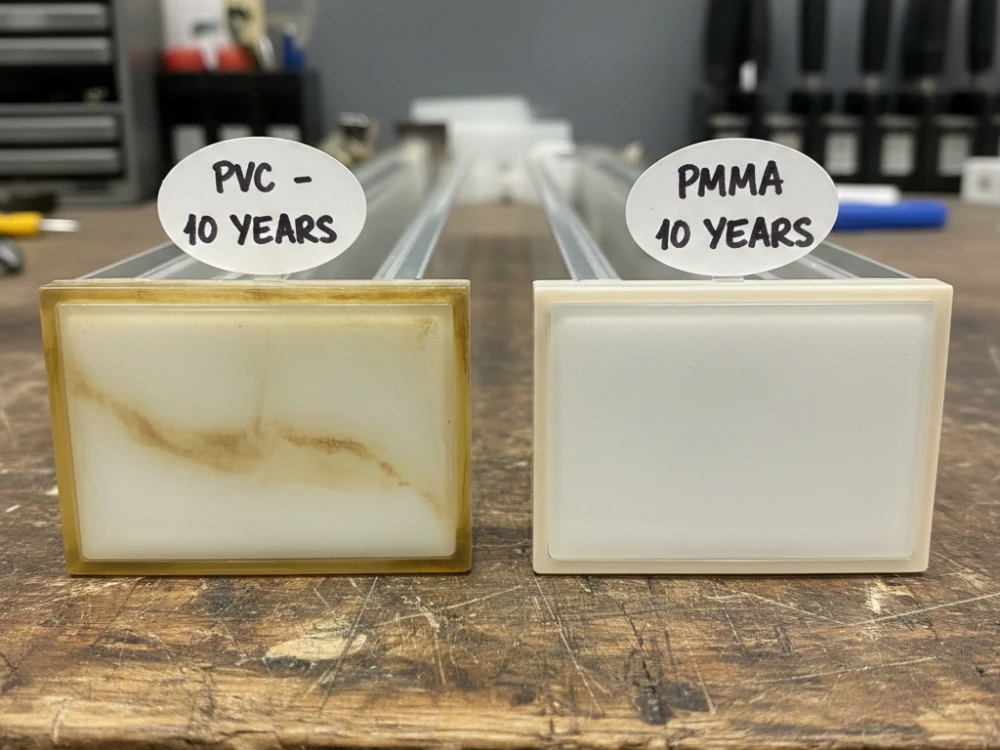
Máy khuếch tán PVC chủ yếu là giải pháp định hướng chi phí. Mặc dù có thể chấp nhận được đối với các dự án tạm thời hoặc ngân sách thấp, PVC chưa được xử lý có xu hướng giảm dưới ánh sáng tia cực tím, dẫn đến hiện tượng ố vàng có thể nhìn thấy và giảm chất lượng ánh sáng.
Theo dữ liệu từ nghiên cứu ngành nhựa, PMMA có thể duy trì độ trong suốt hơn mười năm, trong khi PVC không được xử lý có thể cho thấy sự đổi màu đáng kể trong vòng hai năm sau khi tiếp xúc với tia cực tím.
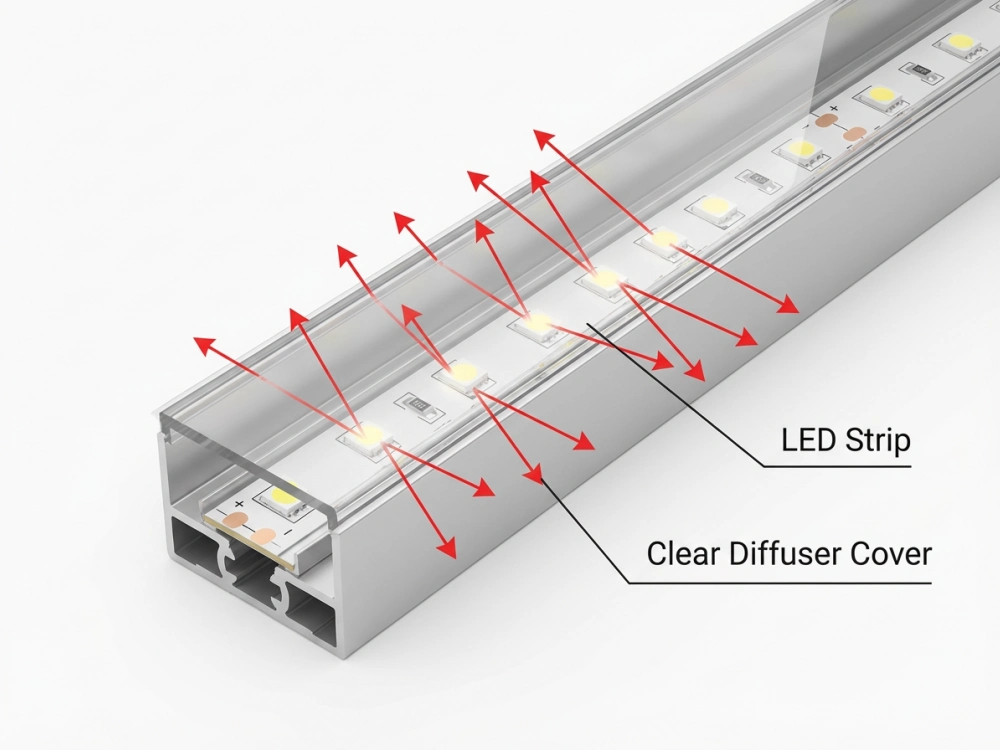
Bao da khuếch tán rõ ràng: Độ sáng tối đa, điểm sáng nhìn thấy
Nắp bộ khuếch tán LED rõ ràng được thiết kế để bảo quản đầu ra sáng nhất có thể. Chúng giới thiệu nhiễu quang học tối thiểu và thường được chọn khi độ sáng là mục tiêu chính.
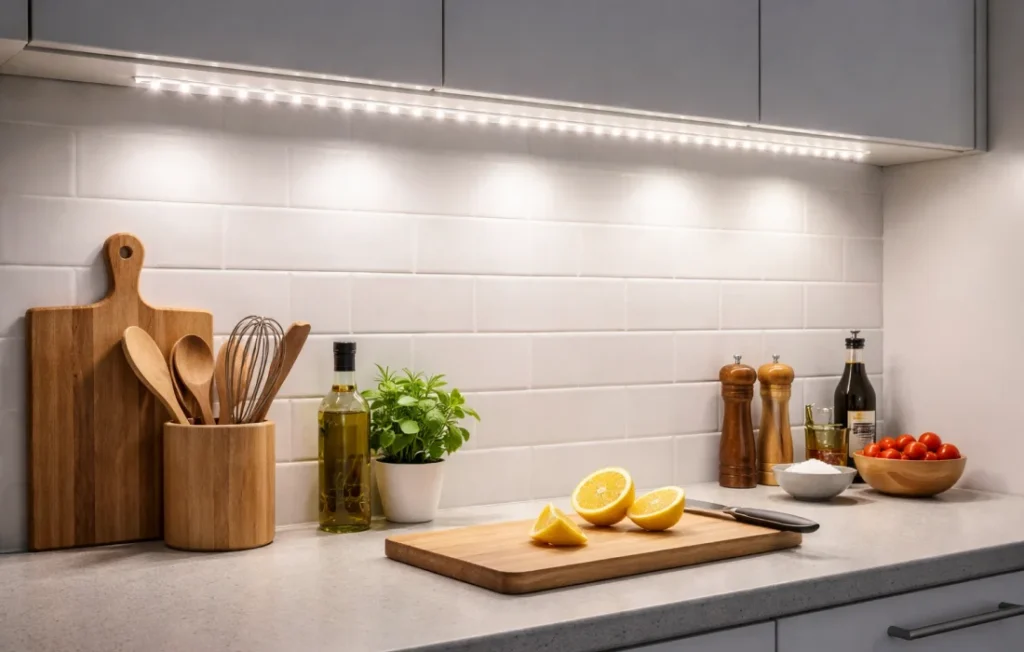
Khi nào nên sử dụng đèn LED trong suốt lột trần truồng người làm khuếch tán
Bộ khuếch tán rõ ràng phù hợp nhất cho các ứng dụng mà hiệu quả ánh sáng vượt trội hơn độ mềm thị giác. Các trường hợp sử dụng điển hình bao gồm chiếu sáng chức năng, chiếu sáng tác vụ và chiếu sáng hiển thị trong đó các điểm LED có thể chấp nhận được hoặc thậm chí mong muốn.
Với mức mất ánh sáng ước tính dưới mười phần trăm, các nắp đậy trong suốt cung cấp sản lượng lumen cao nhất trong số tất cả các loại bộ khuếch tán.
Ưu và nhược điểm của bộ khuếch tán rõ ràng
Ưu điểm bao gồm hiệu quả cao, chiếu sáng sắc nét và tổn thất truyền tải tối thiểu. Tuy nhiên, bộ khuếch tán rõ ràng không che giấu các điểm LED riêng lẻ, đặc biệt là khi được sử dụng với dải LED mật độ thấp hoặc các kênh nông. Lóa cũng có thể trở thành một vấn đề trong cài đặt xem trực tiếp.
Các tổ chức tiêu chuẩn chiếu sáng nhấn mạnh rằng tổn thất truyền tải là một yếu tố quan trọng trong thiết kế chiếu sáng, điều này giải thích tại sao bộ khuếch tán rõ ràng được ưu tiên khi đầu ra lumen thô được ưu tiên.
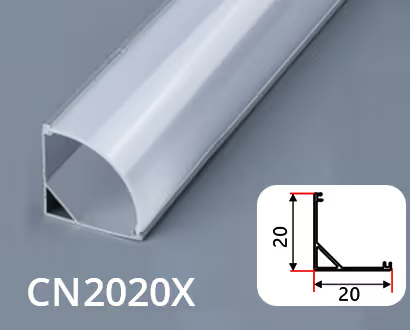
Hồ sơ nhôm góc
Trọng lượng: 0.087kg
Độ dày: 0.8mm
Màu PC: rõ ràng
Kích thước: L1000 * W20 * H20mm
Mũ/clip cuối: 1 cặp/m
Aluminiu Màu sắc: Bạc/Đen
Đối với ánh sáng tác vụ dưới tủ, nơi có độ sáng là chính, hãy sử dụng bộ khuếch tán rõ ràng với Kênh hình chữ V góc để hướng ánh sáng chính xác nơi bạn làm việc.
Bao gồm máy khuếch tán Milky: sự lựa chọn tốt nhất cho ánh sáng không có chấm
Bộ khuếch tán ánh sáng dải LED màu sữa là lựa chọn phổ biến nhất cho các kênh dải LED, đặc biệt là trong ánh sáng kiến trúc và trang trí. Ưu điểm chính của họ nằm ở khả năng tán xạ ánh sáng và giảm các điểm nóng có thể nhìn thấy được.
Tại sao sữa dắt nốt thứ hai trongngười làm nón nốt đôvượt qua được ưu tiên cho các kênh dải LED
Milky bao gồm sự khuếch tán ánh sáng và hiệu quả. Bằng cách tán xạ ánh sáng trong khoang kênh, chúng làm mềm chùm tia và giảm đáng kể khả năng hiển thị điểm. Điều này làm cho chúng lý tưởng cho ánh sáng gián tiếp, vịnh nhỏ, trần nhà và các ứng dụng kiến trúc tuyến tính.
Tuy nhiên, riêng bộ khuếch tán không đảm bảo một sự xuất hiện không tì vết. Độ sâu kênh và mật độ LED đóng vai trò quan trọng như nhau.
Bí mật không tì vết: tỷ lệ giữa độ sâu và mật độ LED
Ánh sáng không có chấm phụ thuộc vào mối quan hệ giữa độ cao của dải LED và khoảng cách khuếch tán. Khoảng cách giữa nguồn LED và bề mặt khuếch tán càng lớn thì ánh sáng có thể lan tỏa đều hơn.
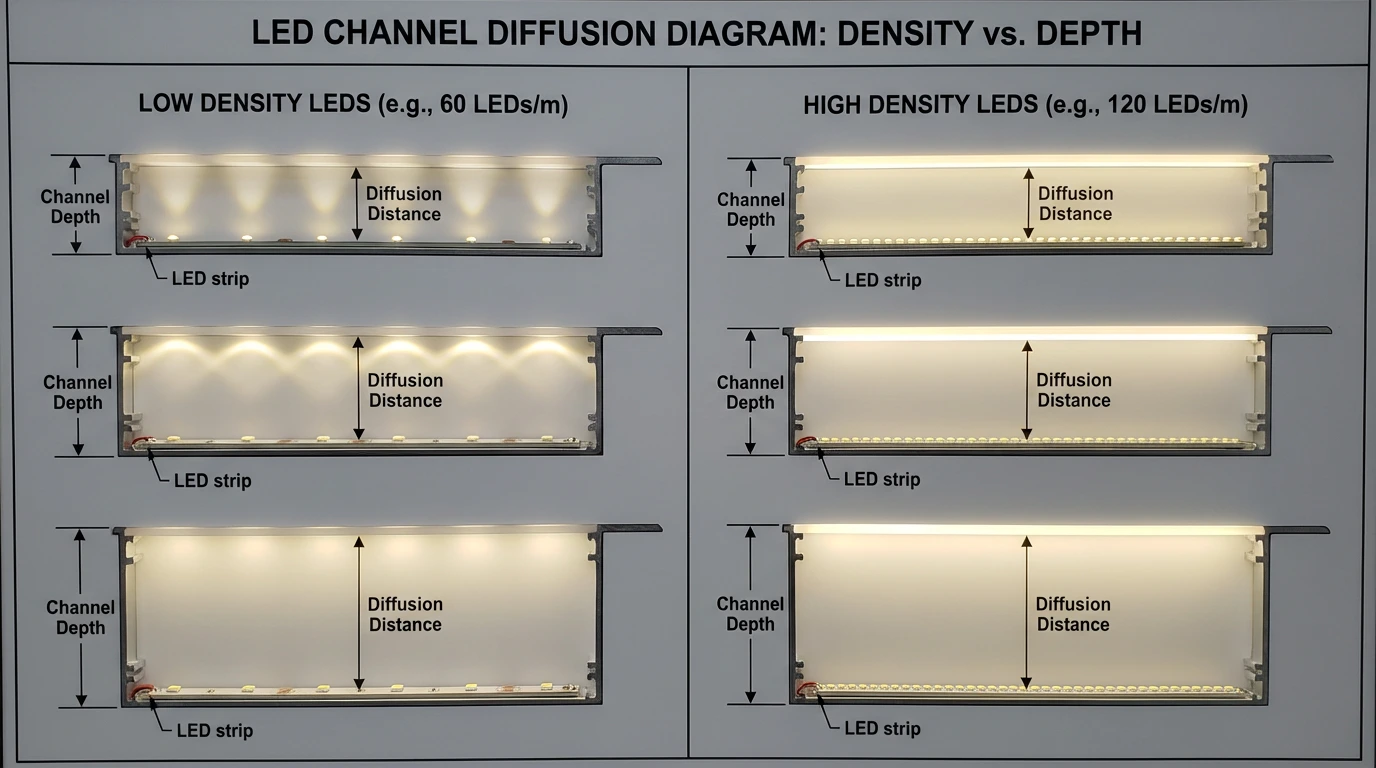
Bảng tham chiếu khoảng cách không tì vết
| mật độ dải LED | mẫu | Tối thiểu. Độ sâu kênh cho hiệu ứng không tì vết (bìa sữa) |
| 30 đèn LED / m | SMD tiêu chuẩn | > 20 mm (l sâu) |
| 60 đèn LED / m | SMD tiêu chuẩn | > 12–15 mm |
| 120 đèn LED / m | SMD mật độ cao | > 7–10 mm |
| Dải đèn LED COB | sán trên tàu | > 3–5 mm |
Bảng này nêu bật lý do tại sao dải đèn LED COB ngày càng phổ biến trong ánh sáng tuyến tính. Mật độ LED cực cao của chúng cho phép chiếu sáng đồng đều ngay cả trong các kênh siêu mỏng.
Máy khuếch tán Milky và dải LED COB: Sự kết hợp lý tưởng
Khi được ghép nối với dải đèn LED COB, bộ khuếch tán màu sữa có thể đạt được dòng ánh sáng giống như đèn neon, với độ sâu kênh tối thiểu. Sự kết hợp này được sử dụng rộng rãi trong các dự án dân cư, khách sạn và thương mại cao cấp, nơi mà sự thoải mái về thị giác là rất quan trọng.
Bao phủ khuếch tán màu đen: Khi thẩm mỹ quan trọng hơn độ sáng
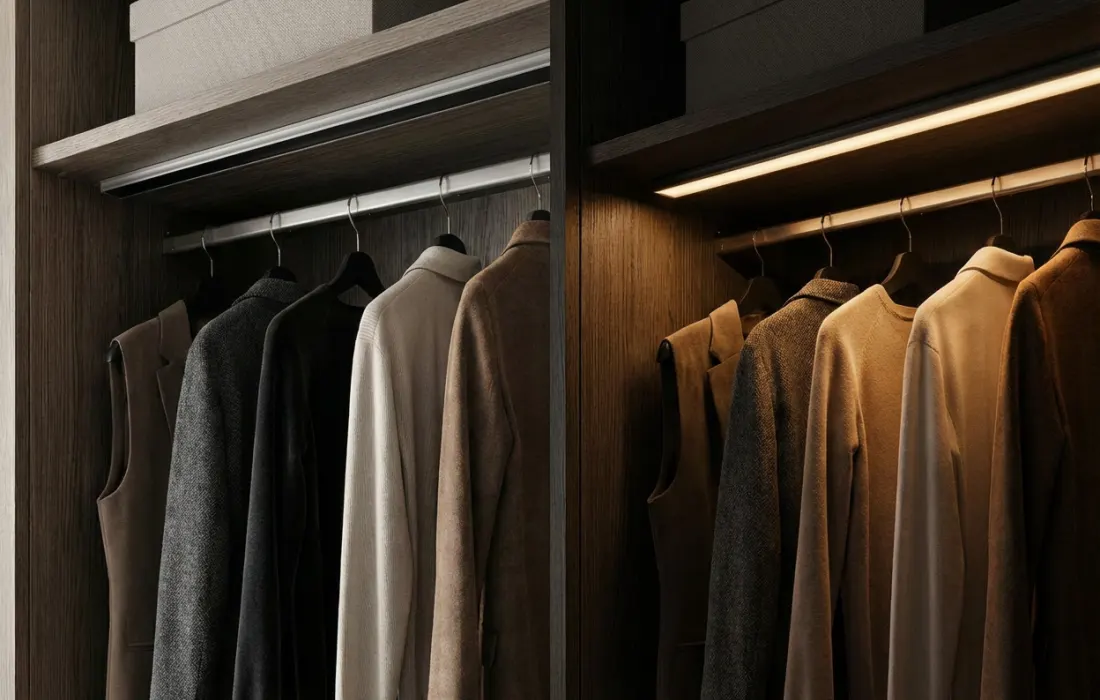
Nắp máy khuếch tán màu đen hoàn toàn phục vụ một mục đích khác. Thay vì tối đa hóa sản lượng ánh sáng, chúng tập trung vào tích hợp trực quan và bầu không khí.
Đèn LED màu đen là gì Ánh sáng Bìa khuếch tán
Máy khuếch tán màu đen có vẻ tối hoặc mờ khi đèn tắt, cho phép kênh hòa quyện liền mạch vào trần nhà hoặc tường. Khi được chiếu sáng, chúng phát ra ánh sáng mềm mại, có kiểm soát hơn là một chùm tuyến tính sáng.
Ứng dụng của bộ khuếch tán màu đen trong chiếu sáng kiến trúc
Bìa đen thường được sử dụng trong các khách sạn, bán lẻ sang trọng, quán bar và nội thất dân cư hiện đại. Chúng lý tưởng cho ánh sáng tâm trạng, ánh sáng điểm nhấn và không gian nơi đồ đạc nên giữ kín thị giác.
Mặc dù tổn thất ánh sáng có thể đạt từ sáu mươi đến bảy mươi phần trăm, nhưng sự đánh đổi này là có chủ đích và phù hợp với các mục tiêu chiếu sáng xung quanh.
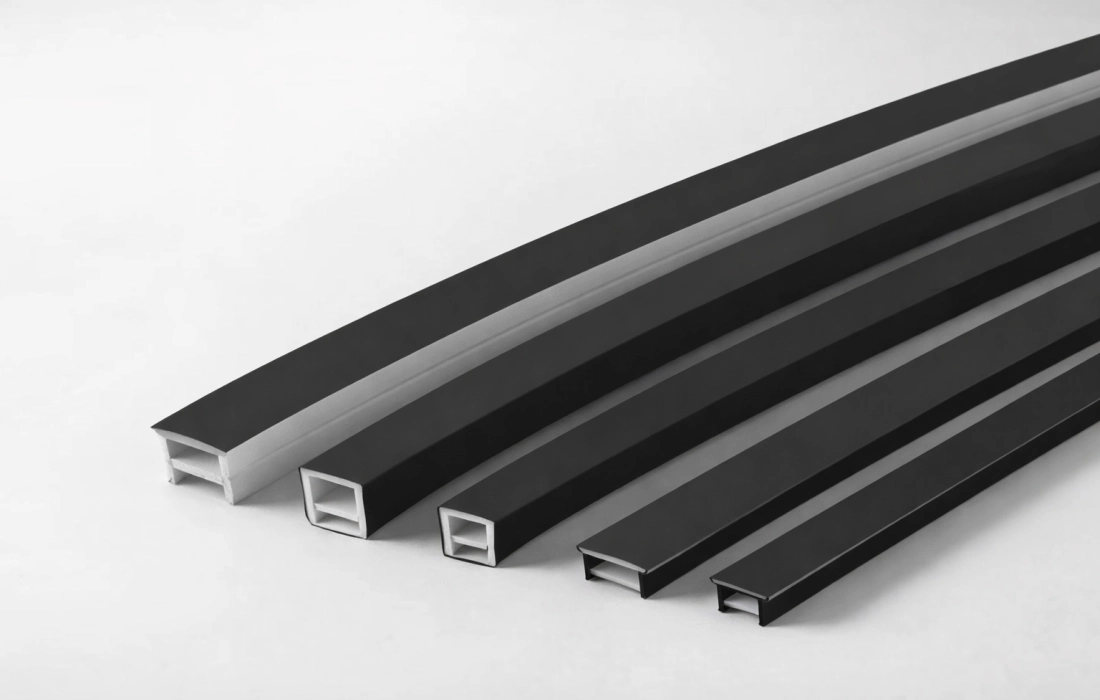
Kênh dải LED linh hoạt
Tổng chiều dài: 1m/3m/5m
Hướng sáng: ánh sáng phía trước
Số lượng đèn LED: 30LED / M và hơn thế nữa
Màu sắc: Đen
Kích thước phần: T1212/T1616/T2010/T2014/T2020/T2520
Chiều rộng PCB: 7mm - 20mm
Góc chùm: 120 độ
Chất liệu: Silicone
Chống nước: IP65/IP67/IP68
Nguồn sáng: SMD2835/5050, dải đèn LED COB
Đối với các phòng chiếu phim hoặc nội thất theo chủ đề tối, các kênh bạc tiêu chuẩn có thể gây mất tập trung. của chúng tôi Hồ sơ phiên bản màu đen biến mất vào nền khi tắt.
Clear vs Milky vs Black Diffusers: So sánh song song
Ma trận so sánh cuối cùng
Chọn vỏ phù hợp là sự cân bằng giữa sản lượng lumen (độ sáng) và khuếch tán ánh sáng (độ mịn). Sử dụng bảng này để tìm số dư của bạn:
| làm nổi | Bộ khuếch tán rõ ràng (trong suốt) | máy khuếch tán sữa (Opal / Frost) | máy khuếch tán màu đen (hút thuốc) |
| truyền ánh sáng | 90% - 95% | 70% - 85% | 30% - 40% |
| Dot | Cao (Chip LED hiển thị đầy đủ) | Thấp đến không (tùy theo độ sâu) | Zero (hoàn toàn ẩn) |
| Sự thay đổi nhiệt độ màu | Không (CCT gốc) | Hơi ấm (-100k đến -200k) | tối đáng kể |
| Kiểm soát chói | tối thiểu | Tuyệt vời (làm mềm ánh sáng) | Cao (chiếu sáng tâm trạng) |
| Thẩm mỹ (tắt) | Dải bên trong có thể nhìn thấy | Làm sạch bề mặt trắng | Kết thúc màu đen tàng hình |
| Ứng dụng tốt nhất | dưới tủ, ánh sáng cove, tiện ích gián tiếp | Đường nét kiến trúc, xem trực tiếp, văn phòng | Rạp chiếu phim, quầy bar, trang trí theo chủ đề tối |
Phân tích hiệu ứng hình ảnh
Bìa rõ ràng (vua hiệu quả): Tốt nhất cho Ứng dụng chiếu sáng gián tiếp nơi nguồn sáng bị ẩn, chẳng hạn như bên trong một vịnh nhỏ hoặc phía trên tủ. Vì bạn không nhìn thấy trực tiếp các vật cố định, nên việc pixel hóa không thành vấn đề và bạn sẽ nhận được mức độ lux tối đa.
Milky Covers (Tiêu chuẩn chung): Chúng hoạt động như một chất đồng nhất nhẹ. Bằng cách tán xạ chùm sáng, chúng tăng góc chùm tia (thường lên đến 120 độ) và giảm mỏi mắt. Đây là tiêu chuẩn cho các thiết bị chiếu sáng tuyến tính nơi kênh được tiếp xúc.
Bìa đen (lựa chọn của nhà thiết kế): Mặc dù chúng làm giảm hiệu quả phát sáng đáng kể, nhưng chúng không thể so sánh được về độ tương phản và kiểu dáng. Hoàn hảo cho tính thẩm mỹ “đèn tắt” nơi kênh cần hòa vào trần hoặc tường tối.
Các loại cài đặt: Snap-in so với bộ khuếch tán slide-in
Trước khi mua, bạn phải xem xét ở đâu bạn đang cài đặt kênh. Loại nắp sai có thể làm cho việc lắp đặt không thể.
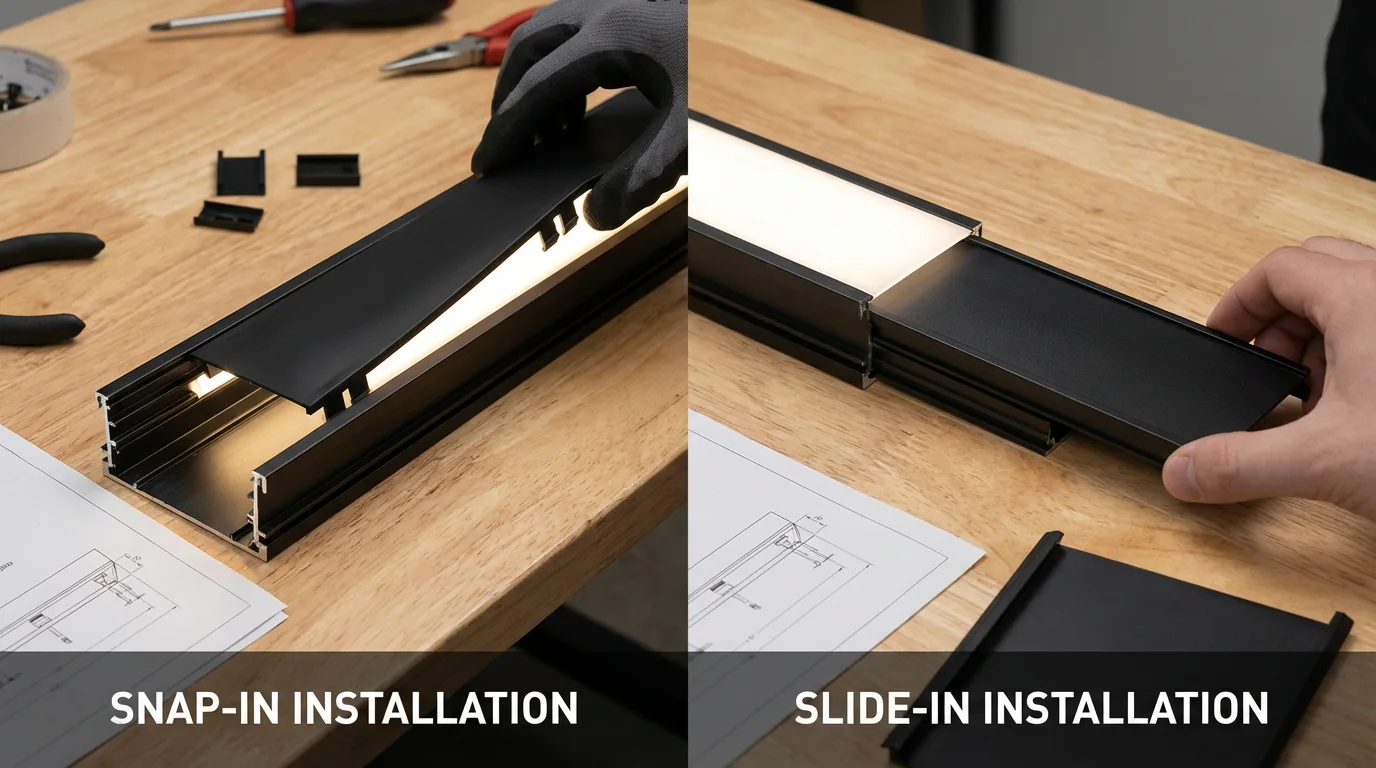
Bộ khuếch tán Snap-in (click-on): sự lựa chọn thân thiện với người dùng
Còn được gọi là nắp đậy vừa vặn, chúng được thiết kế để ép lên kênh nhôm từ phía trước.
- Tốt nhất cho: Cài đặt âm tường hoặc rãnh (như trong tủ quần áo hoặc vách thạch cao) nơi các đầu của kênh bị chặn.
- Ưu điểm: Bảo trì dễ dàng. Nếu dải đèn LED không thành công, bạn có thể chỉ cần bật nắp ra mà không cần tháo toàn bộ vật cố định.
- Cơ chế: Sử dụng các đường gờ nhỏ để “nhấp chuột” vào các cạnh của hồ sơ một cách chắc chắn.
Bộ khuếch tán trượt: Tay cầm an toàn
Chúng phải được chèn từ đầu mở của hồ sơ nhôm và trượt dọc theo toàn bộ chiều dài.
- Tốt nhất cho: Đèn chiếu sáng bị treo hoặc các khu vực có độ rung cao. Cấu trúc thường chặt hơn và chống lại nhiều hơn.
- The Catch: Bạn cần khoảng trống ở cuối. Không sử dụng nắp trượt cho các khe lõm từ tường đến tường, nếu không bạn sẽ không bao giờ lắp được ống kính!

Cách chọn bộ khuếch tán phù hợp cho kênh dải LED của bạn
dùng để chỉ thời Chọn bộ khuếch tán phù hợp cho các kênh LED, làm theo năm bước sau:
- Kiểm tra mật độ đèn LED và loại dải của bạn. Dải mật độ cao hoặc lõi lõi kết hợp tốt nhất với máy khuếch tán màu trắng đục.
- Xác định mục tiêu trực quan của bạn. Chọn Clear cho độ sáng, màu trắng đục cho độ đồng nhất, hoặc màu đen cho bầu không khí.
- đo độ sâu kênh. Các kênh sâu hơn cải thiện sự khuếch tán và giảm các điểm nóng.
- Chọn vật liệu phù hợp. PMMA cung cấp tuổi thọ, PC cung cấp độ bền và PVC nên tránh cho các dự án dài hạn.
- Quyết định loại cài đặt. Nắp đậy giúp đơn giản hóa việc bảo trì, trong khi ống kính trượt vào cung cấp một lớp hoàn thiện sạch hơn.
Máy khuếch tán ngoài trời và không thấm nước: Cân nhắc đặc biệt
Việc lắp đặt ngoài trời các kênh dải LED đòi hỏi nhiều hơn là chỉ chọn một bộ khuếch tán có hiệu suất quang học tốt - chúng cũng yêu cầu xem xét cẩn thận về bảo vệ môi trường, xếp hạng chống thấm nước và các loại dải LED phù hợp. Một bộ khuếch tán LED được lựa chọn tốt sẽ giúp giảm thiểu độ chói và điểm nóng, nhưng trong môi trường bên ngoài hoặc ẩm ướt, xếp hạng bảo vệ IP của hệ thống chiếu sáng và loại dải LED mà bạn kết hợp với nó cũng rất quan trọng để đảm bảo độ tin cậy lâu dài.
Khi lập kế hoạch thiết lập kênh LED ngoài trời, trước tiên hãy đảm bảo bản thân dải đèn LED phù hợp với điều kiện ngoài trời. Các loại dải LED khác nhau có mức độ chống thấm và chống chịu môi trường khác nhau, và việc chọn loại phù hợp sẽ bảo vệ cả hiệu suất và tuổi thọ. Bạn có thể xem xét sự khác biệt giữa các biến thể dải LED và cách chúng liên quan đến các tình huống sử dụng trong này Các loại dải LED là gì trang tham khảo.
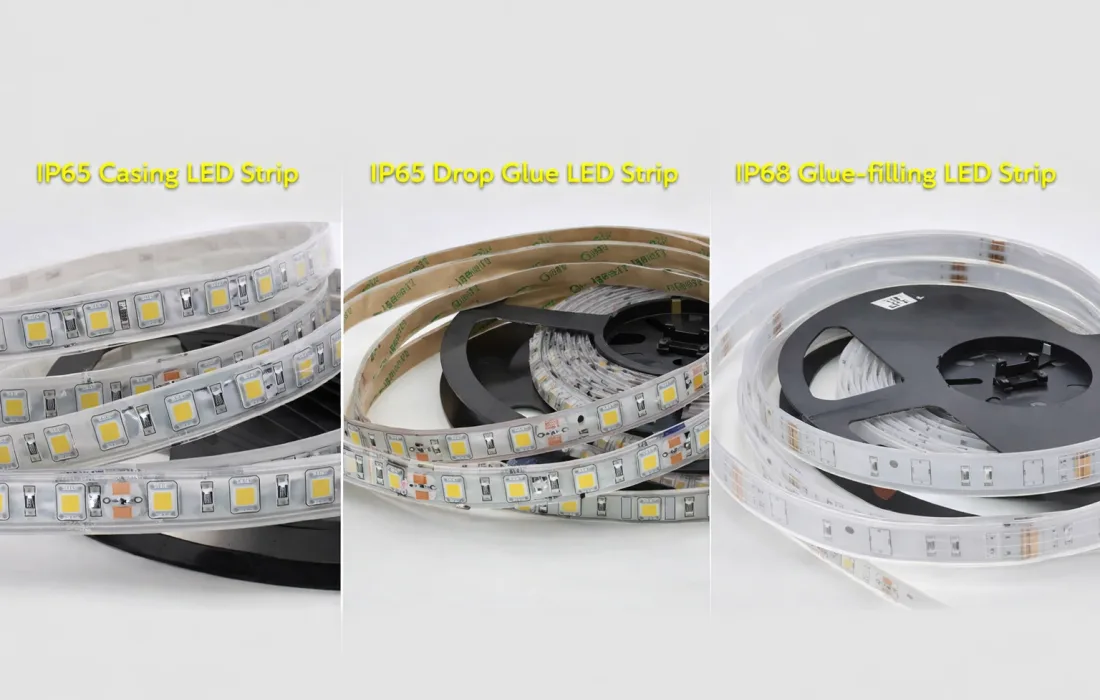
Về mặt chống nước và bụi, dải LED và bộ khuếch tán lý tưởng nên đáp ứng xếp hạng IP65 trở lên. Theo Hướng dẫn về xếp hạng IP chống nước của đèn LED Strip, xếp hạng IP65 bảo vệ chống lại tia nước áp suất thấp và mưa nhẹ, làm cho chúng phù hợp cho trang trí ngoài trời nói chung và lắp đặt bán phơi sáng; IP67 cung cấp bảo vệ chống ngâm lên đến 1 mét trong thời gian ngắn; và xếp hạng IP68 hỗ trợ sử dụng dưới nước kéo dài, chẳng hạn như trong hồ bơi hoặc đài phun nước.
Đối với bộ khuếch tán kênh và dải đèn LED hoạt động cùng nhau ngoài trời, hãy lưu ý đến việc niêm phong ảnh hưởng đến việc tản nhiệt như thế nào. Một hệ thống chống thấm hoàn toàn có thể cản trở sự thoát nhiệt, do đó ảnh hưởng đến nhiệt độ mối nối LED và tuổi thọ tổng thể. Tích hợp các kênh nhôm với bộ khuếch tán chống thấm nước phù hợp giúp cân bằng bảo vệ và quản lý nhiệt.
Trong thực tế, hãy xem xét việc kết hợp các dải LED chống thấm nước với bộ khuếch tán mạnh mẽ và các kênh được đánh giá cho các điều kiện ngoài trời. Ghép nối các dải được đánh giá ngoài trời với bộ khuếch tán IP65 + bên trong các kênh nhôm được niêm phong đúng cách không chỉ ngăn chặn sự xâm nhập của độ ẩm mà còn hỗ trợ hiệu suất nhất quán trong các điều kiện thời tiết thay đổi.
Những sai lầm thường gặp khi chọn đèn LED khuếch tán chổ núp
Sai lầm #1: Bẫy “điểm nóng” (độ sâu nông + mật độ thấp)
Sử dụng một bề mặt nông (ví dụ: chiều cao 6mm) với dải đèn LED / m tiêu chuẩn 60 sẽ đảm bảo các chấm có thể nhìn thấy được, ngay cả khi có nắp màu trắng đục.
sửa chữa: Sử dụng dải đèn LED COB hoặc một biên dạng sâu (chiều sâu tối thiểu 15mm) để đảm bảo các chùm ánh sáng chồng lên nhau trước khi chạm vào ống kính.
Sai lầm #2: Bỏ qua sự suy thoái của tia cực tím (hiệu ứng "vàng")
Mua máy khuếch tán rẻ nhất thường có nghĩa là nó được làm bằng nhựa thông thường không có chất ổn định tia cực tím. Trong nhà gần cửa sổ hoặc ngoài trời, chúng sẽ chuyển sang màu vàng và giòn trong vòng vài tháng.
sửa chữa: Luôn chỉ định các nắp PMMA ổn định UV (acrylic) hoặc polycarbonate để tồn tại lâu dài.
Sai lầm #3: Quên dung sai nắp cuối
Máy khuếch tán có thể mở rộng và co lại với nhiệt (sự giãn nở nhiệt). Việc cắt bộ khuếch tán theo chiều dài chính xác với kênh nhôm đôi khi có thể gây ra hiện tượng vênh.
sửa chữa: Để lại khoảng cách 1-2mm hoặc đảm bảo các nắp cuối được thiết kế để giữ bộ khuếch tán cụ thể.
Tùy chọn khuếch tán tùy chỉnh cho các kênh dải LED nhôm
Chiều dài tiêu chuẩn 1 mét hoặc 2 mét không phải lúc nào cũng đủ cho các dự án chuyên nghiệp. Đây là nơi hợp tác với một nhà sản xuất chuyên biệt như Signiteled làm tăng giá trị.
Chúng tôi cung cấp các giải pháp đặt phòng cho nhu cầu chiếu sáng thương mại và kiến trúc:
- Chiều dài tùy chỉnh: Cần chạy liên tục từ 3 mét trở lên mà không có đường nối? SigniLited có thể đùn chiều dài tùy chỉnh để giảm thiểu rò rỉ ánh sáng và các điểm kết nối.
- Độ mờ phù hợp: Đối với các dự án OEM, chúng tôi có thể điều chỉnh hỗn hợp khuếch tán của các nắp PMMA của chúng tôi — tạo ra sự cân bằng hoàn hảo giữa việc ẩn các chấm LED và tối đa hóa việc truyền ánh sáng cho dải đèn LED cụ thể của bạn.
- Lựa chọn vật liệu: Chọn giữa polycarbonate (PC) có tác động mạnh cho các lối đi công cộng hoặc PMMA cấp quang học để có độ rõ chất lượng bảo tàng.
- Hoàn thành kết hợp hệ thống: Đừng đoán xem vỏ có phù hợp không. Signiteled cung cấp các hệ thống tích hợp đầy đủ, đảm bảo tản nhiệt bằng nhôm, ống kính khuếch tán và các phụ kiện gắn kết hoạt động hài hòa hoàn hảo.
hỏi Ẩn
Suy nghĩ cuối cùng
Lựa chọn bộ khuếch tán là một trong những khía cạnh được đánh giá thấp nhất của thiết kế chiếu sáng dải LED. Bằng cách hiểu sự khác biệt giữa các tấm bìa rõ ràng, màu trắng đục và đen, cùng với khoa học vật liệu, độ sâu kênh và phương pháp lắp đặt, bạn có thể đạt được kết quả chiếu sáng vừa được tinh chỉnh vừa được tinh chỉnh về mặt kỹ thuật và kỹ thuật.
Một bộ khuếch tán được lựa chọn tốt chuyển đổi một kênh dải LED từ một nhà ở đơn giản thành một giải pháp chiếu sáng chuyên nghiệp đáp ứng các tiêu chuẩn kiến trúc hiện đại.
Bài viết liên quan