English
  简体中文
简体中文  Deutsch
  Español
  Français
  Italiano
  日本語
日本語  한국어
한국어  Polski
  Português
  Русский
  Türkçe
  Nederlands
  Tiếng Việt
  ไทย
ไทย 
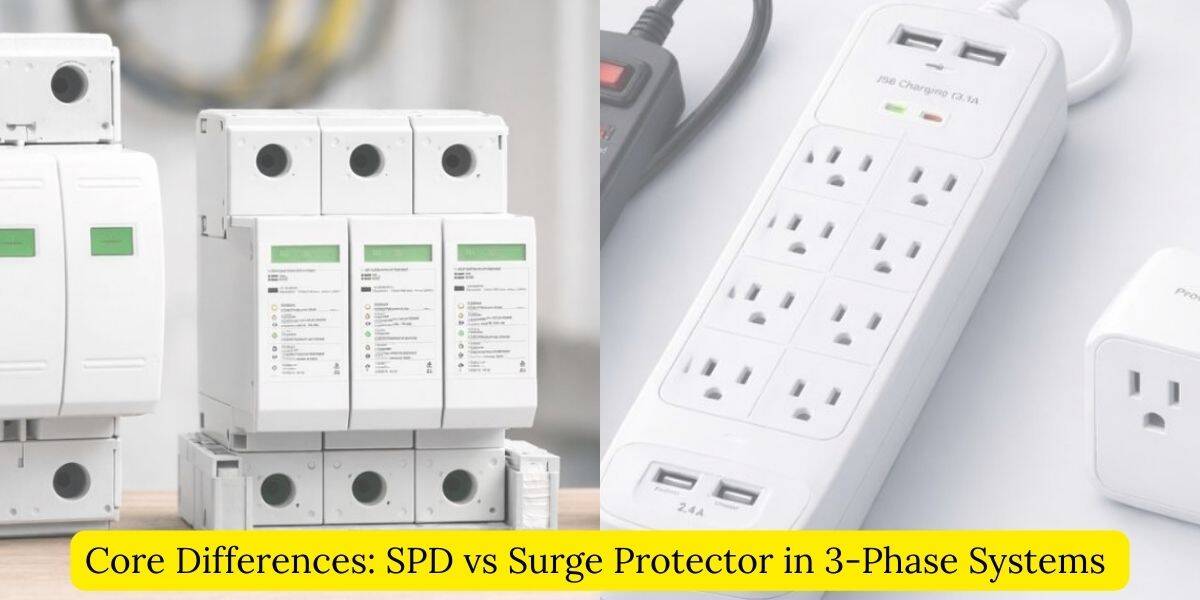
The main difference is scope and installation: SPDs protect the electrical system at panel level (including key 3-phase surge modes like L–L and L–G), while surge protectors protect one device at the endpoint.
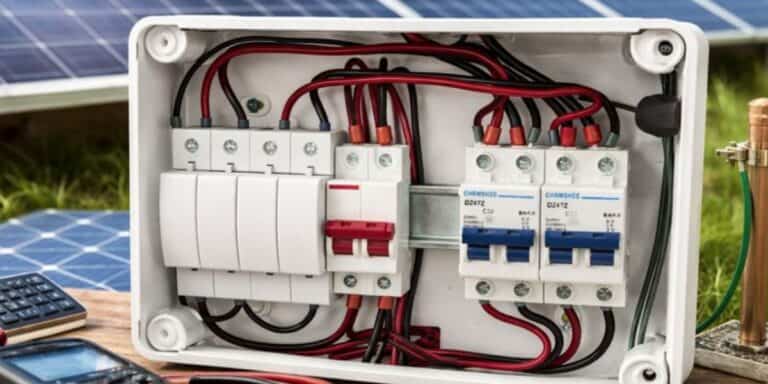
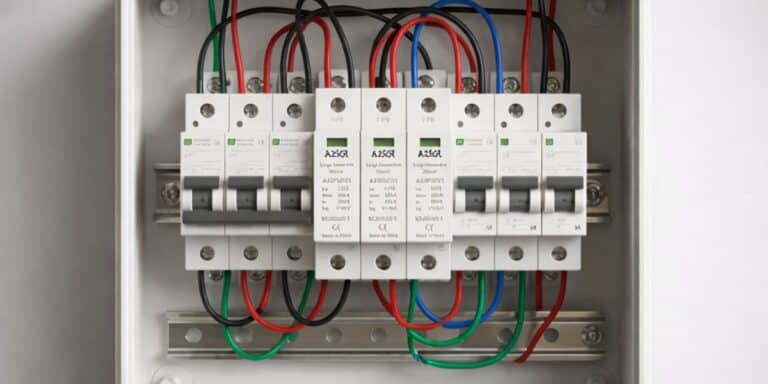
In 3-phase systems, a surge protective device (SPD) is typically a hardwired, panel-mounted device installed at the service entrance or distribution panels to protect a 3-phase distribution zone by limiting transient overvoltages and diverting surge current.
A “surge protector” usually refers to point-of-use protection near a single load (often plug-in style), which can reduce surges at the equipment terminal but does not protect upstream wiring or the full 3-phase distribution network.
This article will discuss the differences between a surge protective device (SPD) used in 3-phase electrical distribution and a surge protector used for point-of-use equipment protection.
What “Surge Protective Device” Means in 3-Phase Electrical Systems
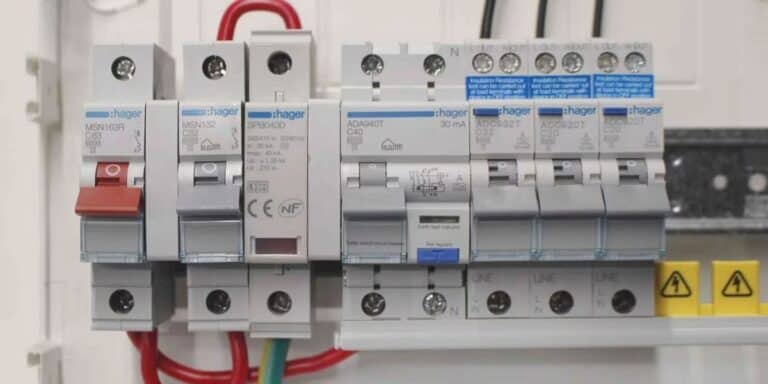
In engineering and electrical distribution practice, a surge protective device is typically a permanently connected protective component installed at the service entrance, main distribution, or downstream panelboards to limit transient overvoltages on the power system.
In a 3-phase context, a panel-mounted SPD is part of the facility’s electrical infrastructure. Its job is not “to protect one device,” but to reduce surge stress across a zone of the electrical system, helping protect multiple downstream circuits and loads.
Panel-mounted / distribution-level protection concept
A distribution SPD is installed at a point where it can intercept surge energy before it propagates deeply into the facility wiring. The SPD provides a low-impedance diversion path during a transient event, limiting the voltage that appears across connected loads.
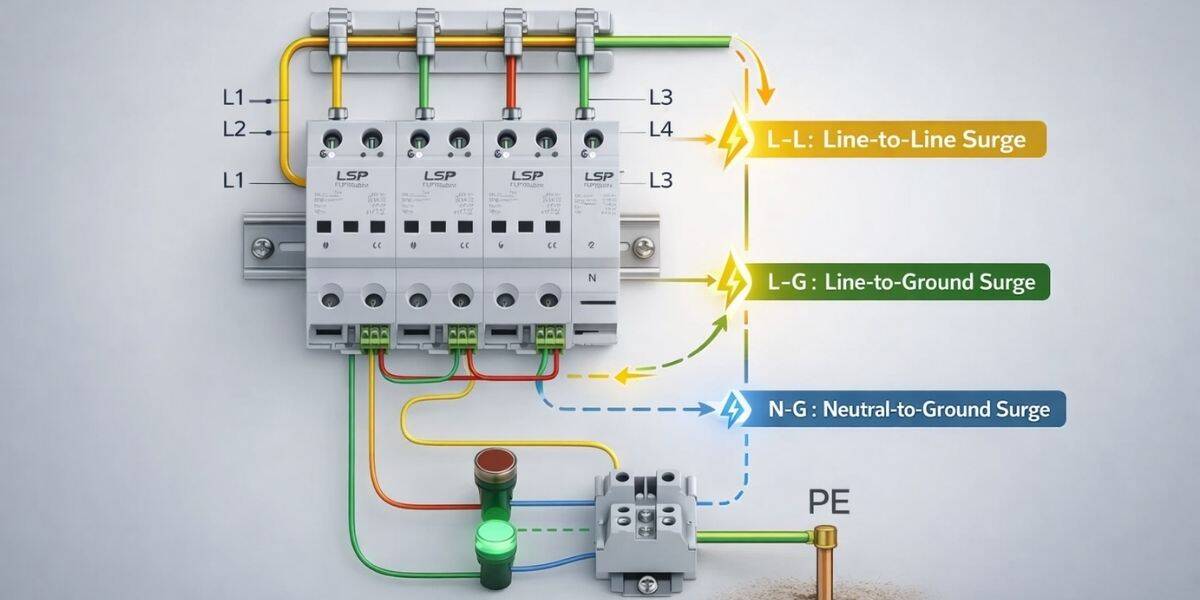
In a typical 3-phase distribution, SPDs are selected and wired to address the relevant surge modes, such as:
- L–G (Line-to-Ground): a phase conductor rising relative to ground
- L–L (Line-to-Line): a voltage spike between two phase conductors
- (Where applicable) N–G (Neutral-to-Ground): especially relevant in systems with a neutral conductor and sensitive loads
The practical effectiveness of an SPD depends strongly on where it is installed, not just what it is called. Two devices with similar internal components can behave very differently depending on panel location, conductor length, bonding quality, and the impedance of the return path.
Why installation location matters more than name
In real installations, the distribution wiring between an SPD and the protected equipment is not “ideal.” It has resistance and inductance. Surges are fast events, so wiring inductance becomes a major factor in what voltage actually reaches equipment terminals.
A panel SPD installed close to the panel bus and bonded correctly can reduce surge stress much more effectively than a device installed farther away with long leads, even if their nominal ratings appear similar on paper.
Short note: 3-phase surge behavior (why it’s different)
In 3-phase systems, surge behavior can include:
Phase-to-phase surges:
Switching events, faults, or coupling effects can create spikes between phases (L1–L2, L2–L3, L1–L3). This matters because some equipment (like drives and power supplies) can be stressed by L–L transients even when L–G looks acceptable.
Grounding system impact:
The grounding and bonding network determines how effectively surge current can be diverted. A high-impedance ground path, poor bonding, or multiple parallel paths can increase residual voltages during surges.
Impedance + lead length effect:
Fast surge currents through wiring inductance create extra voltage drop. Even a high-quality SPD can appear “weak” if it is installed with long conductors or routed poorly.
What People Usually Mean by “Surge Protector”

The term surge protector is widely used as a general label for many different products and installation styles. In everyday language, it often refers to:
- Plug-in power strips with surge suppression
- Point-of-use devices near a specific load
- Small protective modules integrated into equipment power cords
This broad use causes confusion in commercial and industrial 3-phase design because the term does not clearly communicate:
- whether the device is permanently connected or plug-in,
- what surge modes it actually protects (L–L vs L–G),
- whether it is designed for 3-phase topologies,
- how it coordinates with upstream protection.
In other words, “surge protector” is often a consumer-facing or informal term, while spd (surge protective device) is typically used as a system-level engineering term tied to electrical distribution practice, standards, and installation zones.
That does not mean point-of-use devices are “bad” or “useless.” It means the name alone does not tell you enough about suitability for a 3-phase system.
Core Differences: SPD vs Surge Protector in 3-Phase Systems
Comparison Table: Surge Protective Device vs Surge Protector
| Parameter | Surge Protective Device (SPD) | Surge Protector (Common usage) | Practical impact in 3-phase systems |
| Typical installation zone | Service entrance switchboards, distribution panels | Point-of-use near equipment | Determines whether protection is system-wide or localized |
| Primary role | Reduce surge stress across a distribution zone | Protect a specific device or outlet | Affects how much of the system benefits from protection |
| Topology fit | Often designed for 3-phase modes (L–L, L–G, sometimes N–G) | Often single-phase oriented unless specified | Wrong mode coverage can leave L–L surges unmanaged |
| Surge energy exposure | Higher expected exposure, infrastructure-level duty | Typically lower expected exposure | Point-of-use devices may be overstressed without upstream SPD |
| Voltage limiting at equipment | Depends on distance and wiring inductance | Clamps close to the load | Local clamping can help, but doesn’t protect upstream wiring |
| Coordination strategy | Usually part of staged protection | Often the last stage (Type 3 role) | Best results come from coordinated layers, not a single device |
| Monitoring and maintenance | Often includes status and optional remote contacts | Often basic indication | Maintenance visibility matters for facility reliability |
| Replaceability | Frequently serviceable or panel-integrated | Often replaced as a unit | Impacts downtime and maintenance workflow |
1) Installation Location & System Role
A distribution-level SPD is installed at the service entrance, main switchboard, or distribution panels to intercept surge energy before it propagates deeper into the facility wiring. In a 3-phase context, it supports protection across a zone of the electrical system rather than one device only.
A surge protector (in common usage) is typically placed near the equipment or receptacle. This can be helpful for local protection, but it does not automatically protect upstream feeders, panels, or other loads connected to the same 3-phase network.
2) Primary Role (Zone Protection vs Device Protection)
An SPD is part of the facility’s electrical infrastructure. Its purpose is to reduce transient stress across multiple downstream circuits and loads.
A surge protector is usually selected to protect a specific device or outlet. It is a localized solution and may not address the full surge environment of a commercial/industrial 3-phase distribution system.
3) Topology Fit and Surge Modes in 3-Phase Systems
3-phase systems can experience surges in multiple modes, including:
- L–G (Line-to-Ground)
- L–L (Line-to-Line)
- N–G (Neutral-to-Ground) where applicable
A 3-phase SPD is typically selected and wired to address the relevant modes for the system configuration (3-wire vs 4-wire, delta vs wye). Many products called “surge protectors” are single-phase oriented unless explicitly designed for 3-phase, which can lead to incomplete protection (especially for L–L events).
4) Surge Energy Exposure & Duty Cycle
Panel-mounted SPDs generally face higher exposure because they operate at infrastructure level and may handle repeated switching transients plus incoming disturbances over long service periods.
Point-of-use devices are usually intended for smaller, localized transients. If a large surge reaches the load end without upstream staging, point-of-use devices may be forced to absorb more energy than intended.
5) Voltage Limiting at the Equipment Terminals
Point-of-use protection can clamp closer to the equipment, which may help reduce residual voltage at the device terminals.
However, distribution-level SPDs reduce surge energy earlier in the system, which can lower stress across panels, feeders, and multiple downstream circuits. In 3-phase facilities, the best performance typically comes from staged protection rather than relying on only one protection location.
6) Monitoring, Maintenance & Replaceability
Commercial and industrial installations often require maintainability and visibility. Distribution-level SPDs frequently include status indication and optional remote signaling contacts to support maintenance planning.
Point-of-use devices often provide basic indicators and are treated as replaceable accessories rather than infrastructure components.
SPD Types in 3-Phase Systems
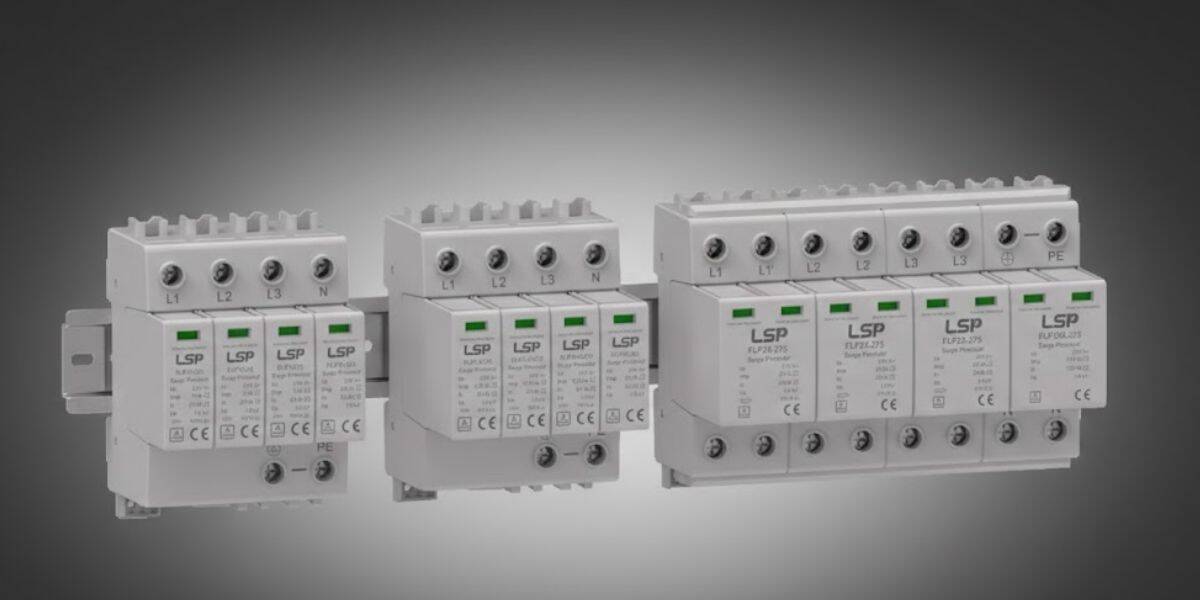
The term spd types typically refers to installation categories that indicate where and how an SPD is applied within the power system. In 3-phase systems, the type affects exposure level and coordination.
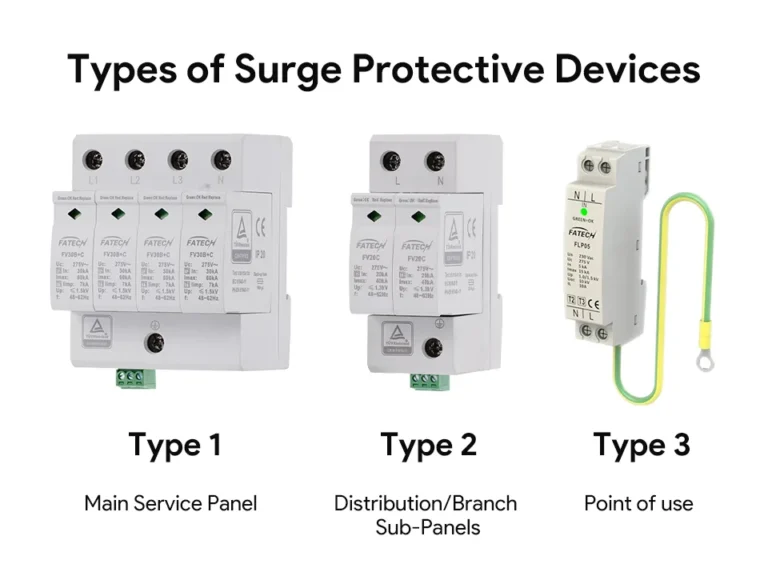
Type 1 surge protection device
A type 1 surge protection device is generally used at the service entrance side and is intended to handle higher-energy events at or near the source of incoming power disturbances. It helps reduce surge energy entering the facility.
What it does not replace:
It does not eliminate the need for downstream protection in large facilities, because wiring distances and internal switching can still generate damaging transients deeper in the system.
Type 2 surge protection device
A type 2 surge protection device is commonly installed in distribution panels and subpanels. In many 3-phase buildings, this is the most common “workhorse” layer because it sits close to branch circuits and loads.
Why it’s common in panels:
It offers practical protection at distribution points where internal switching surges and downstream equipment interactions are frequent.
Type 3 surge protection device
A type 3 surge protection device is typically used at the equipment level or point-of-use. It is usually most effective when it is coordinated with upstream Type 1 and/or Type 2 protection.
Dependency on upstream protection:
In 3-phase systems, a Type 3 device alone may be exposed to more energy than intended if there is no upstream SPD to reduce surge magnitude first.
Selection Guidance for a 3 Phase Surge Protective Device
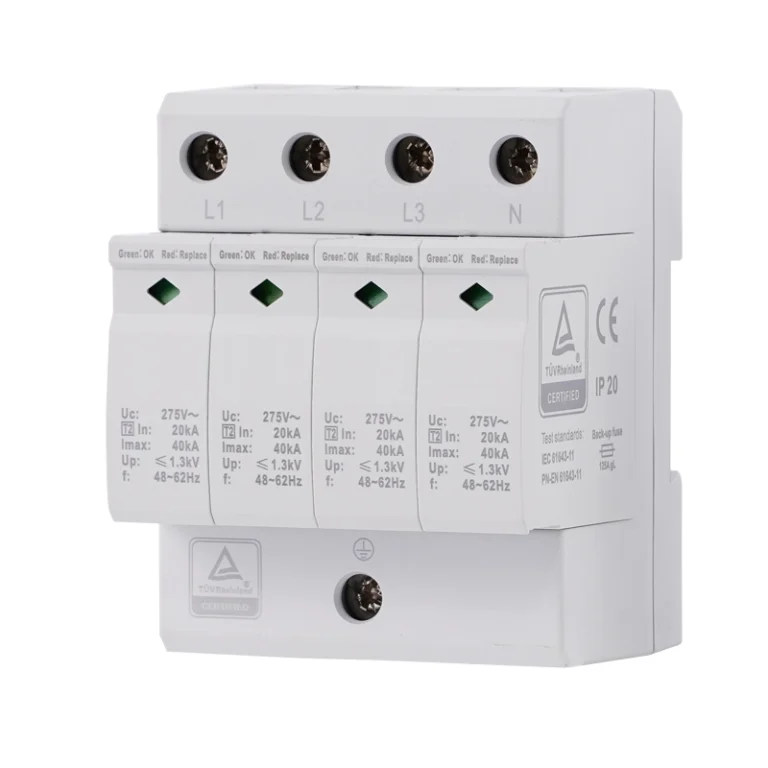
- FDS20C/4-275 Class II
- Designation: Type2
- Classification: Class II
- Protection mode: L→PE , N→PE
- Nominal Voltage Un: 230 Vac/50(60)Hz
- Max. continuous operating voltage Uc (L-N): 275 Vac/50(60)Hz
- Short-circuit withstand capability: 20 kA
- Continuous operating current Ic: <20 µA
- Standby power consumption Pc: ≤25 mVA
- Max discharge current (8/20μs) Imax: 40 kA
- Nominal discharge current (8/20μs) In: 20 kA
- Voltage protective level Up: ≤1.3 kV
- Isolation resistance: >1000 MΩ
- Housing material: UL94V-0
- Degree of protection: IP20
Engineers typically select a 3 phase surge protective device based on the system’s electrical configuration, expected surge environment, and how protection will be coordinated across zones.
Key engineering inputs
System voltage and configuration:
Selection must match the actual system (3-wire vs 4-wire, delta vs wye). A mismatch can lead to ineffective protection modes or improper operation.
Installation zone:
Service entrance protection targets incoming surges. Distribution protection targets internal and downstream exposure. Equipment-level protection targets sensitive loads.
Grounding arrangement compatibility:
The grounding method influences which modes matter most and how surge current returns. Poor bonding can increase residual voltage regardless of device rating.
Coordination strategy (staged protection):
Rather than expecting one device to cover everything, engineers often apply staged protection so each layer handles what it is best suited for.
Selection checks (max 6 bullets):
- Confirm system topology (3-wire/4-wire, delta/wye) and required protection modes
- Choose installation zone (service entrance, distribution panel, equipment level)
- Verify voltage rating compatibility with the system’s nominal and tolerance range
- Check monitoring needs (local indication vs remote contacts for alarms)
- Plan for short, direct conductor routing to minimize lead inductance
- Coordinate upstream/downstream devices so energy is shared appropriately
Common Mistakes in 3-Phase Surge Protection
Even good hardware can underperform if applied incorrectly. Common mistakes in 3-phase installations include:
- Wrong placement or long leads: installing the SPD far from the bus or routing conductors with unnecessary length increases residual voltage.
- Assuming one device protects the whole facility: large sites often need staged protection at multiple distribution points.
- Using point-of-use protection without upstream coordination: equipment-level devices may be overstressed if upstream surge energy is not reduced.
- Ignoring bonding/grounding quality: poor bonding increases impedance and raises the voltage seen by equipment during a surge.
- Selecting without matching system topology: protection modes must fit the actual 3-phase configuration (3-wire vs 4-wire, delta vs wye).
Why This Difference Matters for OEM 3-Phase Projects
In OEM 3-phase panel projects, the SPD choice is often driven by practical integration constraints rather than generic product labels. Engineers may require specific mounting formats, wiring modes (L–L, L–G, and neutral handling where applicable), monitoring contacts for control systems, and enclosure or thermal constraints. In such cases, factory manufacturing and China-based OEM customization support can be relevant for meeting project-specific electrical and mechanical requirements without changing the intended protection strategy.
Conclusion
In 3-phase systems, a Surge Protective Device (SPD) is typically a distribution-level component installed in panels or switchboards to reduce transient stress across sections of the electrical system. The term surge protector is broader and often refers to point-of-use protection, which can help at specific equipment terminals but may not address system-level exposure.
For 3-phase environments, correct placement, topology matching, and coordinated staged protection usually matter more than the label. A well-designed surge strategy treats protection as a system engineering task, not a single-device decision.
FAQs
Related Posts