English
  简体中文
简体中文  Deutsch
  Español
  Français
  Italiano
  日本語
日本語  한국어
한국어  Polski
  Português
  Русский
  Türkçe
  Nederlands
  Tiếng Việt
  ไทย
ไทย 
Selecting acoustic lighting comes down to balancing sound control, lighting quality, material performance, and how the system fits into a real commercial space. Acoustic lighting combines illumination with sound absorption, so the right choice can reduce echo, improve speech clarity, and support visual comfort in offices, public interiors, and shared environments. For architects, designers, and facility managers, the decision directly affects workplace usability, compliance, and long-term operating costs.
This article explains the key technical, acoustic, and design factors to consider when selecting acoustic lighting for commercial environments.
How Acoustic Lighting Functions Within a Building System
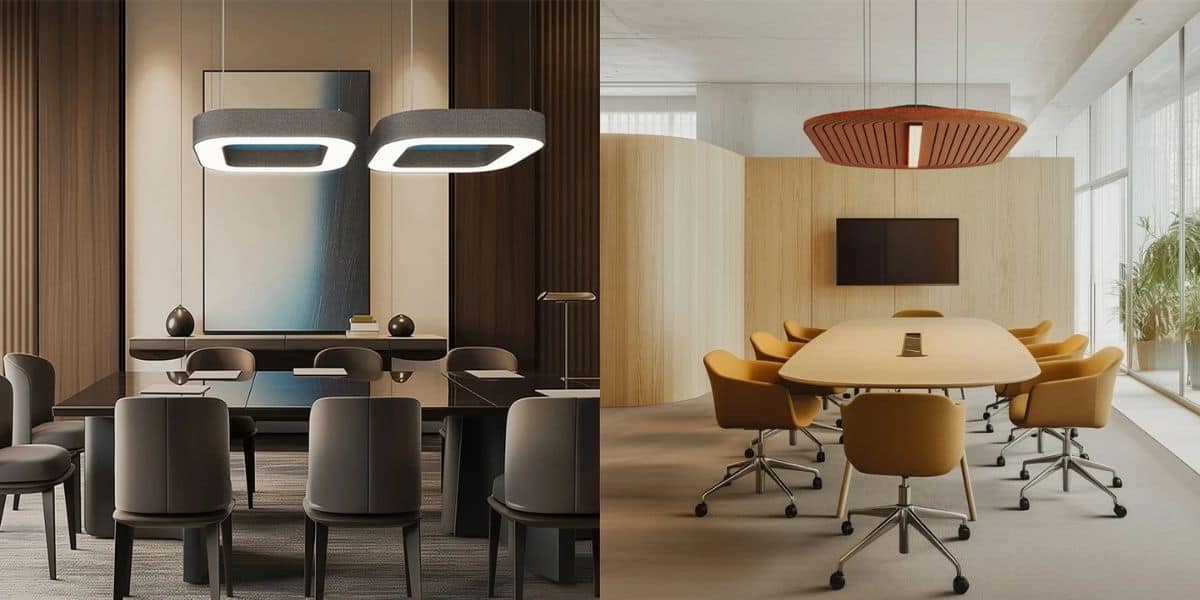
Acoustic lighting should not be understood as simply a light fixture covered in felt. In commercial environments, it operates as part of the building’s overall acoustic and lighting strategy.
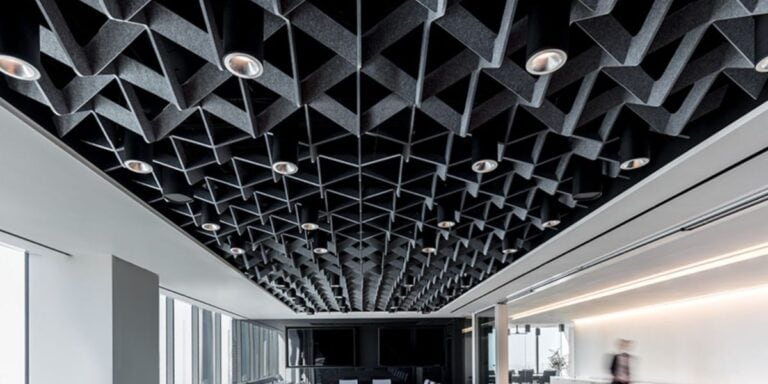
In most modern interiors, ceilings represent the largest uninterrupted reflective surface. When speech and ambient sound rise, they reflect from ceilings and spread across the room. Traditional lighting fixtures installed on hard ceilings contribute little to sound control and may even increase reflection patterns.
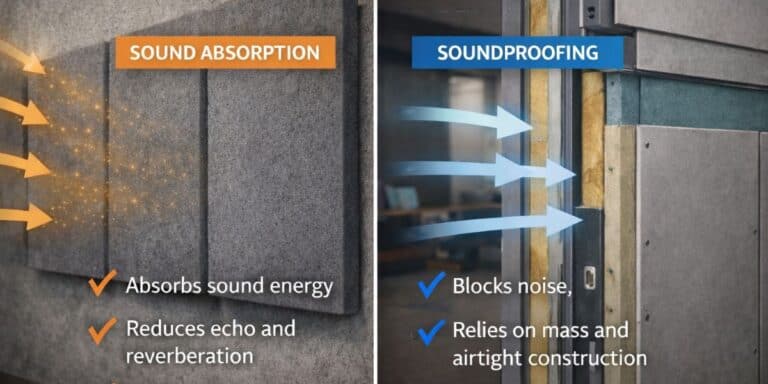
Acoustic lighting changes this dynamic by introducing absorptive mass directly into the ceiling plane. Instead of allowing sound energy to reflect freely, the integrated acoustic body captures and dissipates mid- and high-frequency sound waves. This reduces reverberation time and limits the spread of speech across open areas.
Unlike separate acoustic panels and luminaires, acoustic lighting consolidates two systems into one architectural element. The lighting component provides illumination according to required lux levels and visual comfort standards, while the acoustic structure modifies how sound behaves in the same zone.
This dual-function approach matters most in environments where ceiling space is limited or visually sensitive. In open offices, collaboration areas, and conference rooms, acoustic lighting allows designers to control reverberation without covering the entire ceiling with panels.
From a building performance perspective, acoustic lighting should be evaluated based on:
- How it alters reflection paths within the room
- Whether it meaningfully contributes to reverberation control
- How evenly acoustic coverage is distributed across the ceiling
- Whether the lighting component maintains visual comfort standards
When specified correctly, acoustic lighting becomes a structural part of spatial performance rather than a decorative addition.
Key Factors to Consider When Selecting Acoustic Lighting
Acoustic Performance

Acoustic performance is the primary reason these systems exist, yet it is often the least understood.
Noise Reduction Coefficient (NRC) is the most common metric used to describe how much sound a material absorbs. In simple terms, NRC indicates how much sound energy is absorbed rather than reflected back into a space. For commercial interiors, mid-to-high NRC values are especially important because human speech, phone calls, and collaboration noise typically sit in the mid-frequency range.
Mid-frequency absorption matters more than many buyers realize. A fixture that performs well only at high frequencies may not meaningfully improve speech clarity in offices or meeting rooms. Reviewing frequency-specific performance data, not just a single NRC number, helps avoid this issue.
Placement also affects performance. Acoustic lighting works best when positioned where sound energy accumulates, such as above workstations, collaboration zones, or conference tables. Even high-performing acoustic fixtures can underdeliver if they are poorly distributed or treated as purely decorative ceiling elements.
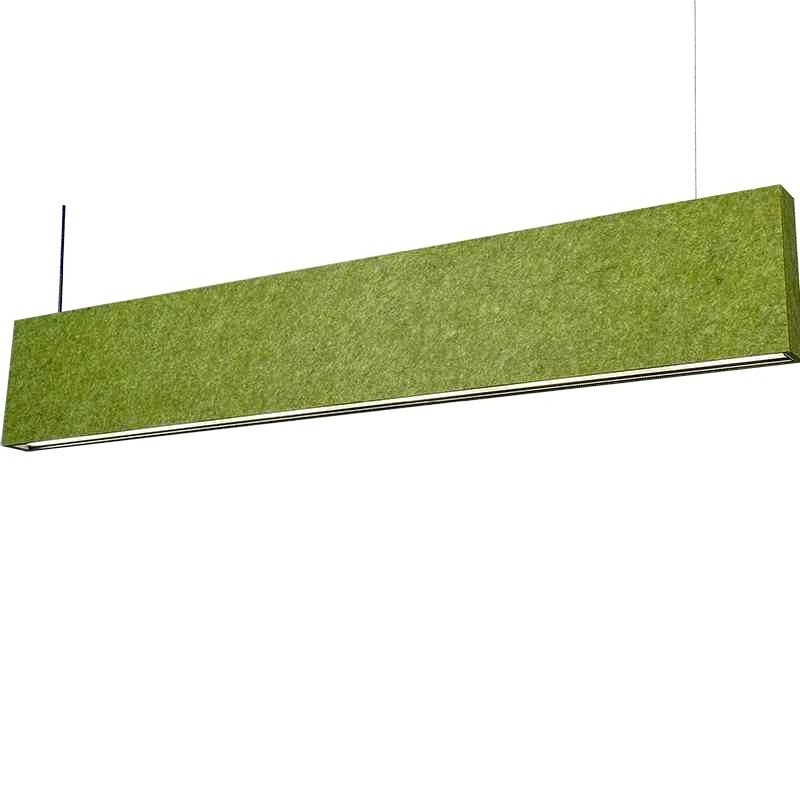
Slim Anti-Glare Acoustic LED Linear Light
- Input Voltage: AC100-277V / AC220-240V,50-60HZ
- Housing Size: W58*H200 mm/ W58*H300mm
- Emitting Direction: Downward
- Length Option: 1218mm / 1220mm / 1288mm
- CCT: 3000K / 4000K / 6000K
- Power: 30W / 32W
- Luminous Flux: 100-110Lm/W
- CRI: >90Ra
- PF: >0.90
- Flicker Free: Yes
- Beam Angle: 36°
- IP Grade: IP20
- Warranty: 5 years
- Felt Acoustic Board Color: Red / Green / Blue / Grey more than 48 colors option
Material Quality
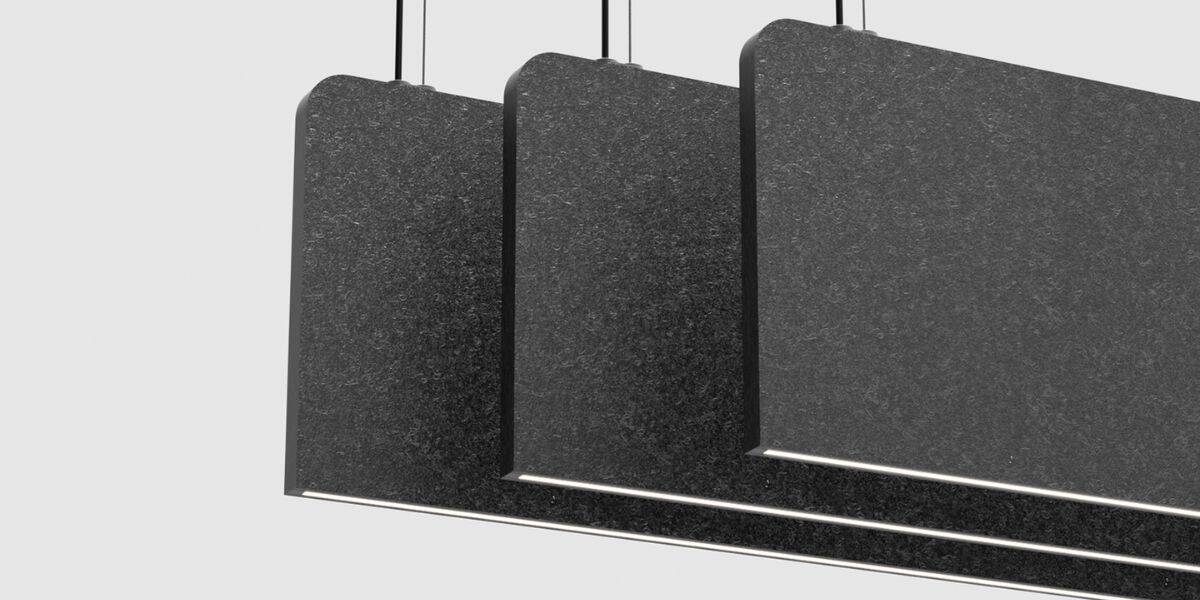
Material selection largely determines whether acoustic lighting performs consistently over time.
PET felt is the most common material in commercial-grade acoustic lighting because it offers predictable acoustic behavior, dimensional stability, and fire performance. Low-grade felt or loosely bonded materials may look similar initially but tend to sag, discolor, or lose absorption efficiency as they age.
Density, thickness, and layering directly influence absorption. Thicker, denser panels generally perform better at lower and mid frequencies. Layered constructions can improve performance without significantly increasing visual bulk.
Fire rating is non-negotiable in commercial projects. Acoustic lighting should meet relevant fire safety standards for ceiling-mounted products, especially in offices, hospitality, and public interiors.
Durability and aging are often overlooked. High-quality materials resist dust buildup, maintain color stability, and retain their acoustic properties over years of use, reducing replacement cycles.
Lighting Performance
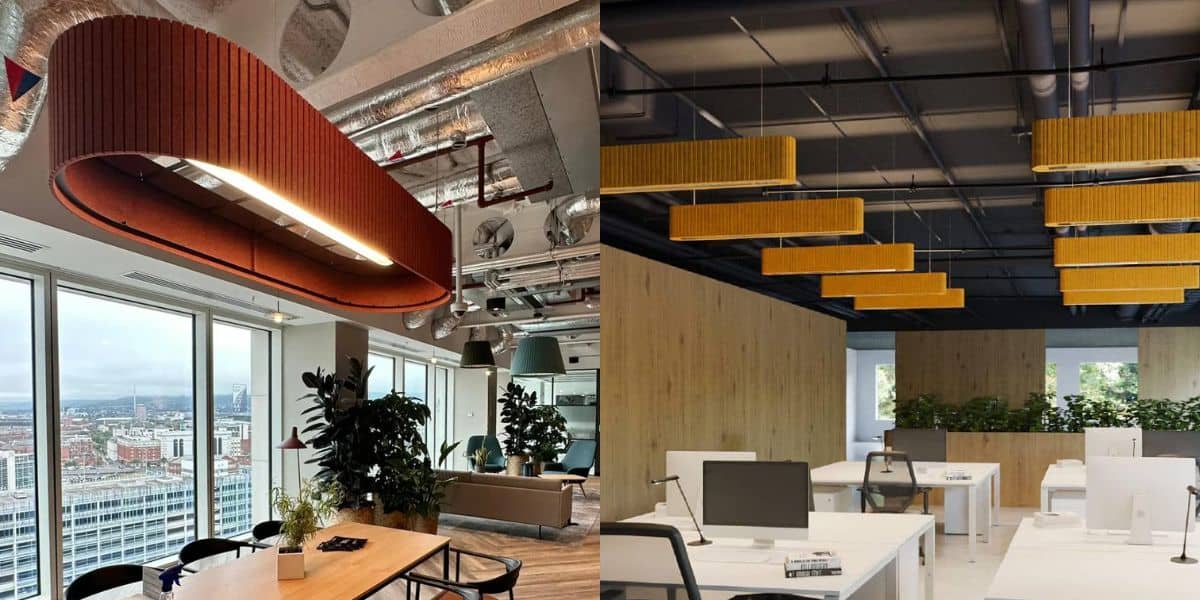
Acoustic benefits should never compromise lighting quality.
Light distribution must suit the task. Offices and meeting rooms require controlled, even illumination without harsh hotspots. Poor optical design can lead to uneven brightness that undermines usability.
Glare control is critical, particularly in screen-heavy environments. Acoustic lighting often sits directly above occupants, so diffusers, shielding, and optical angles matter more than in standard decorative pendants.
Color temperature stability affects visual comfort and consistency across a space. Fixtures with unstable CCT can create mismatched lighting zones over time.
Driver quality and lifespan influence maintenance cycles and total cost of ownership. Commercial projects benefit from reliable drivers with predictable performance rather than short-term efficiency gains.

58mm Width Acoustic LED Linear Light
- Input Voltage: AC110-120V / AC220-240V,50-60HZ
- Width: 58mm
- Size: 1288*58*400mm/ 1288*80*400mm
- LED Chip: SMD2835
- UGR: <19
- PF: >0.90
- CRI: >90Ra
- Luminous Flux: 100Lm/W
- CCT: 3000K / 4000K / 6000K
- Power: 30W
- IP Grade: IP20
- Warranty: 5 years
- Acoustic Panel Color Option: Red / Green / Blue / Grey more than 48 colors option
Design and Integration
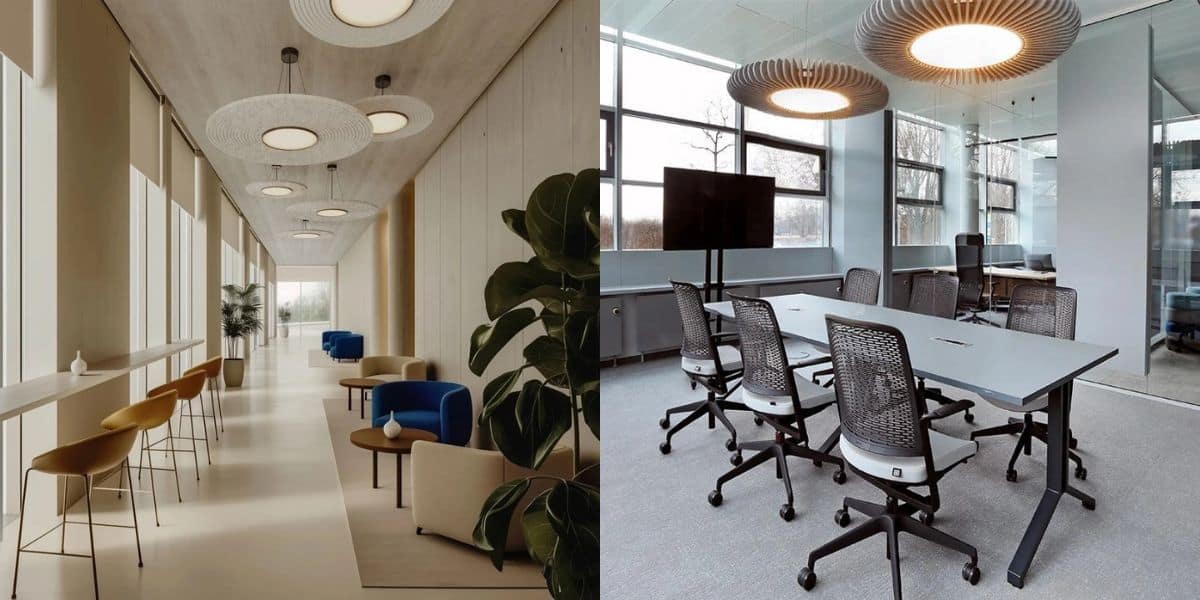
Acoustic lighting must integrate into both the ceiling plan and the overall interior concept.
Ceiling real estate is limited in many commercial projects. Combining acoustics and lighting into a single system can free up space otherwise occupied by separate panels and luminaires.
Visually, acoustic lighting softens interiors dominated by hard surfaces like glass, concrete, and metal. The goal is not decoration, but visual balance that supports comfort.
Compatibility with modern interiors matters. Neutral forms, scalable geometries, and adaptable configurations allow acoustic lighting to work across offices, hospitality, and public spaces without locking the design into a specific trend.
Installation and Maintenance
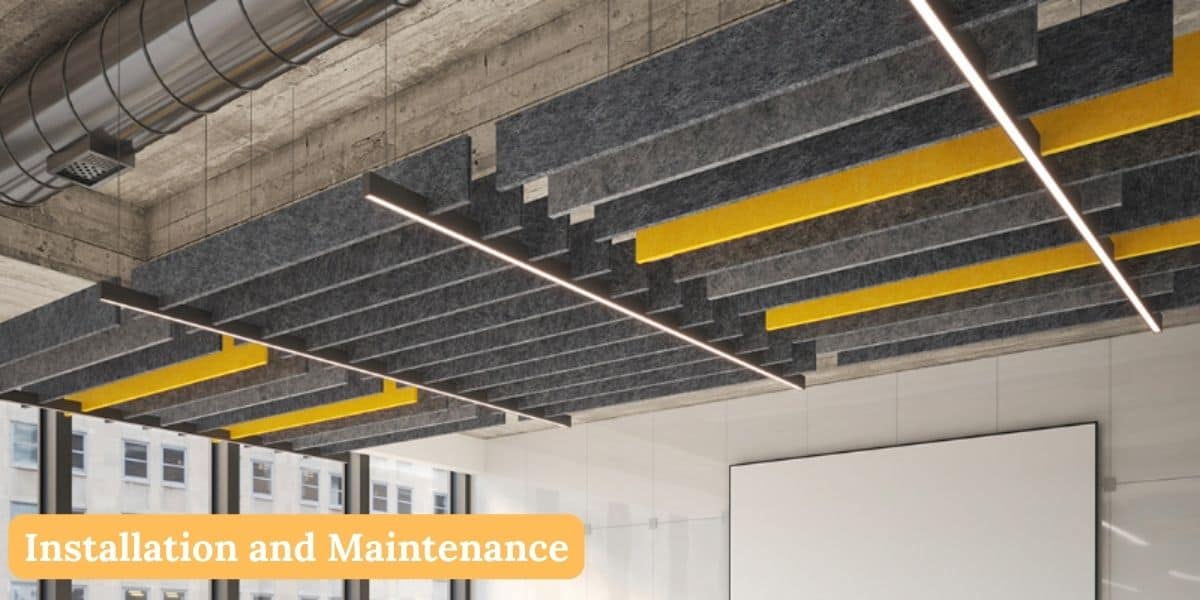
Installation method affects flexibility and long-term usability.
Suspended systems are common because they place absorption closer to sound sources and allow for adjustable positioning. Surface-mounted options can work where ceiling height is limited, but may reduce acoustic effectiveness.
Cleaning and maintenance should be straightforward. Materials that trap dust or require specialist cleaning increase operational overhead. Accessible drivers and modular components simplify long-term upkeep.
Clear expectations around maintenance intervals help facility managers plan costs more accurately over the fixture’s lifespan.
Sustainability and Compliance
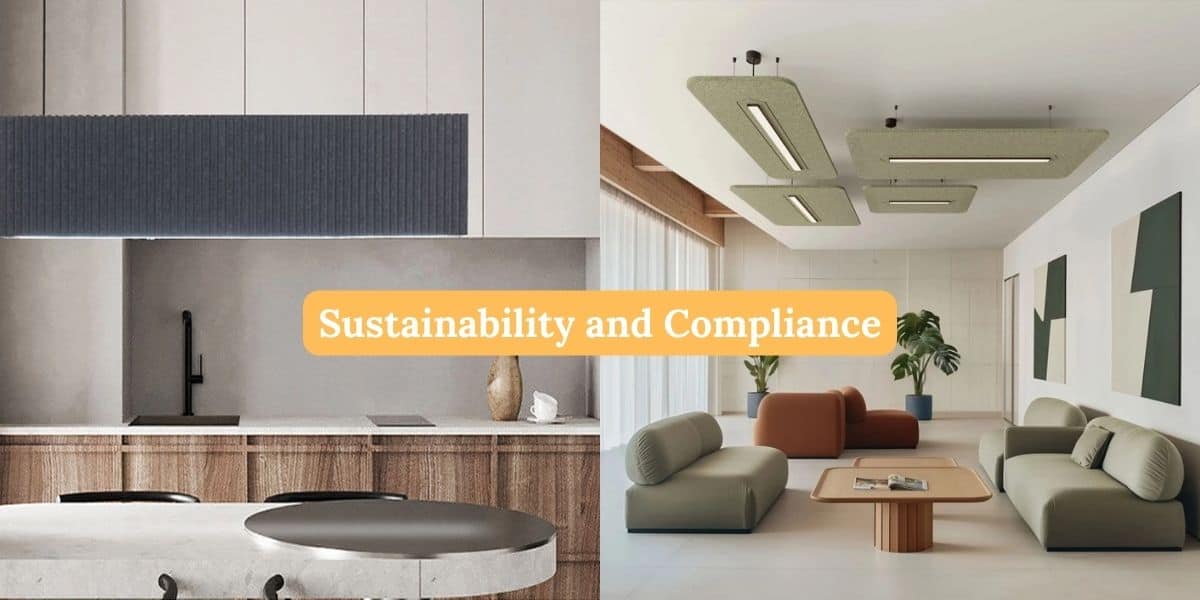
Sustainability is now a baseline requirement for many commercial buyers.
Recycled content, particularly in PET felt, reduces environmental impact without sacrificing performance. Many systems now use high percentages of post-consumer recycled material.
Environmental certifications and compliance with building standards support project approvals and sustainability targets. For B2B buyers, this is often tied to corporate ESG commitments rather than aesthetics.
Responsible material sourcing and long service life also contribute to sustainability by reducing replacement frequency and waste.
Quick Comparison for B2B Buyers
| Selection Factor | What to Check | Why It Matters |
| Acoustic performance | NRC range, coverage area | Determines echo and speech control |
| Felt material | PET density, fire rating | Safety, durability, consistency |
| Lighting quality | Glare control, CCT stability | Visual comfort and usability |
| Fixture design | Panel, pendant, integrated system | Ceiling integration and flexibility |
| Maintenance | Cleaning method, access to components | Long-term cost and reliability |
Where Acoustic Lighting Makes the Most Sense
Acoustic lighting is most effective in environments where sound control and visual comfort are equally critical.
In offices and coworking spaces, it supports focus and speech clarity in open layouts without adding visual clutter. Conference rooms benefit from improved intelligibility during meetings and video calls. Hospitality spaces use acoustic lighting to manage ambient noise while maintaining a refined atmosphere. Public interiors, such as libraries or education facilities, rely on it to balance openness with acoustic control.
The decision should always be driven by how the space is used, not by the fixture’s appearance alone.
Common Mistakes Buyers Make
A frequent mistake is choosing acoustic lighting based solely on appearance, assuming all felt-based fixtures provide meaningful absorption. Another is ignoring material specifications and acoustic data, which leads to underperformance in real spaces.
Some buyers assume placement does not matter, installing fixtures where they look best rather than where they absorb sound effectively. Others underestimate maintenance needs, selecting materials that degrade quickly in high-use environments.
Avoiding these mistakes requires treating acoustic lighting as a functional building system, not a decorative accessory.
Acoustic Lighting Selection Trends for 2026
Current trends emphasize integrated lighting and acoustics rather than add-on solutions. Modular systems that adapt to changing layouts are gaining traction, particularly in hybrid work environments. There is also a stronger focus on wellbeing, with performance-driven design taking precedence over purely decorative features.
Conclusion
The key factors to consider when selecting acoustic lighting are acoustic performance, material quality, lighting reliability, and suitability for the intended space. For commercial projects, the right choice depends on verified performance data, durable materials, and thoughtful integration, not aesthetics alone. Acoustic lighting is a functional design decision that influences comfort, productivity, and long-term value.
FAQs
Related Posts