English
  简体中文
简体中文  Deutsch
  Español
  Français
  Italiano
  日本語
日本語  한국어
한국어  Polski
  Português
  Русский
  Türkçe
  Nederlands
  Tiếng Việt
  ไทย
ไทย 
Are fish really attracted to light at night? This is one of the most frequently asked questions among commercial fishers and recreational anglers. For decades, boat-mounted or dock-based surface lights have been used to improve nighttime catch.
However, light itself is not a bait in the traditional sense. Fish do not swim toward a source simply because it’s bright. The key is that surface-mounted fishing lights change the underwater environment at night—they create visibility, contrast, and feeding opportunities that naturally draw fish into illuminated zones near the surface and upper water columns.
This article explores two core points: why fish respond more strongly to light at night than during the day, and the predictable ecological chain reaction that occurs underwater when a surface fish-attracting light is switched on.
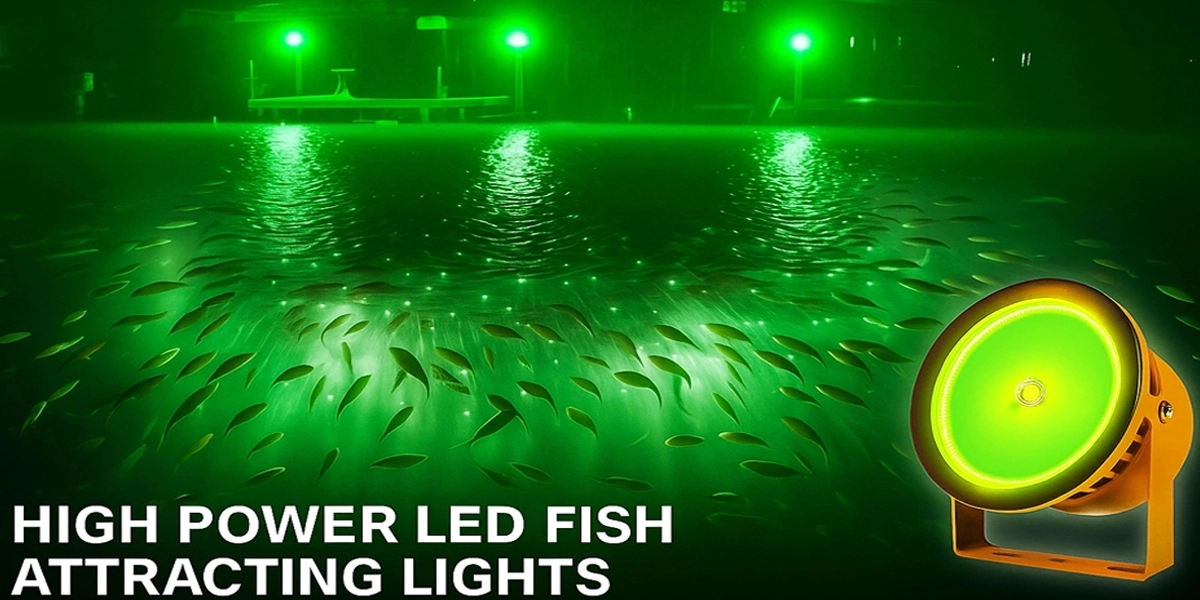
Are Fish Attracted to Light or to Food?
A common misunderstanding in night fishing is that fish are drawn directly to the light itself. In reality, most fish respond not to the light source, but to what the light reveals underwater.
How Fish-Aggregation Works Around Lights:
Plankton and Microscopic Organisms Gather First
- When a fish-attracting LED light is turned on at night, tiny organisms such as plankton respond first.
- These organisms are highly sensitive to light and quickly move into illuminated areas, especially in dark water.
Baitfish Follow the Food Source
- Small fish come to feed on the plankton and microorganisms.
- This creates a concentrated baitfish zone near the light.
Predatory Fish Arrive Last
- Larger fish follow the baitfish, forming a natural feeding chain.
- The light itself does not “pull” fish, but triggers a food chain aggregation zone.
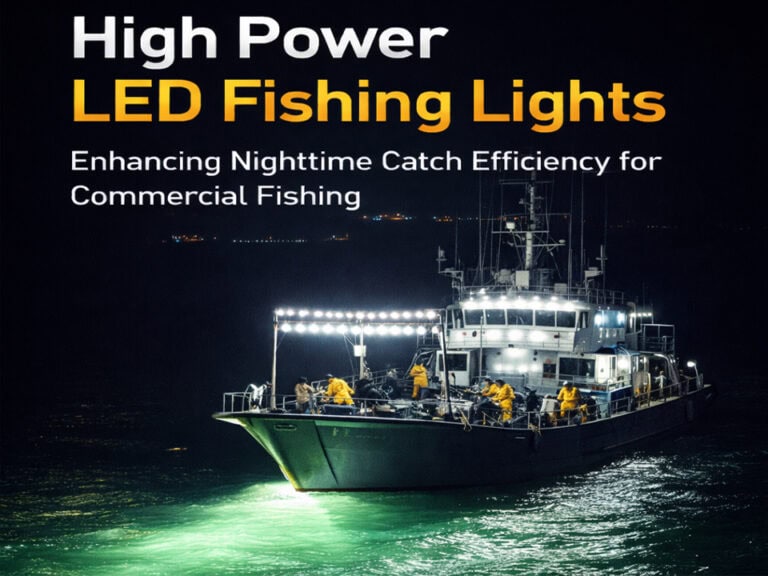
In practice, light coverage, beam pattern, and installation location are often more important than simply increasing brightness. This is why LED fish-attracting lights work consistently on boats, docks, and nearshore areas.
Why Are Fish More Responsive to Light at Night?
Fish respond more strongly to light at night than during the day. This is not because they “prefer” light, but because darkness changes how the underwater environment functions.
Key Reasons Nighttime Lights Are More Effective:
Enhanced Visual Contrast
- At night, even a controlled artificial light source creates strong contrast in the water.
- This makes plankton, baitfish, and predatory fish more visible and easier to aggregate.
Natural Migration of Plankton
- Many microscopic organisms naturally migrate toward the surface after sunset.
- When a fishing light is switched on, these organisms concentrate rapidly within the illuminated zone.
Layered Food Chain Response
- Baitfish follow the plankton.
- Larger predatory fish follow the baitfish.
- This layered reaction is why fish-attracting lights work so effectively at night.
Amplified Light Influence in Darkness
A single, well-positioned lamp can affect a wider area at night than during the day.
Commercial and recreational night fishing setups rely on this principle for efficient catch.
From a practical perspective, darkness amplifies the effect of light. This explains why fish-attracting lights are primarily used after sunset rather than during daylight hours.
Watch this short video for a visual demonstration of how fish are attracted to lights at night:

What Makes a Fish Attracting Light Effective at Night?
Not all fishing lights perform the same at night. While brightness often gets the most attention, effective fish attracting lights depend on a combination of light efficiency, beam control, and stability in real marine conditions.
Light output and efficiency
At night, extremely high brightness is not always necessary. What matters more is stable luminous output and energy efficiency. High-efficiency LED fish attracting lights can deliver strong, uniform illumination without excessive power consumption, allowing the light to remain on for long periods without overheating or voltage fluctuation. This is especially important for fishing vessels operating overnight.
Beam pattern: spotlight vs. flood light
Beam control plays a critical role in how light interacts with water.
Fish attracting spotlights create focused illumination, which is useful when targeting specific depths or directing light along the sides of a boat. Flood lights, on the other hand, provide wider coverage and are better suited for attracting plankton and baitfish across a broader surface area. In many night fishing setups, a combination of spotlight and flood light distribution delivers more consistent results than relying on a single beam type.
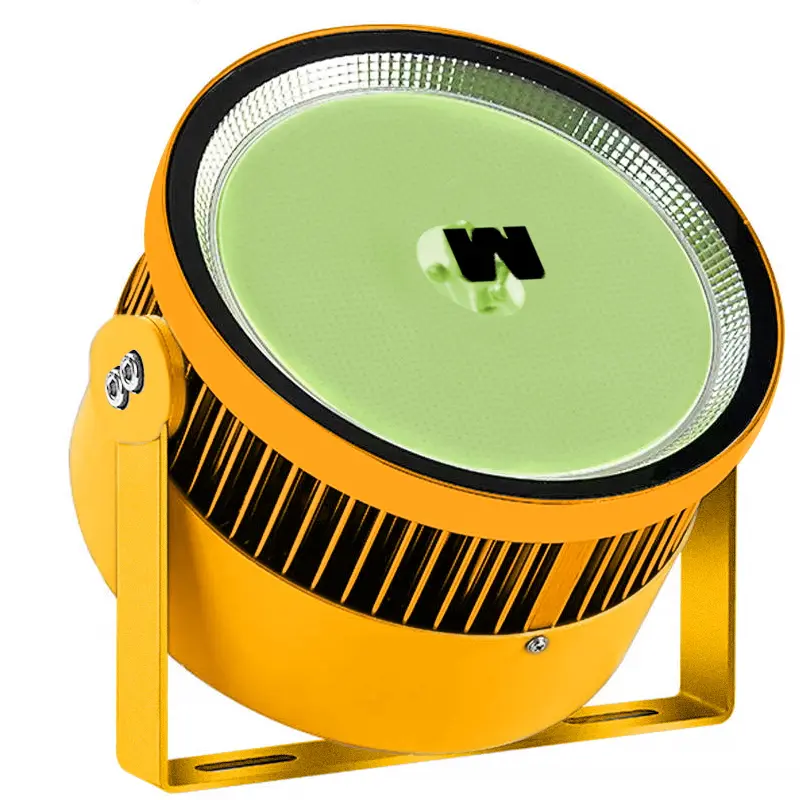
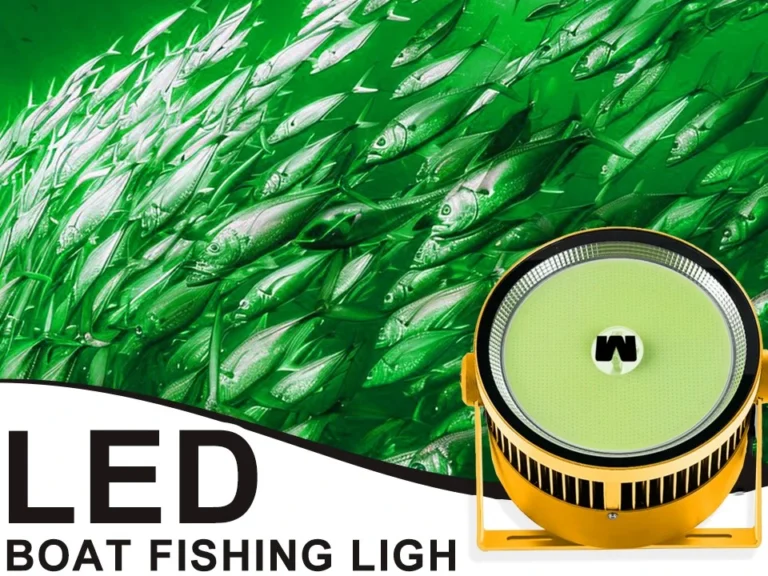
HIGH POWER COB FISH LIGHING
Model No.: Round Type
Input Voltage: AC100–320V
Surge: 10000V
Watt/pcs: 800W/1000W/1200W
LED Type: COB
Size (mm): Φ230 × 140
Color: 3000K / 4000K / 5000K / 6000K/ Red / Green / Blue / Purple
CRI: >80@3000K / 4000K / 5000K / 6000K/
Lumen: >120lm/w@3000K / 4000K / 5000K / 6000K/
IP Grade: IP67
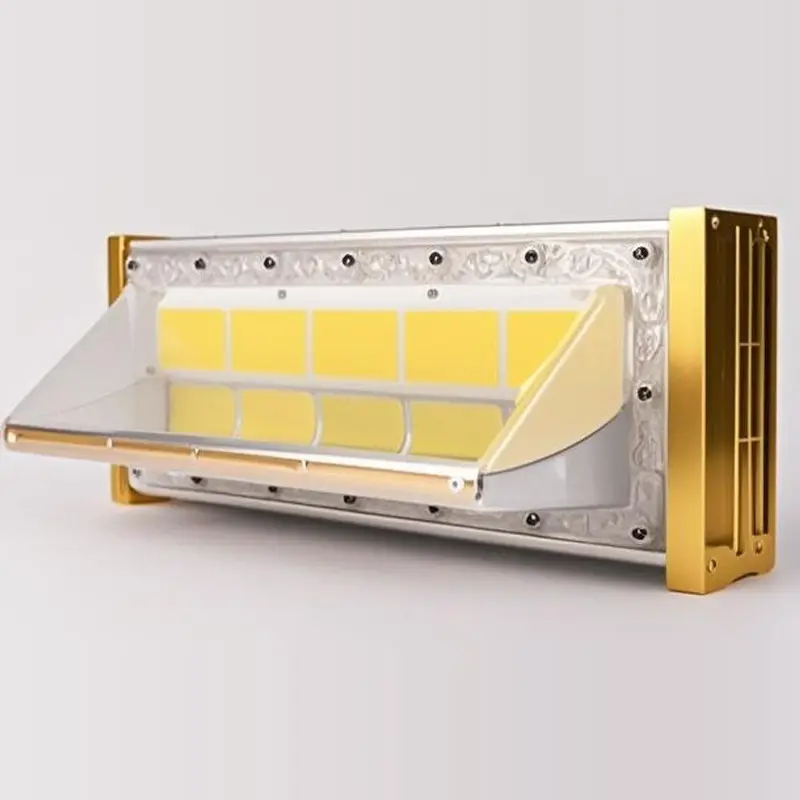
HIGH POWER COB FISH LIGHING
Model No.: Square Type
Input Voltage: AC86-277V
Surge: 10000V
Watt/pcs: 800W/1000W/1200W
LED Type: COB
Size (mm): 390* 140*210mm/ 400* 150*200mm
Color: 3000K / 4000K / 5000K / 6000K
CRI: >80
Lumen: >120lm/w
IP Grade: IP67
Reliability in marine environments
Night fishing places continuous demands on lighting systems. Salt spray, vibration, and long operating hours require fixtures with stable electrical performance and corrosion-resistant construction. For this reason, many operators choose high power LED fish attracting lights designed specifically for marine use, where durability and electrical stability matter as much as light output.
Comparison of LED Fish-Attracting Light Types:
| Feature | Spotlight (Focused Beam) | Flood Light (Wide Beam) |
| Beam Angle | Narrow (10°–30°) | Wide (60°–120°) |
| Primary Use | Targeting specific depths or zones | Aggregating plankton and baitfish over a wider surface area |
| Light Efficiency | High; concentrated energy | Moderate; covers larger area |
| Effect on Fish | Draws fish to a precise zone | Encourages broad aggregation near the surface |
| Recommended Placement | Along boat sides or at specific depth layers | On deck, docks, or open-water areas for general coverage |
For technical details on wavelength selection and how these technologies help improve fish attraction, see our guide on fish attracting lights technology and selection.
Practical Setup of Fish Attracting Lights on Boats & Docks
Proper installation plays a major role in how effective fish attracting lights perform at night. Even a high-quality light will deliver inconsistent results if it is poorly positioned or incorrectly aimed.
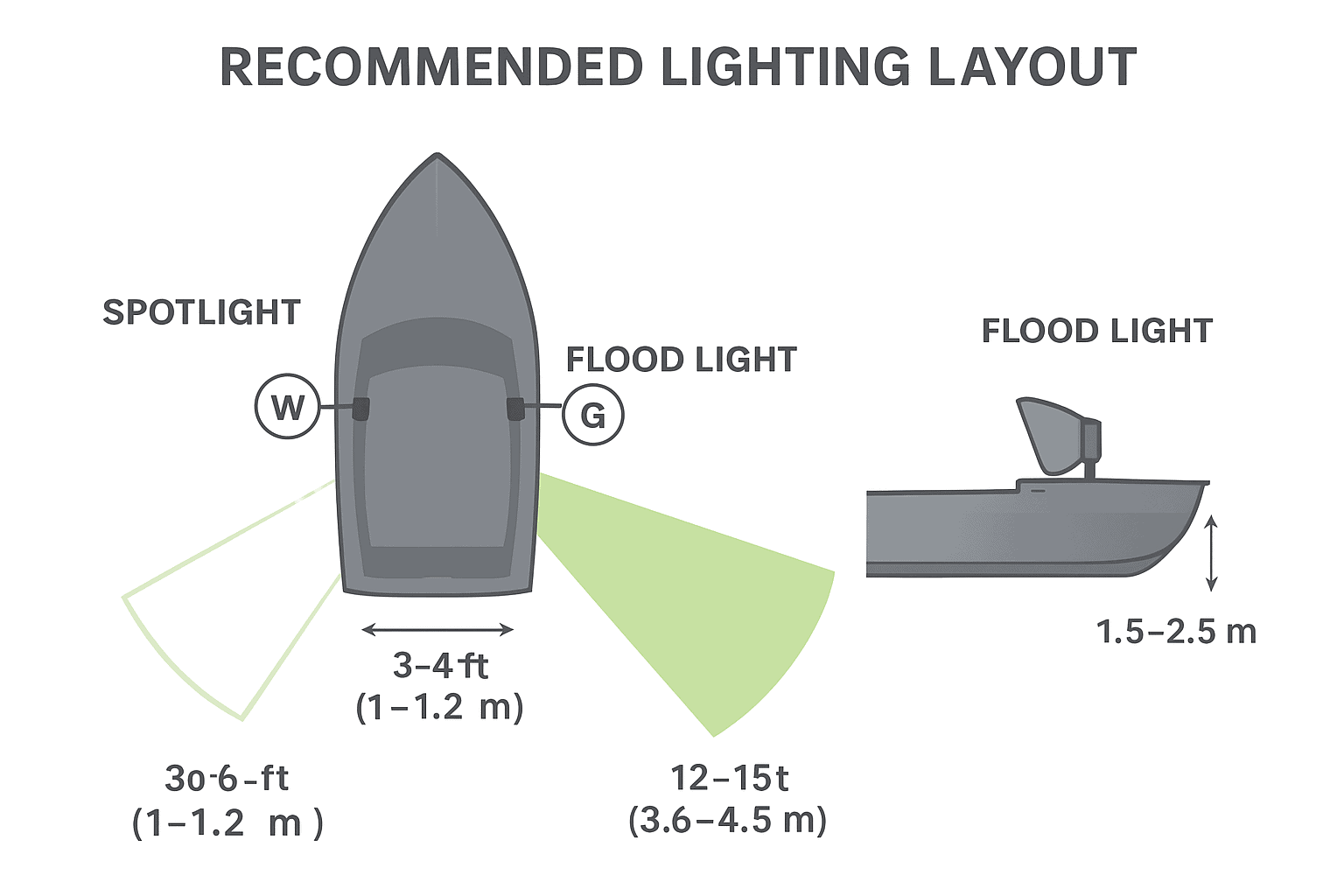
Boat-side installation
On fishing vessels, lights are commonly mounted along both sides of the hull rather than concentrated in a single location. Symmetrical placement helps create a balanced illuminated zone, allowing plankton and baitfish to gather evenly instead of being pushed to one side.
Spotlights are often used to direct light toward specific depths or along the boat’s sides, while flood lights provide broader surface coverage. Combining both beam types can improve attraction consistency without increasing the total number of fixtures.
Height and spacing considerations
For above-water installations, mounting height affects how light spreads across the water surface. Lights positioned too high may lose intensity before reaching the target zone, while lights mounted too low can create glare without expanding coverage. In most night fishing setups, moderate height and even spacing produce the most stable results, especially during long operating hours.
Dock and shoreline setups
For docks or fixed structures, fish attracting lights are typically positioned to illuminate a defined area rather than the entire waterway. Consistent illumination allows plankton to accumulate naturally over time, encouraging baitfish and predatory species to return regularly. This is why dock lights attract fish reliably when left on for extended periods at night.
Depending on the environment, choosing between underwater or surface-mounted fixtures can make a difference—here’s a comparison of underwater vs surface LED fish lights.
Key Takeaways for Using Fish Attracting Lights at Night
Understanding why fish are attracted to light at night helps anglers and commercial fishing operations use fish attracting lights more effectively.
Based on biological behavior and practical fishing experience, several key conclusions can be drawn:
- What attracts fish is not the light itself, but the food chain aggregation zone created by the light underwater, an environment that encourages fish to stay.
- Compared to flashing or inconsistent light sources, stable and continuous illumination is more effective in dark offshore or deep-water environments.
- Fixture performance directly impacts results. For surface-mounted fish attracting lights, their luminous intensity, beam angle, and the penetration and distribution of light from air into the water determine the size and stability of the attraction zone.
- Compared to traditional fishing lamps, high-power LED fish attracting lights designed for surface marine use offer better efficiency, longer lifespan, and more controlled output, making them more suitable for prolonged nighttime operations.
For fishing vessels that operate regularly at night, choosing the right surface fish attracting light is not just about brightness—it’s about continuously creating a stable underwater fish aggregation environment, starting from the water surface.
FAQ
Related Posts