标牌和 LED 灯带工厂,始于 2011 年

标牌和 LED 灯带工厂,始于 2011 年

SPD Types Explained: Type 1 vs. Type 2 vs. Type 3

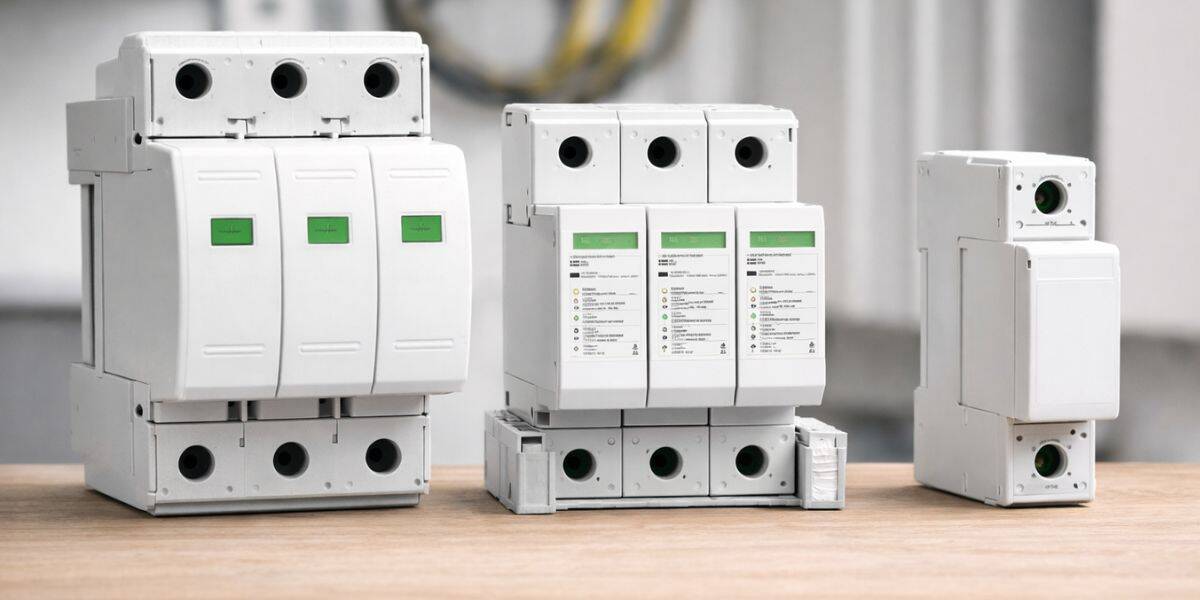
Surge Protective Devices (SPDs) are classified as Type 1, Type 2, and Type 3 to reflect where they operate within an electrical system and how they manage surge energy at that location. These types are not interchangeable. Each is engineered for a specific surge environment and protection function, and they only perform correctly when applied as part of a coordinated system.

This article is a comparative technical guide. It does not reintroduce surge protection fundamentals. Instead, it focuses on how Type 1, Type 2, and Type 3 SPDs differ in role, capability, and system interaction, and how engineers determine correct placement in real electrical installations.

Comparison Framework: How SPD Types Are Differentiated

surge protective device

SPD classification is not based on product size, price, or perceived robustness. It is based on installation position and expected surge exposure.

As surge energy travels through an electrical system, its characteristics change:

  • Surge current magnitude decreases
  • Waveform shape evolves
  • Residual voltage remains hazardous to sensitive equipment

Because of this behavior, surge protection is divided into zones. Each SPD type is designed to operate within a specific zone, where it can manage surge stress without being overstressed or underperforming.

The comparison between Type 1, Type 2, and Type 3 SPDs should always consider:

  • Installation location
  • Expected surge energy level
  • Primary protection function
  • Dependency on other SPD types

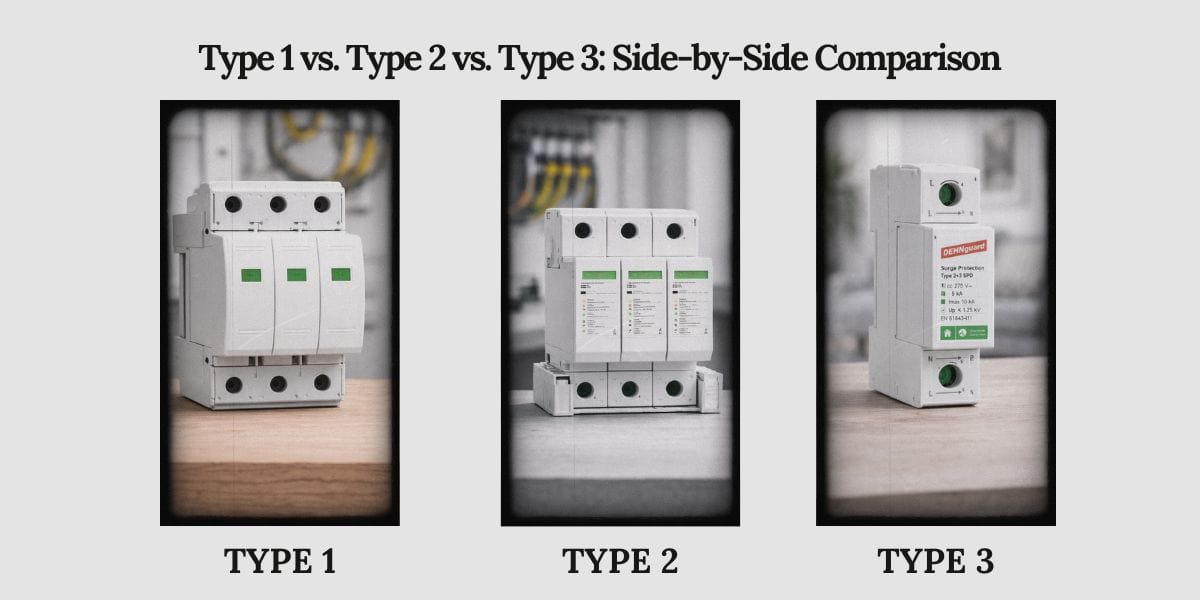
Type 1 vs. Type 2 vs. Type 3: Side-by-Side Comparison

surge protective device

参数1 型 SPD2 型 SPD3 型 SPD
Typical installation locationService entrance, line side of main disconnectDistribution panels, load side of disconnectNear sensitive equipment
Surge exposure levelMedium to high
Primary functionDivert incoming surge currentClamp residual and switching surgesFine voltage limitation
Surge current handling中度至高度
Voltage clamping precision中型
Standalone suitability没有没有
Dependency on other SPDsRequires Type 2 downstreamOften paired with Type 1 and Type 3Requires upstream Type 1 or Type 2
Typical risk if misappliedInadequate equipment protectionOverstress and reduced lifespanCatastrophic failure

This comparison highlights a key principle: SPD types are defined by function and placement, not by performance ranking.

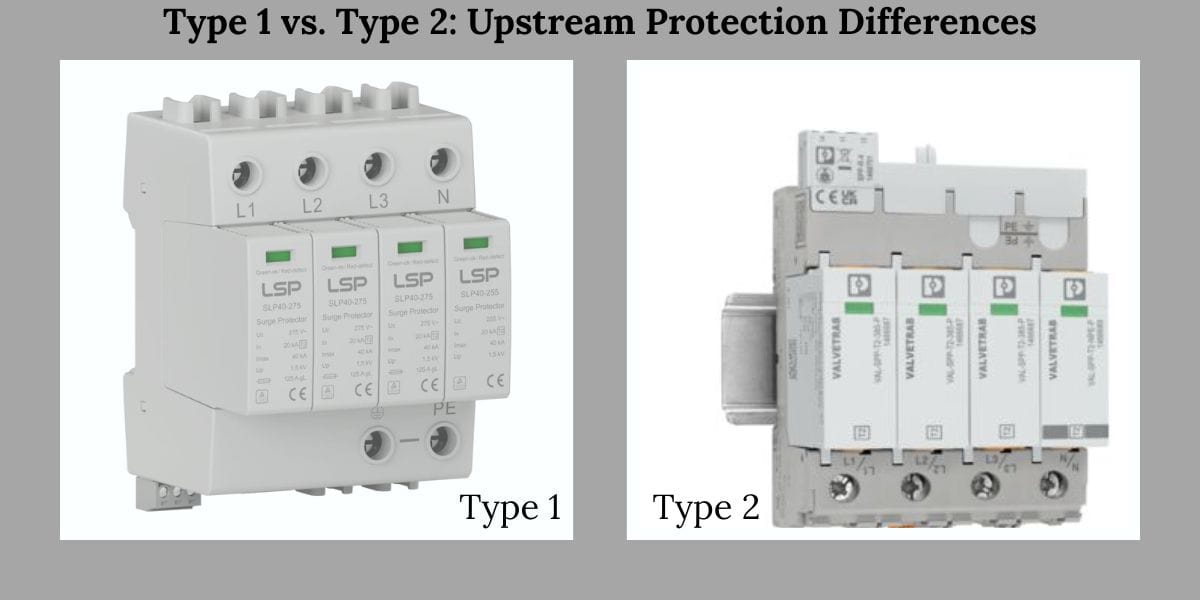
Type 1 vs. Type 2: Upstream Protection Differences

surge protective device

Installation context

Type 1 SPDs are installed at the service entrance, where external surge exposure is highest. Type 2 SPDs are installed downstream, within the internal distribution system.

This positional difference fundamentally changes what each device is expected to handle.

Surge energy profile

  • Type 1 SPDs encounter high-energy impulses associated with lightning-related events entering from the utility network.
  • Type 2 SPDs encounter residual lightning energy and frequent internally generated switching transients.

Because Type 2 devices are not designed for the highest energy impulses, they cannot replace Type 1 protection at the service entrance.

Functional distinction

  • Type 1 focuses on surge current diversion
  • Type 2 focuses on voltage limitation and repetitive surge control

Installing only Type 2 protection in high-exposure environments shifts excessive stress onto devices that are not designed for it, leading to premature degradation.

Type 2 vs. Type 3: Distribution vs. Equipment-Level Protection

Installation proximity

Type 2 SPDs protect distribution networks, while Type 3 SPDs protect individual equipment or circuits. The distance between the SPD and the protected load is a critical differentiator.

Residual voltage control

After upstream protection, residual transient voltage can still exceed the impulse withstand capability of sensitive electronics. Type 3 SPDs provide fine voltage refinement at the point of use.

Energy handling limitation

Type 3 SPDs are not designed to absorb surge energy. If exposed directly to high-energy events, they can fail rapidly. This is why they must never be used without upstream protection.

The comparison between Type 2 and Type 3 is not about which is “better,” but about where precision replaces energy handling.

Why No Single SPD Type Is Enough

Surge protection is not additive. Installing multiple devices of the same type does not provide layered protection.

Each SPD type operates optimally only within its intended stress range:

  • Type 1 reduces incoming surge energy
  • Type 2 manages remaining overvoltage
  • Type 3 limits final residual voltage

Attempting to perform all these functions with a single device results in compromised protection, shortened service life, or both.

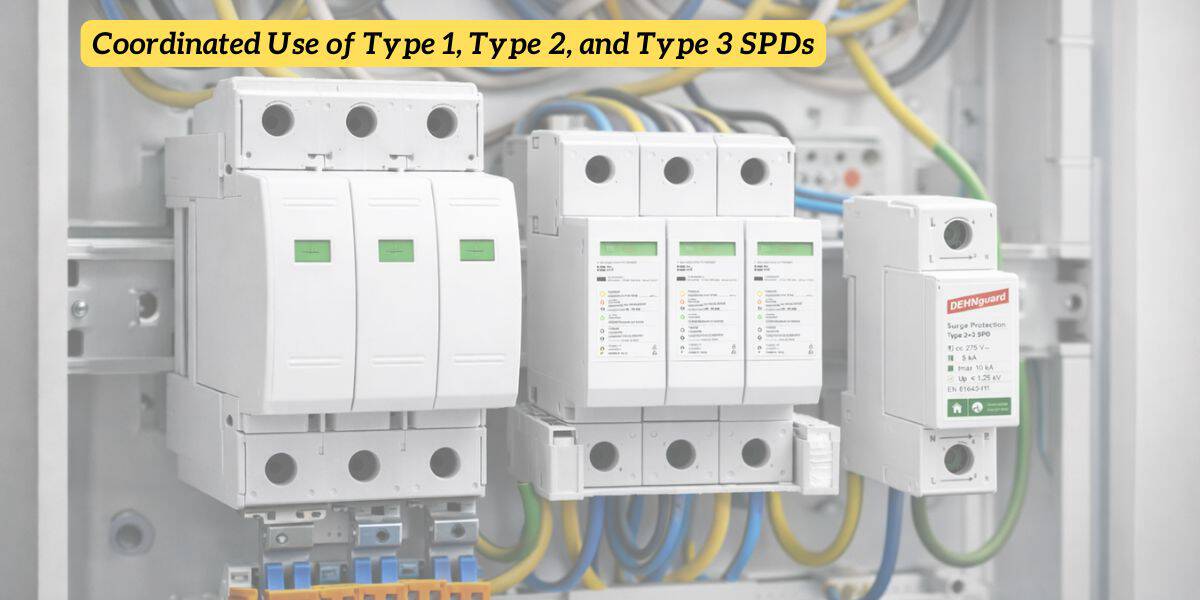
Coordinated Use of Type 1, Type 2, and Type 3 SPDs

surge protective device

How coordination works

A coordinated surge protection system mirrors the way surge energy propagates:

  1. 类型 1 diverts high-energy impulses at system entry
  2. 类型 2 clamps remaining surges within the distribution system
  3. 类型 3 protects sensitive loads from residual voltage

Each stage reduces stress on the next.

Why coordination matters more than quantity

Improper coordination can cause:

  • Uneven energy sharing
  • Localized overheating
  • Unpredictable failure behavior

Correct placement and impedance separation matter more than installing additional devices.

Application-Based Comparison Scenarios

Service entrance with external exposure

Facilities with overhead utility lines or outdoor electrical infrastructure require Type 1 protection at the service entrance, followed by Type 2 protection downstream.

Commercial and industrial distribution systems

Switching operations dominate surge activity. Type 2 SPDs provide the primary protection role, often coordinated with upstream Type 1 devices.

Sensitive electronic systems

Automation controllers, instrumentation, and communication interfaces require Type 3 protection, but only when upstream surge energy has already been reduced.

Single-phase vs. three-phase systems

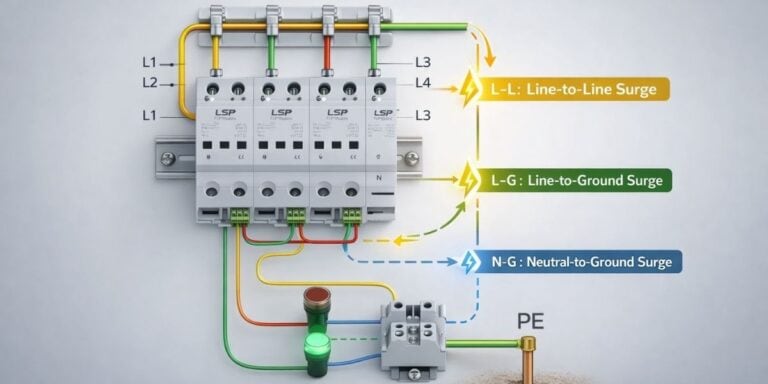
A 3 phase surge protective device must manage phase-to-phase and phase-to-ground transients consistently. SPD type selection must align with system configuration, not just voltage rating.

Common Comparison Mistakes Engineers Make

  • Assuming Type 3 devices can operate standalone
  • Oversizing one SPD instead of coordinating multiple types
  • Installing multiple Type 2 devices without considering impedance
  • Treating SPD types as performance tiers rather than functional roles

These errors reduce protection effectiveness and increase maintenance risk.

Standards Context

Standards such as UL 1449 and IEC 61643 define test conditions and classification criteria for SPD types. They support consistent comparison, but they do not replace system-level engineering judgment regarding placement and coordination.

结论

Type 1, Type 2, and Type 3 surge protective devices serve distinct and complementary roles within an electrical system. Their differences are defined by installation location, surge exposure, and protection function, not by product class or marketing position.

Effective surge protection depends on coordination, not oversizing or redundancy. When each SPD type is applied where it performs best, surge energy is progressively controlled, equipment stress is reduced, and long-term system reliability improves.

常见问题

用于 LED 三防灯的超级导光板
在工业和商业照明中,耐用性和效率是选择合适灯具的关键因素。LED 三防灯的设计能够承受恶劣的环境,这些灯具能效高、寿命长、维护成本低,通常用于工业应用或户外环境。本文将探讨这些灯具的技术标准、优点和维护成本。
用于肉类展示的 LED 灯条用于肉类展示的 LED 灯条
采用最先进的 LED 条带照明解决方案,让您的生鲜食品展示焕发新活力
陈列柜中鲜肉或糖果的颜色会极大地影响顾客的购买决定。这第一印象至关重要,因为造成肉类颜色的色素肌红蛋白会在光线、热量和氧气的作用下发生化学反应。确保您的照明能够最佳地展示这些颜色,可以帮助...
为什么说 3M-VHB 是 LED 灯条的最佳选择?为什么说 3M-VHB 是 LED 灯条的最佳选择?
用于 LED 灯条的优质胶带
在装饰和照明领域,LED 灯条因其灵活性和多功能性而成为现代家庭和商业场所的热门选择。然而,选择合适的胶带对于确保这些灯带能够牢固安装并保持长期稳定至关重要。 有了...
热销 LED 灯条控制器热销 LED 灯条控制器
如何为 LED 灯条选择 LED 控制器?
在世界迅速转向智能、节能照明的今天,LED 控制器已成为照明系统的关键组成部分。通过 LED 控制器,我们可以控制各种 LED 灯条照明参数,如亮度、颜色和色温。还可以设置自动化,以优化能源效率、视觉舒适度...
双侧电压测试双侧电压测试
LED 灯条上的电压降:原因与解决方案
电压下降是 LED 照明系统中的一种常见现象,会影响 LED 灯条的性能和寿命。它是指由于电路中导体和元件的电阻导致电压沿灯带长度方向下降。 什么是压降? 电压降是...
闪烁的 COB-LED 灯条闪烁的 COB-LED 灯条
COB LED 灯条闪烁?
由于 COB LED 灯条亮度高、性价比高,照明领域对它的使用越来越多。然而,COB LED 灯条是否会闪烁是一个常见问题。本篇文章将探讨 COB LED 灯条闪烁的原因以及如何停止闪烁。 什么...

分享:

Facebook
叽叽喳喳
Pinterest
LinkedIn
订阅评论
提醒
来宾
0 评论
最老的
最新 最多投票
内联反馈
查看所有评论

搜索 SignliteLED 博客

类别

返回顶部

立即获取报价