English
  简体中文
简体中文  Deutsch
  Español
  Français
  Italiano
  日本語
日本語  한국어
한국어  Polski
  Português
  Русский
  Türkçe
  Nederlands
  Tiếng Việt
  ไทย
ไทย 
Acoustic lighting typically costs more upfront than regular LED lighting, with commercial fixtures often ranging between $400–$2,500+ per unit depending on size and acoustic performance, compared to $80–$600 for standard commercial LED fixtures. However, total project cost depends on whether separate acoustic treatment is required.
For architects, procurement managers, and facility managers, the meaningful comparison extends beyond fixture pricing. A proper financial evaluation must include unit cost, installation labor, maintenance requirements, lifecycle cost over three to five years, and long-term system coordination.
This article focuses strictly on cost structure, pricing variables, installation expense, maintenance, and lifecycle financial implications in the 2026 commercial market.
Market Price Overview (2026 Commercial Market)
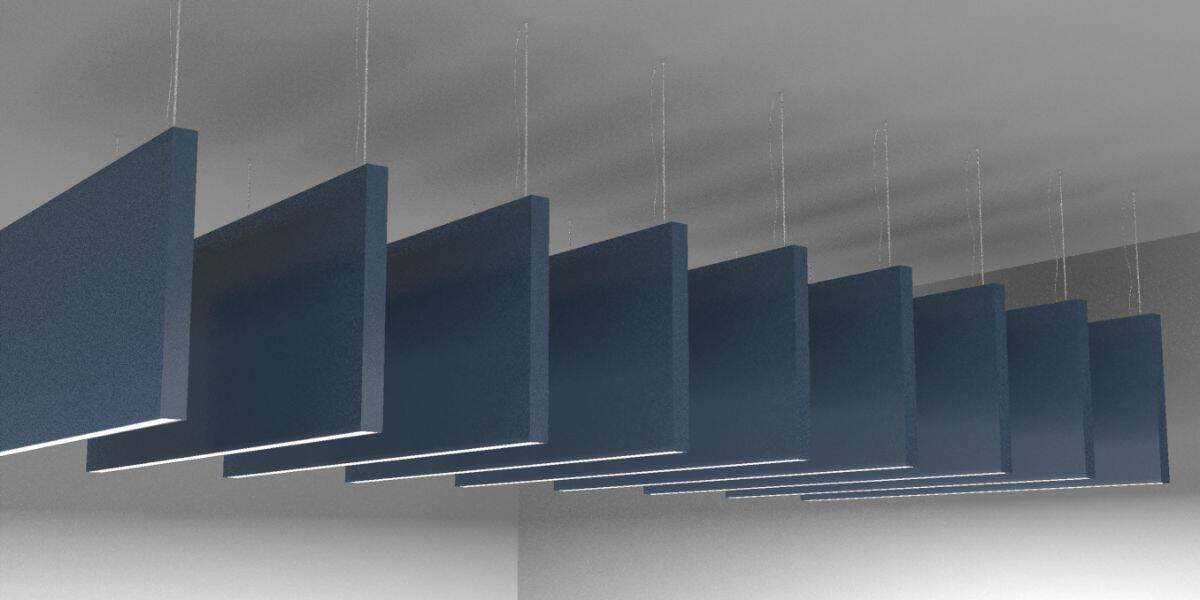
Commercial lighting prices vary based on fixture dimensions, LED performance specifications, acoustic rating, customization level, and purchase volume. Consumer marketplaces often reflect decorative or entry-level products, while B2B supplier catalogs reflect engineered commercial systems.
Below is a structured overview of typical per-unit pricing in the 2026 commercial market.
Typical Market Price Ranges (Per Unit)
| Product Type | Typical Price Range (USD) | What’s Included | Typical Application |
| Standard commercial LED panel (2×2 or 2×4 troffer) | $80–$250 | LED board, driver, steel housing | Offices, schools, healthcare |
| Linear LED pendant (commercial grade) | $150–$600 | Aluminum housing, driver, suspension kit | Open-plan offices, retail |
| Decorative felt pendant (non-acoustic rated) | $120–$400 | PET felt shade with LED module | Cafés, small offices |
| Acoustic lighting panel (commercial grade) | $400–$1,200 | Integrated LED + acoustic PET felt system | Open offices, collaborative areas |
| Large acoustic lighting fixture (custom/commercial) | $1,200–$2,500+ | Custom size, higher NRC rating, engineered suspension | Corporate HQ, coworking, atriums |
| Separate acoustic ceiling panel (per panel) | $150–$500 | PET or fiberglass acoustic panel | Retrofit sound control projects |
Pricing ranges are based on publicly available 2026 commercial supplier catalogs, distributor listings, and marketplace data. Actual costs vary by region, order volume, acoustic material thickness, LED specification, customization requirements, and project scope.
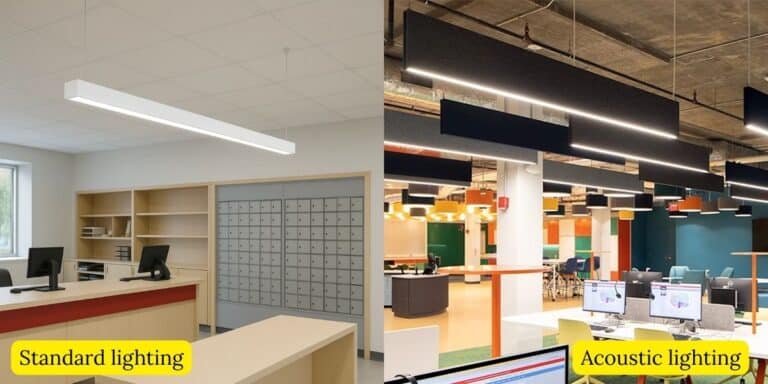
The primary cost distinction is clear: acoustic lighting fixtures typically cost two to four times more than standard LED luminaires. The financial comparison becomes meaningful only when acoustic treatment requirements are factored into the overall system cost.
Why Acoustic Lighting Costs More
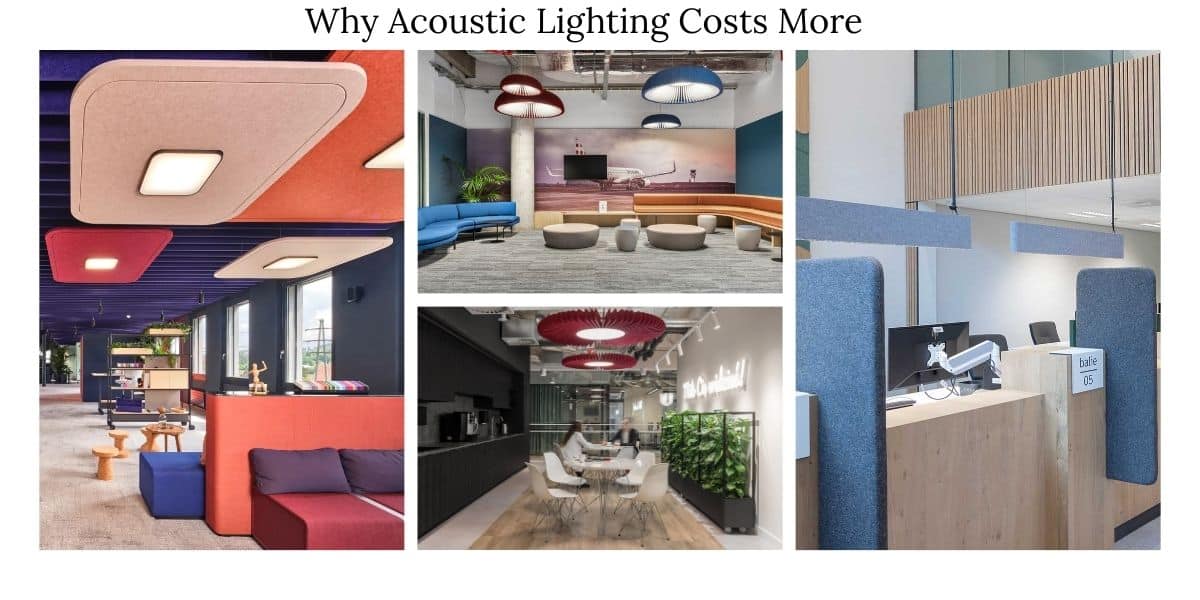
The higher cost of acoustic lighting is structural, not cosmetic. These systems integrate illumination and sound absorption into a single engineered fixture.
The first cost driver is acoustic-grade PET felt. Commercial acoustic fixtures use dense recycled PET material typically ranging from 9 mm to 24 mm thickness. This material is substantially more expensive than thin decorative felt. Greater density and thickness improve sound absorption but increase raw material cost.
Manufacturing complexity is another factor. Acoustic fixtures require CNC cutting, shaping, and sometimes layered assembly to achieve structural stability. Standard LED panels, by contrast, use stamped steel or aluminum housings produced at very high volume.
Engineering integration also adds cost. LED modules must be thermally managed inside partially enclosed felt structures. Suspension systems must support larger surface areas while meeting safety standards. This level of integration increases production expense compared to basic luminaires.
Acoustic fixtures are typically physically larger than regular lighting products because sound absorption depends on surface area. A four-foot linear LED pendant may cost $300–$400, while a similarly sized acoustic version with extended felt panels may cost $900–$1,500 due to increased material and structural requirements.
Production volume further influences pricing. Standard LED fixtures are mass-produced globally at scale. Acoustic fixtures are often project-specific or customized for commercial interiors, resulting in higher per-unit cost.
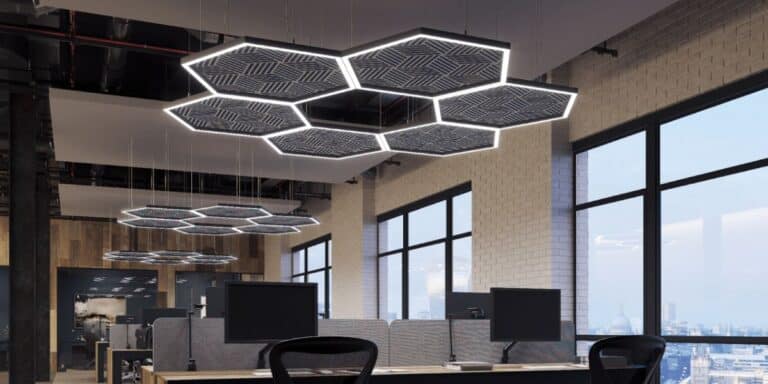
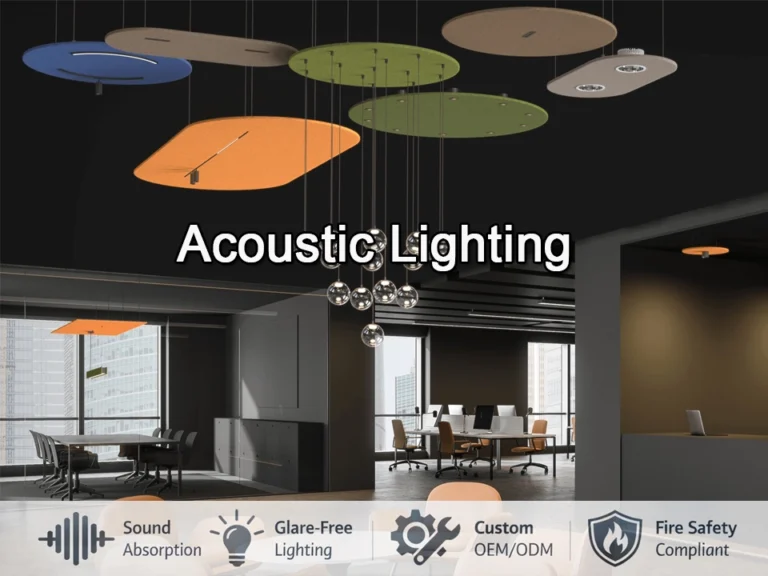
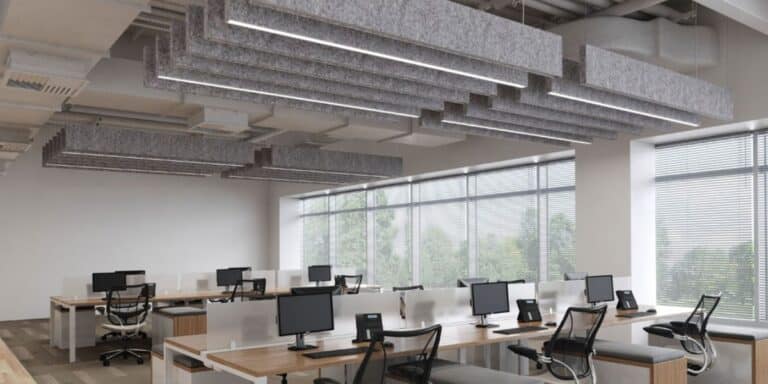
Integrated commercial systems such as those shown on SignliteLED’s OEM acoustic lighting page illustrate how manufacturers combine engineered LED modules with acoustic panels for project-level applications rather than consumer retail environments.
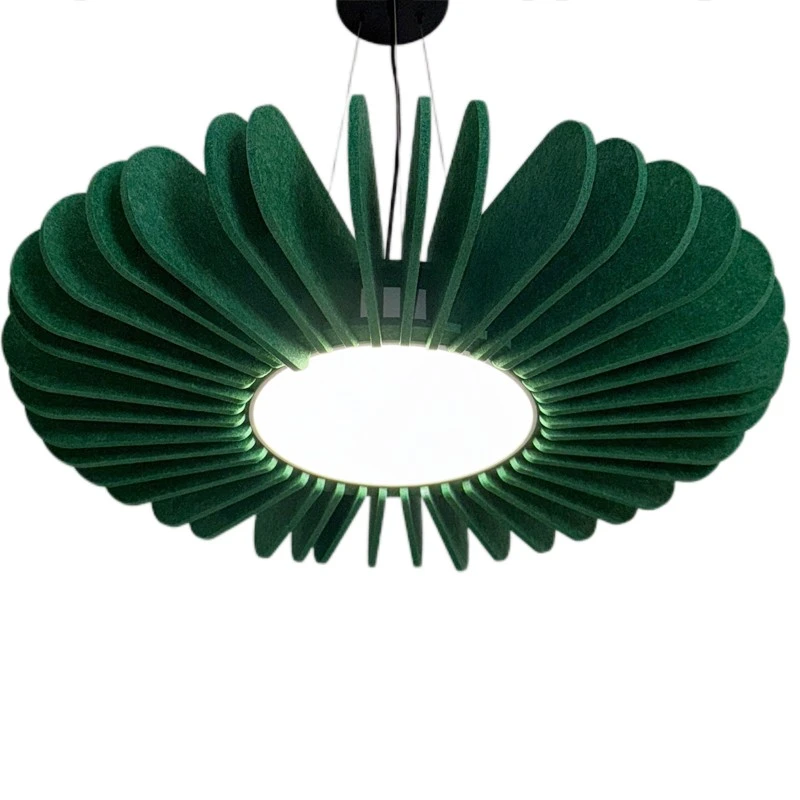
Ultrathin Slim Round Acoustic LED Pendant Light
- Input Voltage: AC100-277V / AC220-240V,50-60HZ
- Housing Size: 120 mm
- Emitting Direction: Downward
- Size DH: 500*80mm
- CCT: 3000K / 4000K / 6000K
- Power: 15W
- Luminous Flux: 100-110Lm/W
- CRI: >90Ra
- PF: >0.90
- Fllicker Free: Yes
- Beam Angle: 120°
- IP Grade: IP20
- Warranty: 5 years
- Acoustic Panel Color Option: Red / Green / Blue / Grey more than 48 colors option
Installation Cost Comparison
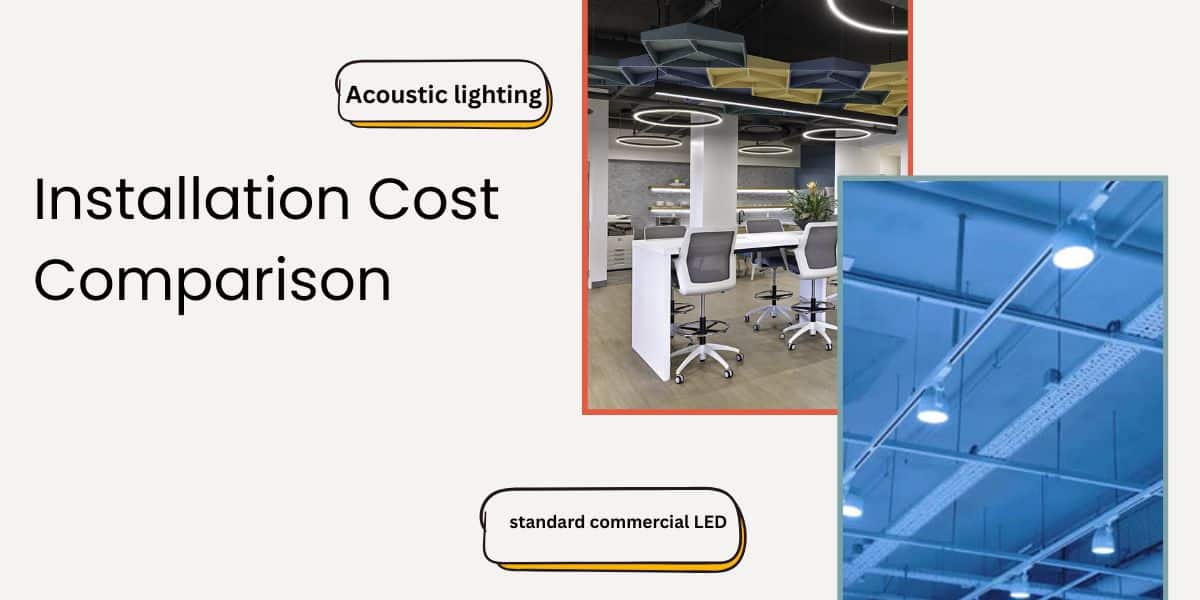
Installation cost can significantly influence total project budget.
For standard commercial LED fixtures, labor typically ranges between $50–$150 per fixture. Drop-in troffers installed within suspended ceiling grids fall at the lower end. Suspended linear pendants require additional time for alignment and cable adjustment.
Acoustic lighting installation typically ranges between $100–$300 per fixture, depending on size, suspension design, and ceiling structure. Larger acoustic fixtures may require additional anchoring points or two-person installation crews due to weight and surface area.
When regular lighting is paired with separate acoustic panels, additional labor must be included. Installation of acoustic ceiling panels generally costs $80–$200 per panel. This is separate from lighting labor and may require coordination between electrical and ceiling contractors.
Projects using separate systems may also incur coordination complexity, particularly when layout conflicts arise between lighting placement and acoustic coverage zones.
Total System Cost Example (1,000 sq ft Open Office)
Consider a 1,000 square foot open-plan office requiring twelve primary lighting fixtures and moderate sound absorption.
Option A: Regular LED Lighting + Separate Acoustic Panels
Lighting:
12 linear pendants at $300 each = $3,600
Installation at $100 each = $1,200
Acoustic treatment:
12 ceiling panels at $300 each = $3,600
Installation at $120 each = $1,440
Estimated total system cost: $9,840
Option B: Integrated Acoustic Lighting
Lighting:
12 acoustic fixtures at $1,100 each = $13,200
Installation at $200 each = $2,400
Estimated total system cost: $15,600
In this scenario, integrated acoustic lighting carries a higher upfront investment. However, if greater acoustic coverage were required under Option A, additional panels would increase total cost. The correct decision depends on acoustic performance targets, ceiling configuration, and long-term design plans.
Maintenance Cost Comparison
Both systems rely on LED modules and drivers with comparable performance characteristics. Commercial LEDs typically offer lifespans between 30,000–50,000 hours. Driver replacement costs generally range between $40–$120, depending on wattage and specification.
Over a three to five year period, LED-related maintenance costs are similar for both systems.
Acoustic lighting introduces felt surfaces that require periodic cleaning. In most office environments, vacuuming every three to six months is sufficient. Dust accumulation can affect appearance more than performance.
Replacement of acoustic panels is uncommon but possible in high-impact or heavily soiled environments. Replacement cost depends on fixture size and customization level.
Standard aluminum LED fixtures require occasional lens cleaning and housing wiping. While acoustic fixtures may involve slightly more cleaning effort, overall maintenance cost differences are typically modest.
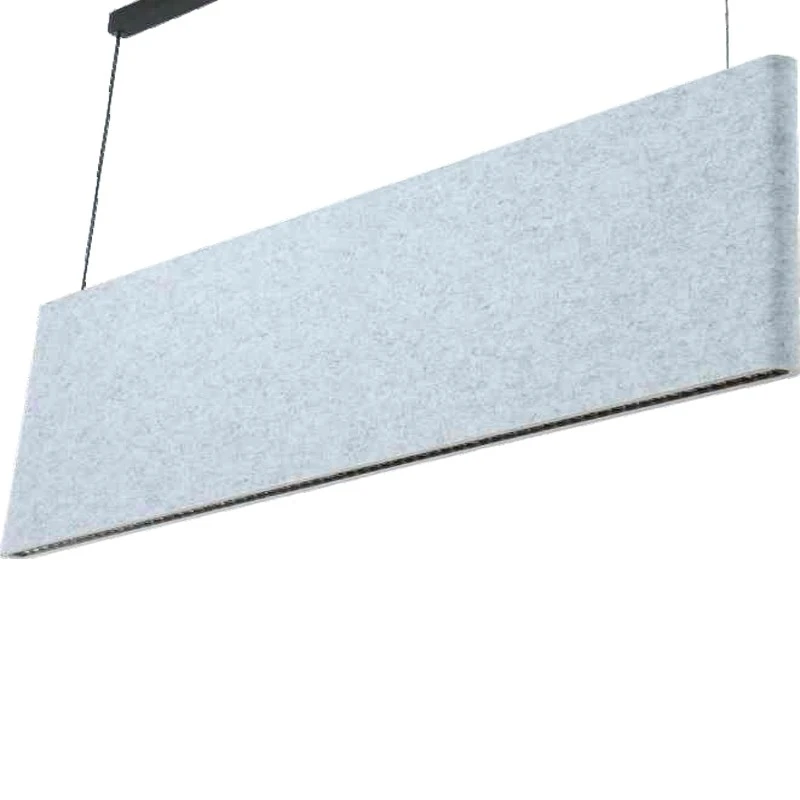
Acoustic LED Reflector Linear Light
- Input Voltage: AC110-120V / AC220-240V,50-60HZ
- Width: 36mm/ 58mm/ 80mm
- Height: 400mm
- Length: 1218mm / 1288mm
- LED Chip: SMD2835
- UGR: <19 PF: >0.90
- CRI: >90Ra
- Luminous Flux: 100Lm/W
- Beam Angle: 34°
- CCT: 3000K / 4000K / 6000K
- Power: 20W/ 40W/ 60W
- Warranty: 5 years
- Acoustic Panel: Red / Green / Blue / Grey more than 48 colors option
Lifecycle Cost (3-5 Year Perspective)
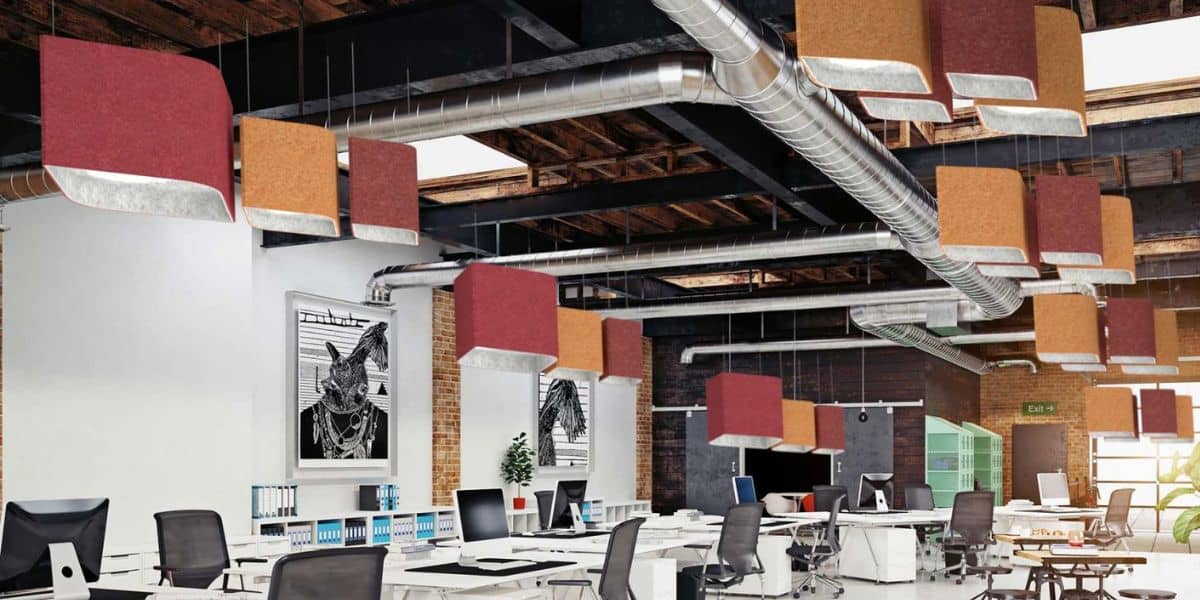
Lifecycle cost evaluation should consider system integration rather than unit price alone.
Acoustic lighting may reduce the need for separate ceiling acoustic systems, which can lower procurement duplication and reduce ceiling penetrations. In renovation projects, combining lighting and acoustic treatment can simplify reconfiguration compared to managing two separate systems.
However, acoustic lighting does not automatically guarantee financial savings. In spaces where acoustic requirements are minimal or already satisfied through ceiling construction, standard LED lighting remains more cost-efficient.
A three to five year evaluation should include acoustic coverage needs, labor rates, expected layout changes, and maintenance planning.
Maintenance & Lifecycle Comparison
Cost and Lifecycle Comparison (3-5 Years)
| Cost Factor | Acoustic Lighting | Regular Lighting | 3–5 Year Impact |
| Initial unit cost | $400–$2,500+ | $80–$600 | Higher upfront investment |
| Installation labor | $100–$300 per unit | $50–$150 per unit | Moderate increase |
| Additional acoustic treatment | Often integrated | $150–$500 per panel + labor | May increase total system cost |
| LED rated lifespan | 30,000–50,000 hours | 30,000–50,000 hours | Exceeds 3–5 year evaluation window |
| Warranty coverage | 5 years (manufacturer dependent) | 3–5 years typical | Covered during primary risk period |
| Cleaning effort | Periodic vacuuming of felt surfaces | Lens and housing cleaning | Slightly higher maintenance effort |
| Trade coordination | Integrated system | Separate lighting and acoustic contractors | Potential scheduling complexity |
When Acoustic Lighting Is Financially Justified
Acoustic lighting is financially justified in open-plan offices with high speech density, coworking environments, conference-heavy layouts, high-ceiling commercial interiors, and design-driven corporate spaces requiring integrated solutions. In these contexts, combining sound control and lighting into a single suspended system can simplify specification and reduce reliance on extensive ceiling panels.
When Regular Lighting Is More Cost-Efficient
Regular commercial LED lighting remains more economical in small enclosed rooms, low speech-activity areas, buildings with existing acoustic drop ceilings, and budget-constrained retrofit projects. In such cases, the higher fixture cost of acoustic lighting may not provide proportional financial value.
Common Cost Evaluation Mistakes
Common errors include comparing fixture prices without accounting for acoustic panel costs, ignoring separate installation labor, underestimating ceiling coordination complexity, and failing to evaluate maintenance planning over multiple years. A full system analysis provides a more accurate financial picture.
Conclusion
Acoustic lighting carries a higher upfront unit cost than regular commercial LED lighting, typically ranging from $400 to $2,500+ per fixture compared to $80 to $600 for standard options.
In acoustically demanding environments, integrated acoustic lighting may reduce reliance on separate panels and simplify coordination. In simpler applications, regular LED lighting remains more economical.
The appropriate decision should be based on total system cost and three to five year lifecycle evaluation rather than fixture price alone.
FAQs
Related Posts