English
  简体中文
简体中文  Deutsch
  Español
  Français
  Italiano
  日本語
日本語  한국어
한국어  Polski
  Português
  Русский
  Türkçe
  Nederlands
  Tiếng Việt
  ไทย
ไทย 
Coworking spaces reduce noise best by combining echo control (absorption), sound blocking (zoning/privacy), and sound masking (background noise control). When you layer these three strategies, you get better focus, fewer distractions, and clearer calls across the whole space.
This article explains the best noise reduction solutions for coworking spaces, the recommended products that work best, and where to place them for maximum acoustic comfort and productivity.
Quick Overview (Best Solutions at a Glance)
For fast, reliable results, start with these solutions first:
- Acoustic wall panels + ceiling baffles/clouds to reduce echo
- Acoustic lighting (dual purpose: lighting + sound absorption)
- Desk dividers / PET felt screens for privacy and speech control
- Phone booths / meeting pods for call-heavy members
- Soft furnishings + rugs to reduce harsh reflections
- Sound masking systems to lower speech distractions
- Noise-canceling headphones for individuals who need deep focus
Why Coworking Spaces Get Noisy

Coworking spaces are designed for collaboration, flexibility, and openness. The downside is that sound travels easily.
Here’s what usually causes the noise problem:
Open-plan layouts amplify speech. Conversations don’t stay in one place, especially when there are no barriers.
Hard surfaces create echo. Glass walls, concrete floors, exposed ceilings, and whiteboards bounce sound around.
Calls and meetings add constant speech noise. Even a few people on video calls can make the entire room feel “busy.”
The real issue is distraction, not just volume. Most coworking members complain about speech they can understand, not just loudness.
So instead of chasing “silence,” your goal is simple: reduce echo, stop sound from traveling too far, and make speech less distracting.
Best Noise Reduction Solutions for Coworking Spaces
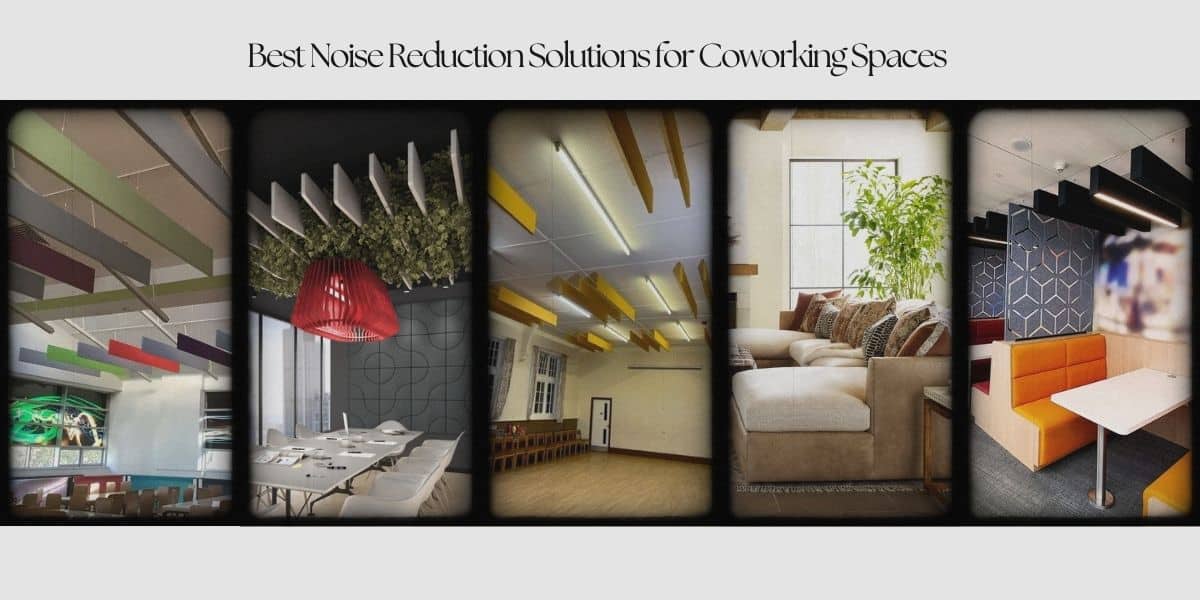
Below are the most effective noise reduction categories for coworking spaces. Each one helps in a different way, and the best setups combine multiple categories.
A) Acoustic Surface Treatments (Reduce Echo)
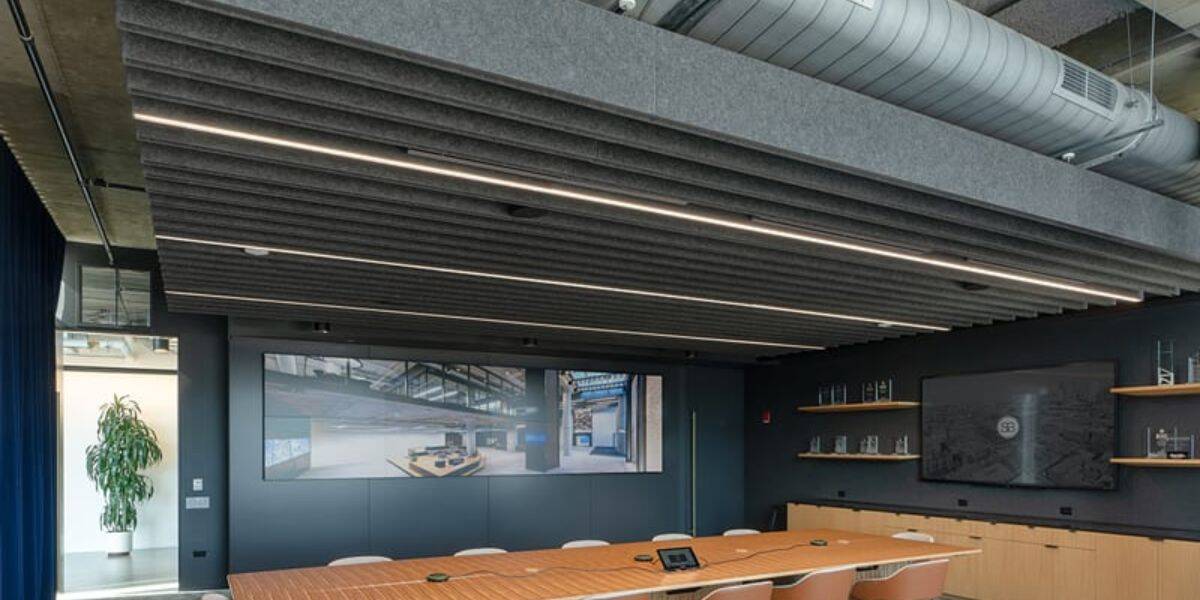
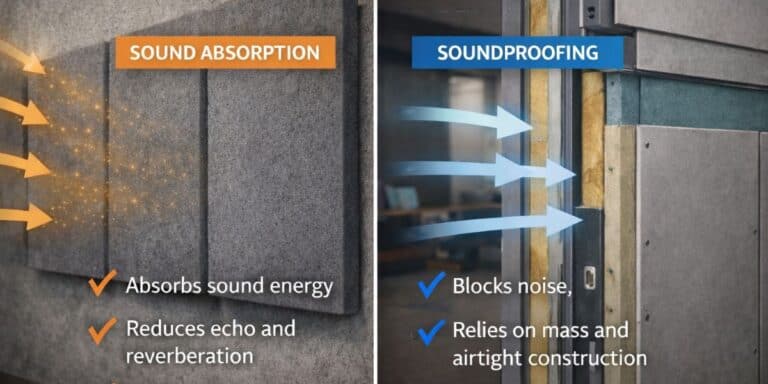
Acoustic surface treatments are the foundation of a quieter coworking space. They don’t “block” noise like a wall, but they reduce reverberation so the space feels calmer and conversations don’t bounce everywhere.
When echo is reduced, you’ll notice:
Less “ringing” in open areas
Clearer meeting room audio
Less fatigue from constant background chatter
Recommended products (echo control)
Acoustic wall panels
Great for reducing reflections from large flat walls (especially near desks and corridors).
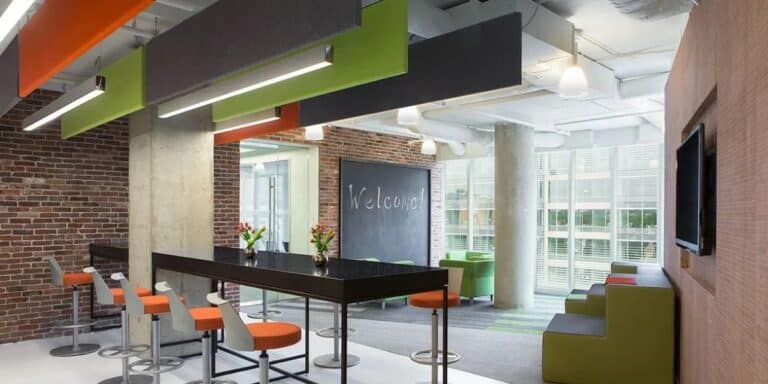
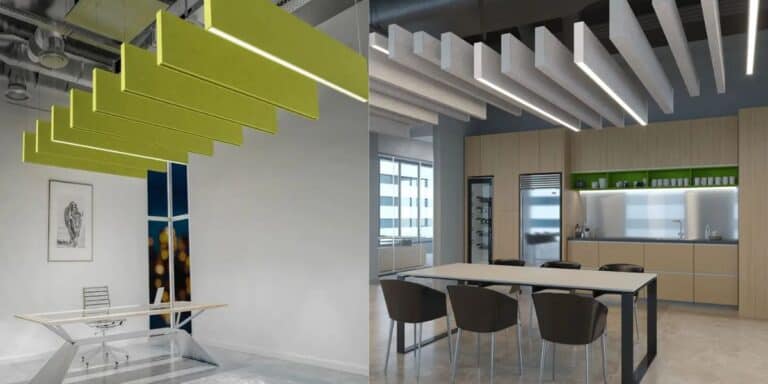
Ceiling baffles
Vertical hanging panels that reduce echo in big open areas.
Ceiling clouds
Horizontal ceiling-mounted panels that absorb sound from above.
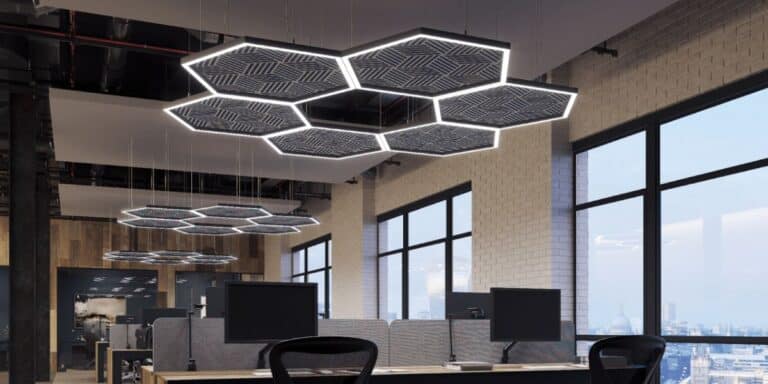
Acoustic lighting panel
A smart option that combines absorption + lighting in one product, especially useful when the ceiling is your biggest reflection surface.
Best placement tips (simple + effective)
Install panels on walls near open desk areas, not just on random “empty walls.”
Treat the ceiling above shared work zones, because ceilings reflect a lot of speech.
Add absorption near hallways and walkways where sound carries.
Use a mix of wall + ceiling treatment instead of doing only one surface.
Focus first on the areas with the most complaints (usually open desks + call zones).
If you fix echo early, everything else you add later works better.
B) Acoustic Lighting (Dual-Purpose Noise + Light Solution)
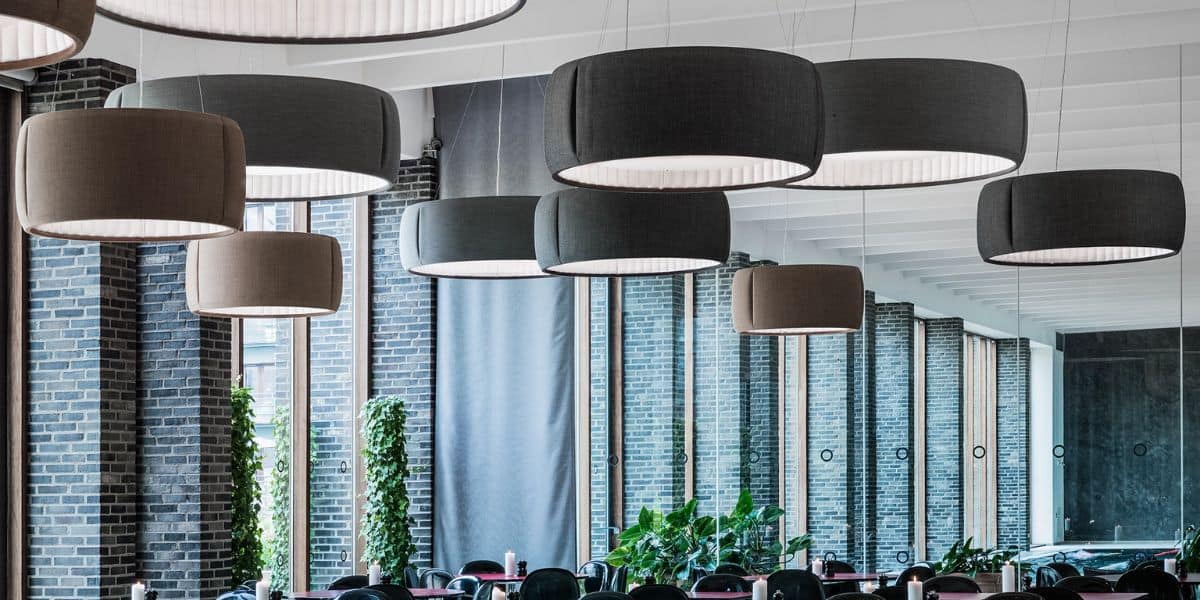
Acoustic lighting is one of the most practical upgrades for modern coworking spaces because it improves two major comfort issues at once: harsh acoustics and poor lighting distribution.
Instead of installing standard lights and then adding separate acoustic panels later, acoustic lighting helps you do both in one step.
Why acoustic lighting works so well in coworking spaces
Most coworking spaces have ceiling-heavy designs: open ceilings, exposed ductwork, and lots of hard materials. That makes the ceiling a major sound reflection surface.
Acoustic lighting helps by:
Absorbing speech reflections from above
Reducing the “buzz” of an open-plan environment
Improving comfort in shared desk areas
Supporting clearer calls in collaboration zones
It’s especially helpful when you can’t (or don’t want to) fully cover the ceiling with baffles or clouds.
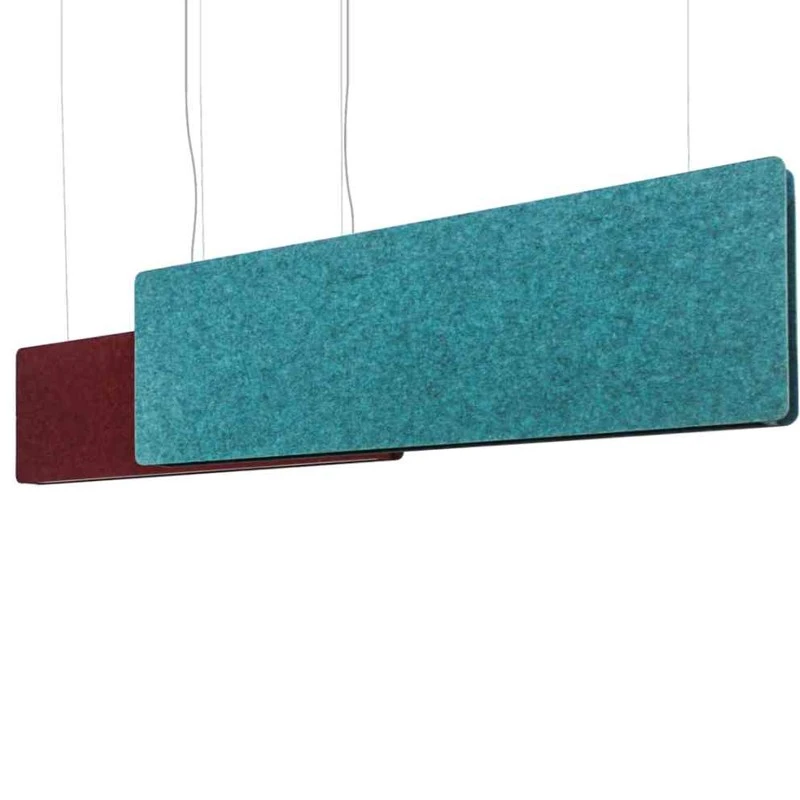
Acoustic LED Reflector Linear Light
- Input Voltage: AC110-120V / AC220-240V, 50-60HZ
- Width: 36mm / 58mm / 80mm
- Height: 400mm
- Length: 1218mm / 1288mm
- LED Chip: SMD2835
- UGR: <19
- PF: >0.90
- CRI: >90Ra
- Luminous Flux: 100Lm/W
- Beam Angle: 34°
- CCT: 3000K / 4000K / 6000K
- Power: 20W / 40W / 60W
- Warranty: 5 years
- Acoustic Panel:
- Color Option: Red / Green / Blue / Grey (more than 48 colors option)
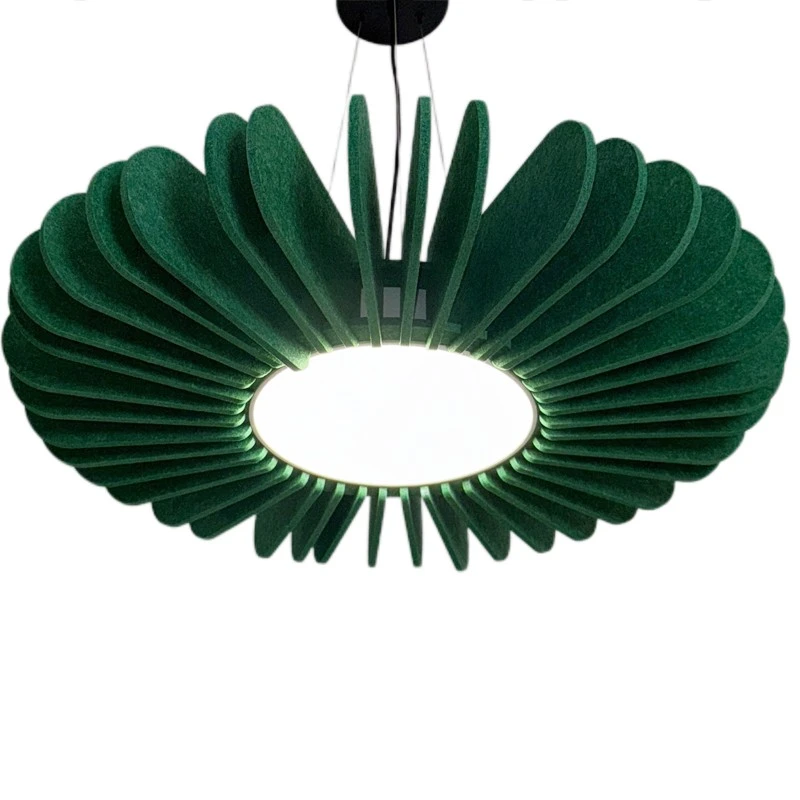
Ultrathin Slim Round Acoustic LED Pendant Light
- Input Voltage: AC100–277V / AC220–240V, 50–60HZ
- Housing Size: 120 mm
- Emitting Direction: Downward
- Size D*H: 500 × 80 mm
- CCT: 3000K / 4000K / 6000K
- Power: 15 W
- Luminous Flux: 100–110 lm/W
- CRI: > 90 Ra
- PF: > 0.90
- Fllicker Free: Yes
- Beam Angle: 120°
- IP Grade: IP20
- Warranty: 5 years
- Acoustic Panel Color Option: Red / Green / Blue / Grey (more than 48 colors option)
Recommended acoustic lighting products
Acoustic pendant lights
These work well above long desks, bench seating, and shared tables.
Felt lighting and fixtures
A popular option because felt naturally supports absorption and adds warmth to modern interiors.
Acoustic fixtures
This term generally refers to lighting products built with sound-absorbing materials and forms.
Where to place acoustic lighting (most effective spots)
For coworking spaces, placement matters more than the product label. Start here:
- Above shared desks
This is usually the loudest area and the biggest productivity zone. - Above lounge zones
Soft seating helps, but ceiling reflections still create noise buildup. - Above collaboration tables
These tables create speech “hotspots,” especially during peak hours.
A good rule: if people sit there for more than 30 minutes, it’s worth treating the ceiling above them.
C) Architectural & Privacy Solutions (Block Sound Travel)
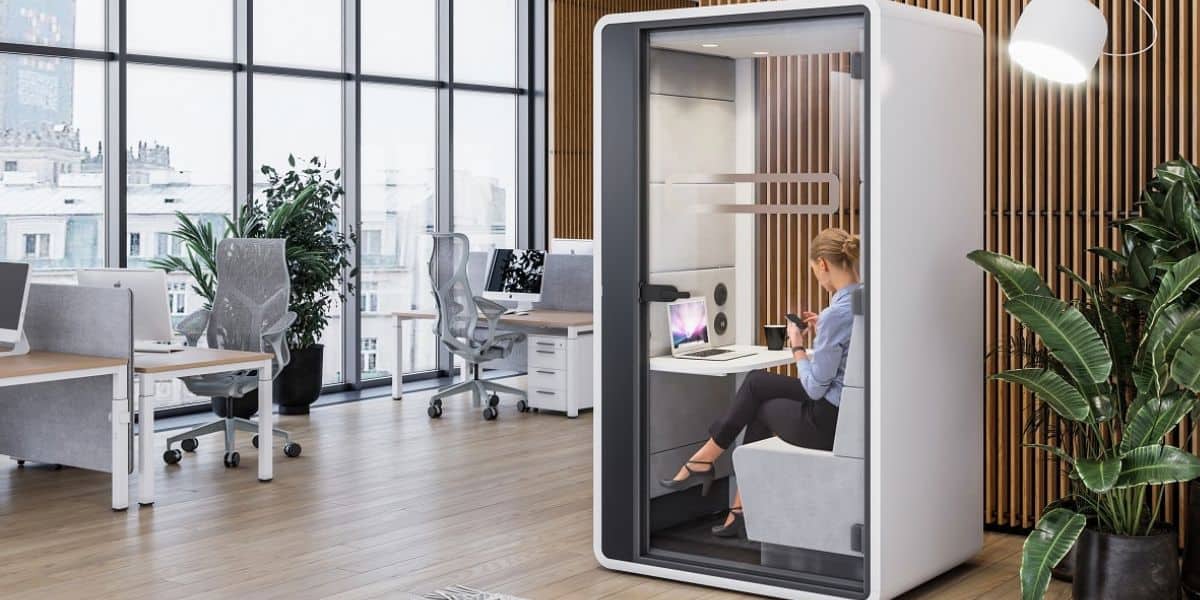
Once you reduce echo, the next step is stopping sound from spreading between zones. This is where privacy solutions and space planning make a big difference.
Recommended products (sound blocking + zoning)
Phone booths for calls
A must-have in any coworking space with frequent video meetings.
Meeting pods
Great for 2–4 people who need quick collaboration without disturbing others.
Privacy partitions
Useful for separating open desks from walkways or lounge areas.
Desk dividers (PET felt)
One of the most cost-effective upgrades. PET felt helps reduce direct speech transfer between adjacent seats.
Placement strategy that actually works
Put phone booths near call-heavy areas, but not directly inside quiet zones.
Create a clear quiet zone away from social areas and café seating.
Use partitions to separate “movement paths” from seated work areas.
Add desk dividers in rows where members sit face-to-face or side-by-side.
Even small zoning changes can reduce complaints fast because speech becomes less “shared.”
D) Soft Materials & Furniture Upgrades
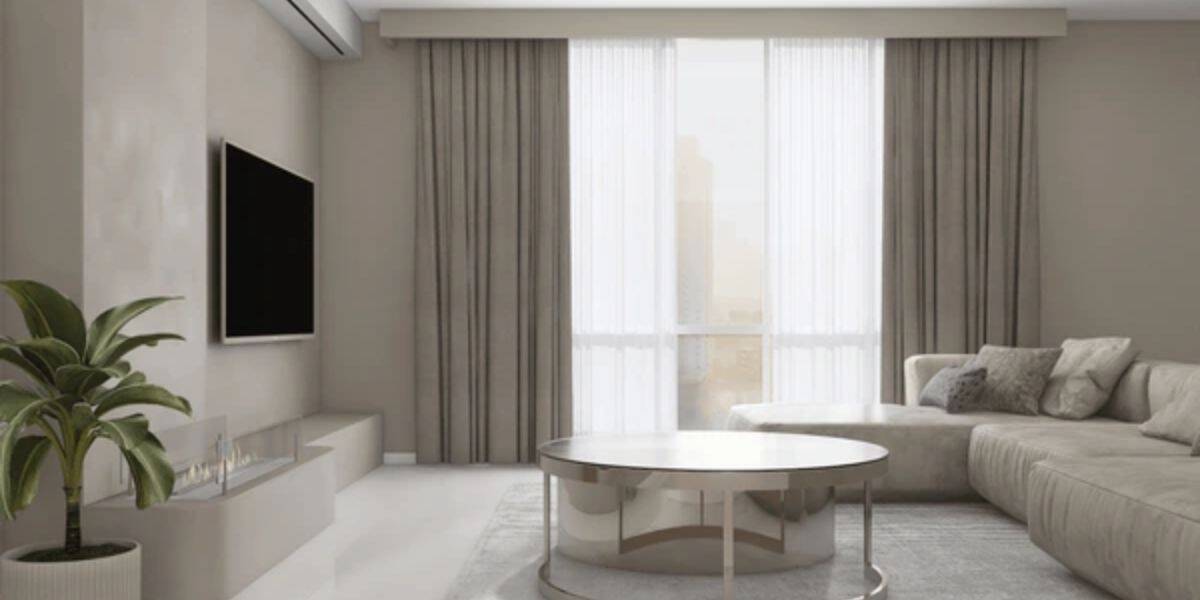
Not every coworking space can do construction or large installations right away. The good news is that soft materials can reduce harshness and improve comfort quickly.
Recommended products (easy upgrades)
Rugs / carpet tiles
One of the fastest ways to soften sound in open spaces and lounge areas.
Curtains
Helpful near glass walls and windows where sound reflects strongly.
Upholstered seating
Soft seating absorbs more sound than hard chairs and benches.
Felt décor elements
Wall décor, separators, and felt-based design features help reduce reflections.
Soft upgrades reduce sharpness. Members may not say “it’s quieter,” but they’ll feel like it’s easier to focus.
E) Active Sound Management
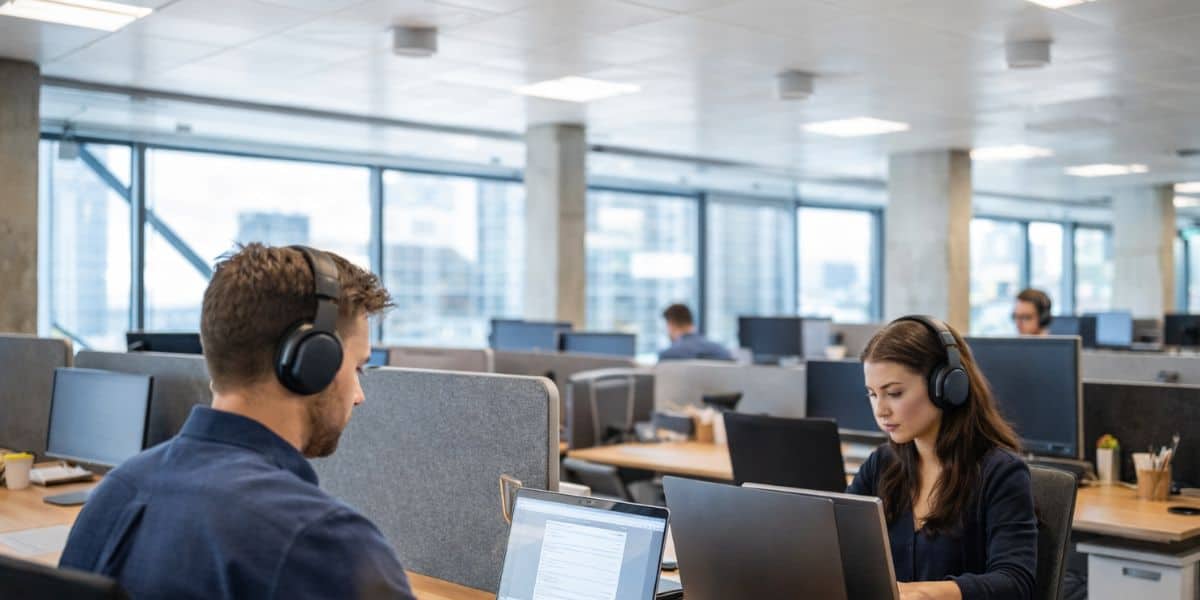
After you control echo and improve zoning, sound masking can help reduce speech distractions across the whole space.
Sound masking doesn’t eliminate noise. It makes speech less noticeable, which is what people actually want during deep work.
Recommended products
Sound masking systems (best for open desks and long corridors)
White/pink noise solutions (quick fix for small areas)
Noise-canceling headphones (individual solution)
This works best when you’ve already handled echo. Otherwise, you may just be adding more “sound” to a messy acoustic environment.
Noise Reduction Solutions for Coworking Spaces (What Works Best + Where to Use It)
| Solution/Product | Best For | Noise Problem It Solves | Placement Tip | Notes |
| Acoustic wall panels | Open desks, hallways, meeting rooms | Echo + speech reflections | Place on walls closest to work zones | Great first upgrade |
| Ceiling baffles/clouds | Large open spaces | High echo in open ceilings | Hang above shared desks and walkways | Strong impact in big rooms |
| Acoustic lighting | Open areas needing light + absorption | Ceiling reflections + speech distraction | Install above desks and collaboration zones | Dual-purpose upgrade |
| Desk dividers (PET felt) | Bench seating, shared tables | Direct speech transfer | Add between workstations | Budget-friendly privacy |
| Phone booths | Call-heavy coworking spaces | Call noise spreading | Put near call zones | High satisfaction |
| Rugs/soft furniture | Lounges, café zones, reception | Harsh reflections + footsteps | Use in seating clusters | Easy comfort boost |
| Sound masking | Open-plan desks | Speech distraction across distance | Use evenly across large areas | Best after absorption |
Recommended Setup by Coworking Zone
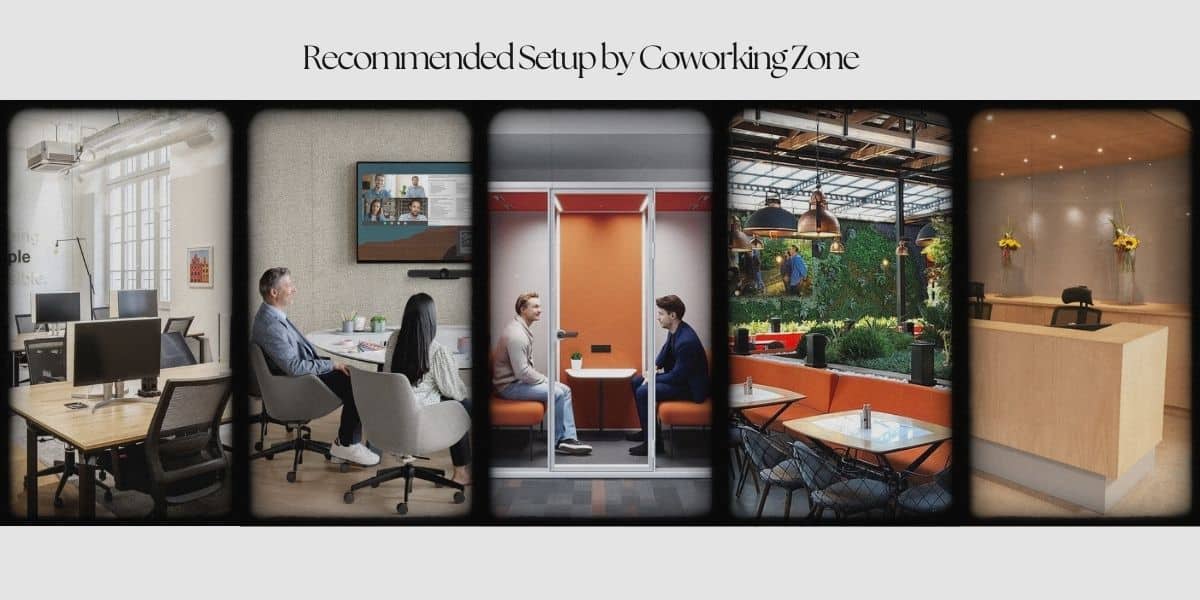
1) Open Desk Area (Main Productivity Zone)
Best solutions: ceiling clouds/baffles, acoustic lighting, desk dividers
Tip: treat the ceiling first because it’s the biggest reflection surface.
2) Meeting Rooms (Calls, Collaboration, Presentations)
Best solutions: wall panels + ceiling cloud above table + curtains (if glass)
Tip: treat at least two surfaces (wall + ceiling) for noticeable clarity.
3) Phone Call Areas (High Complaint Zone)
Best solutions: phone booths/pods + nearby wall panels
Tip: booths must be close enough that people actually use them.
4) Lounge / Café Zone (Social Energy Without Chaos)
Best solutions: rugs + soft seating + acoustic lighting
Tip: treat above seating clusters so sound doesn’t spill into quiet zones.
5) Reception (First Impressions Matter)
Best solutions: wall panels behind desk + soft seating + partitions
Tip: add a buffer zone so entry noise doesn’t travel into work areas.
Common Mistakes to Avoid
Only adding décor but ignoring ceiling echo
Buying phone booths but not fixing open-area reverb
Poor placement of panels far from the speech zones
Expecting one product to solve everything
The best results come from layering absorption + zoning + masking.
Conclusion
The best noise reduction results in coworking spaces come from a layered approach: reduce echo, block sound travel with smart zoning, and add sound masking when needed.
Acoustic lighting is one of the smartest upgrades because it improves both comfort and illumination in the same footprint, especially in open desk areas.
Most importantly, placement matters more than just buying products. When you install the right solutions in the right zones, you get better focus, fewer distractions, and a coworking space people actually want to work in.
FAQs
Related Posts