English
  简体中文
简体中文  Deutsch
  Español
  Français
  Italiano
  日本語
日本語  한국어
한국어  Polski
  Português
  Русский
  Türkçe
  Nederlands
  Tiếng Việt
  ไทย
ไทย 
Architectural lighting is the planned use of lighting systems to improve visibility, enhance building design, and support functional requirements in indoor and outdoor environments.
It combines layered lighting techniques with LED technology and control systems to achieve consistent illumination, visual comfort, and energy efficiency.
In modern buildings, lighting is not only used to provide brightness but also to shape how a space is experienced. It influences how people see objects, move within a space, and interact with their surroundings. In practice, architectural lighting systems often use LED strips with aluminum profiles to achieve consistent performance and durability.
In this article, we will explain architectural lighting fundamentals, including its types, design principles, fixtures, technologies, and real-world applications.
Quick Answer
What is architectural lighting?
Architectural lighting is the structured use of light to improve function, visibility, and visual appearance in built environments.
What are the main types of architectural lighting?
Ambient, task, accent, and decorative lighting.
Why is architectural lighting important?
It improves usability, enhances architectural features, and ensures visual comfort while maintaining energy efficiency.
What Is Architectural Lighting ?

Architectural lighting refers to the integration of lighting systems into buildings to support visibility, spatial perception, and design enhancement.
It plays both a functional and visual role. Functionally, it ensures that spaces are properly illuminated for activities such as working, walking, or interacting. Visually, it enhances textures, shapes, and architectural elements.
Architectural lighting is not a single product. It is a system composed of multiple elements that work together to create a complete lighting solution.
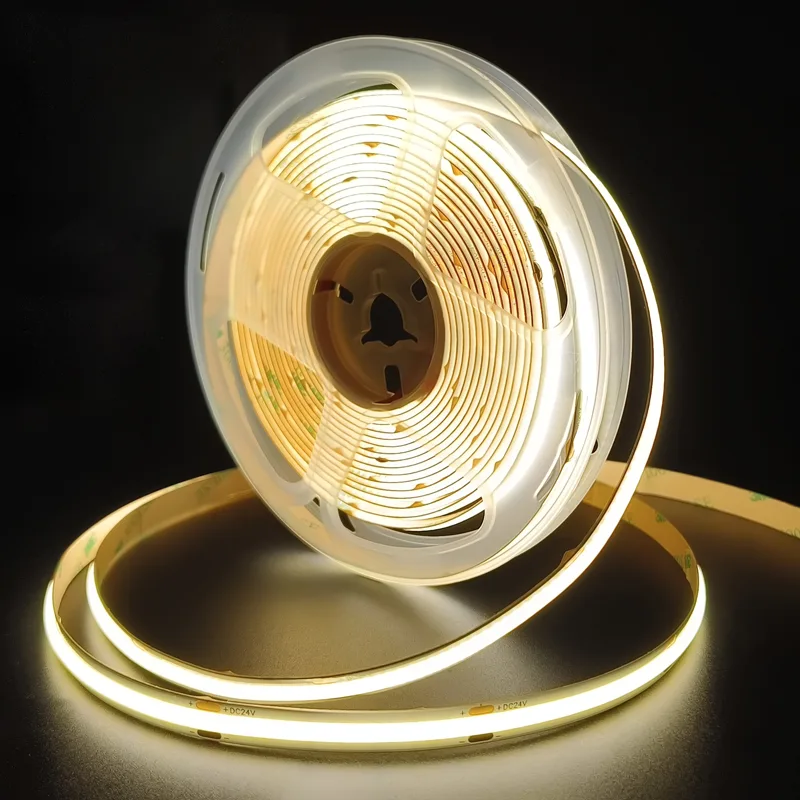
Single Color COB LED Strip Light
- LED Chip QTY per Meter: 320/384/480/528chips
- CRI: >90
- PCB Width: 8mm/10mm
- Color Temperature: Red/Green/Blue/3000K/4000K/6000K
- Input Voltage: DC12V/DC24V
- Power per meter: 8W/m, 10W/m, 11W/m, 14W/m
- Efficiency: 90lm/w – 105lm/w
- IP Grade: IP20/IP65/IP67/IP68
- Warranty: 3 years
- Price: USD $0.93-1.65 per meter
Key Components of Architectural Lighting
| Component | Function |
| Light Source | Produces illumination (typically LED) |
| Fixture | Controls light direction and spread |
| Control System | Adjusts brightness and operation |
| Mounting System | Integrates lighting into structure |
Each component directly affects performance. For example, an efficient LED will not deliver good results if the fixture does not control light distribution properly.
Decision Insight:
Lighting performance depends on how well all system components are integrated, not on individual parts alone.
What Are the Core Principles of Architectural Lighting Design
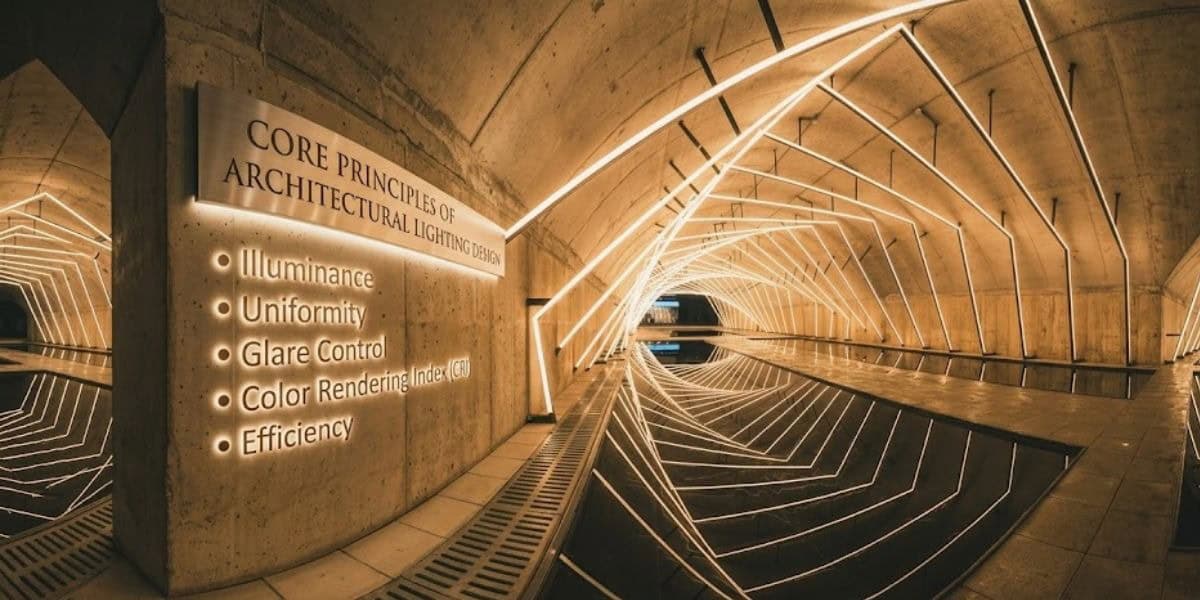
Lighting design principles are measurable factors used to ensure lighting performance, comfort, and efficiency.
These principles help define how lighting should be applied in real environments. Without them, lighting may be uneven, uncomfortable, or inefficient.
Key Design Principles
| Principle | Description | Typical Value |
| Illuminance | Required brightness level | 300–500 lux |
| Uniformity | Even distribution of light | ≥0.4 |
| Glare Control | Visual comfort level | UGR <19 |
| CRI | Color rendering accuracy | ≥80 / ≥90 |
| Efficiency | Energy performance | 100–150 lm/W |
Illuminance ensures that spaces are bright enough for tasks. Uniformity prevents dark areas and uneven lighting. Glare control reduces eye strain, especially in offices and commercial spaces.
Color rendering is important in environments where accurate color perception matters, such as retail or design spaces.
Key Takeaway:
Effective lighting design balances brightness, comfort, and efficiency rather than focusing on a single metric.
How to Design Architectural Lighting (Step-by-Step)

Architectural lighting design is the process of planning lighting based on space requirements, functionality, and performance targets.
Step-by-Step Design Process
| Step | Description |
| Step 1 | Identify space type (office, retail, residential) |
| Step 2 | Define required lux levels |
| Step 3 | Select lighting types (ambient, task, accent) |
| Step 4 | Choose fixtures based on layout |
| Step 5 | Plan lighting uniformity and spacing |
| Step 6 | Add control systems (dimming/sensors) |
This process ensures lighting is not randomly installed but designed based on measurable requirements and space usage.
Key Takeaway:
Lighting design should always start with function and measurable targets, not fixtures.
Also Read Our Guide On: Can Hidden Lighting Be Used to Highlight Architectural Features?
Can Hidden Lighting Be Used to Highlight Architectural Features
How to Calculate Lighting Requirements (Lux Planning)
Lighting calculation refers to determining how much light (lux) is needed in a space.
Basic Lighting Calculation
| Parameter | Example |
| Room Size | 20 m² |
| Required Lux | 300 lux |
| Total Lumens Needed | 6000 lumens |
Total lumens = area × required lux level. This helps ensure lighting meets functional requirements without over-lighting or under-lighting the space.
Key Takeaway:
Correct lux calculation prevents both insufficient lighting and excessive brightness.
What Are the Types of Architectural Lighting
Architectural lighting is divided into four main types, each designed for a specific function within a space.
Ambient Lighting
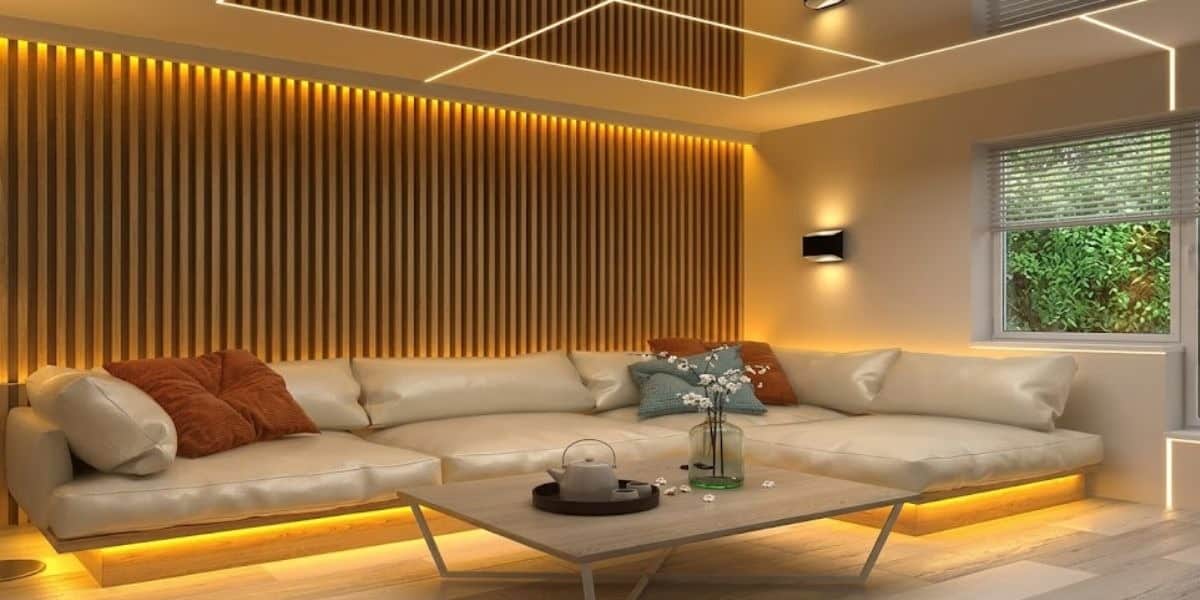
Ambient lighting provides overall illumination across a space. It creates a base level of brightness that allows people to move safely and perform general activities. It is usually delivered through ceiling-mounted fixtures such as panels or downlights.
Task Lighting

Task lighting provides focused illumination for specific activities such as reading, working, or cooking. It is typically brighter than ambient lighting and positioned close to the task area to improve visibility and reduce eye strain.
Accent Lighting

Accent lighting highlights specific elements such as walls, artwork, or architectural details. It creates contrast by using higher intensity, often 2–3 times brighter than ambient lighting, to draw attention to selected features.
Decorative Lighting

Decorative lighting focuses on visual appearance rather than function. It enhances the aesthetic value of a space through fixtures like chandeliers or pendant lights, contributing to overall design and atmosphere.
Lighting Types Table
| Type | Purpose | Typical Output | Common Fixtures |
| Ambient | General illumination | 300–500 lux | Panels, downlights |
| Task | Focused lighting | 500–1000 lux | Desk lights |
| Accent | Highlight features | 2–3× ambient | Spotlights |
| Decorative | Visual effect | Variable | Chandeliers |
Decision Insight:
Combining multiple lighting types creates a balanced environment that supports both function and design.
LED vs Traditional Lighting (Performance Comparison)
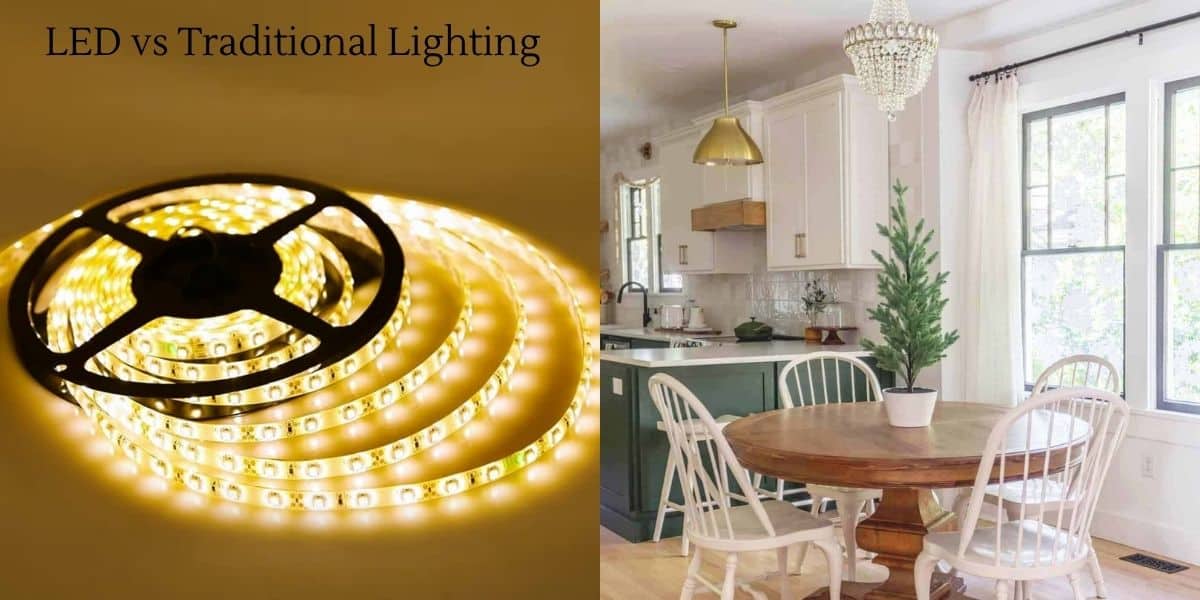
Lighting technologies differ in efficiency, lifespan, and maintenance requirements.
Comparison Table
| Parameter | LED Lighting | Traditional Lighting |
| Efficiency | 100–150 lm/W | 40–80 lm/W |
| Lifespan | ~50,000 hours | 5,000–15,000 hours |
| Energy Use | Lower | Higher |
| Heat Output | Low | High |
| Maintenance | Minimal | Frequent replacement |
LED lighting provides higher efficiency and longer lifespan compared to traditional lighting systems. This makes it more suitable for modern architectural applications.
Key Takeaway:
LED technology offers better long-term performance and lower operational costs.
LED Strip and Aluminum Profile in Architectural Lighting
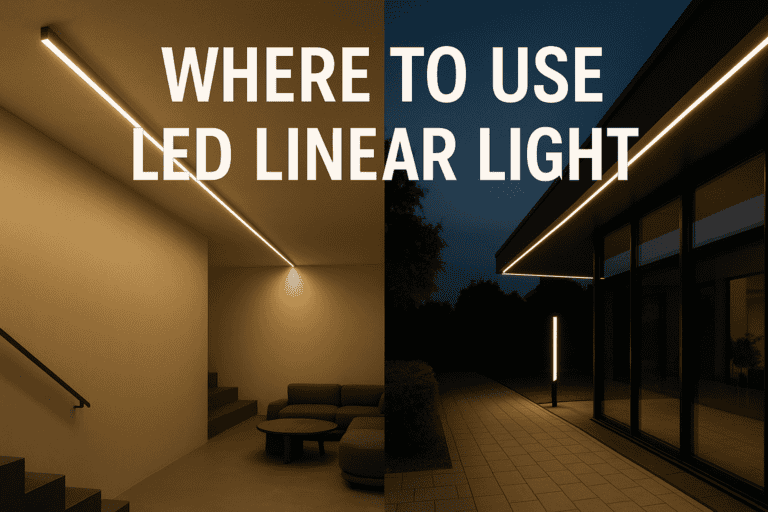
LED strip lights and aluminum profiles are commonly used components in architectural lighting systems, especially for linear and concealed lighting applications.
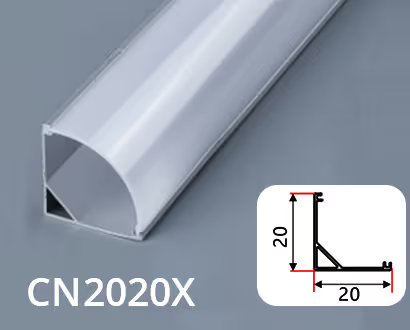
In real projects, LED strips provide flexible and continuous light output, while aluminum profiles improve heat dissipation and protect the LEDs from environmental exposure.
Role of LED Strip Lighting
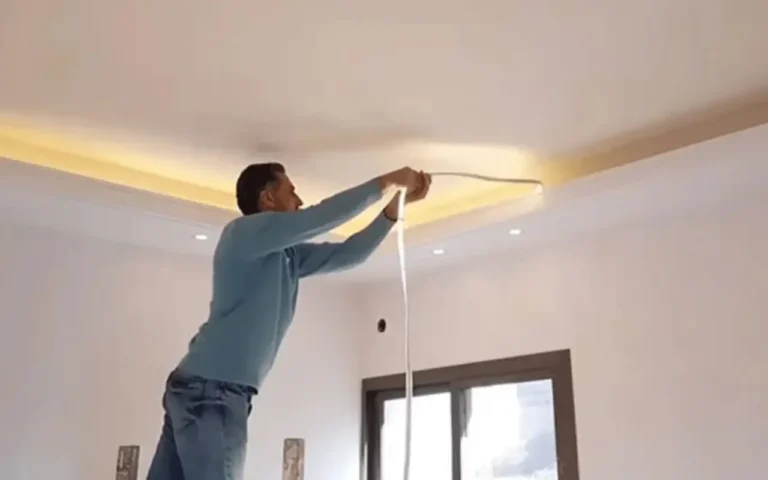
LED strip lights are used to create continuous lighting lines in applications such as cove lighting, under-cabinet lighting, and architectural outlines. Their flexible structure allows installation along curved or irregular surfaces.
Role of Aluminum Profiles
Aluminum profiles act as mounting and heat management structures. They help maintain LED performance by reducing heat buildup and also improve durability, especially in outdoor installations.
Indoor vs Outdoor Applications
| Application | Typical Use |
| Indoor | Cove lighting, ceiling design, furniture lighting |
| Outdoor | Building facades, pathways, exterior outlines |
In most installations, LED strips are combined with aluminum profiles to ensure stable performance and longer lifespan.
Key Takeaway:
LED strips provide flexibility, while aluminum profiles ensure durability and thermal stability.
What Are Architectural Lighting Fixtures
Lighting fixtures are devices that control how light is distributed, directed, and installed within a space.
They influence beam angle, light spread, and installation method. Selecting the correct fixture ensures that light reaches the intended area effectively.
Common Fixtures Table
| Fixture | Beam Angle | Application |
| Downlight | 60–90° | General ceiling lighting |
| Spotlight | 15–40° | Accent lighting |
| Linear Light | 90–120° | Offices, commercial |
| LED Strip | Diffused | Cove and indirect lighting |
| Floodlight | Wide beam | Outdoor facade lighting |
For example, spotlights are suitable for highlighting specific objects, while linear lights provide uniform illumination across workspaces.
Key Takeaway:
Fixture selection should match both the lighting purpose and installation conditions.
What Is LED Technology in Architectural Lighting
LED technology is the primary light source used in modern architectural lighting systems due to its efficiency, durability, and flexibility.
Compared to traditional lighting, LEDs consume less power and offer longer operational life, making them suitable for both residential and commercial applications.
LED Performance Table
| Parameter | Typical Range | Impact |
| Efficiency | 100–150 lm/W | Energy savings |
| Lifespan | ~50,000 hours | Lower maintenance |
| CRI | 80–95 | Accurate color rendering |
| CCT | 2700–6500K | Controls ambiance |
| SDCM | ≤3 | Color consistency |
Color temperature affects how a space feels. Warm tones are used in residential and hospitality environments, while neutral tones are common in offices.
Decision Insight:
LED performance should be evaluated using measurable metrics such as CRI, efficiency, and consistency.
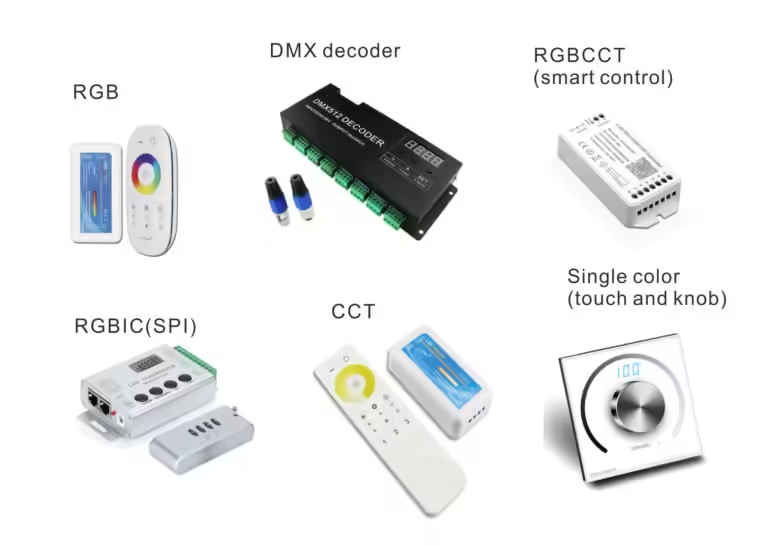
What Are Smart Lighting Control Systems
Smart lighting systems use sensors and control technologies to adjust lighting automatically based on environmental and user conditions.
These systems improve efficiency by reducing unnecessary energy use and provide flexibility in lighting control.
Control Systems Table
| System | Function |
| Motion Sensor | Detects occupancy |
| Daylight Sensor | Adjusts brightness |
| Dimming System | Controls light intensity |
| DMX Control | Enables scene-based lighting |
For example, daylight sensors reduce artificial lighting when natural light is sufficient, helping lower energy consumption.
Key Takeaway:
Smart control systems enhance both efficiency and user comfort.
Where Is Architectural Lighting Used
Architectural lighting is applied differently depending on the environment and its functional requirements.
Application Table
| Space | Lighting Type | Lux Level | CCT |
| Office | Ambient + Task | 300–500 lux | 3500–4000K |
| Retail | Accent + Decorative | 500–1000 lux | 3000–4000K |
| Hotel | Ambient | 200–300 lux | 2700–3000K |
| Residential | Ambient + Task | 150–300 lux | 2700–3000K |
Offices require balanced lighting to support productivity, while retail spaces use accent lighting to highlight products. Hotels and residential areas use warmer tones to create a comfortable atmosphere.
Decision Insight:
Lighting design should always match the purpose and user experience of the space.

Market Trends in Architectural Lighting
Architectural lighting is evolving due to advancements in LED technology and smart control systems.
Market Data Table
| Year | Market Size | Growth |
| 2023 | ~$11B | — |
| 2028 | ~$15.2B | ~6.4% CAGR |
The industry is moving toward energy-efficient, automated, and adaptable lighting solutions.
Key Takeaway:
Future lighting systems will prioritize efficiency, automation, and long-term performance.
Common Architectural Lighting Mistakes
Common mistakes are design or installation issues that reduce lighting performance and visual comfort.
| Mistake | Impact |
| Excessive brightness | Causes glare and discomfort |
| Poor fixture placement | Creates uneven lighting |
| Incorrect color temperature | Affects space atmosphere |
| Ignoring control systems | Increases energy usage |
| Lack of planning | Leads to inconsistent results |
These mistakes are common in projects where lighting is installed without proper planning or calculation.
Also Read Our Detailed Guide On: How to Choose a Commercial & Architectural LED Lighting Manufacturer
How to Choose the Right Architectural Lighting System

Choosing the right lighting system depends on space requirements, performance targets, and installation conditions.
In real projects, lighting selection is based on multiple factors rather than a single specification.
Lighting Selection Table
| Factor | What to Consider |
| Space Type | Office, retail, residential, outdoor |
| Lux Level | Based on activity (300–1000 lux) |
| Fixture Type | Downlight, linear, strip, spotlight |
| Control System | Dimming, sensors, automation |
| Installation | Surface, recessed, integrated |
This structured approach helps ensure that lighting is selected based on function, not just product type. It also improves consistency across different spaces.
Key Takeaway:
The right lighting system is chosen by matching technical requirements with real application needs.
Conclusion
Architectural lighting combines structured design, LED technology, and control systems to create efficient and visually balanced environments.
A well-designed lighting system improves both functionality and user experience while maintaining energy efficiency and long-term reliability.
Understanding lighting types, design principles, and application requirements allows for better decision-making in both residential and commercial projects.
FAQs
Related Posts