English
  简体中文
简体中文  Deutsch
  Español
  Français
  Italiano
  日本語
日本語  한국어
한국어  Polski
  Português
  Русский
  Türkçe
  Nederlands
  Tiếng Việt
  ไทย
ไทย 
High-output LED tape lights, when properly engineered and under equivalent heat dissipation and design conditions, can match the durability of standard LED strips. Their thermal management and robust construction support reliable operation, but they do not inherently exceed the lifespan of standard variants.
Durability is a critical factor in modern LED installations because lighting is no longer treated as a short-term or purely decorative component. In commercial, architectural, and industrial environments, LED tape lights are often expected to operate for 10–18 hours per day, sometimes continuously. Premature failure increases maintenance costs, causes downtime, and can introduce safety risks, especially in hard-to-access installations such as coves, façades, or integrated signage. As lumen outputs increase, the margin for poor engineering narrows, making durability a defining differentiator between well-engineered and commodity-grade LED tape solutions.
This article examines durability from an engineering perspective by addressing four core areas:
- What technically defines “high output” versus standard LED tape lights
- The engineering factors that directly influence durability
- Real-world durability metrics and testing standards
- How to select high output LED tape lights that are genuinely built for reliable operation
What Makes LED Tape Lights High Output vs Standard?
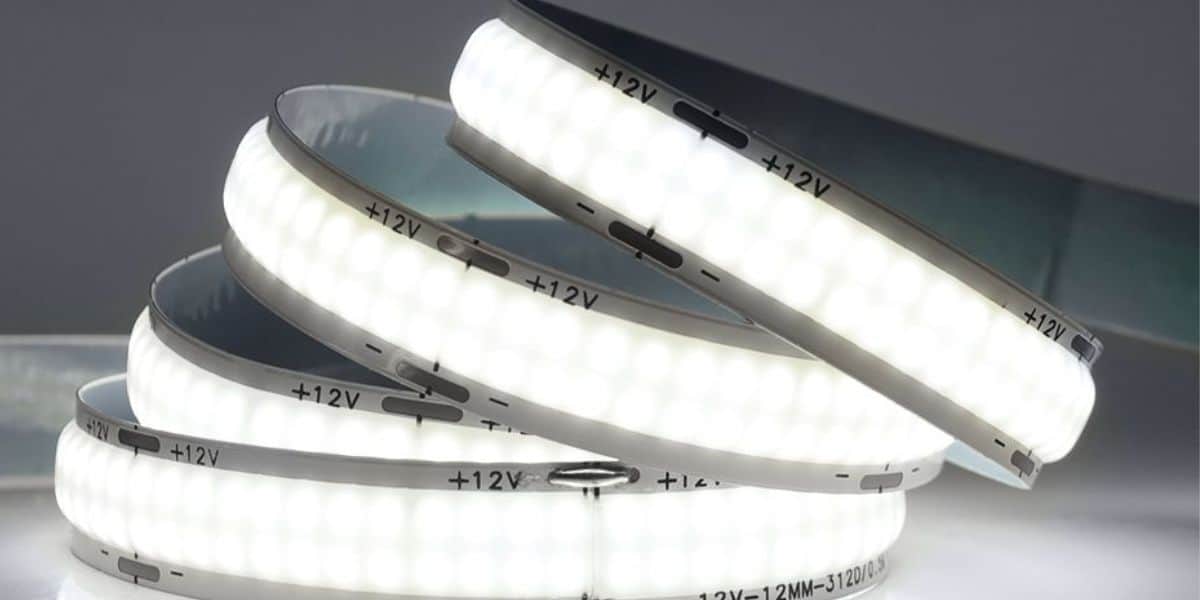
In technical terms, “high output” LED tape lights are defined by significantly higher luminous flux and power density per unit length compared to standard LED tape strip lights. While marketing language often exaggerates brightness claims, engineers evaluate output using measurable parameters such as lumens per foot (or meter), watts per foot, and LED density.
Quantitative Definition of High Output
| Specification | Standard LED Tape | High Output LED Tape |
| Power Density | 4–10 W/ft | 14–28 W/ft |
| Lumen Output | 300–800 lm/ft | 1200–2500+ lm/ft |
| LED Density | 60–120 LEDs/m | 240–480+ LEDs/m |
| Typical Use Case | Accent or decorative lighting | Primary or task illumination |
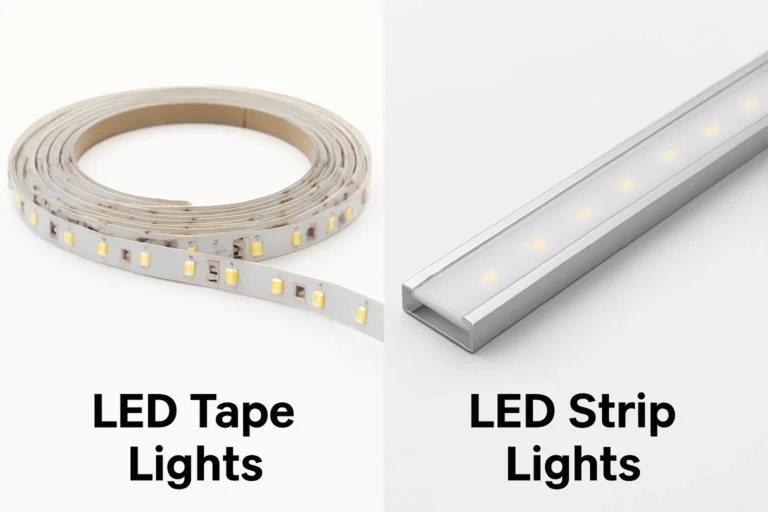
Standard LED tape lights are designed primarily for accent lighting, where visual continuity and moderate brightness are sufficient. High output LED tape strip lights, by contrast, are engineered to deliver higher luminous output suitable for applications that would otherwise require traditional linear luminaires or fluorescent fixtures.
Durability Implications of Increased Output
Higher LED density and power density introduce additional durability challenges. As more electrical power is converted into light along a confined flexible circuit, heat generation increases proportionally. Without proper thermal pathways, junction temperatures rise rapidly, accelerating lumen depreciation, color shift, and solder fatigue.
For this reason, high output LED tape lights do not inherently offer greater durability. Instead, under equivalent heat dissipation and design conditions, their durability can match that of standard LED tape lights. Effective thermal engineering is therefore essential to maintaining comparable lifespan and reliability.
The Engineering Behind Durability: 5 Critical Factors
1. Thermal Management Systems
Thermal management is the single most important determinant of LED tape light durability. LEDs are solid-state devices, but they are highly sensitive to temperature. For high output LED tape lights, heat generation can be 40–60% greater than that of standard tapes operating at lower wattages.
Professional-grade high output LED tape lights rely on layered thermal strategies, including:
- Increased copper weight (often 2 oz instead of 1 oz) to reduce resistive heating
- Thermal interface materials that transfer heat into aluminum channels
Operating temperature has a direct relationship with lumen maintenance. For example, an LED operating at a junction temperature of 85°C may reach L70 in roughly half the time of the same LED operating at 65°C. When thermal conditions are equivalent, high output LED tape lights can maintain durability comparable to standard tapes despite higher wattage.
2. Component Quality & Solder Integrity
Durability is also dictated by material quality. Copper trace width and thickness influence current distribution, voltage drop, and localized heating. Wider, thicker traces help maintain stable electrical performance across the strip.
Solder integrity is equally critical. Inferior solder alloys or thin solder masks can crack under thermal cycling, especially in high output LED tape strip lights that experience frequent on/off cycles. High-quality tapes use controlled reflow processes and UV-resistant solder masks to maintain mechanical stability over time.
In demanding environments, optional potting or encapsulation methods can protect solder joints from moisture and vibration without trapping excessive heat.
3. Driver & Power Supply Considerations
Even a well-designed LED tape light system can experience premature failure if paired with an inadequate power supply. High output LED tape lights draw higher currents, making driver selection a durability-critical decision.
Using power supplies rated 20–30% above calculated load reduces thermal stress on both the driver and the tape. Constant current systems can help stabilize operating conditions, while constant voltage systems require careful power injection planning to prevent uneven loading.
Protection features such as surge suppression, thermal shutdown, and short-circuit protection play a key role in maintaining durability over time.
4. Mechanical Protection
Mechanical durability is often underestimated. Aluminum channels serve dual purposes by acting as heat sinks and protecting LED tape lights from physical damage.
Ingress Protection (IP) ratings must align with the environment. High output LED tape lights used outdoors or in washdown areas should meet at least IP65, with IP67 or higher recommended for direct exposure to water. Flex cycle ratings also matter, as repeated bending can damage copper traces and solder joints over time.
5. LED Chip & Phosphor Quality
LED chip quality strongly influences durability. Proper binning ensures consistent forward voltage, luminous flux, and color temperature. Poor binning leads to uneven current distribution and localized overheating.
Phosphor quality affects long-term color stability. In high output LED tape lights, phosphors operate under higher thermal load. Premium phosphor formulations are designed to remain stable at elevated temperatures, preserving color consistency throughout the product’s service life.
Real-World Durability Metrics: Testing & Standards
Engineering claims must be supported by standardized testing. The most relevant standards for LED tape lights include LM-80, TM-21, and ISTMT.
- LM-80 measures lumen depreciation of LED packages at multiple temperatures
- TM-21 extrapolates long-term performance from LM-80 data
- ISTMT verifies in-situ operating temperatures
Comparative Lifespan Data
| Condition | Standard Tape (L70) | High Output Tape (L70) |
| 25°C Ambient | 50,000 hours | 35,000–50,000 hours* |
| 45°C Ambient | 30,000 hours | 25,000–30,000 hours* |
| 60°C Ambient | 15,000 hours | 10,000–15,000 hours* |
* With proper thermal management and equivalent heat dissipation conditions
These results show that when engineered correctly, high output LED tape lights can match the durability of standard tapes across a range of operating environments.
Application-Specific Durability Concerns
Commercial and Retail
Continuous operation increases thermal stress, making heat dissipation and driver quality essential to maintaining durability.
Industrial
Vibration, airborne contaminants, and temperature extremes require robust mechanical protection and stable thermal design.
Outdoor and Architectural
UV exposure, moisture ingress, and thermal cycling demand UV-stable encapsulation and sealed construction.
Residential
Although duty cycles are generally lower, improper installation can still compromise durability without adequate aluminum channels.Case Study:
In a commercial restaurant kitchen, high output LED tape lights installed under stainless steel shelving failed prematurely due to insufficient heat sinking. Replacing them with properly heat-managed, high-IP-rated tapes extended operational life beyond four years with minimal lumen depreciation.
How to Choose Truly Durable High Output LED Tape Lights
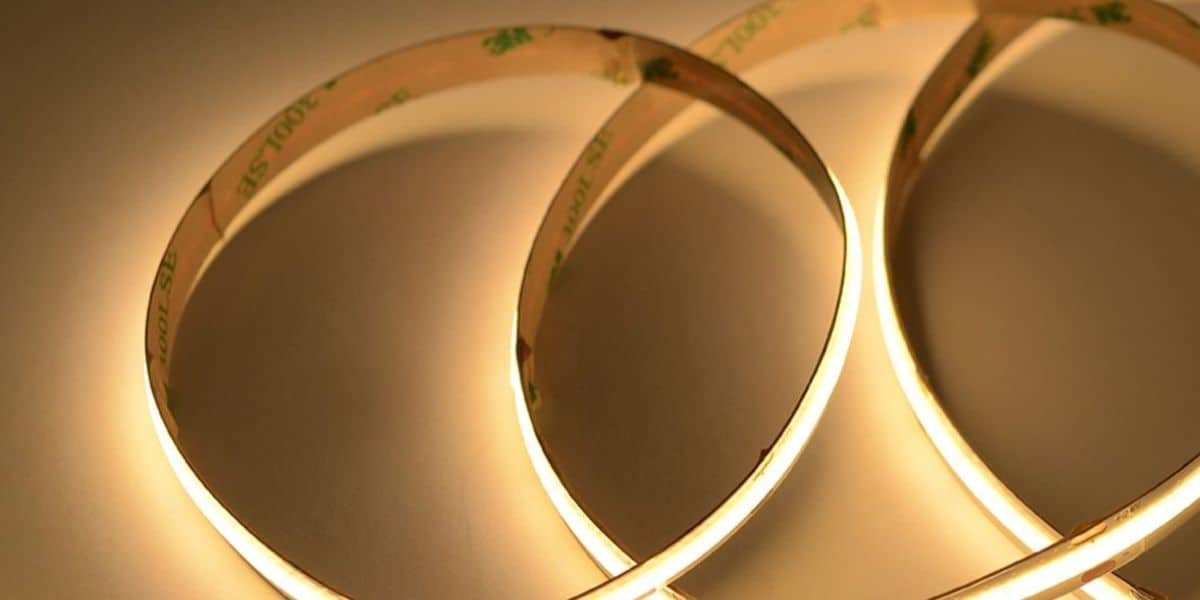
Step-by-Step Selection Guide
- Assess thermal requirements based on wattage and mounting method
- Verify LM-80 and TM-21 data for the specific LED batch
- Examine copper weight, PCB construction, and solder quality
- Design proper aluminum channel and power injection layouts
- Match IP rating to environmental exposure
Red Flags Checklist
- No published thermal performance data
- Undefined warranty conditions
- Missing IP ratings
- Lack of technical documentation
- Unrealistically low pricing for claimed output
Maximizing Your LED Tape Light’s Lifespan
Proper installation has a direct impact on durability. Clean mounting surfaces improve thermal transfer, while correctly sized aluminum channels prevent localized overheating. Power injection spacing should be planned to minimize voltage drop and current imbalance.
Routine inspection for early signs such as color shift or uneven dimming helps prevent cascading failures.
Why SignliteLED’s High Output Solutions Deliver Reliable Durability
For applications requiring both high output and verified durability, SignliteLED’s engineered COB LED strip light solutions focus on thermal stability, component consistency, and transparent testing.
Technology Overview
| Durability Feature | SignliteLED Implementation | Benefit |
| Thermal Management | 2 oz copper + aluminum substrate | Maintains controlled operating temperature |
| Component Quality | Industrial-grade LEDs and drivers | Stable performance under load |
| Protection | IP67 options with surge protection | Environmental resistance |
| Verification | LM-80 testing available | Documented performance |
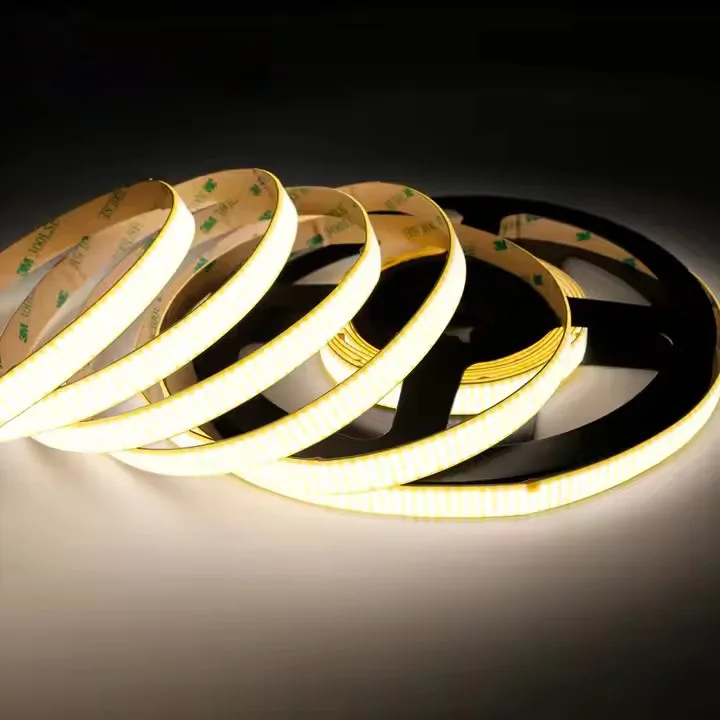
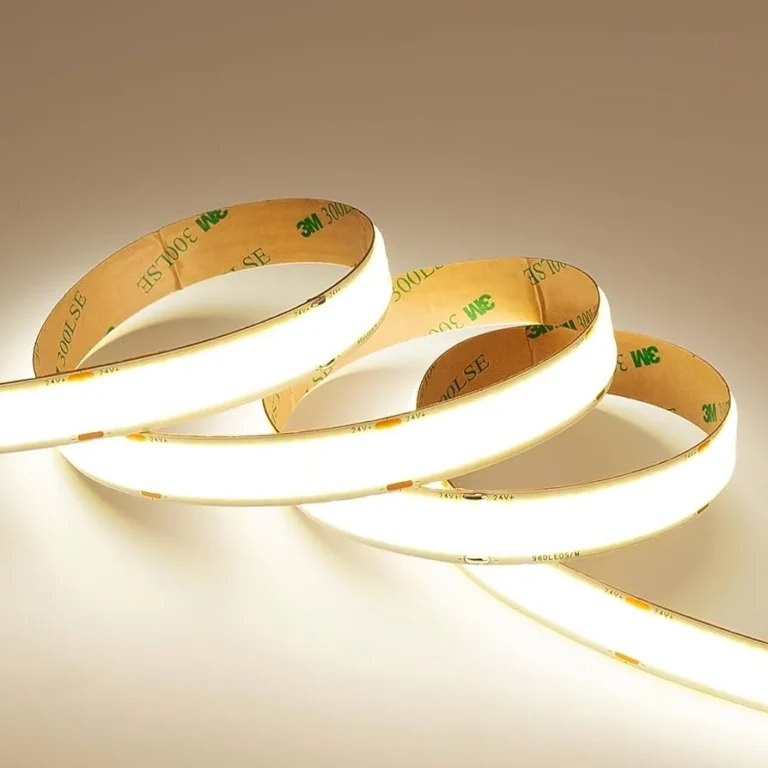
These solutions emphasize reliability under equivalent heat dissipation conditions, supported by testing rather than marketing claims.
Conclusion
High output LED tape lights do not inherently provide greater durability than standard LED tape lights. Under equivalent heat dissipation and design conditions, they can match the lifespan and reliability of standard options while delivering significantly higher illumination levels.
Thermal management, component quality, verified testing, and correct installation ultimately determine durability. For long-term value, prioritizing engineering quality over brightness claims ensures consistent performance in real-world applications.
FAQs
Related Posts