English
  简体中文
简体中文  Deutsch
  Español
  Français
  Italiano
  日本語
日本語  한국어
한국어  Polski
  Português
  Русский
  Türkçe
  Nederlands
  Tiếng Việt
  ไทย
ไทย 
Green fishing lights are widely used in night fishing, from small recreational boats to large commercial vessels. Many fishermen believe that green lights attract more fish than other colors, but is this always true?
In this article, we focus specifically on green fishing lights and examine whether they are more effective at attracting fish at night. Instead of repeating basic theories, we look at how green light behaves in water, why it is commonly chosen in real fishing scenarios, and in which situations it performs better—or not—compared to other light colors.
If you are selecting fishing lights for boats, docks, or surface-mounted applications, understanding the role of green light can help you make a more practical and cost-effective decision.
Why Light Color Matters in Night Fishing
In night fishing, light color plays a practical role beyond visibility.
Different colors of light have different wavelengths, and wavelength determines how light travels in water. Some colors are absorbed quickly, while others spread farther and maintain a clearer illuminated zone. This directly affects how well a fishing light can create a stable feeding area at night.
Because fish attracting lights work by forming a visible activity zone rather than simply increasing brightness, color selection becomes an important factor. In many cases, choosing the right light color has a greater impact on fishing results than increasing power output alone.
Understanding why light color matters helps explain why certain colors are used more frequently in night fishing—and sets the foundation for comparing green lights with other options.
How Fish Respond to Green Light at Night
Fish Do Not React to Color, but to Light Behavior
Fish are not attracted to light in the same way humans are.
They are not “seeing” green as a color choice, but responding to how light behaves underwater.
At night, vision relies more on contrast and brightness than on precise color recognition. This is why the physical performance of light in water matters more than its visual appearance.
Why Green Light Is Easier for Fish to Detect at Night
Green light operates within a wavelength range that many fish species can detect more efficiently in low-light environments.
Compared with red or yellow light, green light remains visible over longer distances underwater and forms a more stable illuminated zone. This makes it easier for fish to sense changes in their surroundings without sudden stimulation.
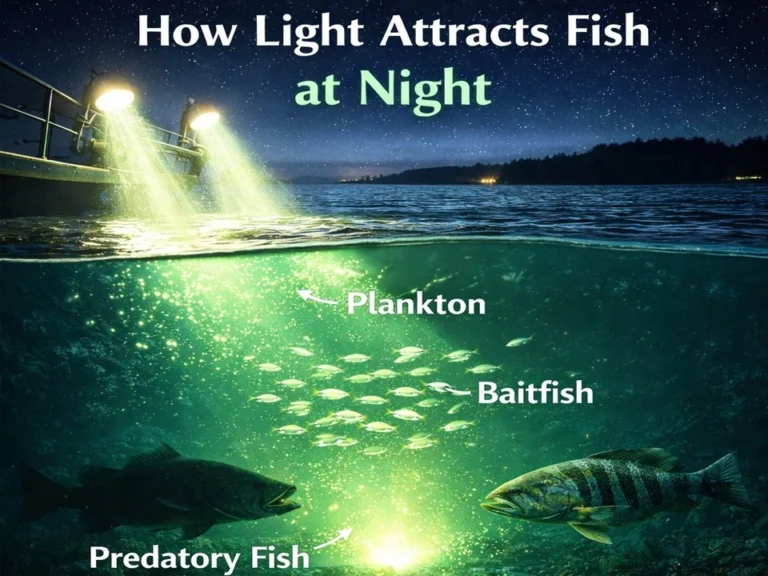
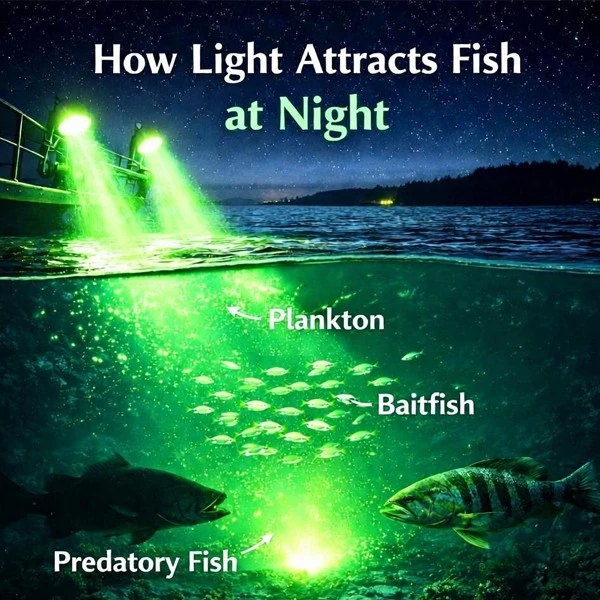
The Chain Reaction: From Plankton to Predatory Fish
Fishing lights do not attract large fish directly.
The process usually follows a layered response:
- Light first attracts plankton and microscopic organisms
- Small baitfish gather to feed
- Larger predatory fish follow the baitfish
Why Green Light Works Well in Practical Night Fishing
From a practical perspective, green light offers a balance between brightness and disturbance.
It is strong enough to activate underwater activity, yet not overly harsh or stressful for fish. In many night fishing situations, this makes green fishing lights easier to control and more consistent in performance.
Green vs Blue vs Red vs Cyan vs White Fishing Lights — What’s the Difference?
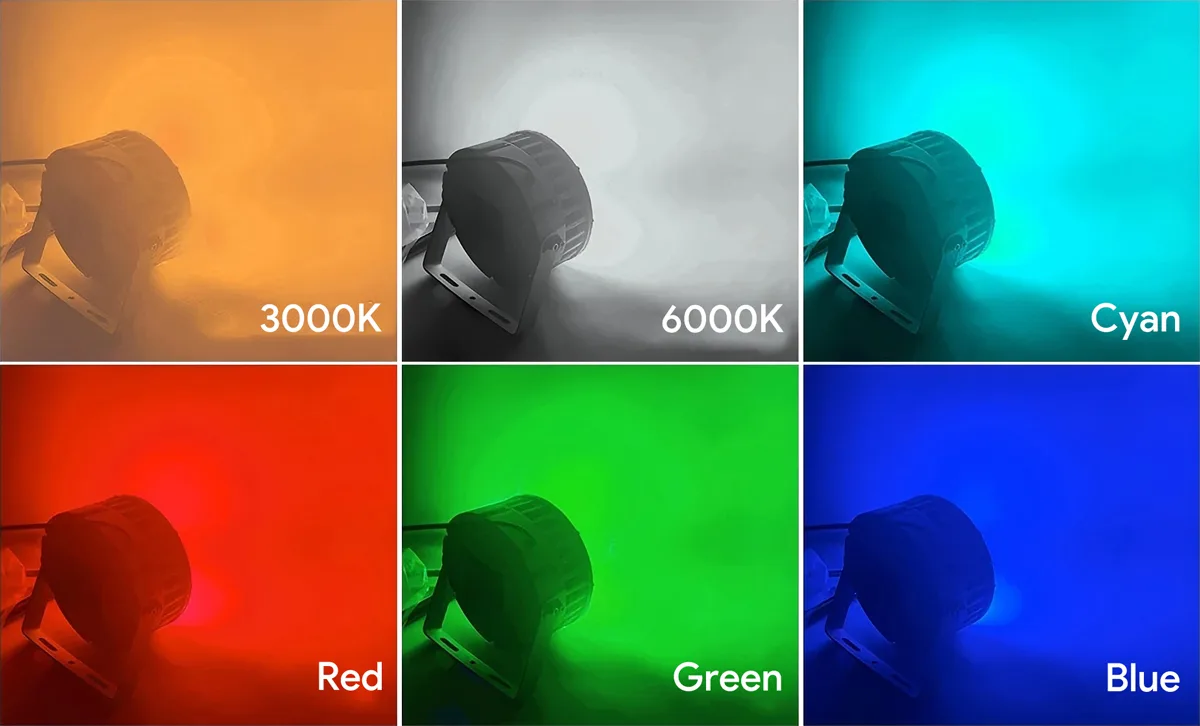
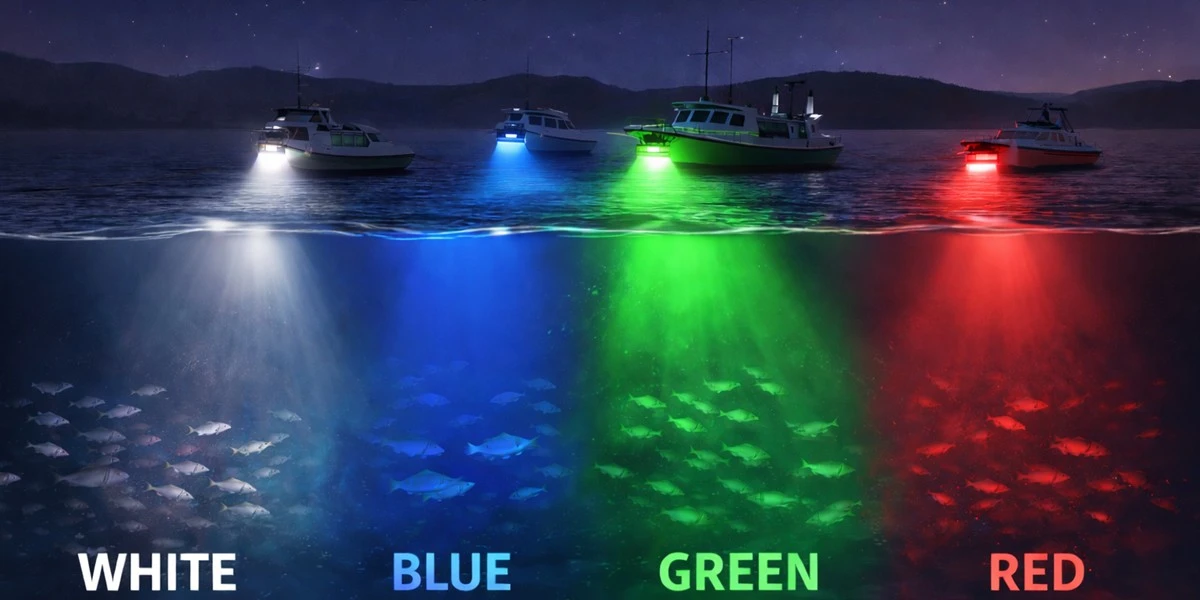
Choosing the right fishing light color for 2026 depends on your specific target and water conditions. Each color has a different wavelength that affects how deep it penetrates and what specific marine life it attracts.
Quick Comparison Table
| Color | Best For | Effectiveness |
| Green | Universal / Best Overall | Attracts plankton most effectively; works in fresh & saltwater. |
| Blue | Deep Saltwater | Penetrates deepest in clear saltwater; attracts saltwater bait & crabs. |
| White | Shallow Water / Shrimping | High intensity but shallow; attracts larger (but fewer) baitfish. |
| Cyan | Commercial Catch Rates | Proven to out-perform white/green for specific species like squid (coleoidea). |
| Red | Stealth / Night Vision | Doesn’t attract “bugs” or scare shy fish; preserves your night vision. |
Green: The All-Purpose Winner
Green (approx. 520nm) is considered the gold standard for attracting marine life because it effectively stimulates plankton, the foundation of the underwater food chain.
- Freshwater: It’s the best choice for lakes and rivers, especially for targeting species like crappie and bass.
- Murky Water Green light provides high contrast, making the water appear clearer, which helps baitfish find the light source.
Blue: Deep-Water Specialized
Blue light (approx. 470nm) is highly specialized for saltwater environments and has unique advantages.
- Offshore Performance: It penetrates deeper in clear seawater than other colors, making it ideal for offshore fishing.
- Freshwater Warning: Blue light tends to fail in attracting baitfish in freshwater, and it may even startle them.
- Target Species: Particularly effective for attracting blue swimming crabs and specific offshore pelagic species.
White: Intense & Shallow
White light is commonly used for its high intensity, but it has limitations in terms of depth penetration.
- Large Bait: While green attracts more small baitfish, white light draws larger individual baitfish.
- Limitations: White light dissipates quickly in the water and doesn’t penetrate deep waters effectively. It’s ideal for shallow areas close to the boat or dock.
Cyan: The “Commercial” Choice
Cyan light (430–600nm) is gaining popularity in 2026 for its unique benefits, bridging the gap between blue and green.
- Better Yields: Cyan has been shown to attract species like squid (coleoidea), shrimp (Penaeus merguiensis), and sardines more effectively than white light.
- Deeper Travel: It has a lower attenuation coefficient than white light in seawater, allowing it to travel farther and reach greater depths.
Red: The Stealth Option
Red light is not typically used for attracting fish but serves several functional purposes that benefit fishermen.
- Night Blindness: Red light allows fishermen to see their gear without ruining their natural night vision.
- Shy Species: It’s ideal for attracting cautious fish species like catfish or snook that may be spooked by brighter lights.

How to Choose the Right Green Fishing Light
Choosing a green fishing light is not simply about selecting a specific color. To achieve consistent fish attraction at night, several practical factors need to be considered together. Understanding these basics helps avoid overpowered setups while ensuring effective coverage in real fishing conditions.
First, consider water clarity. In relatively clear water, green light travels efficiently and maintains strong visibility over a wide area, making it ideal for surface-mounted fishing lights on boats or docks. In more turbid or plankton-rich water, green light still performs well, but uniform beam distribution becomes more important than raw brightness.
Second, light output should match the fishing environment. Higher wattage does not automatically mean better results. In many night fishing scenarios, stable and evenly distributed illumination attracts more baitfish than a narrow, overly intense beam. This is why many operators prefer green fishing flood lights for area coverage, while green fishing spotlights are better suited for directing light toward a specific zone.
Third, pay attention to beam control and light stability. A controlled beam angle helps concentrate light where fish activity is expected, while electrical stability ensures consistent output throughout long night operations. Flickering or unstable light reduces effectiveness, regardless of color.
Finally, consider mounting height and lighting purpose as part of the selection process. Lights mounted above the waterline should provide sufficient spread to illuminate the surface and upper water layers without excessive glare. The goal is not to flood the water with light, but to create a stable, attractive feeding zone that fish return to repeatedly.
By focusing on water conditions, beam type, and output stability—not color alone—you can select a green fishing light that delivers reliable performance across different night fishing situations.
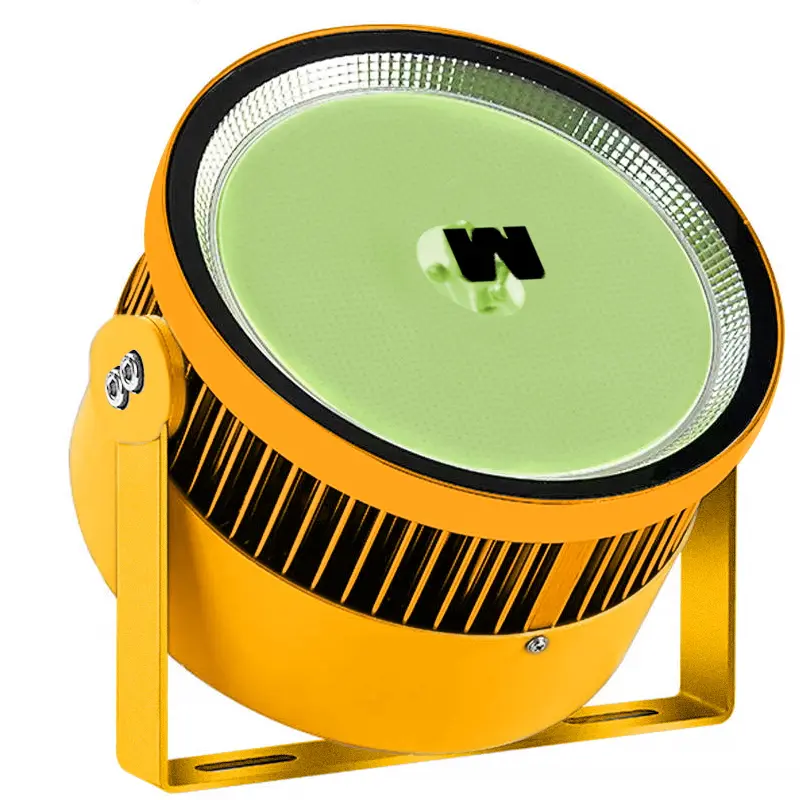
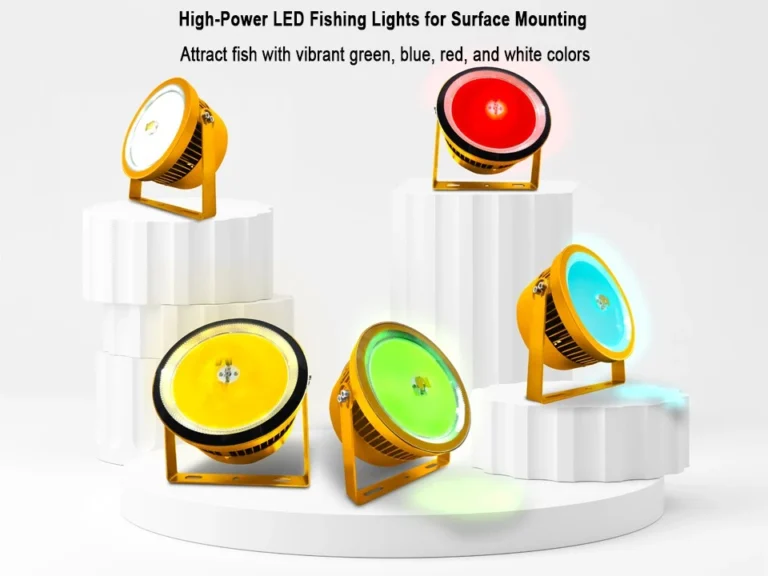
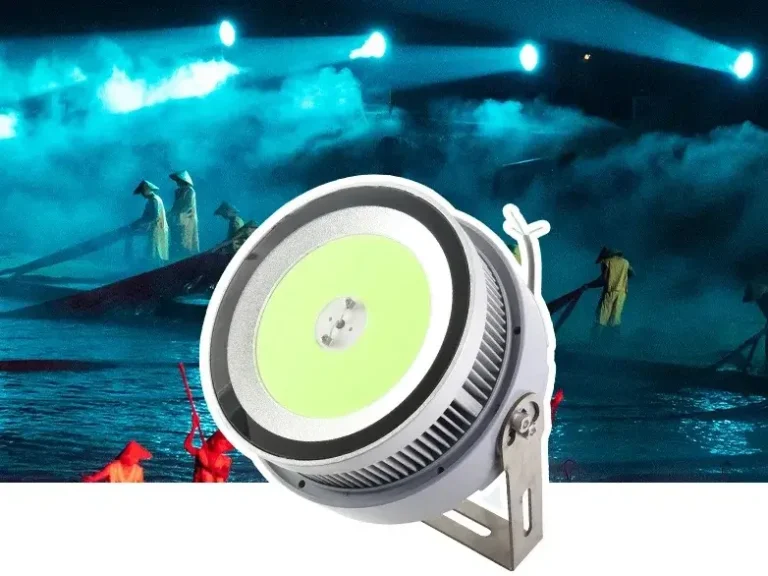
HIGH POWER COB FISH LIGHING
Model No.: Round Type
Input Voltage: AC100–320V
Surge: 10000V
Watt/pcs: 800W/1000W/1200W
LED Type: COB
Size (mm): Φ230 × 140
Color: 3000K / 4000K / 5000K / 6000K/ Red / Green / Blue / Purple
CRI: >80@3000K / 4000K / 5000K / 6000K/
Lumen: >120lm/w@3000K / 4000K / 5000K / 6000K/
IP Grade: IP67
Where Green Fishing Lights Are Commonly Used
Green fishing lights are widely adopted across different night fishing scenarios because they offer a balanced combination of penetration, coverage, and visual comfort. Rather than being limited to a single use, green lights support consistent fish attraction across multiple environments.
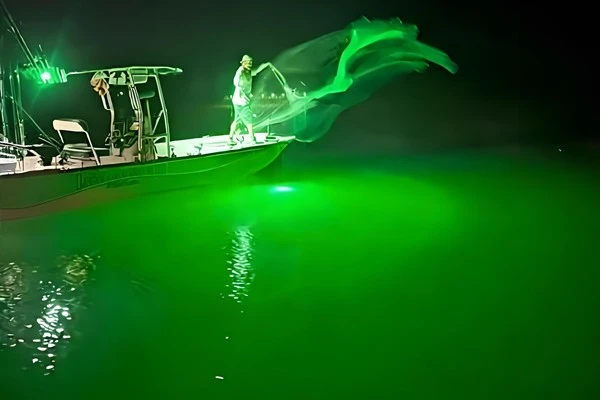
1. Boat-Mounted Night Fishing
fishing vessels. These lights illuminate the surface and upper water layers, forming a stable feeding zone that attracts baitfish and larger predatory species. This setup is widely used in both commercial fishing boats and recreational night fishing.
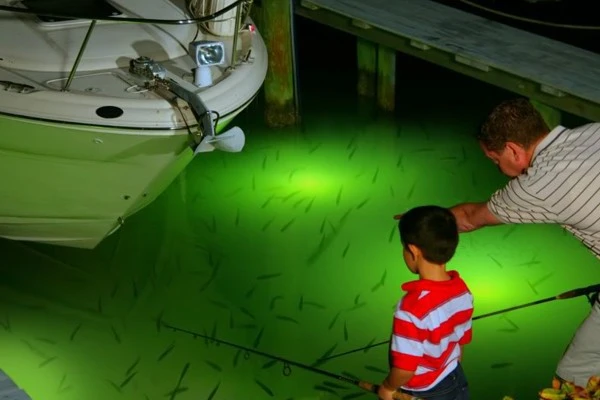
2. Dock and Pier Fishing Areas
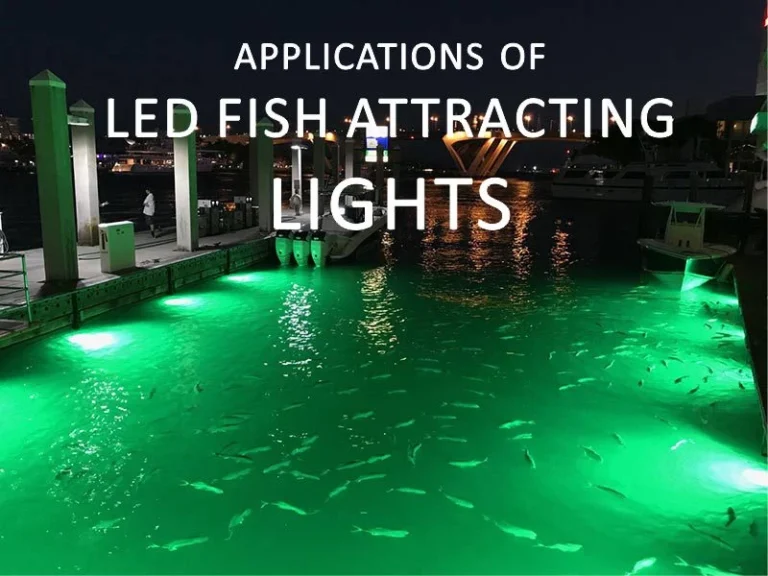
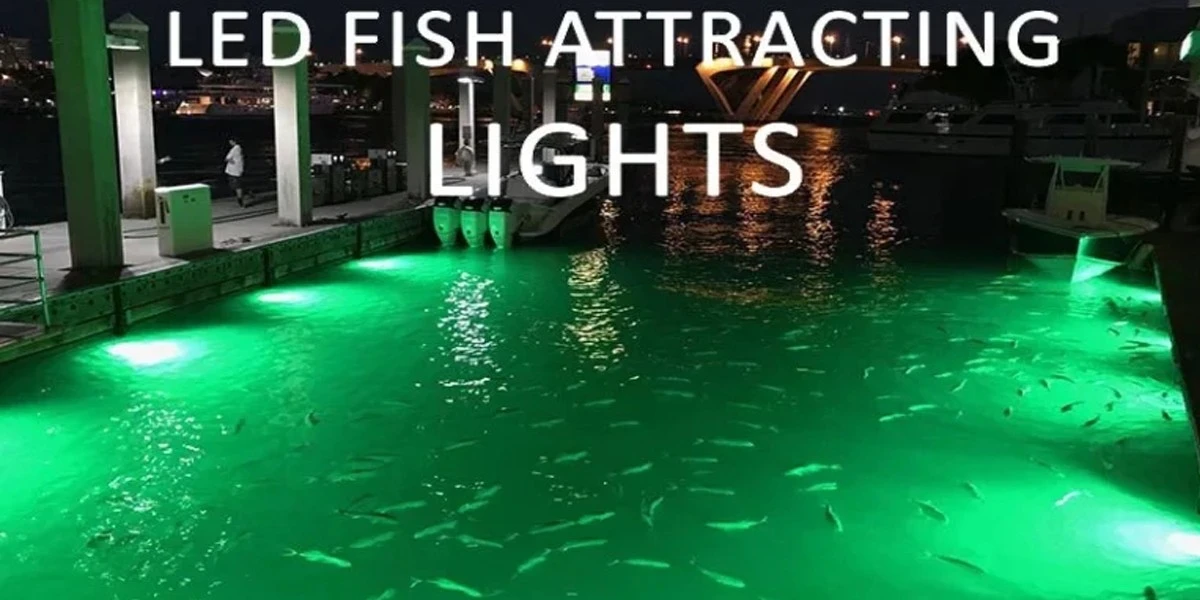
Green fishing lights are also widely used for dock and pier lighting. When mounted along docks or piers, they extend light into the surrounding water, encouraging plankton and baitfish to gather near the structure. Over time, this creates a reliable fishing spot without excessive glare or disturbance.
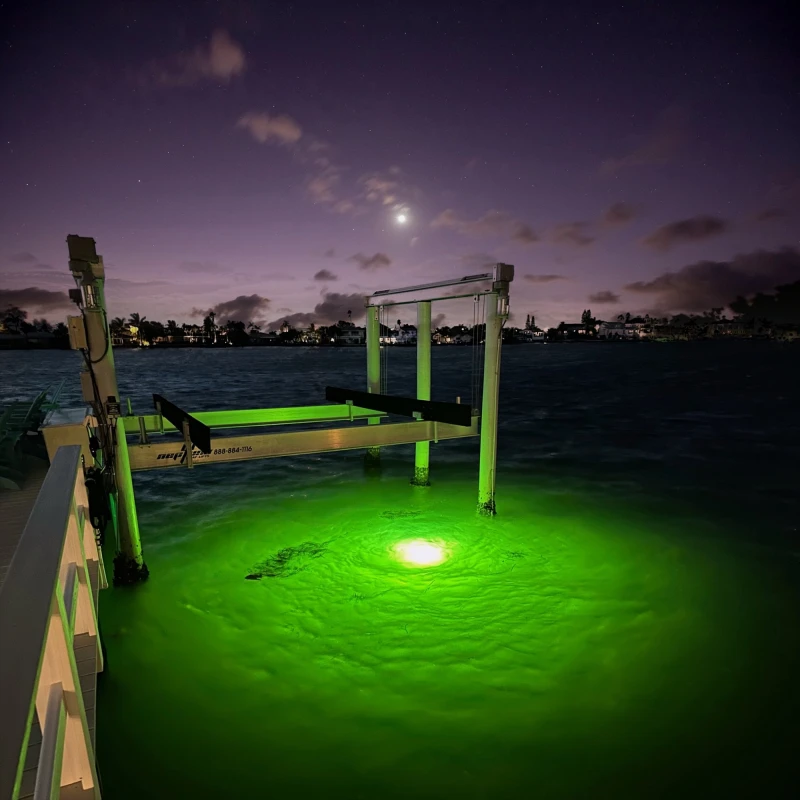
3. Nearshore and Coastal Night Fishing
In nearshore and coastal environments, green fishing lights enhance nighttime visibility and fish activity in shallow waters. Their controlled beam spread makes them suitable for shoreline fishing, small harbors, and coastal night operations where precise illumination is preferred.
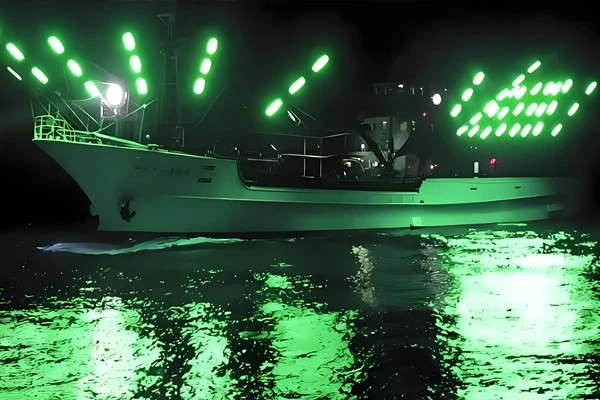
4. Offshore and Commercial Fishing Operations
For offshore and commercial fishing, green fishing lights are often part of larger lighting systems. Consistent light output and balanced placement across the vessel are more important than individual lamp intensity, helping maintain fish concentration during extended night fishing sessions.
These applications explain why green fishing lights remain a standard choice across boats, docks, and coastal fishing environments worldwide. For more details on how these lights perform in different settings, check out Top Applications of LED Fish Attracting Lights on Boats, Docks, Ponds, and Offshore Projects.
Conclusion
Green fishing lights are widely used in night fishing because they provide a reliable balance between water penetration, beam coverage, and visual stability. In most nighttime conditions, green light creates a clear, effective feeding zone without overwhelming the surrounding environment.
However, color alone does not determine fish attraction. Light output, beam control, and proper placement often play a greater role than brightness or color choice by itself. Understanding these factors helps achieve consistent results while avoiding unnecessary power consumption.
If you are planning a night fishing setup for boats or docks, choosing the right green fishing light is only the first step. Exploring beam types, mounting options, and overall system design will help you build a more efficient and stable fishing light setup.
Frequently Asked Questions (FAQ)
Related Posts