English
  简体中文
简体中文  Deutsch
  Español
  Français
  Italiano
  日本語
日本語  한국어
한국어  Polski
  Português
  Русский
  Türkçe
  Nederlands
  Tiếng Việt
  ไทย
ไทย 
Acoustic lighting improves the ambiance of a recording studio by addressing two critical requirements at the same time: controlled sound behavior and comfortable, functional illumination. By integrating sound-absorbing materials with carefully designed lighting systems, acoustic lighting helps reduce unwanted reverberation, improves speech and music clarity, and creates a visually calm environment that supports long recording sessions. The result is not just better sound quality, but a studio atmosphere that feels balanced, focused, and purpose-built rather than improvised.
What Is Acoustic Lighting?
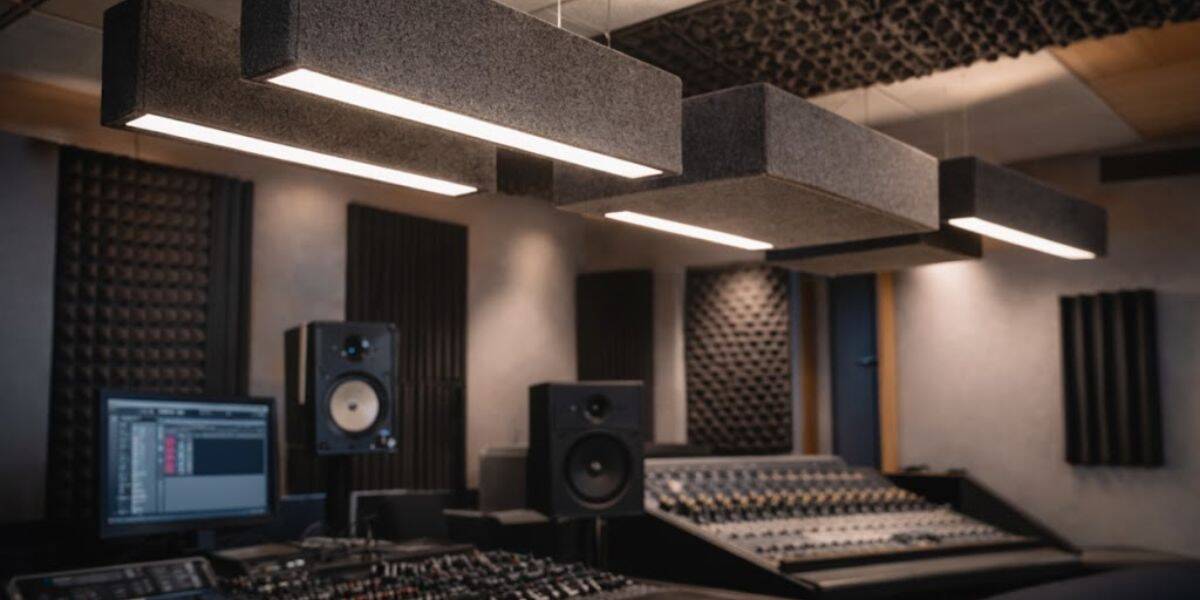
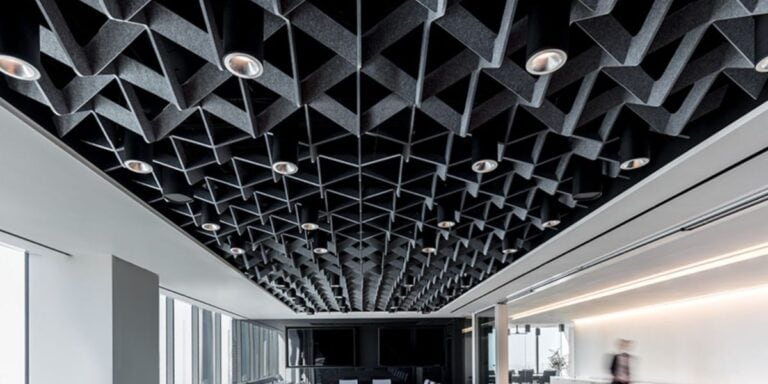
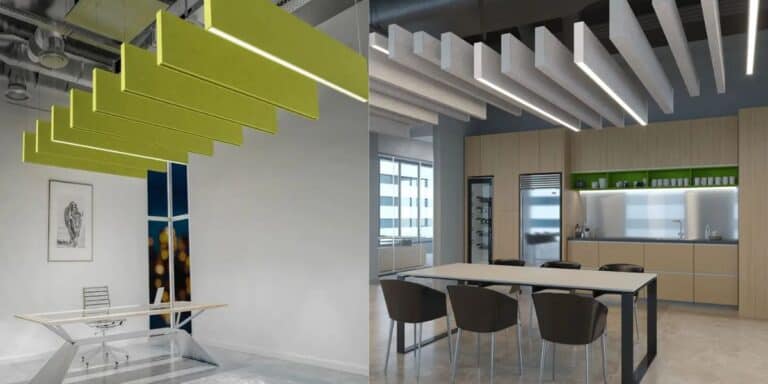
Acoustic lighting is a category of integrated fixtures that combine sound-absorbing elements with lighting components in a single system. Instead of treating acoustics and lighting as separate layers added at different stages of a studio build, acoustic lighting solutions merge these functions into one coordinated element, most commonly installed on ceilings or suspended overhead.
From an acoustic perspective, these systems rely on porous materials that absorb mid- to high-frequency sound energy, reducing reflections that would otherwise bounce between hard surfaces. From a lighting perspective, they provide diffuse, glare-controlled illumination suitable for tasks such as mixing, tracking, and long periods of focused listening.
In professional environments like recording studios, where both sound accuracy and visual comfort directly affect performance, acoustic lighting serves a functional role rather than a decorative one.
Why Recording Studios Have Unique Acoustic and Lighting Challenges
Recording studios operate under tighter constraints than most commercial or residential spaces. The goal is not simply to make a room quieter or brighter, but to create predictable, controlled conditions where sound can be accurately captured and evaluated.
Acoustic challenges specific to studios
Recording spaces must manage reflections, flutter echo, and uneven reverberation times. Hard surfaces such as ceilings, walls, and equipment racks can cause sound waves to reflect back into microphones, coloring recordings and reducing clarity. Small and mid-sized studios are especially vulnerable to ceiling reflections because of short distances between sound sources and reflective surfaces.
Lighting challenges specific to studios
Studios also require lighting that avoids glare, eye fatigue, and visual distraction. Harsh point-source lighting or uneven brightness can be uncomfortable during long sessions and may interfere with screen visibility in control rooms. At the same time, lighting must be reliable, low-noise in operation, and compatible with ceiling layouts filled with acoustic treatments, cabling, and ventilation.
Acoustic lighting directly addresses the overlap between these two problem areas.
Sound Absorption vs Soundproofing: A Critical Distinction
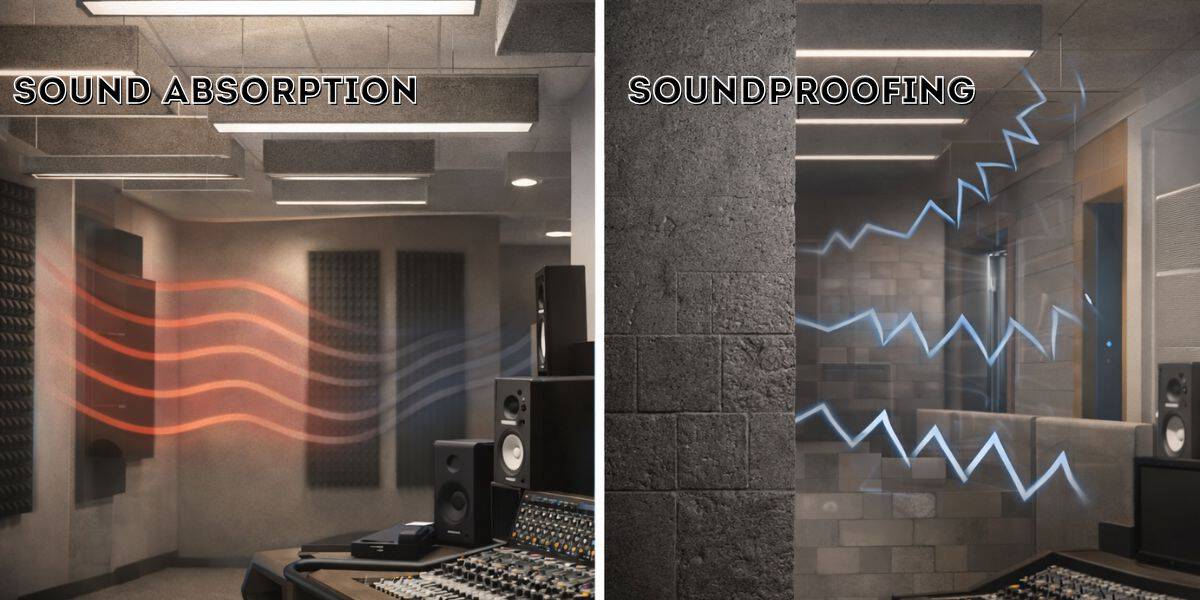
Sound absorption and soundproofing are often confused, but they solve very different problems. Understanding this distinction is essential when evaluating acoustic lighting.
Sound absorption
Sound absorption reduces reflections within a room. Absorptive materials convert a portion of sound energy into heat, lowering reverberation time and improving clarity. Metrics such as NRC (Noise Reduction Coefficient) are commonly used to describe how effectively a material absorbs sound across a range of frequencies. In studios, absorption is used to shape the internal sound field, not to block noise from entering or leaving.
Soundproofing
Soundproofing focuses on isolation. It aims to prevent sound from passing through walls, floors, or ceilings by adding mass, damping, and airtight construction. This is a structural concern addressed through room-within-a-room designs, heavy partitions, and specialized construction methods.
Acoustic lighting contributes to sound absorption, not soundproofing. Its value lies in improving the internal acoustic environment, particularly in controlling reflections from ceilings.
The Role of Ceilings in Studio Acoustic Control
The ceiling is one of the most influential surfaces in a recording studio, yet it is often underutilized. Because it sits directly above sound sources and listening positions, ceiling reflections can arrive at microphones and ears very quickly, causing comb filtering and loss of definition.
Traditional ceiling treatments include acoustic clouds, panels, and diffusers suspended above the listening area. While effective, these elements must compete for space with lighting fixtures, HVAC components, and structural constraints.
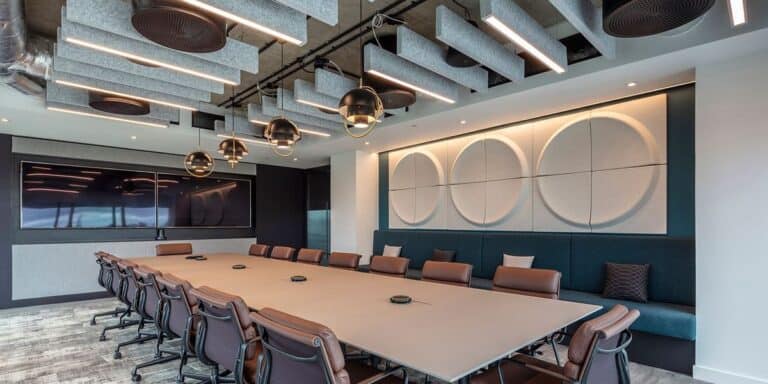
Acoustic ceiling lighting helps consolidate these functions in many studio designs. By combining absorption and illumination in one system, it allows designers to treat the ceiling as an integrated acoustic plane rather than a patchwork of separate elements.
Why Integrated Acoustic Ceiling Lighting Matters
Integrated acoustic ceiling lighting matters because it reduces complexity while increasing consistency. When lighting fixtures and acoustic treatments are designed separately, compromises are common. Panels may block light distribution, or fixtures may introduce reflective surfaces that undermine acoustic performance.
With integrated systems, the acoustic and lighting components are engineered to coexist. Light output is shaped to avoid glare and reflections, while acoustic materials are positioned where they are most effective. This alignment supports predictable studio performance and simplifies coordination during design and installation.
In practice, this means fewer conflicts between disciplines and a more cohesive studio environment.
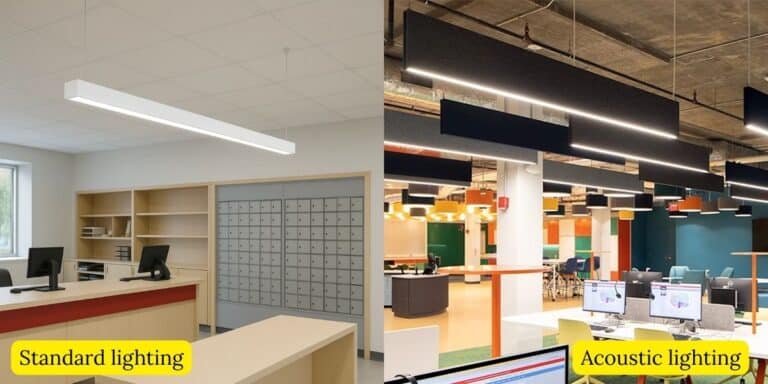
Traditional Lighting Plus Panels vs Integrated Acoustic Lighting Solutions
To understand the practical impact, it helps to compare traditional approaches with integrated acoustic lighting solutions.
| Aspect | Traditional Lighting + Acoustic Panels | Integrated Acoustic Lighting |
| Design coordination | Separate systems designed independently | Single coordinated system |
| Ceiling clutter | Multiple suspended elements | Reduced visual complexity |
| Acoustic consistency | Dependent on placement around fixtures | Absorption and lighting aligned |
| Lighting quality | May be compromised by panel placement | Designed for diffusion and comfort |
| Installation process | Multiple trades and mounting steps | Streamlined installation |
| Visual ambiance | Functional but often fragmented | Cleaner, calmer ceiling appearance |
This comparison highlights why many studio designers now consider integrated acoustic lighting during early planning rather than as a retrofit solution.
How Acoustic Lighting Influences Studio Ambiance
Ambiance in a recording studio is not about decoration. It is about how the space feels and behaves during use. Acoustic lighting influences ambiance through several interconnected factors.
Reduced auditory stress
By lowering excessive reverberation and reflections, acoustic lighting contributes to a calmer sound field. Engineers and performers may experience reduced listening fatigue, especially during long sessions.
Visual comfort and focus
Diffuse, well-controlled lighting reduces glare and harsh contrasts. This supports concentration, improves screen visibility, and makes the space feel intentional rather than improvised.
Perceived professionalism
Studios that integrate acoustics and lighting tend to feel more refined. This perception matters for client confidence, even when the improvements are subtle.
Material and Design Considerations in Acoustic Lighting
Acoustic lighting systems typically use sound-absorbing materials such as engineered felt or fiber-based panels paired with LED lighting components. The exact materials, finishes, and configurations vary by manufacturer and application.
According to the product information published by SignliteLED, their LED acoustic lighting systems are designed as integrated solutions that combine lighting with acoustic treatment for commercial and professional environments. Specific performance values such as acoustic ratings or lifespan metrics are not universally published, so they should be evaluated on a project-by-project basis rather than assumed.
For designers, the key consideration is not a single specification but how the system fits into the overall acoustic strategy of the studio.
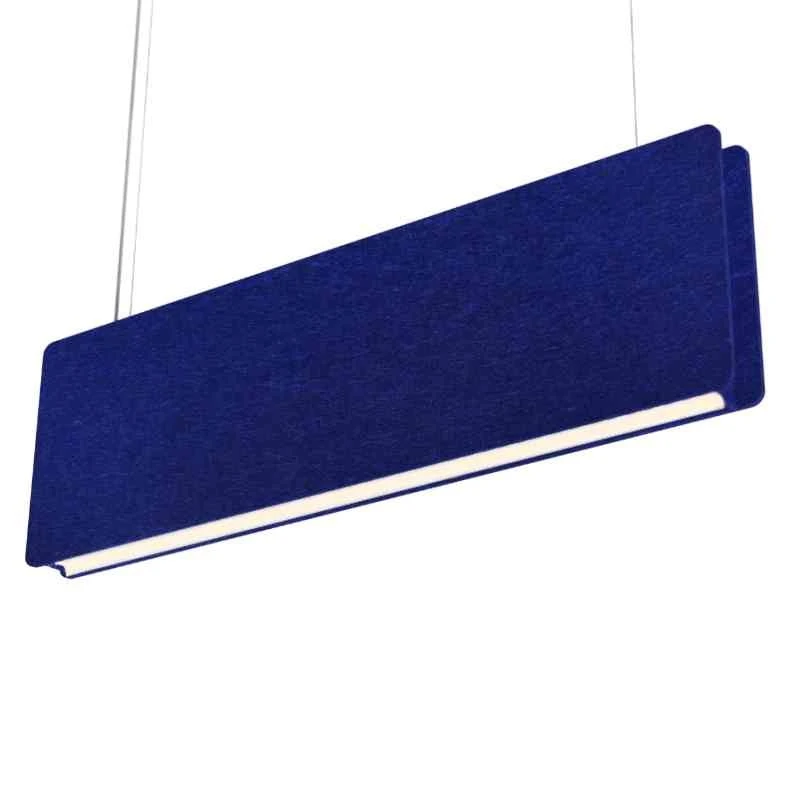
58mm Width Acoustic LED Linear Light
- Input Voltage: AC110–120V / AC220–240V, 50–60Hz
- Emitting Direction: Downward
- Width Options: 58 mm / 80 mm
- Size: 1288 × 58 × 400 mm / 1288 × 80 × 400 mm
- LED Chip: SMD2835
- UGR: < 19
- Power Factor (PF): > 0.90
- CRI: > 90 Ra
- Luminous Efficacy: 100 lm/W
- Correlated Color Temperature (CCT): 3000K / 4000K / 6000K
- Power: 30 W
- Beam Angle: 120°
- IP Rating: IP20
- Flicker Free: Yes
- Warranty: 5 years
- Acoustic Panel Color Options: Red / Green / Blue / Grey (more than 48 color options)
Placement Strategies in Recording Studios
Where acoustic lighting is placed matters as much as what type is used. In recording studios, common placement strategies include:
Above mixing positions in control rooms, where early reflections from the ceiling can affect stereo imaging.
Above live room performance areas, where controlling ceiling reflections helps maintain clarity without deadening the space.
In vocal booths, where combined lighting and absorption help manage tight spaces efficiently.
The goal is always to support the intended acoustic response of the room rather than to apply absorption uniformly without analysis.
Integration With Broader Acoustic Treatment Plans
Acoustic lighting should be viewed as one component of a larger acoustic treatment plan. Studios still require wall treatments, bass control, and appropriate room geometry. Acoustic lighting does not replace these elements, but it complements them by addressing the ceiling, a surface that is otherwise difficult to treat without visual compromise.
When integrated early in the design process, acoustic lighting can reduce the number of separate ceiling clouds or panels required, leading to a cleaner layout and more predictable results.
Considerations for Retrofit vs New Studio Builds
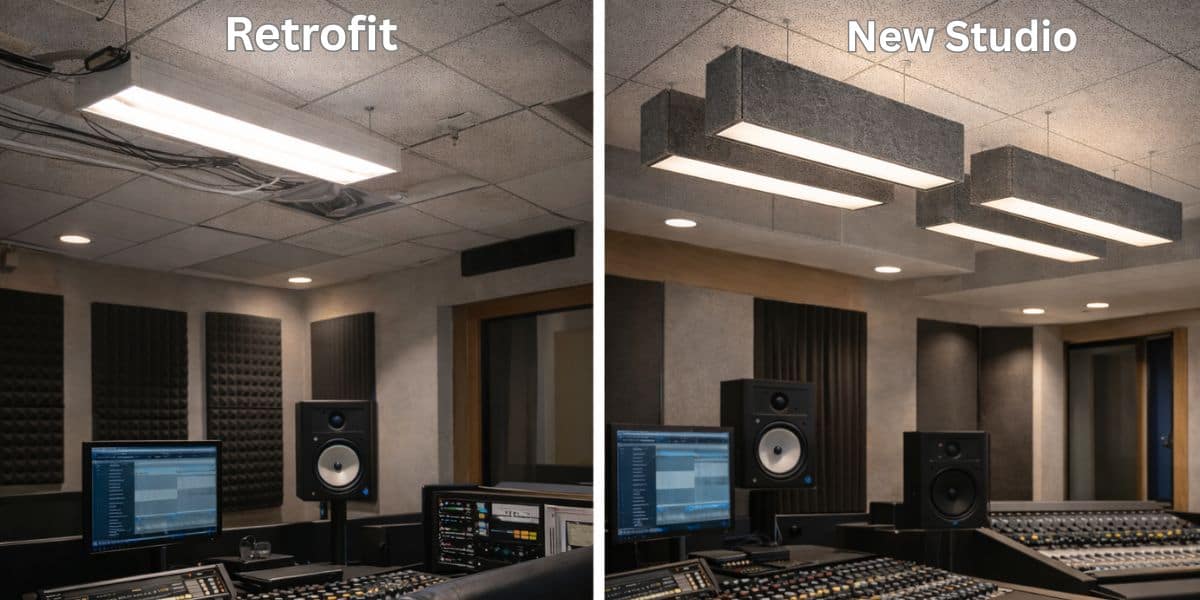
In new studio builds, acoustic lighting can be specified from the outset, allowing structural, electrical, and acoustic considerations to align. This often results in the most seamless outcome.
In retrofit projects, acoustic lighting can still be effective, especially in spaces where ceiling-mounted fixtures and acoustic clouds already exist. Replacing or consolidating these elements can improve both performance and appearance, though careful evaluation of existing conditions is essential.
Relevance to Modern Studio Workflows
Modern recording studios are increasingly hybrid spaces, used for music production, podcasting, post-production, and streaming. These workflows demand flexibility and long hours of use.
Acoustic lighting supports this shift by providing stable acoustic conditions and comfortable lighting without adding complexity. For spaces that serve multiple functions, this consistency becomes part of the studio’s overall usability.
Conclusion
Acoustic lighting improves the ambiance of a recording studio by aligning acoustic control and visual comfort into a single, integrated solution. By addressing ceiling reflections while providing diffuse, functional illumination, it supports clearer sound, reduced listening fatigue, and a more focused working environment.
For studio designers, audio engineers, and architects, integrated acoustic lighting represents a strategic design choice rather than a decorative upgrade. It simplifies coordination, reduces ceiling clutter, and contributes to predictable acoustic behavior without introducing unsupported claims or unnecessary complexity.
When applied thoughtfully and in coordination with broader acoustic treatment strategies, acoustic lighting becomes a practical tool for shaping studio environments that sound accurate, feel comfortable, and function reliably over time.
FAQs
Related Posts