한국어
한국어  English
  简体中文
简体中文  Deutsch
  Español
  Français
  Italiano
  日本語
日本語  Polski
  Português
  Русский
  Türkçe
  Nederlands
  Tiếng Việt
  ไทย
ไทย 
A custom LED neon sign can still illuminate normally after delivery while being unusable because of structural damage. In this project, an indoor neon sign shipped internationally arrived with a broken acrylic corner near one of its mounting holes. After reviewing the customer’s photographs and delivery information, we arranged a replacement sign and upgraded the packaging for the second shipment.
한 눈에 프로젝트
- Product: Custom indoor LED neon sign
- Approximate size: 80 × 70 cm
- Light color: Ice blue
- Backboard: Transparent acrylic
- Installation: Suspended through four mounting holes
- Destination: Germany
- Shipping term: DDP
- Problem: Broken acrylic corner after international shipping
- Resolution: Replacement sign with reinforced wooden packaging
- Customer privacy: Brand name and artwork are not shown
This case shows why custom neon sign quality involves more than brightness and appearance. Acrylic strength, mounting-hole position, accessory placement, internal protection and the shipping route all affect whether the finished sign reaches the installation site safely.
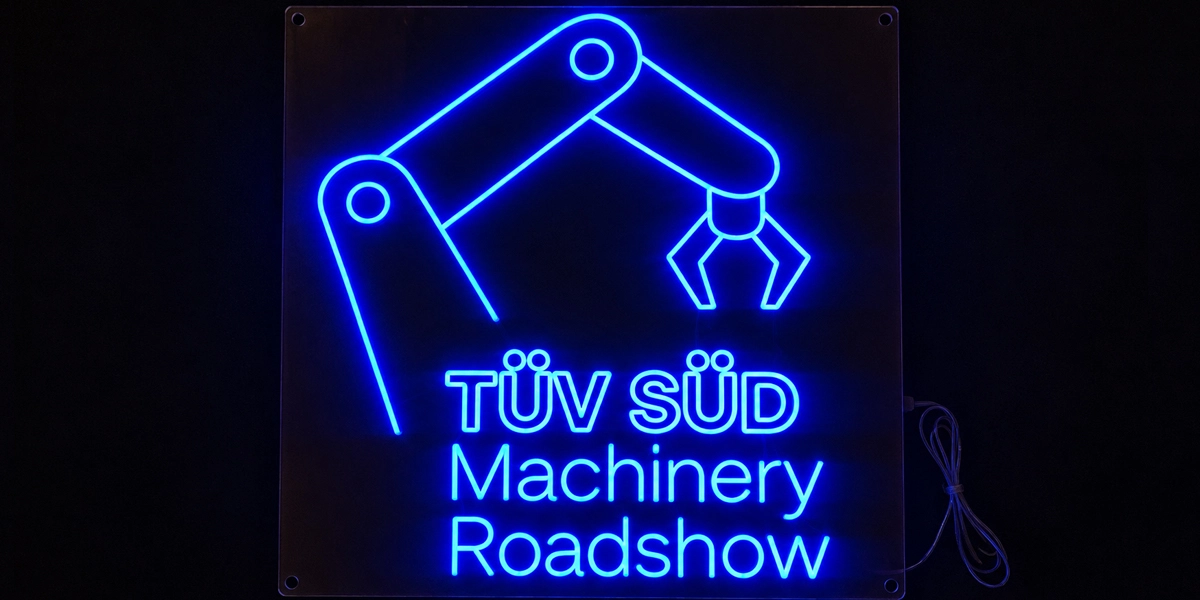
The Original Custom LED Neon Sign Requirements
The project began with an inquiry for a custom LED neon sign to be used at a small indoor event in Germany. The customer provided draft artwork and requested a finished size of approximately 80 × 70 cm.
The main requirements were:
- a transparent acrylic or similar clear backboard;
- a white outline in the original artwork;
- a fixed light-blue output rather than RGB;
- a European power connector;
- indoor use;
- four mounting holes near the corners;
- international delivery to Germany;
- DDP shipping if available.
Although the inquiry appeared straightforward, several details needed to be confirmed before production. The requested blue had to be translated into an available LED neon color. The mounting method affected how the acrylic panel would be drilled, while the destination determined the required power supply and plug type.
Clear acrylic was selected to keep the support panel visually unobtrusive while providing a rigid base for the neon outline. Buyers comparing backboard styles, colors, mounting methods and construction options can refer to our complete guide to custom LED neon signs.
The customer’s company and end-customer branding have been removed from this case study. The purpose of the article is to explain the specification, shipping damage and replacement process—not to publish the customer’s logo or event identity.
Specifications Confirmed Before Production
Custom neon signs should not enter production based on artwork alone. The light color, backboard, power supply, installation method and operating environment all need to be confirmed because each choice affects the finished construction.
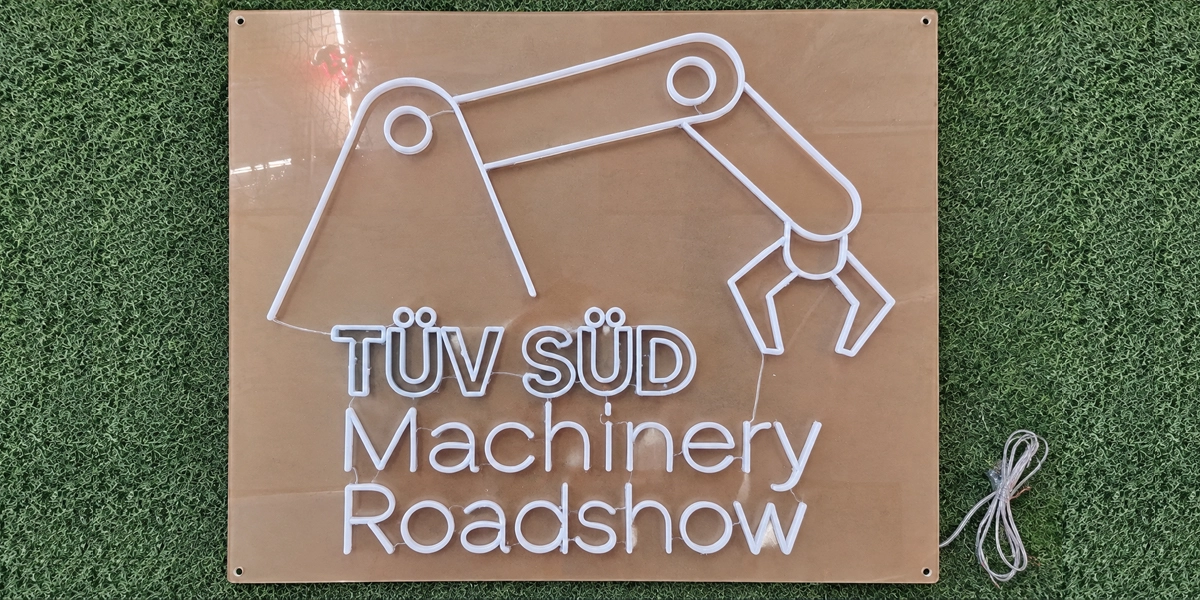
Indoor Rather Than Outdoor Construction
The customer confirmed that the sign would be used indoors. This allowed us to quote an indoor version rather than adding outdoor waterproofing that the project did not require.
An indoor LED neon sign and an outdoor LED neon sign may use similar artwork but should not automatically be treated as the same product. Outdoor signs may require additional sealing, weather-resistant connections, suitable power components and materials selected for exposure to moisture and sunlight.
Projects exposed to rain, sunlight or persistent humidity require different electrical, sealing and backboard specifications. Our guide to materials for outdoor custom neon signs explains these additional considerations.
Ice-Blue Light Color
The customer initially requested light blue and later approved the available ice-blue LED neon color.
This confirmation was important because descriptions such as light blue, sky blue 그리고 ice blue are subjective. A reference photo, illuminated sample or manufacturer’s color chart should be approved whenever the exact visual result matters.
Screen colors should only be used as a reference. Camera exposure, monitor settings, ambient light and the color of surrounding surfaces can all change the apparent shade.
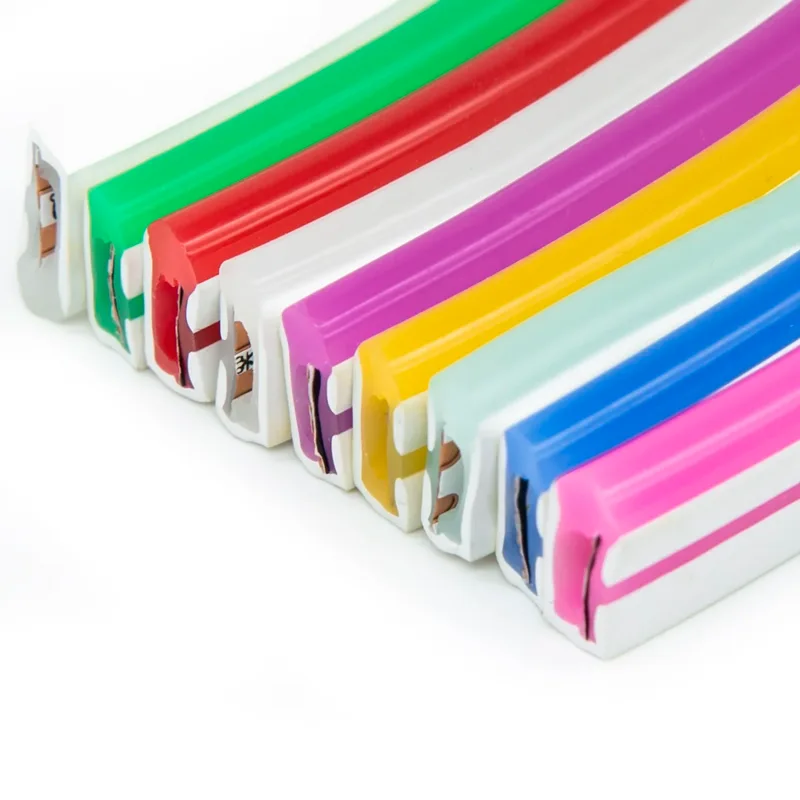
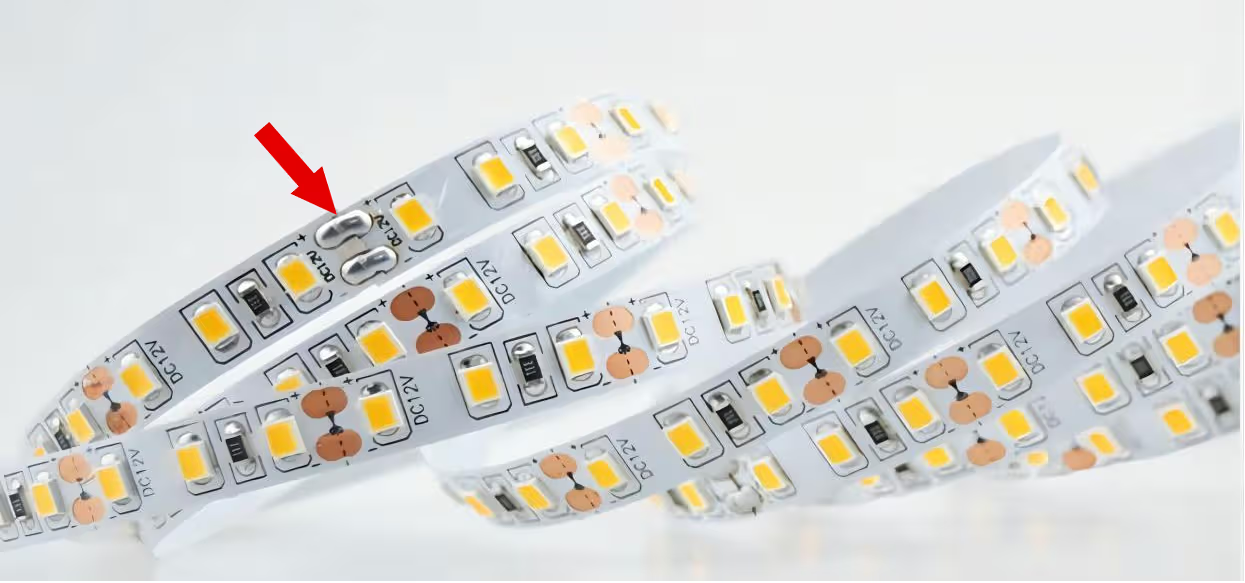
간판용 사이드 벤드 S0612 실리콘 LED 네온 스트립
- 입력 전압: DC12V/24V
- Watt:10W/m
- LED 수량: SMD2835 120LED/m
- 색상: 레드/그린/블루/옐로우/아이스 블루/라이트 핑크/핑크/퍼플/레몬
- 옐로우/골든 옐로우/오렌지/화이트
- 나PPgrade: IP67
- 절단 가능한 길이: 25mm/50mm
- 길이: 50미터/롤
Transparent Acrylic Backboard
A clear acrylic panel was used to support the neon outline while allowing the wall or exhibition background to remain visible.
The acrylic was not only a visual component. It also carried the LED neon, wiring and mounting points. Damage to the panel could therefore affect the installation even when the lighting circuit continued to work.
This distinction became important after delivery: the LEDs illuminated, but the damaged acrylic corner made the finished sign unsuitable for its intended event installation.
Hanging Installation and Four Mounting Holes
Before production, we asked whether the sign would be mounted directly to a wall or suspended. The two methods require different accessories and may affect the mounting-hole arrangement.
The customer confirmed that the sign would be hung and requested four small holes near the corners. The required holes were therefore included in the acrylic backboard.
Drilled areas deserve particular attention during design and packaging. A hole changes the stress distribution in the panel, while a hole placed too close to an outside edge leaves less acrylic around the mounting point. This does not mean that drilled acrylic is unsuitable, but the hole position, edge distance, panel thickness and shipping protection must be considered together.
European Power Supply
The customer requested a European power supply and asked whether the driver was CE compliant. The appropriate power supply and European plug were included for the indoor sign.
For public product information, it is generally clearer to state the applicable marking or documentation instead of using broad phrases such as “internationally certified.” Buyers should confirm which power supply is supplied with the exact sign and request the relevant documentation when it is required for the destination market.
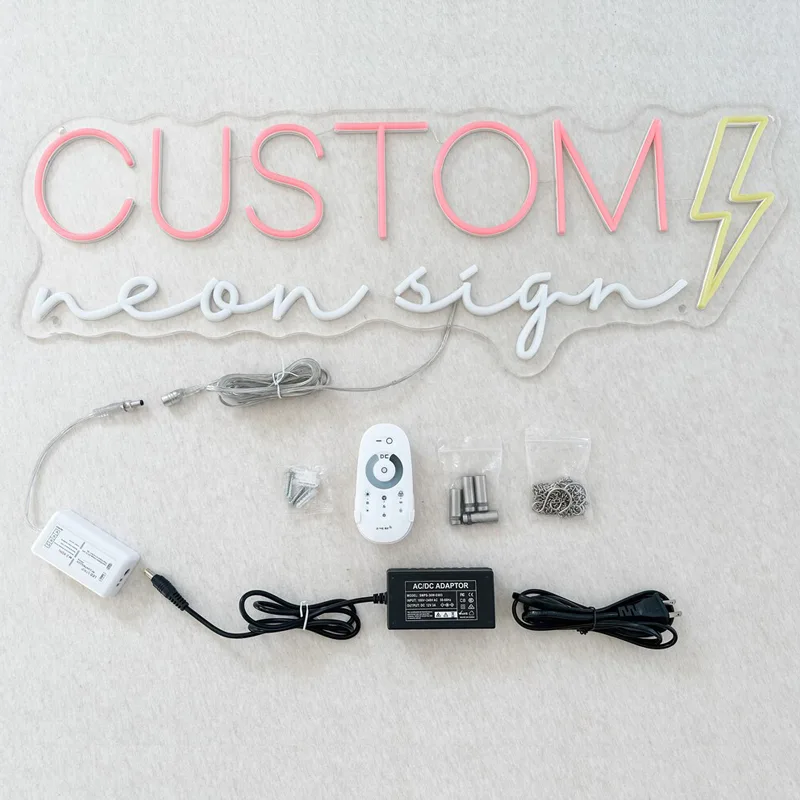
DC 포트가 있는 LED 어댑터/LED 전원 공급 장치(DC12V/24V)
- 입력 전압: AC100-240V
- 출력 전압: DC12V/DC24V
- 출력 전류: 3A/4A/5A/6A/8A/10A
- Watt: 72W/96W/120W
- 치수: 120x55x30mm
- 인증: 미국 CE ROHS AU
- IP 등급: IP20
- 보증: 2년
Production and Shipping Arrangement
After the quotation and specifications were confirmed, the customer placed the order and selected DDP shipping. Payment was received, and production was scheduled for approximately three to five days.
The original sign was shipped in late August. The estimated international transit time was around 15 days.
These details—backboard, mounting method, color, power supply and installation environment—should all be approved before manufacturing. Buyers preparing a project can use our guide on how to order custom neon signs and choose materials as a pre-production checklist.
What Was Damaged During Shipping?
When the package arrived in Germany, the customer tested the sign and reported that it illuminated correctly. However, a corner of the transparent acrylic backboard had broken near one of the drilled mounting holes.
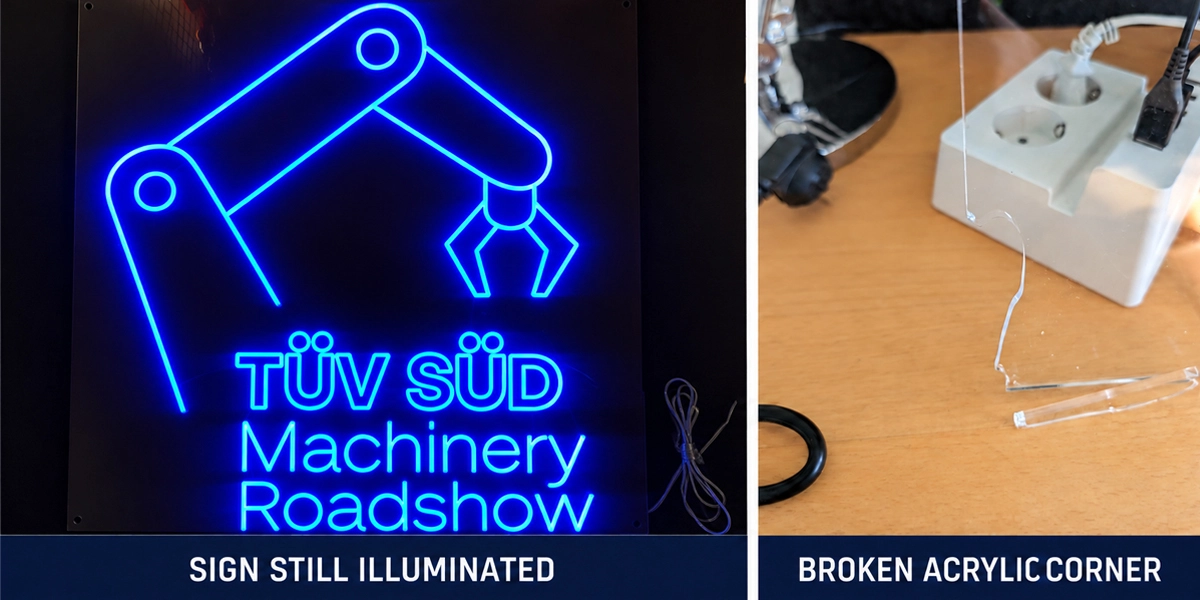
The customer also observed that:
- the outer package showed several damaged areas;
- the broken corner was close to the power-supply area inside the package;
- this area appeared to have limited padding;
- the electrical system and neon illumination still operated;
- the damaged sign could not be used in its delivered condition.
The location of the break mattered. A superficial mark away from a visible or structural area might sometimes be acceptable to an end user, but a broken mounting corner affects both appearance and installation reliability.
Why Was the Sign Unusable Even Though It Still Lit Up?
A custom neon sign is a complete assembly, not just a light source.
The finished product normally includes:
- the LED neon tube or flexible light source;
- acrylic backboard;
- wiring and electrical connections;
- power supply;
- mounting holes or hardware;
- finished artwork and alignment.
In this case, the light source and power system were still functional. The failure was structural: part of the acrylic backboard required for mounting had broken.
Using the sign with a damaged suspension point could have placed additional load on the remaining holes. The broken corner was also clearly visible and unsuitable for an event display. Electrical operation alone was therefore not evidence that the complete product had arrived in an acceptable condition.
This is an important distinction for buyers and suppliers. Delivery inspection should evaluate the entire assembly rather than checking only whether the sign switches on.
How the Customer Documented the Shipping Damage
The customer contacted us shortly after inspecting the package and provided photographs showing both the illuminated sign and the damaged packaging.
The evidence included:
- the complete sign after unpacking;
- the broken acrylic corner;
- the location of the damage near the mounting hole;
- the external condition of the package;
- the position in which the shipment had been left;
- confirmation that the sign still illuminated.
This information allowed us to distinguish transport-related damage from a lighting, wiring or power-supply failure.
This documentation approach is consistent with DHL’s guidance for damaged shipments, which recommends photographing the exterior package, internal packaging and damaged contents when reporting a claim.
For future claims, it is also useful to retain:
- the shipping label and tracking number;
- the carton, wooden case and internal padding;
- photos taken before moving or opening the package;
- a short unpacking video where practical;
- the commercial invoice or order reference;
- photos of all accessories inside the package;
- a clear description of what remains functional and what cannot be used.
Carrier procedures and reporting periods vary. Buyers should inspect custom signs promptly after delivery and contact the supplier as soon as damage is discovered.
How the Replacement Solution Was Reached
After reviewing the photographs, we concluded that the damage most likely occurred during transportation. The customer needed an undamaged sign for the event and could not use the original unit as delivered.
We proposed the following solution:
- manufacture a replacement sign at no charge;
- reuse the original working power supply rather than include another driver;
- upgrade the replacement packaging with a stronger wooden structure;
- share part of the additional freight and reinforced-packaging cost.
The customer accepted the proposal and sent the agreed contribution. Replacement production was then arranged.
This outcome addressed the main requirement—providing an undamaged sign—while avoiding the cost and waste of replacing a functioning power supply.
Why Was the Driver Not Replaced?
The customer’s report and photographs showed physical damage to the acrylic panel rather than a power failure. The original sign illuminated, indicating that the supplied driver remained operational at the time of inspection.
For that reason, the replacement focused on the damaged sign assembly. Sending another identical power supply would have increased shipment weight, packing volume and material use without resolving an additional fault.
This approach should only be used after the relevant component has been checked. If the driver, connector or wiring also shows damage, overheating, deformation or unstable output, it should not be reused until it has been evaluated.
Why Was Reinforced Packaging Used?
The first package had completed an international journey, and the delivered carton showed visible handling damage. The replacement therefore needed a packaging method with greater resistance to compression, bending and impact.
A stronger wooden frame or wooden case can add rigidity around a large acrylic-backed sign. However, an external wooden structure alone is not sufficient. The sign still needs internal restraint and clearance so that impacts are not transferred directly to its corners or mounting holes.
The reinforced package was intended to:
- reduce flexing of the outer package;
- provide a more rigid protective boundary;
- maintain clearance around vulnerable acrylic edges;
- prevent the power supply from pressing against the panel;
- reduce movement of the sign and accessories during handling.
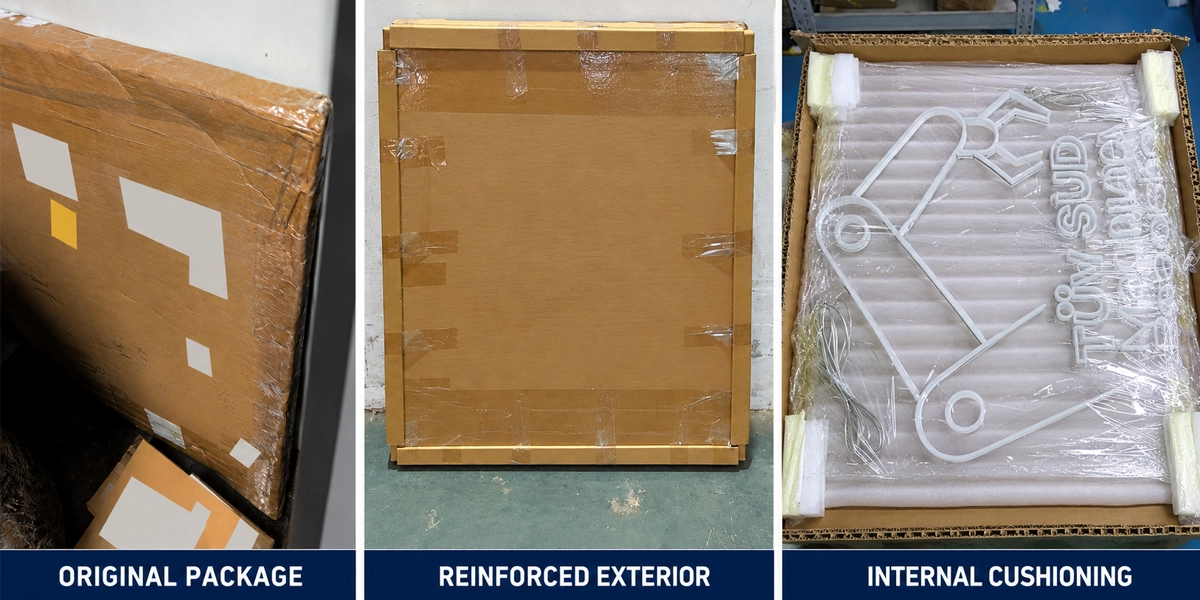
The replacement was subsequently produced and dispatched. The available correspondence confirms shipment and a later tracking request, but it does not contain a final delivery confirmation. For accuracy, this case study therefore does not claim that the replacement had already arrived or been installed.
Packaging Lessons from This Custom Neon Sign Case
Transport packaging is part of product engineering for large or irregular custom signs. A sign may pass production inspection and operate perfectly before dispatch but still fail at the customer’s site if the package does not control movement, pressure and edge impact.
Protect the Complete Acrylic Panel
Padding should not be concentrated only around the LED neon lines. The entire acrylic outline, including transparent areas that do not carry lighting, must be supported and protected.
A clear corner may look visually unimportant, but it can contain a mounting hole and carry installation load.
Reinforce Corners and Drilled Areas
Corners and mounting holes should have sufficient clearance from the external package. Protective materials should absorb shock without applying concentrated pressure directly to the drilled area.
Where possible, the package should prevent the panel from sliding toward an outside corner during transportation.
Separate the Power Supply and Accessories
A driver or controller is relatively dense compared with an acrylic panel. If it moves during shipping, it can behave like a hard object striking or pressing against the sign.
The power supply, suspension wires, screws and other accessories should therefore be secured in a separate compartment or fixed position. They should not be able to contact the acrylic during normal handling.
Prevent Movement Inside the Package
An oversized carton without adequate internal restraint does not necessarily provide better protection. Empty space can allow the product to gain momentum before hitting the side of the package.
The sign should be immobilized using suitable foam, corner protection or a shaped insert. The packaging system must hold the product securely without placing excessive pressure on the neon surface.
Match Packaging to Size, Route and Risk
The appropriate packaging depends on more than product value. Suppliers should consider:
- sign dimensions and shape;
- acrylic thickness;
- mounting-hole position;
- product weight;
- accessory weight;
- shipping distance;
- courier or freight handling;
- transshipment frequency;
- event deadline;
- whether replacement would be time-critical.
A small indoor sign shipped domestically may not require the same packaging as a large acrylic-backed sign moving through several international logistics hubs.
Project Timeline
Late July 2026 — Initial Inquiry
The customer submitted artwork and requested an indoor light-blue neon sign on a transparent backboard for an event in Germany.
August 2026 — Specifications Confirmed
The customer confirmed indoor use, a European power supply, ice-blue lighting and suspended installation through four holes.
August 20, 2026 — Order Confirmed
The invoice and payment were confirmed, and production was scheduled.
August 21, 2026 — Mounting Details Finalized
The customer confirmed that the sign would be suspended rather than directly wall-mounted.
August 27, 2026 — Original Sign Shipped
The completed sign was dispatched to Germany.
September 15, 2026 — Damage Reported
The customer reported a broken acrylic corner near a mounting hole and supplied photographs of the sign and package.
September 16–17, 2026 — Replacement Agreed
A replacement sign and reinforced wooden packaging were proposed. The customer accepted the solution and contributed to the additional logistics and packaging cost.
Late September 2026 — Replacement Shipped
The replacement sign was dispatched. The correspondence reviewed for this case study does not include final installation confirmation.
What Buyers Should Check When Their Neon Sign Arrives
International buyers should inspect a custom LED neon sign before discarding any packaging.
1. Photograph the Package Before Opening
Take clear pictures of every side of the carton or wooden case. Record dents, punctures, crushed corners, water exposure or opened seals.
2. Record the Unpacking Process
An unpacking video can show the relationship between the outer damage, internal protection and product condition. This may be useful when the cause of damage is disputed.
3. Inspect the Acrylic Backboard
확인:
- all corners and external edges;
- mounting holes;
- narrow sections of acrylic;
- areas beneath heavy accessories;
- visible cracks, chips or stress marks.
4. Test the Lighting System
Connect the supplied power system according to the instructions and check:
- whether all neon sections illuminate;
- whether the color is correct;
- whether flickering occurs;
- whether connectors remain secure;
- whether the power supply operates normally.
Do not continue using damaged wiring or electrical components merely because the sign initially switches on.
5. Keep All Packaging
Do not discard the carton, foam, wooden frame, shipping label or internal accessory boxes until the supplier or carrier confirms that they are no longer required.
6. Contact the Supplier Promptly
Send the order number, tracking information, photos, video and a concise explanation of the problem. Also state whether the product is completely unusable, partly usable or cosmetically damaged.
Clear documentation helps the supplier decide whether the appropriate solution is a repair component, partial replacement, complete replacement or carrier claim.
What Buyers and Sign Suppliers Can Learn from This Project
Product Quality and Delivery Condition Are Different Issues
A correctly manufactured sign can still be damaged after leaving the factory. Final customer satisfaction depends on both production quality and transport protection.
Mounting Details Should Be Confirmed Early
Wall mounting and suspension may require different holes, hardware and load distribution. These choices should be finalized before cutting the backboard.
Functional Testing Does Not Replace Structural Inspection
A sign that illuminates may still be unsafe or unsuitable for installation. Acrylic condition, mounting points and wiring need separate inspection.
Accessories Must Be Treated as Moving Loads
Power supplies, controllers and metal hardware can damage a lighter sign if they are not restrained. They should be packed as separate, fixed components.
Replacement Terms Should Be Explained Clearly
A replacement solution should identify:
- which parts will be remade;
- whether working accessories will be reused;
- which party covers the product cost;
- whether upgraded packaging changes the freight cost;
- the expected production and shipping schedule.
Specific terms reduce misunderstanding and help both parties evaluate the proposed solution.
Do Not Publish More Customer Information Than Necessary
Case studies can demonstrate manufacturing and after-sales experience without disclosing the customer’s logo, address, contact details or confidential artwork.
For this article, the company identity and branded artwork have been intentionally withheld. Only the product specifications and service process relevant to other buyers are discussed.

Above video shows a representative custom LED neon sign production process; the design differs from the sign featured in this case study.
자주 묻는 질문
결론
This project involved an indoor ice-blue LED neon sign on a transparent acrylic backboard, designed for suspended installation at an event in Germany. The sign illuminated after delivery, but a broken acrylic corner near a mounting hole made it unsuitable for use.
Photographs from the customer helped identify the damage as transport-related rather than an electrical failure. A replacement sign was arranged, the working power supply was retained, and the second shipment used reinforced packaging intended to provide better structural protection.
The central lesson is straightforward: a custom neon sign must be evaluated as a complete product. Light output, acrylic structure, mounting points, accessories and packaging all contribute to a successful installation.
If you are preparing an LED neon sign for an event, exhibition, retail display or branded interior, provide the artwork, required size, installation environment, mounting method, destination country and delivery deadline. You can review SignliteLED’s custom LED neon sign options before requesting a model-specific quotation and packaging recommendation.
아저: 스티븐 콴
영업 관리자
이메일: sales@signlite.com.cn
모바일: +86 158 1447 8470

관련 게시물