2011년부터 간판 및 LED 스트립 조명 공장

2011년부터 간판 및 LED 스트립 조명 공장

PCB와 PCBA의 차이점은 무엇입니까? (2026년 업데이트)

In the electronics manufacturing industry, “PCB” and “PCBA” are mentioned almost daily. However, these two concepts often cause confusion, even among hardware startups or procurement teams without an electronics background.

Some believe they are merely synonyms, others mistakenly assume PCBA is simply an “upgraded version of PCB,” and some procurement personnel even remain unclear about which service they truly require when requesting quotes.

In reality, the distinction between PCB and PCBA extends beyond definitions, directly impacting product costs, delivery cycles, quality risks, and supply chain complexity. Especially in the context of 2026, where electronics are highly intelligent and AI technology is deeply integrated into manufacturing processes, correctly understanding the distinction between PCB and PCBA has become critical for enterprises to reduce risks and enhance efficiency.

This article will systematically analyze the core differences between PCB and PCBA from multiple dimensions—technical definitions, manufacturing processes, cost structures, industry trends, and procurement decisions—to help engineers and procurement personnel make more informed choices in the early stages of projects.

What is a PCB? (Printed Circuit Board)

What is a PCB (Printed Circuit Board)

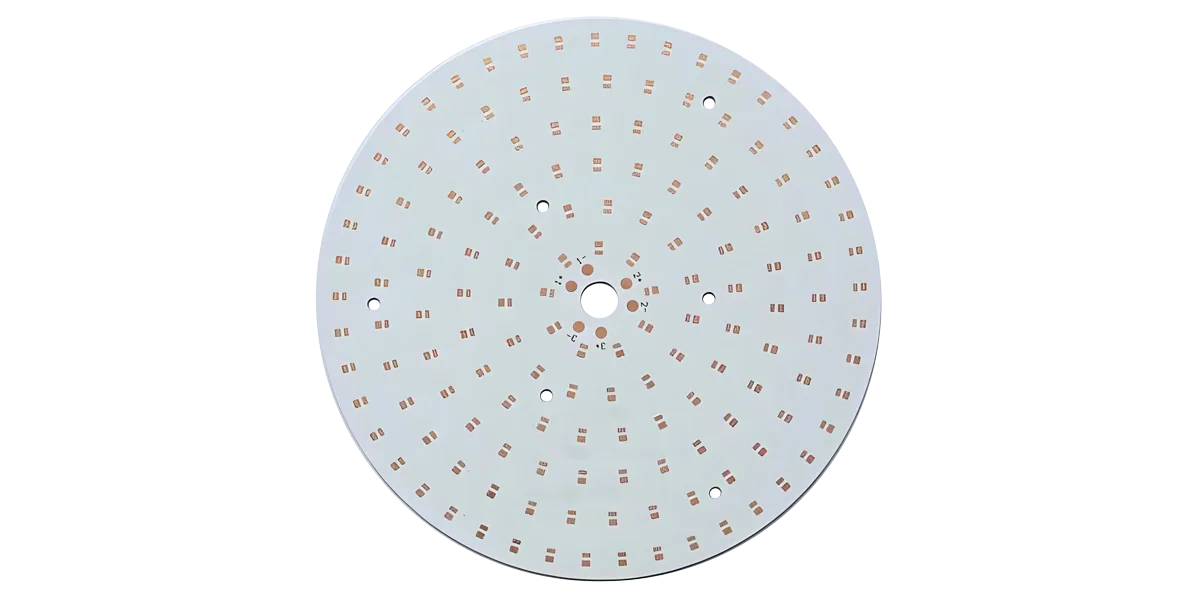
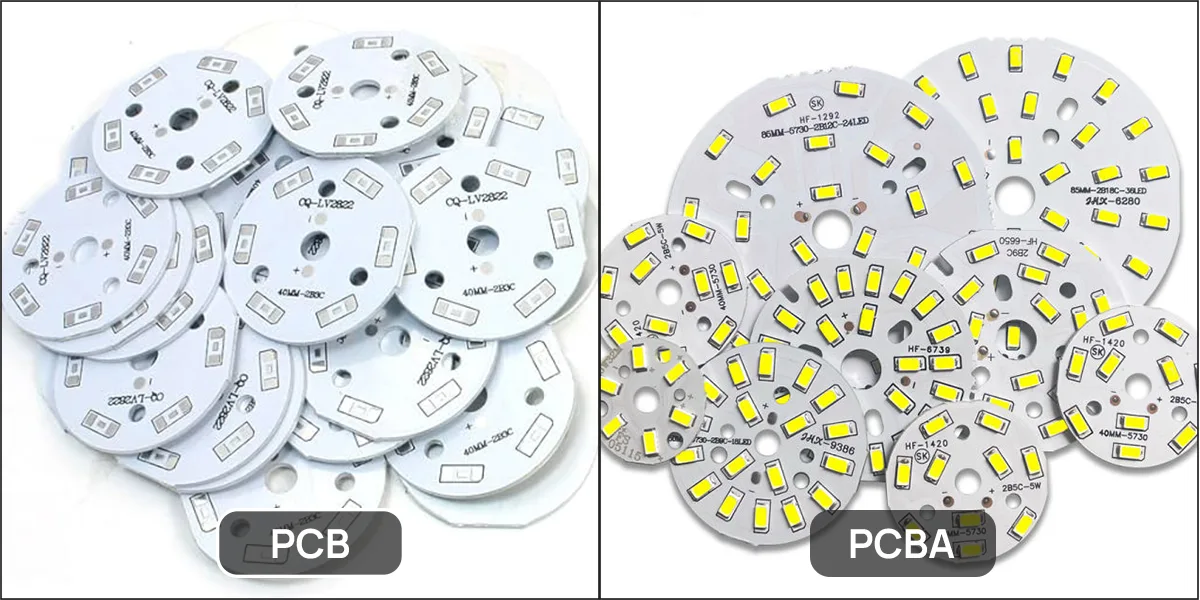
A PCB (printed circuit board) serves as the fundamental carrier for electronic components, enabling electrical connections through copper foil traces, pads, and vias. A PCB refers solely to the “bare board” without any electronic components mounted on it. However, it forms the physical foundation of electronic products, providing the substrate for circuitry and facilitating electrical connections.

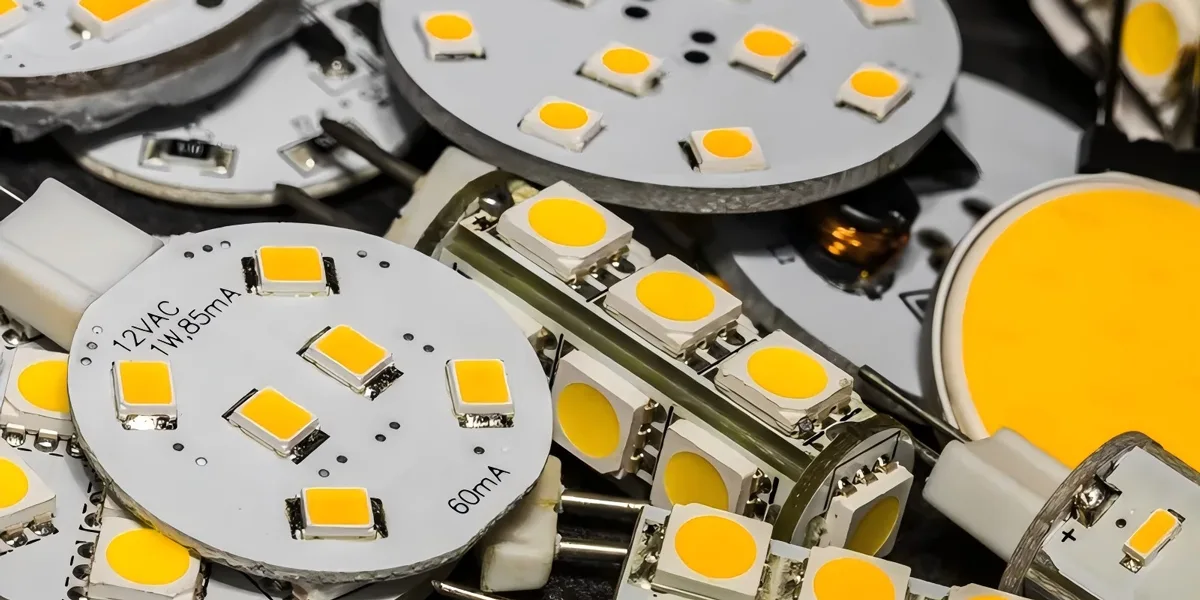
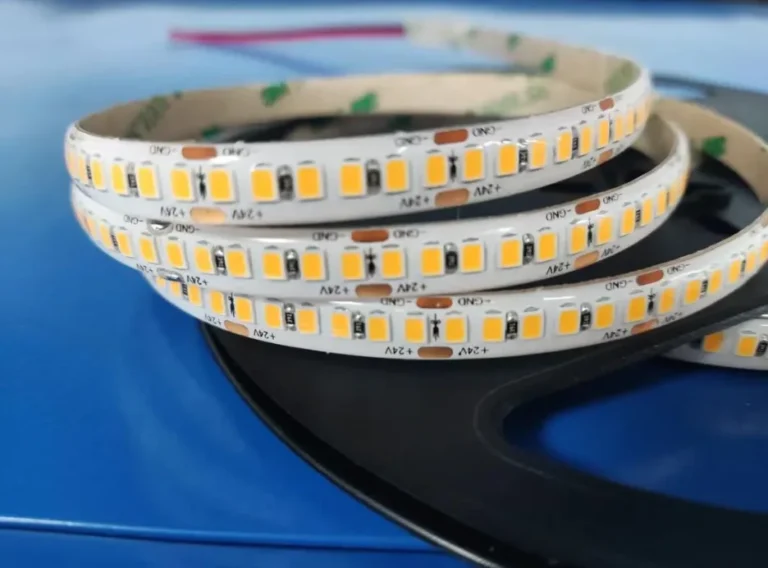
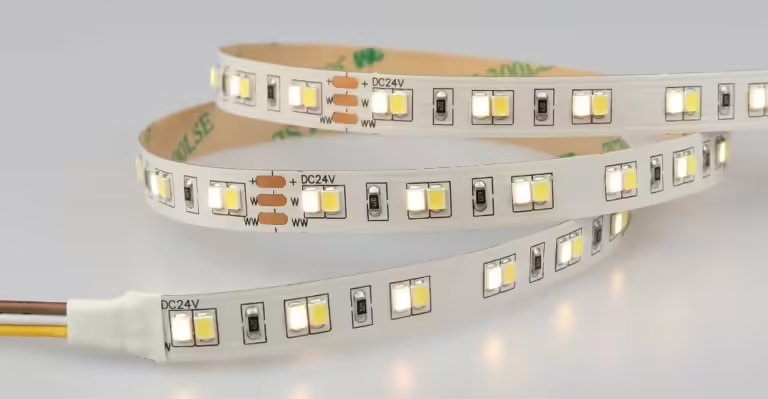
PCBs serve as the starting point for all LED lighting systems, whether flexible LED strips or high-power LED modules.

Structural Components of LED PCBs

A typical LED PCB usually includes:

1. Base Material

  • FR-4: Suitable for low-to-medium power LEDs
  • Metal Core PCB (MCPCB): Aluminum or copper-based, widely used in high-power LED strips and modules for superior thermal performance
  • High-frequency Materials: Used in smart lighting and IoT LED systems

2. Copper Layer

Copper thickness (1 oz–6 oz) directly impacts:

  • Current carrying capacity
  • Voltage drop control
  • Thermal management performance of LED strips

3. Solder Mask

Prevents short circuits and oxidation. In the LED industry, white solder mask is widely adopted for its superior reflective properties.

4. Silkscreen

Markings indicate LED polarity, orientation, and part numbers, facilitating mass production and maintenance.

Common PCB Types in the LED Industry

The PCB types and applications in the LED industry are primarily as follows:

유형재료애플리케이션 시나리오
LED 가동 가능한 스트립 PCB유연한 인쇄 회로(FPC)라이트 슬롯, 캐비닛, 불규칙한 설치 환경
‌LED Module PCBFR-4 유리 섬유 보드 / 알루미늄 베이스 보드선형 조명, 천장 조명(저전력용 FR-4, 고전력용 알루미늄)
LED 강성 스트립 PCB알루미늄 베이스 PCB / 두꺼운 구리 FR-4 보드리니어 조명, 산업용 조명
LED Custom PCB BoardLED 사용자 정의 PCB 보드고급/전문 조명

What is PCBA? (Printed Circuit Board Assembly)

What is PCBA (Printed Circuit Board Assembly)

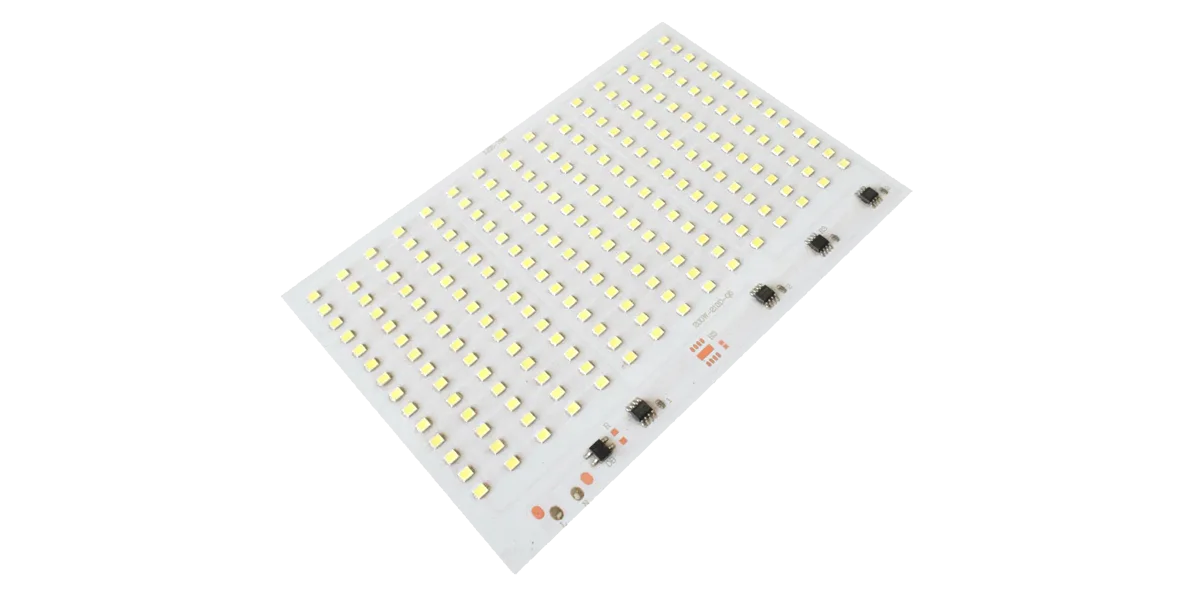
PCBA (Printed Circuit Board Assembly) refers to the finished circuit board produced by soldering electronic components such as resistors, capacitors, ICs, LEDs, and connectors onto a PCB using SMT or THT processes. It possesses complete electrical and functional properties. It is the finished circuit system after electronic components are soldered, assembled, and tested on the PCB.

PCBA is the critical step that makes a PCB “truly functional.”

1. Why Must LED Products Undergo PCBA?

Without PCBA:

  • LEDs cannot illuminate.
  • Constant-current drivers cannot operate stably.
  • Smart control and dimming functions cannot be implemented.

PCBA soldered LED chips, resistors, capacitors, driver ICs, connectors, and other components onto the PCB, transforming it into a functional lighting system.

2. LED PCBA Assembly Processes

  • SMT (Surface Mount Technology)

– Mainstream process for LED strips and modules

– High automation, efficiency, and consistency

– Suitable for high-density LED arrangements

  • THT (Through-Hole Technology)

– Used for power interfaces and high-current terminals

– High mechanical strength and stability

– Hybrid Assembly (SMT + THT)

– Common in commercial and industrial LED fixtures, balancing performance and reliability.

Comparison of PCB and PCBA Manufacturing Processes (Step-by-Step)

Understanding the manufacturing processes is key to grasping their differences.

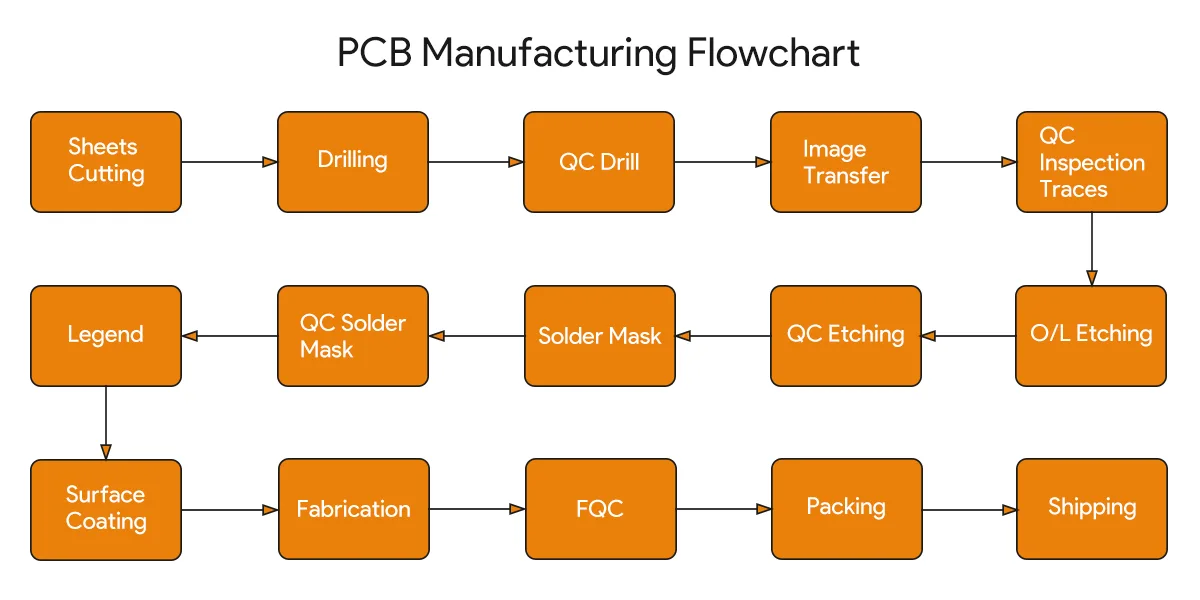
The PCB manufacturing process primarily involves exposure, etching, drilling, plating, etc. Refer to the following diagram for the specific workflow:

PCB Manufacturing Flowchart

At this stage, the completed PCB remains a bare board without any lighting or control functions.

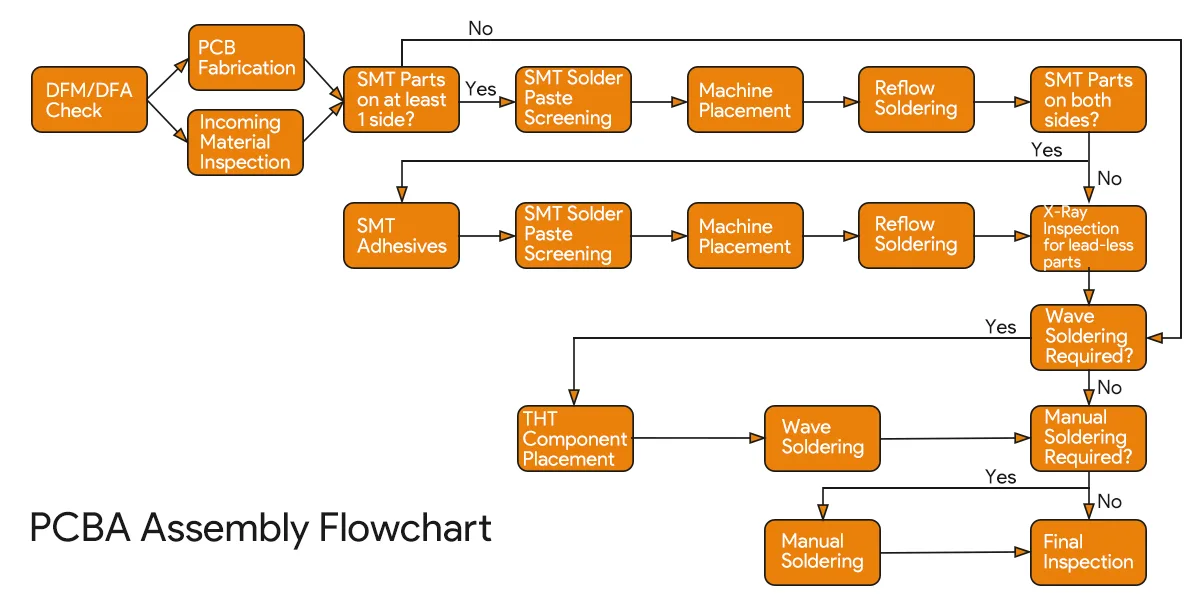
The PCBA manufacturing process primarily includes SMT placement, assembly, and testing. The specific workflow is illustrated in the chart below:

PCBA Assembly Flowchart-3

As shown, the PCBA process is significantly longer than PCB manufacturing and relies more heavily on expertise, equipment, and management capabilities.

PCB vs. PCBA: Key Differences at a Glance

PCB vs. PCBA Key Differences at a Glance

What exactly is the difference between PCB and PCBA? A simple analogy: PCB = the foundational structure, akin to a building’s framework and piping; PCBA = the functional finished product, a fully powered and operational building.

In LED lighting products, a bare PCB alone cannot emit light. Only after completing the PCBA can LED strips or modules function properly.

CategoryPCB (Printed Circuit Board)PCBA (Printed Circuit Board Assembly)
정의A bare board made of insulating substrate and conductive copper traces, without electronic componentsA functional module created by assembling electronic components (resistors, capacitors, ICs, etc.) onto a PCB
기본 기능Provides electrical connection paths and mechanical support for componentsPerforms actual electronic functions such as signal processing, power management, and control logic
Physical StateUnpopulated “bare board”Fully assembled and soldered “finished module”
모양Green (or other color) solder mask with visible copper traces and padsCovered with components, solder joints, and leads; functional layout clearly visible
Manufacturing ScopeBoard fabrication onlyComponent sourcing + assembly + testing
생산 프로세스Material cutting → Copper lamination → Circuit etching → Drilling → Surface finishIncoming inspection → SMT placement → Reflow / Wave soldering → Inspection & functional testing
Key Technical FocusTrace accuracy, impedance control, micron-level etching precisionSoldering quality, placement accuracy, yield control (typically ≥99.9%)
Cost StructureRaw materials + PCB fabrication processesElectronic components (BOM) + assembly + testing
Typical Cost LevelRelatively low (custom PCB: approx. $0.1–$5 per board)Higher (PCBA prototypes typically start from $30, depending on BOM)
Delivery OutputElectrical carrier without functionalityReady-to-use electronic circuit with defined functions

1. Functional Differences

  • PCB: Provides circuit pathways only
  • PCBA: Fully operational LED system ready for power-up

2. Scope of Manufacturing

  • PCB: Circuit board fabrication
  • PCBA: Component procurement + assembly + testing

3. Required Documentation (Frequently Asked Procurement Questions)

PCB Manufacturing Requires:

  • Gerber files
  • NC Drill files

PCBA requires:

  • BOM (Bill of Materials)
  • Pick-and-Place (coordinate files)
  • Stencil files

4. Testing and Quality Control

PCB:

  • Electrical continuity testing
  • Visual inspection
  • Copper thickness measurement
  • Impedance testing

PCBA:

  • SPI solder paste inspection
  • AOI automatic optical inspection
  • X-Ray (BGA, driver IC solder joint inspection)
  • ICT/Functional Testing (Brightness, Current, Stability)
  • Aging and Reliability Testing
  • Luminous Flux and Electrical Performance Testing

5. Packaging and Logistics

  • PCB: Vacuum moisture-proof packaging
  • PCBA: Anti-static packaging (ESD), custom trays

Why is PCBA significantly more expensive than PCB?

Why is PCBA significantly more expensive than PCB

This is one of the most frequently asked questions by procurement personnel. The higher cost of PCBA isn’t simply due to “increased processing fees,” but rather the result of multiple factors:

  • Component costs: Chips, resistors, capacitors, LEDs, driver ICs, and other components often constitute the largest portion of PCBA costs.
  • Labor and equipment investment: High-speed pick-and-place machines, reflow ovens, AOI systems, and testing equipment are all high-value assets.
  • Yield and risk costs: Soldering defects, material flaws, and design issues all carry risks of rework or scrap.
  • Supply chain management costs: Material shortages, component substitutions, and delivery schedule fluctuations require additional coordination.

From a business perspective, PCBA is fundamentally a “system engineering service,” not merely manufacturing processing.

By 2026, artificial intelligence has moved beyond conceptual stages to deeply integrate into PCB and PCBA production, accelerating the industry’s shift toward highly integrated and intelligent manufacturing.

Key trends include:

  • AI-Assisted DFM Analysis: Predicts potential manufacturing issues before production, reducing trial runs.
  • AI-powered AOI defect detection: Identifies complex flaws like cold solder joints and misalignment through deep learning, lowering misjudgment rates.
  • Intelligent scheduling and material forecasting: Optimizes capacity utilization while reducing delivery uncertainty.
  • Closed-loop quality data: Continuously improves yield and consistency through data analysis.

In the future, AI-enabled PCBA factories will gain significant advantages in delivery timelines, quality control, and cost management.

Should you opt for a bare PCB or a one-stop PCBA?

There’s no one-size-fits-all answer—it depends entirely on your project type.

If you have an experienced electronics team and reliable SMT resources and only need bare boards, PCBs offer greater flexibility and may be more cost-effective.

If you aim to reduce coordination costs, minimize quality risks, and accelerate time-to-market, one-stop PCBA is typically the superior choice.

For products like LED light boards, LED 모듈, and smart lighting, PCBA significantly enhances consistency and delivery reliability.

Common PCB/PCBA Procurement Pitfalls

The following errors are frequently encountered in real projects:

  • Providing incomplete or unverified design files
  • BOM discrepancies with actual design
  • Neglecting testing requirements while focusing solely on unit price
  • Assigning complex PCBA projects to PCB suppliers

These issues often remain unnoticed during quoting but amplify risks during mass production.

Procurement Decision Guide: How Should You Choose?

Before finalizing your selection, prioritize evaluating these factors:

  • Project complexity and batch size
  • Internal engineering and supply chain capabilities
  • Requirements for lead time and consistency
  • Need for a long-term, stable partner

The optimal choice is not necessarily the lowest quote but the solution with the lowest overall risk.

결론

In summary, PCBs and PCBAs serve distinct yet complementary roles in electronics manufacturing. PCBs provide the foundational structure and electrical connections, while PCBA delivers complete functionality and commercial value to the product.

For LED lighting manufacturers, understanding the distinction between PCB and PCBA transcends technical considerations—it is a strategic decision. Selecting the appropriate manufacturing and assembly solution helps reduce costs, enhance quality, and accelerate product launches in global markets. As product integration continues to advance, PCBA solutions with engineering capabilities and quality control advantages will play an increasingly vital role in the global electronics and LED lighting markets.

자주 묻는 질문

LED 조명이 건강에 해롭습니까? LED 조명에 대한 IEC 62471 테스트 이해
LED 기술의 급속한 발전으로 조명 제품은 상업 및 주거용 프로젝트에서 더욱 밝고 효율적이며 더 널리 사용되고 있습니다. 그러나 고강도 광원은 사람의 눈과 피부에 잠재적인 위험을 초래할 수도 있습니다. 안전을 보장하기 위해 IEC 62471과 같은 국제 표준을 사용하여 평가합니다.
경관 조명의 실외 LED 네온 - 인기 색상 및 제어 옵션경관 조명의 실외 LED 네온 - 인기 색상 및 제어 옵션
건축가 및 설치자를 위한 실외 LED 네온 플렉스 마운팅 솔루션
LED 네온 플렉스 조명은 옥외 간판, 건축 액센트 및 창의적인 설치물을 위한 솔루션으로 빠르게 자리 잡았습니다. 유연성, 내구성, 밝고 균일한 빛으로 상업용 및 장식용 모두에 이상적입니다. 하지만 한 가지 중요한 세부 사항을 간과하는 경우가 많은데, 바로 올바른 마운팅 액세서리를 선택하는 것입니다. 적절한 마운팅 클립을 선택하거나...
건축 조명용 LED 네온 플렉스건축 조명용 LED 네온 플렉스
건축 조명용 LED 네온 플렉스: 적용 분야, 이점 및 팁
파사드는 건물의 외부 표면으로, 사람들이 가장 먼저 눈에 띄는 부분입니다. 파사드는 현대적이든 우아하든 창의적이든 건물의 스타일을 표현하는 데 도움이 됩니다. 디자이너와 건축가들 사이에서 인기를 얻고 있는 새로운 조명 솔루션은 LED 네온 플렉스입니다. 유연한 구조와 눈에 띄는 시각적 효과로 이 조명 옵션은 ...
설치 방법 - LED 스트립 조명 - 천장 조명설치 방법 - LED 스트립 조명 - 천장 조명
천장에 LED 스트립 조명을 설치하는 방법
천장에 LED 스트립 조명을 설치하면 기능적인 조명과 장식적인 조명을 모두 제공하면서 분위기를 개선하여 방을 변화시킬 수 있습니다. 이 가이드에서는 천장에 LED 스트립을 설치하는 다양한 방법을 소개하여 전문적인 분위기를 연출할 수 있도록 도와드립니다. 적합한 LED 스트립 유형, 고려해야 할 요소 등에 대해 설명합니다.
SEO-Salon_02SEO-Salon_02
SEO 살롱
어제 SEO 살롱에 참여하게 되어 기뻤고, 선생님의 공유와 다른 공장과의 교류를 통해 많은 도움을 받았습니다. 요즘 국제 무역은 점점 더 어려워지고 있습니다. 홈페이지, 온라인 플랫폼, 소셜 등 다양한 형태로 우리 제품을 더 잘 보여줘야 할 뿐만 아니라...
COB-LED 스트립이란?COB-LED 스트립이란?
COB LED 스트립: 무엇인가요?
작업 조명에서 무드 조명에 이르기까지, LED 스트립 조명은 다양한 환경에서 점점 더 보편화되고 있습니다. COB(칩 온 보드) LED 스트립은 기존의 SMD(표면 실장 장치) LED 기술에 비해 비교적 새로운 유형의 LED 스트립입니다. 특별한 장점이 있습니다. 자세한 내용을 자세히 살펴보겠습니다...

공유하다:

페이스북
지저귀다
핀터레스트
링크드인
구독하다
알림
guest
0 댓글
가장 오래된
최신 가장 많이 투표된
인라인 피드백
모든 댓글 보기

SignliteLED 블로그 검색

카테고리

위로

지금 견적을 받으세요