English
  简体中文
简体中文  Deutsch
  Español
  Français
  Italiano
  日本語
日本語  한국어
한국어  Polski
  Português
  Русский
  Türkçe
  Nederlands
  Tiếng Việt
  ไทย
ไทย 
LED linear module solutions for architectural lighting are integrated lighting systems built around a rigid PCB, combined with optics, housing, and control interfaces. Unlike basic LED strips, they function as stable light engines designed for long-term architectural use, delivering consistent illumination, controlled thermal behavior, and seamless integration into ceilings, walls, and linear design features.
What Are LED Linear Modules in Architectural Lighting?
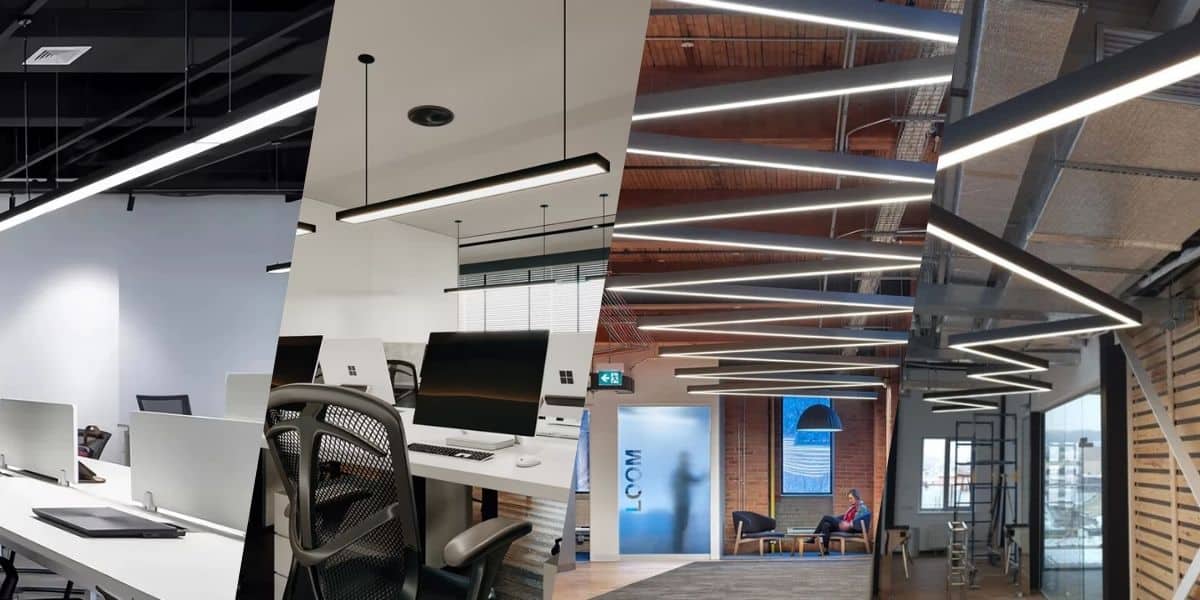
In architectural lighting, a linear module is a rigid, engineered lighting unit designed to produce continuous, uniform light along a defined length. At its core is a PCB that acts as the light engine, supporting LEDs, managing heat flow, and ensuring electrical stability.
Unlike flexible LED strips, which prioritize adaptability, linear modules prioritize structural consistency and predictable performance. Architectural spaces demand lighting that looks the same today and years later, especially in fixed installations where access is limited.
Core components typically include:
- LED PCB acting as the primary light engine
- Defined thermal path for heat dissipation
- Optical diffuser or lens for controlled light spread
- Driver interface for stable power and control
This system-level approach is why linear modules are preferred where lighting becomes part of the architecture itself.
Why PCB-Based Linear Modules Are Used in Architecture
Architectural environments place very different demands on lighting compared to decorative or temporary applications. PCB-based linear modules offer mechanical rigidity, which keeps LED spacing fixed and prevents visual distortion over time.
Thermal consistency is another key reason. A rigid led strip pcb board allows heat to spread evenly along the length, reducing localized hotspots that can affect color and lifespan. This matters in projects where lights operate for long hours every day.
Uniform light distribution is also easier to achieve when LEDs are mounted on a controlled PCB layout rather than a flexible substrate that may bend or sag. For architects and engineers, this reliability reduces visual risk once a project is completed.
In professional architectural projects, many linear modules are designed around Zhaga-based mechanical and electrical consistency, which helps maintain uniform performance across fixtures and simplifies long-term maintenance in large installations.
Key Technical Characteristics Architects Care About
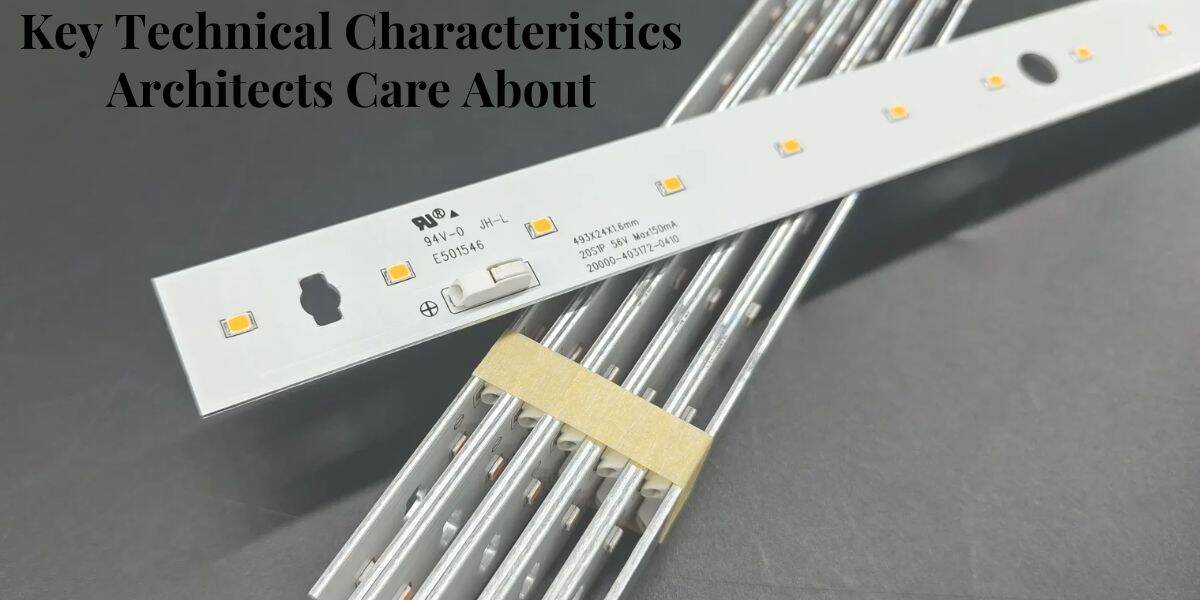
Architects and lighting designers rarely focus on raw lumen numbers alone. What matters more is how light behaves in real spaces.
Light uniformity over long runs is critical, especially in corridors, coves, and feature lines. Any variation becomes immediately noticeable. Thermal behavior is equally important, as modules are often enclosed within ceilings or walls where airflow is limited.
Color consistency across multiple modules ensures that large installations appear cohesive rather than segmented. Scalability also matters, since projects often require the same lighting effect across different lengths and layouts without visual breaks.
In 2026, architectural projects typically balance efficiency with visual quality, favoring stable performance and color fidelity rather than chasing output alone. These factors determine whether a pcb led strip solution feels architectural or improvised.
Linear Module Mounting Solutions in Architectural Design
Recessed and trimless applications
These installations allow light to emerge directly from architectural surfaces. Linear modules work well here because their rigid form maintains straight lines and clean edges, supporting minimalist design intent.
Surface-mounted architectural lines
When lighting is visible, consistency becomes even more important. Linear modules provide precise alignment and uniform output, reinforcing intentional design rather than appearing like an added fixture.
Suspended linear lighting
In open spaces, suspended modules become visual elements themselves. Stability and balance are essential, which is why rigid PCB-based solutions are preferred over flexible alternatives.
Control, Dimming, and Smart Integration Context
Architectural lighting is rarely static. Linear modules must integrate smoothly with building-wide control systems to support dimming, scene setting, and adaptive lighting.
Dimming performance is evaluated by smoothness and consistency across all modules, not just whether dimming is possible. Mismatched behavior breaks visual continuity. Designers therefore look for solutions that behave predictably as part of a larger system, regardless of control method.
The focus is compatibility at a system level rather than individual features.
Design and Manufacturing Considerations for Architectural Linear Modules
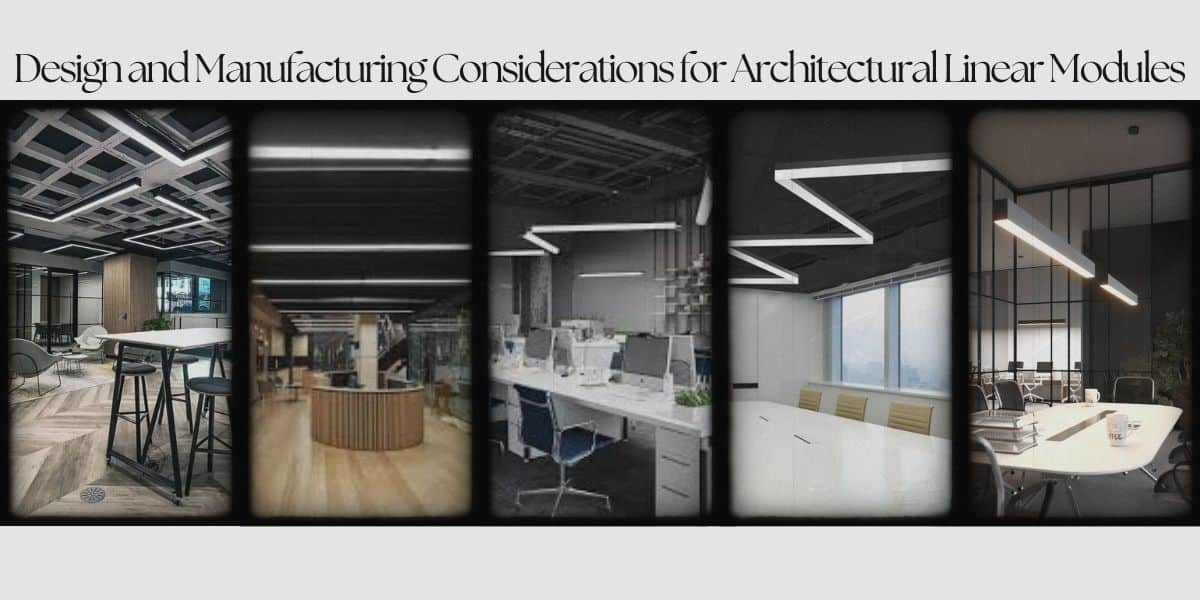
PCB design directly affects architectural outcomes. LED placement, copper thickness, and layout influence both visual uniformity and heat flow. Over long duty cycles, small design compromises become visible failures.
Heat management is especially critical in continuous installations where modules operate daily for extended periods. Tolerance control during manufacturing also matters, as even minor variations can result in visible inconsistencies once modules are installed side by side.
Cheap strip solutions often fail in architectural settings because they are not designed for these long-term, system-level demands.
Common Mistakes When Selecting Linear Lighting Solutions
One common mistake is treating architectural lighting like decorative lighting, assuming similar products will behave the same. Ignoring thermal behavior is another, particularly in enclosed installations.
Design teams also sometimes prioritize lumen output over consistency, leading to uneven illumination and visual discomfort. These issues are rarely apparent during short tests but become obvious after installation.
Understanding the difference between an led pcb light designed for architecture and a basic strip helps avoid these problems.
Comparison of Lighting Approaches in Architectural Projects
| Lighting Approach | Typical Characteristics | Architectural Suitability |
| Flexible LED strips | Adaptable, low rigidity, variable spacing | Limited for permanent architecture |
| Basic linear fixtures | Predefined formats, moderate consistency | Suitable for general applications |
| PCB-based LED linear modules | Rigid structure, controlled optics, stable thermal behavior | Well-suited for architectural integration |
How LED Linear Modules Support Modern Architectural Lighting Goals
Modern architecture emphasizes visual comfort, clean lines, and long-term reliability. Linear modules support these goals by delivering consistent light that integrates naturally into spaces rather than competing with them.
Their modular nature allows designers to maintain a unified lighting language across different areas, while the underlying system design ensures predictable performance over time. Modular PCB-based designs also support long-term sustainability by allowing maintenance or replacement at the module level rather than removing entire lighting systems.
This balance between design intent and technical stability is why linear modules remain central to architectural lighting strategies.
Conclusion
LED linear module solutions for architectural lighting are system-based lighting engines built for stability, consistency, and integration. By combining a rigid PCB, controlled optics, thermal management, and compatible controls, they address the long-term demands of architectural spaces. Their value lies not in output alone, but in predictable behavior that supports design intent over the life of a building.
FAQs
Related Posts