English
  简体中文
简体中文  Deutsch
  Español
  Français
  Italiano
  日本語
日本語  한국어
한국어  Polski
  Português
  Русский
  Türkçe
  Nederlands
  Tiếng Việt
  ไทย
ไทย 
LED PCB assembly for smart connected lighting is the process of integrating LEDs, control electronics, and wireless connectivity onto a single, reliable PCB platform. Unlike standard LED boards, these assemblies combine high-power lighting components with microcontrollers, sensors, and RF modules. This makes assembly specialized because thermal control, signal integrity, and power regulation must all work together for stable, long-term operation.
What Is LED PCB Assembly for Smart Connected Lighting?
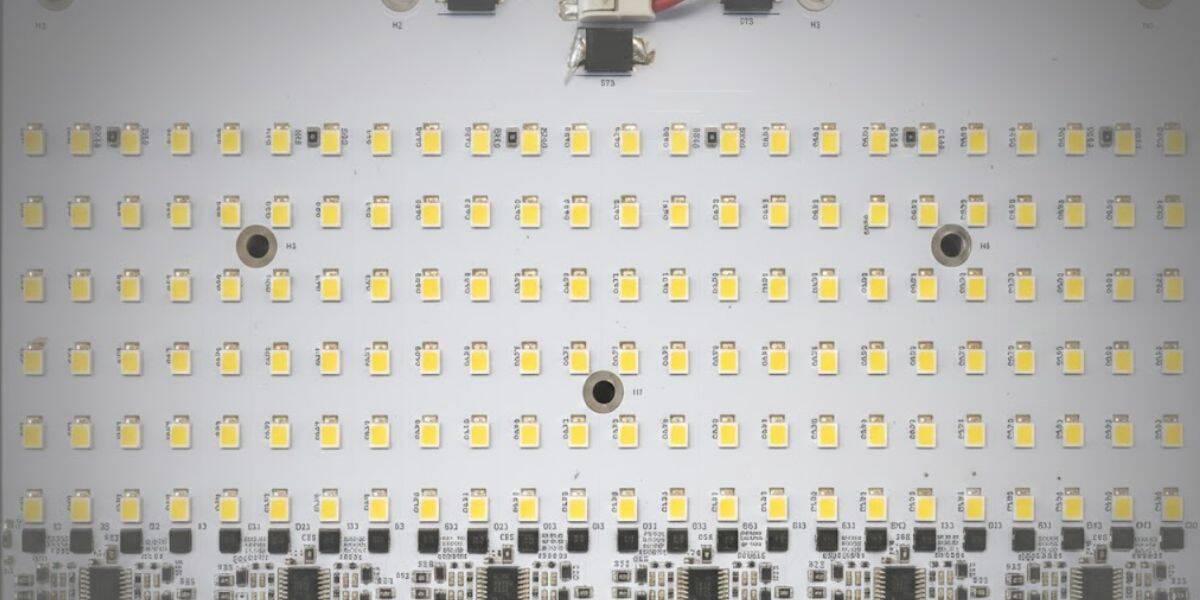
Standard LED assembly focuses mainly on placing and powering light-emitting components. Smart connected lighting goes further. The PCB is no longer just a mounting surface for LEDs. It becomes the core system where lighting, control, and communication coexist.
In smart lighting, the pcb led assembly supports LEDs, control logic, and connectivity at the same time. This changes how boards are laid out, assembled, and tested. Control electronics manage dimming, scheduling, and automation, while connectivity enables remote access and system coordination. Because all of this happens on one led pcb board, assembly quality directly affects how the entire lighting system behaves in real environments.
Key Components Integrated in Smart LED PCB Assemblies
High-Power LED Components
High-power LEDs generate significant heat and are sensitive to placement accuracy. During pcb led assembly, even small alignment errors can affect solder joint reliability and heat transfer. Poor assembly increases thermal stress, which shortens LED lifespan and causes light output degradation over time.
Connectivity Modules (Wi-Fi, Zigbee, Bluetooth, Matter)
Wireless modules are sensitive to noise, grounding, and physical placement. In smart lighting, connectivity must remain stable even when LEDs switch on and off at varying power levels. Assembly decisions such as antenna clearance, ground reference quality, and solder consistency directly influence signal stability.
Microcontrollers and Control ICs
Microcontrollers act as the brain of the system. They handle dimming curves, automation rules, and communication with other devices. In custom pcb assembly for smart lighting, these components must be assembled with care to avoid power fluctuations and timing issues that can disrupt lighting behavior.
Sensors Used in Smart Lighting
Smart lighting often includes motion, ambient light, or environmental sensors. These components must be assembled to remain electrically isolated from LED heat and noise sources. Poor assembly can lead to false readings or unstable behavior, even if the sensor itself is well designed.
Critical Assembly Considerations for Smart Connected Lighting
Smart lighting assembly introduces challenges that are not present in basic LED boards. Thermal interface materials must create a reliable heat path without interfering with sensitive electronics. Power regulation must handle both high LED currents and ultra-low standby power states.
Signal integrity is another concern. Wireless modules operate alongside high-current LED traces, which increases the risk of interference. Assembly errors such as solder voids, uneven reflow, or contamination are difficult to correct later because they affect both lighting and connectivity at the system level.
At the assembly stage, reliability depends on balancing:
- LED thermal paths and heat dissipation
- Power stability across dimming and standby states
- Signal integrity for wireless communication
Thermal Management in Smart LED PCB Assembly
Thermal management is a defining factor in smart lighting reliability. Many smart LED systems use MCPCB or aluminum substrates because they provide efficient heat spreading for LEDs. However, assembly choices determine whether that thermal potential is actually realized.
Smart lighting often runs longer duty cycles than conventional lighting. Dimming, sensing, and connectivity keep the system active even when light output is reduced. If heat is not managed correctly during assembly, long-term operation leads to accelerated component aging and unstable performance.
Manufacturing and Assembly Workflow for Smart LED PCBs

The manufacturing flow for smart LED assemblies starts with design readiness, where component placement supports both heat dissipation and signal integrity. Assembly sequencing matters. LEDs, control ICs, and RF modules may require different handling and reflow profiles.
Mixed assemblies must balance LED solder requirements with the thermal limits of connectivity components. Inspection focuses not only on solder quality but also on alignment, cleanliness, and consistency across boards. This workflow reflects system integration rather than simple component attachment.
Testing and Reliability in Smart Connected Lighting Assemblies
Visual inspection alone cannot validate smart lighting assemblies. Functional testing must confirm that connectivity modules communicate reliably and that control logic responds correctly under load. Many early failures in smart lighting systems originate from assembly issues such as marginal solder joints or poor thermal interfaces, not from design flaws.
Effective testing typically focuses on:
- Stable communication under LED load changes
- Power stability during communication bursts
- Control response during dimming and automation cycles
Testing helps reveal interactions between lighting, power control, and communication that are otherwise invisible during basic inspection.
Common Assembly Mistakes in Smart Lighting Projects

One common mistake is treating smart LED boards like standard LED assemblies. Ignoring RF behavior during assembly leads to unstable connectivity. Another issue is underestimating long-term thermal stress. Smart lighting systems operate continuously, and small assembly weaknesses grow into reliability problems over time.
Overlooking the interaction between power delivery and communication circuits is another frequent error. These mistakes reduce system stability and increase field failures.
How Smart LED PCB Assembly Supports Modern Lighting Systems
Smart lighting relies on reliable assembly to deliver consistent performance. Proper pcb led assembly enables remote control, automation, and energy management without compromising LED lifespan. When assembly aligns LEDs, control electronics, and connectivity as a single system, lighting networks remain stable, predictable, and scalable.
Key Differences Between Standard and Smart Connected LED PCB Assembly
The table below highlights the practical differences between standard LED PCB assembly and smart connected LED PCB assembly at the system level.
| Aspect | Standard LED PCB Assembly | Smart Connected LED PCB Assembly |
| Assembly complexity | Low to moderate | High due to mixed components |
| Component integration | LEDs and basic drivers | LEDs, control ICs, sensors, RF modules |
| Testing needs | Visual and electrical | Functional, connectivity, and load testing |
| Reliability risk | Mostly thermal | Thermal, power, and signal interaction |
Conclusion
LED PCB assembly for smart connected lighting is a system-level process, not just a manufacturing task. Reliable smart lighting depends on disciplined assembly that balances LED performance, thermal management, power control, and connectivity. When assembly quality is treated as a core engineering factor, smart lighting systems deliver stable operation and long-term reliability.
FAQs
Related Posts