Nederlands
  English
  简体中文
简体中文  Deutsch
  Español
  Français
  Italiano
  日本語
日本語  한국어
한국어  Polski
  Português
  Русский
  Türkçe
  Tiếng Việt
  ไทย
ไทย 
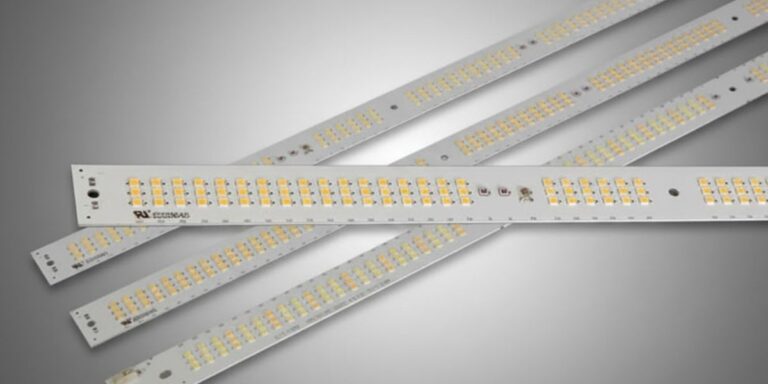
High-CRI LED-modules zijn verlichtingssystemen die zijn ontworpen om kleuren nauwkeurig te reproduceren onder kunstmatige verlichting. CRI, of kleurweergave-index, meet hoe dicht een lichtbron kleuren onthult in vergelijking met een natuurlijke referentie. LED's met een hoge CRI-waarde worden vaak gebruikt in architecturale verlichting, winkeldisplays, medische omgevingen, studio's en elke toepassing waar kleurnauwkeurigheid belangrijker is dan ruwe helderheid.
In deze modules is het LED-pakket slechts een deel van het systeem. De printplaat speelt een cruciale rol in hoe consistent de LED in de loop van de tijd presteert. Vergeleken met standaard LED-assemblages zijn ontwerpen met een hoge CR-methode veel gevoeliger voor warmte, elektrische instabiliteit en lay-outbeslissingen. Kleine variaties in de junctietemperatuur of aandrijfstroom kunnen het uitgezonden spectrum verschuiven, waardoor de kleurgetrouwheid wordt verminderd, zelfs als de LED zelf is beoordeeld voor hoge CRI.
Daarom richt PCB LED-ontwerp voor toepassingen met hoge CRi zich minder op het maximaliseren van de output en meer op het handhaven van stabiliteit. Thermisch gedrag, stroomregeling en optische uniformiteit moeten allemaal samenwerken. Een goed ontworpen LED-printplaat helpt de kleurkwaliteit gedurende de levensduur van het product te behouden, terwijl slechte ontwerpkeuzes zelfs de beste LED-pakketten kunnen ondermijnen.
Wat maakt high-CRI LED PCB-ontwerp anders
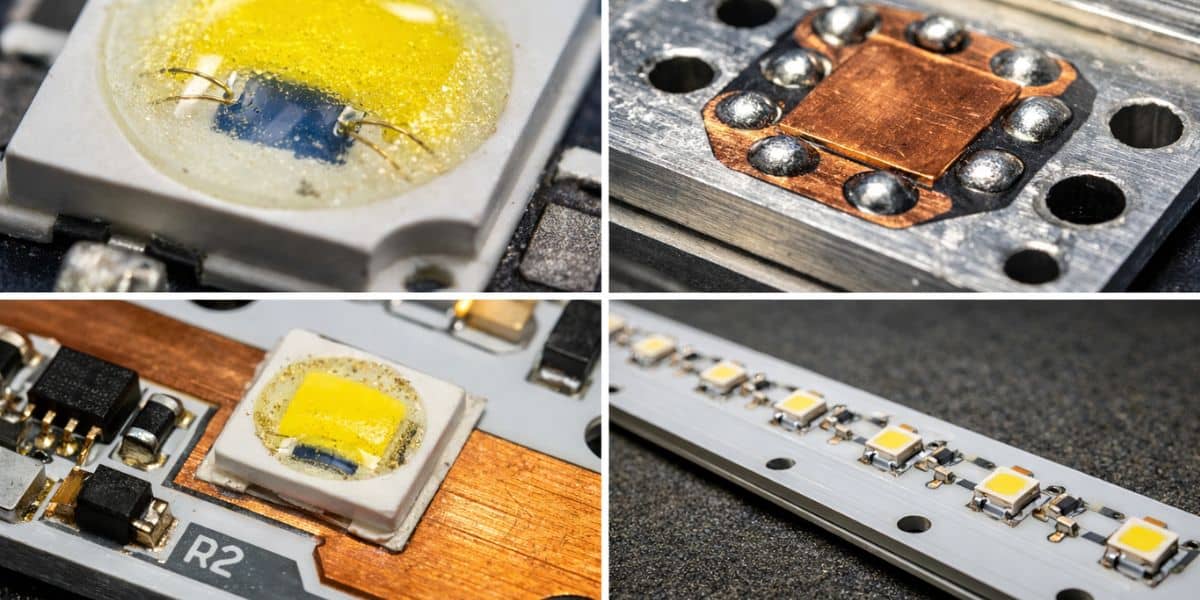
Hoog-CRI-LED's vertrouwen op zorgvuldig afgestemde fosforsystemen om het uitgangsspectrum vorm te geven. Deze fosforen zijn gevoeliger voor bedrijfsomstandigheden dan die gebruikt in standaard MID-CRi-LED's.
Fosforgevoeligheid en temperatuur
De fosforlaag zet een deel van de blauwe LED-emissie om in langere golflengten. Naarmate de temperatuur stijgt, kunnen fosforefficiëntie en spectrale balans veranderen. Zelfs een bescheiden stijging van de junctietemperatuur kan leiden tot meetbare verschuivingen in gecorreleerde kleurtemperatuur en CRI. Dit maakt thermische consistentie een eerste-orde ontwerpprobleem.
Warmte-impact op kleurstabiliteit
Inconsistente warmte verspreiding over de PCB kan ertoe leiden dat verschillende LED's op hetzelfde bord werken bij verschillende temperaturen. Het resultaat is zichtbare kleurvariatie over de module. In tegenstelling tot lumenafschrijvingen, kunnen deze kleurverschuivingen vroeg in de levensduur van het product verschijnen als het ontwerp van de PCB de warmte niet gelijkmatig beheert.
Waarom PCB-ontwerp direct van invloed is op de lichtkwaliteit op lange termijn
De PCB bepaalt hoe warmte de LED verlaat, hoe de stroom er doorheen stroomt en hoe de mechanisch stabiele verzamelen blijft in de loop van de tijd. In het ontwerp met hoge CRi-led-PCB's is het bord niet alleen een elektriciteitsdrager. Het is een thermische en optische besturingsstructuur die de kleurstabiliteit direct beïnvloedt.
Thermisch beheer
Thermisch beheer is het meest kritische aspect van PCB LED-lichtontwerp voor toepassingen met een hoge CRi. Het doel is niet alleen om de temperatuur laag te houden, maar om ze uniform en voorspelbaar te houden.
MCPCB versus FR-4
Voor krachtige of dicht opeengepakte high-CRi-LED's worden vaak metaal-kern-PCB's gebruikt.
- FR-4-borden Vertrouw op koperen vlakken en thermische vias om warmte naar een externe koellichaam te verplaatsen. Ze kunnen geschikt zijn voor lage vermogens of ver uit elkaar geplaatste LED's, maar hun thermische geleidbaarheid is beperkt.
- MCPCB's Gebruik een metalen basis, typisch aluminium of koper, met een diëlektrische laag tussen het kopercircuit en de metalen kern. Deze structuur zorgt voor een direct thermisch pad weg van de LED.
Voor modules met een hoge CR waar kleurconsistentie van cruciaal belang is, hebben MCPCB's vaak de voorkeur omdat ze temperatuurgradiënten over de hele linie verminderen.
Aluminium versus koperbasis
Aluminium-kernplaten worden veel gebruikt vanwege hun evenwicht tussen kosten, gewicht en thermische prestaties. Koperkernplaten bieden een hogere thermische geleidbaarheid, maar voegen kosten en gewicht toe, en zijn meestal gereserveerd voor toepassingen met een zeer hoge vermogensdichtheid of een beperkte luchtstroom.
De keuze moet gebaseerd zijn op thermische vereisten, mechanische beperkingen en koeling op systeemniveau, niet op aannames dat één materiaal altijd betere kleurprestaties levert.
Thermische vias en koperdikte
Op FR-4-ontwerpen helpen thermische vias onder het LED-thermisch pad om de warmte in binnenste koperen vlakken of een koellichaam te verplaatsen. Het aantal, de diameter en de plaatsing van deze via's zijn belangrijker dan het overmatig gebruiken ervan. Slecht geplaatste vias kunnen een ongelijke warmtestroom veroorzaken.
Koperdikte beïnvloedt ook de warmteverspreiding. Dikkere koperen vlakken verdelen de warmte zijdelings, waardoor hete plekken worden verminderd en de constante LED-junctiontemperaturen over de hele linie worden behouden.
Warmteverspreidende logica
Effectief thermisch ontwerp verspreidt warmte voordat het warmte afvoert. Grote koperen gebieden, symmetrische lay-outs en consistente laagstapels helpen de temperatuur te egaliseren. Deze benadering is vooral belangrijk in lineaire LED-modules, waar temperatuurgradiënten zich anders van het ene uiteinde van het bord naar het andere kunnen ontwikkelen.
Vermogensintegriteit en huidige controle
Elektrische stabiliteit is nauw verbonden met kleurstabiliteit in high-CRI LED-systemen.
Belang van constant-stroom rijden
Hoog-CRI-LED's moeten worden aangedreven met een stabiele constante stroom. Variaties in stroom hebben direct invloed op de temperatuur van de junctie en het emissiespectrum. PCB-ontwerp ondersteunt dit door spanningsdalingen, ruis en parasitaire weerstand te minimaliseren.
Huidige rimpel- en flikkereffect
Overmatige stroomrimpel kan flikkeren en thermisch fietsen introduceren bij de LED-overgang. Hoewel flikkeren vaak wordt besproken in termen van menselijke perceptie, draagt het ook bij aan langdurige stress op fosformaterialen. Een goede ontkoppeling en schone stroomroutering op de PCB helpen deze effecten te verminderen.
Spoorbreedte, aarding en ontkoppeling
Brede sporen verminderen resistieve verliezen en warmteontwikkeling. Een duidelijke aardingsstrategie minimaliseert ruiskoppeling in LED-stroompaden. Ontkoppelingscondensatoren die dicht bij driverinterfaces zijn geplaatst, helpen de voedingsspanning en stroomlevering te stabiliseren.
In PCB LED-ontwerp, deze praktijken gaan niet over het verleggen van prestatielimieten, maar over het vermijden van onnodige elektrische stress die de kleurkwaliteit na verloop van tijd kan verminderen.
PCB-lay-out en optische symmetrie
Lay-outbeslissingen beïnvloeden zowel thermisch als optisch gedrag
Symmetrie voor LED-plaatsing
Symmetrische plaatsing zorgt ervoor dat elke LED vergelijkbare thermische en elektrische omstandigheden ziet. Asymmetrie kan leiden tot gelokaliseerde hotspots, die zich vertalen in kleurvariatie over het verlichte oppervlak.
Afstand en thermische overspraak
Te dicht bij elkaar geplaatste LED's kunnen elkaar verwarmen, zelfs als elk apparaat binnen de nominale limieten valt. Door voldoende afstand kan de warmte zich gelijkmatiger verspreiden en afvoeren. De optimale afstand is afhankelijk van het vermogensniveau, het boardmateriaal en de koelmethode.
Traceer routering weg van optische paden
Hoogstroomsporen moeten worden weggeleid van reflecterende of optische gebieden. Dit vermindert ongewenste absorptie, schaduw of gelokaliseerde verwarming nabij het uitzendoppervlak.
Soldeermasker reflectiviteit en stabiliteit
Lichtgekleurde, niet-vergelende soldeermaskers worden vaak gebruikt in high-CRI LED PCB-bordontwerpen. Hoewel soldeermasker niet direct CRI verandert, kan verkleuring na verloop van tijd de waargenomen uniformiteit en het licht uiterlijk beïnvloeden.
Materiaalselectie en oppervlakteafwerkingen

Materiële keuzes beïnvloeden meer betrouwbaarheid dan onmiddellijke prestaties.
PCB-basismaterialen
Naast de opties van FR-4 en MCPCB zijn diëlektrische materialen met stabiele thermische geleidbaarheid en lage verouderingseigenschappen belangrijk. Inconsistente diëlektrische prestaties kunnen de thermische weerstand in de loop van de tijd veranderen.
Enig en Enepig eindigt
Enig en Enepig oppervlakteafwerkingen zorgen voor een goede soldeerbaarheid en corrosiebestendigheid. Vanuit een kleurperspectief ligt hun waarde in elektrische en mechanische stabiliteit op lange termijn in plaats van optische effecten.
Een betrouwbare afwerking vermindert het risico op contactdegradatie, wat anders zou kunnen leiden tot een ongelijke stroomverdeling over LED's.
Overwegingen op de lange termijn betrouwbaarheid
Hoge-CRI-toepassingen verwachten vaak een lange levensduur met minimale kleurverschuiving. Materialen die bestand zijn tegen oxidatie, delaminatie en thermische vermoeidheid ondersteunen dit doel door elektrische en thermische paden stabiel te houden.
Betrouwbaarheid en bescherming voor modules met een hoge CRi
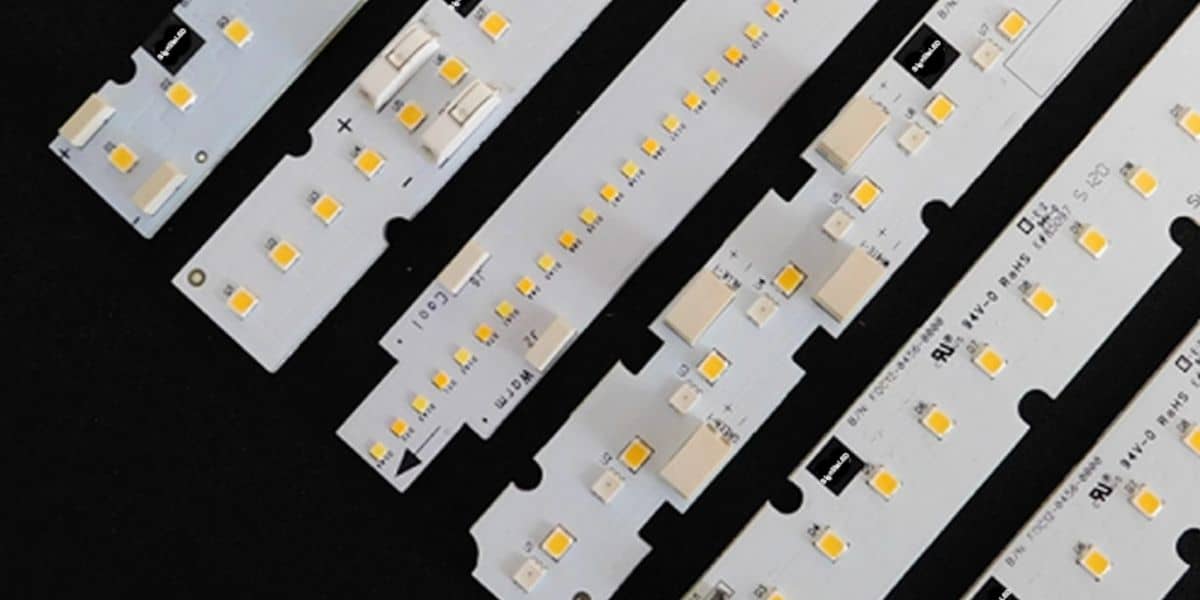
Thermische verouderingsrisico's
Herhaalde blootstelling aan verhoogde temperaturen versnelt de veroudering van fosfor en kan de kleuroutput verschuiven. PCB-ontwerp dat de piektemperaturen beperkt en thermische cycli vermindert, helpt dit proces te vertragen.
Conforme coating
In ruwe omgevingen kunnen conforme coatings de PCB beschermen tegen vocht en verontreinigingen. De coating moet optisch stabiel zijn en compatibel zijn met LED-werking, omdat sommige materialen kunnen verkleuren onder warmte en licht.
NTC-thermistoren en thermische feedback
Door een NTC-thermistor op de PCB te integreren, kan het systeem de temperatuur van de kaart bewaken en indien nodig de stroom verminderen. Deze vorm van thermische bescherming ondersteunt de kleurstabiliteit door langdurige werking bij schadelijke temperaturen te voorkomen.
Veelvoorkomende PCB-ontwerpfouten in LED-modules met hoge CRi
Een veel voorkomende fout is het behandelen van hoge CRi-LED's hetzelfde als standaard LED's. Ontwerpen die acceptabel werken voor algemene verlichting, behouden mogelijk geen kleurkwaliteit in toepassingen met een hoge CRi.
Het negeren van thermische symmetrie kan leiden tot zichtbare kleurvariatie over de module. Overdreven LED's om een hogere helderheid te bereiken, verhoogt de hittestress en versnelt de kleurverschuiving. Slechte lay-outbeslissingen, zoals smalle sporen of ongelijke koperverdeling, introduceren elektrische en thermische onevenwichtigheden die de stabiliteit op lange termijn ondermijnen.
Hoe een goed PCB-ontwerp CRI in de loop van de tijd behoudt
Een goed PCB LED-ontwerp verhoogt de CRI niet verder dan wat het LED-pakket biedt. In plaats daarvan behoudt het de beoordeelde kleurprestaties gedurende het hele productleven.
Dit vereist systeemniveau denken. De PCB, de driver, de mechanische behuizing en de koelmethode moeten samen worden overwogen. Wanneer thermische paden consistent zijn, is de huidige levering stabiel en wordt de lay-outsymmetrie gehandhaafd, is de kans groter dat LED's met een hoge crisis jaar na jaar een consistente kleuroutput leveren.
Ontwerpkeuzes en hun impact
| Ontwerp aspect | PCB-ontwerpkeuze | Impact op CRI-stabiliteit |
| Thermisch pad | MCPCB met uniform koper | Vermindert temperatuurgradiënten |
| aanleg | Symmetrische LED-plaatsing | Verbetert de kleuruniformiteit |
| Stroomroutering | Brede, uitgebalanceerde sporen | Houdt stabiele stroom |
| materieel | Stabiel soldeermasker en afwerking | Ondersteunt langdurige consistentie |
Conclusie
Hoog-CRI LED-modules vragen meer van PCB-ontwerp dan van standaard verlichtingsproducten. Thermisch beheer, elektrische stabiliteit en lay-outsymmetrie spelen allemaal een directe rol bij het behouden van de nauwkeurigheid van de kleur. Een goed uitgevoerd LED-PCB-ontwerp belooft geen hogere CRI-nummers, maar het beschermt de kleurkwaliteit die de LED's moeten leveren.
Door te focussen op consistente warmteverspreiding, schone stroompaden en betrouwbare materialen, kunnen ingenieurs ervoor zorgen dat high-CRi LED-modules hun beoogde visuele prestaties gedurende hun hele operationele levensduur behouden.
FAQs
Gerelateerde berichten