Nederlands
  English
  简体中文
简体中文  Deutsch
  Español
  Français
  Italiano
  日本語
日本語  한국어
한국어  Polski
  Português
  Русский
  Türkçe
  Tiếng Việt
  ไทย
ไทย 
Akoestische verlichting verbetert de sfeer van een opnamestudio door tegelijkertijd aan twee kritische vereisten te voldoen: gecontroleerd geluidsgedrag en comfortabele, functionele verlichting. Door geluidsabsorberende materialen te integreren met zorgvuldig ontworpen verlichtingssystemen, helpt akoestische verlichting ongewenste nagalm te verminderen, verbetert de spraak- en muziekhelderheid en creëert het een visueel rustige omgeving die lange opnamesessies ondersteunt. Het resultaat is niet alleen een betere geluidskwaliteit, maar een studiosfeer die gebalanceerd, gefocust en speciaal gebouwd aanvoelt in plaats van geïmproviseerd.
Wat is akoestische verlichting?
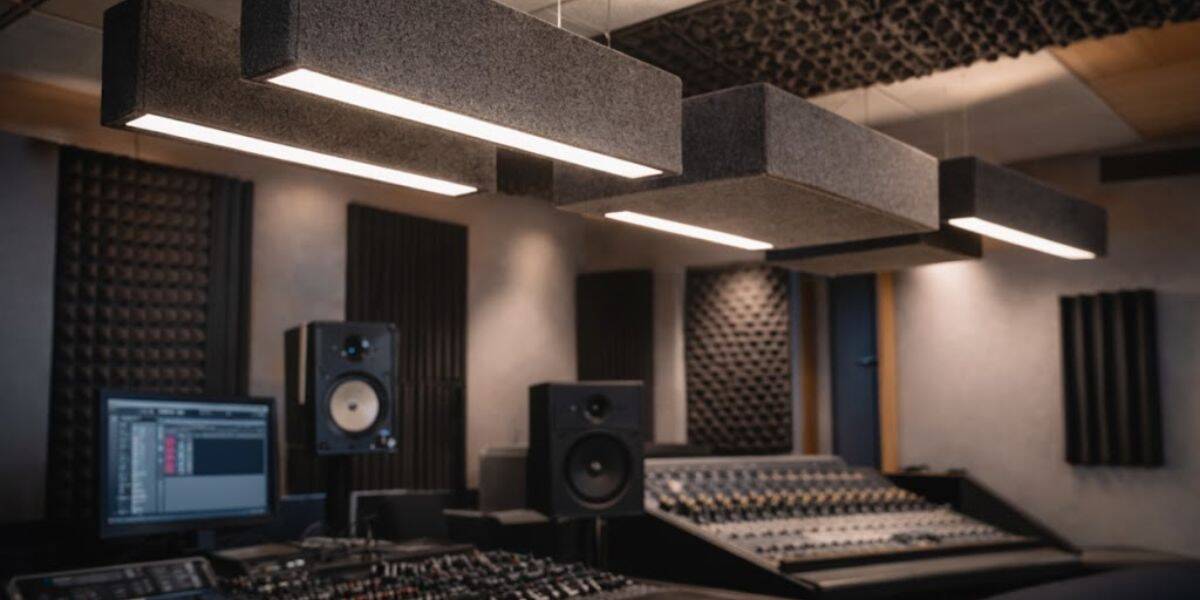
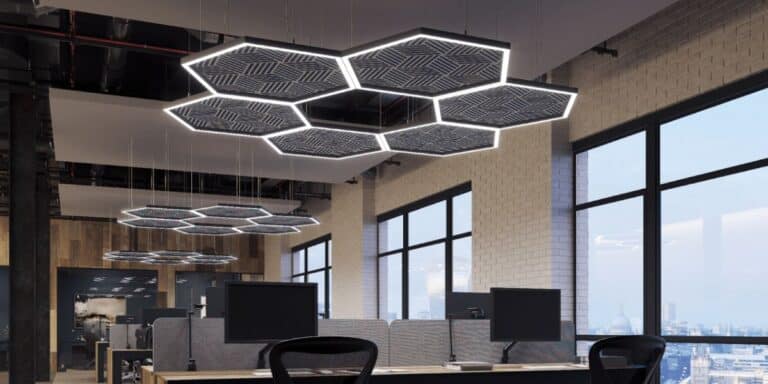
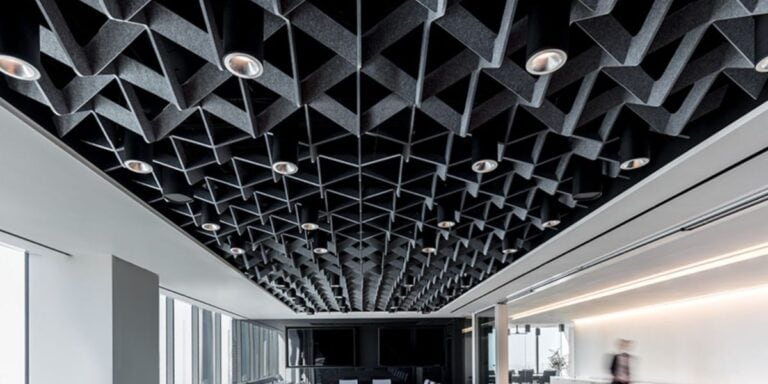
Akoestische verlichting is een categorie geïntegreerde armaturen die geluidsabsorberende elementen combineren met verlichtingscomponenten in één systeem. In plaats van akoestiek en verlichting te behandelen als afzonderlijke lagen die in verschillende stadia van een studio-build zijn toegevoegd, voegen akoestische verlichtingsoplossingen deze functies samen tot één gecoördineerd element, meestal geïnstalleerd op plafonds of hangende bovengrondse.
Vanuit een akoestisch perspectief vertrouwen deze systemen op poreuze materialen die middelmatige tot hoogfrequente geluidsenergie absorberen, waardoor reflecties die anders tussen harde oppervlakken zouden stuiteren, verminderen. Vanuit een lichtperspectief bieden ze diffuse, door schittering gecontroleerde verlichting die geschikt is voor taken zoals mixen, volgen en lange perioden van gericht luisteren.
In professionele omgevingen zoals opnamestudio's, waar zowel geluidsnauwkeurigheid als visueel comfort direct van invloed zijn op de prestaties, dient akoestische verlichting een functionele rol in plaats van een decoratieve.
Waarom opnamestudio's unieke akoestische en verlichtingsuitdagingen hebben
Opnamestudio's werken onder strengere beperkingen dan de meeste commerciële of residentiële ruimtes. Het doel is niet alleen om een kamer stiller of helderder te maken, maar om voorspelbare, gecontroleerde omstandigheden te creëren waarin geluid nauwkeurig kan worden vastgelegd en geëvalueerd.
Akoestische uitdagingen specifiek voor studio's
Opnameruimten moeten reflecties, flutter-echo en ongelijke nagalmtijden beheren. Harde oppervlakken zoals plafonds, muren en apparatuurrekken kunnen ervoor zorgen dat geluidsgolven weerkaatsen in microfoons, opnames inkleuren en de helderheid verminderen. Kleine en middelgrote studio's zijn bijzonder kwetsbaar voor plafondreflecties vanwege de korte afstanden tussen geluidsbronnen en reflecterende oppervlakken.
Verlichtingsuitdagingen specifiek voor studio's
Studio's hebben ook verlichting nodig die verblinding, oogvermoeidheid en visuele afleiding vermijdt. Harde verlichting van de puntbron of oneffen helderheid kan tijdens lange sessies ongemakkelijk zijn en kan de zichtbaarheid van het scherm in controlekamers verstoren. Tegelijkertijd moet verlichting betrouwbaar zijn, geluidsarm in bedrijf en compatibel met plafondlay-outs gevuld met akoestische behandelingen, bekabeling en ventilatie.
Akoestische verlichting pakt direct de overlap tussen deze twee probleemgebieden aan.
Geluidsabsorptie versus geluidsisolatie: een kritisch onderscheid
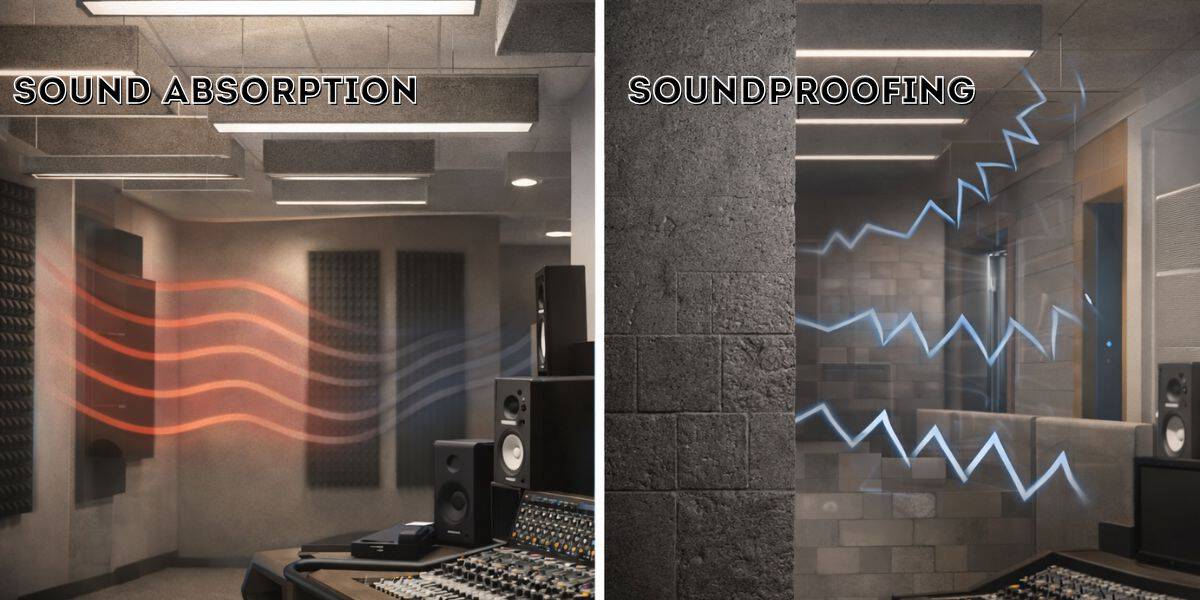
Geluidsabsorptie en geluidsisolatie worden vaak verward, maar ze lossen heel verschillende problemen op. Het begrijpen van dit onderscheid is essentieel bij het evalueren van akoestische verlichting.
geluidsabsorp
Geluidsabsorptie vermindert reflecties in een kamer. Absorberende materialen zetten een deel van de geluidsenergie om in warmte, waardoor de galmtijd wordt verlaagd en de helderheid wordt verbeterd. Metrieken zoals NRC (Noise Reduction Coefficient) worden vaak gebruikt om te beschrijven hoe effectief een materiaal geluid absorbeert over een reeks frequenties. In studio's wordt absorptie gebruikt om het interne geluidsveld vorm te geven, niet om ruis te blokkeren voor het binnenkomen of verlaten van het geluid.
geluidsisolatie
Geluidsisolatie richt zich op isolatie. Het is bedoeld om te voorkomen dat geluid door muren, vloeren of plafonds gaat door het toevoegen van massa, demping en luchtdichte constructie. Dit is een structurele zorg die wordt aangepakt door middel van kamer-in-een-kamerontwerpen, zware scheidingswanden en gespecialiseerde bouwmethoden.
Akoestische verlichting Draagt bij tot geluidsabsorptie, niet geluidsisolatie. De waarde ervan ligt in het verbeteren van de interne akoestische omgeving, met name in het beheersen van reflecties van plafonds.
De rol van plafonds in studio akoestische besturing
Het plafond is een van de meest invloedrijke oppervlakken in een opnamestudio, maar wordt vaak onderbenut. Omdat het direct boven geluidsbronnen en luisterposities zit, kunnen plafondreflecties zeer snel bij microfoons en oren komen, waardoor kamfiltering en verlies van definitie ontstaan.
Traditionele plafondbehandelingen omvatten akoestische wolken, panelen en diffusers die boven het luistergebied zijn opgehangen. Hoewel ze effectief zijn, moeten deze elementen concurreren om ruimte met verlichtingsarmaturen, HVAC-componenten en structurele beperkingen.
Akoestische plafondverlichting helpt deze functies te consolideren in veel studio-ontwerpen. Door absorptie en verlichting in één systeem te combineren, kunnen ontwerpers het plafond behandelen als een geïntegreerd akoestisch vlak in plaats van een lappendeken van afzonderlijke elementen.
Waarom geïntegreerde akoestische plafondverlichting belangrijk is
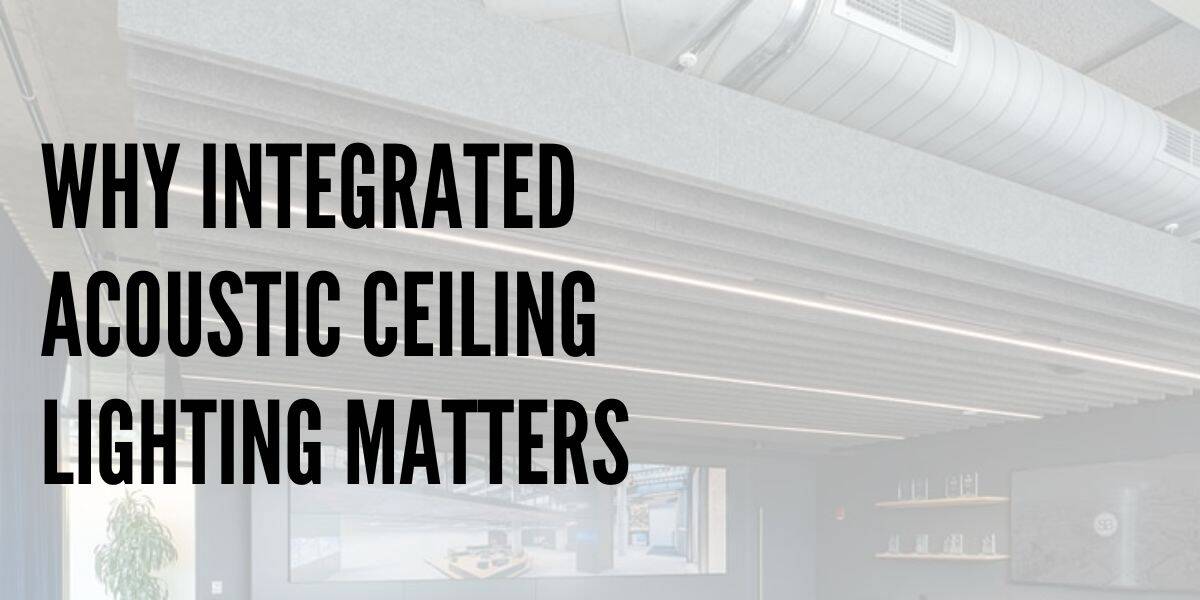
Geïntegreerde akoestische plafondverlichting is van belang omdat het de complexiteit vermindert en tegelijkertijd de consistentie verhoogt. Wanneer verlichtingsarmaturen en akoestische behandelingen afzonderlijk worden ontworpen, komen compromissen vaak voor. Panelen kunnen de lichtverdeling blokkeren, of armaturen kunnen reflecterende oppervlakken introduceren die de akoestische prestaties ondermijnen.
Met geïntegreerde systemen worden de akoestische en verlichtingscomponenten ontworpen om naast elkaar te bestaan. De lichtopbrengst is gevormd om verblinding en reflecties te voorkomen, terwijl akoestische materialen worden gepositioneerd waar ze het meest effectief zijn. Deze uitlijning ondersteunt voorspelbare studioprestaties en vereenvoudigt de coördinatie tijdens ontwerp en installatie.
In de praktijk betekent dit minder conflicten tussen disciplines en een meer samenhangende studioomgeving.
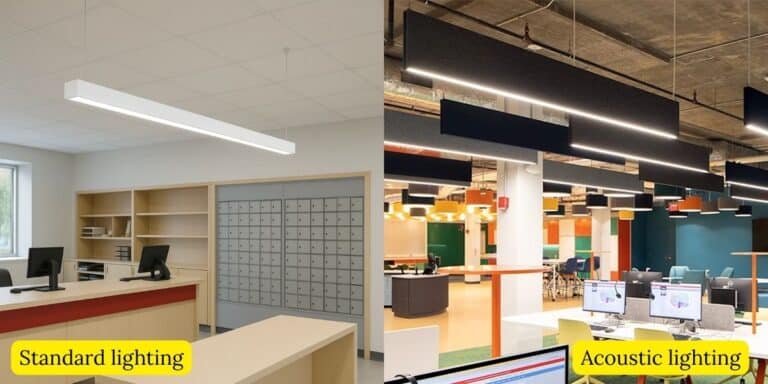
Traditionele verlichting plus panelen versus geïntegreerde akoestische verlichtingsoplossingen
Om de praktische impact te begrijpen, helpt het om traditionele benaderingen te vergelijken met geïntegreerde akoestische verlichtingsoplossingen.
| Aspect | Traditionele verlichting + akoestische panelen | Geïntegreerde akoes |
| Ontwerpcoördinatie | Afzonderlijke systemen die onafhankelijk zijn ontworpen | enkel gecoördineerd systeem |
| Plafond rommel | Meerdere opgeschorte elementen | Verminderde visuele complexiteit |
| Akoestische consistentie | Afhankelijk van plaatsing rond armaturen | Absorptie en verlichting uitgelijnd |
| lichtkwaliteit | kan worden gecompromitteerd door plaatsing van het paneel | Ontworpen voor diffusie en comfort |
| Installatieproces | Meerdere transacties en montagestappen | Gestroomlijnde installatie |
| visuele sfeer | Functioneel maar vaak gefragmenteerd | Schoner, rustiger plafond uitstraling |
Deze vergelijking benadrukt waarom veel studioontwerpers nu geïntegreerde akoestische verlichting als een vroege planning beschouwen in plaats van als een retrofit-oplossing.
Hoe akoestische verlichting de studioambiance beïnvloedt
Sfeer in een opnamestudio gaat niet over decoratie. Het gaat erom hoe de ruimte zich voelt en gedraagt tijdens het gebruik. Akoestische verlichting beïnvloedt de sfeer door verschillende onderling verbonden factoren.
Verminderde auditieve stress
Door overmatige nagalm en reflecties te verlagen, draagt akoestische verlichting bij aan een rustiger geluidsveld. Ingenieurs en artiesten kunnen minder luistermoeheid ervaren, vooral tijdens lange sessies.
Visueel comfort en focus
Diffuse, goed gecontroleerde verlichting vermindert verblinding en harde contrasten. Dit ondersteunt de concentratie, verbetert de zichtbaarheid van het scherm en zorgt ervoor dat de ruimte opzettelijk aanvoelt in plaats van geïmproviseerd.
Ervaren professionaliteit
Studio's die akoestiek en verlichting integreren, voelen meestal verfijnder aan. Deze perceptie is van belang voor het vertrouwen van de klant, zelfs als de verbeteringen subtiel zijn.
Materiaal- en ontwerpoverwegingen in akoestische verlichting
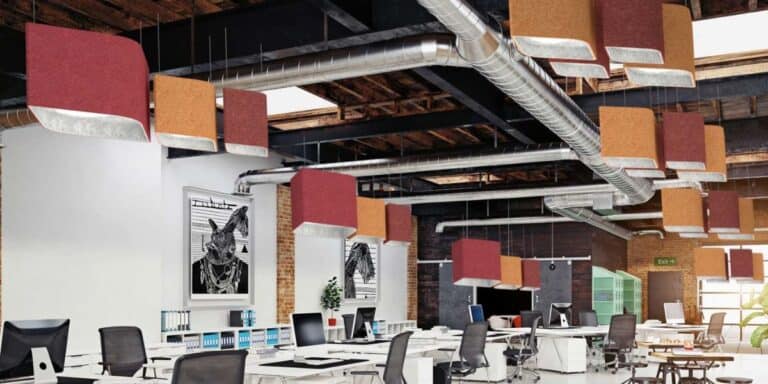
Akoestische verlichtingssystemen gebruiken doorgaans geluidsabsorberende materialen zoals gemanipuleerde vilt of vezels op basis van panelen in combinatie met LED-verlichtingscomponenten. De exacte materialen, afwerkingen en configuraties verschillen per fabrikant en toepassing.
Volgens de productinformatie die door Siglitetled is gepubliceerd, zijn hun LED-akoestische verlichtingssystemen ontworpen als geïntegreerde oplossingen die verlichting combineren met akoestische behandeling voor commerciële en professionele omgevingen. Specifieke prestatiewaarden zoals akoestische beoordelingen of lifespan-statistieken worden niet universeel gepubliceerd, dus ze moeten project-per-project worden geëvalueerd in plaats van aangenomen.
Voor ontwerpers is de belangrijkste overweging geen enkele specificatie, maar hoe het systeem past in de algehele akoestische strategie van de studio.
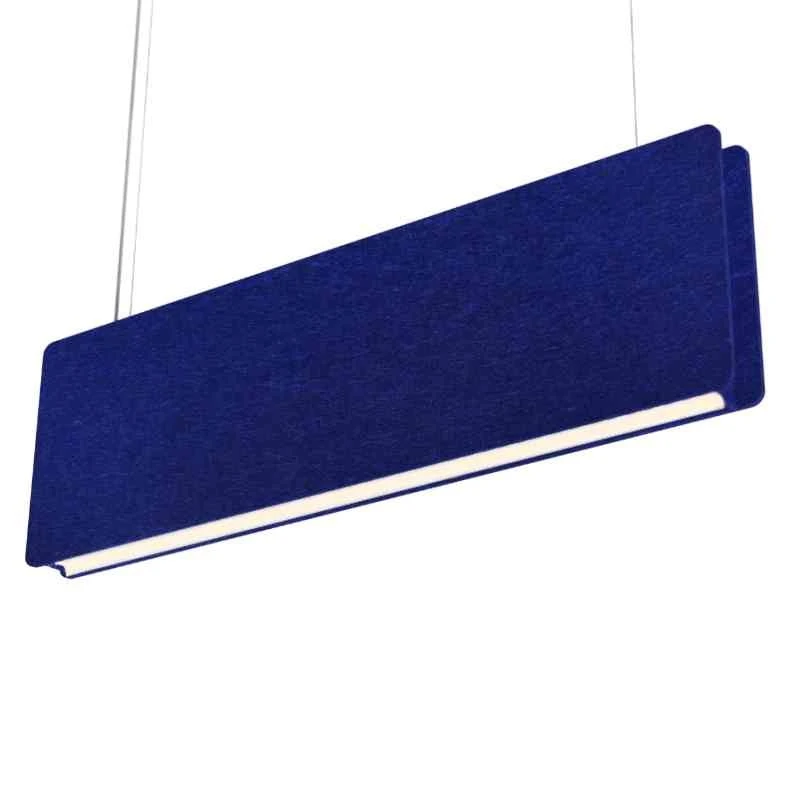
58mm breedte akoestische LED lineair licht
- Ingangsspanning: AC110–120V / AC220–240V, 50–60Hz
- Richting uitzenden: verergerend
- Breedte opties: 58 mm / 80 mm
- Grootte: 1288 × 58 × 400 mm / 1288 × 80 × 400 mm
- LED-chip: SMD2835
- UGR: < 19
- Vermogensfactor (PF): > 0,90
- CRI: > 90 ra
- Lichtgevende werkzaamheid: 100 lm/w
- Gecorreleerde kleurtemperatuur (CCT): 3000K / 4000K / 6000K
- Vermogen: 30 W
- Stralingshoek: 120°
- IP-classificatie: IP20
- Flikkervrij: Ja
- Garantie: 5 jaar
- Akoestische paneelkleuropties: Rood / Groen / Blauw / Grijs (meer dan 48 kleuropties)
Plaatsingsstrategieën in opnamestudio's
Waar akoestische verlichting wordt geplaatst, is er net zo belangrijk als welk type wordt gebruikt. In opnamestudio's zijn veelvoorkomende plaatsingsstrategieën:
Boven mengposities in controlekamers, waar vroege reflecties vanaf het plafond invloed kunnen hebben op stereobeeldvorming.
Boven live-ruimteprestaties, waar het beheersen van plafondreflecties helpt om de helderheid te behouden zonder de ruimte te dempen.
In vocale cabines, waar gecombineerde verlichting en absorptie helpen om krappe ruimtes efficiënt te beheren.
Het doel is altijd om de beoogde akoestische respons van de kamer te ondersteunen in plaats van absorptie uniform toe te passen zonder analyse.
Integratie met bredere akoestische behandelplannen
Akoestische verlichting moet worden gezien als een onderdeel van een groter akoestisch behandelplan. Studio's vereisen nog steeds muurbehandelingen, bascontrole en de juiste kamergeometrie. Akoestische verlichting vervangt deze elementen niet, maar het vullen ze aan door het plafond aan te pakken, een oppervlak dat anders moeilijk te behandelen is zonder visueel compromis.
Wanneer het vroeg in het ontwerpproces wordt geïntegreerd, kan akoestische verlichting het aantal benodigde plafondwolken of panelen verminderen, wat leidt tot een schonere lay-out en meer voorspelbare resultaten.
Overwegingen voor retrofit versus nieuwe studio-builds
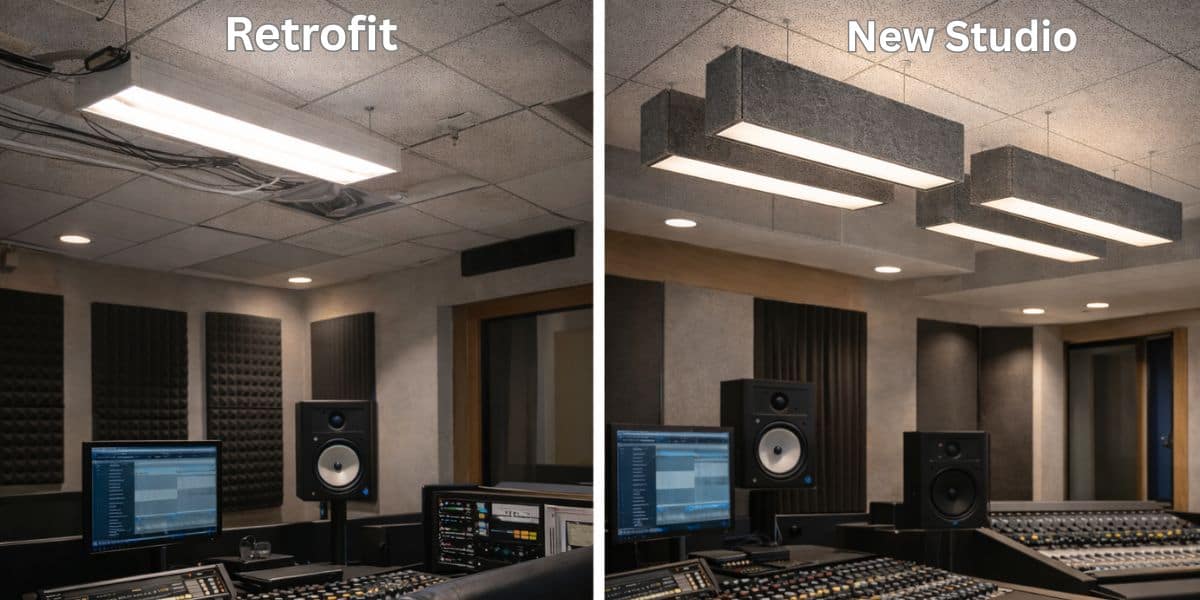
In nieuwe studio-builds kan vanaf het begin akoestische verlichting worden gespecificeerd, waardoor structurele, elektrische en akoestische overwegingen kunnen worden uitgelijnd. Dit resulteert vaak in het meest naadloze resultaat.
Bij retrofitprojecten kan akoestische verlichting nog steeds effectief zijn, vooral in ruimtes waar al aan het plafond gemonteerde armaturen en akoestische wolken bestaan. Het vervangen of consolideren van deze elementen kan zowel de prestaties als het uiterlijk verbeteren, hoewel een zorgvuldige evaluatie van bestaande omstandigheden essentieel is.
Relevantie voor moderne studio-workflows
Moderne opnamestudio's worden steeds meer hybride ruimtes, gebruikt voor muziekproductie, podcasting, postproductie en streaming. Deze workflows vereisen flexibiliteit en lange gebruiksuren.
Akoestische verlichting ondersteunt deze verschuiving door stabiele akoestische omstandigheden en comfortabele verlichting te bieden zonder complexiteit toe te voegen. Voor ruimtes die meerdere functies vervullen, wordt deze consistentie onderdeel van de algehele bruikbaarheid van de studio.
Conclusie
Akoestische verlichting verbetert de sfeer van een opnamestudio door akoestische controle en visueel comfort in één, geïntegreerde oplossing te brengen. Door plafondreflecties aan te pakken en tegelijkertijd diffuse, functionele verlichting te bieden, ondersteunt het een helderder geluid, minder luistermoeheid en een meer gerichte werkomgeving.
Voor studioontwerpers, audio-ingenieurs en architecten vertegenwoordigt geïntegreerde akoestische verlichting een strategische ontwerpkeuze in plaats van een decoratieve upgrade. Het vereenvoudigt de coördinatie, vermindert rommel aan het plafond en draagt bij aan voorspelbaar akoestisch gedrag zonder onondersteunde claims of onnodige complexiteit te introduceren.
Wanneer ze doordacht en in coördinatie worden toegepast met bredere akoestische behandelingsstrategieën, wordt akoestische verlichting een praktisch hulpmiddel voor het vormgeven van studioomgevingen die nauwkeurig, comfortabel en in de loop van de tijd betrouwbaar klinken.
FAQs
Gerelateerde berichten