Nederlands
  English
  简体中文
简体中文  Deutsch
  Español
  Français
  Italiano
  日本語
日本語  한국어
한국어  Polski
  Português
  Русский
  Türkçe
  Tiếng Việt
  ไทย
ไทย 
Als het gaat om het kiezen van vislichtkleuren, is de eerste vraag die veel vissers stellen: "Welke kleur is het beste?" - maar deze vraag kan misleidend zijn. In werkelijkheid hangt de effectiviteit van een vislicht niet af van een enkele "beste kleur". Het is een systeembeslissing: de lichte kleur moet overeenkomen met wateromstandigheden, doelsoorten, vismethode en installatie-opstelling.
Deze handleiding introduceert een duidelijk vierstapsbeslissingsraamwerk om u te helpen bij het selecteren van de meest geschikte LED-vislichtkleuren en opstellingen voor scenario's voor zoutwater, zoet water en commerciële visserij. Door de relatie tussen water, licht en visgedrag te begrijpen, kunt u uw doelsoorten consistenter en efficiënter aantrekken, waardoor u het succes van de nachtvisserij vermindert en uw nachtvisserijsucces verbetert.
Hoe de wateromstandigheden de prestaties van de visserijlicht beïnvloeden
licht gedrag in water
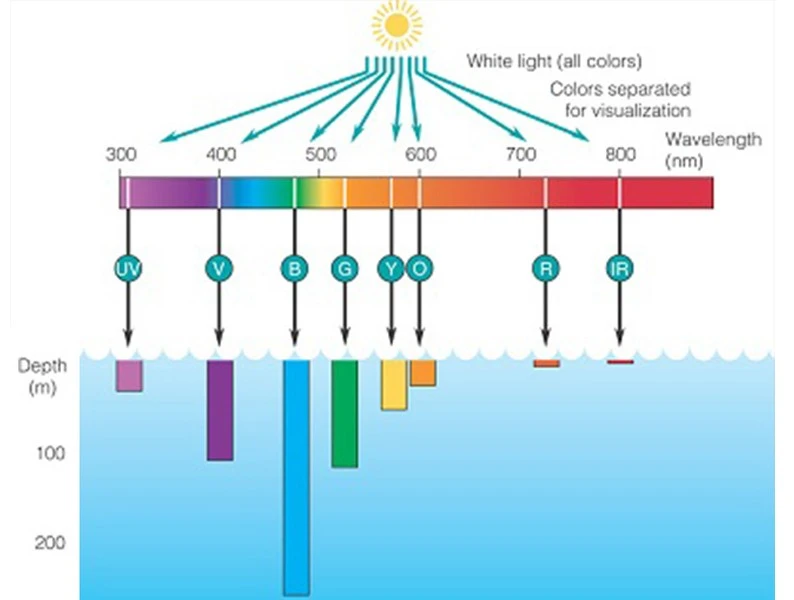
De prestaties van de lichte kleuren van de visserij zijn sterk afhankelijk van hoe licht door het water reist. Anders dan in lucht wordt licht onder water snel beïnvloed door absorptie en verstrooiing. Verschillende golflengten vervagen met verschillende snelheden, wat betekent dat sommige kleuren veel verder zichtbaar blijven dan andere.
Kortere golflengten zoals blauw en groen reizen over het algemeen verder onder water, terwijl langere golflengten sneller afnemen. Dit verschil is een belangrijke reden waarom de selectie van lichtkleuren voor vissen nooit willekeurig mag zijn.
Waterhelderheid en zichtbaarheid
Waterhelderheid speelt een belangrijke rol bij het bepalen welke lichtkleur het beste presteert. In helder water kan licht verder reizen voordat het wordt verstrooid, waardoor bepaalde kleuren een groter gebied kunnen verlichten. Daarentegen absorbeert troebel of planktonrijk water het licht sneller en vermindert het zicht.
Groen licht wordt vaak begunstigd omdat het een evenwicht bewaart tussen penetratie en contrast, en zichtbaar blijft in zowel heldere als matig troebele omstandigheden.
Waterdiepte en omgevingslicht 's nachts
Diepte beïnvloedt verder hoe vislichtkleuren presteren. Naarmate de waterdiepte toeneemt, worden bepaalde kleuren sneller geabsorbeerd dan andere. Een kleur die goed werkt in ondiep zoet water kan de effectiviteit verliezen in diepere zoutwateromgevingen.
's Nachts dalen de omgevingslichtniveaus aanzienlijk. Zelfs visserslichten met een matige output kunnen een sterk contrast creëren met de omringende duisternis, waardoor de kleurkeuze kritischer wordt dan pure helderheid.
Waarom er geen universele "beste" vislichtkleur is
Omdat de helderheid, diepte en omgevingslichtomstandigheden van het water zo sterk variëren, presteert geen enkele vislichtkleur het beste in elke situatie. Effectieve kleurselectie hangt altijd af van het afstemmen van het licht op de specifieke visomgeving.
Dit is de reden waarom vissende lichte kleurkeuzes meestal worden besproken door scenario in plaats van als een one-size-fits-all-oplossing.
| Factor | Impact op lichtkleurprestaties |
| Waterhelderheid | Helder water bevordert langer zicht; troebel water vermindert het bereik |
| waterdiepte | Grotere diepte verhoogt de kleurabsorptie |
| Golflengte | Kortere golflengten reizen verder onder water |
| Nachtomstandigheden | Laag omgevingslicht versterkt het kleurcontrast |
Beste visserij lichte kleuren voor zoutwatervissen
Zoutwateromgevingen bieden unieke uitdagingen vanwege hun diepte en variërende waterhelderheid. De beste vislichtkleur voor vissen op zoutwater hangt af van verschillende factoren, waaronder de diepte van het water, de helderheid van het water en het type vis waarop u zich richt. In deze omstandigheden bieden sommige lichte kleuren, zoals groen, blauw en cyaan, voordelen ten opzichte van andere.
Zoutwateromgevingen bieden unieke uitdagingen vanwege diepte, waterhelderheid en variabele omstandigheden. Het kiezen van de meest effectieve vislichtkleur hangt niet alleen af van de doelsoort, maar ook van watereigenschappen en visserijdiepte. In deze omgevingen kan groen, blauw, cyaan, rood en zelfs wit licht voordelen bieden bij het aantrekken van vissen en aas.
Lichtkleurenoverzicht
Groen licht: de meest gebruikte keuze
Groene visserijlampen worden veel gebruikt bij het vissen op zoutwater omdat ze de penetratie en zichtbaarheid in evenwicht houden. Groen licht dringt effectief door in het water, blijft zichtbaar op matige diepten en trekt sterk plankton aan, dat op zijn beurt aasvis en grotere roofdieren trekt.
Blauw licht: effectief in helder en diep water
Blauw licht dringt dieper door dan andere kleuren, waardoor het ideaal is voor offshore- of diepwatervisserij. Het is het meest effectief in helder water, maar minder in troebele omstandigheden.
Cyaan licht: gebalanceerde penetratie en contrast
Cyaan (blauwgroen) licht combineert de penetratie van blauw met de zichtbaarheid van groen, goed presteren in diepere of planktonrijke wateren. Het creëert een goed contrast voor vissen om het licht te zien en erop te reageren.
Rood licht: sluipende aantrekkingskracht
Rood licht is minder zichtbaar voor de meeste vissen, waardoor het nuttig is in drukbezochte gebieden of ondiepe wateren waar vissen gevoelig zijn voor licht. Het is echter minder effectief in het aantrekken van plankton.
Wit licht: brede verlichting
Wit licht zorgt voor een brede, uniforme verlichting en kan nuttig zijn voor navigatie of algemeen zicht. Het is over het algemeen minder effectief dan groen, blauw of cyaan voor het aantrekken van plankton en roofvissen.
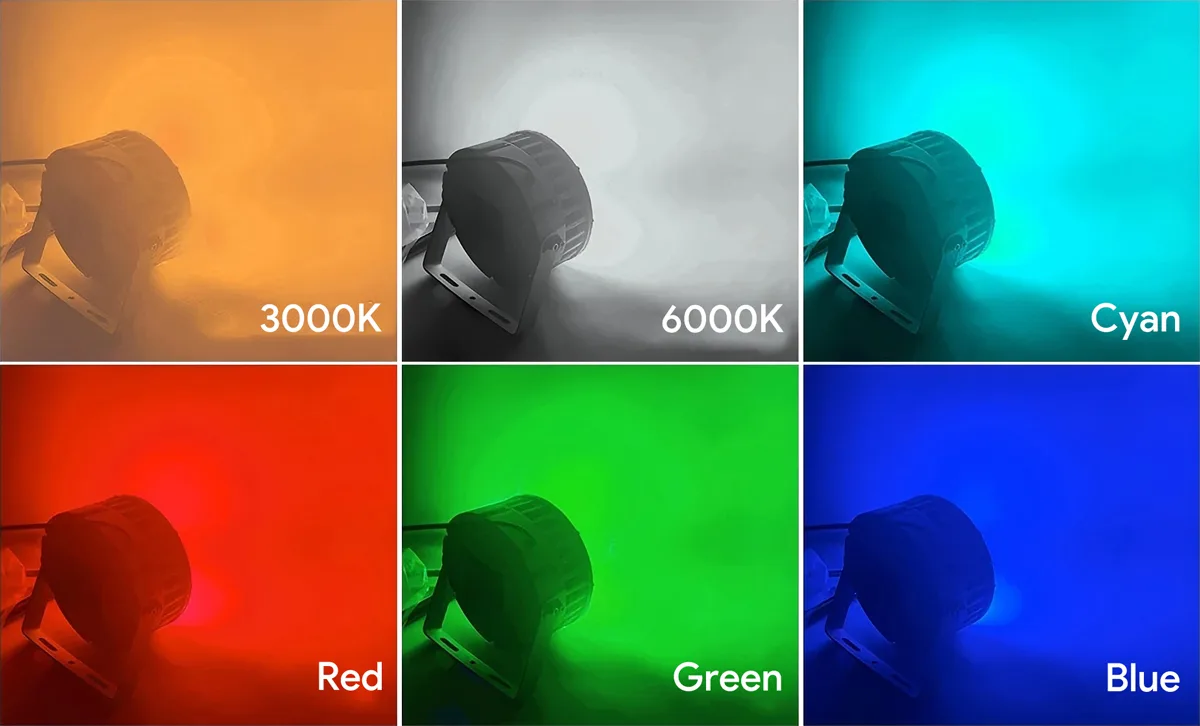
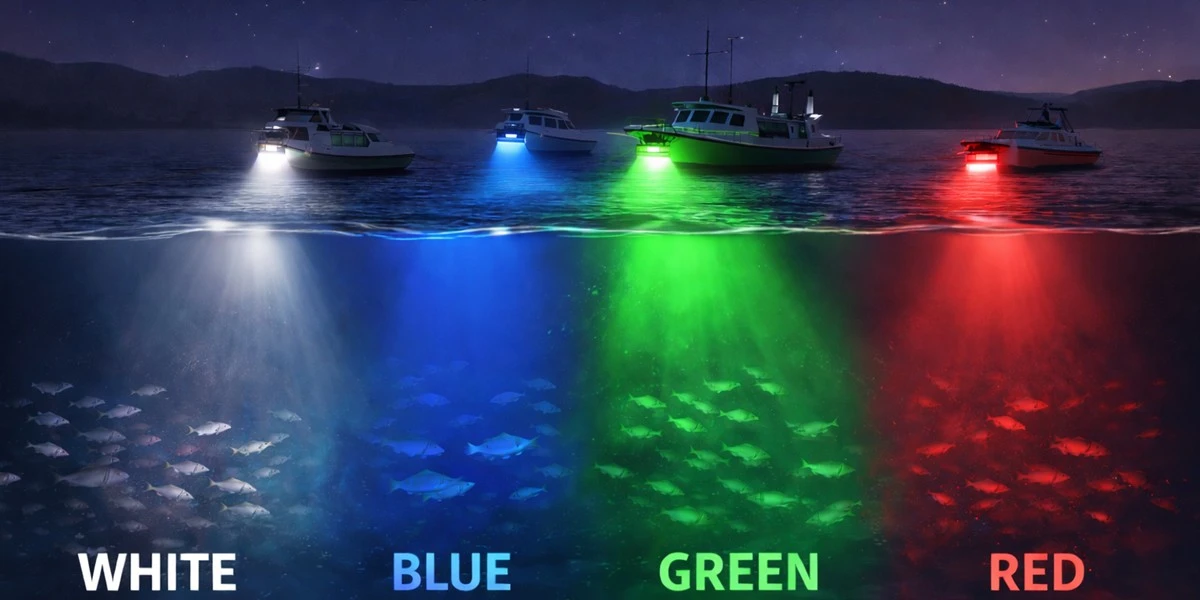
Hieronder ziet u een voorbeeldafbeelding die laat zien hoe verschillende lichtkleuren (wit, groen, blauw, rood) zich gedragen in een zoutwateromgeving, met een boot en drijvend plankton. Dit beeld demonstreert penetratie, kleurzichtbaarheid en attractiezones voor aasvis en doelsoorten.
Snelle vergelijking: zoutwatervisserij lichte kleuren
| lichtkleur | Beste gebruik van zoutwater | Belangrijkste voordeel | begrenzing |
| Groen | Nearshore & Offshore | Evenwichtige penetratie en aantrekkingskracht | — |
| Blauw | Helder, diep offshore water | Zichtbaarheid op lange afstand | Lager contrast in troebel water |
| scyaan | Diepe, planktonrijke wateren | Hoge penetratie, goed contrast | Kan minder effectief zijn in troebele wateren |
| Rood | Ondiepe wateren & onder druk staande vissen | Minder zichtbaar voor vissen, geen verstoring | Minder effectief voor plankton |
| Wit | Nearshore, algemene verlichting | Brede verlichting, goed zicht | Minder effectief voor het aantrekken van plankton en roofvissen |
Beste visserij lichte kleuren voor zoetwatervissen
Wat werkt het beste in typische zoetwateromstandigheden
In de meeste zoetwateromgevingen, zoals meren, reservoirs en langzaam bewegende rivieren, is het doel niet extreme penetratie, maar stabiele visaggregatie.
Vergeleken met offshore-visserij reageren zoetwatervissen beter op matig, gelijkmatig verdeeld licht in plaats van zeer intense of scherp gefocuste stralen.
In de praktijk worden groen en cyaan licht veel gebruikt bij zoetwatervissen omdat ze een zichtbare aantrekkingszone creëren zonder de vissen te overstimuleren.
Blauw licht kan effectief zijn in heldere meren, terwijl rood licht meestal beperkt is tot zeer ondiepe of korte afstandstoepassingen vanwege de snelle demping in water.
Om de kleurselectie gemakkelijker te maken, vat de onderstaande tabel samen hoe verschillende lichtkleuren presteren in typische zoetwateromgevingen.
Zoetwatervisserij licht kleurvergelijking
| lichtkleur | Typische zoetwaterprestaties | Beste gebruiksscenario's | vastleggen |
| Groen | Sterke en stabiele visaggregatie | Meren, stuwmeren, langzame rivieren | Evenwichtige attractie, veel gebruikt voor nachtvissen |
| scyaan | gelijk aan Groen met zachter visueel effect | Helder zoet water, recreatieve visserij | Minder agressief dan groen, goed voor lange sessies |
| Blauw | Matige aantrekkingskracht in helder water | heldere meren, ondiep zoet water | Minder effectief in troebel water |
| Wit | Hoge zichtbaarheid, brede verlichting | Algemene verlichting, korte afstandsgebruik | kan insecten aantrekken; minder selectief |
| Rood | Beperkte onderwaterpenetratie | Zeer ondiep water, oppervlakteverlichting | Hoofdzakelijk voor zichtbaarheid, niet voor primaire visattractie |
Praktische tips voor het gebruik van visserijlampen in meren en rivieren
Voor zoetwatervissen, licht plaatsing en outputcontrole zijn vaak meer dan kleur alleen van belang.
Door het licht boven water te monteren en naar beneden te richten, kan de balk zich op natuurlijke wijze verspreiden, waardoor aasvissen en roofdieren zich geleidelijk verzamelen.
Het gebruik van minder lichten met een consistente output levert meestal betere resultaten op dan het installeren van meerdere high-power lampen.
In de meeste kleine tot middelgrote zoetwaterboten zijn één tot twee goed geplaatste visserslichten voldoende voor nachtelijke operaties.
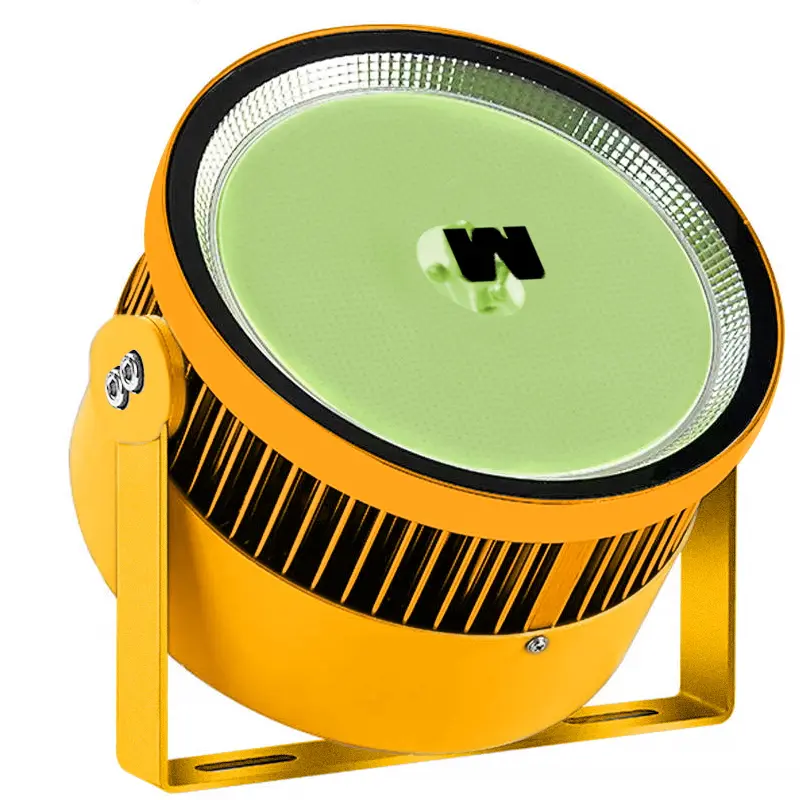
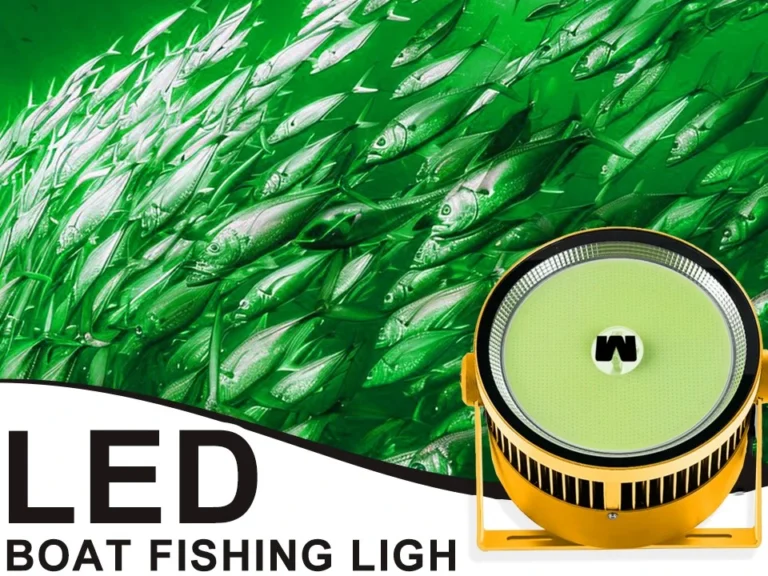
HOOG VERMOGEN KOLF VIS VERLICHTING
Modelnr..: Rond Type
Ingangsspanning: AC100-320V
Overspanning: 10000V
Watt/stuks: 800W/1000W/1200W
LED-type: COB
Afmetingen (mm): Φ230 × 140
Kleur: 3000K / 4000K / 5000K / 6000K/ Rood / Groen / Blauw / Paars
CRI: >80@3000K / 4000K / 5000K / 6000K/
Lumen: >120lm/w@3000K / 4000K / 5000K / 6000K/
IP-klasse: IP67
Hoe bouw je een effectieve visserijverlichtingsopstelling?
In de vorige paragrafen analyseerden we hoe lichtkleuren zich gedragen in verschillende wateromgevingen, vissenreacties op verschillende golflengten en praktische prestaties van verschillende kleuren in zout en zoet water. Met deze principes in gedachten is de volgende cruciale stap het vertalen ervan in een real-world visserijlichtsysteem.
Het kiezen van een vislichtkleur is slechts een deel van het systeem. Om stabiele en efficiënte aantrekkingskracht van vissen in verschillende wateromstandigheden te bereiken, moeten factoren zoals waterhelderheid, diepte, doelsoorten en vismethode samen worden overwogen. Alleen focussen op "welke kleur is het beste" leidt vaak tot inconsistente resultaten.
Om dit proces gemakkelijker te volgen, kunnen we het opsplitsen in een eenvoudig beslissingskader, dat u stap voor stap begeleidt, van het begrijpen van uw visomgeving tot het bepalen van de optimale kleur, het aantal lichten en de lay-out.
Vissen Verlichtingsbeslissing
- Identificeer het milieu (zoetwater / zoutwater / troebelheid)
- Definieer het primaire doel (trek aasvis / doelroofdieren aan)
- Selecteer kleuren op basis van diepte en penetratiebehoeften (groen / blauw / cyaan)
- Bepaal het aantal lichten en lay-out op basis van de bootgrootte
Aanbevolen aantal vislichten per boottype
| Boottype / visscenario | Typische bootlengte | Aanbevolen lichthoeveelheid | Voorgestelde totale vermogensbereik | vastleggen |
| Kleine recreatieve boten | < 6 m | 1-2 eenheden | 200-400 W | Geschikt voor kalme zoetwater- of nearshore-visserij; opbouwlampen bij voorkeur |
| Kleine commerciële vissersboten | 6-10 m | 2-4 eenheden | 400-800 W | Gelijkmatige verdeling rond de boot verbetert de stabiliteit van de aantrekkingskracht |
| Middelgrote offshore vissersvaartuigen | 10-20 m | 4-8 eenheden | 800-1500 W | Bredere lichtverdeling belangrijker dan enkele high-power lampen |
| Grote commerciële vissersvaartuigen | > 20 m | 8+ eenheden | 1500 W en hoger | Lichten moeten gelijkmatig worden verdeeld voor consistente attractiezones |
| Dock / vaste visplatforms | Vaste installatie | 2-6 eenheden | 300-1000 W | Focus op waterdiepte en stralingshoek in plaats van aantal; oppervlakte-installatie bij voorkeur |
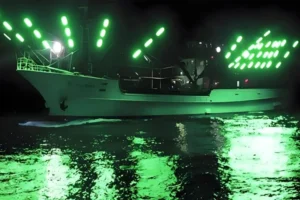
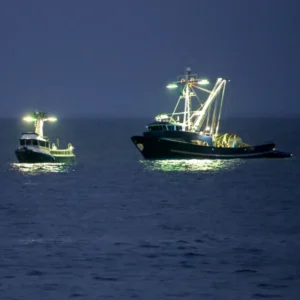
Optimale opbouw op het oppervlak gemonteerde vislichtopstelling
- Verbeterde operationele veiligheid
Bovenwatermontage vermindert het risico op binnendringen van water, elektrische gevaren en schade door stromingen of puin in vergelijking met ondergedompelde verlichtingsopstellingen. - Brede lichtdekking
Goed gepositioneerde oppervlaktelichten reflecteren en breken in het water, waardoor brede attractiezones ontstaan die plankton, aasvissen en roofdieren effectief verzamelen. - Eenvoudig onderhoud en inspectie
De wateroppervlakmontage maakt het mogelijk om gemakkelijk toegang te krijgen voor reiniging, afstelling en routineonderhoud, zonder dat u lichten uit het water hoeft te verwijderen. - Flexibele installatiemogelijkheden
Oppervlaktelampen kunnen op rails, palen of beugels rond de boot of het platform worden gemonteerd, waardoor nauwkeurige controle over straalhoeken, overlap en lichtverdeling mogelijk is.
Bijpassende output en lay-out
Ervaren operators richten zich op systeemsynergie in plaats van alleen kleur
- Vergelijk de totale stroom- en lichtverdeling met het scenario:
Offshore / Grote schepen / Hoge stroom → Hogere totale output + bredere dekking kalm zoetwater / nearshore → matig vermogen + gerichte verlichting - Lichtverdeling en overlap zijn belangrijker dan enkele high-power lampen
- Ervaren operators richten zich op systeemsynergie in plaats van alleen kleur
Conclusie
Hoewel de kleur van het vissen een belangrijke rol speelt bij het aantrekken van vissen, hangt de werkelijke effectiviteit van een visserijlichtsysteem af van hoe goed kleur, lichtopbrengst, dekking en installatie samenwerken. Verschillende visserijomgevingen - zoetwater, zout water, nearshore of offshore - vereisen andere lichtstrategieën dan een one-size-fits-all oplossing.
Groene vissers worden veel gebruikt omdat ze een uitgebalanceerde combinatie van penetratiediepte, zichtbaarheid en energie-efficiëntie bieden. Het selecteren van het juiste aantal lichten, geschikte straalhoeken en de juiste montagehoogte is echter vaak kritischer dan alleen kleur bij het streven naar stabiele en herhaalbare visresultaten.
Als u een nieuwe visverlichtingsopstelling plant of een bestaande opwaardeert, Begrijpen hoe verlichting werkt in echte viscondities Kan u helpen bij het verminderen van trial-and-error en het verbeteren van de efficiëntie vanaf het begin. Voor meer gedetailleerde richtlijnen over lichttypes, installatiemethoden en toepassingsspecifieke aanbevelingen, kunt u onze gerelateerde gidsen over vislicht begrijpen, op boot gemonteerde verlichtingsoplossingen en Praktische toepassingen in verschillende visscenario's.
Gerelateerde berichten